

Speyer Audiotour: Echo's van Geloof, Vrijheid en Verborgen Binnenplaatsen
Onder de machtige kathedraaltorens van Speyer weerklonken ooit de voetstappen van keizers, rebellen en geheime genootschappen. Ga op een zelfgeleid audio-avontuur door kronkelende straatjes en zonovergoten pleinen. Elke stop onthult over het hoofd geziene mysteries en verborgen legendes die de lokale bevolking zelden deelt. Welke wanhopige gok van een monarch veranderde voorgoed het lot van Europa binnen deze kathedraalmuren? Welke stille aanwijzingen liggen verborgen in de sierlijke kamers van het Jezuïetencollege? Hoe ontketende een in wijn gedrenkt artefact in het Historisch Museum een schandaal dat de beschaafde samenleving opschudde? Volg vervaagde fresco's en kogelgaten in deuren terwijl je eeuwen van rivaliteit, veerkracht en revolutie doorkruist. Hoor de onvertelde verhalen van de stad tot leven komen bij elke stap. Aan het einde van de reis zal de bekende skyline van Speyer bruisen van intrige en ongeziene verwondering. Druk op afspelen om de geheimen onder de stenen van Speyer te ontgrendelen en de hartslagen te ontdekken die de geschiedenis probeerde te verbergen.
Tourvoorbeeld
Over deze tour
- scheduleDuur 40–60 minsGa op je eigen tempo
- straighten3.5 km wandelrouteVolg het geleide pad
- location_on
- wifi_offWerkt offlineEén keer downloaden, overal gebruiken
- all_inclusiveLevenslange toegangOp elk moment opnieuw afspelen, voor altijd
- location_onStart bij Karmelietenklooster
Stops op deze tour
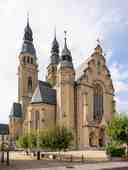
To spot St. Joseph (Speyer), just look for a colossal church with two towering spires topped by curvy, pointed roofs and a grand arched entrance flanked by detailed stonework,…Meer lezenToon minder
To spot St. Joseph (Speyer), just look for a colossal church with two towering spires topped by curvy, pointed roofs and a grand arched entrance flanked by detailed stonework, right ahead of you-trust me, it’s hard to miss! Now, get ready, because standing here means you’re about to hear one of Speyer's liveliest tales of friendly rivalry, musical masterpieces, and community spirit! Let’s wind the clock back to the late 19th century. Picture Speyer as a town bubbling with excitement, drawn into a sort of friendly arms race between its Protestant and Catholic communities. Right after the Protestants launched a massive fundraiser to build their Gedächtniskirche-a monumental church just over the way-the Catholics said, “Well, two can play at this game!” and started up their very own church-building club back in 1887. Where to put such a magnificent new church? The Protestants snapped up land right at the city’s edge for their church, so the Catholics sought a plot just across, bargaining and trading till they settled on the site you see before you. The St. Magdalena monastery even chipped in some precious land! The dream was a church to match the Protestants’-grand, inspiring, and undeniably eye-catching. But dreams take money, and here’s where things got bumpy. The Catholic community had big plans to finish by the turn of the century. Instead, they hit delay after delay. Opening their wallets only to find moths, construction kept being postponed for years. But hope refused to die. On June 9th, 1912, they finally gathered for the laying of the foundation stone, with Bishop Michael von Faulhaber himself in attendance, and the scene was nothing short of electric-a feast of faith, tradition, and anticipation. Just two years later, in 1914, the church was ready enough to be dedicated to Saint Joseph-the patron of workers and the region. Yet, even as the congregation cheered, a twist was on the wind: war broke out. Suddenly, the grand, sweeping staircase intended to welcome crowds became a humble set of steep concrete steps; other details, like some of the stonework above the entrance, were left jutting out, rough and unfinished. The east side? Imagine a half-finished puzzle-there should have been a building mirroring the parish house on the west, but the project remained incomplete. Instead, remnants of the St. Ägidius monastery now form the base of the so-called Ägidienhaus. Despite these hiccups and hardships, the church grew into a symbol-first of rivalry, then of love. This was a place of Catholic pride, a shoutout to their Bavarian roots and loyalty to the king. Yet over time, something wonderful happened: old competition mellowed into genuine friendship. When St. Joseph recently needed months of renovation, guess where the parish held their services? Right in the Gedächtniskirche, with their once-rivals turned gracious hosts. That spirit of diversity is woven straight into the church’s architecture. St. Joseph looks nothing like the Gedächtniskirche or the majestic cathedral. Ludwig Becker, the architect, tossed strict rules out the window, mixing Art Nouveau with late Gothic, Baroque flourishes, and a touch of Renaissance flair. Even the twin towers are special-their swooping shapes are inspired by Heidelberg’s Church of the Holy Spirit. At nearly 90 meters, they rise just 2.5 meters shorter than Kaiserslautern’s Marienkirche’s tower, and only 10 meters shy of their Protestant neighbor-a friendly game of “mine’s almost as tall as yours!” Step inside, and the sense of grandeur continues. Imagine nearly 4,000 organ pipes swelling with music-built by master Heinz Wilbrand in 1990, these pipes help fill every corner with soaring sound. The windows? Each brilliantly colored pane was designed by Bernhard Kraus and crafted in Munich. They weren’t paid for by a faceless committee, but donated by locals and community groups-a patchwork of generosity. Bells ring out from the towers-four, harmonizing in a sequence that dings right into your bones. The largest, cast in 1960, weighs nearly 4 tons! As you look around, you’ll see that St. Joseph is more than just a church-it’s a beating heart for the whole area. To the north is the Ägidienhaus, home to parish gatherings, a library, and meeting rooms; the south holds the parish office, kindergarten, and youth rooms; and to the west, gathering halls, a garden, and even a care home. In the end, St. Joseph’s story is about much more than stone and glass. It’s about neighbors outdoing one another in kindness, music ringing through unfinished towers, and a city skyline shaped not just by rivalry, but by a community coming together-one sturdy step, beautiful window, and shared hymn at a time. So go ahead, let your eyes and imagination wander up those towers, and see if you can spot the spots still waiting to be finished-it’s all part of the charm! Yearning to grasp further insights on the architecture, equipment or the complex? Dive into the chat section below and ask away.
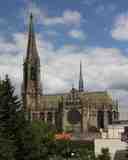
Open eigen pagina →Look ahead for a tall, needle-like spire decorated with intricate stonework and a huge rose window-this awe-inspiring Gothic church towers above its surroundings and you really…Meer lezenToon minder
Look ahead for a tall, needle-like spire decorated with intricate stonework and a huge rose window-this awe-inspiring Gothic church towers above its surroundings and you really can’t miss it! Now, as you stand right here, let’s step back in time-imagine the late 1800s, the city of Speyer buzzing with plans, arguments, and a dash of competition. This enormous church in front of you is the Memorial Church of the Protestation, or as the locals call it, the Protestationskirche. It was built between 1893 and 1904, and trust me, its story is as dramatic as its architecture! It all started with a splash of defiance. Jump back to 1529: a rowdy parliament, the Reichstag, was held right here in Speyer. Picture a grand hall filled with powerful princes-some fiercely loyal to Luther’s new ideas, others determined to keep things as they were. When it was proposed to vote on what people should believe, those “protesting” princes simply refused. Their stand gave birth to the very word “Protestant” and changed the course of Christian history forever! Now, centuries later-cue the dramatic music-tensions still simmered between Catholics and Protestants, especially after new declarations from Rome and Germany’s new Protestant emperor. Protestant Speyer dreamed of a church that would rival even the mighty cathedral nearby. But the dreamers didn’t agree with each other right away-it took more than 35 years of lively debates and fundraising (with a few sharp elbows among friends) before a single stone was laid! Imagine builders and stonemasons testing rocks from one quarry after another, looking for just the right stones. Red sandstone looked good at first, but “too many pebbles!” someone cried. In the end, glowing white-gray sandstone from the Vosges gave the church its bright look, with glazed roof tiles sparkling like a giant, soup-ladle-shaped checkerboard. When they finally finished, the tower soared 100 meters high-the tallest in all the Palatinate-almost sticking its tongue out at the cathedral across town! The inside is just as impressive: three great halls, ribbed vaults, and bright stained-glass windows everywhere. Forget stuffy academic art-these windows burst with stories, colors, and even portraits of the German Emperor’s children as cherubs. The best seat in the house is the emperor’s own “Kaiser choir,” but no, Kaiser Wilhelm II actually snubbed the church’s opening-political drama kept him away. He did stop by for a peek years later, though. As you step into the tower’s ground floor, you’ll find a bronze statue of Luther himself, fist raised, standing on Swedish granite. That’s no accident-this spot, called the Memorial Hall, was designed to parade the heroes of the Protestant stand right before your eyes. Look for statues of the six protesting princes, and the floor beneath Luther carved with his legendary words: “Here I stand, I can do no other.” It’s powerful stuff! The church’s doors are guarded by a stone King David, strumming his harp, welcoming you with a psalm. And inside, look for peculiar fish carved into the lectern-one fat fish holds a book (it’s Martin Luther), and another fish with braids is his wife. You don’t see that at every church, do you? And if you’re lucky enough to be here when the organ plays, you’re in for a treat. The Protestationskirche has not one but two gigantic organs-the main one with nearly a hundred registers is among the largest in southwest Germany. When they fire up, it’s like the church itself comes alive. But, not everyone cheered for this place. There was plenty of rivalry-nearby Catholics soon built their own grand church as a sort of architectural thumb-your-nose, right next door. Even today, the Memorial Church keeps on ringing out, not just as a beacon for Protestants, but as a historic symbol of standing up for your beliefs-even if you have to debate about it for decades and haul tons of the finest stone halfway across Germany. So, take a long look at that spire breaking the sky, and imagine the legacy of courage, argument, and artistry that it celebrates. After all, where else can you find an argument carved in stone and sung out with organ pipes? Onward to the next stop! Eager to learn more about the reason for commemoration: protestation 1529, place of construction, architectural style, architects or the financing and architecture? Simply drop your inquiries in the chat section and I'll provide the details you need.
Open eigen pagina →
Toon 11 stops meerToon minder stopsexpand_moreexpand_less
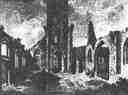
From where you’re standing, look for the remains of gothic archways and old stone walls rising up like a skeleton-this is all that whispers of the St. Moritz Church, just beneath…Meer lezenToon minder
From where you’re standing, look for the remains of gothic archways and old stone walls rising up like a skeleton-this is all that whispers of the St. Moritz Church, just beneath your feet at Königsplatz. Now, imagine the ground rumbling with footsteps and the air shimmering with the sound of bells-because you’re standing above what was once the grandest gothic church in the Vorderpfalz region. St. Moritz began its life way back in the 9th or 10th century, as the heart and soul of Speyer’s citizens, and trust me, it was not shy about making an entrance! By the late 1200s, the church was shining in the style of the time, with a massive 60-meter tower poking towards the clouds, sturdy walls, and a noble presence about 40 meters long and 25 meters wide. It even had its own protective wall-like a medieval VIP club with no guest list! But the plot thickens. In the 15th century, the church welcomed a new chapter, merging with St. German’s community. New wings, a grand choir, and a lively crowd kept the place buzzing. Picture local villagers bustling to and fro, stone masons tinkering on the newest gothic arch, while priests might have tried out their best sermons-maybe even sneaking in a joke or two to keep the congregation awake. And then… disaster. In 1689, fire tore through Speyer in a city-wide blaze, leaving most of St. Moritz a smoldering ruin. Only the west tower and walls stood their ground, while charred debris creaked under sorrowful skies. Yet, the people of Speyer were nothing if not stubborn-worship resumed among the ruins, and church books record life, love, even an important priestly ordination, echoing with hope. Eventually, change came again. In the early 1800s, the last stones of St. Moritz were cleared, making way for Königsplatz. But if you listen closely and let your imagination wander, you might just hear the whispers of centuries past, still curling up through the paving stones beneath your feet. And if you want to really delve into the church’s secrets, the Historical Museum of the Palatinate has tales and sketches waiting for curious minds-perhaps even yours!
Open eigen pagina →If you’re looking for the remains of the Franciscan Monastery, glance to your right at the broad open area where the modern hospital now stands-once, the impressive monastery…Meer lezenToon minder
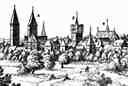
If you’re looking for the remains of the Franciscan Monastery, glance to your right at the broad open area where the modern hospital now stands-once, the impressive monastery stood there, marked by a square of historic alleys, with a pointed church roof rising up behind the city wall. The next time someone says, “You can’t miss it,” just remember: you’re searching for ghosts in the heart of Speyer! Imagine yourself in the bustling town of Speyer nearly 800 years ago. Monks in rough brown robes walk by, bare feet padding quietly across stone streets-hence their nickname, the “Barefooted.” The air is filled with the distant sound of church bells, and in this very spot, you would have seen the thriving Franciscan Monastery. Its first stone was laid around 1230, right by the Moritz Church and near the Allerheiligenstift. Back then, the alleys around you would have thrummed with the life of a busy religious community. It all began with Caesarius of Speyer, a local man and the first German leader of the new Franciscan order, which had only been founded in Italy in 1210. With the help of Bishop Konrad III and a generous canon named Mitter, the friars were offered a leprosy house near the city wall; what a real fixer-upper! On a September day in 1223, the friars gathered in their humble quarters for a meeting-imagine the creaking benches and the murmur of Latin prayers-where they planned the order’s future across Germany. Soon, thanks to local support and a bit of persuasive preaching, they secured permission to build. Streets you now know as Ludwigstraße, Herdstraße, Allerheiligenstraße, and Brudergasse once outlined their plot. The friars even got a barrel of herring as a donation in 1260-so if you smell fish, you know you’re on holy ground. The Franciscans became a beloved part of the community-so much so that when the town expelled all clergy in 1421, the Franciscans and Dominicans were allowed to stay. But Speyer was no stranger to trouble. Arguments broke out within the order-a classic fight between friars who wanted to keep everything and those who wanted to give it all away. By the end of the 1500s, the place had fallen on hard times. The few monks left were more interested in ale than prayers, leaving their church in disrepair and causing a scandal in town. The situation got so wild that even the local nuns started rolling their eyes! The pope himself eventually ordered the monastery closed in 1580, but the friars wriggled out of it with a little help from friends in high places. There’s nothing like papal drama to keep life exciting. As the centuries turned and repairs always seemed just out of reach, the friars begged the bishop to let them collect alms to rebuild-imagine them, cap in hand, on rainy streets. By 1735, the new church was finished and the bells rang out in celebration. Then came the chaos of the French Revolution in the late 1700s. Imperial troops marched in, taking over every monastery for barracks or hospitals-except for the Klarissen nuns, who dodged that fate but had to feed a squad of military bakers for their trouble! The Franciscans themselves were pressed for huge war payments; when they couldn’t pay up, their confessor was whisked away as a hostage. Soon Speyer swapped hands back and forth between French and German armies, and the monastery’s once tranquil halls echoed with marching boots and clattering hooves: picture 180 cannoneers and their horses tramping through the cloisters. When the dust of wars and revolutions finally settled, the monastery was no more. Its church was sold and then torn down, and the grounds were divided and redeveloped. Today, only the names-Brudergasse and Mönchsgasse-whisper where the friars once wandered. And on old maps and prints, you can still see the monastery: a church with a pointed steeple, standing proudly by the city wall, forever a part of Speyer’s story. So when you look around at the quiet hospital building and the cobbled lanes, remember-this was once the domain of barefooted friars, the echo of prayers, scandal, fish, and, on a wild night or two, perhaps a bit too much wine.
Open eigen pagina →To spot the Jewish courtyard, look for a low, ancient stone wall in front of you, made of reddish sandstone and brick, with arched and circular window openings and a small grassy…Meer lezenToon minder
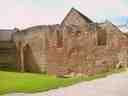
To spot the Jewish courtyard, look for a low, ancient stone wall in front of you, made of reddish sandstone and brick, with arched and circular window openings and a small grassy area at its base. Alright, step right up! You’re now standing before the heart of medieval Jewish life in Speyer, and I have to say, if these old stones could talk-they’d probably tell you some pretty wild stories (and maybe ask you to dust them off). Imagine this quiet courtyard bustling with people nearly a thousand years ago: the shuffle of feet on stone, the murmur of prayers, the distant laughter of children who were definitely not supposed to be running during lessons. The air would have smelled of fresh bread from the communal ovens and maybe, just maybe, someone’s stew had gotten a bit out of hand nearby. Back in 1084, the Bishop of Speyer, Rüdiger Huzmann, gave the Jewish families something precious: protection. Why, you ask? He wanted the city to thrive, and smart merchants and scholars would help! So, Jews fleeing danger in Mainz arrived, bringing hopes, dreams, and probably some truly excellent recipes. Soon after, Speyer became one of the most important centers of Jewish life in Europe; the “ShUM-cities” (Speyer, Worms, and Mainz) were legendary for scholarship and community spirit. Things were so good that even the Holy Roman Emperor, Henry IV, got in on the act by expanding those protections. But building a community means building, well… buildings. Right before your eyes you’ll see the remains of a synagogue consecrated in 1104, built in tough, rose-colored Romanesque sandstone. The arched windows around a central circle were so stylish that they caught on in Ashkenazi synagogues far and wide. Now picture it in its heyday: lantern light gleaming through the glass, families gathering for Shabbat, and debates about ancient texts going late into the night. To the east, hidden away for privacy, they dug deep to create a mikvah-Europe's oldest! Imagine tiptoeing down ancient stairs to a silent, cool underground pool, light slanting through intricately carved stonework. I bet even the stonemasons who built Speyer’s Christian cathedrals slipped over to admire their own handiwork-it was that impressive. In the 13th and 14th centuries, this community didn’t just retreat to the past. They expanded: building a yeshiva for intense study and a new Gothic women’s shul just next to the synagogue. (The rib-vaulted ceilings in the women's section practically shout “Look at me, I’m fancy!”) By then, the place was buzzing with learning and celebration. Of course, not every chapter was happy: a terrible pogrom in 1196 saw the synagogue burned, only to be rebuilt stronger. Through every golden age and dark cloud, this place was at the heart of it all. Time marched on. By the 16th century, the Jewish community faded from Speyer. The synagogue became an armory, then the courtyard turned into humble huts and gardens-as if medieval history had just taken a nap underground. But in 2021, UNESCO woke everybody up: this wasn’t just old stones, but living memory. So as you stand here, listening and maybe feeling a shiver of the past, remember how these walls sheltered hope, faith, struggle, and joy for centuries-and hey, if you hear a whisper or two, don’t worry. It’s just the stones having a brief chat!
Open eigen pagina →To spot the Gymnasium am Kaiserdom, look to your left for a large, solid stone building with tall arched windows on the lower level and pale, modern windows stretching above-it…Meer lezenToon minder
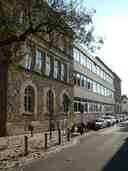
To spot the Gymnasium am Kaiserdom, look to your left for a large, solid stone building with tall arched windows on the lower level and pale, modern windows stretching above-it stands at the edge of the street, with cars lined up beside it. Now, take a deep breath of Speyer’s city air because you’re about to hear quite the school story! Imagine yourself standing outside in the crisp morning air, the sound of footsteps as students once hurried along these very cobblestones, books in hand, minds buzzing with thoughts of ancient Greeks... or maybe just the lunch bell. The Gymnasium am Kaiserdom, or GaK if you like shortcuts, is more than a school-it’s a timeline you can walk next to. The origins go back almost a thousand years, to 983, when this spot was home to the old cathedral school. Picture monks in flowing robes and bright-eyed boys like Walter von Speyer, who would become a bishop-he probably dreaded Latin homework just like anyone else! But the real drama started in 1525 when city leaders got together and, after much debate (and probably a few too many pretzels), decided Speyer needed a proper school. It took 15 rocky years, interrupted by the wild days of the Reformation, before the doors finally opened in 1540. Back then, this was a Protestant Latin school, quizzing kids on tough Latin phrases-imagine arguing with your friends in Latin on the playground! Over time, the Gymnasium saw the world around it change dramatically. When Speyer was handed over to the Kingdom of Bavaria in 1816, the school got a royal upgrade-and no, not in cafeteria food. It became the "Lyceum," then "Royal Study Institute," and finally the "Royal Humanistic Gymnasium”-which must have taken up most of the space on the school sign. The building before you, with its formidable stone and proud Neorenaissance face, was finished in 1902. Architects Ludwig von Stempel and Heinrich Ullmann wanted it to feel both grand and slightly intimidating-like a wise old teacher keeping an eye on you! Imagine the commotion here in 2002 when the whole city celebrated its centennial. Fast forward to the 21st century and you’ll catch updates like a snazzy new logo or a sparkling website. In 2017, proud banners went up: "School without Racism - School with Courage." I’d give them extra credit just for that. Step closer and you may even smell the faintest trace of old books drifting from within-this school’s library is legendary, the largest historical collection in Speyer. Its catalog can still be found as old-school card files in the State Library, perfect for dusty-fingered book hunters. And what about the classes? GaK is serious about languages; students start with Latin, progress to English, and then get the joy of choosing French or Greek by eighth grade. You’ll hear the chatter of students trying out Italian verbs by eleventh grade-because why not add some Roman flavor to the mix? Science lovers might be jealous to hear that the science department moved out in 1967, getting a shiny place of their own and becoming the city’s other Gymnasium. As you stand close to the entrance, picture young revolutionaries, future doctors, politicians, even a future German chancellor, Helmut Kohl, passing straight through these doors-with dreams as wide as the Rhine. Sometimes, I suspect, they dreamed less of glory and more of summer vacation, but let’s not ruin the myth! The GaK is also a connector, twinning with schools across the world, from France and Switzerland to distant Rwanda and New Jersey, USA. Think of all the excited voices skyping across time zones, swapping stories about what school lunch looks like on the other side of the world. And of course, any place as old as this has brushed up against history’s dark corners. During the Nazi era, it felt the tension of those times-anxious whispers in the halls, difficult choices for teachers and students alike. Now, as the leaves rustle around and the city hums behind you, remember that you’re not just looking at a school. You’re standing before a living piece of Speyer’s past, present, and future. The Gymnasium am Kaiserdom has stood for centuries-outlasting kings, revolutions, world wars, and even bad cafeteria food. Now, to your next adventure!
Open eigen pagina →Look for an impressive building with a dramatic red sandstone entrance, two corner towers wearing little round "hats," and a tall turret with a greenish roof on one side-it stands…Meer lezenToon minder
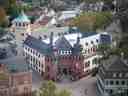
Look for an impressive building with a dramatic red sandstone entrance, two corner towers wearing little round "hats," and a tall turret with a greenish roof on one side-it stands right before you, impossible to miss as its banners flutter outside the main archway. Welcome to the Historical Museum of the Palatinate, where over a million treasures from the region’s wild, wonderful past are tucked away behind these grand old walls! Imagine, you’re standing right in front of a building that’s kind of like Speyer’s version of a historical treasure chest. Let’s crack it open-don’t worry, you won’t set off any ancient curses-and take a trip back in time. Now, picture this: it all began in the 1820s, when a curious official named Joseph von Stichaner wanted to show off local stone artifacts in a place called the “Antikenhalle.” Back then, most of the other objects were just stuffed away in the city hall-perhaps fighting for desk space with dusty paperwork. As the city’s collection grew larger (imagine trying to store a Roman helmet in your mailbox!), they needed more room. So in 1910, this museum threw open its doors, right beside the mighty Speyer Cathedral. The building you see today, with its beautiful turrets and grand entrance, was actually designed after an old military barracks was swept away-as if some history-loving wizard waved a wand. The museum is a true all-rounder: more than 200,000 people come here each year (except, well, during pandemics-museums need to social distance too). Inside, history comes alive with exhibits that run from the earliest Stone Age tools, to glittering Roman treasures, to the elegant porcelain of the Baroque-and even the oldest wine ever found, dating back to the 4th century AD. That’s right, you could say the museum is home to a wine that’s so old, if you drank it, you might sprout a toga! And in the “Weinmuseum” you’ll spot nutty artifacts like a 16th-century drinking figure that’s had a more adventurous time than most tourists, having been lost, found, auctioned, stolen, and turned into the subject of a mysterious legal battle. Cheers to history with a splash of drama! But this isn’t just a place for grown-up history buffs-there’s a “Young Museum” inside for kids and families, where you can pilot a Viking ship, hunt for pirate treasure, or hang out with the famous orange “Maus” from German TV. Over the years, the museum has pulled off some show-stopping special exhibitions: Samurai armor straight from Japan, ancient Egyptian mummies from Turin, secrets of the Maya, lost treasure hoards from the Rhine, and even the true riches and tragedies of the Titanic. You might think a museum would just be about old pots and rusty swords, but here, the air practically crackles with stories-from witch hunts to royal dynasties, Viking invasions to the rise and fall of empires. The team behind it all is a heroic band of historians, archaeologists, and art lovers, with every new director adding their own flavor (and probably a few extra stacks of paperwork in the archive). And, let’s not forget, Speyer itself has been at the center of European history for centuries-emperors, popes, and even the odd celebrity politician have all left their mark here. The museum doesn’t just show off the Pfalz’s past, it helps everyone connect local stories with the big, swirling currents of world history. History here isn’t quiet-it’s a living, changing adventure, always ready with a new secret or two. So next time you walk past, know that you’re passing one of Germany’s most exciting museums-where every stone, every painting, every glittering goblet whispers a story. And if you listen closely, you might even hear echoes of all those voices from centuries past, inviting you in to see what’s next. Who knows, maybe the most exciting discovery is still waiting for you, just around the next corner. If you're curious about the management (directors), traffic or the exhibition offer, the chat section below is the perfect place to seek clarification.
Open eigen pagina →To spot the Holy Trinity Church in front of you, look for an elegant, buttercream-yellow Baroque facade with grand arched windows and a tall, richly decorated steeple rising up…Meer lezenToon minder
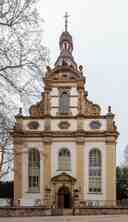
To spot the Holy Trinity Church in front of you, look for an elegant, buttercream-yellow Baroque facade with grand arched windows and a tall, richly decorated steeple rising up above the treetops. Welcome to the Holy Trinity Church, Speyer’s very own Baroque “jewel”-a place where faith, history, and a touch of drama all come bundled together, almost like a medieval version of prime-time TV! If you stand quietly for a moment, you might almost hear the footsteps of past centuries echoing off these proud walls. It all began after a firestorm-quite literally. In 1689, French troops, obeying the iron will of Louis XIV, tore through Speyer during the War of the Palatine Succession. Imagine a city in smoldering ruins, with its frightened townsfolk fleeing over the Rhine. Lutherans, who made up the majority here after the Reformation, scattered to distant places like Frankfurt, their churches and homes nothing but ashen memories. Only ten years later did some brave souls trickle back, determined to bring life to these ghostly streets again. Now, while the Reformers got busy rebuilding the Heiliggeistkirche, the Lutherans set to work in the winter of 1700-01-clearing charred rubble with numbed fingers, laying the first stones of hope. Their foundation was poured in April 1701. Maybe you can picture their excitement-followed by the city council’s eager dash to get in on the act, laying a second foundation stone just days later, with a tin plaque almost shouting, “This church will shine for God’s glory and make Speyer beautiful again!” The actual building was a community affair. Under the careful eye of Johann Peter Graber, the bold Mannheim architect, the walls shot up between 1701 and 1703, thanks in no small part to Paul Bagnato-an Italian mason who had so settled in, he renamed himself Paul Naß. But trouble didn’t let up: in 1703, the Spanish War of Succession threatened the city, so the Lutheran congregation moved their worship into the unfinished church for safe keeping. Inside, construction slogged on-wood galleries in 1704, walls unfinished until 1717 (budget woes are nothing new)-but hope prevailed. There’s nothing like lending a hand and praying something will work out! The organ was installed in 1717, just in time for that mighty 200th anniversary of the Reformation. The church’s bare beams shimmered with candles and expectation as crowds filled the air with singing. But the church’s luck, like life’s favorite soap opera, took another twist. In 1792, revolutionary French troops stormed Speyer. The last service of the ‘old’ days happened on Christmas in 1793-but then, the church was plundered: no more bells, no glittering chalices, not even the organ pipes survived. The building ended up as a makeshift hospital for wounded soldiers, the haunting groans of pain no doubt bouncing between the altar and broken pews. Services only started again in 1814, as Europe tried to catch its breath. But here’s a silver lining: all that shared hardship drew once-divided spiritual families together. By 1817, reformers and Lutherans looked past old line-in-the-sand arguments and, with typical German efficiency, voted overwhelmingly to unite. A year later, the Palatinate’s churches officially declared Union with a grand service-one congregation at last! The Holy Trinity Church became the beating heart of Protestant life here, especially during cold winters, since the new Memorial Church didn’t have any central heating yet (the thought of frosty pews still chills the imagination!). Peeking at the church’s design, you’ll find inspiration taken from Frankfurt’s Katharinenkirche-a wide, open space with a rare, flat wooden vaulted ceiling painted with vibrant biblical scenes. Forget the usual dizzyingly high Baroque ceilings; these panel paintings draw you in close, bringing the Word to every worshipper’s eye. If you had super-hearing, you’d catch the bells overhead: their story is a wild ride. The original tower was just a stump for years, until new bells-cast in harmonies to echo the famous cathedral-made the place sing. But war and fire never spared anything for long: bells lost, recast, stolen for war, and recast again. The bell you’d hear now, the “Vaterunserglocke,” was cast in 1951. Inside, the majestic organ rests above the altar, though, as of 2020, silence reigns, waiting for a new restoration. So as you stand outside, let your gaze wander up the beautifully restored 1891 facade, and think of the generations-from ruined beginnings to baroque beauty-who’ve built, rebuilt, and reinvented this grand old church. It’s the kind of place where faith isn’t just sung or spoken, but hammered, painted, and rebuilt, one determined century after another. And if buildings could talk, the Holy Trinity Church would surely wink, nod, and hum a hymn of triumph through the ages!
Open eigen pagina →To spot the Jesuit College, look for the yellow sandstone portal adorned with a carved Jesuit emblem and crowned crest-just glance for this ornate stonework set within the façade…Meer lezenToon minder
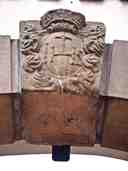
To spot the Jesuit College, look for the yellow sandstone portal adorned with a carved Jesuit emblem and crowned crest-just glance for this ornate stonework set within the façade and you’ll know you’re in the right place. Welcome to the former site of the Jesuit College in Speyer! Now, I know the grand old buildings are mostly gone, but close your eyes for a second and let your mind drift to 16th-century Speyer. The city streets were buzzing with rumors: “Who are these newcomers in black robes?” The Jesuits, champions of education and spirited debate, had just arrived, determined to make their mark. Imagine the smell of ink and dusty parchment, the echo of Latin prayers, and the faint sound of eager footsteps echoing through the narrow lanes. It all began during the stormy days of the Counter-Reformation-picture passionate debates, banners waving, and choral hymns under Speyer’s vast sky. The Jesuits were called here in 1567 at the request of desperate church officials who needed inspiring preachers and skilled teachers. The first rector was Hermes Halpaur, who stepped in when the local cathedral preacher’s health failed. The Jesuit’s arrival was like inviting a rock band into a town meeting: things changed fast! The Cathedral Chapter demanded a college of their own, and soon Jesuit teachers were filling chilly classrooms at the old Domschule. But the Jesuits faced a wall of resistance-imagine the city council sitting there arms crossed, muttering, “Not so fast!” It wasn’t until 1571 that the order, after much wrangling and some strategic arm-twisting, received the St. Nicholas Chapel and a nearby house in exchange for a yearly payment of money, grain, barley, and-because no big deal was struck without a tipple-wine. This little college soon burst at the seams. Students flocked to the Jesuit sermons and lectures, so many that by the year 1600, 400 to 500 boys crowded into lessons-now that’s a lot of chalk dust! Even big names like Saint Petrus Canisius and the universal scholar Athanasius Kircher turned up to teach or reflect here, their voices ringing off the schoolroom walls. But the original chapel and house were far too small, so the Jesuits managed to get hold of another chapel and rectory nearby, only to knock both down and rebuild from scratch. They erected a new church, with a quaint polygonal stair-tower, and a school so lively it was practically bursting with scholars’ enthusiasm. The students’ chatter and church bells were to be silenced all too violently. In 1689, the great fire of Speyer reduced much of the city - and the Jesuit buildings - to smoldering ash. The neighborhood, once noisy with lessons and music, fell silent. When the city was reborn, so too was the college: bigger and grander, with four wings around a cozy courtyard, the main building facing Stuhlbrudergasse, as proud and solid as could be. By 1727, a new church stood, its windows flashing in the sunlight, its space broad, bright, and open-no cramped corners here! But fate is always an unpredictable teacher. In 1773, the Pope dissolved the Jesuit Order under heavy pressure from powerful kings. The Speyer Jesuits packed away their books-well, as many as could fit in their cases-and handed their beloved buildings back to the cathedral. The school carried on, bouncing between different religious groups, even through the chaos of the French Revolution when the college and church were looted and converted, for a brief moment, into the city’s Catholic parish church. Afterward, Speyer changed hands-Napoleon’s men marched through, and the Jesuit church was sold off, bringing in just enough francs for the most basic repairs to the cathedral next door (although, let’s face it, even Napoleon couldn’t fix everything). By the time the dust settled, parts of the former college were used as a horse-riding hall, while others became army barracks. The grand old portal-the one decorated with the Jesuit crest that you see today, carved back in 1714-had quite the journey too. After years of storage, it was finally rescued and stands strong at a church in Grünstadt, a relic of the college’s former glory. So there you have it-the story of a fearless band of teachers and preachers, of fiery debate, great fires, and grand dreams that echoed through Speyer for centuries. And hey, remember: never argue with a Jesuit unless you’ve done your homework!
Open eigen pagina →Look for a grand stone gateway with swirling decorations and a crest above the arch - just beyond it, you’ll see leafy trees and the soft yellow walls of the monastery, plus if…Meer lezenToon minder
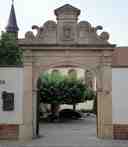
Look for a grand stone gateway with swirling decorations and a crest above the arch - just beyond it, you’ll see leafy trees and the soft yellow walls of the monastery, plus if you squint to the left, the pointy church spire is peeking out from behind the greenery. Welcome to the St. Magdalena Monastery, an extraordinary place that’s been home to stories of hope, heartbreak, and a fair bit of perseverance. Imagine the air humming with secrets from centuries past. Step closer, and you can almost hear the gentle echoes of prayer inside those thick old walls. Back in the early thirteenth century, a group of Reuerinnen-women who lived a life of repentance-settled across the Rhine, until one day in 1228, they packed up and moved to Speyer. It sounds a bit like a medieval moving day-imagine boxes labeled “candles,” “prayer books,” and, of course, “strict vows.” They set up shop right here, north of the great Speyer Cathedral. Their new home grew out of faith and determination, and with a little papal paperwork (let’s be honest, getting into the Dominican Order was probably as nerve-wracking as waiting for exam results), Pope Benedict XI officially welcomed them in 1304. But peaceful days are like cats-never around when you need them. In 1689, the Palatinate succession war swept through, and the monastery, like almost the entire town, was left a smoking ruin. Picture the sisters fleeing through smoke and rubble, hearts heavy but undeterred. Ten years would pass before they returned, breathing life (and probably some laughter and singing) into these stones once again. Fast-forward to the chaos after the French Revolution. Between 1792 and 1795, the sisters were forced to evacuate their beloved home not once but four times. It became a bit of a frustrating family vacation-pack up, leave, come back, repeat! Finally, in 1797, they dared to hope again, but within five years, secularization swept Europe and they were thrown out, the buildings sold. Yet, never underestimate determined nuns-and probably some very persuasive letters to family! By 1807, with generous help from relatives, they bought much of the ground back and continued their quiet community life-forbidden to wear their habits, they blended into the city, like secret saints in ordinary clothes. In 1811, the rooms welcomed a new and unusual resident: Reichsgraf Damian Hugo Philipp von Lehrbach, a canon of Freising Cathedral, moved in quietly and spent his final years in humble peace. He grew so close to the sisters that he had a window cut from his little room straight into the church’s choir-an early VIP pass to the altar, if you will! His devotion was so inspiring that the monastery chronicle called him a “great example of piety.” At his death in 1815, he left behind not just memories, but his fortune (and a very special chalice) to support these women and the newly re-founded Diocese of Speyer. For a while, the monastery church of St. Magdalena became the city’s main place of worship, with the majestic Dom almost collapsing nearby. By 1828, King Ludwig I gave the official green light for the monastery to be born anew-on one condition: they were to educate the city’s Catholic girls. (A nuns’ tale: first prayers, then algebra.) Education flourished here, but not without setbacks. By the twentieth century, Nazi rule forced the closing of all monastery schools-some sisters journeyed bravely to Peru and Brazil, founding new schools across oceans, while those who remained carried on as best they could. After the war, the sisters brought schools back, teaching everything from music to practical trades-even opening today’s all-day elementary school with a musical twist in 2013. Just try humming a hymn as you walk by; the walls might just remember the melody. Looking around, you’ll see hints of centuries everywhere: the stately gate from the late 1800s stands tall, topped with the word “Veritas”-Truth-like an ancient password to enter. Tucked against the historical city wall are gravestones from the eighteenth century, the memories of past sisters chiseled forever in stone. The church itself feels like something out of a Gothic fairy tale, with its oldest walls and columns still whispering their thirteenth-century origins. And don’t miss the left altar inside; it holds the patroness statue, “Patrona Spirensis,” a symbol of hope and rebirth rescued and remade after revolutionaries destroyed the original. So as you stand before St. Magdalena’s, you’re not just seeing a monastery-you’re glimpsing a living chronicle, layered with courage, faith, and a relentless spirit of starting over. And let’s be honest: if these walls could talk, they’d have some pretty dramatic bedtime stories.
Open eigen pagina →Take a look just to the north side of the mighty cathedral, where you’ll spot the remains of a grand structure-what’s left of the Episcopal Palatinate is a graceful arcade and…Meer lezenToon minder
Take a look just to the north side of the mighty cathedral, where you’ll spot the remains of a grand structure-what’s left of the Episcopal Palatinate is a graceful arcade and ancient stonework, tucked near the towering silhouette of the Dom. Alright, now stand still for a second and picture this scene: Mist rolls in off the river, and towering above you is not only the cathedral’s mighty spires, but an impressive bishop’s palace-the Episcopal Palatinate. Don’t let the quiet today fool you, because this place was once the nerve center for medieval power moves, secret plots, and more than a little bit of holy drama! Way back in the mists of time, nobody really knows exactly where the first bishop’s house stood, but logic says it had to be right here, close to the spiritual heart of Speyer. By 1270, the bishop’s palace was already important enough to make the history books-though don’t you imagine it just popped into existence overnight. It probably had seen a lot of years (and probably a lot of bishops’ arguments) before it ever got mentioned! Once, the palatinate stood proud on the cathedral’s north side, glancing down on daily life like a wise old uncle. The cathedral’s south side, meanwhile, was all monks and silence in the cloister. Over the centuries, great builders-like Hans von Mingolfsheim in the 1400s-spruced up the palace, adding new rooms and splendid touches. Fast forward to Abraham Saur’s time in 1658, and he wrote that it was a cheerful place filled with gorgeous chambers, columns, and, my personal favorite, “artful carpentry.” Can’t you just picture those creaky wooden floors and glittering windows? But alas, everything has its stormy night: Wars swept through, and after terrible destruction, Prince-Bishop Johann Hugo von Orsbeck tried to revive it with fancy Baroque flair, hiring master builders to work wonders on the old stones. They gave it new arches, an impressive gateway, and made it richer than ever. But with shifting times and the lure of a comfier palace in Bruchsal, the grand old Palatinate slowly faded -finally, by 1806, it was taken down completely, leaving behind only a whisper of its greatness. Yet, as you stand here, if you listen closely to the wind, you might just hear the echo of bishops’ footsteps, the clink of goblets in grand feasts, and the stories that linger in these ancient stones. Now that’s a palace with secrets!
Open eigen pagina →Look ahead and you’ll spot the great cathedral rising above a vast, sunlit lawn, surrounded by broad emerald trees-just follow where the towers peek above the leaves and you’ll…Meer lezenToon minder
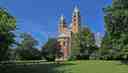
Look ahead and you’ll spot the great cathedral rising above a vast, sunlit lawn, surrounded by broad emerald trees-just follow where the towers peek above the leaves and you’ll find yourself in the heart of the Cathedral Garden Speyer. Welcome to the Cathedral Garden-known locally as the “Dummgaade”! Here, you’re not just wandering a patch of grass but traveling through over a thousand years of history, legends, and a bit of town drama. Imagine stepping back to the days when the Rhine River flowed close by, almost lapping at the feet of the cathedral. Now, after some 19th-century river engineering, there’s this wide-open green, sandwiched between the mighty cathedral and the river, with more memories than it has blades of grass. Long before this peaceful park was filled with picnicking locals and playful kids, officials dreamed of transforming the cathedral’s surroundings into a grand public space. Napoleon’s wars slowed things down, but by 1821, under the keen eye of Carl Albert Leopold von Stengel, the ruins were cleared for a park that’s seen both the glory of kings and the mystery of murder most foul-yes, even murder! In 1277, poor Albert von Mußbach, a head churchman with a knack for making tax enemies, met a very sticky end. Backstabbing, a missing hand, and a city maybe too eager to look the other way-if these trees could talk! Stroll a bit and you’re walking through two gardens-east and west-spanning an impressive 124,300 square meters all the way to the Rhine. If you listen, you may hear the rustle of the oldest trees in Speyer overhead-some planted as far back as 1816. The platanes, maples, and hornbeams are veteran witnesses to everything from royal visits to raucous festivals, though sadly, even centuries-old trees can’t escape the summer heat. Now, keep your ears open--the park is a haven for 15 species of birds (and apparently, owls with a dislike for drones). And as you wander, sculptures pop out in the most unexpected places. Close to the cathedral’s southern wall, kids and grownups alike touch a gigantic tactile model-a sand-colored miniature of the cathedral, made for blind and sighted visitors to trace history with their fingers. Go ahead, it’s at wheelchair height too! There’s even more art tucked among the shrubs: an ancient “Ölberg” sculpture spattered with drama and an angel at the top, a bronze bust of Helmut Kohl-designed to grin mischievously at passersby-plus a steel “Speyer Head” seemingly pondering eternity, and the curious “Giro Porta,” a “twisted door” by a local artist, just in case you wondered if doors could dream. See that big fancy fountain? In the 1880s, it reached over 20 meters high, nearly visible from the Rhine. Sadly, there’s no more high-flying water, but there’s still plenty of splashing on warm days. Speaking of controversial splashes, there used to be a giant bronze statue called “Filia Rheni”-the daughter of the Rhine-striking a pose that scandalized some folks until its artist and the city had a tug-of-war and she vanished, leaving only whispers behind. But not all is glitter. Some art, like the “salische Kaiser”-statues of spearing-eyed medieval rulers-came to the garden via the fevered dreams of 1930s Germany and have sparked debate ever since. Look for little touches of quirky legend, too, like the “Heidentürmchen”-one of the last medieval towers-called “heathen’s turret” after an odd misunderstanding about its ancient, stony roots. One legend had giants building it (but separate bedrooms led to serious marital problems). In truth, that giant bone once shown at Town Hall? Sorry, not a giant-just a whale vertebra (or maybe a mammoth!). And let’s not forget the “Fährmann hol’ über!” statue, evoking an old tale: in 1813, it’s said, the emperors from the cathedral’s tombs rose from their graves and called the ferryman to cross the river and save the empire-talk about making a splashy comeback! Modern touches, too: in 2018, they added the Stauferstele-tall, octagonal, trimmed in gold to honor medieval rulers, glinting in the sun. And somewhere nearby, you might find the climbing web, the “Speyer Spider,” a playground for kids, or the trio of abstract sculptures called “Trifolium,” connecting nature and art like a giant cloverleaf. So as you finish your stroll, take in the sounds: laughter, birds, a distant bell-or maybe the whisper of emperors and spirits from centuries past. Here, in the Cathedral Garden, every shadow, every sculpture, every rustle tells a story-sometimes wild, sometimes touching, occasionally ridiculous, but always uniquely Speyer. And remember: every garden is a little wild beneath its neat paths, so keep your eyes open-who knows what, or whom, you might meet!
Open eigen pagina →
Veelgestelde vragen
Hoe begin ik de tour?
Download na aankoop de AudaTours-app en voer je inwisselcode in. De tour is direct klaar om te starten – tik gewoon op afspelen en volg de GPS-geleide route.
Heb ik internet nodig tijdens de tour?
Nee! Download de tour voordat je begint en geniet er volledig offline van. Alleen de chatfunctie vereist internet. We raden aan om te downloaden via wifi om mobiele data te besparen.
Is dit een groepsrondleiding met gids?
Nee - dit is een audiotour met eigen gids. Je verkent zelfstandig op je eigen tempo, met audiovertelling via je telefoon. Geen tourguide, geen groep, geen schema.
Hoe lang duurt de tour?
De meeste tours duren 60-90 minuten, maar jij bepaalt het tempo volledig. Pauzeer, sla stops over of neem pauzes wanneer je wilt.
Wat als ik de tour vandaag niet kan afmaken?
Geen probleem! Tours hebben levenslange toegang. Pauzeer en hervat wanneer je wilt – morgen, volgende week of volgend jaar. Je voortgang wordt opgeslagen.
Welke talen zijn beschikbaar?
Alle tours zijn beschikbaar in meer dan 50 talen. Selecteer je voorkeurstaal bij het inwisselen van je code. Let op: de taal kan niet worden gewijzigd na het genereren van de tour.
Waar vind ik de tour na aankoop?
Download de gratis AudaTours-app uit de App Store of Google Play. Voer je inwisselcode in (verzonden per e-mail) en de tour verschijnt in je bibliotheek, klaar om te downloaden en te starten.
Als je niet tevreden bent met de tour, betalen we je aankoop terug. Neem contact met ons op via [email protected]
Veilig afrekenen met 


