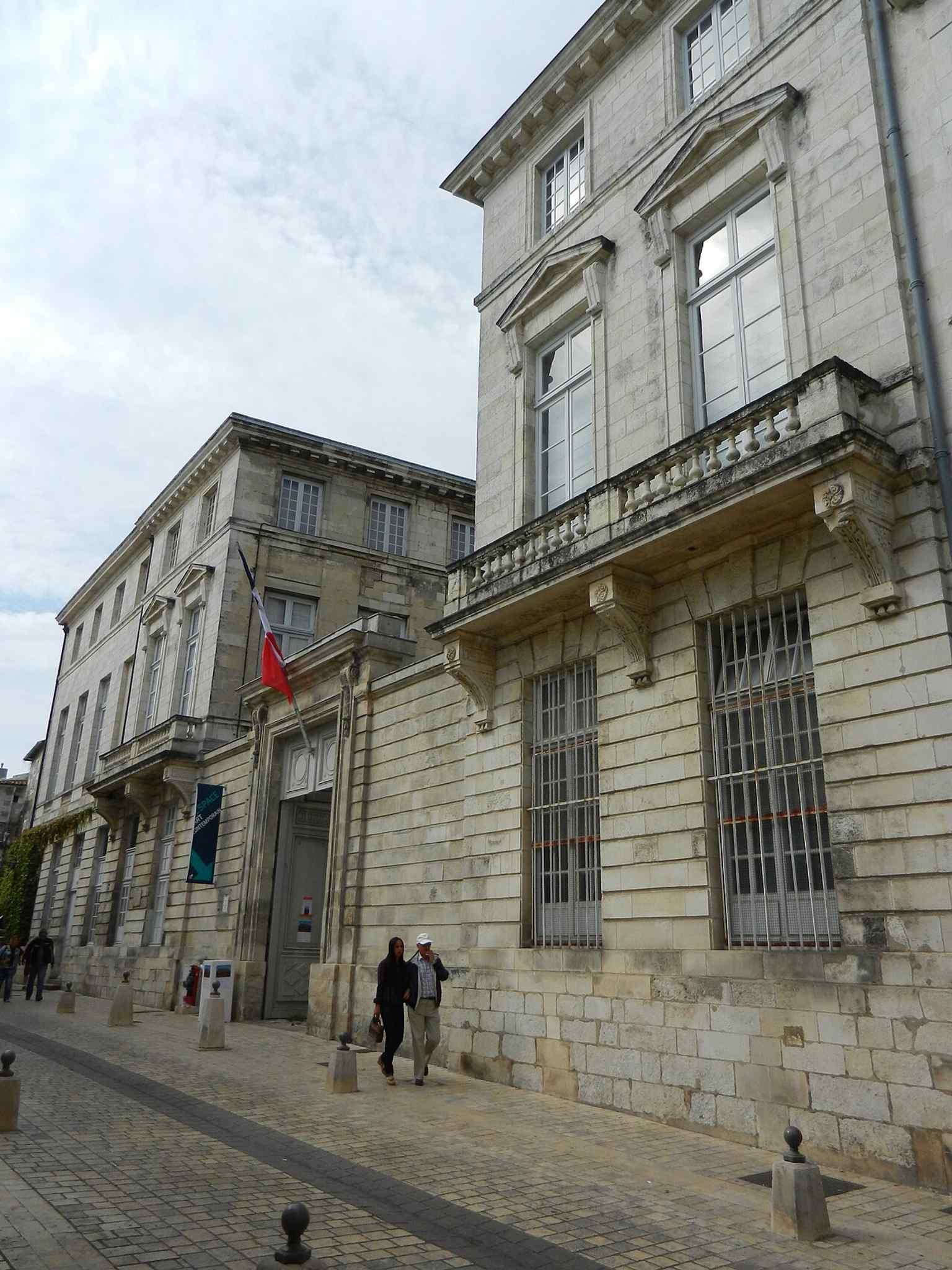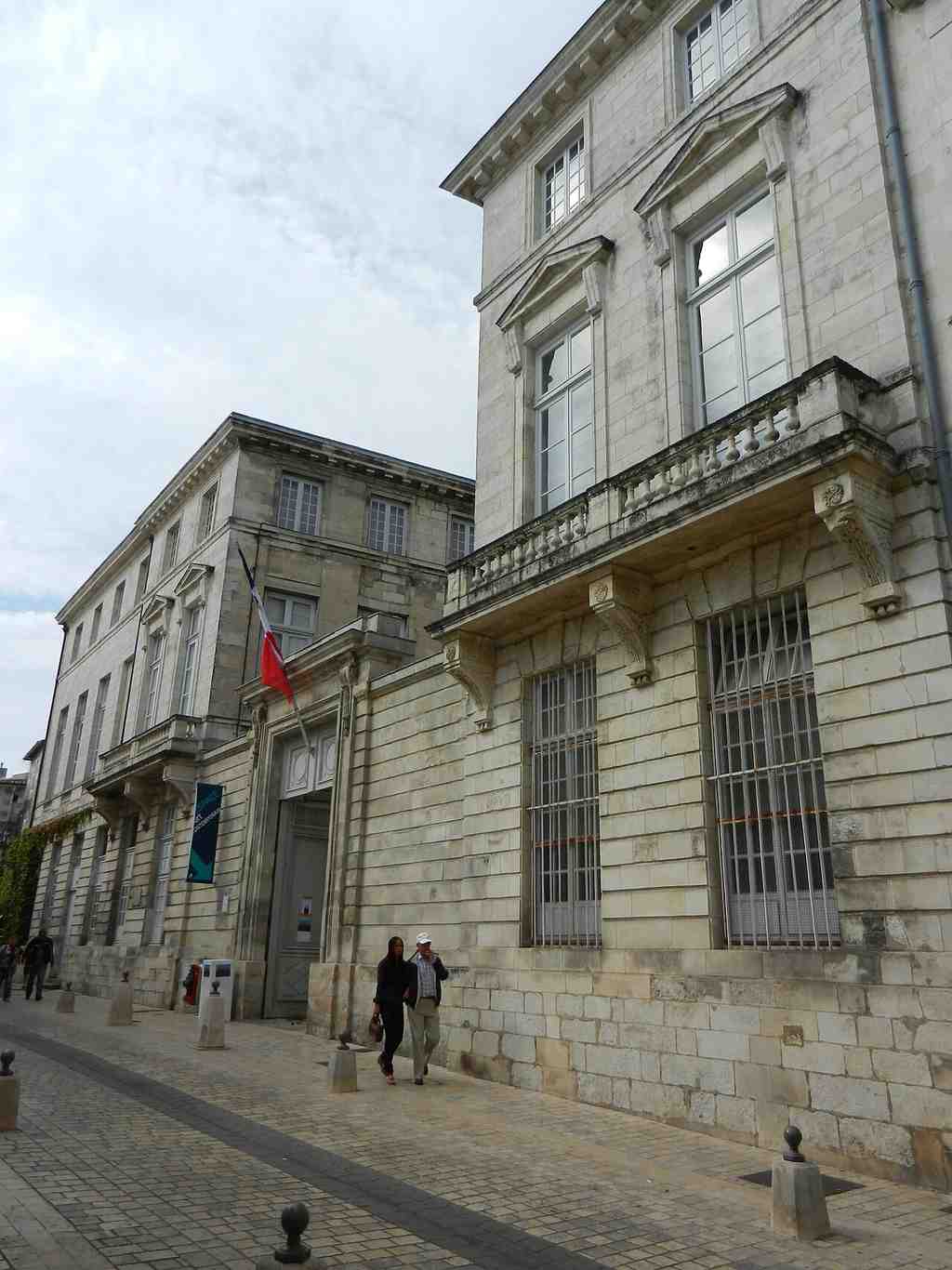
Kijk aan uw linkerhand naar een gevel van een rechthoekig paleis in bleke steen met hoge, regelmatige ramen en een formele boogvormige ingang omlijst door klassieke pilasters. Dit gebouw is een mooi voorbeeld van een stad die weigert een goede locatie te verspillen. Het begon in het begin van de zeventiende eeuw als een groots privéhuis. In zestienhonderd kocht Paul Legoux, schatbewaarder van het Huis van Navarra, het pand. Daarvoor verwelkomde een eerdere residentie hier, het Grand-Logis of Palais-Royal genaamd, zwaargewicht gasten: Sully in zestienhonderdvier, Condé in zestienhonderdvijftien, Lodewijk XIII in zestienhonderdachtentwintig en Anna van Oostenrijk in zestienhonderdtweeëndertig. Men omschreef het als het fijnste, meest comfortabele en best geventileerde huis in La Rochelle... wat bewijst dat opscheppen over onroerend goed een oud beroep is. Toen veranderde het gebouw van eigenaar. In zestienhonderddrieënzeventig werd het een seminarie, een school voor de opleiding van geestelijken. In zestienhonderdzesennegentig vestigde bisschop Henri de Laval hier het bisdom, waardoor het de officiële residentie van de bisschop werd. Later, tussen zeventienhonderdnegenenzestig en zeventienhonderdvierenzeventig, gaf François-Joseph-Emmanuel de Crussol d’Uzès opdracht voor een volledige herbouw. Architect Gilles Nassivet tekende de plannen en François Chapuy voerde ze uit. Wat u nu ziet komt uit dat moment: een neoklassiek paleis, wat staat voor kalm, evenwichtig en erg zelfverzekerd. Als u naar de afbeelding op uw scherm kijkt, maakt de ingang dat punt duidelijk.
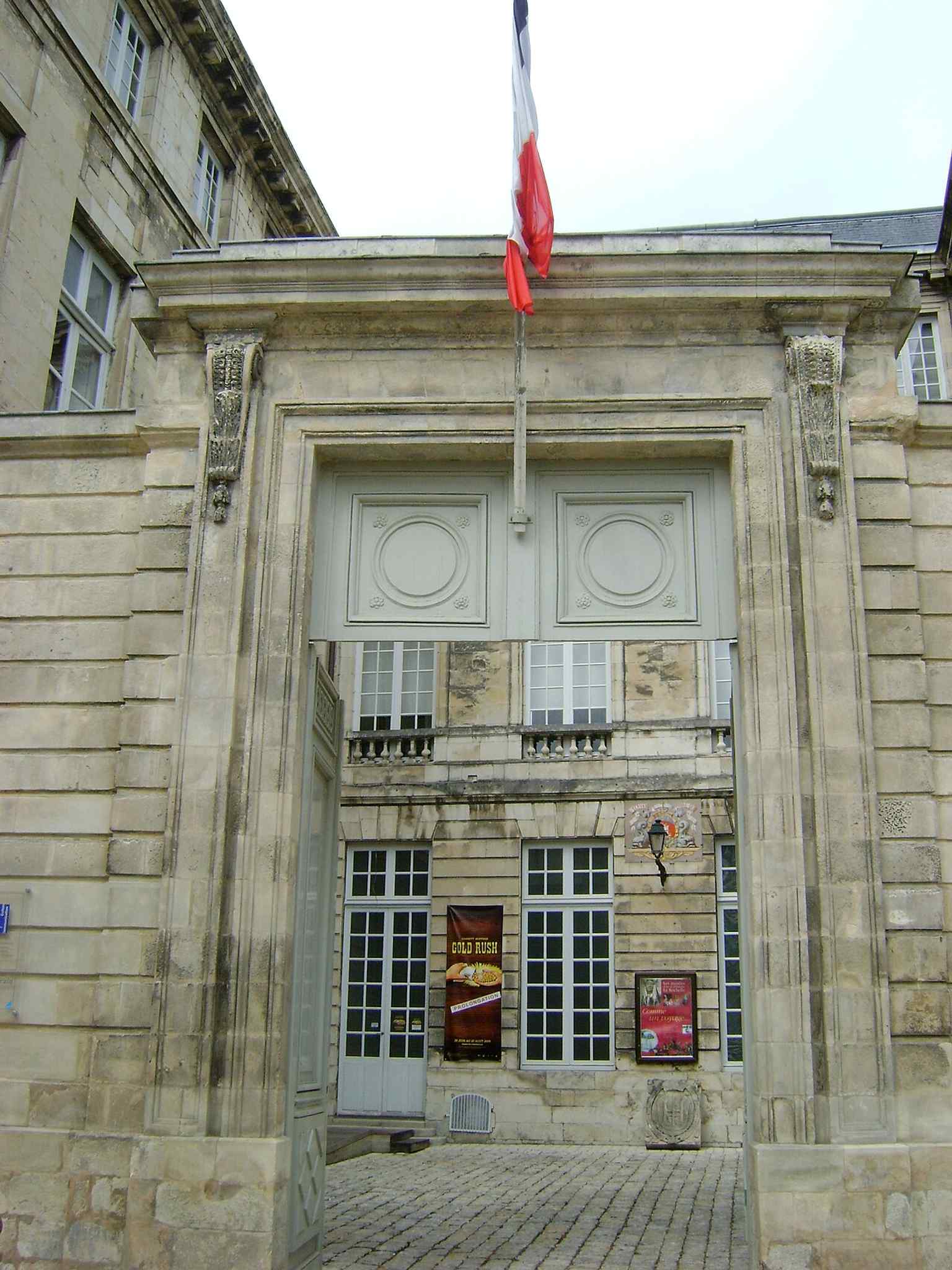
The Revolution changed the owner again. The city took over, and in seventeen ninety-five the municipal library moved in. Then, in eighteen forty-five, the fine arts museum settled on the second floor above the books. That layering matters. This place did not simply become a museum; it inherited earlier roles of power, learning, and public order.
And La Rochelle kept editing the story. The library left in nineteen ninety-eight for the Michel-Crépeau media library. Contemporary art moved into the space in nineteen ninety-nine. Stone fragments from vanished buildings ended up here too, in a collection of carved stone fragments, so even lost architecture found a second life indoors.
The museum itself began early, with local citizens. In eighteen forty-one, the Société des Amis des Arts started buying works; by eighteen forty-four, the museum existed. Its first curators, the painters Édouard Pinel and Tibulle Mary Furcy de Lavault, shaped a collection that felt unmistakably Rochelais. More recently, from two thousand eight to two thousand eighteen, community groups helped choose and arrange displays themselves. A small museum, perhaps, but not a timid one.
Since a structural alert in two thousand eighteen, the building has been under major repair and rethinking. Still, the museum never really went silent. It kept acquiring works and lending them to places like the Louvre and museums farther afield in Europe.
That may be the real lesson here: a city curates itself the way this building changed hands, room by room, purpose by purpose. Next, we go looking for something older than all this careful arrangement... Château Vauclair, where La Rochelle’s deeper beginnings still murmur underneath the later city.