AudaTours logoAudaTours

Audiotour Montreal: Van Kathedralen tot Comic Con

Audiogids15 stops

Het hart van Montreal verbergt meer dan op het eerste gezicht lijkt – onder grootse koepels, moderne torens en beroemde gevels kloppen verhalen van intrige en transformatie. Deze zelfgeleide audiotour leidt je door de oogverblindende kern van Ville-Marie en onthult de geheimen van de geschiedenis waar de meeste mensen aan voorbijgaan. Welke dramatische confrontatie veranderde het Queen Elizabeth Hotel bijna in een commandopost tijdens een crisis? Welke verloren blauwdruk stuurde geheime agenten naar Rome vanuit de Kathedraal van Maria, Koningin van de Wereld? Waarom is er een ijsbaan weggestopt in de hoogste wolkenkrabber van de stad, 1000 de La Gauchetière – en wie heeft dit bedacht? Beweeg tussen koninklijke schandalen en rebelse kunst, hoor echo's van vredesliederen en politieke omwentelingen, en zie de lagen van het oude Montreal rimpelen onder staal en glas. Elke stap onthult onverwachte details; elke blik omhoog of naar binnen onthult een nieuwe legende. Klaar om de oppervlakte af te pellen? Begin nu en zie Ville-Marie met nieuwe ogen – waar elk monument een verborgen verhaal herbergt dat op jou wacht.

Tourvoorbeeld

map

Over deze tour

  • schedule
    Duur 40–60 minsGa op je eigen tempo
  • straighten
    4.2 km wandelrouteVolg het geleide pad
  • location_on
  • wifi_off
    Werkt offlineEén keer downloaden, overal gebruiken
  • all_inclusive
    Levenslange toegangOp elk moment opnieuw afspelen, voor altijd
  • location_on
    Start bij Queen Elizabeth Hotel

Stops op deze tour
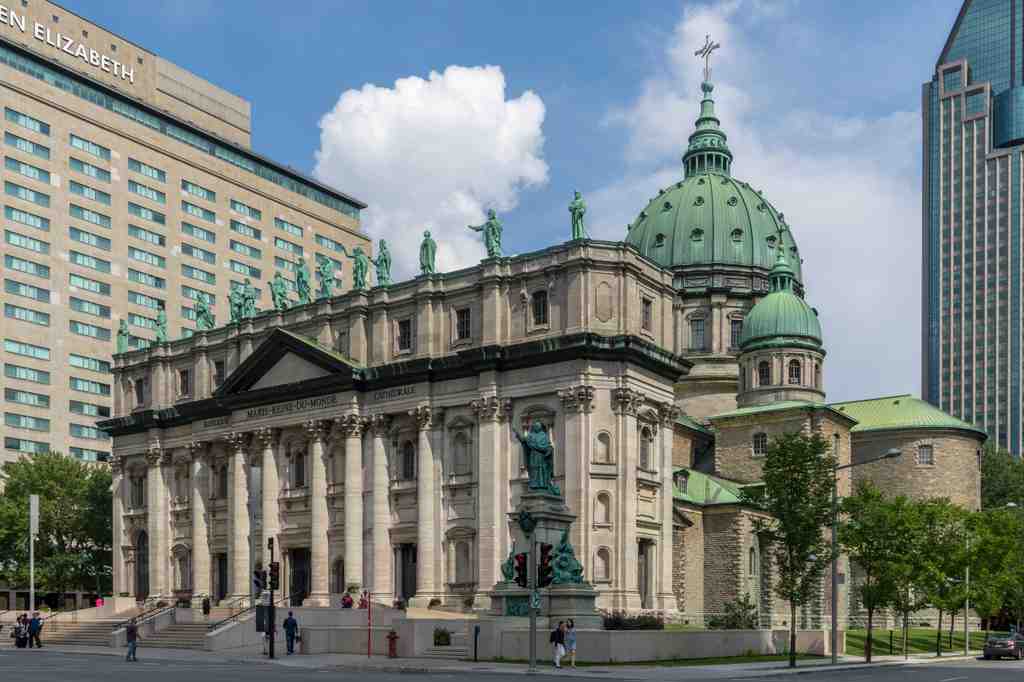
  1. To spot the Queen Elizabeth Hotel, look for a huge, pale building with rows of square windows and “THE QUEEN ELIZABETH” boldly written at the very top-right across from the grand…Meer lezenToon minder

    To spot the Queen Elizabeth Hotel, look for a huge, pale building with rows of square windows and “THE QUEEN ELIZABETH” boldly written at the very top-right across from the grand Marie, Queen of the World Cathedral. Welcome to the grand entrance of Montreal’s legendary Queen Elizabeth Hotel! As you stand here, take in the sense of scale-the building rises high above the boulevard with a confident, modern look. This isn’t just any hotel; it’s been the stage for royal visits, rock star revolutions, political drama, and even a bit of espionage. It all began on April 15, 1958, when the doors swung open and the scent of fresh paint and polished wood filled the air. Imagine a city so proud of its new jewel, built by Canadian National Railway, that there was an argument over its very name. Some wanted to honor Montreal’s founder, Paul Chomedey de Maisonneuve, with the title Château Maisonneuve. But CN's president Donald Gordon? He was determined to give the crown to the new queen herself-Queen Elizabeth II-who’d just come to the throne while the hotel was still a scribble on paper. So, “The Queen Elizabeth” it became, and there’s a sort of royal drama in every brick. Step inside-no wait, let’s just imagine it together! The designers picked only the best, filling the interior with Quebec’s finest crafts. Wooden panels carved by Albert Edward Cloutier, stained glass murals from Marius Plamondon, and bronze elevator doors by Julien Hébert. If these doors could talk, they’d have plenty of royal secrets to whisper! And don’t forget the grand dining room, the Salle Bonaventure, where Cloutier’s mural looked down on guests from all over the world. Now, don’t blink-over the years, a dazzling cast has crossed this threshold. Queen Elizabeth II herself (she’s been here four times, and you know she’s got a busy schedule), King Charles, the Dalai Lama, Fidel Castro, Princess Grace of Monaco, and even Hollywood legends like Joan Crawford. You might imagine the clatter of hockey sticks too-this hotel hosted the NHL Entry Draft ten times between the ‘60s and ‘70s. Talk about slapshot history! But the wildest moment? The summer of 1969. John Lennon and Yoko Ono, unable to set foot in the USA, checked into Room 1742. For one magical, surreal week, they staged their famous “Bed-In for Peace”-right here! Imagine reporters lining the hallway, the sound of guitars and laughter echoing out the door, as they recorded “Give Peace a Chance.” That simple, hopeful song left these walls and circled the world, fueling the anti-war movement and becoming an anthem for peace. There’s been drama behind the scenes too. In 1970, during the tense October Crisis, the Quebec government moved its center of operations into the hotel-making it a fortress of decision and fear. And, not all stories were about peace and royalty; in 2010, six doormen found themselves on the wrong side of the law in a scandal straight out of a detective novel! Through changes in ownership, glittery renovations, and decades of excitement, the Queen Elizabeth Hotel has stood tall, a silent witness to Montreal’s stories. And lucky you, you’re standing right where rock legends sang, queens dined, and history was made. Watch out-you never know whom you might bump into next!

    Open eigen pagina →
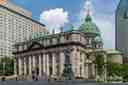
  2. To spot Mary, Queen of the World Cathedral, look for a grand, stone building with a big green dome crowned by a cross, surrounded by statues standing like sentinels above its tall…Meer lezenToon minder

    To spot Mary, Queen of the World Cathedral, look for a grand, stone building with a big green dome crowned by a cross, surrounded by statues standing like sentinels above its tall columns right at the busy corner of René Lévesque Boulevard and Metcalfe Street. Now, let’s step into one of Montreal’s most dramatic stories-right here at the foot of the mighty Mary, Queen of the World Cathedral! Imagine yourself in 19th-century Montreal: it’s a city buzzing with rivalries-French against English, Catholic versus Anglican-and at the center of it all is the fearless Bishop Ignace Bourget. When his original cathedral was lost to a fire in 1852, did Bishop Bourget play it safe? Of course not! He decided to build a scaled-down version of St. Peter’s Basilica in Rome-because if you’re going to copy, why not copy the best? But there was a catch-Bishop Bourget’s architect, Victor Bourgeau, took one look at St. Peter’s and said, “No way, boss, this can’t be shrunk down!” Undeterred, Bishop Bourget, drama lover that he was, sent secret missions to Rome to create the blueprints in true Montreal style: with a pinch of mystery and a dash of spycraft! Meanwhile, as Italy was trembling with political turmoil, Bishop Bourget recruited 507 Canadian Zouaves to defend the Pope’s territories. Their sacrifice and names are still etched in gold inside the cathedral, alongside the motto: “Love God and go your way.” Now that’s a pep talk! Picture the cathedral growing from the ground up between 1875 and 1894-workmen covered in dust, marble gleaming, tension running high as different religious and cultural groups debated the location and design. The west end, where the cathedral stands, was then an English neighborhood, far from the city’s French-Canadian faithful. Still, against all odds, Saint James Cathedral (as it was then called) rose to become the largest church in Quebec, making quite the statement on this corner. And it didn’t stop there-it was promoted to a minor basilica by Pope Benedict XV in 1919, and in 1955, Pope Pius XII gave it a new dedication fit for a basilica: Mary, Queen of the World. Step a little closer and tilt your head up-you’ll see glorious bronze statues lining the top, a tribute to Montreal’s thirteen oldest parishes, each one standing like a guardian. At the cathedral’s highest point, the green dome, sculpted angels and saints keep watch, rain or shine. You’ll also see a statue outside of Bishop Bourget himself. I imagine he’s making sure his masterpiece is always in tip-top shape! Inside, the air is rich with echoes of history. Walk through the nave and you’ll find walls and floors made of imported Italian marble-imagine the footsteps and whispered prayers over the years. Look for the Baptistery Chapel, the Bishops’ Mortuary Chapel with its mosaic-adorned marble walls, and the wealthy Chapel of the Assumption, boasting an altarpiece that once took a wild ride through European history before landing here. Don’t miss the magnificent neo-baroque ciborium above the altar-basically a royal canopy of red copper and gold leaf, hand-made in Rome as an almost perfect replica of Bernini’s famous work at St. Peter’s. Think of it as Montreal’s own “little” slice of Vatican glamour! And what’s that rumble you hear? It’s not your stomach-it’s the epic Casavant Frères organ, originally installed in 1893 but rebuilt and expanded so that, today, it thunders through the cathedral with 93 stops. If you ever hear it, trust me, the walls do a little dance. Paintings all around you tell stories of Montreal’s wildest early days-nuns singing while their hospital is burning, daring missionaries braving rivers and Iroquois, noble founders praying for luck before launching Ville-Marie (the city’s original name). Even beneath your feet, in the burial chapel, lies Bishop Bourget himself-finally at peace among the bishops, after a lifetime of big dreams and bigger drama. So whether you came for the history, the art, or just a bit of shade-take a moment and soak in Mary, Queen of the World Cathedral. Here is a place where Montreal’s past, and a touch of Rome, meet right under your nose. And hey, even if the original architect ran off, I’d say Bishop Bourget got the last word.

    Open eigen pagina →
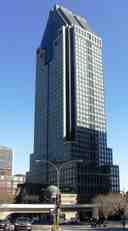
  3. To spot 1000 de La Gauchetière, just look up-way up!-for the gleaming skyscraper with the striking triangular copper roof and the four rounded domes at its base, standing tall…Meer lezenToon minder

    To spot 1000 de La Gauchetière, just look up-way up!-for the gleaming skyscraper with the striking triangular copper roof and the four rounded domes at its base, standing tall against Montreal’s sky right in front of you. Let’s step closer for a story that practically scrapes the clouds. Here you are, standing before 1000 de La Gauchetière-Montreal’s tallest building, at least if you ask the National Building Code! At a dizzying 205 meters to the roof-or 232.5 meters above sea level, right at the city’s legal limit-this architectural giant plays a fun little game of hide-and-seek with your eyes. Sometimes, depending on where you’re standing, it even looks shorter than the neighboring 1250 René-Lévesque, but surprise: that’s just because this one’s built on lower ground. Now that’s skyscraper sneakiness. Let me paint the scene back in the early '90s. It’s 1992-Montreal’s construction scene is buzzing. The air resounds with the clang and hum of building crews, cutting steel and pouring concrete as the Pomerleau team brings this colossus to life. Architects from Lemay & Associates and Dimakopoulos & Associates are determined to fill downtown with something dazzling. Their creation is inspired not just by the dreams of city planners, but by the city’s own history: those four copper-capped entrances at the tower’s base? They’re a modern nod to the domes of the Mary, Queen of the World Cathedral just across the street. And see those rounded caps on each corner? Their shape mirrors the half-moon windows of the Marriott Château Champlain hotel, a clever architectural wink to Windsor Station next door. The building is a layer cake of postmodern design and local homage, blending history and innovation in every detail. But don’t be fooled-this isn’t just a pretty face. Inside, it’s like a mini-city. There are 51 floors serviced by 22 elevators zipping people up and down all day. Office workers and lawyers bustle between floors-firms like McCarthy Tétrault, Rogers, and Fidelity Investments call this place home. Take a walk through the grand atrium and you might hear the joyful scrape of ice skates on the building’s own full-size rink. In fact, it’s the only skyscraper in Montreal where you can go from boardroom to figure skating in just a few minutes. There’s more-the building isn’t just connected to downtown streets. Wander downstairs and you’ve got seamless access to Montreal’s vast underground city, the Central Station, the Bonaventure Metro, and bus routes zipping you out to the South Shore. It’s a transportation hub, a shopping stop, and a neighborhood landmark all wrapped up in one postmodern icon. Now, the building has changed hands more than once, always fetching a pretty penny. Originally the pride of Bell Canada and Teleglobe, it caught the eye of the Caisse de dépôt in 2002 for a cool $184 million, before becoming a jewel in the Ivanhoé Cambridge crown, and now resting in the portfolios of MACH and Groupe Petra. Through it all, 1000 de La Gauchetière remains a symbol of Montreal’s ambition-a place where clever design, commerce, and community all meet. As you stand here, soaking in the sunlight reflecting from those copper roofs, just imagine all the stories happening inside right now. Skaters twirling, business deals signing, commuters rushing, and the city’s very heartbeat pulsing beneath your feet. To expand your understanding of the height and architecture, features or the tenants, feel free to engage with me in the chat section below.

    Open eigen pagina →
Toon 12 stops meerToon minder stopsexpand_moreexpand_less
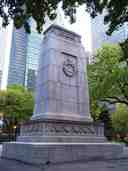
  1. Look just ahead for a tall, solid stone monument-the Cenotaph rises with strong, straight sides and is decorated with carved garlands and symbols, standing proudly among the trees…Meer lezenToon minder

    Look just ahead for a tall, solid stone monument-the Cenotaph rises with strong, straight sides and is decorated with carved garlands and symbols, standing proudly among the trees and skyscrapers in Place du Canada. Now, here’s the story! Picture yourself back in 1921: the world is quieter, people are returning from two devastating wars, and Montreal’s heart is heavy but hopeful. Suddenly, in walks Lord Byng of Vimy-a man who’s just as good at unveiling monuments as he is at keeping a stiff upper lip. He’s here to reveal this very Cenotaph, inspired by London’s own monument. On that day, the air must have felt electric with memories, pride, and a hint of nervousness-no smartphones snapping selfies, just a deep respect. Fast forward to November 11, 1924: a huge crowd surrounds the monument for the sixth anniversary of the armistice. At exactly eleven o’clock, the city holds its breath. Two minutes of silence. Even the birds seem to hush, the ticking clocks lose their voice, and the world pauses to remember-the First World War, the Second, and the Korean War. It’s a rare moment where time stands still and every heartbeat carries gratitude. So, as you stand before this unwavering monument, know that you’re sharing space with some serious Montreal history-and hey, if you feel a sudden urge to stand absolutely still for two minutes, don’t worry, you’d be following tradition!

    Open eigen pagina →
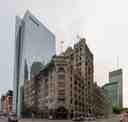
  2. Look ahead for a grand, fortress-like building with thick, grey limestone walls, beautiful castle-like towers, and arched windows right beside the gleaming modern…Meer lezenToon minder

    Look ahead for a grand, fortress-like building with thick, grey limestone walls, beautiful castle-like towers, and arched windows right beside the gleaming modern skyscrapers-Windsor Station stands proudly at the corner, its historic architecture impossible to miss against the city’s glassy new neighbors. Alright, take a moment to imagine yourself standing here in the late 1800s, when steam engines thundered up to this enormous stone station, and the clang of metal wheels echoed between the thick limestone columns-columns so wide, you’d almost think they were sturdy enough to support a bridge. That’s Windsor Station you’re in front of! Montreal’s once-booming gateway, designed in true Romanesque Revival style by New York architect Bruce Price-though rumor has it he had to submit his plans four times, probably muttering, “Fifth time’s the charm?” under his breath. This wasn’t just a spot to catch a train; it was the nerve center of the entire Canadian Pacific Railway empire and from 1889 all the way to 1996, it was their headquarters. Just picture it: back then, Avenue des Canadiens-de-Montréal was filled with carriages and later, shiny automobiles, all bustling around this limestone giant. Those walls you see are quarried from right here in Montreal-a true local in the neighborhood! The very first trains rolled out on snowy February mornings in 1889 and folks would have lined up on what was then Windsor Street (now Peel Street), suitcases bumping on the cobblestones, feeling the anticipation. The building was such a hit, they expanded it not once, not twice, but three times! In fact, during the 1916 expansion, a fifteen-storey tower was added-an honest-to-goodness skyscraper in its day. It dramatically changed Montreal’s skyline, so much that children must have gazed upwards, dizzy from craning their necks. Windsor Station wasn’t just about trains, though. It was a hub of life, a place where families waited to welcome soldiers home or wave goodbye, hearts pounding in their chests. The building even helped spread out the crowds leaving Dominion Square, guiding travelers gently along with its sprawling arms. But, like any grande dame, Windsor Station saw its share of threats and close calls! In 1970, there were bold plans to tear her down and replace her with a 60-storey office tower, crafted by the same folks who designed the World Trade Center in New York-imagine that! But year after year the project stalled, until finally, Windsor Station got to keep her limestone crown and stay standing tall. I guess sometimes you just can't keep a good station down. Through the decades, the trains that departed from here told so many stories-adventures to Quebec City, escapes to Ottawa, New York-bound Amtrak rides on the Adirondack. But by the 1980s, the rhythm was changing. Intercity trains slowly moved over to Central Station, and Windsor’s grand hall grew quieter. Yet, even as the echo of train whistles faded, local commuters kept the spirit alive. In the 1990s, just when the clickety-clack of tracks seemed to be a distant memory, along came the Bell Centre-then called the Molson Centre-plunked down immediately west of Windsor Station, right over where the platforms once stood. Suddenly, Windsor Station was cut off from the rails. But don’t worry, this old beauty refused to fade away! A new train terminal-Lucien-L’Allier Station-popped up nearby, sharing its name with the bustling metro below. You can still march through the Bell Centre’s halls and end up back at Windsor Station if you know the secret passages. By the mid-1990s, the famous Canadian Pacific headquarters packed up and moved all the way to Calgary, chasing new adventures. Since then, Windsor Station has transformed: offices, cafes, and restaurants fill the old halls, and the glorious public concourse is alive with everything from weddings to art shows. If you wander inside, you can almost hear echoes of travelers past and the grand announcements rolling off the stone walls. Downstairs, Windsor Station is plugged right into Montreal’s underground city, RÉSO, keeping it forever part of the city’s fast-moving pulse. Today, you won’t find steam engines waiting, but you will find a new kind of energy-people bustling, laughter from a nearby terrace, and maybe the faintest ghost-train whistle if you listen closely enough. Believe it or not, those limestone walls have witnessed it all-ambitions, dreams, departures, and homecomings. Next time you walk past Windsor Station’s grand arches, tip your hat, and silently thank her for standing her ground. After all, even legends need a little appreciation!

    Open eigen pagina →
  3. Look for a massive, boxy structure made of red brick and glass panels with a giant blue "Centre Bell" sign; it’s right across a broad plaza with the Canadiens logo set into the…Meer lezenToon minder

    Look for a massive, boxy structure made of red brick and glass panels with a giant blue "Centre Bell" sign; it’s right across a broad plaza with the Canadiens logo set into the ground, so you really can't miss it! Welcome to the Bell Centre, Montreal’s undisputed arena king! Standing right in front of you is the beating heart of the city’s sports, music, and wild, unforgettable nights. With its bold, red-brick exterior, the Bell Centre is a colossus of concrete and dreams, sitting like a proud goalie at the corner of Avenue des Canadiens-de-Montréal and de la Montagne. You might even catch the distant hum of hockey fans echoing through the city -that’s how you know you’ve arrived at the soul of Montreal’s hockey madness. Now, picture the clock winding back to June 1993-just weeks after the Canadiens hoisted their last Stanley Cup at the legendary Forum, the ground was broken to make way for a new palace. March 16, 1996: the Bell Centre opened its doors (well, back then it was called the Molson Centre), ready to welcome over 21,000 roaring fans. Imagine a sea of red jerseys and waving towels, the excitement buzzing in the air like static. If these walls could talk, they’d probably be asking for earplugs. The Bell Centre is massive-Canada’s biggest indoor arena and the second largest hockey venue in the world! It's so big, you’d need skates to get across the lobby in less than a minute. And when it’s game night, over 21,000 fans cram in here, making it the loudest house in hockey; on one epic playoff night in 2010, the noise reportedly hit 115 decibels. That’s not just loud-it’s “can-you-hear-your-own-thoughts” loud! But hockey is just the start. The Bell Centre is also the stage for legendary concerts-Céline Dion, Montreal’s golden voice, has performed here a record 50 times, each show probably requiring a few extra tissues for the crowd. The Rolling Stones, Madonna, Taylor Swift, Elton John-you name it, they've rocked these rafters. On New Year's Eve 1999, the final show of Céline's "Let's Talk About Love" tour brought the millennium in with one unforgettable note.. But where there’s fame, there’s drama! This arena has been home to pulse-pounding World Cup of Hockey battles, rowdy NBA preseason matchups, and heart-pounding UFC fights where tickets vanished in less than a minute. It’s even had its share of wrestling infamy-any wrestling fans out there? Remember the “Montreal Screwjob” of 1997? It happened right in here, when Bret Hart, refusing to lose his title in front of a Canadian crowd, was sneakily double-crossed by WWE boss Vince McMahon. The crowd’s roar of disbelief still whispers through the halls, and Shawn Michaels’ notorious “Who’s your daddy, Montreal?” speech eight years later certainly didn’t help the city’s scars heal. Speaking of scars and stories, in these seats, Montrealers have cheered through nail-biting playoff matches, witnessed emotional tributes-like the night they left a single seat empty to honor hockey legend Jean Béliveau-and, in 2024, the arena saw a record set for women’s hockey, with 21,105 fans celebrating the Montreal Victoire’s home debut. Even during tough times, like the COVID-19 pandemic, fans gathered in the square outside to rally behind their team on giant screens, proving that hockey love in Montreal is pandemic-proof. And if you peek inside today, you’ll find a place transformed by renovations-new seats, sparkling concessions, swanky restaurants, and Wi-Fi fast enough for everyone to post their cheers and tears online. There are even special zones: the roaring Coors Light Zone, the family-friendly Family Zone, and the legendary “Club Desjardins” with the comfiest seats and free food (no wonder Canadiens fans are so passionate). Of course, every arena needs its own quirks! The Bell Centre is one of only two NHL venues left to use an old-fashioned siren to mark the end of play, a tradition carried over from the original Forum days. And if you ever sit way up behind the press gondola, don’t worry-the building’s got mini scoreboards just for you, so you won’t miss a goal! So whether it’s the deafening blare of victory, the chant of the crowd, or the echoes of a rock anthem, the Bell Centre is where Montreal comes to feel alive, every night, all year long. Who knows? Maybe you’ll hear the ghostly sound of that old siren as you pass by-reminding us that here in Montreal, legends never really leave the ice. For a more comprehensive understanding of the location, arena information or the entertainment, engage with me in the chat section below.

    Open eigen pagina →
  4. To spot Le Centre Sheraton Hotel, just look up-the building towering over you with two light grey walls filled with rows of windows and bright red ‘Sheraton’ signs near the very…Meer lezenToon minder

    To spot Le Centre Sheraton Hotel, just look up-the building towering over you with two light grey walls filled with rows of windows and bright red ‘Sheraton’ signs near the very top is definitely hard to miss. Now take a deep breath and imagine it’s 1982-the streets are abuzz with excitement, a fresh skyscraper has just joined Montreal’s skyline, and its shimmering windows seem to promise something grand inside. But here’s the twist: this hotel, now a 38-floor giant with 825 rooms, wasn’t always destined to be a Sheraton! Once upon a time, it was planned to open as the world’s largest Holiday Inn for the 1976 Summer Olympics. But like a movie with too many plot twists, things got wild-costs soared by a staggering $81 million, and as the Olympic torch burned, the project crawled along. Eight years later, after Holiday Inn bowed out, Sheraton swooped in to save the day and the building finally opened its doors with a big ribbon-cutting by Mayor Jean Drapeau. Through the years, drama hasn’t stayed away. In 1993, baseball legend Don Drysdale checked into room 2518 and, to everyone’s heartbreak, never checked out. And if these walls could talk, they’d tell tales of world leaders and G-20 finance ministers plotting economic moves in elegant conference rooms, and even Wikimania 2017, where over 900 knowledge lovers gathered to imagine the future together. So as you stand here, picture all those stories drifting around you-while secretly hoping you won’t get lost trying to find your own room among all 38 floors!

    Open eigen pagina →
  5. To spot the site of the Victoria Skating Rink, look for a modern parking garage with a coffee shop at street level between Drummond and Stanley Streets, just north of René…Meer lezenToon minder

    To spot the site of the Victoria Skating Rink, look for a modern parking garage with a coffee shop at street level between Drummond and Stanley Streets, just north of René Lévesque Boulevard-imagine it once stood where a long, brick, two-storey building once dazzled crowds with its tall, arched windows and a soaring roof. All right, stand still for a moment and shake off the ordinary-because if you could look through time, you’d see this block exploding with excitement and music instead of parked cars! Picture yourself going back to 1862: Montreal is chilly, laughter hangs in the air, and you’re outside one of the very first and grandest indoor ice rinks ever built-designed to be “one of the finest covered rinks in the world.” Even from the street, the old Victoria Skating Rink was impossible to miss: its arched windows reflected winter sunlight, and its enormous pitched roof soared almost 16 meters high. When evening fell, over 500 colored lamps would glow through those windows, lighting up the ice like a winter starfield. Crowds once gathered from every corner of the city-young, old, glittering in fanciful costumes and crisp skating attire, all gliding across the ice as military officers did wobbly pirouettes, and children spun until they fell over laughing. Can you hear the swish of skates and the rustle of silk as women performed waltzes, men traced intricate figures, and everyone from society’s elite to nervous first-timers darted and twirled across the rink? Now, sprinkle in some real history: this is the place where, in 1875, people first gathered indoors to witness a new game called “ice hockey”! The first-ever organized, recorded indoor ice hockey match happened right here-with rules, a puck, goalies and all. The rink was so perfectly shaped that it set the standard for modern North American hockey, and its boards echoed with the cheers of fans during the first Stanley Cup playoff games. By day, the Victoria Skating Rink hosted skating clubs like the prestigious Victoria and Earl Grey clubs-and one local, Louis Rubenstein, became a world-famous figure skater right here. In winter, this building buzzed with more than just errant pucks; it rocked with music, balls, winter carnivals, and even wild fancy-dress masquerades that left everyone in stitches. Someone once wrote that when the rink filled with hundreds of skaters, the scene was dazzling-a living, swirling sea of color, action, and laughter, all under banners and garlands hung from the rafters. And that’s not all-once the ice melted, in came horticultural fairs, concerts, medical conventions (including scientific displays by Nikola Tesla himself!), and parties for thousands of kids in honor of Queen Victoria. But it wasn’t always smooth skating. The Victoria Skating Rink was the first building in Canada to get electric lights, but as other arenas popped up, she started feeling her age. The building was eventually sold in the 1920s and-are you ready for this-the “cathedral of Canadian skating” became a humble… parking garage. Today, if you sit at the Melk coffee shop across the way, you’re perched right where history happened. If only those coffeehouse walls could talk, they’d tell tales of vaudeville nights, roaring applause, and even the telegraph wires that brought real-time hockey scores to fans, long before radio or TV. NHL hockey? Still alive and well just down the street at the Bell Centre. And if you really want to glide where legends skated, pop over to Le 1000 de la Gauchetière-yes, you can still ice skate indoors nearby, just like in days past. And in case you’re wondering-hockey hadn’t just stuck around in Montreal! In 2008, the International Ice Hockey Federation made sure Victoria Skating Rink would never be forgotten. There’s a plaque at the Bell Centre, and even a Victoria Cup named after this quirky, glorious rink. So next time you hear the clack of skates or the cheers of a hockey game, remember, you’re standing where it all began-where ice, electricity, music, and the world’s very first hockey puck came together in a whirlwind of Canadian history. Now, who’s up for a triple axel or a slapshot? Okay, maybe best stick to coffee and memories for now!

    Open eigen pagina →
  6. To spot the Eaton’s Ninth Floor Restaurant, just look up at the tall building beside you on Saint Catherine Street West, and imagine a grand hall sitting above it all-with sleek…Meer lezenToon minder

    To spot the Eaton’s Ninth Floor Restaurant, just look up at the tall building beside you on Saint Catherine Street West, and imagine a grand hall sitting above it all-with sleek Art Deco lines and big windows hinting at glamorous gatherings from another era. Now, let’s take you into the story! Picture yourself pressing the elevator button in the bustling Eaton’s department store back in 1931, rising up, floor by floor, until the doors open to something completely unexpected. You walk into a soaring space with glowing peach walls, shimmering marble columns, gentle curves in the ceiling, and sunlight spilled through wide windows onto crisp white tablecloths. This, my friend, is the “Ninth Floor”-and if you listen closely, you might almost hear the murmur of well-dressed diners and the clink of silverware from decades past. The vision for this spectacular spot came straight from Lady Eaton herself, a woman who believed that shopping should always be paired with a dash of glamour-or maybe even an entire pitcher. Along with a team of architects, including the famous Jacques Carlu, Lady Eaton transformed the new upper stories of the store into an Art Deco paradise. With sweeping views and even a mural painted by Carlu’s wife Natacha (inspired by the ocean-liner SS Île de France), the restaurant felt as if it had been plucked from a transatlantic cruise-the kind where you’d sip champagne while waiting for caviar, even when all you could afford was a pot of tea. The atmosphere inside was magical. Imagine the warm glow from the lantern-like lamps, the careful hustle of waitresses (always called “the ladies of the ninth”), and the slow, tempting parade of meticulously plated Sunday roasts. Families made memories here. Lovers celebrated anniversaries. Dazzling Montrealers, clutching their shopping bags and brushing off the city’s snow, would sweep into this sanctuary of style just for the thrill of it all. But then, in 1999, the music faded. Eaton’s itself went bankrupt, and on the last day, mourners filled the restaurant as a lone bagpiper marched through, playing “Amazing Grace.” The doors locked shut, and the once-sparkling chandeliered dining room started to gather dust. It became the stuff of Montreal legend-an Art Deco ghost trapped among faded plates and folded linens. For a quarter-century, the Ninth Floor waited in silence. It was declared a heritage site, but no one could quite figure out what to do next. Urban explorers snuck in, snapping eerie photos before being shooed out. Historians wrung their hands. A lone petition began to circulate, and at one point it was estimated it would take more than $15 million just to bring the old grandeur back to life. The building’s owners kept the doors closed to nearly everyone but the occasional news crew, leaving Montrealers to wonder: Would Le 9e ever shine again? Finally, hope returned. In 2023, it was announced-the Ninth Floor would live once more! A dedicated team restored every sloping surface, every shimmering accent, making sure the bones of the old restaurant would last for new generations. The reborn “Le 9e” opened its doors in spring 2024, complete with a chic new restaurant and an events space buzzing again with laughter, lights, and the scents of fresh-baked bread. So as you stand here, below those legendary upper floors, picture those Art Deco details gleaming anew. And if you hear the faintest echo of laughter or a distant clang from a cutlery tray, don’t worry-it’s just the spirit of Montreal’s most glamorous dining room, back from its long, elegant sleep. And if you feel tempted to sneak a peek inside… well, who could blame you? This is a piece of living history waiting for its next story.

    Open eigen pagina →
  7. To spot the Christ Church Cathedral, just look ahead for a striking stone church with a greenish rooftop and a tall, black, pointy steeple rising dramatically among modern glass…Meer lezenToon minder

    To spot the Christ Church Cathedral, just look ahead for a striking stone church with a greenish rooftop and a tall, black, pointy steeple rising dramatically among modern glass towers and red-brick buildings. Now that you’re standing right beside it, take a good look at this curious blend of old and new-because you’re about to dive into a world where Montreal’s history is anything but ordinary. Let’s go back, not just a few years, but a couple of centuries. The year is 1760, and Montreal’s Anglican congregation is the new kid in town, crashing Roman Catholic chapels just to get a roof over their heads! Picture cold winter air sneaking in through the stone walls, candles flickering, and a sense of excitement as they finally get their own church in 1789... which then burns down a few years later. Fire: 1, Church: 0. Undeterred, they build a new church, and by 1850, this congregation gets a promotion: cathedral status for the fresh Anglican Diocese of Montreal! Just when everything is looking up, disaster strikes again in 1856-a second fire. At this point, I’m sure they were ready to invest in some serious fire insurance. But the Anglican spirit just wouldn’t quit. Enter a new era: the mid-1800s! They bring in architect Frank Wills all the way from England-except, fate has a dark sense of humor and Wills doesn’t even live to see ground broken. Instead, Montreal’s Thomas Seaton Scott takes over. Imagine the clang of hammers and the whir of saws echoing between muddy boots and hopeful voices as the present cathedral rises by 1859. You’ll notice that sharp, pointy aluminum steeple-yes, aluminum! Originally, the builders modeled the stone steeple after English countryside designs, but the cathedral’s foundation had other ideas. The ground underneath was softer than day-old bread, and before long, everyone realized the steeple was leaning, tilting 1.2 meters south by 1920. Courtroom drama followed, all the way to the British Empire’s highest judges. Spoiler alert: the builder had to own up for planting their beautiful steeple on wobbly ground. If you’d been here in 1940, you’d have seen a true Montreal spectacle: the heavy stone spire coming down, and a much lighter aluminum version-shiny, silver, and smiling bravely against gravity-hoisted up in its place. It towers 70 meters above street level today, holding its posture nicely. Funny to think: the next time someone complains about lightweight materials, just tell them “because otherwise, the cathedral might lean like the Tower of Pisa!” But here’s a twist you wouldn’t expect-a real underground secret. In the 1980s, city planners decided to dig out an entire shopping mall underneath. The cathedral was hoisted onto stilts, creaking and groaning as workmen dug out space for the Promenades Cathédrale. If this building could talk, it would have plenty to say about the Montreal rush hour right beneath its feet. Let’s not forget the music! Inside, magnificent organ music often pours out, especially during “L’Oasis musicale” every Saturday. Imagine the rich notes swirling up to the stained-glass windows, filling the air with energy and hope-music performed by young artists trying to conquer the city, just like the Anglicans did centuries before. The cathedral is also the regimental church of the Canadian Grenadier Guards-Canada’s only regiment with bearskin hats outside of a British royal parade. Every Remembrance Day, they march proudly through downtown Montreal to come here, their polished boots clicking on the pavement, keeping tradition alive. So as you stand here, think about it: you’re next to a masterpiece built with stubborn hope, rebuilt after fires, saved from architectural disaster, floated atop a retail maze, and still echoing with music and military footsteps. And all this right in the heart of modern Montreal-it’s enough to make even the neighboring skyscrapers feel a tad jealous!

    Open eigen pagina →
  8. To spot the St. James United Church, look straight ahead for a large, dramatic Gothic-style building with two tall towers and a huge circular stained-glass window set above three…Meer lezenToon minder

    To spot the St. James United Church, look straight ahead for a large, dramatic Gothic-style building with two tall towers and a huge circular stained-glass window set above three arched doorways. Now, let’s step back in time and imagine Montreal buzzing in the late 1800s, horse-drawn carriages rattling down the street as this magnificent church first opens its doors. The year is 1889, and the St. James United Church stands as a brand new giant on Saint Catherine Street-with enough seats to fit 2,000 people! It was so impressive, folks called it the “Cathedral Church of Methodism.” And if you think it looks like something from a fairy tale with those sharp spires and pointed arches, you’re not alone-it’s a classic Gothic Revival masterpiece, dreamed up by local architect Alexander Francis Dunlop. But there’s more magic inside. The air would have been filled with the deep, rich sounds of the Casavant Frères organ-so powerful it could probably make even a choir of angels jealous. And tucked in the back, the church offices hide behind a “false apse”-a clever architectural trick that surprised more than a few visitors. Now, this wasn’t just a place for Sunday sermons and hymns. The people here rolled up their sleeves and got involved in big causes. Imagine the excitement when the very first YMCA in North America was organized by these churchgoers, or when women’s voices echoed off these stones as they fought for the right to vote. During the dark days of World War I, the church honored its heroes with a memorial window-a vivid scene of muddy trenches and hope, surrounded by glowing images for Justice, Prudence, Temperance, and Fortitude. But here’s a twist worthy of a detective story! For over 78 years, a commercial building hid this stunning church from public view-people had to hunt for a neon sign just to know it was there. Only in 2005, after a dramatic round of restorations, was the breathtaking façade finally revealed to the world again, welcoming us back to its steps. So, as you stand here, you’re not just outside a church-you’re at the heart of a story filled with passion, secrets, surprises, and the sounds of history!

    Open eigen pagina →
  9. Take a look straight ahead and you’ll spot Ville-Marie spread out before you-glowing city lights stretch down a wide avenue, flanked by modern buildings and elegant lamp posts,…Meer lezenToon minder

    Take a look straight ahead and you’ll spot Ville-Marie spread out before you-glowing city lights stretch down a wide avenue, flanked by modern buildings and elegant lamp posts, with festive decorations and the faint outline of Mount Royal rising in the background-just follow the sparkling rows of lights leading up the boulevard. Welcome to Ville-Marie, the very heart of Montreal-where history, culture, and a little extravagance all walk hand in hand like old friends who can’t decide if they’re heading to a jazz club or a cathedral. Picture yourself standing on the exact ground where adventure-seeking French settlers once landed centuries ago. Back in 1642, when beaver hats were more fashionable than smartphones and the wild forests of New France seemed endless, Ville-Marie was just a small fort teetering on the edge of the great, unpredictable Saint Lawrence River. Imagine the early settlers shivering in their wooden cabins, peering out at the thick woods and mysterious banks of fog, as the wind whipped past Fort Ville-Marie’s rough walls. What started as Fort Ville-Marie grew into the city you see now-a central, sparkling borough that holds not just the bones of Montreal’s oldest neighborhood, Old Montreal, but also the buzz of today’s rushing commuters and curious explorers. The streets here echo with centuries of footsteps: from the priests and soldiers of New France to the jazz musicians and tech wizards of downtown’s skyscrapers. Just about everything that shouts ‘Montreal’ is packed into these 16.5 square kilometers-from the soaring spires of Notre-Dame Basilica, to the pink glow of the Gay Village, to the leafy green stretches of Mount Royal Park, which watches proudly over the city like a nature-loving grandparent. If you look closely tonight, you might even spot the illuminated cross atop the mountain, reminding everyone that Ville-Marie’s story reaches skyward! Turn your attention to the shimmering lights along the avenue and the high-rises looming overhead. You’re in a place where business moguls sip coffee alongside students from three of Montreal’s top universities-McGill, Concordia, and UQAM-all part of Ville-Marie’s creative stew. From the hustle of office towers like 1000 de La Gauchetière to the buzz outside Maison Radio-Canada, Ville-Marie is where deals are struck, ideas are born, and more than a few awkward elevator conversations are had. If you hear the distant rumble, that’s not just the traffic-it could be the Bell Centre, just nearby, where hockey fans chant for the Canadiens until the rafters shake. Or maybe it’s the echo of history, bouncing down from Windsor Station or the grand facades on Place Ville-Marie. But Ville-Marie isn’t only about old stones and new glass. It’s where all walks of life mingle, in neighborhoods like the bustling Chinatown, the Latin Quarter, or the International Quartier, now alive with festivals and nightlife. Through winding lanes, you’ll catch a whiff of fresh bagels baking, the sizzle from a street vendor, or the distant strains of a jazz tune-all little hints of what makes this borough tick. The borough is so central to Montreal’s heartbeat that it doesn’t even have a traditional borough hall: its government offices are up in a glass tower, Place Dupuis, keeping watch over the action below. Ville-Marie’s story isn’t locked away in dusty museums, either. It’s alive in every festival in the Quartier des spectacles, every art exhibit in the Contemporary Art Museum, and every runaround in Mount Royal’s leafy trails. And right at the water’s edge, Old Port offers a taste of Old World adventure mixed with new excitement: street performers, museums, and boats cruising the river like modern-day explorers. Ville-Marie is also the transport hub of the city-three metro lines, buses, railways, bridges, and tunnels all weave through its busy web. There’s the powerful rush of trains, the jingling bike bells, and the occasional driver who thinks honking is a local sport. So, as you stand here, you’re not just on a street-you're on the very thread that knits together centuries of dreams, dramas, dazzling lights, and delicious discoveries. Ville-Marie has always been a place for comebacks, reinventions, and a dash of mystery. With every step, you walk through old legends and new possibilities. And who knows? Next time you wander these streets, maybe you’ll make a little history of your own! Interested in knowing more about the geography, government or the neighbourhoods

    Open eigen pagina →
  10. You’re standing in front of an unassuming entrance into a world where legends are born, lights flicker, scripts come alive, and voices echo through the halls-welcome to the…Meer lezenToon minder

    You’re standing in front of an unassuming entrance into a world where legends are born, lights flicker, scripts come alive, and voices echo through the halls-welcome to the National Theatre School of Canada! Take a moment to look around. Imagine the gentle hum of anticipation as students rush in with script folders under their arms, dreams tumbling out with every step. It all began back in 1960, but really, the spark was ignited much earlier. In 1951, a report-famous among theatre nerds, at least-complained that aspiring Canadian actors had to leave the country for real theatre training. That report didn’t just raise eyebrows; it practically threw a spotlight on the issue! It took a few more years (okay, nearly a decade), but finally, in 1960, a group of theatrical bigwigs from across Canada gathered, summoned Michel Saint-Denis from Britain-yes, the very same who helped create Juilliard’s Drama Division in New York-to help launch a school meant to shine in both English and French. But Montreal got the starring role as location, not Toronto. Why? Because Montreal wears its bilingual badge proudly-where else could Shakespeare and Molière stand so comfortably side by side? The first home was a modest Legion Hall, but soon the National Theatre School grew into something grander. Today, its beating heart is the magnificent, century-old Monument-National theatre, just steps from where you now stand-a place where velvet seats creak, stage lights burn, and stories both classic and daring have unfolded for decades. The school’s other key landmark, the Michel and Suria Saint-Denis Pavilion, was once a juvenile courthouse! Now, instead of judges and lawyers, you’ll find budding playwrights inventing worlds, actors rehearsing in echoing halls, and designers sewing magic at the costume shop. And just beneath the buzz, the Bleviss Family Library quietly holds Canada’s largest treasure trove of theatre books and manuscripts-if you ever wanted to stage “Hamlet on Mars,” there’s probably a script for that in there somewhere! Inside, the air is always thick with possibility. Rehearsal studios ring with lines delivered a hundred different ways. The lighting lab flashes like a mini thunderstorm as students experiment, and in the school cafeteria, you can overhear debates about everything from Chekhov to the best place to grab a bagel nearby. It wasn’t always applause and curtain calls, though. Back in 1968-known as "the year of the barricades"-eight brave graduating students from the French section left in protest, demanding better recognition for Québécois writers. Their dramatic exit was more effective than a stage fight; it shook the school awake and led to real change. A few years later, those same students were officially welcomed back as alumni, recognized as catalysts for progress. Who knew that sometimes the best way to get noticed is a well-timed exit? Competition here is as intense as a sold-out opening night. Of the six hundred students who audition for Acting each year, barely a handful are chosen-imagine winning the theatre lottery! And if you have a script in your backpack, get ready: the Playwriting program picks only two lucky students annually. Just two! Yet every year, about sixty artists graduate, ready to set the stage-or screen-on fire from Vancouver to Paris. But it’s not just about the performers. The National Theatre School trains the entire crew, from directors calling the shots to the mystical folks in production who somehow keep sets from collapsing. With programs in both English and French, it’s one of the few places in the world where teamwork happens in two languages. Sometimes, that means a little chaos. Sometimes, magic. Even the buildings themselves are characters-like the restored Monument-National, once so rundown pigeons probably had season tickets. Now, after a sweeping renovation, its halls pulse with premieres and standing ovations. In those theatres, you can hear the creak of the floorboards, the hush before the spotlight hits, and the thunderous applause when a scene knocks it out of the park. Many of Canada’s stage and screen stars passed through these halls, and if you listen closely, you might just catch the ghostly whisper of a monologue or the faint echo of a standing ovation. So keep your eyes open-everyone you pass might be the next big thing, warming up for a life of standing ovations, right here at the National Theatre School of Canada.

    Open eigen pagina →
  11. If you look up to the rooftop of the Musée d'art contemporain de Montréal just ahead, you’ll spot a huge billboard panel emblazoned with a striking close-up of red lips in the…Meer lezenToon minder

    If you look up to the rooftop of the Musée d'art contemporain de Montréal just ahead, you’ll spot a huge billboard panel emblazoned with a striking close-up of red lips in the sky-those lips are your sign you’ve found La Voie lactée! Now, let’s take a moment to stand right here and look up-don’t worry, you won’t start floating away like one of those cartoons, but your imagination just might. It’s hard to miss: a pair of gently parted, larger-than-life lips glowing from atop the building, as if Montreal’s got its own cosmic smile hanging right over Place des Arts. The lips belong to the mother of Geneviève Cadieux, a Montreal-born artist asked back in 1992 to create something unforgettable for the newly relocated museum and the city’s 350th anniversary. No pressure, right? Well, she took inspiration from the surreal world of Man Ray-the painter who once floated a pair of lips over a city-and she said, “Let’s make it personal.” So, imagine the city, 1992, the museum opening in its new home, and suddenly, above the bustle and chatter, these lips appear-red, bold, and touched with the traces of time. People stop and stare; some whisper, others just let their curiosity bubble. Critics immediately fall in love, saying it felt as though the lips had always been there, like a secret guardian or a silent message in neon lights. Cadieux called her work "La Voie lactée," which translates to "The Milky Way," tying her mother’s lips to the cosmic sweep of the night sky. But here’s where things get clever-if you tweak the French just a little, “la voie” becomes “la voix,” and suddenly, the title whispers another secret: “The Milky Voice.” Cadieux meant it as a tribute to motherhood, language, and, in her words, “claiming voice.” The lips are more than lips-they’re the vessel of stories, lullabies, and even every scolding you might have gotten as a kid. Language, after all, often comes from our mothers-so it’s fitting those lips hang over a city full of voices. Some say, though, these lips hint at mystery, even a little mischief. They sparkle with life at night, glowing in neon as if winking at revelers and passersby. They’re bold, a little bit sensual, mysterious, and yes-even like a wound in the sky, as the artist once said herself. Critics have called them everything from a symbol of creative power to an “erotic come-on,” to a cultural wound, to the very origin of existence. That’s a lot for a pair of lips to carry, but hey, these aren’t just any lips-they’re icons. What’s even more incredible? La Voie lactée isn’t just stuck here in Montreal. In 2011, Cadieux created a twin in Paris, inside the bustling Saint-Lazare Métro station, gifting it to the city as a symbol of shared language and connection. Montreal got a fancy metro entrance in return. Can you imagine Parisians looking up, wondering, “Why is Montreal sending us lips?” Art really knows how to travel-no passport required! Since 1992, these lips have watched festivals, protests, love stories, and late-night snack runs. You’ll even find them on Canadian stamps, gracing letters that crisscross the globe. Over all these years, La Voie lactée has become a symbol not only of the museum but of Montreal itself-a billboard-sized secret above the busy streets, a reminder that our city’s voice, much like a mother’s, carries stories through the air, through time, and straight into the stars. So next time you see a pair of red lips in the sky, don’t worry-you’re not dreaming. You’re just in Montreal, where a single image can mean a million different things, every one of them absolutely unforgettable.

    Open eigen pagina →
  12. To spot the Musée d'art contemporain de Montréal, look ahead for a striking modern building with a glass-roofed section, bold white columns, and the letters "MAC" in red on the…Meer lezenToon minder

    To spot the Musée d'art contemporain de Montréal, look ahead for a striking modern building with a glass-roofed section, bold white columns, and the letters "MAC" in red on the façade, right beside the Place des Arts. Welcome to the heart of contemporary creativity! Right in front of you stands the Musée d'art contemporain de Montréal, or as the locals affectionately call it, the MAC. Now, this place isn’t just any art museum-it’s Canada’s very first museum devoted entirely to contemporary art, and it definitely knows how to make a splash. If you think this building looks modern, you’re right: it’s the result of an international design showdown where over a hundred architecture firms threw their blueprints into the ring. In 1984, Jodoin Lamarre Pratte & Associés clinched the title, creating the bold, sleek structure you see today-a gigantic 15,100 square meter canvas that’s as much a work of art as the pieces inside. Picture yourself back in the swinging sixties: it’s 1964, everyone’s listening to The Beatles, and below all that mod energy, the government of Quebec decided it was time to shake things up in the Canadian art world. The museum’s first home? The posh Place Ville-Marie, but that wasn’t enough for its ambitious spirit. Just a year later, it packed up and moved into the romantic Château Dufresne. But still, the MAC wanted more. In 1968, it joined the excitement of Expo 67, nestling into an exhibition gallery at the bustling Cité du Havre. All these moves gave the museum a hint of mystery, like an art-loving nomad searching for the perfect home. Finally, in 1992, after years of wandering, the MAC found its forever spot here on Place des Arts. When the doors first opened, nearly 20,000 art enthusiasts rushed in, eager for a first look at their extraordinary new neighbor. Imagine the excitement buzzing in the air-paint still drying, sculptures being carefully positioned, art lovers practically skipping to the entrance. And here’s a fun twist: when the museum opened its new doors, local artist Geneviève Cadieux gave it a signature feature, an enormous photo of a pair of lips, called “La Voie lactée,” right up on the roof. If you ever wanted to see a building with its own Mona Lisa smile, this is the place! Today, the MAC is part of Canada’s largest cultural complex-a perfect confluence of visual and performing arts. Step inside (if you dare!), and you’ll discover more than 7,000 works from over 1,500 artists. There’s a special love for Quebec and Canadian artists here, but international stars get plenty of wall space too. You’ll find paintings, installations, sculptures, photography, video, and works on paper. And let’s not forget Betty Goodwin-a Montreal legend whose art you’ll encounter throughout the museum. So, whether you prefer your art mysterious, emotional, eye-popping, or softly poetic, there’s a good chance you’ll find something here that surprises you. The story of the Musée d'art contemporain de Montréal is one of bold moves, big ideas, and a never-ending search for what’s next in art. I’d say that’s a pretty contemporary tale, wouldn’t you?

    Open eigen pagina →

Veelgestelde vragen

Hoe begin ik de tour?

Download na aankoop de AudaTours-app en voer je inwisselcode in. De tour is direct klaar om te starten – tik gewoon op afspelen en volg de GPS-geleide route.

Heb ik internet nodig tijdens de tour?

Nee! Download de tour voordat je begint en geniet er volledig offline van. Alleen de chatfunctie vereist internet. We raden aan om te downloaden via wifi om mobiele data te besparen.

Is dit een groepsrondleiding met gids?

Nee - dit is een audiotour met eigen gids. Je verkent zelfstandig op je eigen tempo, met audiovertelling via je telefoon. Geen tourguide, geen groep, geen schema.

Hoe lang duurt de tour?

De meeste tours duren 60-90 minuten, maar jij bepaalt het tempo volledig. Pauzeer, sla stops over of neem pauzes wanneer je wilt.

Wat als ik de tour vandaag niet kan afmaken?

Geen probleem! Tours hebben levenslange toegang. Pauzeer en hervat wanneer je wilt – morgen, volgende week of volgend jaar. Je voortgang wordt opgeslagen.

Welke talen zijn beschikbaar?

Alle tours zijn beschikbaar in meer dan 50 talen. Selecteer je voorkeurstaal bij het inwisselen van je code. Let op: de taal kan niet worden gewijzigd na het genereren van de tour.

Waar vind ik de tour na aankoop?

Download de gratis AudaTours-app uit de App Store of Google Play. Voer je inwisselcode in (verzonden per e-mail) en de tour verschijnt in je bibliotheek, klaar om te downloaden en te starten.

verified_user
Tevredenheid gegarandeerd

Als je niet tevreden bent met de tour, betalen we je aankoop terug. Neem contact met ons op via [email protected]

Veilig afrekenen met

Apple PayGoogle PayVisaMastercardPayPal

AudaTours: Audiotours

Vermakelijke, budgetvriendelijke wandeltours met eigen gids

Probeer de app arrow_forward

Geliefd bij reizigers wereldwijd

format_quote Deze tour was een geweldige manier om de stad te zien. De verhalen waren interessant zonder te gekunsteld aan te voelen, en ik vond het heerlijk om op mijn eigen tempo te verkennen.
Jess
Jess
starstarstarstarstar
Tbilisi-tour arrow_forward
format_quote Dit was een prima manier om Brighton te leren kennen zonder je als toerist te voelen. De vertelling had diepgang en context, maar overdreef het niet.
Christoph
Christoph
starstarstarstarstar
Brighton-tour arrow_forward
format_quote Begon deze tour met een croissant in de ene hand en nul verwachtingen. De app gaat gewoon mee met je, geen druk, gewoon jij, je koptelefoon en gave verhalen.
John
John
starstarstarstarstar
Marseille-tour arrow_forward

Onbeperkte audiotours

Ontgrendel toegang tot ELKE tour wereldwijd

0 tours·0 steden·0 landen
all_inclusive Onbeperkt verkennen