

가든 시티 오디오 투어: 대저택, 철도, 그리고 도금 시대의 메아리
고딕 양식의 첨탑과 웅장한 빅토리아 시대 벽돌 건축물이 가든 시티의 푸른 가로수길에서 예상치 못하게 솟아오르며, 뉴욕의 잃어버린 귀족만큼이나 오래된 비밀을 암시합니다. 이 셀프 가이드 오디오 투어는 사회의 가장 대담한 꿈과 가장 기이한 스캔들이 흔적을 남긴 곳을 거닐며, 대부분의 방문객이 그냥 지나치는 이야기와 뒷골목을 드러냅니다. 폭풍우 치는 밤, 누가 화육 대성당을 습격하여 구원—또는 복수—를 요구했을까요? 세인트 폴 학교의 금지된 복도와 사라진 학생들 뒤에 숨겨진 진실은 무엇일까요? 특정 가든 시티 호텔 스위트룸은 왜 망명한 왕족, 선거 음모자, 그리고 갑작스러운 한밤중의 화재를 끌어들였을까요? 햇살 가득한 정원에서 고요한 돌담으로 이동하며 선구자, 반역자, 그리고 그림자 같은 권력자들의 발자취를 따라가 보세요. 각 정류장마다 완벽한 잔디밭 아래 숨겨진 드라마, 미스터리, 그리고 상상력을 발견하게 될 것입니다. 가든 시티의 세련된 외관 뒤에 숨겨진 이야기들을 풀어낼 준비가 되셨나요? 지금 바로 여정을 시작하세요.
투어 미리보기
이 투어에 대하여
- schedule소요 시간 30–50 mins나만의 속도로 이동
- straighten2.9 km 도보 경로안내 경로 따라가기
- location_on
- wifi_off오프라인 작동한 번 다운로드, 어디서든 사용
- all_inclusive평생 이용언제든지 다시 재생 가능
- location_on가든 시티 호텔에서 시작
이 투어의 정류장
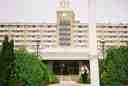
To spot the Garden City Hotel, look for a grand, light-brick building with a large central tower topped by a white cupola and a big clock right above the entrance-just behind the…더 보기간략히 보기
To spot the Garden City Hotel, look for a grand, light-brick building with a large central tower topped by a white cupola and a big clock right above the entrance-just behind the waving American flag. Right in front of you stands the legendary Garden City Hotel, a place where fortunes were made and lost, legends rested, and even presidents once nervously checked the time on that clock above the door. Picture the year 1874-the smell of new lumber in the air, horses’ hooves clopping down dusty Long Island roads, and millionaire Alexander Turney Stewart strutting about, overseeing the finishing touches on his proud hotel. Back then, $150,000 was a king’s ransom! Stewart ran the first hotel himself, and after he passed, his devoted wife Cornelia took the reins. Can you imagine the family dinners? “Please pass the salt-and the deed to the hotel!” After Cornelia left this world, the hotel passed into the hands of her relatives, guided by one of America’s most famous architects, Stanford White. By 1895, a brand new version rose-so stylish, with a cupola inspired by Independence Hall. And just when guests were getting comfortable, disaster struck. Early one September morning in 1899, fire swept through, leaving only ashes in its wake. But this hotel doesn’t stay down for long. The third incarnation, glimmering in Georgian Revival style, arrived in 1901. This was the one that drew high society like moths to a chandelier-think Vanderbilts, Pierpont Morgans, and the kind of fancy hats that needed their own seat. By 1927, the whole world watched as Charles Lindbergh arranged to sleep here the night before his historic Transatlantic flight. Spoiler: he ended up napping elsewhere. I guess even famous aviators can’t resist a friend’s couch. Over the years, the hotel changed hands more times than a rumor in a small town, from the Knott family to ambitious developer Michael Forte, who, sadly, saw the grand old place torn down and his plans fizzle. The site spent years as a dusty patch of nothing, until in 1983, when the Nelkin family brought the hotel roaring back to life. It has since welcomed everyone from JFK and Margaret Thatcher to pop icons and international royals-a guest list long enough to fill the ballroom! In 2014, a $35 million renovation polished every corner so you can experience the glamour of a modern classic
전용 페이지 열기 →You’re looking at a long set of train tracks flanked by platforms with low, brown-roofed station houses and Garden City signs-you can spot the station right in front of you next…더 보기간략히 보기
You’re looking at a long set of train tracks flanked by platforms with low, brown-roofed station houses and Garden City signs-you can spot the station right in front of you next to the parking lots and under the web of power lines. Imagine-you’re standing where travelers have arrived for over a century, since 1872, when Garden City station first welcomed visitors on the Hempstead Branch. Back then, things were a bit more grand: the station boasted a fancy Victorian style, with a second story set above the front door and a generous back porch overlooking high, wooden platforms. Alexander Turney Stewart, who dreamed up both the Garden City Hotel and much of the village itself, built this stop to lure visitors straight to his luxury hotel across the street. You could say he was all about first-class arrivals! Over the years, railway companies married and merged like a complicated soap opera-the Central Railroad of Long Island joined up with the Flushing and North Side, and then the Long Island Rail Road swept them all under its wing in 1876. The station itself had some clever upgrades as times changed. In 1898, it got a makeover: eyebrow windows peeked over the roof, and trolley cars would rattle by connecting you to other towns. By 1915, even a pedestrian tunnel made its debut-no more dashing in front of trolleys! The platforms rose higher in the 1970s, and a more recent restoration has given the whole area a fresh sweep. With two station houses, the Garden City station is something of a local railway oddity-like a train station with a split personality. Even as shiny cars fill the parking lots and the platforms hum with commuters, the ghosts of Victorian travelers, trolley bells, and hotel porters with heavy trunks still linger in the air. If your suitcase feels lighter, maybe Stewart’s old porters are still lending a hand!
전용 페이지 열기 →To spot the A. T. Stewart Era Buildings, look for clusters of charming old homes and structures nearby-think mansard roofs, cupolas, and classic Victorian details right here in…더 보기간략히 보기
To spot the A. T. Stewart Era Buildings, look for clusters of charming old homes and structures nearby-think mansard roofs, cupolas, and classic Victorian details right here in the heart of Garden City. Now, let’s step back in time for a moment. Imagine the hustle and bustle of the late 1800s-horses pulling carriages along wide, tree-lined avenues, children playing under the shade of hundreds of newly planted trees, and families moving into the very first planned community on Long Island. This is the dream world Alexander Turney Stewart, a department store tycoon, brought to life right here between 1871 and 1893. He didn’t just want houses-he wanted a community, so he filled his Garden City with all sorts of buildings: cozy little cottages, sprawling three-story villas, shops, water works, and even this mighty cathedral that towers above you. And then there’s the legendary Apostle Houses-a name that sounds like it belongs in an old mystery novel. Built as part of Stewart’s grand vision, these homes came with mansard roofs, elegant cupolas, and even room for servants. Sixteen rooms, tall ceilings, and enough space for, well, almost anything except maybe hiding from your chores! Of the original ten Apostle houses, only six have survived fires, moves, and the ever-hungry jaws of real estate development. One house even pulled off the ultimate magic trick-moving from street to street until it landed on Eleventh Street and became the home of the Garden City Historical Society. As you stand here, surrounded by history, you can almost hear the echoes of past residents, the laughter, the secrets of the servants' quarters, and the pride of a community growing from the seeds of one visionary’s imagination. These buildings aren’t just wood and stone; they’re the beating heart of Garden City, telling stories of ambition, resilience, and a little bit of 19th-century style.
전용 페이지 열기 →

5개 정류장 더 보기정류장 적게 보기expand_moreexpand_less
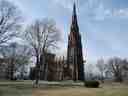
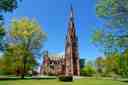
Directly ahead, you’ll see a stunning stone cathedral rising from the park-like lawns, with a soaring, pointed spire and tall, arched windows-just look for the tallest, most…더 보기간략히 보기
Directly ahead, you’ll see a stunning stone cathedral rising from the park-like lawns, with a soaring, pointed spire and tall, arched windows-just look for the tallest, most dramatic building on the block surrounded by green trees. Imagine standing on these grounds back in the late 1800s-horses clip-clopping by, a fresh breeze carrying the scent of spring, and workmen sweating in their shirtsleeves as they quarried brownstone for what would become the grand Cathedral of the Incarnation. This wasn’t just any church. It was built by Cornelia Stewart in honor of her late husband Alexander Turney Stewart, a retail tycoon so wealthy he could’ve bought every pair of socks from here to Brooklyn and still had change left over! He dreamed up Garden City as a model town: tree-lined streets, open green parks, and homes for his workers, all centered around this cathedral. As you stand admiring the spiky spire that shoots 210 feet into the blue sky, you might feel history pressing in-after all, this is the only cathedral in the U.S. built for one single person, and it truly glows in its special English Gothic style. Take a moment and imagine the day its cornerstone was laid in 1877: crowds gathered, shovels in hand, and just maybe a few confused squirrels wondering what had happened to the quiet Hempstead Plains. On consecration day in 1885, dignitaries arrived from all over, carriages lined the roads, and Mrs. Stewart handed over both the building and a hefty sum to keep it polished and well cared for-talk about leaving a legacy! Peek up at the vast windows and you’ll see flashes of red, blue, and gold from the stained glass made by master artisans in London. The interior’s designed to be light-filled and lofty, with slender columns and a ceiling high enough for angelic choirs to get a running jump. And those windows? They aren’t just decoration-they actually tell stories from the Bible, serving as a “Bible in glass” for anyone walking inside who maybe missed Sunday school. And let’s talk about the high altar, carved in Belgium and fully restored just a few months ago. The panels show everything from angels to... well, a rather dramatic Adam and Eve having a snack they really shouldn’t! In the undercroft, there’s a crypt where you’ll find Cornelia Stewart, and maybe even Alexander himself-if you believe the legends. There’s a dash of mystery too, because his body was famously stolen once in the 1870s! But the cathedral isn’t just about the past. Today, it buzzes with music thanks to choirs that date back over a century-once upon a time, they even built the train station just so the choirboys could get here without cutting class. The organ inside is the largest on Long Island and can shake your bones during a rousing festival. If you’re here on a Sunday, you might catch a traditional service, or even a “Neighborhood Mass” out on the lawn where pets are invited-no barking at the sermons, though. The cathedral reaches far beyond its stone walls, running programs from feeding hungry families and offering support at the Nassau County jail, to chaplaincy at Adelphi University across the way. There’s a passionate focus on both quiet prayer and social justice, with everything from prison ministry to innovative “Cathedral for Kids” services to a program where, believe it or not, even your pets can get a special blessing. They even survived the pandemic by feeding front-line workers and streaming services to living rooms. So as you glance up at that spire reaching for the sky, just remember: whether it’s ringing bells, welcoming a crowd for Christmas, or whispering secrets of the Stewart family legacy, this cathedral has seen dreams, drama, prayer, and the occasional surprise-definitely a place that always reaches a little higher than the treetops! Interested in knowing more about the governance, architecture or the worship
전용 페이지 열기 →You’re standing before the Episcopal Diocese of Long Island, and if these walls could talk, they’d probably sing in harmony! Picture this: it’s the late 1800s, and the quiet…더 보기간략히 보기
You’re standing before the Episcopal Diocese of Long Island, and if these walls could talk, they’d probably sing in harmony! Picture this: it’s the late 1800s, and the quiet breeze of Garden City rustles through the old oak trees. Here, a chapter of faith was being written for all of Long Island-from bustling Brooklyn to the far East End. The diocese was formed in 1868, covering Kings, Queens, Nassau, and Suffolk counties, basically supervising more sand and suburbia than you could ever imagine. The cathedral at the heart of this story is the Cathedral of the Incarnation-just a short stroll away. But right here, in these diocesan offices, big decisions and spirited debates shaped the religious fabric of the region. Over the years, a parade of bishops has led the diocese, each bringing their own flair, like Abram Newkirk Littlejohn, the original bishop with a last name fit for a novel, or the modern-day Bishop Provenzano, who, fun fact, announced he’ll be hanging up his bishop’s mitre in September 2026. These halls have seen everything from generous donations-a cool $10,000 from John Ordronaux in 1908, which was enough to buy a LOT of hymnals-to modern reckonings. In 2023, the diocese started digging into its own history with the Uncovering Parish Histories project, exploring links to both slavery and the fight for abolition. Imagine all the whispering voices of the past echoing through these rooms, each with a story to tell. So whether it’s spiritual guidance, local history, or just appreciating a building with more bishops than a chess tournament, you’ve found the heartbeat of Episcopal life on Long Island.
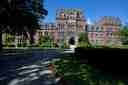
전용 페이지 열기 →Looking straight ahead, you’ll spot an enormous, castle-like brick building with grand arches, slate rooftops, and tall chimneys peeking out above the trees-that’s St. Paul’s…더 보기간략히 보기
Looking straight ahead, you’ll spot an enormous, castle-like brick building with grand arches, slate rooftops, and tall chimneys peeking out above the trees-that’s St. Paul’s School, right in front of you. Alright, take a moment to soak in this view-St. Paul’s School stands like a sleeping giant at the end of the drive. Imagine yourself back in 1879, as the cornerstone is laid with the sound of triumphant cheers and church bells echoing through the air. This place was the dream of Cornelia Stewart, widow of Alexander Stewart, and it was built as a living tribute to her late husband. It took four years for James L’Hommedieu to finish this immense, brick E-shaped building, all topped off with a sharp slate roof and a soaring clock and bell tower. This is High Victorian Gothic at its boldest-look for those colorful arches above each window and the stone trim that shows off the architect’s flair. Originally, St. Paul’s had 500 rooms, including laboratories packed with curious gadgets, kitchens churning out meals for hundreds, and a chapel grand enough to sit 400. Imagine the halls bustling with the clatter of boots because St. Paul’s opened in 1883 as a military school for boys. Marching drills, the thud of footsteps in unison, and every boy looking sharp enough to make their parents proud. Over the years, the sound of football cheers replaced military orders when St. Paul’s became a college preparatory academy. In fact, in 1884, the school’s football team were the New York area champions! They also had students on baseball and ice hockey teams-clearly, sports were serious business here. The mission back then? The legendary headmaster Rev. Frederick Luther Gamage summed it up: “develop manly, Christian character, a strong physique, and the power to think.” Tough crowd! Generosity also lived here: George Bywater Cluett, whose son once studied at St. Paul’s, funded a gymnasium after his son passed away, hoping future students would grow strong and spirited. Speaking of students, there’s a tale of a young man named William Bradford Turner, who arrived in 1906. He was a direct descendant of Governor William Bradford and would later earn the Congressional Medal of Honor for bravery in World War I. Just think, heroes walked these very grounds. And if you thought high school pep rallies were wild, imagine this: in 1917, right after the World Series, the Chicago White Sox and New York Giants came here for an exhibition baseball game-yes, right out there on the athletic fields! Soldiers from the U.S. Army Rainbow Division cheered, while legends like Jim Thorpe and teams soon tangled in scandal faced off. But life at St. Paul’s wasn’t all heroics and headline games. Pranks were practically an institution-just ask the Trump family! Fred Trump Jr. graduated in 1956 and his father, Fred Sr., even donated to fix up the soccer field, which was briefly known as Trump Field-now that’s one way to leave your mark. In the 1970s, the sound of basketballs joined the symphony here, as St. Paul’s opened the largest indoor sports fieldhouse on Long Island. Students played alongside the New York Nets, sharing the exact locker rooms with future Hall of Famer Rick Barry. In the 1990s, though, the laughter and footsteps faded. The school fell silent when the Episcopal Diocese that owned the property went bankrupt, and Garden City took it over. Since then, the fate of the building has been a tug of war, with community votes, failed proposals to turn it into a high school, and heated debates about demolition or preservation. Now, it stands mostly unused, a beautifully haunting landmark chosen among New York’s "Seven to Save" endangered properties-a monument to ambition, community, mischief, and tenacity. So as you look at those arches and imagine the tangled stories woven into every brick, remember: every epic tale needs a castle, and St. Paul’s School is one of Garden City’s grandest. So, who’s up for a game of hide-and-seek in a 500-room building? Only kidding-let’s not upset the neighbors!
전용 페이지 열기 →

자주 묻는 질문
투어는 어떻게 시작하나요?
구매 후 AudaTours 앱을 다운로드하고 교환 코드를 입력하세요. 투어를 바로 시작할 수 있습니다 - 재생을 탭하고 GPS 안내 경로를 따라가시면 됩니다.
투어 중 인터넷이 필요한가요?
아닙니다! 시작 전에 투어를 다운로드하면 완전히 오프라인으로 즐길 수 있습니다. 채팅 기능만 인터넷이 필요합니다. 모바일 데이터 절약을 위해 WiFi에서 다운로드하시는 것을 권장합니다.
이것은 가이드가 안내하는 단체 투어인가요?
아닙니다 - 이것은 셀프 가이드 오디오 투어입니다. 폰을 통해 오디오 나레이션을 들으며 나만의 속도로 독립적으로 탐험합니다. 투어 가이드도, 단체도, 일정도 없습니다.
투어는 얼마나 걸리나요?
대부분의 투어는 60-90분이 소요되지만, 속도는 전적으로 본인이 조절합니다. 원할 때 언제든지 일시정지하거나, 정류장을 건너뛰거나, 휴식을 취하세요.
오늘 투어를 끝낼 수 없으면 어떻게 하나요?
괜찮습니다! 투어는 평생 이용이 가능합니다. 원할 때 언제든지 일시정지하고 다시 시작하세요 - 내일, 다음 주, 또는 내년에도. 진행 상황이 저장됩니다.
어떤 언어를 이용할 수 있나요?
모든 투어는 50개 이상의 언어로 이용 가능합니다. 코드를 교환할 때 원하는 언어를 선택하세요. 참고: 투어 생성 후에는 언어를 변경할 수 없습니다.
구매 후 투어는 어디에서 이용하나요?
App Store 또는 Google Play에서 무료 AudaTours 앱을 다운로드하세요. 교환 코드(이메일로 전송됨)를 입력하면 라이브러리에 투어가 나타나며, 다운로드하여 시작할 수 있습니다.
투어가 마음에 들지 않으시면 환불해 드립니다. 문의: [email protected]
안전한 결제 


