AudaTours logoAudaTours

피츠버그 오디오 투어: 다운타운의 강철 거인과 문화 보석

오디오 가이드14 정류장

강철과 돌이 함께 솟아오르고, 솟아오르는 유리 타워와 그늘진 법원 건물 사이에서 피츠버그의 비밀이 울려 퍼집니다. 모든 블록은 이야기를 숨기고 있으며, 대부분 서두르는 인파에 의해 간과됩니다. 이어폰을 꽂고 주도권을 잡으세요. 중앙 비즈니스 지구를 가로지르는 셀프 가이드 오디오 투어를 통해 도시의 극적인 대결, 법정의 속삭임, 그리고 간과된 전설들을 당신의 속도에 맞춰 발견할 수 있습니다. 어떤 폭동이 한때 U.S. 스틸 타워의 기반을 흔들었을까요? 어떤 법정 스캔들이 앨러게니 카운티 법원 안에서 명성을 산산조각 냈을까요? 그리고 피츠버그 플레이하우스의 오래된 무대는 왜 사라진 공연의 유령 같은 메아리를 여전히 불러일으킬까요? 뻔한 것을 지나쳐 한때 반란군이 행진했던 골목으로 들어가고, 야망으로 지어진 솟아오른 파사드 아래에서 머무르며, 도시의 운명을 형성했던 잊혀진 발자취를 따라가 보세요. 모든 모퉁이에서 역사와 고조된 드라마가 현대 생활과 충돌하는 피츠버그의 맥박을 느껴보세요. 도시의 숨겨진 심장을 잠금 해제하세요—당신의 피츠버그 이야기는 지금 시작됩니다.

투어 미리보기

map

이 투어에 대하여

  • schedule
    소요 시간 40–60 mins나만의 속도로 이동
  • straighten
    2.2 km 도보 경로안내 경로 따라가기
  • location_on
  • wifi_off
    오프라인 작동한 번 다운로드, 어디서든 사용
  • all_inclusive
    평생 이용언제든지 다시 재생 가능
  • location_on
    어거스트 윌슨 아프리카계 미국인 문화 센터에서 시작

이 투어의 정류장
  1. Look for the striking modern building featuring a dramatic, curved metallic prow and a massive wall of glass running right down Liberty Avenue. This is the August Wilson African…더 보기간략히 보기
    August Wilson African American Cultural Center
    August Wilson African American Cultural CenterPhoto: Minnaert, Wikimedia Commons, CC BY-SA 4.0. Cropped & resized.

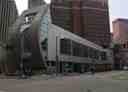
    Look for the striking modern building featuring a dramatic, curved metallic prow and a massive wall of glass running right down Liberty Avenue. This is the August Wilson African American Cultural Center, and its story is as thrilling as the legendary plays written by its namesake!

    Back in 1996, Pittsburgh NAACP President Tim Stevens wanted to bring the national convention to the city, and part of his pitch was building a dedicated museum. After years of planning and funding from the city and local foundations, the center finally opened its doors to the full public in September 2009. Check out your app to see a lively snapshot from that grand opening milestone. The sleek exterior you are looking at was led by the brilliant architect Allison G. Williams, whose team gave it this unforgettable, sweeping shape.

    Inside, the space is just bursting with creativity, housing galleries, classrooms, and a stunning 500-seat theater. Take a look at your screen to peek inside that beautiful performance space where so much magic happens.

    But the story of this center almost took a tragic turn. By 2014, struggling with construction debt, the building was forced into a sheriff's sale, which is a public auction for repossessed property. It was actually bought by the mortgage holder, Dollar Bank, for just over nineteen hundred dollars! A private developer planned to swoop in and build a hotel right on top of this cultural landmark. But Pittsburgh's leaders and local foundations refused to let that happen. They banded together, formed a nonprofit consortium, and fought off the developer by buying the center back for nearly eight million dollars.

    Today, it is a massive success, celebrating Black artists locally and internationally with a rock-solid financial foundation. If you want to explore the galleries, keep in mind they are open Thursday through Sunday afternoons.

    Take a moment to soak this beautiful beacon of culture in. Whenever you are ready, let's head over to the Gulf Tower for our next stop.

    The modern exterior of the August Wilson African American Cultural Center on Liberty Avenue in Downtown Pittsburgh, a building that opened to the public in 2009.
    The modern exterior of the August Wilson African American Cultural Center on Liberty Avenue in Downtown Pittsburgh, a building that opened to the public in 2009.Photo: Cbaile19, Wikimedia Commons, CC0. Cropped & resized.
    전용 페이지 열기 →
  2. Look to your left for the soaring, beige stone skyscraper with long vertical columns of windows, capped off by a distinctive stepped pyramid at its very top. This is the Gulf…더 보기간략히 보기
    Gulf Tower
    Gulf TowerPhoto: Tysto, Wikimedia Commons, Public domain. Cropped & resized.

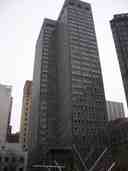
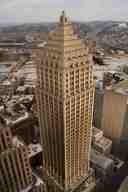
    Look to your left for the soaring, beige stone skyscraper with long vertical columns of windows, capped off by a distinctive stepped pyramid at its very top.

    This is the Gulf Tower, a forty four story masterpiece finished in 1932. It cost ten million dollars to build, which is well over two hundred million dollars today. It was designed as the headquarters for the Gulf Oil Company in the Art Deco style, an architectural movement known for its sleek, bold, geometric shapes. See that stepped crown? It is actually modeled after the Mausoleum of Halicarnassus, a massive ancient Greek tomb that was famously one of the Seven Wonders of the Ancient World.

    This grand building holds some intense history, too. In June 1974, a bomb tore through the twenty ninth floor. A radical group called the Weather Underground Organization planted the explosive, claiming it was a protest against Gulf Oil's operations in regions affected by the Angolan War of Independence.

    But for generations of Pittsburghers, this building is beloved for something a lot more practical... its giant weather beacon! Starting in the mid twentieth century, building manager Edward Heath used the neon lights on that pyramid to broadcast the forecast for miles. A steady blue meant fair and colder, while flashing orange meant warmer with rain. You can check out a neat before and after shot in your app showing how the old neon tubes were eventually upgraded to bright modern LEDs.

    The beacon is not just for weather, though. Take a look at the photo in your app to see the pinnacle flashing during a celebration. Since 2001, whenever the Pittsburgh Pirates hit a home run across the river, the top of the tower flashes wildly. It started with Regina Taylor, a lobby receptionist who would listen to the games on her radio and manually trigger the lights. Pirates announcer Lanny Frattare loved this so much he started shouting over the broadcast... Flash the beam, Regina, that one is out of here!

    This image from 2001 captures the iconic pinnacle beacon which, since the opening of PNC Park, flashes after a Pittsburgh Pirates home run, earning a shout-out from announcer Lanny Frattare.
    This image from 2001 captures the iconic pinnacle beacon which, since the opening of PNC Park, flashes after a Pittsburgh Pirates home run, earning a shout-out from announcer Lanny Frattare.Photo: Cbaile19, Wikimedia Commons, CC0. Cropped & resized.

    The tower remains a fantastic piece of local pride that connects ancient architecture to modern baseball. Feel free to linger here, and follow your map to the next site when you're ready.

    This upward view highlights the tower's 177.4-meter height and distinctive Art Deco architecture that makes it a recognizable feature of downtown Pittsburgh.
    This upward view highlights the tower's 177.4-meter height and distinctive Art Deco architecture that makes it a recognizable feature of downtown Pittsburgh.Photo: Cbaile19, Wikimedia Commons, CC0. Cropped & resized.
    This view from the Lower Hill showcases the Gulf Tower, which has been a Pittsburgh History & Landmarks Foundation Historic Landmark since 1973.
    This view from the Lower Hill showcases the Gulf Tower, which has been a Pittsburgh History & Landmarks Foundation Historic Landmark since 1973.Photo: Cbaile19, Wikimedia Commons, CC0. Cropped & resized.
    The crown of the Gulf Tower, modeled after the Mausoleum of Halicarnassus, now features the KDKA Weather Beacon which changes colors to provide a detailed forecast.
    The crown of the Gulf Tower, modeled after the Mausoleum of Halicarnassus, now features the KDKA Weather Beacon which changes colors to provide a detailed forecast.Photo: Cbaile19, Wikimedia Commons, CC0. Cropped & resized.
    전용 페이지 열기 →
  3. You'll easily spot the U.S. Steel Tower on your right by its massive triangular shape with indented corners, stretching straight up into the sky and clad entirely in dark brown…더 보기간략히 보기
    U.S. Steel Tower
    U.S. Steel TowerPhoto: Cbaile19, Wikimedia Commons, Public domain. Cropped & resized.

    You'll easily spot the U.S. Steel Tower on your right by its massive triangular shape with indented corners, stretching straight up into the sky and clad entirely in dark brown weathering steel. If you remember the Gulf Tower we visited a bit ago, that was Pittsburgh's tallest building until 1970. Then, this absolute giant claimed the crown. At sixty-four stories and nearly eight hundred and fifty feet tall, it remains the tallest building in the city today.

    U.S. Steel wanted to show off a new product called Cor-ten steel. They deliberately placed over forty-four thousand tons of massive structural steel columns right on the exterior. Cor-ten is a specialized metal that forms a protective layer of dark brown oxidation, basically a controlled rust, to shield itself from corrosion without ever needing costly paint.

    When the metal first started weathering, the runoff caused an unexpected problem. The rust washed down and discolored the surrounding city sidewalks. The corporation orchestrated a massive cleanup once the weathering was complete, but the pavement around here still has a faint rusty tinge.

    Putting raw steel on the outside of a building usually violates fire codes, which require steel to be insulated with concrete. To get around this, the engineers did something totally unprecedented. They made the eighteen exterior columns hollow and filled them with a mixture of water, antifreeze, and rust inhibitor. It was the first building in history to use liquid-filled fireproofed columns. Take a glance at your screen to see a close-up of those indented corners and that beautiful, rustic brown texture.

    A close look at the U.S. Steel Tower reveals its unique triangular shape with indented corners and the distinctive Cor-ten steel, which forms a protective dark brown oxidation layer against weather.
    A close look at the U.S. Steel Tower reveals its unique triangular shape with indented corners and the distinctive Cor-ten steel, which forms a protective dark brown oxidation layer against weather.Photo: Cbaile19, Wikimedia Commons, CC0. Cropped & resized.

    This place is an absolute fortress of engineering. It features incredibly robust redundant systems, meaning it has backup equipment for absolutely everything. With two water mains, four water pumps, and four separate electrical feeds, the tower has stayed completely free of unplanned service interruptions since it opened in 1971.

    Now look way up to the very top. See the huge UPMC letters? The University of Pittsburgh Medical Center leases over five hundred thousand square feet inside. In 2008, they installed those twenty-foot letters using helicopters. A heavy storm rolled in during the installation, forcing the crew to retreat. This left the skyline awkwardly reading U, P, and C for weeks until the M could finally be attached.

    Unlike most skyscrapers that taper as they rise, this building shoots straight up. That gives it an absolutely enormous, totally flat roof spanning nearly a full acre. Check your app for a glimpse of the view from the sixty-second floor, where a famous restaurant called Top of the Triangle once gave diners unmatched sights of the entire region. Since it closed, groups like the High Point Park Investigation have actively proposed turning that massive flat roof into a spectacular public nature park.

    It is such an iconic structure that it has starred in movies like The Dark Knight Rises and Jack Reacher. It truly stands as a monumental tribute to American industrial innovation. Once you've taken it all in, follow the route to our next stop.

    The U.S. Steel Tower stands prominently in the Pittsburgh skyline, known as the city's tallest building, a distinction it has held since its opening in 1971.
    The U.S. Steel Tower stands prominently in the Pittsburgh skyline, known as the city's tallest building, a distinction it has held since its opening in 1971.Photo: Dllu, Wikimedia Commons, CC BY-SA 4.0. Cropped & resized.
    At the base of the tower, the 'Steel Garden' plaza provides a public space, famously hosting the annual Nativity scene, an authorized replica of the Vatican's Christmas crèche.
    At the base of the tower, the 'Steel Garden' plaza provides a public space, famously hosting the annual Nativity scene, an authorized replica of the Vatican's Christmas crèche.Photo: Cbaile19, Wikimedia Commons, CC0. Cropped & resized.
    The towering U.S. Steel Tower dominates Grant Street in downtown Pittsburgh, reflecting its colossal presence and status as a beacon of the city.
    The towering U.S. Steel Tower dominates Grant Street in downtown Pittsburgh, reflecting its colossal presence and status as a beacon of the city.Photo: Cbaile19, Wikimedia Commons, CC0. Cropped & resized.
    A black-and-white view of the U.S. Steel Tower from the South Side offers a dramatic perspective, highlighting its robust form as a symbol of American industrial strength and innovation.
    A black-and-white view of the U.S. Steel Tower from the South Side offers a dramatic perspective, highlighting its robust form as a symbol of American industrial strength and innovation.Photo: Cbaile19, Wikimedia Commons, CC0. Cropped & resized.
    The U.S. Steel Tower stands prominently alongside the Chatham Center, viewed from Duquesne University, illustrating its commanding integration into the dynamic downtown Pittsburgh urban landscape.
    The U.S. Steel Tower stands prominently alongside the Chatham Center, viewed from Duquesne University, illustrating its commanding integration into the dynamic downtown Pittsburgh urban landscape.Photo: Cbaile19, Wikimedia Commons, CC0. Cropped & resized.
    A dramatic vertical shot of the U.S. Steel Tower from Ross Street accentuates its immense height and the sleek, modern lines of its construction, which utilized over 44,000 tons of structural steel.
    A dramatic vertical shot of the U.S. Steel Tower from Ross Street accentuates its immense height and the sleek, modern lines of its construction, which utilized over 44,000 tons of structural steel.Photo: Cbaile19, Wikimedia Commons, Public domain. Cropped & resized.
    전용 페이지 열기 →
11개 정류장 더 보기정류장 적게 보기expand_moreexpand_less
  1. Look to your left at the 410-foot skyscraper featuring a diamond-patterned, dark grey aluminum facade and a flat, stepped-back roofline. We just marveled at the U.S. Steel…더 보기간략히 보기
    Regional Enterprise Tower
    Regional Enterprise TowerPhoto: Mr. Vitale, Wikimedia Commons, Public domain. Cropped & resized.

    Look to your left at the 410-foot skyscraper featuring a diamond-patterned, dark grey aluminum facade and a flat, stepped-back roofline.

    We just marveled at the U.S. Steel Tower, and now another mighty Pittsburgh metal takes center stage. This thirty-one story building beside Mellon Square is the Regional Enterprise Tower, originally famous as the Alcoa Building.

    Completed in 1953, it was the first skyscraper ever built with an all-aluminum facade! The walls are an astonishing one-eighth of an inch thick. Check the image on your device to see a vintage shot of this groundbreaking metal skin shortly after it was built. It was an engineering marvel. They designed the windows to rotate a full 360 degrees to be washed from the inside. A unique heating and cooling system was hidden in the ceiling, eliminating clunky radiators and freeing up fifteen thousand square feet of extra space. If you want to see how this iconic modernist fixture has stood the test of time, check out the before and after slider in your app.

    Before this metal giant stood here, the site housed pure theatrical magic. From 1903 to 1950, this was the Nixon Theater. It was a gorgeous Beaux Arts structure... a highly decorative French classical architectural style crowned with a massive dome. Opening night critics called it the world's most perfect playhouse. The interior dripped with luxury, featuring imitation marble columns capped in solid gold and walls styled like damask silk. The productions were wonderfully extravagant. A 1905 staging of Ben Hur featured four live horse-drawn chariots, while another play brought in a herd of camels, horses, goats, and fifty camel drivers!

    When Alcoa bought the theater in 1950, people were outraged. Legendary actress Katharine Hepburn wrote a furious letter to the city before demolition, arguing the new skyscraper would just be another building... maybe fascinating, but not glamorous. Today, the top floors have been converted into apartments, keeping its legacy alive.

    Enjoy the view of this aluminum marvel, and let's keep moving when you are ready.

    전용 페이지 열기 →
  2. Look to your left and you will see a massive red brick building resting on an elegant light stone base, defined by three towering vertical sections connected by dramatic arches…더 보기간략히 보기
    Omni William Penn Hotel
    Omni William Penn HotelPhoto: Dllu, Wikimedia Commons, CC BY-SA 4.0. Cropped & resized.

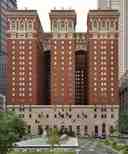
    Look to your left and you will see a massive red brick building resting on an elegant light stone base, defined by three towering vertical sections connected by dramatic arches near the roofline. You are standing in front of the Omni William Penn Hotel.

    I am so thrilled to share this place with you. Built between 1915 and 1916, this twenty three story marvel originally cost six million dollars to construct, which is roughly one hundred and eighty million dollars today. When its doors opened on March 11, 1916, newspapers across the country declared it the Grandest Hotel in the nation. The opening night gala was the biggest party Pittsburgh had ever seen, hosted by the United States Secretary of State.

    If you step inside today, you can still visit the Terrace Room, a gorgeous restaurant dating all the way back to that opening year, complete with a wall length mural depicting the taking of Fort Pitt. But the stories that echo through these halls are what make it truly legendary. Imagine the sheer chaos in April 1970 when the local zoo president addressed a rotary conference inside alongside an eight month old elephant named Rani, a llama, an eagle, and a snapping turtle. Or picture the romance of 1934, when a young Bob Hope dropped to one knee and proposed to his wife right here. The brilliant hotel staff even invented the famous bubble machine later popularized by bandleader Lawrence Welk.

    In 1929, an ambitious owner named Eugene Eppley financed a massive expansion that filled the entire city block. Take a glance at your app to see the magnificent interior of the grand lobby, capturing the sheer scale of the space. This expansion made it the second largest hotel in the entire world, bringing the room count to a staggering sixteen hundred. It also added a spectacular Art Deco ballroom at the very top, full of the glamorous geometric shapes and sleek lines that made the 1920s style so popular.

    Music lovers, this spot is sacred ground. In the winter of 1937, the legendary Count Basie and His Orchestra held a residency in the hotel lounge called the Chatterbox. The live radio broadcast from that room became the first known recording of the Basie band with jazz icons like Lester Young and Buck Clayton. The swing music pouring out of those doors must have been absolutely electric.

    Over the decades, this hotel has hosted luminaries like John F. Kennedy, as well as Harry S Truman and Dwight D. Eisenhower, who both actually stayed here during the intense heat of their 1956 presidential campaigns. If you look at the second picture on your phone, you can see how the grand building illuminates the skyline, serving as a shining beacon of Pittsburgh history. Today, it remains a proud and award winning member of the Historic Hotels of America.

    Take your time admiring the grand exterior, and head to the next stop whenever you're ready.

    This panoramic view showcases the Omni William Penn Hotel, listed on the National Register of Historic Places in 1985.
    This panoramic view showcases the Omni William Penn Hotel, listed on the National Register of Historic Places in 1985.Photo: Dllu, Wikimedia Commons, CC BY-SA 4.0. Cropped & resized.
    전용 페이지 열기 →
  3. Look to your right for a raised urban plaza featuring low, square concrete planters, striking geometric pavement, and neat rows of trees. Welcome to Mellon Square! This is not…더 보기간략히 보기
    Mellon Square
    Mellon SquarePhoto: Lee Paxton, Wikimedia Commons, CC BY-SA 4.0. Cropped & resized.

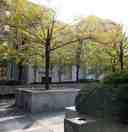
    Look to your right for a raised urban plaza featuring low, square concrete planters, striking geometric pavement, and neat rows of trees. Welcome to Mellon Square! This is not just any park, it is a brilliant piece of engineering. Back in 1953, it became the very first Modernist park built completely over an underground parking garage.

    Remember that gleaming aluminum skyscraper we admired a few minutes ago, the Regional Enterprise Tower? After World War Two, the Aluminum Company of America wanted to pack up and move their operations to New York. But a powerhouse banker named Richard King Mellon stepped in. He convinced them to stay by proposing that shiny new headquarters, and as a massive sweetener, he promised them this magnificent plaza right across the street. The Mellon family poured four million dollars into creating it, which is over forty-five million in today's money!

    But the ground beneath these black, white, and green tiles holds even older stories. Take a look at your screen to see a bronze historical marker located in the square. In 1881, right here in a building called Turner Hall, the world's very first labor union was founded, eventually becoming the American Federation of Labor, a massive national union coalition. And forty years later? The very first live radio broadcast of a theater performance went out to the world from a stage on this exact block.

    If the space feels a bit cinematic to you, you might recognize it from the 2002 thriller The Mothman Prophecies. When the park opened, its nine massive circular bronze fountain basins were the absolute largest ever cast, and you can check your app for a close-up of the beautiful water feature.

    One of Mellon Square's prominent fountains. The nine circular bronze basins for the block-long fountain were the largest ever cast when the square opened in 1953.
    One of Mellon Square's prominent fountains. The nine circular bronze basins for the block-long fountain were the largest ever cast when the square opened in 1953.Photo: Cbaile19, Wikimedia Commons, CC0. Cropped & resized.

    The square is open every day from six in the morning until eleven at night for you to enjoy. Take a moment to soak in this historic oasis. Whenever you are ready, we can wander over to our next stop.

    Steps leading up to Mellon Square, an urban oasis in Downtown Pittsburgh, known as the first Modernist park built above a parking garage.
    Steps leading up to Mellon Square, an urban oasis in Downtown Pittsburgh, known as the first Modernist park built above a parking garage.Photo: Cbaile19, Wikimedia Commons, CC0. Cropped & resized.
    전용 페이지 열기 →
  4. Look to your left and spot the striking Trinity Cathedral, a tan stone structure featuring classic Gothic pointed arches and a distinctive, towering central spire with a clock…더 보기간략히 보기
    Trinity Cathedral
    Trinity CathedralPhoto: PerryPlanet, Wikimedia Commons, Public domain. Cropped & resized.

    Look to your left and spot the striking Trinity Cathedral, a tan stone structure featuring classic Gothic pointed arches and a distinctive, towering central spire with a clock face.

    This land holds incredible historical weight! Long before European settlers arrived, this terrace above the rivers was sacred to Native Americans as a burial ground. Later, heirs of Pennsylvania's founder, William Penn, actually deeded this very plot to the congregation. Because of this layered history, the churchyard holds the oldest marked graves west of the Atlantic Seaboard, serving as the resting place for Native American leaders alongside French, English, and American colonists.

    The congregation itself evolved dramatically over the centuries. They started in the 1780s two blocks away in a brick, eight-sided meeting house literally called the Round Church. By 1824, they moved here and built what is considered Western Pennsylvania's first Gothic structure.

    The beautiful building before you is their third home, completed in 1872 by architect Gordon W. Lloyd. Look at the image on your device to see a clear view of that central steeple. This English Gothic style was incredibly popular with mid-Victorian Episcopalians, a Christian denomination that is part of the worldwide Anglican communion. Inside is a soaring central hall known as a nave, lined with clustered stone columns. While most of the stained glass dates back to 1872, a 1967 fire destroyed several windows, which were then replaced with stunning medieval-style glass.

    The distinctive central steeple of Trinity Cathedral, a hallmark of the English Gothic style favored by mid-Victorian Episcopalians when the church was designed in 1870-1871.
    The distinctive central steeple of Trinity Cathedral, a hallmark of the English Gothic style favored by mid-Victorian Episcopalians when the church was designed in 1870-1871.Photo: Cbaile19, Wikimedia Commons, CC0. Cropped & resized.

    You might notice the exterior stonework looks remarkably well-preserved. Up until 2007, it was covered in thick industrial soot from Pittsburgh's famous steel-making era. That grime was actually causing acid runoff to eat away at the stone before they finally scrubbed it clean!

    The cathedral also navigated a complex modern chapter during a major 2008 theological split, or schism, within the diocese. For three years, Trinity miraculously maintained ties with both the breakaway and continuing factions, until officially reaffirming its Episcopal identity in 2011.

    If you want to view the interior, they are open Tuesday through Friday from ten to three, and Sunday mornings. Trinity Cathedral remains an enduring monument to faith, survival, and community. Take all the time you need, and whenever you are ready, we will head over to our next stop.

    View of the rear of Trinity Cathedral, completed in 1872 on land originally deeded by William Penn's heirs, a site once sacred to Native Americans as a burial ground.
    View of the rear of Trinity Cathedral, completed in 1872 on land originally deeded by William Penn's heirs, a site once sacred to Native Americans as a burial ground.Photo: Cbaile19, Wikimedia Commons, CC0. Cropped & resized.
    전용 페이지 열기 →
  5. Over on your right, you are looking at the site of a genuine lost giant of Pittsburgh. Back in 1912, if you craned your neck up right here, you would be staring at the tallest…더 보기간략히 보기

    Over on your right, you are looking at the site of a genuine lost giant of Pittsburgh. Back in 1912, if you craned your neck up right here, you would be staring at the tallest building in the entire city. The First National Bank Building started as a modest high-rise in 1909, but just three years later, it was expanded into a massive 26-story, 118-meter skyscraper.

    Imagine the buzz on April 1, 1912, when the very first tenants proudly moved in. The building heavily advertised its state-of-the-art fireproofing. In an era where devastating urban fires were a terrifying threat, that promise of safety was the ultimate luxury.

    But stone and steel don't always last forever. By the late 1960s, Pittsburgh National Bank decided it was time for a modern upgrade. Tenants were told to pack up and vacate the building by April 30, 1968. Work began later that year, and the structure was completely demolished in 1969 to clear the way for One PNC Plaza. It is wild how an entire skyline-defining titan can simply vanish.

    Take a moment to picture that historic giant. Whenever you are ready, let's wander to our next stop.

    전용 페이지 열기 →
  6. Look to your left and you will see a towering glass skyscraper defined by its sleek rectangular shape and a distinctive dark sloped roofline at the very top. This is the Tower at…더 보기간략히 보기
    Tower at PNC Plaza
    Tower at PNC PlazaPhoto: Cbaile19, Wikimedia Commons, CC0. Cropped & resized.

    Look to your left and you will see a towering glass skyscraper defined by its sleek rectangular shape and a distinctive dark sloped roofline at the very top. This is the Tower at PNC Plaza, a spectacular structure soaring thirty three stories and five hundred forty five feet into the Pittsburgh skyline. PNC and its predecessors have proudly called this exact intersection of Fifth Avenue and Wood Street home since 1858.

    When they announced this four hundred million dollar project in 2011, they set out to build the greenest office tower in the world. You can witness the dramatic rise of the Tower at PNC Plaza, transforming from an early construction site in 2012 into a gleaming, glass-enclosed skyscraper by 2015 right in your app. That construction phase alone created twenty five hundred temporary jobs, and PNC purposely directed twenty percent of the budget to women and minority owned contractors to help build up the community.

    The technology inside this building is basically science fiction brought to life. It features the country's only fully automated double-skin facade. That means the building is wrapped in two separate layers of glass with a thirty inch gap in between. Fresh air enters through small, automatically programmed vertical exterior windows playfully called poppers. Inside, automated louvers called floppers open up to let that fresh air circulate naturally. Office workers can literally slide open wood-framed glass doors and step out onto a built-in porch for a breeze.

    And remember that sloped roof we looked at? That is not just for style. It is the largest solar chimney in a modern American office building. It acts as a five thousand square foot glass box angled south toward the sun. As the sun heats the air inside, it naturally rises and exits through the roof, pulling fresh air up through the entire building without relying on massive, energy-hogging electric fans. Because of this, the tower's climate control operates in a net zero energy state, meaning it produces as much energy as it consumes, for up to thirty percent of the year!

    They even built a water recycling system that treats rain and wastewater, cutting down their clean water use by an astonishing seventy seven percent. Take a look at your screen to step inside the Tower at PNC Plaza's lobby and experience The Beacon, a thirty foot sculptural installation visualizing the building's real-time energy performance. This absolute masterpiece of design achieved LEED Platinum certification, surpassing the absolute strictest environmental requirements for green architecture.

    Step inside the Tower at PNC Plaza's lobby and experience The Beacon, a 30-foot sculptural installation visualizing the building's real-time energy performance.
    Step inside the Tower at PNC Plaza's lobby and experience The Beacon, a 30-foot sculptural installation visualizing the building's real-time energy performance.Photo: Cbaile19, Wikimedia Commons, CC0. Cropped & resized.

    If you need to visit for business, the building is open Monday through Friday from 9 AM to 5 PM, though it is closed on Saturdays and Sundays. Take a moment to really look up and appreciate this marvel of modern sustainability. When you are ready, we can head to the next stop.

    This view highlights the sloped roof of the Tower at PNC Plaza, which acts as a solar collector for its innovative solar chimney system.
    This view highlights the sloped roof of the Tower at PNC Plaza, which acts as a solar collector for its innovative solar chimney system.Photo: Cbaile19, Wikimedia Commons, CC0. Cropped & resized.
    The 33-story Tower at PNC Plaza dominates the Pittsburgh skyline, located where PNC and its predecessors have been based since 1858.
    The 33-story Tower at PNC Plaza dominates the Pittsburgh skyline, located where PNC and its predecessors have been based since 1858.Photo: Cbaile19, Wikimedia Commons, CC0. Cropped & resized.
    Witness the Tower at PNC Plaza rising in February 2014, part of the construction phase that created approximately 2,500 temporary jobs.
    Witness the Tower at PNC Plaza rising in February 2014, part of the construction phase that created approximately 2,500 temporary jobs.Photo: Cbaile19, Wikimedia Commons, CC0. Cropped & resized.
    전용 페이지 열기 →
  7. You should be looking at a modern, light tan stone complex featuring large rectangular openings that form an open air balcony, marked by a sleek, vertical black sign spelling out…더 보기간략히 보기
    Pittsburgh Playhouse
    Pittsburgh PlayhousePhoto: Minnaert, Wikimedia Commons, CC BY-SA 4.0. Cropped & resized.

    You should be looking at a modern, light tan stone complex featuring large rectangular openings that form an open air balcony, marked by a sleek, vertical black sign spelling out Pittsburgh Playhouse. Check the first image on your screen to see the full sweep of this gorgeous modern structure.

    This is the new Pittsburgh Playhouse on Forbes Avenue, which opened in 2018, offering modern facilities and three public performance spaces, including the 560-seat PNC Theatre.
    This is the new Pittsburgh Playhouse on Forbes Avenue, which opened in 2018, offering modern facilities and three public performance spaces, including the 560-seat PNC Theatre.Photo: Cbaile19, Wikimedia Commons, CC0. Cropped & resized.

    Let me tell you, the drama that happened inside this institution rivals anything ever performed on its stages. It all started back in 1933 as a humble community theater. But they quickly ran into debt, so they brought in a man named Richard S Rauh. He was the heir to a massive men's clothing fortune, but his true passion was the arts. While spending time in New York, Richard fell madly in love with a radio actress named Helen Wayne. He was totally smitten. He actually promised to build her a stage to act on if she would just stay in Pittsburgh with him. The couple married in 1935, and Helen went on to star in thirty eight productions at the Playhouse.

    For over seventy years, their artistic home was not here, but in a rambling set of buildings on Craft Avenue, which you can see in the second image on your app. That old location even had a basement restaurant with an ice cream parlor and a meat locker!

    But that golden age hit a major wall in the 1960s. Enter William Ball, a visionary director who wanted to turn this beloved community theater into a fully professional powerhouse. He staged incredibly ambitious, highly controversial plays. The local supporters, who loved light comedies starring their favorite community actors like Helen Wayne Rauh, were absolutely outraged. Ball lost his backing and left for San Francisco. You would think the board learned their lesson, right? Well, the very next director brought in even more controversial shows! Subscriptions plummeted, causing a massive financial crisis. They had to launch an emergency campaign to raise three hundred thousand dollars, which is over two point eight million dollars today. Even with the money, the board was so fractured that eight directors flat out resigned.

    The Playhouse was on the brink of total collapse until Point Park University stepped in and acquired it in 1968, eventually moving it to this stunning downtown complex in 2018.

    I just love how they honored the past when they built this place. To clear space for this massive building, they had to remove three turn of the century buildings, which made preservationists incredibly worried. But they salvaged the historic terra cotta facades. Terra cotta is a type of baked clay often used for beautiful, intricate architectural decorations. They carefully deconstructed those clay facades and built them right into an outdoor plaza. They even connected the theater to the historic 1903 Pittsburgh Stock Exchange building next door, restoring its gorgeous stained glass skylights.

    Today, this complex has three distinct stages, including a ninety nine seat black box theater, which is just a simple, unadorned square room painted entirely black to allow directors total creative freedom. Naturally, it is named the Rauh Theatre, honoring the family whose romance helped start it all. It is a brilliant mix of Pittsburgh's architectural history and its vibrant creative future. Appreciate the details of this restored facade, and we'll move on when you're ready.

    전용 페이지 열기 →
  8. On your left, you will spot a massive, seven-story rectangular block of light stone masonry, topped with a distinctive dark cornice, the decorative ledge lining its flat roof.…더 보기간략히 보기
    Frank & Seder Building
    Frank & Seder BuildingPhoto: Minnaert, Wikimedia Commons, CC BY-SA 4.0. Cropped & resized.

    On your left, you will spot a massive, seven-story rectangular block of light stone masonry, topped with a distinctive dark cornice, the decorative ledge lining its flat roof.

    This is the Frank and Seder Building! The story starts with Isaac Seder and Jacob Frank, two Russian Jewish immigrants who chased the American dream right here in Pittsburgh. They began selling women's wear wholesale in the early nineteen hundreds, then pivoted to retail, opening a booming downtown department store in nineteen oh seven.

    They expanded, but then disaster struck. On January twenty seventh, nineteen seventeen, a massive fire ripped through this district. The original store was completely reduced to ash, causing six hundred thousand dollars in damage, which is over fourteen million dollars today! But Isaac and Jacob did not quit. They immediately rebuilt, and by nineteen eighteen, the thirty meter tall structure standing before you was finished. Glance at your screen. That is a nineteen twenty seven snapshot showing the grand department store at its absolute peak.

    This 1927 photo shows the Frank & Seder Building during its peak as a thriving department store, which operated from 1907 until its closure in 1958.
    This 1927 photo shows the Frank & Seder Building during its peak as a thriving department store, which operated from 1907 until its closure in 1958.Photo: AnonymousUnknown author, Wikimedia Commons, Public domain. Cropped & resized.

    The brand became a giant, expanding across several states. It had its rocky moments, including intense, sometimes violent labor strikes in the nineteen fifties, before eventually closing its doors in nineteen fifty eight. Today, after developers abandoned plans to tear it down for a towering skyscraper, it is being reborn as Smith and Fifth, blending modern apartments, retail, and office space inside its historic shell.

    It is amazing how this survivor just keeps reinventing itself for a new generation. Let's follow the route to our next piece of history when you're set.

    전용 페이지 열기 →
  9. Look right toward the modern Kaufmann's expansion. This was once the site of the Carnegie Building, a massive rectangular high-rise featuring a pale stone base, tall brick upper…더 보기간략히 보기
    Carnegie Building
    Carnegie BuildingPhoto: John C. Bragdon, Wikimedia Commons, Public domain. Cropped & resized.

    Look right toward the modern Kaufmann's expansion. This was once the site of the Carnegie Building, a massive rectangular high-rise featuring a pale stone base, tall brick upper floors, and a bold overhanging roof cornice. Completed in eighteen ninety-five, this was Pittsburgh's very first steel-framed skyscraper, and the tallest in the city at the time.

    It was designed in the Chicago school architectural style, a revolutionary method that used a rigid internal steel cage to hold up the building rather than relying on heavy exterior walls. This made it one of the first steel-skeleton structures in the world!

    This Fifth Avenue landmark served as world headquarters for the Carnegie Steel Company, run by industrialist Andrew Carnegie. His empire eventually became U.S. Steel, whose massive modern tower we admired earlier. Sadly, this thirteen-floor beauty met the wrecking ball in nineteen fifty-two to make room for an expansion of Kaufmann's flagship store.

    Take a moment to reflect on this lost piece of history. Let's continue on whenever you're prepared.

    전용 페이지 열기 →
  10. Look to your right for a massive structure of rough-cut granite blocks, featuring a steep red tile roof and a towering five-story stone spire reaching into the sky. Welcome to the…더 보기간략히 보기
    Allegheny County Courthouse
    Allegheny County CourthousePhoto: Cbaile19, Wikimedia Commons, CC0. Cropped & resized.

    Look to your right for a massive structure of rough-cut granite blocks, featuring a steep red tile roof and a towering five-story stone spire reaching into the sky. Welcome to the Allegheny County Courthouse, a true architectural masterpiece.

    When Boston architect Henry Hobson Richardson finished designing this complex in the 1880s, he called it his great achievement. And you can completely see why. It is one of the finest examples of Romanesque Revival architecture in the country. If that term is new to you, Romanesque Revival is a style known for heavy, stable appearances, using wide arches and thick, rusticated stone. Rusticated just means the granite blocks were left with a rough, natural-looking texture instead of being polished smooth.

    But this is actually the third courthouse to stand in Pittsburgh. The second one sat right on this very spot, on Grant's Hill. It was a beautiful Greek Revival building, a style inspired by ancient temples, made of polished gray sandstone, but it had a fatal enemy... Pittsburgh's infamous coal smoke. The corrosive smoke literally ate away at the stone facade until the heavy stone cornices started dropping right off the building. Then, a massive fire finished the job in May of 1882.

    When Richardson won the competition to build the replacement, he wanted a space that felt dignified but also breathable. Take a look at your screen to see what I mean. He built the courthouse around a stunning interior courtyard, which allowed fresh air and natural sunlight to pour into almost every room.

    There is a really funny quirk about the entrance, though. In the 1900s, the city decided to lower the street level in front of the building as part of a massive re-grading project. Richardson actually anticipated this, so he buried finished masonry underground, knowing it would eventually be exposed. A grand stairway was added to reach his original ceremonial entrance, but during a street widening project in the 1930s, those stairs were ripped out. So today, visitors actually enter the building through low corridors that used to be the basement.

    If you walk around to the Ross Street side of the complex, you will spot an enclosed stone walkway arching over the street. Check your app for a great view of it. That is the Bridge of Sighs, modeled directly after the famous bridge in Venice. It connects the courthouse to the former county jail. The jail itself is fascinating. In the 1990s, instead of tearing it down, the county spent twenty five million dollars transforming the old cell blocks and rotunda into the Family Court division, a brilliant piece of historic preservation.

    The building is so incredibly cinematic that Hollywood loves it, using it as a backdrop for movies like Hoffa and Striking Distance. If you want to peek inside at the stunning 1930s murals by Vincent Nesbert, the building is open to the public Monday through Friday from 8:30 AM to 4:30 PM, though it is closed on weekends. Catch your breath, and follow your map to the final stop.

    This 1888 illustration shows the Allegheny County Courthouse shortly after its completion, a building H. H. Richardson later called his "great achievement".
    This 1888 illustration shows the Allegheny County Courthouse shortly after its completion, a building H. H. Richardson later called his "great achievement".Photo: AnonymousUnknown author, Wikimedia Commons, Public domain. Cropped & resized.
    An 1888 illustration of the Allegheny County Complex, highlighting H. H. Richardson's original vision for both the Courthouse and the Old Allegheny County Jail together.
    An 1888 illustration of the Allegheny County Complex, highlighting H. H. Richardson's original vision for both the Courthouse and the Old Allegheny County Jail together.Photo: Template:Henry Hobson Richardson, Wikimedia Commons, Public domain. Cropped & resized.
    A close-up of the Allegheny County Courthouse tower, showcasing the steep roof and intricate stonework characteristic of H. H. Richardson's Romanesque Revival design.
    A close-up of the Allegheny County Courthouse tower, showcasing the steep roof and intricate stonework characteristic of H. H. Richardson's Romanesque Revival design.Photo: Cbaile19, Wikimedia Commons, CC0. Cropped & resized.
    A detailed view of a lion decoration, one of the many rusticated granite architectural elements that give the courthouse its heavy, stable, and dignified appearance.
    A detailed view of a lion decoration, one of the many rusticated granite architectural elements that give the courthouse its heavy, stable, and dignified appearance.Photo: Cbaile19, Wikimedia Commons, CC0. Cropped & resized.
    An aerial perspective of Downtown Pittsburgh, with the red-roofed Allegheny County Courthouse visible in the background, showing its prominent position on Grant's Hill.
    An aerial perspective of Downtown Pittsburgh, with the red-roofed Allegheny County Courthouse visible in the background, showing its prominent position on Grant's Hill.Photo: InvadingInvader, Wikimedia Commons, CC BY-SA 4.0. Cropped & resized.
    전용 페이지 열기 →
  11. On your left stands the monumental Pittsburgh City-County Building, a massive pale gray stone structure defined by three deep arched entrance bays at the base and a striking row…더 보기간략히 보기
    Pittsburgh City-County Building
    Pittsburgh City-County BuildingPhoto: Dllu, Wikimedia Commons, CC BY-SA 4.0. Cropped & resized.

    On your left stands the monumental Pittsburgh City-County Building, a massive pale gray stone structure defined by three deep arched entrance bays at the base and a striking row of tall columns lining the upper floors.

    This is a spectacular powerhouse of a building. By the early twentieth century, Pittsburgh was growing so fast it was practically bursting at the seams. In nineteen oh seven alone, the city absorbed neighboring Allegheny City, adding a hundred and thirty thousand new residents in an absolute flash. The old city hall simply could not handle the crushing crowds, so city and county officials teamed up to build this masterpiece.

    And they wanted it to be entirely homegrown. Mayor Joseph Armstrong was fiercely protective of his city. He demanded that every ounce of material and every single laborer come straight from Allegheny County. Even the design competition was strictly limited to local architects, eventually won by a team led by the brilliant Henry Hornbostel. You can see the grand portico they designed right on your app.

    But the project almost derailed before a single shovel hit the dirt. A local contracting firm filed a legal injunction to halt the work, furious over what they claimed was an improper, shady bidding process for the supervising engineer. The legal battle completely paralyzed construction for over a year. The dispute went all the way up to the Pennsylvania Supreme Court and required a special legislative act to finally resolve. When they eventually broke ground in nineteen fifteen, they were so relieved that the pick and shovel used in the ceremony were silver plated and proudly displayed as trophies in the office of the Mayor.

    Hornbostel designed the building in the Beaux Arts style, filling the massive, symmetrical structure with rich classical decorations. It was also heavily influenced by the City Beautiful Movement, an urban planning philosophy that believed creating sweeping, orderly civic centers would inspire civic virtue and elevate society. If you want to see how the surrounding streetscape has evolved while this monumental structure stayed completely steadfast, swipe to the before and after view on your screen.

    While the outside is intensely rigid, the inside is pure magic. The Grand Lobby is a naturally lit atrium boasting a breathtaking forty seven foot barrel vaulted ceiling. Holding up that magnificent ceiling are custom bronze columns crafted by the legendary Louis Tiffany Studios, featuring intricate carvings of the Native American frontiersman Guyasuta and the historic Fort Pitt Blockhouse at their bases. Even the elevator doors are storytelling masterclasses, covered in bronze reliefs that depict the evolution of Pittsburgh's municipal buildings, aging from childhood to adulthood as the architecture scales up. Hornbostel was so dedicated to his complete vision that he even custom designed the furniture for the Mayor's office and the Supreme Court room... and it is all still being used today.

    전용 페이지 열기 →

자주 묻는 질문

투어는 어떻게 시작하나요?

구매 후 AudaTours 앱을 다운로드하고 교환 코드를 입력하세요. 투어를 바로 시작할 수 있습니다 - 재생을 탭하고 GPS 안내 경로를 따라가시면 됩니다.

투어 중 인터넷이 필요한가요?

아닙니다! 시작 전에 투어를 다운로드하면 완전히 오프라인으로 즐길 수 있습니다. 채팅 기능만 인터넷이 필요합니다. 모바일 데이터 절약을 위해 WiFi에서 다운로드하시는 것을 권장합니다.

이것은 가이드가 안내하는 단체 투어인가요?

아닙니다 - 이것은 셀프 가이드 오디오 투어입니다. 폰을 통해 오디오 나레이션을 들으며 나만의 속도로 독립적으로 탐험합니다. 투어 가이드도, 단체도, 일정도 없습니다.

투어는 얼마나 걸리나요?

대부분의 투어는 60-90분이 소요되지만, 속도는 전적으로 본인이 조절합니다. 원할 때 언제든지 일시정지하거나, 정류장을 건너뛰거나, 휴식을 취하세요.

오늘 투어를 끝낼 수 없으면 어떻게 하나요?

괜찮습니다! 투어는 평생 이용이 가능합니다. 원할 때 언제든지 일시정지하고 다시 시작하세요 - 내일, 다음 주, 또는 내년에도. 진행 상황이 저장됩니다.

어떤 언어를 이용할 수 있나요?

모든 투어는 50개 이상의 언어로 이용 가능합니다. 코드를 교환할 때 원하는 언어를 선택하세요. 참고: 투어 생성 후에는 언어를 변경할 수 없습니다.

구매 후 투어는 어디에서 이용하나요?

App Store 또는 Google Play에서 무료 AudaTours 앱을 다운로드하세요. 교환 코드(이메일로 전송됨)를 입력하면 라이브러리에 투어가 나타나며, 다운로드하여 시작할 수 있습니다.

verified_user
만족 보장

투어가 마음에 들지 않으시면 환불해 드립니다. 문의: [email protected]

안전한 결제

Apple PayGoogle PayVisaMastercardPayPal

AudaTours: 오디오 투어

재미있고, 경제적이고, 자유로운 셀프 가이드 워킹 투어

앱 체험하기 arrow_forward

전 세계 여행자들에게 사랑받고 있습니다

format_quote 이 투어는 도시를 보는 정말 좋은 방법이었습니다. 이야기들이 너무 대본처럼 느껴지지 않으면서도 흥미로웠고, 나만의 속도로 탐험할 수 있어서 좋았습니다.
Jess
Jess
starstarstarstarstar
Tbilisi 투어 arrow_forward
format_quote 관광객처럼 느끼지 않으면서 Brighton을 알아가는 훌륭한 방법이었습니다. 내레이션에 깊이와 맥락이 있었지만 과하지 않았습니다.
Christoph
Christoph
starstarstarstarstar
Brighton 투어 arrow_forward
format_quote 크루아상을 한 손에 들고 아무 기대 없이 시작했습니다. 앱이 그냥 자연스럽게 함께해 주는 느낌이에요, 부담도 없고, 그냥 나와 이어폰과 멋진 이야기들.
John
John
starstarstarstarstar
Marseille 투어 arrow_forward

무제한 오디오 투어

전 세계 모든 투어의 잠금을 해제하세요

0 투어·0 도시·0 국가
all_inclusive 무제한 탐험