오워소 오디오 투어: 산업과 혁신의 메아리
오워소에는 빅토리아 시대의 저택들이 긴 그림자를 드리우고 공장 기적 소리가 새벽을 지배했던 조용한 구석마다 비밀이 남아 있습니다. 이 셀프 가이드 오디오 투어는 잘 알려지지 않은 길을 벗어나 숨겨진 스캔들, 건축학적 경이로움, 그리고 대부분의 방문객이 간과하는 웅장한 외관 뒤에 숨겨진 개척자들의 치열한 이야기를 발견하게 해줍니다. 라이먼 우다드 가구 및 관 회사에서 경쟁자들을 능가하기 위해 모든 것을 걸었던 사람은 누구일까요? 에벤에셀 굴드 하우스의 복도에는 지금도 어떤 수수께끼 같은 흔적들이 남아 있을까요? 악명 높은 미시간 애비뉴 결투가 어떻게 의자 하나 때문에 도시 전체의 공황을 거의 촉발시켰을까요? 잎이 무성한 길에서 유서 깊은 벽돌 건물까지 거닐며 잃어버린 시대가 한 걸음 한 걸음 살아나는 것을 지켜보세요. 모든 전환점은 새로운 드라마나 즐거움을 선사합니다. 도시의 투쟁, 웅장함, 그리고 야망이 마치 영화 필름처럼 눈앞에 펼쳐집니다. 표면 아래를 파헤칠 준비가 되셨나요? 재생 버튼을 누르고 오워소가 들려주지 않은 이야기들을 드러내게 하세요.
투어 미리보기
이 투어에 대하여
- schedule소요 시간 30–50 mins나만의 속도로 이동
- straighten1.1 km 도보 경로안내 경로 따라가기
- location_on
- wifi_off오프라인 작동한 번 다운로드, 어디서든 사용
- all_inclusive평생 이용언제든지 다시 재생 가능
- location_on옛 밀러 병원에서 시작
이 투어의 정류장
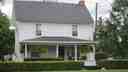
Look for a two-story white clapboard house with a broad front porch running the full width of the building and a sharply peaked gable roof facing the street-it's tucked behind…더 보기간략히 보기
Look for a two-story white clapboard house with a broad front porch running the full width of the building and a sharply peaked gable roof facing the street-it's tucked behind some neatly trimmed shrubs and shaded by leafy trees. Now, as you’re standing here, imagine the year is 1908. The air smells faintly of sawdust and new beginnings, and all around you is the bustle of small-town Michigan. But this house you’re looking at? It’s more than just a home. When Mary Miller bought this place, it was an ordinary clapboard house, possibly an old barn in disguise. She must have taken one look at its creaky floors and crooked porch and thought, “Hospital!”-as you do. With just one extra nurse, Mary transformed her living room into an operating room, and her bedroom into patient beds. Doctors would hurry over with patients needing more care than a house call could offer, and for a while, medical miracles happened under this very roof with little more than determination and elbow grease. By 1910, the townsfolk realized what a treasure the Miller Hospital was, and bit by bit, the hospital grew-another operating room popped up, and soon you had a ten-bed facility! In 1916, Mary handed things over to Bertha Bowman, and not long after, the town built brand new hospitals. But everything started right here, in the humble home that dared to dream big. If these walls could talk, they’d have some pretty impressive tales-and maybe ask if you’ve washed your hands!
전용 페이지 열기 →Standing in front of you is a grand red-brick building with a strong rectangular shape, tall double-hung windows, and a central doorway framed by a stone plaque that proudly reads…더 보기간략히 보기
Standing in front of you is a grand red-brick building with a strong rectangular shape, tall double-hung windows, and a central doorway framed by a stone plaque that proudly reads “LINCOLN SCHOOL 1915”-just look for the bold, classical lines and the symmetrical windows. Here’s a place with more personalities than your average chameleon. Back in 1915, Owosso had so many students that the town decided it was time to give the tired old Union School a break-so along came this beauty, designed by Samuel Dana Butterworth and built by the Rickman Sons Company. The halls buzzed with schoolkids and the scent of chalk until 1980, when Lincoln School finally hung up its coat as an elementary school. After that, it stopped playing host to spelling bees and instead moonlighted as a storage stash and headquarters for the district’s maintenance crew. In 2005, the building switched gears again, transforming into Lincoln Alternative Education High School, where it welcomed students until 2011-then, just to keep things dramatic, it stood silent and empty for several years. But, like any good underdog story, a transformation was brewing. In 2018, the old school reopened its doors, but this time as Lincoln House Apartments, where the echoes of students’ laughter have been replaced by the clatter of coffee cups and microwaves. From classrooms to cozy homes, this building has truly aced every chapter!
전용 페이지 열기 →You’ll spot the Michigan Avenue-Genesee Street Historic Residential District right in front of you-just look for the beautifully detailed houses lined up close together, showing…더 보기간략히 보기
You’ll spot the Michigan Avenue-Genesee Street Historic Residential District right in front of you-just look for the beautifully detailed houses lined up close together, showing off decorative woodwork and porches, some painted in deep greens and soft yellows, on narrow streets that practically invite you to imagine the stories within. Now take a moment to stand still and imagine yourself in the late 1800s, boots clicking on a strip of brick road, surrounded by the sounds of new industry and dreams taking root. This district sprang up as Owosso flourished-factories buzzed nearby, the commercial district boomed, and the city drew in fine craftsmen eager for a patch of opportunity. Shopkeepers and skilled workers built their lives here, and with every new family, another home appeared-each one as unique as its owner. You’ll find 32 houses, almost all from the 1800s, showing off everything from Greek Revival dignity to Queen Anne whimsy, and Eastlake’s playful flourishes. There’s the Eli Gregory house at 416 Genesee, standing tall since around 1860-the oldest in the neighborhood. It started out classic and dignified, then got a fancy French Second Empire upgrade by Mayor Gregory himself. Then, over at 220 Michigan, Granville North built a proud Queen Anne home before passing it to Charles Rigley, who ran the Estey Manufacturing Company. Just down the way, you’ll see the Louis Hall Residence with its elegant, columned porch-maybe not a Greek god, but those Ionic columns sure try! And don’t miss the Samuel Gardner house, where intricate Eastlake trim dazzles the eye and hints at the parade of craftspeople who lived inside-all telling stories with every carved spindle and pane of glass. Imagine laughter spilling out of open windows on summer evenings, neighbors sharing a wave as they hurry to work in the factories or shops. Through all these years, the care poured into these homes has kept the neighborhood strong and inviting-each house a chapter in Owosso’s ever-evolving story.
전용 페이지 열기 →
4개 정류장 더 보기정류장 적게 보기expand_moreexpand_less
To spot the Ebenezer Gould House, look for the red wooden house with white trim, a gable roof, two tall chimneys, and a cozy porch nestled between neatly trimmed hedges and…더 보기간략히 보기
To spot the Ebenezer Gould House, look for the red wooden house with white trim, a gable roof, two tall chimneys, and a cozy porch nestled between neatly trimmed hedges and towering evergreens. Now, let’s take you back in time-it’s the 1840s, and you’d hear the steady as Ebenezer Gould arrives in Owosso, ready to make his mark. He starts out with a modest grocery store, but soon upgrades his living situation and builds this sturdy T-shaped Greek Revival house. Just picture Ebenezer on that porch, sleeves rolled up, chatting about groceries and riverboats with neighbors. Soon, though, the story takes a twist: Ebenezer hangs up his apron and picks up the law books, helping form the Owosso and Saginaw Navigation Company. Thanks to him, the Shiawassee River was cleared for boats-imagine the excitement as those first vessels made their way through town! But wait, there’s more: when the Civil War broke out, guess who grabbed his uniform and headed south? That’s right-our very own Ebenezer, who’d return home as a colonel, medals gleaming. The echoes of those days linger here, along with tales of courthouse drama and victories in the river that made Owosso bustle. Years rolled on and new stories moved in. Lyman E. Woodard, the furniture and casket king himself, once called this house home. Fast-forward to the 20th century, the Storrer family moved in-then in 1991, the house itself packed up and rolled through town, landing at Corunna Historical Village to escape the jaws of a McDonald’s bulldozer! Now, maintained by passionate volunteers, the Gould House stands as a time traveler’s dream, ready for the next story-you, standing right here, adding your own footsteps to its wooden porch.
전용 페이지 열기 →To spot the Lyman Woodard Company Workers' Housing, just look for a big, two-story red brick building on the corner with a line of tall windows framed in red and a big sign that…더 보기간략히 보기
To spot the Lyman Woodard Company Workers' Housing, just look for a big, two-story red brick building on the corner with a line of tall windows framed in red and a big sign that reads “H.K. Allen Paper Co.” Alright, you’re standing in front of a piece of Owosso history, but don’t be fooled by the paper company sign-this red-bricked building once buzzed with the laughter and conversations of Lyman Woodard’s workers. Imagine it’s the 1880s: the air is filled with the smell of cut wood and varnish from the factory next door, and footsteps echo up and down these very sidewalks as young craftsmen hustle into their new, temporary home. Woodard needed talent for his bustling furniture and casket business, but Owosso’s housing market was tighter than a jam jar lid. So, what’s a clever businessman to do? Build his own lodging, right here beside the factory! Workers would hurry between the cheerful rows of tall arched windows you see; maybe they’d peek out at lunchtime, eyeing the competition’s factory across town, plotting how to out-craft them. Over the years, the building’s purpose changed, switching from hardworking housing to commercial hustle, but if these old brick walls could talk, they’d whisper about camaraderie, ambition, and maybe a few arguments over whose turn it was to stoke the stove on a cold Michigan morning.
전용 페이지 열기 →You’re looking for a huge, red-brick factory complex on your left, with rows of tall, arched windows stretching five stories high and “Owosso Casket Company” still painted proudly…더 보기간략히 보기
You’re looking for a huge, red-brick factory complex on your left, with rows of tall, arched windows stretching five stories high and “Owosso Casket Company” still painted proudly near the roof. Picture yourself in the late 1800s: Owosso is bustling, and the air is thick with sawdust and the clack-clack of machinery. This massive building, brainchild of Lyman E. Woodard, was the beating heart of not just furniture-but a casket empire! Lyman, who moved here from New York, wasn’t just your average carpenter. He built his business like a buffet-offering everything from plain pine beds to fancy walnut masterpieces. If you had money, you could sleep in luxury. If you were on a budget, well, at least you had somewhere to lay your head. By 1885, he’d gotten so successful that he put up this sprawling place-right at the corner of Cass and Elm. In 1888, disaster struck when a fire roared through part of the factory, but Lyman wasn’t one to be kept down; he rebuilt the same year, hammering away, determined to keep business running. When Lyman passed in 1904, his sons took over, focusing their energy on furniture and the casket world. Strangely enough, the flu epidemic of the 1910s made business boom-let’s just say demand for caskets was, unfortunately, at an all-time high. By the 1920s, this was the world’s largest casket maker, filling trains with their creations from right here. But the Great Depression wasn’t a friend to anyone, not even the Woodards. By 1942, the family’s original companies were gone, and Lee Woodard started over, this time with metal furniture. The building in front of you saw it all: fortune, fire, growth, and survival. Imagine workers pouring out those doors at shift change, or the sound of busy hands in every window. Today, it stands mostly silent, like a giant brick memory box, keeping Owosso’s wild industrial dreams alive.
전용 페이지 열기 →To spot the Lee Woodard and Sons Building, look for a massive four-story red brick factory with rows of arched windows-it’s right in front of you, dominating the view along South…더 보기간략히 보기
To spot the Lee Woodard and Sons Building, look for a massive four-story red brick factory with rows of arched windows-it’s right in front of you, dominating the view along South Elm Street. Now imagine it’s the year 1900: the air hums with the clatter of saws and the scent of fresh-cut wood. Lyman Woodard, legendary for his furniture and casket company, has just built this brick giant to keep up with booming demand-but trouble’s brewing. Just four years later, Lyman passes away, throwing the company into crisis. Enter Lee Woodard-son, savior, and soon-to-be metal furniture mastermind! With wood in decline, Lee has a wild idea: swap out the saws for metal presses. Soon, those arched windows flicker with torchlight and the clang of metal beats through the building. In the Great Depression, things took a nosedive again, but Lee turned the factory into a war machine, churning out parts for World War II. When peace returned, so did the furniture-this time, all metal, and once again the business thrived. Decades passed, and by 1995, they’d outgrown this spot, moving elsewhere. But these sturdy walls didn’t rest for long: today, the factory has new life as the Woodard Station Lofts, where stylish living meets industrial legacy. You’re standing where Owosso’s grit and ingenuity turned metal into magic-now that’s a solid finish!
전용 페이지 열기 →
자주 묻는 질문
투어는 어떻게 시작하나요?
구매 후 AudaTours 앱을 다운로드하고 교환 코드를 입력하세요. 투어를 바로 시작할 수 있습니다 - 재생을 탭하고 GPS 안내 경로를 따라가시면 됩니다.
투어 중 인터넷이 필요한가요?
아닙니다! 시작 전에 투어를 다운로드하면 완전히 오프라인으로 즐길 수 있습니다. 채팅 기능만 인터넷이 필요합니다. 모바일 데이터 절약을 위해 WiFi에서 다운로드하시는 것을 권장합니다.
이것은 가이드가 안내하는 단체 투어인가요?
아닙니다 - 이것은 셀프 가이드 오디오 투어입니다. 폰을 통해 오디오 나레이션을 들으며 나만의 속도로 독립적으로 탐험합니다. 투어 가이드도, 단체도, 일정도 없습니다.
투어는 얼마나 걸리나요?
대부분의 투어는 60-90분이 소요되지만, 속도는 전적으로 본인이 조절합니다. 원할 때 언제든지 일시정지하거나, 정류장을 건너뛰거나, 휴식을 취하세요.
오늘 투어를 끝낼 수 없으면 어떻게 하나요?
괜찮습니다! 투어는 평생 이용이 가능합니다. 원할 때 언제든지 일시정지하고 다시 시작하세요 - 내일, 다음 주, 또는 내년에도. 진행 상황이 저장됩니다.
어떤 언어를 이용할 수 있나요?
모든 투어는 50개 이상의 언어로 이용 가능합니다. 코드를 교환할 때 원하는 언어를 선택하세요. 참고: 투어 생성 후에는 언어를 변경할 수 없습니다.
구매 후 투어는 어디에서 이용하나요?
App Store 또는 Google Play에서 무료 AudaTours 앱을 다운로드하세요. 교환 코드(이메일로 전송됨)를 입력하면 라이브러리에 투어가 나타나며, 다운로드하여 시작할 수 있습니다.
투어가 마음에 들지 않으시면 환불해 드립니다. 문의: [email protected]
안전한 결제