AudaTours logoAudaTours

뉴욕시 오디오 투어: 시빅 센터의 정의의 메아리

오디오 가이드3 정류장

로어 맨해튼의 반짝이는 고층 빌딩 아래에는 도시의 매끄러운 현대적 외관을 거부하는 이야기들이 숨어 있습니다. 이곳에서는 대리석 홀에 스캔들이 울려 퍼지고, 조용한 포장도로 아래에는 잊혀진 무덤이 숨겨져 있으며, 돌로 된 외벽은 폭동과 혁명을 목격했습니다. 이 셀프 가이드 오디오 투어는 관광객의 발길이 닿지 않는 곳으로 벗어나 시빅 센터 랜드마크에 숨겨진 비밀을 밝혀내고, 대부분이 그냥 지나치는 날것 그대로의 드라마를 발견하도록 초대합니다. 치명적인 권력 투쟁 속에서 서러게이트 법원의 우아한 문 뒤에서 누가 모든 것을 걸었을까요? 아프리카 매장지 국립 기념물 아래 당신의 발밑에는 어떤 비밀이 잠들어 있을까요? 280 브로드웨이의 소박한 로비는 왜 잊혀진 반란의 흔적으로 반짝일까요? 구불구불한 보도와 그림자 진 아치를 따라가며 음모와 대담한 저항의 맥박을 추적하세요. 뉴욕의 신경 중심부를 들여다보고, 보이는 모습이 아닌 진정한 도시의 모습을 발견하세요. 지금 바로 뛰어들어 당신의 다음 발걸음 아래 숨겨진 맨해튼의 비밀을 밝혀내세요.

투어 미리보기

map

이 투어에 대하여

  • schedule
    소요 시간 30–50 mins나만의 속도로 이동
  • straighten
    0.5 km 도보 경로안내 경로 따라가기
  • location_on
    위치뉴욕, 미국
  • wifi_off
    오프라인 작동한 번 다운로드, 어디서든 사용
  • all_inclusive
    평생 이용언제든지 다시 재생 가능
  • location_on
    아프리카 매장지 국립 기념물에서 시작

이 투어의 정류장

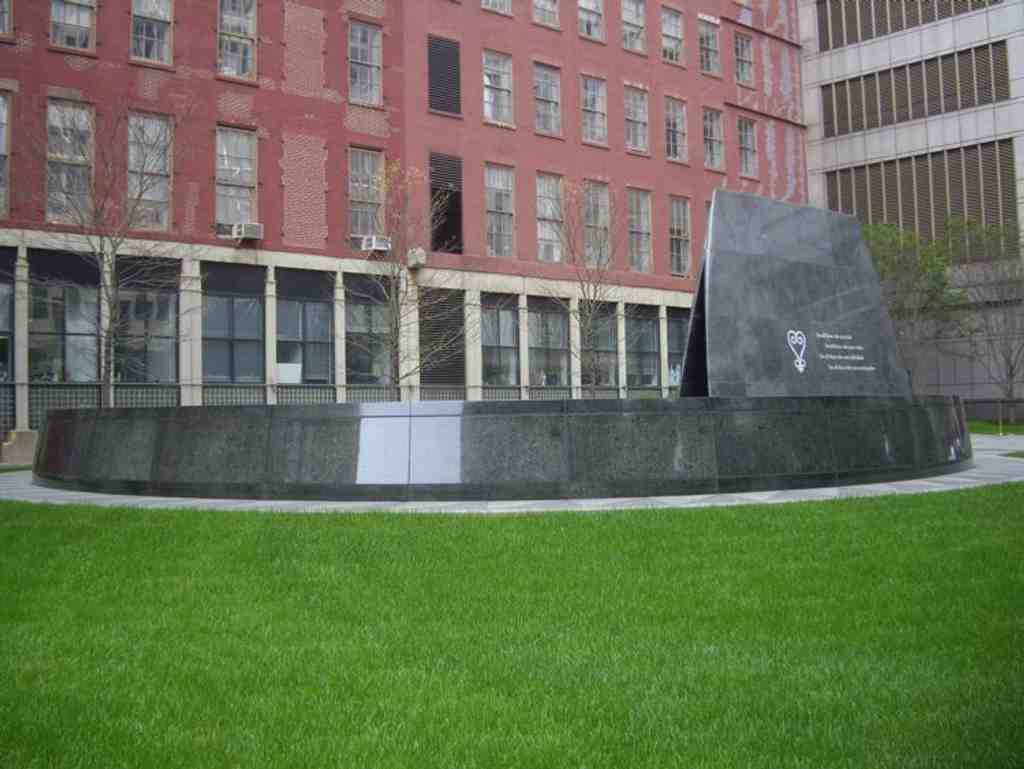
  1. Right ahead, you'll spot a large, circular stone monument with a striking slanted granite structure rising up, set in a patch of bright green grass, right between the red-brick…더 보기간략히 보기

    Right ahead, you'll spot a large, circular stone monument with a striking slanted granite structure rising up, set in a patch of bright green grass, right between the red-brick building and the more modern high-rise-look for the dark, almost reflective stone against the lighter backdrop. Now, let me whisk you back to a New York City you might not recognize! Imagine standing here, but it’s the late 1600s and 1700s-way before all these skyscrapers. This spot you’re looking at was once a huge cemetery, the final resting place for tens of thousands of Africans and African Americans, both free and enslaved, who built the city’s foundations-yes, literally and figuratively. You’re standing where, for years, history tried desperately to keep its secrets-until they were dug up in a most dramatic fashion. Picture dusty streets at the edge of colonial New York, with people coming from the Congo, Angola, and Guinea, speaking many languages and carrying the sounds, stories, and hopes of their homelands. Some were enslaved, some managed to carve out patches of freedom, and together, they shaped the city’s earliest days. But when the English took over the city and called it New York, rules got stricter, and the men and women who built so much were denied even the right to be buried within city boundaries. So this five to six-acre patch just outside the old town limits became their sacred ground-eventually stretching into what might have been the largest colonial-era African burial ground in North America. Their stories were almost buried forever-quite literally! As New York grew, the cemetery was forgotten under new construction and landfill, so much so that people started putting up buildings and hotels right on top! A department store even opened here in 1846. Every now and then, workers would dig up bones and wonder who they might have been-there were even relic hunters snatching bones as odd souvenirs. Yes, people in the 1800s had some pretty odd ideas for collectibles! Now, fast-forward to 1991. Picture this: heavy construction equipment rumbling down, workers digging deep for a new federal office building, when suddenly-out come eight perfectly intact skeletons. The community was stunned. As more burials were uncovered, New Yorkers protested fiercely to protect this important site. Archaeologists got involved, and by the time the digging stopped, they’d uncovered over 419 burials, half of them children. Those skeletons revealed just how tough life was- think malnutrition, hard labor, disease, and far too many young lives cut short. And yet, there’s a powerful story of resilience here. Even though some bodies had items from Africa-pendants, filed teeth, focused burial rituals-others bore marks of a new American identity, shaped by hardship and hope. The remains were studied with great respect, and in 2003, they were finally reburied in a ceremony that brought together thousands of people in cities all along the East Coast, from Washington D.C. to Manhattan. Behind you, you’ll see the Ted Weiss Federal Building-part of that long, complicated tale of discovery and preservation. The memorial before you was designed to honor this legacy: the tall granite Ancestral Chamber echoes the depth of the original graves, bearing African symbols inviting us to learn from the past. The ringed Circle of the Diaspora shows the Atlantic routes of the slave trade, its stones connecting continents just as fate connected people. Visitors now come from all over the world, often pausing in the quiet, grassy space, maybe hearing distant traffic, but sensing something greater-a connection to those who built New York but were nearly erased from its story. If you walk into the visitor center, you’ll find stories, artifacts, and even a life-sized tableau of a funeral. Funny how a place once hidden beneath feet of dirt now stands at the surface, proud and impossible to ignore! So, take a moment-feel the energy of this sacred ground, where layers upon layers of New York’s history still linger. Not every city gives you the chance to visit a site that rewrote the way we see its past. And hey, whether you’re a local or a visitor, you’ve just uncovered one of New York’s most important stories-without even getting your shoes muddy! Wondering about the africans and african americans in new york city, memorial or the legacy? Feel free to discuss it further in the chat section below.

    전용 페이지 열기 →

  2. Right ahead, you'll spot a large, circular stone monument with a striking slanted granite structure rising up, set in a patch of bright green grass, right between the red-brick…더 보기간략히 보기

    Right ahead, you'll spot a large, circular stone monument with a striking slanted granite structure rising up, set in a patch of bright green grass, right between the red-brick building and the more modern high-rise-look for the dark, almost reflective stone against the lighter backdrop. Now, let me whisk you back to a New York City you might not recognize! Imagine standing here, but it’s the late 1600s and 1700s-way before all these skyscrapers. This spot you’re looking at was once a huge cemetery, the final resting place for tens of thousands of Africans and African Americans, both free and enslaved, who built the city’s foundations-yes, literally and figuratively. You’re standing where, for years, history tried desperately to keep its secrets-until they were dug up in a most dramatic fashion. Picture dusty streets at the edge of colonial New York, with people coming from the Congo, Angola, and Guinea, speaking many languages and carrying the sounds, stories, and hopes of their homelands. Some were enslaved, some managed to carve out patches of freedom, and together, they shaped the city’s earliest days. But when the English took over the city and called it New York, rules got stricter, and the men and women who built so much were denied even the right to be buried within city boundaries. So this five to six-acre patch just outside the old town limits became their sacred ground-eventually stretching into what might have been the largest colonial-era African burial ground in North America. Their stories were almost buried forever-quite literally! As New York grew, the cemetery was forgotten under new construction and landfill, so much so that people started putting up buildings and hotels right on top! A department store even opened here in 1846. Every now and then, workers would dig up bones and wonder who they might have been-there were even relic hunters snatching bones as odd souvenirs. Yes, people in the 1800s had some pretty odd ideas for collectibles! Now, fast-forward to 1991. Picture this: heavy construction equipment rumbling down, workers digging deep for a new federal office building, when suddenly-out come eight perfectly intact skeletons. The community was stunned. As more burials were uncovered, New Yorkers protested fiercely to protect this important site. Archaeologists got involved, and by the time the digging stopped, they’d uncovered over 419 burials, half of them children. Those skeletons revealed just how tough life was- think malnutrition, hard labor, disease, and far too many young lives cut short. And yet, there’s a powerful story of resilience here. Even though some bodies had items from Africa-pendants, filed teeth, focused burial rituals-others bore marks of a new American identity, shaped by hardship and hope. The remains were studied with great respect, and in 2003, they were finally reburied in a ceremony that brought together thousands of people in cities all along the East Coast, from Washington D.C. to Manhattan. Behind you, you’ll see the Ted Weiss Federal Building-part of that long, complicated tale of discovery and preservation. The memorial before you was designed to honor this legacy: the tall granite Ancestral Chamber echoes the depth of the original graves, bearing African symbols inviting us to learn from the past. The ringed Circle of the Diaspora shows the Atlantic routes of the slave trade, its stones connecting continents just as fate connected people. Visitors now come from all over the world, often pausing in the quiet, grassy space, maybe hearing distant traffic, but sensing something greater-a connection to those who built New York but were nearly erased from its story. If you walk into the visitor center, you’ll find stories, artifacts, and even a life-sized tableau of a funeral. Funny how a place once hidden beneath feet of dirt now stands at the surface, proud and impossible to ignore! So, take a moment-feel the energy of this sacred ground, where layers upon layers of New York’s history still linger. Not every city gives you the chance to visit a site that rewrote the way we see its past. And hey, whether you’re a local or a visitor, you’ve just uncovered one of New York’s most important stories-without even getting your shoes muddy! Wondering about the africans and african americans in new york city, memorial or the legacy? Feel free to discuss it further in the chat section below.

    전용 페이지 열기 →
  3. 280 Broadway is the giant marble building stretching along the corner of Broadway and Chambers Street-just look for its pale stone facade, classic columns, and keep your eyes out…더 보기간략히 보기

    280 Broadway is the giant marble building stretching along the corner of Broadway and Chambers Street-just look for its pale stone facade, classic columns, and keep your eyes out for the four-sided clock perched above the entrance on the corner. Imagine yourself standing outside this grand, pale building as the city rushes by, horns honking, the air thick with the scent of roasting chestnuts from a nearby vendor. The chill in the air makes the marble sparkle just a bit more. Before you stands not just a building but the “Marble Palace”-a nickname that dates back to when this place dazzled 19th-century New Yorkers, who had never seen anything quite like it. Back in the 1840s, this corner was a leap into the wild future. Alexander Turney Stewart, an enterprising Irish immigrant, saw more than just a chance for a corner shop-he wanted to create a temple to shopping, an architectural marvel of style and commerce. Imagine the sound of horses clopping along an unpaved Broadway while laborers hauled huge marble blocks from Tuckahoe, the ground shaking as temporary railroad tracks clattered by, all to construct the grandest dry-goods store anyone had ever dreamed of. This was New York’s first Italianate commercial building; at a time when most shops were modest brick affairs, Stewart’s store shone with the glow of marble and glittered behind 2,000 panes of imported French plate glass. It had a rotunda so impressive you’d half expect fancy-dressed shoppers to break out in an impromptu waltz-a domed, echoing marvel lined with mahogany counters and a balcony circling above. And instead of haggling over every penny, Stewart introduced the radical idea of fixed prices. Talk about making life easier for those of us with terrible poker faces! But here’s where things get even more interesting: underneath your feet, long before the shoppers came, this ground was part of the old Negros Burial Ground, where the remains of New Yorkers of African descent were laid to rest as far back as the 17th century. These layers of city history sit quietly beneath all the storefronts and marble, reminding us that the city is never just what it seems. Through the decades, Stewart’s Marble Palace grew as fast as the city. Stories were added, annexes sprouted, and next door, clerks lived in a special boardinghouse-sort of the first “work-live” concept, except with stricter dress codes and fewer lattes. Eventually, the wealthy buyers drifted uptown, so Stewart followed, shifting the glitzier shopping north but leaving his wholesale empire right here. In its heyday, this place boasted hundreds of clerks, a vast maze of departments, and enough imported lace to wrap the building twice. After Stewart’s death, the Marble Palace became the Stewart Building, and the grand rotunda was lost to time-replaced by a no-nonsense office courtyard. The city considered demolishing the building more than once, but it had other plans. For a time, newspapers like the Sun occupied these halls, leaving behind the famous four-faced clock and its cheerful motto, “It Shines for All.” Generations of municipal employees have called it home ever since, from overworked clerks hauling ledgers to the modern staff of the Department of Buildings. If you look up, you’ll see not just marble but nearly two centuries of ambition, invention, and reinvention. Notice the big thermometer on Reade Street-added in the 1930s to keep New Yorkers guessing how much more summer they had to sweat through. Or the subtle quirks where old expansions meet, reminding you that this Goliath was stitched together over decades, not built in a day. So, as the traffic rushes by and you stand in the shadow of those old marble walls, you’re gazing at the very birth of American department stores-a stone-and-glass survivor stuffed with secrets, style, a few scandals, and maybe even a ghostly shopper still looking for a bargain on silk gloves. Intrigued by the site, architecture or the impact? Make your way to the chat section and I'll be happy to provide further details.

    전용 페이지 열기 →

자주 묻는 질문

투어는 어떻게 시작하나요?

구매 후 AudaTours 앱을 다운로드하고 교환 코드를 입력하세요. 투어를 바로 시작할 수 있습니다 - 재생을 탭하고 GPS 안내 경로를 따라가시면 됩니다.

투어 중 인터넷이 필요한가요?

아닙니다! 시작 전에 투어를 다운로드하면 완전히 오프라인으로 즐길 수 있습니다. 채팅 기능만 인터넷이 필요합니다. 모바일 데이터 절약을 위해 WiFi에서 다운로드하시는 것을 권장합니다.

이것은 가이드가 안내하는 단체 투어인가요?

아닙니다 - 이것은 셀프 가이드 오디오 투어입니다. 폰을 통해 오디오 나레이션을 들으며 나만의 속도로 독립적으로 탐험합니다. 투어 가이드도, 단체도, 일정도 없습니다.

투어는 얼마나 걸리나요?

대부분의 투어는 60-90분이 소요되지만, 속도는 전적으로 본인이 조절합니다. 원할 때 언제든지 일시정지하거나, 정류장을 건너뛰거나, 휴식을 취하세요.

오늘 투어를 끝낼 수 없으면 어떻게 하나요?

괜찮습니다! 투어는 평생 이용이 가능합니다. 원할 때 언제든지 일시정지하고 다시 시작하세요 - 내일, 다음 주, 또는 내년에도. 진행 상황이 저장됩니다.

어떤 언어를 이용할 수 있나요?

모든 투어는 50개 이상의 언어로 이용 가능합니다. 코드를 교환할 때 원하는 언어를 선택하세요. 참고: 투어 생성 후에는 언어를 변경할 수 없습니다.

구매 후 투어는 어디에서 이용하나요?

App Store 또는 Google Play에서 무료 AudaTours 앱을 다운로드하세요. 교환 코드(이메일로 전송됨)를 입력하면 라이브러리에 투어가 나타나며, 다운로드하여 시작할 수 있습니다.

verified_user
만족 보장

투어가 마음에 들지 않으시면 환불해 드립니다. 문의: [email protected]

안전한 결제

Apple PayGoogle PayVisaMastercardPayPal

AudaTours: 오디오 투어

재미있고, 경제적이고, 자유로운 셀프 가이드 워킹 투어

앱 체험하기 arrow_forward

전 세계 여행자들에게 사랑받고 있습니다

format_quote 이 투어는 도시를 보는 정말 좋은 방법이었습니다. 이야기들이 너무 대본처럼 느껴지지 않으면서도 흥미로웠고, 나만의 속도로 탐험할 수 있어서 좋았습니다.
Jess
Jess
starstarstarstarstar
Tbilisi 투어 arrow_forward
format_quote 관광객처럼 느끼지 않으면서 Brighton을 알아가는 훌륭한 방법이었습니다. 내레이션에 깊이와 맥락이 있었지만 과하지 않았습니다.
Christoph
Christoph
starstarstarstarstar
Brighton 투어 arrow_forward
format_quote 크루아상을 한 손에 들고 아무 기대 없이 시작했습니다. 앱이 그냥 자연스럽게 함께해 주는 느낌이에요, 부담도 없고, 그냥 나와 이어폰과 멋진 이야기들.
John
John
starstarstarstarstar
Marseille 투어 arrow_forward

무제한 오디오 투어

전 세계 모든 투어의 잠금을 해제하세요

0 투어·0 도시·0 국가
all_inclusive 무제한 탐험