
컬럼비아 오디오 투어: 하이랜드 파크의 유산의 메아리
단 한 통의 대통령 서신이 컬럼비아에서 도시 전체의 운명을 바꾼 적이 있습니다. 이곳에서는 비밀 계단과 속삭이는 거래가 대부분의 사람들이 알지 못하는 방식으로 역사를 형성했습니다. 이 셀프 가이드 오디오 투어를 통해 자신만의 속도로 거닐어 보세요. 하이랜드 파크와 그 유명한 이웃들을 정의하는 숨겨진 이야기들을 따라가며, 일반 여행객들이 놓치는 전설과 지역의 진실을 밝혀보세요. 한밤중의 정치적 대결 동안 폴크 하우스 문 뒤에서는 실제로 무슨 일이 일어났을까요? 아테네움은 왜 역사가들이 여전히 논쟁하는 비밀을 지키고 있을까요? 어떤 예상치 못한 재료가 처치 하우스에서 스캔들을 촉발하여 컬럼비아에 영원히 흔적을 남겼을까요? 그늘진 현관에서 역사적인 거리로 이동하며, 반란과 야망의 메아리가 여전히 남아있는 곳을 느껴보세요. 극적인 전환, 잊혀진 불화, 그리고 갑작스러운 아름다움을 경험하며 컬럼비아를 새롭게, 층층이, 한 걸음 한 걸음씩 발견해 보세요. 대통령, 반란군, 그리고 선구자들의 길을 따를 준비가 되셨나요? 지금 시작하여 도시가 가장 잘 간직한 비밀을 드러내도록 하세요.
투어 미리보기
이 투어에 대하여
- schedule소요 시간 30–50 mins나만의 속도로 이동
- straighten2.7 km 도보 경로안내 경로 따라가기
- location_on
- wifi_off오프라인 작동한 번 다운로드, 어디서든 사용
- all_inclusive평생 이용언제든지 다시 재생 가능
- location_on유니언 역에서 시작
이 투어의 정류장
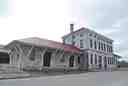
If you’re looking for Union Station, just spot the tall, rectangular stone building with a reddish metal roof and three big arched doorways on its front-it stands right by the…더 보기간략히 보기
If you’re looking for Union Station, just spot the tall, rectangular stone building with a reddish metal roof and three big arched doorways on its front-it stands right by the roadside, ready to jump out of Tennessee history! Now picture yourself here in 1905, the scent of locomotive smoke in the cool morning air, as the Union Station bustles with people eager for a train ride. Back then, the Nashville, Chattanooga and St. Louis Railway and the Louisville and Nashville Railroad worked together to bring this depot to life. Before this grand station, Columbia’s train adventures began in the 1870s with the Duck River Valley Narrow Gauge Railroad-imagine, the first steam engines chugging only six miles out of town, creaking along tracks that changed gauges like a magician swapping hats! The line stretched its iron fingers to Petersburg and Fayetteville, but it always seemed to face money trouble, switching owners more often than a hot potato at a family picnic. Over years, tracks were adapted and abandoned, but the depot stood strong, seeing off passengers, mail, and more than a few stray dogs. Even after service ended, and the building became offices and apartments, legend has it that its walls remembered the busy sounds of Columbia’s big train days. Now, even after becoming vacant, it’s found a little hope again-restoration plans are on track, so to speak. If these stone walls could talk, I bet they’d have a whistle or two left in them!
전용 페이지 열기 →To spot Rally Hill, look for the impressive two-and-a-half-story brick mansion with tall white columns and a welcoming porch right ahead of you, tucked behind a line of old shade…더 보기간략히 보기
To spot Rally Hill, look for the impressive two-and-a-half-story brick mansion with tall white columns and a welcoming porch right ahead of you, tucked behind a line of old shade trees. Now, picture this stately house around 1848: a young James Walker, brother-in-law to President James K. Polk, stands proudly on that front porch, perhaps rolling up the latest edition of The Western Chronicle. This is where the whispers of national politics and family secrets might have buzzed beneath the solid roof. Life here was busy, with Walker’s wife, Jane Maria Polk, and their three boys-one of whom, Lucius M. Walker, would go on to become a Confederate general. Rumor has it, the house was shaped by the dignified Federal style (despite a little Greek Revival confusion sprinkled in later), with its plain brick face and massive pocket doors ready to impress any high-society guest-or wandering tour guide, for that matter! After Walker’s family, Dr. William M. Biddle took over, adding the hustle and bustle of mayoral duties and patient visits to these halls from 1900 to 1912. Imagine stories echoing through its simple trim-history’s drama, a dash of politics, and more than a little Southern charm all bundled into one remarkable mansion, now proudly on the National Register of Historic Places.
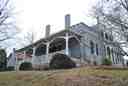
전용 페이지 열기 →To spot the Athenaeum, look up the hill just ahead-you’ll see a gray-blue brick building with towering chimneys, a white porch wrapping around the side, and an eye-catching row of…더 보기간략히 보기
To spot the Athenaeum, look up the hill just ahead-you’ll see a gray-blue brick building with towering chimneys, a white porch wrapping around the side, and an eye-catching row of castle-like battlements along the roofline. As you stand here, imagine it’s the mid-1800s-picture the gentle swish of skirts moving up and down these same steps, and the sharp clip-clop of carriage wheels rolling up the drive. What you’re looking at is no ordinary house! Welcome to the Athenaeum Rectory, a building that’s witnessed more drama than a whole season of your favorite TV show. This landmark originally began construction back in 1835, meant to be a swanky home for Samuel Polk Walker, the nephew of President James K. Polk. But before the last brick was set, plans changed-talk about a real estate twist-and the Reverend Franklin Gillette Smith moved in as the first president of the Columbia Female Institute. Now, here’s where the excitement starts: By 1851, Smith left the Institute under, let’s say, less-than-glowing circumstances, thanks to some rumored improprieties. A little bit of scandal, a dash of public outrage, and Bishop Otey, who’d asked for Smith’s resignation, got so much heat from loyal locals that he moved the entire bishop’s headquarters to Memphis! But Smith wasn’t one to mope around. Instead, he planted new educational roots right next door by founding the Columbia Athenaeum School. Imagine girls of the 19th century, long dresses rustling as they studied calculus, physics-even marine biology, which, let’s be honest, most boys weren’t even getting. Reverend Smith believed women’s minds were just as sharp as men’s, which at the time, was about as radical as suggesting your pet cat could run for mayor. For 52 years, the Athenaeum became known nationwide as a school far ahead of its time, with a sprawling campus of twelve buildings right here. After the school closed in 1903, the building saw new generations of students-and more history-before finding new life as a museum. Today, the Athenaeum is not only a monument to grand ideas but also boasts television fame as a haunted stop on “Haunted Live.” Did you feel a chill just now? Maybe it’s the ghost of Reverend Smith, still rooting for girl power from the great beyond. If you listen close, you might almost hear echoes of laughter from centuries of students and the creak of old floorboards holding up a thousand memories. So, take a deep breath and look around-this place is history, legend, and just a little bit ghost story, all rolled into one!
전용 페이지 열기 →

8개 정류장 더 보기정류장 적게 보기expand_moreexpand_less
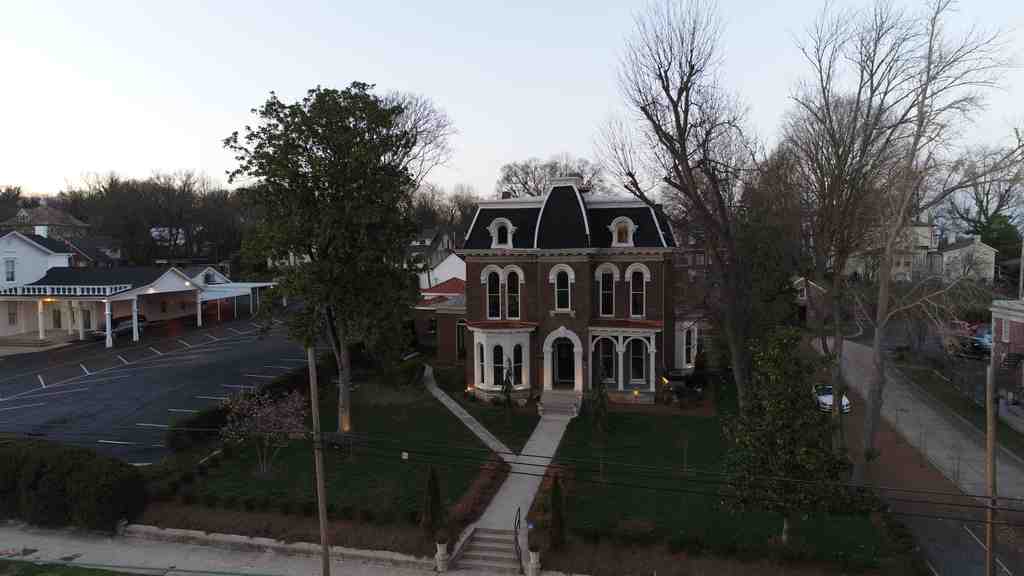
Look straight ahead for a grand, three-story brick mansion with a dramatic black mansard roof and ornate white window arches-it’s right at the end of the sidewalk, framed by big…더 보기간략히 보기
Look straight ahead for a grand, three-story brick mansion with a dramatic black mansard roof and ornate white window arches-it’s right at the end of the sidewalk, framed by big old trees. Welcome to the Church House, or as some still call it, the Barrow House-a true mansion of mystery and magnificence! Imagine yourself stepping back to the 1870s, when Sheriff Latta first commissioned this palatial home, hoping to impress all passersby. You can almost hear the sound of horses’ hooves clattering down the street outside as painters and builders create what would become one of Columbia’s finest examples of Second Empire style architecture. Its mansard roof rises up with such style, you might half-expect to see Sherlock Holmes himself peeking out a dormer window! Run your eyes along the detailed façade: there’s a porch decked out with carved posts, bay windows that bulge with Victorian pride, and those heavy hooded arches-if only doorways could talk, the stories they’d tell! The home even features round-arched windows in ornate dormers, and inside, the rich would have whispered secrets beneath glittering chandeliers as heavy rain pattered on the decorative slate above. Now here’s where the tale gets juicier: Robert Church, a well-known banker and land speculator, bought the place in 1885-locals whispered he was the richest man in town, but the mansion’s real treasure was the generations of the Church family who called it home for nearly a century. But don’t let the name fool you; this wasn’t a church but rather a house so grand and full of life that even the servant quarters and kitchen-a rare luxury back then-were built to impress. Local legend says the architect was Peter J. Williamson from Nashville-clearly, he had a flair for the dramatic. The façade remains nearly untouched, standing proud over this block, just three streets away from the old court square. Can you picture elegant horse-drawn carriages rolling through this once-prestigious neighborhood? Don’t be surprised if you feel a shiver run down your spine; that’s just history brushing past, reminding you that where you stand was once the height of fashion and fortune! Now, on to more mysteries and marvels ahead…
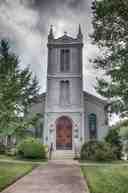
전용 페이지 열기 →Right in front of you stands a tall, gray church with an impressive central tower, arched wooden doors, and pointed gothic spires-just follow the path straight ahead and you can’t…더 보기간략히 보기
Right in front of you stands a tall, gray church with an impressive central tower, arched wooden doors, and pointed gothic spires-just follow the path straight ahead and you can’t miss it! Now, imagine a summer day in 1828: the air thick and hopeful as Columbia’s tiny but determined Episcopal congregation gathers on Garden Street to launch the second church of its kind in Tennessee. Fast-forward to 1860-construction booms and hammers echo, but boom-history has other plans. The Civil War puts building on pause, leaving the future in limbo, with materials waiting in the mud. Incredibly, St. Peter’s doesn’t lose hope; by 1871, the new church building is finally complete, ready to welcome townsfolk into its freshly painted walls. Over the years, St. Peter’s has been a training ground for some legendary leaders-six, count them, six former rectors went on to become bishops, including the famed Leonidas Polk. Peek inside (when you get a chance), and you’ll see the results of a 1926 makeover: a dramatic split chancel, a majestic rood beam, and beautifully carved lecterns. This church doesn’t just rest on its historic laurels-its community gathers at St. John’s, Ashwood, every year for Whitsunday, keeping tradition alive. Even the churchyard has stories to tell, with several bishops from Tennessee resting here under the gentle shade of the trees. So, standing here, you’re not just by a church-you’re at a crossroads where faith, history, and a dash of architectural drama meet!
전용 페이지 열기 →To spot the President James K. Polk Home & Museum, look for an elegant, light brick two-story house with classic green shutters and a grand arched doorway, right on the corner of…더 보기간략히 보기
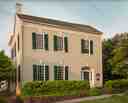
To spot the President James K. Polk Home & Museum, look for an elegant, light brick two-story house with classic green shutters and a grand arched doorway, right on the corner of West 7th and South High streets. Right here in front of you stands a piece of presidential history that has weathered war, family feuds, and more than a few unsolved mysteries about lost outbuildings-welcome to the President James K. Polk Home & Museum! Imagine the year is 1816. The dust from wagon wheels drifts by, and a much-younger James K. Polk-before he picked up the nickname “Napoleon of the Stump”-is wandering through this very doorway, probably wishing he had a smartphone just to Google what a gabled roof even is. Built by Samuel Polk, James’s father, this house is not only the oldest Polk structure in Tennessee, but it’s also the only private residence tied to a president that’s survived the march of time. Now, let me paint a picture: the front entrance you see is tucked into the corner bay, surrounded by crisp green shutters and crowned with a delicate semi-oval window. Picture James’s mother gazing out from those upper windows, keeping an eye on her children or, possibly, on the neighbors’ fashion choices. The layout inside still hints at its early 1800s vibe-a world without electricity, where a creaky staircase could announce your arrival to the entire family much louder than any group text. The interior has been adapted for museum displays, but plenty of the original finishes remain. Young James lived here on and off for about six years, splitting his days between reading law in Nashville and struggling with his siblings for the last piece of cornbread. Eventually, he and his wife, Sarah Childress, moved just down the street; irony of history, that house is now a parking lot… It’s not all pageantry and politics, folks. After James’s father died, Polk owned this house for a spell, and after his mother’s death in 1852, it began its journey through the hands of various owners-including Polk’s brother and nephew-before passing out of the family entirely in 1871. The home then found itself nearly lost in time, until a determined great-great niece swooped in, joined forces with the state, and snagged it for posterity in 1929. Talk about family commitment! The grounds have seen a few changes, including a reconstructed kitchen outbuilding, because apparently history had a habit of burning down the good stuff (real kitchens from Polk’s time are long gone). What’s perhaps most intriguing is that after President Polk’s later home, Polk Place, was demolished, precious relics like garden urns and a literal fountain were rescued and plopped right here, rescuing history with every chunk of marble. And the twists only keep coming. After Polk’s presidency, his wife Sarah became the guardian of his legacy, passing personal treasures to her great-niece, Sallie Fall, who bravely transformed her own home into a sort of presidential museum lite. With crowds of curious folks passing through, you could almost hear the floorboards sigh with relief when in 1929 the real Polk Home was reopened-this time as the full-fledged museum you’re standing before. More recently, in a tale worthy of its own Netflix series, the Tennessee Senate even tried to move President Polk’s and his wife’s remains to the grounds here-debates raged, votes were cast, and, just like the best political dramas, the outcome left everyone biting their nails and waiting for the next decision. So as you stand in front of this L-shaped marvel, imagine the laughter of Polk children, the heated conversations about the future of the young country, and the determined footsteps of preservationists determined not to let these stories slip away into the shadows of modern life. The President James K. Polk Home & Museum isn’t just a building-it’s a stubborn, spirited time traveler that refuses to be forgotten, no matter how many parking lots try to take its place!
전용 페이지 열기 →To spot the First United Methodist Church, look for the tall red-brick tower with arched wooden doors and a striking white-trimmed circular stained-glass window on the…더 보기간략히 보기
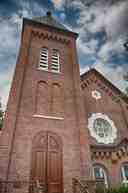
To spot the First United Methodist Church, look for the tall red-brick tower with arched wooden doors and a striking white-trimmed circular stained-glass window on the front. Standing here on 7th Street, take a moment to imagine 1821, when just seven folks gathered as the First Methodist Society and entrusted famous master builder Nathan Vaught to raise their first humble frame church nearby. But this congregation had tenacity in its bones, growing and outgrowing its homes, until Vaught himself built a bigger church on this spot in 1836. Trouble knocked in 1874-a fire swept through, turning hopes and timbers to ash. Yet, like the world’s most determined phoenix, the community rallied, brick by brick, and by 1876 you’d have found people crowding into this soaring new sanctuary, sunlight pouring through intricate stained glass. Pop inside and you might spot President James K. Polk pictured in the windows-just don’t let him hear you call him the 11th president! Back then, John Tyler was only “filling in,” or so the church thought-every congregation has its quirks! Now, this landmark stands proudly on the National Register of Historic Places, a nod to the faith and fiery perseverance that shaped Columbia’s heart.
전용 페이지 열기 →Look for a grand brown brick mansion with four enormous white Corinthian columns along the front-it's hard to miss behind the wrought-iron fence, right in front of you! Now that…더 보기간략히 보기
Look for a grand brown brick mansion with four enormous white Corinthian columns along the front-it's hard to miss behind the wrought-iron fence, right in front of you! Now that you’ve found the Mayes-Hutton House, picture yourself in 1854, when Samuel Mayes decided to wager his future on bricks and dreams instead of cotton and chains. He had a hunch that the era of slavery was ending, so he sold his enslaved people, wound up his business, and set out to build this monumental house-a risky move that definitely called for some nerves of steel and perhaps a dash of hope. Those massive 54-by-58-foot walls, resting on a sturdy limestone foundation, might look a bit intimidating, but let’s be honest-Mayes was probably thinking, “Go big or go home.” The front is all about the wow-factor with its four towering Corinthian columns, elaborate pediment, and a balcony for gazing dramatically at visitors… or just checking the weather. Step inside and it’s a different story: a tastefully simple central hall, an elegant free-standing staircase, and none of the bragging you get from the outside. The place became an official superstar in 1970, landing a spot on the National Register of Historic Places. If these columns could blush, they would!
전용 페이지 열기 →


자주 묻는 질문
투어는 어떻게 시작하나요?
구매 후 AudaTours 앱을 다운로드하고 교환 코드를 입력하세요. 투어를 바로 시작할 수 있습니다 - 재생을 탭하고 GPS 안내 경로를 따라가시면 됩니다.
투어 중 인터넷이 필요한가요?
아닙니다! 시작 전에 투어를 다운로드하면 완전히 오프라인으로 즐길 수 있습니다. 채팅 기능만 인터넷이 필요합니다. 모바일 데이터 절약을 위해 WiFi에서 다운로드하시는 것을 권장합니다.
이것은 가이드가 안내하는 단체 투어인가요?
아닙니다 - 이것은 셀프 가이드 오디오 투어입니다. 폰을 통해 오디오 나레이션을 들으며 나만의 속도로 독립적으로 탐험합니다. 투어 가이드도, 단체도, 일정도 없습니다.
투어는 얼마나 걸리나요?
대부분의 투어는 60-90분이 소요되지만, 속도는 전적으로 본인이 조절합니다. 원할 때 언제든지 일시정지하거나, 정류장을 건너뛰거나, 휴식을 취하세요.
오늘 투어를 끝낼 수 없으면 어떻게 하나요?
괜찮습니다! 투어는 평생 이용이 가능합니다. 원할 때 언제든지 일시정지하고 다시 시작하세요 - 내일, 다음 주, 또는 내년에도. 진행 상황이 저장됩니다.
어떤 언어를 이용할 수 있나요?
모든 투어는 50개 이상의 언어로 이용 가능합니다. 코드를 교환할 때 원하는 언어를 선택하세요. 참고: 투어 생성 후에는 언어를 변경할 수 없습니다.
구매 후 투어는 어디에서 이용하나요?
App Store 또는 Google Play에서 무료 AudaTours 앱을 다운로드하세요. 교환 코드(이메일로 전송됨)를 입력하면 라이브러리에 투어가 나타나며, 다운로드하여 시작할 수 있습니다.
투어가 마음에 들지 않으시면 환불해 드립니다. 문의: [email protected]
안전한 결제 


