
찰스턴 오디오 투어: 신앙, 유산, 숨겨진 이야기의 목소리
한때 속삭임이 찰스턴을 화재로부터 구했지만, 솟아오른 교회들의 그림자 속에서는 숨겨진 반란이 일어났습니다. 이 자갈길 아래에는 비밀과 갑작스러운 드라마가 가득한 도시가 있습니다. 이 셀프 가이드 오디오 투어는 찰스턴의 활기찬 맥박을 따라가며, 대부분의 방문객이 결코 듣지 못하는 이야기들을 풀어냅니다. 유니테리언 교회의 뾰족한 첨탑과 메리언 광장의 울려 퍼지는 잔디밭 사이를 거닐며, 돌에 새겨진 드라마와 스테인드글라스에 얽힌 스캔들을 발견하세요. 누가 야자수 아래에서 폭정에 맞선 봉기를 계획했을까요? 왜 고대 묘지에는 아무도 보지 못하게 감춰진 메시지가 있었을까요? 무엇이 독일 회중으로 하여금 교회 문을 정확히 그 불안한 푸른색으로 칠하게 했을까요? 속삭임으로 가득 찬 구불구불한 길을 따라가세요. 한때 경고를 울리던 종탑 아래에 서보세요. 한 걸음 한 걸음이 찰스턴을 새롭게 드러냅니다—아름다움, 불안, 그리고 알려지지 않은 음모의 도시입니다. 여정을 시작하고, 역사가 남긴 메아리에 귀 기울이세요.
투어 미리보기
이 투어에 대하여
- schedule소요 시간 40–60 mins나만의 속도로 이동
- straighten3.9 km 도보 경로안내 경로 따라가기
- location_on
- wifi_off오프라인 작동한 번 다운로드, 어디서든 사용
- all_inclusive평생 이용언제든지 다시 재생 가능
- location_on메리언 광장에서 시작
이 투어의 정류장
Look ahead: you can’t miss this towering red-brick church with its immense steeple and clock face; just lift your eyes up, way up, and you’ll be staring at the tallest church…더 보기간략히 보기
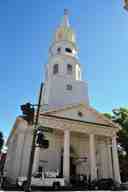
Look ahead: you can’t miss this towering red-brick church with its immense steeple and clock face; just lift your eyes up, way up, and you’ll be staring at the tallest church spire in all of South Carolina! Now, as you stand in front of St. Matthew’s German Evangelical Lutheran Church, imagine you’re stepping into a tale that begins nearly 200 years ago, with the clang of blacksmiths and echoes of German accents swirling in the Charleston breeze. It’s 1840. Charleston is bustling, bursting with new arrivals, when Johann Andreas Wagener and 49 other German-speaking locals decide they want to worship in their own tongue. Their dream? A “cosmopolitan” church-Lutheran, Reformed, Catholic, everyone in one big happy pew. Well, that didn’t quite go as planned (some things never change, right?), so instead they chose the Lutheran path and St. Matthew’s was born, the spiritual home for Charleston’s German community. Early days were anything but easy. Yellow fever haunted the streets, and St. Matthew’s first purchase was a cemetery, known somberly as God’s Acre, just to help families bury their loved ones. As you look up at the church now, imagine Pastor Ludwig Müller, back then, racing from funeral to funeral, sometimes three a day, as Charleston battled wave after wave of disease. Even their worship spaces hopped around, from borrowed lecture halls to old firehouses, and finally, a proper Greek Revival church in 1842. But Charleston’s Germans were a determined bunch: their numbers kept growing, and soon, they needed something grander. Enter the building before you-dedicated in 1872 and designed by an Irish architect with a love for the Gothic. Feel that crisp Charleston air and picture this sanctuary drawing in 3,000 people on its opening day-what a crowd! By the turn of the 20th century, this steeple, soaring 255 feet, was the highest point in South Carolina. It’s still the highest church spire in the state, and honestly, if you had a dollar for every neck craned up at that tower, you’d have… well, enough for a really good Charleston lunch. History poured on, both joyful and tragic. In 1901, ten bells and a grand clock made their home in the steeple-can you almost hear them chiming? But this church knows drama: in 1965, just as twilight hit, smoke began to snake from inside. It started from an innocent lamp, and before long the flames climbed the great roof, winds whipped, and in a moment of shuddering spectacle, the mighty steeple crashed 18 feet to the ground! There’s a chunk of the old steeple preserved right out front, as a reminder of survival and stubborn hope. Instead of fleeing to the suburbs like lemmings, the congregation chose to rebuild, saving precious stained glass and intricate furnishings. By 1966, they were back-sweaty from all the restoration, but triumphant. Of course, Charleston’s storms love putting things to the test, and in 1989, Hurricane Hugo howled in. The copper sheathing peeled away, half the roof was torn off, and water gushed inside as churchgoers waded into the nave to pray by flashlight. Two years and $1.6 million later, the sanctuary glowed again, its cherubs dusted off and windows agleam, ready for music, laughter, and a bit of gospel. And if you listen carefully-besides Sunday morning services broadcast on local radio-sometimes you might catch the Charleston Symphony Orchestra Gospel Choir or a legendary organist from Leipzig making those 61 ranks of pipes roar and whisper. Oh yes, St. Matthew’s has not one, but two grand organs-including the Austin Opus 2465 and the charming Ontko Pipe Organ in the chapel, able to fill this space with everything from thunderous hymns to delicate melodies. And don’t miss the windows-the old ones, some made in Munich, the others from Philadelphia and Pittsburgh. There are saints and martyrs captured in colored glass, stories told in sunlight. If walls could talk, these would sing-Lutherans and Luther, Melanchthon and melancholy, faith, fire, immigration, war, hurricane, hope, quilting bees, and jubilant feasts. Today, St. Matthew’s isn’t just a place for prayer-it’s also a hub for helping. Next door, a restored 1810 building bustles with food pantries, ESL classes, and support programs, championing neighbors in need, newcomers to the city, and even folks in tough times. A place born in troubled days now thrives in the service of joy and compassion. So take it all in-the dizzying spire, the tragedy and rebirth, the organ’s song, the stained glass storybook, and that unbreakable Charleston spirit. If you listen hard enough, you might even hear a ghostly German hymn, or just a very relieved 19th-century pastor saying, “Finally! A little peace and quiet in the sanctuary.” For a more comprehensive understanding of the fire of 1965, hurricane hugo or the community center at st. matthew's, engage with me in the chat section below.
전용 페이지 열기 →
10개 정류장 더 보기정류장 적게 보기expand_moreexpand_less
Look for a bright white, rectangular building with six grand columns out front and tall windows running along the sides, just behind a black wrought-iron fence at 90 Hasell…더 보기간략히 보기
Look for a bright white, rectangular building with six grand columns out front and tall windows running along the sides, just behind a black wrought-iron fence at 90 Hasell Street-trust me, it’s hard to miss! Alright, you’ve got a real jewel of Charleston history in front of you! Standing here, if you listen closely, you might almost hear the distant chatter of early merchants and the rustling of silk-echoes from 1749, when a group of Sephardic Jews arrived from London to make Charleston their new home. This grand structure, Kahal Kadosh Beth Elohim, or KKBE for short, may look like a Greek temple with its enormous Doric columns, but inside, it’s a living legacy of Jewish faith, resilience, and reinvention. Picture the year 1793 when Charleston bustled as a busy port-fresh shipments of tea, rice, and spices arriving on the tides. That’s when the very first version of this synagogue was built, filling the city with the melodies of ancient Portuguese rituals. But then disaster struck: in 1838, a roaring fire swept through Charleston, devouring over 500 buildings, including their house of worship. You can imagine the crackle and roar as flames consumed the synagogue. But out of those ashes, something remarkable emerged-a new Greek Revival temple, built by the hands of enslaved Africans owned by David Lopez Jr., right here in 1840. Deep truths, both painful and honest, are embedded in every brick. KKBE is special for another reason, too: it’s the mother ship of Reform Judaism in America! Back in the 1820s, a group here wondered, why not try something new? Chanting the same prayers as their ancestors in Lisbon and Amsterdam was meaningful, but maybe, just maybe, it was time to write a few new pages in the prayer book. So, they did-sparking a uniquely American version of Reform Judaism, often with ideas as spicy as Charleston’s pepper pot! This building is the oldest synagogue in continuous use in the country and keeps watch over the oldest Jewish cemetery, just nearby. Inside, a mural shows a Jewish Confederate soldier-sword broken, eyes downcast-capturing the bittersweet struggles of the past. There’s more: heroes, leaders, and even a soldier named Joseph Levy once filled these seats. In 2021, a monument appeared out front. Rabbi Stephanie Alexander said it was time to be honest about who built this place-acknowledging the forced labor and honoring those stories, too. As you stand here in the shade of these grand pillars, remember: Charleston’s spiritual heart beats with memories of joy, loss, courage, and hope. Or as I like to say, it’s a story with more twists than my grandma’s challah bread!
전용 페이지 열기 →Right in front of you stands the City Market’s grand Market Hall-a bold ochre-yellow building perched on a high red brick base, with a dramatic staircase divided by swirling green…더 보기간략히 보기
Right in front of you stands the City Market’s grand Market Hall-a bold ochre-yellow building perched on a high red brick base, with a dramatic staircase divided by swirling green ironwork and four enormous columns holding up a triangular Greek temple-like roof; just look for those columns and the double stairs at the corner of Meeting Street and you can’t miss it. Take a deep breath and let yourself be whisked back to Charleston’s bustling days of old, when this market was alive with the clatter of wagon wheels and the cheerful shouts of vendors hawking everything from fresh beef to vegetables. The City Market was born out of necessity after the old Beef Market-yes, a building entirely dedicated to meat-went up in flames in 1796. Instead of just rolling over and ordering takeout, the city decided to set up shop along a marshy strip of land donated by Revolutionary War hero Charles Cotesworth Pinckney and his pals. But there was a catch: this land could only ever be used for a market, or else the city would have to give it back. Talk about pressure! So, between the 1790s and the early 1800s, a patchwork of one-story wooden sheds began stretching from these very stairs down to East Bay Street, making up one of Charleston’s lengthiest landmarks at over 1,200 feet long-just try running that distance with your grocery cart! At its heart is Market Hall, the impressive building before you, added in the 1840s, designed by architect Edward B. White, who took inspiration from Greek and Roman temples. The four Roman Doric columns and the elevated portico-reached by that dramatic double staircase and spruced up with intricate iron railings-were meant to make every visitor feel like shopping was a truly noble pursuit. On top of that, if you squint, you might spot decorative skulls and rams’ heads up in the stone carvings-a nod to the building’s original job as a meat market. Don’t worry, there’s no surprise beef hiding up there today! But the market was more than meat. It was a riot of smells, sights, and sounds, separated into sections for beef, fish, farm produce, and even flowers-and at times, vultures wandered in, gobbling up scraps for a free meal. In fact, vultures were so useful at cleaning things up, the city passed actual laws to protect them. Imagine a city meeting: “Let the record show, the vultures are now official city employees!” The energy here was contagious-locals, whether wealthy planters or working-class families, all mingled as they shopped, swapped gossip, and swapped food. Friends met for drinks and games; the market buzzed with both commerce and camaraderie. Through the centuries, this space turned into Charleston’s social nerve center. But don’t mix it up with the Old Slave Mart nearby-a common mistake! No enslaved people were ever sold right here at the City Market, but it is easy to see why the story gets tangled. Disaster, however, seemed to have a taste for the market: the original headhouse burnt down in 1838, leaving the city scrambling, and just a century later, tornadoes ripped across the sheds, sending market vendors and their goods tumbling into the chaos. There was a time in the early 1900s when the city nearly razed these sheds to the ground to plant gardens or even set up freight stations. Thankfully, local preservationists rallied to save the market-sometimes with creative suggestions like turning the market sheds into bathhouses! In the end, city leaders compromised: the eastern sheds became a bright, inviting covered walkway for all to enjoy, meat stalls congregated on the north, and fruit sellers on the south. Market Hall itself kept reinventing. During the Civil War, the upper room became a military recruiting post, and later, even the mayor worked here when City Hall was out of commission. From 1899 on, the United Daughters of the Confederacy ran a museum upstairs filled with artifacts from Charleston’s Confederate years. In modern times, after a nasty run-in with Hurricane Hugo-who rudely tore off part of the roof-the Hall was restored and proudly sported its original, rather bold, ochre-and-green color scheme, much to the shock of locals who preferred things a little less…sunny. Today, instead of cows and farm produce, you might spot Gullah basket weavers and artists selling sweetgrass baskets, jewelry, and regional crafts. Just imagine the ghosts of all those 19th-century characters, peeking out from the shadows to see what strange treasures today’s vendors have brought to these historic stalls. And if you listen closely, you might even hear faint echoes of wagon wheels on cobblestone and lively market calls floating on the breeze. You’re at the living, beating heart of historic Charleston-where the echoes of centuries never really die down.
전용 페이지 열기 →To spot the Circular Congregational Church’s historic parish house, look for a small, white, Greek Revival building with a grand entrance at the top of two elegant curved…더 보기간략히 보기
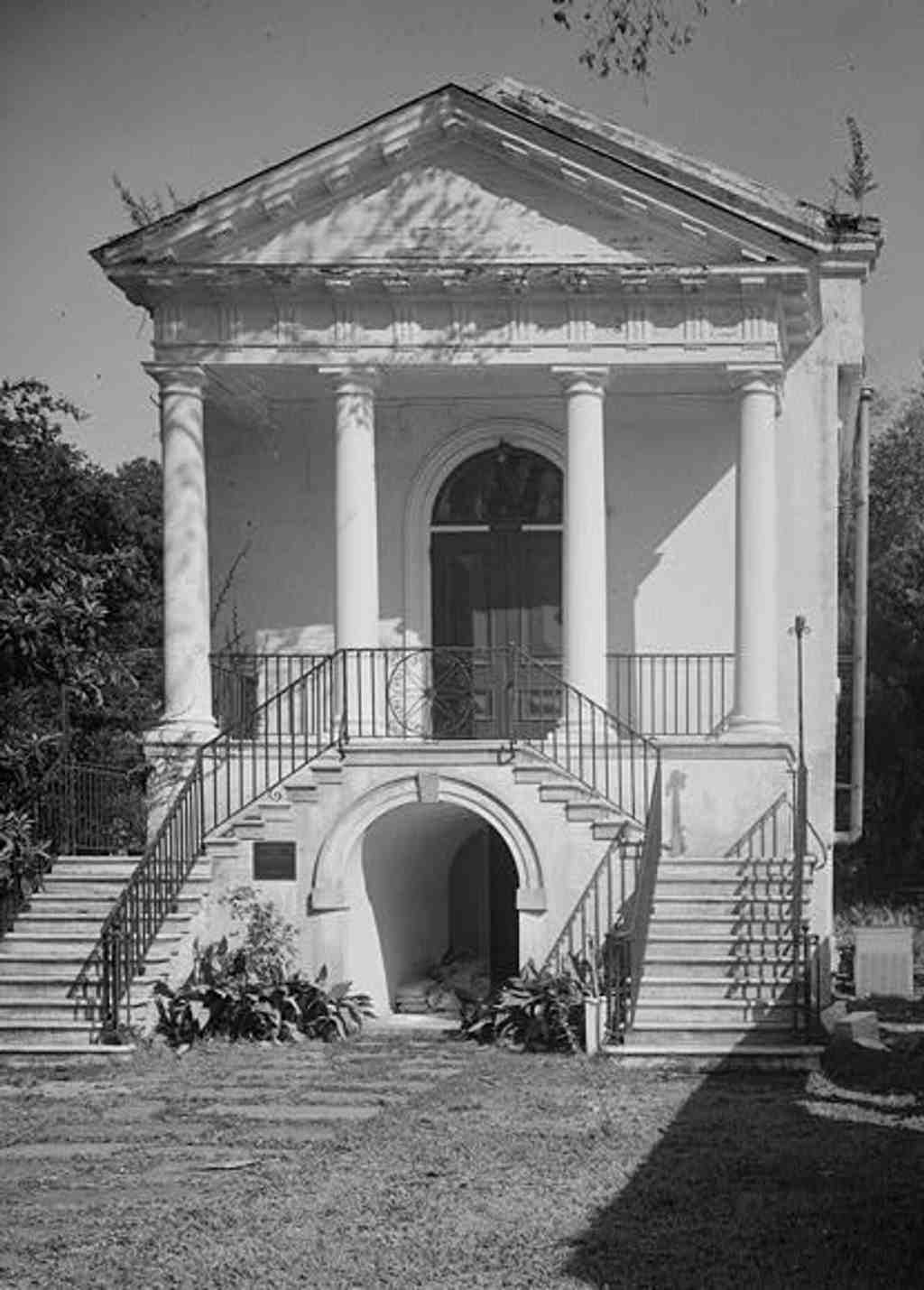
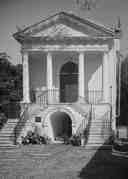
To spot the Circular Congregational Church’s historic parish house, look for a small, white, Greek Revival building with a grand entrance at the top of two elegant curved staircases and four tall columns supporting a triangular pediment-it stands just ahead of you, a stately and serene sight amidst the trees. Now that we’re here, let’s step back in time and imagine Charleston as it was in the late 1600s-dusty roads, horse-drawn carriages, and a patchwork of settlers from England, Scotland, and France, all with very different ideas about faith. This site was chosen by those early “dissenters,” which is just a fancy way of saying folks who didn’t want to pray the way the English authorities did! They built their original Meeting House right here at the edge of the new colony. In fact, Meeting Street gets its name because it literally led to this meeting house, and the word “church” wasn’t quite their style back then-they tried out names like Presbyterian, Congregational, and Independent, sometimes all at once. It’s a bit like when you can’t decide what nickname you want to go by in middle school! Through hurricanes, wars, and even lost paperwork (thanks to a 1713 hurricane that sent all the early records flying into the sea), the congregation stuck together. During colonial times, if you were a moderate dissenter looking for a community, this was the place. But their independence had a price: the church became a hotbed for revolutionary ideas, and Reverend William Tennent was known to stir up trouble-not with a sword, but with words about freedom. He risked his life crisscrossing the backcountry, rallying people for the American cause. Then came the Revolutionary War and, like a scene out of an action movie, a British cannonball struck the church! The British occupied Charleston and turned this sacred space into a hospital or warehouse, smashing the pews and sending 38 heads of families off to prison as punishment for their loyalty to liberty. Families left behind struggled, and the church had no minister-just memories and hope. After the war, the congregation set to rebuilding, though not just in spirit but with bricks too! By the late 1700s, they were so numerous that they opened a second meeting house nearby, alternating services between their two sanctuaries depending on the day. But in 1804, a woman named Martha Laurens Ramsay suggested something bold-a circular sanctuary. Robert Mills, Charleston's most famous architect (you might know him best for that little project in Washington, D.C. called the Washington Monument), designed a revolutionary new round church here in 1818. Seven great doors, 26 windows, and enough room for 2,000 worshippers: it was the first major domed building in all of North America! Before the days of Yelp, locals couldn’t resist poking fun at its lack of a steeple, inventing songs to poke fun at the congregation’s “circle without a point,” until 1838 when the tallest steeple in town was added-take that, critics! The golden age of the Circular Church was dazzling. Members included everyone from governors and newspaper editors to enslaved and poor worshippers, all united under this innovative roof. The city’s first Sunday School started here, and so did organizations like the Charleston Bible Society. But history is never a straight line, and in 1861, a fire swept across Charleston, leaving only charred walls where the church once stood. The Civil War followed, and afterward, Black members formed their own Plymouth Congregational Church, forever changing the community’s fabric. For years, only ruins stood as a testimony to the fiery night that changed everything. The beautiful parish house you’re looking at now is a Greek Revival jewel, designed by Robert Mills, and declared a National Historic Landmark in 1973. But the main church you see today was built in 1890, in a style called Richardsonian Romanesque-that’s “fancy old stone with curves” if you’re not an architect. Despite the name, it’s not perfectly round anymore, but everyone still calls it the Circular Church, a nod to its legendary shape and all the wild, winding stories it holds. Today, the church stands for radical, welcoming Christianity and keeps Charleston ahead of its time. They were the first in the city to open a marriage and family counseling center and still open their doors to everyone in need-no matter what name you go by or which way you circle 'round. So take a deep breath and soak up the echoes of revolution, resilience, and a bit of architectural mischief-this is one Charleston story that has come full circle, again and again. Ready to take the next steps on our adventure? Fascinated by the beliefs and service, buildings or the gallery? Let's chat about it
전용 페이지 열기 →To spot the Charleston Library Society, look for a stately white building with grand columns and a row of tall, elegant windows-standing proudly on King Street, it gives off an…더 보기간략히 보기
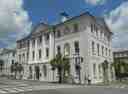
To spot the Charleston Library Society, look for a stately white building with grand columns and a row of tall, elegant windows-standing proudly on King Street, it gives off an air of bookish sophistication even from the sidewalk. Now, pause here a moment, because you’re standing in front of one of Charleston’s oldest treasures-a place that’s been keeping stories safe since before your grandparents’ grandparents were born! Imagine it: the year is 1748, the city bustles with the sounds of horses and market chatter, and seventeen well-read gentlemen meet in a candlelit tavern, pockets jingling with ten pounds sterling each, ready to fuel Charleston’s hunger for knowledge. They started with a craving for current English magazines, but like any good bookworm, they couldn’t stop at periodicals for long-soon, their mission expanded, and books began pouring in. The Charleston Library Society was born, and quickly grew into the third-oldest subscription library in the United States, trailing just behind Benjamin Franklin’s own in Philadelphia. But getting this literary dream off the ground wasn’t exactly easy. Twice, they tried to seal the deal with a charter, but the governors of the Colony must not have been readers-both times, their requests were turned away. Even the Royal government in London gave them a polite “no, thanks.” The plans went on pause, but just like the last page of a mystery novel, there was a twist: in 1754, after rallying more members, their charter was finally granted, and the Society could call itself official. The city’s great thinkers-those first seventeen and their successors-would soon leave their mark beyond books, even playing a key role in founding the College of Charleston and the Charleston Museum. But every great library needs a good survival story, right? The collection grew and grew-imagine 5,000 books stacked on creaky old shelves, waiting to be read. Then, in the winter of 1778, disaster struck: fire swept through, reducing nearly everything to ash. Only about 185 books survived the flames-hard to believe, and heartbreaking to any true book lover. But instead of giving up, the city rallied, and the library’s collection soared to a mighty 20,000 volumes by the eve of the Civil War! Through wars and hurricanes, the Society never stopped adapting. Members paid a small subscription (they still do), pooling their coins to fuel the library’s passion for books-many of which had to be imported from England, since America’s own printing presses were still in their infancy. The collection’s home would change as well-from being safeguarded in members' houses, to the upper floor of the Statehouse, and eventually, after outgrowing one fire-prone building after another, to this beautiful Beaux Arts masterpiece on King Street, completed in 1914. Take in the details around you: the grand, symmetrical façade was designed by McGoodwin and Hawley of Philadelphia. And just in case Charleston’s weather tries to play villain again, the rarest treasures now rest in a fireproof vault behind the restored façade of a Civil War-era armory at 158-160 King Street. And the story doesn’t end with old books on dusty shelves-inside is a magical workshop called Dorothy the Bookbinder’s Bindery and Archival Lab, where trained conservationists, like James Davis, use centuries-old techniques (and a bit of modern wizardry) to repair and preserve the library’s most precious volumes. From battered colonial folios to delicate first editions, these hands are keeping Charleston’s written history alive for future book lovers. So whether you’re here for the scent of old paper, a lesson in perseverance, or a glimpse at the heart of Charleston’s thirst for knowledge, you’re standing before a library that’s survived fire, war, and time itself-yet never lost its love of words. Now that’s a page-turner, don’t you think?
전용 페이지 열기 →To spot the Unitarian Church in Charleston, look ahead for a tall cream-colored building with a square Gothic Revival tower, pointed arch windows, and dramatic buttresses, peeking…더 보기간략히 보기
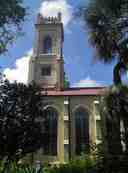
To spot the Unitarian Church in Charleston, look ahead for a tall cream-colored building with a square Gothic Revival tower, pointed arch windows, and dramatic buttresses, peeking up behind lush greenery and palm trees. You’re now standing in front of the oldest Unitarian church in the entire South, and trust me, this place has more drama than a soap opera set in a castle. Picture the year: it’s the 1770s. The local congregation had outgrown its first home on Meeting Street, so they built this church right here-a plainer brick design then, with two doors and a sturdy tower. The construction crew must have felt jinxed, though. Just as they finished up, the Revolutionary War came crashing in, and the building became an unscheduled Airbnb for both British and Colonial soldiers. By the end, it needed “repairs” that probably had the early churchgoers scratching their heads and muttering about property insurance. By 1787, the church-locally known as the Archdale Street Meeting House-was finally dedicated. For the next thirty years, this and its sibling church shared ministers, sermons, potlucks, and, I imagine, a fair bit of rivalry over who had the better acoustics. The real tension bubbled in 1817, when Reverend Anthony Forster switched spiritual teams from trinitarian to unitarian theology. Now, you might think church drama is just about where to put the piano, but in this case, the congregation split in two-75 out of 144 walked out, forming their new independent church right here! The old location eventually became the Circular Congregational Church, while this sanctuary was re-chartered as the Second Independent Church of Charleston. But here’s where it takes a poetic turn: Samuel Gilman became minister after Forster’s passing, and his wife, Caroline, was inspired by peaceful cemeteries up north to make the churchyard a blooming haven. So that wild tangle of beauty you see around you? That’s not neglect, that’s a living garden on purpose. Every season, something’s blooming-and you’re as likely to encounter camellias and roses as a meandering squirrel that fancies itself the “Guardian of the Gravestones.” The churchyard is filled with monuments and memorials, but don’t bother looking for a celebrity-no famous ghosts haunt these graves. Instead, there’s a special sundial honoring Samuel and Caroline Gilman, and a brand new memorial nearby, built from bricks once part of this very building. It’s dedicated to the enslaved workers who helped build the church, with a metal bird called a Sankofa gracing its front-a West African symbol meaning “learn from the past to move forward.” If you’re ever craving inspiration, that’s one way to find it. Life here wasn’t always tranquil, though. Civil War? Check-most members fled, and the church nearly fell apart from neglect. Charleston fire of 1861? This church only just escaped a fiery end. But nature wasn’t done with it yet. In 1885, a hurricane roared through with 125 mph winds, blowing out every window in the nave. Just as repairs wrapped up, the 1886 earthquake (a whopping 7.3) hit and sent the church’s tower-including eight buttresses and all those gothic pointy bits-crashing down. Can you imagine the racket? Splat! Right into the nave, leaving a giant hole in the roof and the famed fan-vaulted ceiling. But Unitarians are nothing if not persistent, and donations poured in from across the country to help restore it. Architecture buffs, don’t miss this: the church was redesigned in the 1850s to look like an English Gothic chapel. The sanctuary is filled with sunlight, thanks to colorful stained-glass windows from Brooklyn and later, Boston-each telling a story in glass and light. Today, this place is more than a church. Reach out if you hear music-concerts and public lectures are regular events. Gage Hall, just across the yard, was once famous for lively debates that made it onto Charleston’s radio waves. And this churchyard is Charleston’s “Gateway Walk,” inviting you to stroll beneath blossoming trees, under the gaze of the past, and with a gentle whisper of hope for the future. So, take a moment right here. Feel the warm sun, listen for rustling leaves, and imagine the generations who have shaped-and been shaped by-this truly one-of-a-kind sanctuary. If those walls could talk, I bet they’d have some opinions about the hurricanes. To delve deeper into the renovation in the english perpendicular gothic revival style, civil war and natural disasters or the campus, simply drop your query in the chat section and I'll provide more information.
전용 페이지 열기 →If you look up just ahead, you’ll spot the Cathedral of Saint John the Baptist-it’s the tall, reddish-brown Gothic building with sharply pointed towers and a golden cross…더 보기간략히 보기
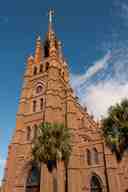
If you look up just ahead, you’ll spot the Cathedral of Saint John the Baptist-it’s the tall, reddish-brown Gothic building with sharply pointed towers and a golden cross glittering atop a narrow copper spire, rising proudly above the palm trees. Now, let me set the scene: imagine yourself standing here in Charleston over 150 years ago, smoke filling the sky as fire races down Broad Street. In 1861, as people tried desperately to save what they could, the original Cathedral of Saint John and Saint Finbar and the neighboring St. Andrews Hall were completely consumed by flames-leaving only haunted ruins and a long wait for something new to rise from the ashes. This very spot sat empty for decades, a scarred reminder of the devastating fire and the struggles following the Civil War. Funds were low, spirits lower-but Catholics in Charleston weren’t about to give up. Fast forward to 1890: the city buzzed with excitement as Cardinal James Gibbons arrived to lay the cornerstone for a new Cathedral-this one, designed by Patrick Keely, an architect from Brooklyn who seemed to have a knack for making Gothic dreams come true. Picture the sound of mallets striking stone, the dizzying sight of scaffolding against the South Carolina sky as workers raised walls of Connecticut brownstone and carved intricate details-think of it like building a sandcastle, just a little heavier and much less likely to wash away at high tide. For years, the new cathedral stood proud, but if you squint at the steeple, you’ll notice: it’s not quite what Keely first imagined. Originally, there wasn’t enough money for a towering spire. It wasn’t until 2010-over a century later-that the steeple, topped with a dazzling 16x9 foot gilded copper Celtic cross, finally crowned the structure. And if you’re here at just the right time, you might hear the cathedral’s three bronze bells-cast in France-chiming clear and sweet in an E major chord across the city. Step inside-well, in your imagination for now-and sunlight pours through stained glass windows shipped all the way from France. Try to picture it: 14 glowing two-light windows showing scenes from Christ’s life, 28 saints shining in the upper nave, and a kaleidoscope of colors pouring down on pews carved from Flemish oak. Over the altar, there’s a copy of Leonardo da Vinci’s The Last Supper, done up in colored glass, and a rose window showing John the Baptist, the cathedral’s patron, baptizing Jesus with angels ringing the scene. It’s a little like walking into a jewelry box full of light. With four chapels-one containing a crypt where Charleston’s first five bishops rest-the cathedral is not just a place of worship but a treasure chest of stories. There’s the Sacred Heart Chapel holding a statue of Jesus with hands extended in blessing, the Blessed Virgin Mary Chapel with a unique marble Madonna and child, and the main lower church, Our Lady of Grace Chapel, which welcomes overflow crowds and once hosted daily mass. You might even hear a note or two from the cathedral’s mighty Bedient pipe organ-it journeyed all the way from Christ Church Episcopal in Louisville, Kentucky before making Charleston its home. This pipe organ isn’t just for show; it’s used to fill the space with music and the occasional grand entrance by the cathedral choir. Over the years, the cathedral has weathered renovations, repairs, and more than a few design tweaks. In 2007, those priceless stained-glass windows were carefully refurbished, making sure that each detail still shone as brightly as when they first arrived. The doors now welcome you beneath rose windows bearing the coat of arms of the city, the state, and Pope Pius X-so you get a little bit of South Carolina, a dash of Rome, and even a sprinkle of papal flair. So, as you stand here today, surrounded by that beautiful brownstone and those sky-reaching spires, remember: this place is more than a building. It’s a living story of resilience, patience, and a community that refused to let disaster be the final word. And hey, with all that history and heavenly music, I bet even the angels would have to admit Charleston knows how to bounce back-and maybe even hit a high note along the way. For a more comprehensive understanding of the exterior, chapels or the stained-glass windows, engage with me in the chat section below.
전용 페이지 열기 →To spot the John Rutledge House, look for a grand three-story mansion on the north side of Broad Street, just across from where Orange Street meets Broad-a building with tall…더 보기간략히 보기
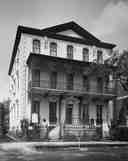
To spot the John Rutledge House, look for a grand three-story mansion on the north side of Broad Street, just across from where Orange Street meets Broad-a building with tall stuccoed walls, elegant corner blocks, and, most notably, an elaborate two-story wrought iron balcony that wraps around the front. Now, let’s imagine it-you're standing right where history happened! Picture this house in 1763, just two stories tall back then, gleaming with new stucco and buzzing with gossip. John Rutledge, the man behind the magic, had already tackled the courtroom and was about to tackle the country. If walls could talk, they’d probably spill secrets about late-night strategy sessions as Rutledge marshaled South Carolina patriots in the fight for independence. Now, Rutledge wasn’t just any founding father-he signed the United States Constitution! Imagine him, powdered wig and all, dashing out the front door with legal briefs in one hand and dreams of a new nation in the other. You’ll notice the house towers over the street, thanks to a basement that lifts it high and proud-no shrinking violet, this one! Gaze at the ornate ironwork on the balconies: that’s believed to be the handiwork of Christopher Werner, a master ironworker. In the heat of a Charleston summer, the balconies offered cool relief (and maybe a good spot for Rutledge to keep an eye on unruly neighbors). Fast forward to 1853-a third story was added, and, through the years, this elegant home saw law offices, legal dramas, and no doubt a bit of late-night foot shuffling when lawyers burned the midnight oil. By 1989, it got a new lease on life-reborn as the John Rutledge House Inn. Today, inside those walls are 19 guest rooms (so you can actually sleep where history happened-and maybe dream of wigs and quills). It even serves afternoon tea in the ballroom, so you can imagine plotting a revolution over scones. With a AAA Four Diamond rating, this house has gone from battle plans to breakfast in bed. Now that’s what I call a historic upgrade!
전용 페이지 열기 →To spot St. Michael’s Anglican Church, just look for the gleaming white building at the corner of Broad and Meeting streets, topped with a tall, layered steeple rising against the…더 보기간략히 보기
To spot St. Michael’s Anglican Church, just look for the gleaming white building at the corner of Broad and Meeting streets, topped with a tall, layered steeple rising against the sky and a grand, columned entrance that practically begs you to admire it. Alright, you've officially arrived at one of Charleston’s most iconic and time-travel-worthy landmarks: St. Michael’s Anglican Church! Take a deep breath and let your imagination step back through nearly three centuries, because you’re standing at the oldest surviving religious building in the city, a true old-timer with stories to tell. Built all the way back in the 1750s, this beauty served not only as a house of worship but as a witness to revolutions, hurricanes, wars, and even a presidential sit-down-George Washington himself prayed here in pew number 43. If you squint hard enough, you might just see a ghostly figure in a powdered wig, nodding approval. The story of St. Michael’s starts with a disaster: way back in 1710, a hurricane battered an earlier wooden church that stood right here, courtesy of St. Philip’s, Charleston’s first parish. With the old church ruined and eventually taken down, city leaders decided to rebuild-on a decidedly more solid foundation. No more wobbling in the wind for Charleston’s faithful! By 1761, St. Michael’s was complete, showing off its brick walls covered in white stucco, designed to look a bit like St Martin-in-the-Fields, a famous church in London. The builder, Samuel Cardy, and a team of artisans gave this church some fancy flourishes-just take a closer look at those columns and the detailed carvings on the portico. They even splurged £1000-no small sum back then-on intricate architecture and elaborate ornaments inside and out. Now let your eyes drift up to that clock tower. The clock that chimes out the hours and quarters is as old as the United States-crafted in England and shipped across the sea. And those bells up there? Cast in London in 1764. During the Civil War, the church took a pounding from cannonballs, but just like the people of Charleston, it dusted itself off, patched up the damage, and kept ringing out the hours. One bell even took a round-trip voyage to London in 1870 to be fixed-a bell with frequent flyer miles! Step inside-or imagine peeking in-and you’d see light streaming through stained glass that would make any artist jealous. One window, given in 1898, is a dazzling Tiffany creation using up to 2,000 individual pieces of glass. Another depicts St. Michael giving Satan the boot, inspired by a painting in the Louvre-proof that this church isn’t just a spot for prayer, but for serious art appreciation, too. Even the organ has its own backstory, with the original case dating to 1768 and a new heart installed in the 1990s. Out in the churchyard, history continues underfoot-two signers of the U.S. Constitution are buried here, adding a little founding-father flavor to your visit. And while the church’s affiliation has changed a bit over the centuries-moving from the Church of England to American Episcopalian, and now to the Anglican Diocese of South Carolina-its commitment to Charleston’s spirit and community remains the same. So, here at this bustling crossroads of Broad and Meeting, with the bells ready to chime above you and history humming under your feet, you’re standing in the beating heart of Charleston’s story. And don’t worry: the columns can handle a selfie or two. If you're curious about the religious affiliation, clock and bells or the gallery, the chat section below is the perfect place to seek clarification.
전용 페이지 열기 →Straight ahead, you’ll spot the Nathaniel Russell House by its grand brick facade, tall arched windows, and iron-railed balcony above a stately wooden door, all framed by a low…더 보기간략히 보기
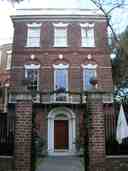
Straight ahead, you’ll spot the Nathaniel Russell House by its grand brick facade, tall arched windows, and iron-railed balcony above a stately wooden door, all framed by a low brick wall and imposing gate posts topped with round stone finials-just walk right up to those gates to admire this neoclassical beauty. Alright, let’s pause a moment in front of these iron gates because you’ve made it to one of Charleston’s real showstoppers! Imagine it’s the year 1808-this mansion is brand new, its brick walls gleaming in the Southern sun, and society’s most fashionable crowds are just dying to be invited inside. Nathaniel Russell, the man behind this house, was a Rhode Islander who made his fortune (and plenty of controversy) trading goods and enslaved people. When he built this showpiece, he wanted every passerby on Meeting Street to know he had truly “made it.” And believe me, with this much marble, ironwork, and fancy brickwork, he definitely made his point. To enter, visitors would pass under this elegant iron gate-maybe you can imagine the sound of the old hinges squeaking just a bit as it opens for a carriage. Peer inside and picture a black-and-white patterned floor in the foyer, the golden-yellow walls glimmering with candlelight, and bustling servants in crisp aprons hurrying about. And there, just ahead, is the showpiece that really gets everyone talking: a spiral staircase so graceful, it seems to float from floor to floor with no visible support! (Honestly, I’d probably trip just looking at it, but those party guests in their finery walked up like pros.) Russell and his wife Sarah were local celebrities-she came from a powerful Charleston family, and together they entertained the city’s elite in rooms dripping with style. Each parlor is its own little jewel box with geometric shapes-rectangles, ovals, and squares-so even the rooms played dress-up! By the way, after dinner, the women would retreat to an oval drawing room upstairs, its apricot wallpaper shimmering, crown moldings twinkling with gold leaf, and the mirrors strategically catching every bit of candlelight. It’s like the original Instagram filter. Now let’s talk about scandal-because every good house has a story. After Sarah Russell’s daughter inherited the mansion, the house passed through Charleston’s hands like the world’s fanciest game of musical chairs. It was even home to a governor-not to mention years as a girls’ boarding school when the Sisters of Our Lady of Mercy moved in. Can you imagine the giggles echoing through these stately halls and the nuns’ quiet footsteps as they made their nightly rounds? By the early 20th century, this place came dangerously close to being chopped up for townhouses. Seriously, Charleston nearly committed architectural crime! But the local Historic Charleston Foundation refused to let that happen. In 1955, folks passed the hat, scraped together a mountain of cash, and rescued the house. Now, because of them, visitors like you get to marvel at what it was really like to live as a 19th-century Charleston merchant-minus the uncomfortable silk breeches, of course. You might hear rustling from the gardens-a formal English garden reimagined from Russell’s own plans, filled now with boxwood, gravel paths, and blooms favored for 200 years. And just behind the house, the heavy truth of history still lingers: preserved slave quarters where many of the 18 enslaved people who lived and labored here once slept and worked, their stories waiting quietly to be told. Even today, this grand house hasn’t lost its flair for drama. Not long ago, the foundation that owns it nearly sold it, sparking outrage across Charleston-imagine the whispers at the local coffee shop and the fiery debates over front porches. Thankfully, after a torrent of backlash, the board decided to keep the house, so these stories could keep echoing off the plaster walls. So, as you stand in the shade of these old oaks and gaze at that proud facade, remember: behind the brick and iron, behind the glitter and the heartbreak, is a living story-one that’s seen Charleston’s triumphs, tragedies, and more than a little high society gossip. Now, what do you say-ready to step inside and try out that legendary staircase? Just don’t try it in heels!
전용 페이지 열기 →
자주 묻는 질문
투어는 어떻게 시작하나요?
구매 후 AudaTours 앱을 다운로드하고 교환 코드를 입력하세요. 투어를 바로 시작할 수 있습니다 - 재생을 탭하고 GPS 안내 경로를 따라가시면 됩니다.
투어 중 인터넷이 필요한가요?
아닙니다! 시작 전에 투어를 다운로드하면 완전히 오프라인으로 즐길 수 있습니다. 채팅 기능만 인터넷이 필요합니다. 모바일 데이터 절약을 위해 WiFi에서 다운로드하시는 것을 권장합니다.
이것은 가이드가 안내하는 단체 투어인가요?
아닙니다 - 이것은 셀프 가이드 오디오 투어입니다. 폰을 통해 오디오 나레이션을 들으며 나만의 속도로 독립적으로 탐험합니다. 투어 가이드도, 단체도, 일정도 없습니다.
투어는 얼마나 걸리나요?
대부분의 투어는 60-90분이 소요되지만, 속도는 전적으로 본인이 조절합니다. 원할 때 언제든지 일시정지하거나, 정류장을 건너뛰거나, 휴식을 취하세요.
오늘 투어를 끝낼 수 없으면 어떻게 하나요?
괜찮습니다! 투어는 평생 이용이 가능합니다. 원할 때 언제든지 일시정지하고 다시 시작하세요 - 내일, 다음 주, 또는 내년에도. 진행 상황이 저장됩니다.
어떤 언어를 이용할 수 있나요?
모든 투어는 50개 이상의 언어로 이용 가능합니다. 코드를 교환할 때 원하는 언어를 선택하세요. 참고: 투어 생성 후에는 언어를 변경할 수 없습니다.
구매 후 투어는 어디에서 이용하나요?
App Store 또는 Google Play에서 무료 AudaTours 앱을 다운로드하세요. 교환 코드(이메일로 전송됨)를 입력하면 라이브러리에 투어가 나타나며, 다운로드하여 시작할 수 있습니다.
투어가 마음에 들지 않으시면 환불해 드립니다. 문의: [email protected]
안전한 결제 


