
톤턴 오디오 투어: 뾰족탑의 메아리, 푸른 잔디밭 위의 이야기
톤턴의 고요한 거리 아래에서는 한때 정치적 격변이 일어났고, 교회 종소리는 예배 이상으로 울려 퍼졌습니다. 이 셀프 가이드 오디오 투어는 도시를 가로지르며, 신뢰받는 기관과 신성한 성소를 지나며 눈에 띄지 않게 숨겨진 이야기들을 드러냅니다. 시청에서의 불화가 톤턴을 거의 갈라놓을 뻔한 이유는 무엇일까요? 안개 낀 밤, 성 토마스 성공회 교회의 스테인드글라스 창문 뒤로 사라진 사람은 누구일까요? 그리고 어떤 비밀 의료 실험이 모턴 병원의 운명을 영원히 바꾸어 놓았을까요? 반란, 스캔들, 미스터리의 이야기를 엮으며 도심의 활기찬 맥박을 느껴보세요. 모든 돌과 뾰족탑에서 열정적인 연설, 속삭이는 기도, 잊혀진 발자국의 메아리를 들어보세요. 도시가 펼쳐지면서, 톤턴의 익숙한 랜드마크들이 흥미로운 이야기와 역사로 변모하는 것을 보게 될 것입니다. 표면 아래 숨겨진 톤턴의 가장 잘 보존된 비밀들을 밝혀낼 준비가 되셨나요? 여러분의 여정은 지금 시작됩니다.
투어 미리보기
이 투어에 대하여
- schedule소요 시간 40–60 mins나만의 속도로 이동
- straighten4.0 km 도보 경로안내 경로 따라가기
- location_on
- wifi_off오프라인 작동한 번 다운로드, 어디서든 사용
- all_inclusive평생 이용언제든지 다시 재생 가능
- location_on모턴 병원 및 의료 센터에서 시작
이 투어의 정류장
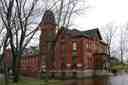
To spot Morton Hospital and Medical Center, look for a large brick building with rows of windows and a blue awning over the entrance, right across from the intersection of…더 보기간략히 보기
To spot Morton Hospital and Medical Center, look for a large brick building with rows of windows and a blue awning over the entrance, right across from the intersection of Washington Street. Now, while you’re standing here, take in the solid, practical look of Morton Hospital-a true survivor and a bit of a local legend, actually. Back in the days of top hats and telegrams, the land under your feet belonged to none other than former Massachusetts Governor Marcus Morton, whose old home was transformed into Taunton’s very first hospital after his passing in 1864. So yes, if you hear any ghostly whispers, it’s probably Governor Morton reminding everyone to say “ahh!” When the Taunton Hospital Company was born in 1888, people here were excited to finally have a place for healing. Fast forward to 1914, and the hospital’s name officially became Morton-like a superhero putting on a cape, ready to serve generations. This place had its own nursing school too! Imagine young nurses dashing through these very halls, stifling giggles while they practiced their bedside manner. Things got wild in the 21st century. In 2011, the hospital was sold for a whopping $170 million, passing through more legal hands than a hot potato. Steward Health Care ran things until 2024, but after some financial acrobatics (and a dramatic bankruptcy), Brown University Health swooped in, keeping clinicians in business and ambulances rolling. Oh-and don’t forget to glance up! On the roof is a heliport, used for emergency airlifts. It’s asphalt, about the size of a small living room, and sometimes, with a roar, a helicopter lands to whisk people away to Boston. This isn’t just a building-it’s Taunton’s lifeline, every single day.
전용 페이지 열기 →Look straight ahead for a grand limestone building with huge Corinthian columns and tall arched windows-it almost looks like it could double as a palace for lost books! Standing…더 보기간략히 보기
Look straight ahead for a grand limestone building with huge Corinthian columns and tall arched windows-it almost looks like it could double as a palace for lost books! Standing here, you’re about to meet a true heavyweight in the world of libraries. Born in 1903 thanks to a hefty $70,000 gift from Andrew Carnegie-yes, the guy who practically invented the phrase “philanthropy flex”-this place was designed by Albert R. Ross in the grand Beaux Arts style. Those columns you see aren’t just for show; if you imagine Taunton’s civic buildings holding a beauty contest, this would easily snag the “Best Dressed” sash. Limestone from Indiana gives it the serious look, and the T-shaped layout means it’s both practical and elegant. Rumor has it, back when the doors first opened, kids raced up those stone steps so fast they probably left scorch marks. The main entrance hides under a round arch with a fancy cartouche-extra points if you can spot it. In the late seventies, the library got a big new addition out back. But the heart of the building, where ideas have been sparking for over a century, is all thanks to a quirky mix of limestone, imagination, and a little help from Carnegie’s wallet.
전용 페이지 열기 →To spot St. Mary's Complex, look for the dramatic stone church with a tall, square front tower capped by a cross at the pointed intersection of Broadway and Washington…더 보기간략히 보기
To spot St. Mary's Complex, look for the dramatic stone church with a tall, square front tower capped by a cross at the pointed intersection of Broadway and Washington Street. Here you are, right in front of the mighty St. Mary's Complex, towering above the corner like it’s challenging the sky to a Gothic fashion contest. Imagine the clang of stone on stone as the massive sanctuary was built back in 1868. Designed by the famous Patrick Keely, this is actually the third church for the parish-talk about not settling for just any old address! The first parish in Taunton, St. Mary’s started all the way back in 1830, thanks to determined Irish immigrants who had to hold mass in their homes. By 1832, they put up a simple wood-frame church across the street, right where the brick rectory now stands-a spot that’s seen a lot of architectural swapping, near-disasters, and fiery drama over the years. When the original church burned down in 1856, the congregation barely skipped a beat before rebuilding. They've faced so much change that you’d think a game of musical chairs was happening with church buildings! When the rectory was built in 1903, that old church moved elsewhere in town and started a new life as St. Charles Hall. Around you, the parish’s mini-neighborhood buzzes with history: to the east stands the grand Flemish Revival rectory, to the west a stately school built in 1907, and a brick convent with a French twist was added in 1912. Over time, this parish became the “mother” for all Catholic congregations in Taunton. Among colorful characters in its history were priests with marathon tenures-like Reverend Coyle, who served so long from 1896 to 1931, he probably knew every secret nook in the place. If these stones could sigh with relief after each renovation, you’d definitely hear it!
전용 페이지 열기 →

11개 정류장 더 보기정류장 적게 보기expand_moreexpand_less
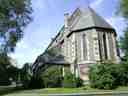
Look to your left for a striking building of rough fieldstone with a tall square tower, arched doorways, and elegant, narrow windows rising above Broadway-trust me, it’s…더 보기간략히 보기
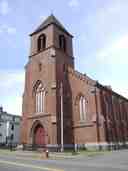
Look to your left for a striking building of rough fieldstone with a tall square tower, arched doorways, and elegant, narrow windows rising above Broadway-trust me, it’s impossible to miss! Now, let’s time travel a bit! Standing here, imagine it’s 1852, and you see stonemasons hauling rocks and dust swirling around as architect Richard Upjohn’s latest masterpiece slowly rises above the street. Back then, the congregation had just split from the First Parish Church, and it was a time of both excitement and, well, a *little* drama-no reality TV, so church splits were big news! Upjohn, who knew how to build churches with personality, gave the Pilgrim Congregational massive stone walls, a strong gabled roof, and that signature square tower right in front, splitting the facade into three impressive sections. Step closer and picture the echo of footsteps through the round-arched doorway, and sunlight filtering through tall, narrow Gothic windows, with splashes of color from stained glass lining the sides. The small chapel tucked behind came in 1915-call it an “expansion pack.” Today, this is the second-oldest church building in the heart of Taunton, a place built from both faith and stone, making it a true survivor-listed on the National Register, but still welcoming folks who happen by. Now tell me, can you imagine some century-old secrets hidden in those stones?
전용 페이지 열기 →To spot the Central Fire Station, just look for the large, red-brick building with a tall mansard-roofed tower and four big doorways facing Leonard Street, right at the corner…더 보기간략히 보기
To spot the Central Fire Station, just look for the large, red-brick building with a tall mansard-roofed tower and four big doorways facing Leonard Street, right at the corner with School Street. Standing here in front of the Central Fire Station, you can almost hear the echoes of a horse-drawn fire wagon rushing out over 150 years ago! Built way back in 1869, this place has seen more emergencies than a popcorn machine at a movie theater. Believe it or not, this is the third oldest fire station still in use in the whole country-and the oldest one in America that has never closed its doors, not even once! Fire engines, ladders, and the Deputy Chief himself all call this station home. Back when it opened, its brick walls and granite-trimmed window arches proudly guarded the city center, and I’m guessing the horse stables smelled a little… fiery. Designed by A.E. Swasey-whose work was so good they hired him to build more stations-the firehouse got a major upgrade in 2008 to handle modern, heavier engines, and to make sure everyone can get in easily. Think of the stories these walls could tell-tales of smoky nights, heroic dashes, and fire hats of every shape and size!
전용 페이지 열기 →You’re looking for a wide, grassy square with a few sturdy old trees, classic lampposts, and a tall statue of a soldier standing on a boulder-the heart of the Taunton Green…더 보기간략히 보기
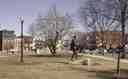
You’re looking for a wide, grassy square with a few sturdy old trees, classic lampposts, and a tall statue of a soldier standing on a boulder-the heart of the Taunton Green Historic District stretches out before you, ringed by brick buildings and busy streets. Right in front of you is the legendary Taunton Green, a place that’s been the center of the city’s excitement, heartache, and wild celebrations for nearly 300 years. Imagine the air thick with voices, the crowd stirring-Taunton Green was set aside way back in 1743 as a militia training ground. Now, instead of drilling troops, you might just catch the hum of traffic and the distant ring of a shop bell. It’s hard to believe, but this now-cozy block was once 88 acres of training space, complete with an early meetinghouse where townsfolk debated and plotted what would come next. If you look around, those monuments dotting the grass are here because this was-and still is-the spot where Taunton rallied its bravest. Soldiers marched off from this green patch toward every war America has ever faced. Among the heroes, one statue stands proud: The Hiker, made by Theo Alice Ruggles Kitson, honoring the Spanish-American War, the Boxer Rebellion, and the Philippine-American War. Next time you need a little courage, try standing tall right next to him-you never know, maybe some bravery will rub off! Picture October 21, 1774: hundreds of Taunton neighbors gathered here, flames of hope flickering in their eyes, as they raised the famous Taunton Flag on a huge 112-foot liberty pole. Its bold “Liberty and Union” motto snapped in the face of King George III. If you squint, you might just picture the clamor, the pounding of boots, and that flag’s triumphant flap. The flag still waves here today-a stubborn streak in the wind. Taunton Green has seen its fair share of drama. In 1859, flames wiped out the buildings east of the green, paving the way for those stately brick blocks you see rising on all sides. Over time, wooden shops gave way to heavier, fire-resistant structures-just another chapter in a place where adaptation is a local sport. And when December arrives? The whole Green erupts in lights, earning Taunton its festive nickname: “The Christmas City.” People come from miles around for the twinkle and glow, trading summer’s soft grass for winter magic as families stroll past the holiday decorations, year after year. So as you take in the Taunton Green Historic District, remember: you’re standing at the heart of the city’s story-one full of banners, bonfires, soldier’s footsteps, and, if you’re lucky, a little Christmas sparkle. If you're keen on discovering more about the description, contributing properties or the properties with separate nrhp listings, head down to the chat section and engage with me.
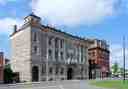
전용 페이지 열기 →You’ll spot the United States Post Office-Taunton Main right in front of you-a grand, single-story limestone building with tall Tuscan columns lined up across its main facade, set…더 보기간략히 보기
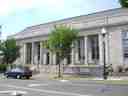
You’ll spot the United States Post Office-Taunton Main right in front of you-a grand, single-story limestone building with tall Tuscan columns lined up across its main facade, set back behind a row of trees and steps. Imagine you’re standing here in 1932 as the brand new post office opens its doors, the sound of marble floors echoing under the footsteps of folks carrying handwritten letters, and the smell of fresh limestone filling the air. This building replaced a much older, rugged Romanesque post office, trading towers for columns but keeping that same sense of importance-a bit like swapping a raincoat for a tuxedo! Funded during the tough times of the Great Depression by the Works Progress Administration, this post office showed the city that progress could still walk hand in hand with style, and sending mail could feel positively presidential. Designed by James A. Wetmore’s team, the Classical Revival vibe makes you feel like you’re stepping into a mini temple of communication, with monumental columns and marble shining inside. And here’s a fun bit: you’re treading on land once owned by Samuel Crocker, one of Taunton’s original movers and shakers. No wonder it’s earned a place on the National Register of Historic Places. If these walls could talk, they might just stamp your next letter with a story!
전용 페이지 열기 →Look for a striking red-brick building with tall, skinny arched windows and a square tower topped by a pyramidal roof, right across from the Mill River on the west side of…더 보기간략히 보기
Look for a striking red-brick building with tall, skinny arched windows and a square tower topped by a pyramidal roof, right across from the Mill River on the west side of Winthrop Street. Standing here, you’re face to face with the majestic Winthrop Street Baptist Church. Behind those heavy wooden doors and Gothic windows, imagine it’s the year 1862-the Civil War is raging, but in Taunton, folks gather here hoping for comfort and a few hymns that are slightly less off-key than mine. This church wasn’t even the first Baptist congregation on this very spot-talk about a popular address for prayer! Crafted from solid brick, perfect for New England’s wild weather, it stands with stout buttresses along its sides, almost like it’s flexing its muscles for anyone in doubt. The brownstone arches above the windows and entry are trimmed just right, like the church dressed up in its Sunday best. Once, its tower soared even higher, with a steeple lost to demolition in the ‘90s. Today, the stained glass and belfry still look proudly over Winthrop Street, a reminder that architecture can outlast even the trickiest church meetings. Isn’t it amazing how one building can carry so much local life in its brickwork and glass?
전용 페이지 열기 →To spot the Henry G. Brownell House, just look ahead for a grand white, wood-frame building with a steep gambrel roof, front porch with big round columns, and a proud American…더 보기간략히 보기
To spot the Henry G. Brownell House, just look ahead for a grand white, wood-frame building with a steep gambrel roof, front porch with big round columns, and a proud American flag waving out front. Now, imagine the year is 1893 and the scent of fresh paint and cut lumber fills the crisp Taunton air. Here rises the Henry G. Brownell House-an absolute beauty of a home, with its sweeping gambrel roof, stately chimneys, and a grand porch just begging for a rocking chair or two. You can practically hear the echo of footsteps on its wooden floors and the chatter of grand parties under glittering chandeliers. Built for Henry G. Brownell by the talented L.M. Witherell, this house quickly became the envy of the neighborhood-a masterpiece of Colonial Revival style. Its windows gleamed with Palladian elegance, and those paired pilasters? They stood like silent sentinels through every season. Fast forward decades, and the house plays host to the lively Elks Lodge, echoing with laughter and the toasts of good friends. But, as if out of a twisty old novel, the house’s story ends in 2014 when it’s replaced by a Walgreens, and its elegant past becomes a memory in the whispers of the wind. Wouldn’t you love to have seen one of those Elks Lodge gatherings? Maybe even snuck in for a dance! History sure knows how to throw a curveball, doesn’t it?
전용 페이지 열기 →Looking just ahead, you’ll spot a dramatic brick building with ornate details, large arched windows, a grand entrance, and a distinctive tower rising at its left rear corner-right…더 보기간략히 보기
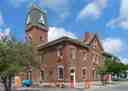
Looking just ahead, you’ll spot a dramatic brick building with ornate details, large arched windows, a grand entrance, and a distinctive tower rising at its left rear corner-right across from the Mill River. Now, imagine the clang and hum of industry as you stand here-this spot once filled with the clatter of tacks and nails being made. The Albert Field Tack Company started way back in the 1820s, before electricity, when folks relied on good old muscle and a bit of luck to power the machines. Albert Field bought up this land in the 1850s, and with business booming, he celebrated by building this striking Italianate office in 1868. Not your average boring factory shack-this place looked so fancy next to the practical brick wings stretching toward the river, like a CEO wearing a tuxedo while everyone else is in overalls! Generations ago, workers here made upholstery tacks, brads, and shoe nails that traveled all around New England. The company grew big enough for two more factories but was snapped up by Atlas Tack in 1896, and by 1902, the action here fizzled out. Over time, this site became a Pentecostal church and a home for local businesses. Today, it’s apartments-so if you ever hear a ghostly tap-tap at night, maybe someone’s still trying to finish their shift!
전용 페이지 열기 →Right in front of you, you’ll see a dramatic, gray stone church, with striking pointed arches and a roof that looks like it’s determined to touch the sky-just look past the leafy…더 보기간략히 보기
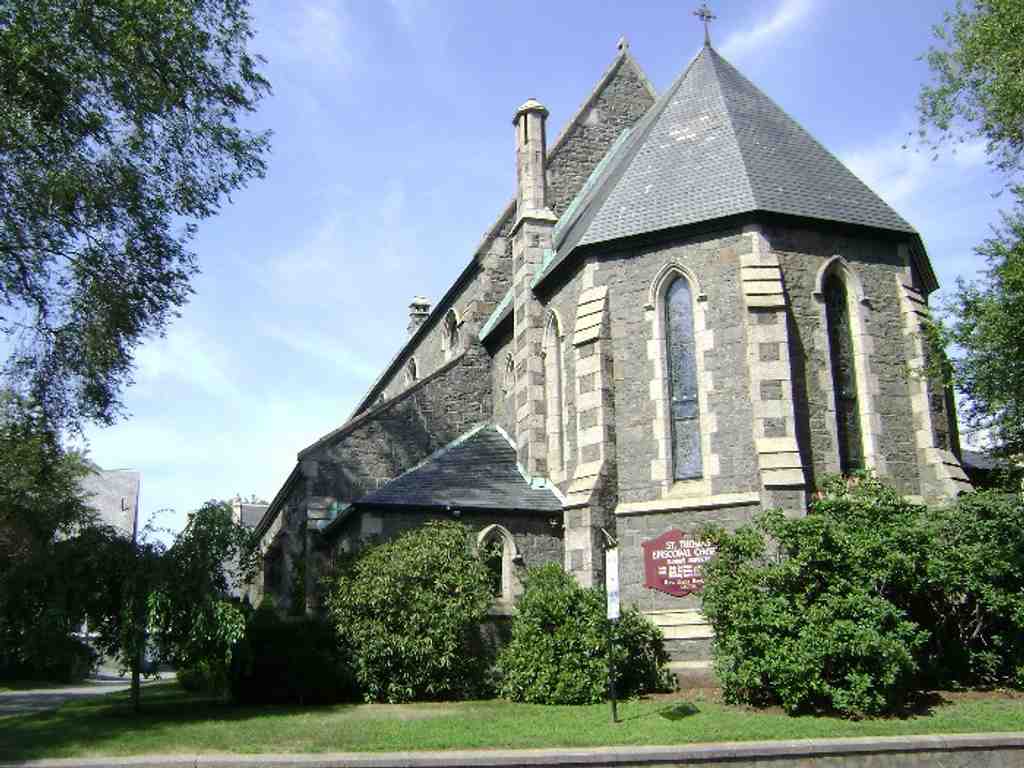
Right in front of you, you’ll see a dramatic, gray stone church, with striking pointed arches and a roof that looks like it’s determined to touch the sky-just look past the leafy trees to spot its Gothic spires and that big maroon sign surrounded by lush greenery! Let’s imagine we’re stepping back in time-way, way back, before this grand stone structure was even a dream. The roots of St. Thomas Episcopal Church stretch all the way to 1728, when Taunton was still wild and rough around the edges. Picture noisy wooden carts clattering down muddy paths, and a group of determined townsfolk gathering near the Three Mile River, full of hope and grit but maybe a little nervous about starting something new-and not entirely welcomed by the local Puritans, who frowned at anything connected to the Church of England. Our story gets a little salty-literally!-with Captain Thomas Coram, an English sea captain who showed up in 1698, hoping to establish a parish. He faced all kinds of skepticism and resistance from the townspeople, but he left a quirky parting gift: If, someday, Taunton became “more civilized,” and at least forty upstanding gents wanted a church, they’d get a chunk of his land for it. This sounds like setting up a treasure hunt-but with fewer pirates and more prayer books! Fast forward a few decades, and the first actual church is built near the Three Mile River. Resources are slim, but the community spirit is strong-they even send a local, John Lyon, all the way to England to be officially ordained as their first resident minister. His first baptism took place on a chilly February day in 1765, with candles flickering and the sound of shuffling hymnals filling the air. Revolutions and storms can be tough on both buildings and spirits. During the Revolutionary War, just like many other Episcopal churches, St. Thomas had to close its doors for a while. Afterward, a new problem: a minister whose political views were a bit too controversial for the parish, leading to a dramatic dismissal meeting-library, prayer books, and glebe land demanded back! And then, in 1815, disaster struck. Imagine lightning flashing and furious winds howling, because during a wicked gale, the church came tumbling down. But Taunton’s Episcopal community was persistent. In 1829, they built a new church on High Street-one much nearer to where you’re standing now. Their community kept growing, pews were added, and the sound of hammers and saws echoed as walls rose higher. Now, the building before you is a testament to perseverance-and some pretty impressive architecture! Designed by Richard Upjohn, the nation’s great Gothic Revival architect, and finished in 1858, this stone masterpiece was consecrated in 1859. The pointed arches, steep slate roof, and tall, narrow windows create that unmistakable Gothic Revival style-meant to inspire awe, maybe even give you goosebumps if you look up at just the right angle! But through all the years and all the changes, one thing never disappeared: the congregation’s knack for working together, overcoming obstacles, and filling these hallowed walls with the sound of community, from hopeful whispers to joyful hymns. Even now, you can practically hear echoes of laughter from annual meetings and the hum of history swirling around every corner. So, as you stand here, you’re not just looking at old stones and stained glass-you’re witnessing the stubborn, loving heart of a community that’s weathered centuries. And if you listen closely, you might just catch the sound of a ship’s bell ringing far down the Taunton River, calling you back to the age of Captain Coram and the dream that started it all.
전용 페이지 열기 →To spot Taunton City Hall, just look for a grand, stone building with tall arched windows and a flagpole towering above it at the corner-it's making a strong, official statement…더 보기간략히 보기
To spot Taunton City Hall, just look for a grand, stone building with tall arched windows and a flagpole towering above it at the corner-it's making a strong, official statement right at the intersection! Standing before this remarkable city hall, imagine the footsteps echoing down granite hallways, with the sounds of city business bustling inside. Built in 1848 on land once owned by a governor-Marcus Morton, no less-this spot became the beating heart of Taunton’s government. Let’s step back for a moment and picture the original brick building rising as hammers clanged and workers shouted, eager to finish before the November chill. The second story arrived just five years later, and for thirty years, students scampered up the steps to Taunton High School-it’s probably the only city hall that doubled as a homework zone. Inside, memorial plaques honor locals lost in the Civil War, World Wars I and II. The building’s face changed in 1896, swapping its castle-like look for bold, Renaissance revival style. But this storied hall saw harder times, too. In 2010, an arsonist crept into the attic and set a fire that threatened to wipe away more than 160 years of history. Walls were soaked, ceilings came down, and Taunton’s leaders had to move operations down the street for a whole decade. But Taunton’s spirit is as sturdy as this stonework-after a $27 million renovation, the city hall reopened in 2020, with memorials, fireplaces, and vault doors telling stories to anyone who stops to listen. From city meetings to high school classes, bravery to rebuilding, this spot has seen it all. And admit it, how many buildings can say they’ve survived homework, history, and a fire?
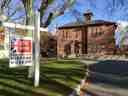
전용 페이지 열기 →To spot the Old Colony History Museum, look for a two-story old brick building with arched windows and a small square cupola on the roof-just behind the large white and red sign…더 보기간략히 보기
To spot the Old Colony History Museum, look for a two-story old brick building with arched windows and a small square cupola on the roof-just behind the large white and red sign on your left. Welcome to the Old Colony History Museum, where the whispers of the past mingle with the crisp Taunton breeze. Picture yourself back in 1852, as the newly designed Bristol Academy opens its doors, crafted by Richard Upjohn-the very same architect who designed the famous Trinity Church in New York. Back then, you might have heard the chatter of eager students and the ring of the school bell cutting through the morning air. Fast forward to 1926: the old academy becomes a home for countless treasures of the region-rare artifacts, ancient documents, and photographs telling stories you never knew Taunton had. In these walls, you can almost hear the scratch of pens in the genealogy research library or the excited gasps as families uncover secrets from their own past. Each autumn, the lawn outside comes alive during the Liberty and Union Festival, as the community celebrates the daring 1774 flag-raising that declared Taunton’s rebel spirit. So, before you head off, imagine all the lives and stories tucked inside these bricks-a place where history isn’t just displayed, it’s alive and kicking!
전용 페이지 열기 →

자주 묻는 질문
투어는 어떻게 시작하나요?
구매 후 AudaTours 앱을 다운로드하고 교환 코드를 입력하세요. 투어를 바로 시작할 수 있습니다 - 재생을 탭하고 GPS 안내 경로를 따라가시면 됩니다.
투어 중 인터넷이 필요한가요?
아닙니다! 시작 전에 투어를 다운로드하면 완전히 오프라인으로 즐길 수 있습니다. 채팅 기능만 인터넷이 필요합니다. 모바일 데이터 절약을 위해 WiFi에서 다운로드하시는 것을 권장합니다.
이것은 가이드가 안내하는 단체 투어인가요?
아닙니다 - 이것은 셀프 가이드 오디오 투어입니다. 폰을 통해 오디오 나레이션을 들으며 나만의 속도로 독립적으로 탐험합니다. 투어 가이드도, 단체도, 일정도 없습니다.
투어는 얼마나 걸리나요?
대부분의 투어는 60-90분이 소요되지만, 속도는 전적으로 본인이 조절합니다. 원할 때 언제든지 일시정지하거나, 정류장을 건너뛰거나, 휴식을 취하세요.
오늘 투어를 끝낼 수 없으면 어떻게 하나요?
괜찮습니다! 투어는 평생 이용이 가능합니다. 원할 때 언제든지 일시정지하고 다시 시작하세요 - 내일, 다음 주, 또는 내년에도. 진행 상황이 저장됩니다.
어떤 언어를 이용할 수 있나요?
모든 투어는 50개 이상의 언어로 이용 가능합니다. 코드를 교환할 때 원하는 언어를 선택하세요. 참고: 투어 생성 후에는 언어를 변경할 수 없습니다.
구매 후 투어는 어디에서 이용하나요?
App Store 또는 Google Play에서 무료 AudaTours 앱을 다운로드하세요. 교환 코드(이메일로 전송됨)를 입력하면 라이브러리에 투어가 나타나며, 다운로드하여 시작할 수 있습니다.
투어가 마음에 들지 않으시면 환불해 드립니다. 문의: [email protected]
안전한 결제 


