
뱅고어 오디오 투어: 페놉스콧 카운티의 전설, 랜드마크 및 이야기
대성당의 첨탑이 울려 퍼지는 종소리 위로 솟아 있고, 불의 메아리가 뱅고어의 가장 오래된 거리들을 따라 여전히 속삭입니다. 도시의 고요한 외관 아래, 잊혀진 홀과 그을린 벽돌 속에서 비밀이 끓어오릅니다. 이 셀프 가이드 오디오 여행에서 자신만의 속도로 걸어보세요. 이야기는 블록마다 펼쳐집니다. 현지인조차 거의 이야기하지 않는 전설, 스캔들, 전투를 들어보세요. 뱅고어를 영원히 재편한 대화재 동안 어떤 절박한 선택들이 이루어졌을까요? 존 뱁스트 기념 고등학교의 탑에 누가 암호화된 메시지를 숨겼고, 그 이유는 무엇일까요? 성 요한 교회에 있는 단 하나의 스테인드글라스 창문은 왜 기발하고 숨겨진 과거를 담고 있을까요? 각 정류장은 뱅고어의 과거를 생생하게 되살립니다. 되살아난 유적과 신성한 공간을 통해 도망자와 선구자의 길을 따라가 보세요. 정치, 신앙, 운명이 충돌하는 미스터리와 드라마 속으로 들어가 보세요. 불, 돌, 이야기가 도시의 고요한 심장을 불태우는 곳에서 여정을 시작하세요.
투어 미리보기
이 투어에 대하여
- schedule소요 시간 40–60 mins나만의 속도로 이동
- straighten3.8 km 도보 경로안내 경로 따라가기
- location_on
- wifi_off오프라인 작동한 번 다운로드, 어디서든 사용
- all_inclusive평생 이용언제든지 다시 재생 가능
- location_on존 뱁스트 기념 고등학교에서 시작
이 투어의 정류장
To spot John Bapst Memorial High School, look for a grand stone building lined with tall columns and large windows stretching along the street-a bit like Bangor’s own ancient…더 보기간략히 보기
To spot John Bapst Memorial High School, look for a grand stone building lined with tall columns and large windows stretching along the street-a bit like Bangor’s own ancient temple of learning. Welcome to the storied halls-well, sidewalk, in your case-of John Bapst Memorial High School! Imagine it’s the late 1920s, the Model T rules the roads, jazz spills from radios, and here, on September 10th, 1928, this imposing building first swung open its doors to a bustling sea of Catholic students, eager for knowledge and maybe a little mischief. Back then, things were strictly divided: boys went to class in the north wing, girls in the south, and the auditorium stood guard right in the middle. If you squint, you might still sense a friendly rivalry echoing down the halls-maybe even hear the ghost of a giggle or two behind those stately windows. As the years rolled on, so did the changes. A fire code update came along, and what was once a maze of hallways behind the auditorium turned into bright new connections, literally linking boys and girls together. The school, however, wouldn’t let a little thing like the threat of closure stand in its way. In 1980, when the Diocese of Portland announced it was shutting the school for good, a band of determined alumni and townsfolk-cue the dramatic rescue music-rallied to bring John Bapst back as an independent, co-ed, college-prep powerhouse. Step into the school’s present, and you’ll find more than 500 students representing towns with names like Glenburn, Orland, and Milford, plus a truly impressive international contingent hailing from places as far-flung as China, Spain, Egypt, and Mongolia-John Bapst is Bangor’s own little United Nations! Now, picture the clatter and cheer of championship sports-football games under bright Friday night lights, the squeak of sneakers on the basketball court, and the roar of the crowd when the Crusaders finally broke a 41-game football losing streak. Drama, art, music, debate, and even a tai chi club mean that these stone walls have seen every flavor of teenage dream and ambition. And in the thick of it all, John Bapst boasts some truly brainy moments-its students score high on APs and SATs, and the math department is legendary (yes, legendary math!). Brendan Murphy, a teacher here, probably counts sheep by calculating their probability matrices! The school’s resilience was tested yet again in 2015. Picture this: it’s school vacation, and instead of peace and quiet, a fiery mishap! Someone tries melting rooftop ice with a blowtorch; flames catch, smoke billows, and the beloved auditorium and gym suffer water and fire damage. You can almost feel the tension rising, but in true John Bapst fashion, classes were back in session by Monday, teacher capes flapping in the invisible breeze. Not to brag, but this is a school that’s been named one of the nation’s elite by the College Board-platinum status, no less! And you’re sharing a sidewalk with the likes of Tabitha King (yes, she’s married to THAT Stephen King), actors, ambassadors, and even a Miss Maine USA. Not bad for a high school built when flappers were in style. So, as you stand here, close your eyes for a moment and imagine the streaming sunlight through the soaring columns, the shouts of students playing, the thump of marching band drums, and the proud sense of history that lives on in every stone and every story. Whether it’s a quiet morning or a noisy afternoon, John Bapst Memorial High School is truly the heart of Bangor’s scholastic spirit. Keep marching forward; there’s so much more history to discover! Intrigued by the admission, sports or the clubs and activities? Explore further by joining me in the chat section below.
전용 페이지 열기 →Right in front of you is a grand white house with four tall columns and wrought iron railings, set just behind some leafy trees at the corner of Penobscot and Pine Streets-look…더 보기간략히 보기
Right in front of you is a grand white house with four tall columns and wrought iron railings, set just behind some leafy trees at the corner of Penobscot and Pine Streets-look for the twin doors marked 48 and 50 to know you’ve found the spot. Now, picture this: it’s the 1830s, and Bangor is bursting with lumber barons showing off their fancy new homes. Among them, the Jonas Cutting-Edward Kent House stands out as a true show-off, all decked out in Greek Revival style as if it’s trying to win the “Best Dressed House” award. Built as a duplex, the house was home to two friends-and you could say, friendly rivals: Edward Kent, who would go on to become Maine’s governor (twice, mind you), and Jonas Cutting, destined for a seat on the Maine Supreme Judicial Court. As you stand here, gaze up at those Doric columns. The details are not just for show: the first-floor columns are fluted and crowned with carved wreaths, and the ornate iron railings seem to hint at secret conversations and important visitors. If you listen closely, you might almost hear the sound of boots clattering up those stone steps after an afternoon in court or council. The best part? This house wasn’t just meant to impress-its Greek Revival style was so sophisticated that it’s believed to be unique in all New England. Even the rounded window bays and the dentillated cornice line shout, “We belong to the city’s elite!” And just imagine the laughter and debates echoing here when Kent and Cutting lived side by side-one making laws, the other interpreting them. Eventually, newer additions were tacked onto the back, but the front keeps all its original flair, still making everyone who passes by wonder what kind of grand stories unfolded behind those doors. In 1973, the world agreed: this place was important enough to protect forever. So snap a picture or two-it isn’t every day you meet a house that might out-brag you!
전용 페이지 열기 →

11개 정류장 더 보기정류장 적게 보기expand_moreexpand_less
To spot St. John's Catholic Church, just look for the towering dark spire reaching skyward above the snowy rooftops-it stands tall and proud with its red brick walls and dramatic…더 보기간략히 보기
To spot St. John's Catholic Church, just look for the towering dark spire reaching skyward above the snowy rooftops-it stands tall and proud with its red brick walls and dramatic Gothic windows. Now, take a deep breath and picture yourself standing in front of this incredible piece of Bangor’s history. Imagine it’s 1855, and the city is buzzing-not always in a friendly way-thanks to the anti-immigrant Know Nothing movement. Against all odds and through tense nights where security had to watch over the site, local Irish laborers, who faced discrimination daily, put their hearts and muscles into building these very walls. Their spirit and determination still echo through this grand, slate-roofed church. This isn’t your average building; Patrick Charles Keely, a famous New York architect, designed it, and he wanted everything-from the soaring 180-foot tower to the sturdy buttresses-to make you stop and stare. Step inside and you’ll see cherubim and leafy designs atop columns, and maybe, just maybe, you’ll catch the haunting, rich notes of the restored 1860 Hook organ-one of only a handful left in the world. But the story doesn’t stop there! The basement once buzzed with bankers instead of bells when former mayor Dennis Soucy started a credit union here-now the Bangor Federal Credit Union with thousands of members. And these days, St. John’s is the busy heart of St. Paul the Apostle Parish, connecting churches all across the region. So whether you’re here for the architecture, the music, or the decades of community stories, you’re standing in a place where history, faith, and a touch of Irish tenacity have shaped the city around you.
전용 페이지 열기 →Right in front of you, you’ll spot a striking building with a grand dome, tall white columns, and twin Stars of David topping each portico-just walk straight ahead to the entrance…더 보기간략히 보기
Right in front of you, you’ll spot a striking building with a grand dome, tall white columns, and twin Stars of David topping each portico-just walk straight ahead to the entrance framed by bright wooden doors and lush green shrubs. Now, let me spin you the remarkable tale of Congregation Beth Israel. Imagine Bangor back in 1888: a city with the aroma of fresh bread wafting from Jewish kitchens, where a group of determined Lithuanian and Polish newcomers-Ezriel Lemke Allen, lured from Boston by good old Ike Wolper-decided it was time to make Maine their home, faith and all. These resilient folks didn’t just want to blend in. With only a borrowed Torah from Boston, a handful of friends, and perhaps a few nervous giggles as rituals took shape, they formed the Beth Israel Society. At first, services took place wherever they could gather, but by 1897, they laid the first stone of what would become Maine’s very first synagogue on Center Street. The excitement must’ve been palpable, like kids unwrapping gifts at Hanukkah. But history threw a curveball in 1911 when the Great Fire blazed through Bangor and turned their beloved synagogue-plus much of downtown-into ashes. Not ones to be defeated, the community collected their $4,000 insurance and, with plenty of “Oy vey!” and elbow grease, built the very building you see now. It looks exotic for Maine, right? That’s because its Byzantine-Romanesque style is meant to evoke the roots of Jewish life in distant Asia Minor, making it stand out like a menorah at a Christmas market. Today, Beth Israel isn’t just old, it’s busy-with Sisterhood meetings, lively Hebrew school classes, and even taking care of treasured Torah scrolls and memorial boards from other small Maine synagogues that have since closed. It’s not just a congregation-it’s a living, laughing, learning family, woven into the tapestry of Bangor for more than a century.
전용 페이지 열기 →Look ahead for a pair of sturdy, crisscrossed steel trusses standing over the road and train tracks, stretching across the wide Penobscot River. Right where you’re standing,…더 보기간략히 보기
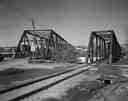
Look ahead for a pair of sturdy, crisscrossed steel trusses standing over the road and train tracks, stretching across the wide Penobscot River. Right where you’re standing, imagine it’s 1902 and workers are clanging steel beams into place. This is the Penobscot River Bridge, once the proud “iron backbone” connecting Bangor and Brewer, built by the American Bridge Company and then toughened up in 1911 by Boston Bridge Works. The air would have been thick with the smell of hot metal and river mist, whistles from trains echoing as they rumbled over the bridge. Now, here’s a twist of drama: it was Maine’s last remaining Baltimore (Petit) through-truss bridge-like a rare dinosaur of engineering! Locals depended on it, with U.S. Route 1A and Route 15 crossing the swaying trusses. At first, it handled loads of up to 15 tons, but after a long, loyal career, the old bridge could only whisper, “Sorry folks, just 3 tons now!” Before it finally retired in 1997, it watched highways change, cars grow heavier, and travelers speed across the “New Penobscot Bridge.” If you listen closely, maybe you’ll hear the ghostly rumble of tires and footsteps on steel.
전용 페이지 열기 →Look to the intersection of Main and Middle Streets for a grand, stone-fronted four-story building with a striking mansard roof and big red awnings over the storefront…더 보기간략히 보기
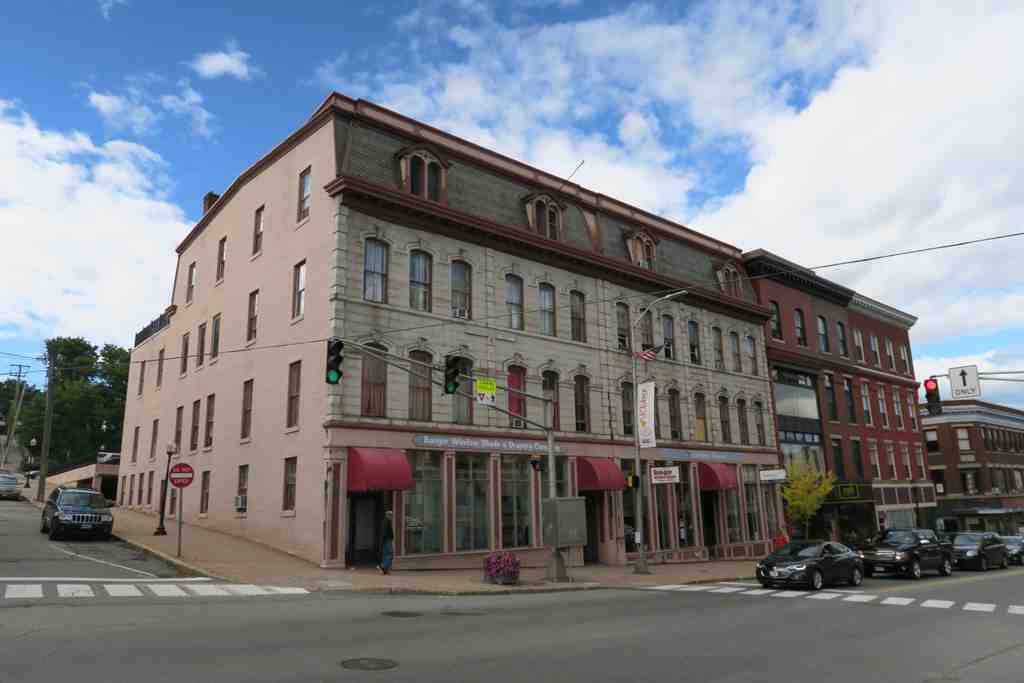
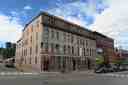
Look to the intersection of Main and Middle Streets for a grand, stone-fronted four-story building with a striking mansard roof and big red awnings over the storefront windows-that’s the Adams-Pickering Block standing proudly before you. Now, take a moment-imagine Bangor in the 1870s, the smell of fresh-cut granite lingering in the air, the clatter of horse-drawn carriages echoing through lively streets. This impressive building rises above the corner, a survivor with stories to spare. The Adams-Pickering Block, crafted by Bangor’s own architect George W. Orff, has stood here since 1873, built right on the site of “The Main Street Fire” of 1872-where flames claimed one life and wounded eight others. You might say this building has been through the fire and come out looking rather dapper, Second Empire style and all-just look at those dramatic window hoods and cast iron trim up above. The elegant granite façade was built to impress, and even though the ground floor has changed over time, you can still spot hints of the original ironwork. Here’s the twist: just a few decades later, in 1911, Bangor was struck by a devastating fire. Most buildings of this era vanished, but the Adams-Pickering Block stood firm. It’s a rare witness to both disaster and progress, stubbornly refusing to be erased by either flames or the urban renewal craze of the 1960s. And who’s behind the name? George W. Pickering-not just a savvy merchant or the president of the Kenduskeag Bank, but also mayor and one of Bangor’s founding figures. If the city’s old timers had a “Best in Business” trophy, his name would be engraved at the top. Today, as sunlight glints off that granite, you’re standing in the shadow of a true Bangor legend-where history, mystery, and a dash of survival spirit meet at one unforgettable corner.
전용 페이지 열기 →Look for a grand beige brick building with a broad, glowing marquee lined with golden lights right between a tall steepled church and an old-fashioned three-story building-if you…더 보기간략히 보기
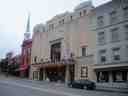
Look for a grand beige brick building with a broad, glowing marquee lined with golden lights right between a tall steepled church and an old-fashioned three-story building-if you spot the shimmer, you’ve found the Penobscot Theatre Company! Standing here, imagine the hustle and bustle of opening night as excited theatergoers gather under those bright lights, their laughter echoing off the brick walls. The story of Penobscot Theatre Company begins in 1973 when George Vafiadis, with dreams as big as a Broadway musical, founded the Acadia Repertory Company. But ten years later, like a daring act two twist, this gave birth to the Penobscot Theatre Company-bringing more drama, comedy, and heartfelt moments to Bangor’s streets. Fast forward and you’d feel the creative tension of the '90s as Joe Turner Cantu took on the artistic directorship, followed by Mark Torres, who orchestrated the magic for 13 full seasons. Today, the stage lights are in the hands of Artistic Director Jonathan Berry and Executive Director Jen Shepard, ensuring every show is filled with a new spark. Through decades, this spot has hosted thousands of stories-some funny, some mysterious, and all unforgettable. So who knows, maybe your next laugh or gasp belongs to the next chapter on this world-class stage!
전용 페이지 열기 →To spot the Hammond Street Congregational Church, look ahead for a tall brick building topped with a clock tower and a striking green spire, sitting proudly at the corner of…더 보기간략히 보기
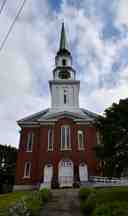
To spot the Hammond Street Congregational Church, look ahead for a tall brick building topped with a clock tower and a striking green spire, sitting proudly at the corner of Hammond and High Streets. Now that you’re standing right outside, let’s rewind the story all the way back to 1833. Imagine those early days-Bangor buzzing with ambition, thunderous hammers ringing out as builders hurried to construct a grand church for a brand-new congregation. Originally, it was supposed to be an impressive brick structure with a gigantic portico and two towers, but as the bills piled up higher than the steeple, corners had to be cut. The result? Let’s just say the first version of the church looked a little... awkward. Folks joked that it was like a person wearing a hat three sizes too big. Enter 1853 and the Boston architects, Towle & Foster, swooping in to give the church a much-needed glow up. Out went the odd proportions and in came this Italianate beauty-a design that would finally make the neighbors stop snickering. Take a moment to admire the tall, arched windows and the bold “dentillated cornice” (those little teeth in the trim-don’t worry, they’re not as scary as they sound). The three-tiered tower above you even boasts a grand clock and, just when you think it couldn’t get fancier, the spire pokes the sky with pride. Over generations, people have gathered here for Sunday services, community events, and milestones with the United Church of Christ. Under that iconic clock, Rev. Gary Bagley now leads a congregation rooted in the same spirit of resilience and renewal. Every brick and beam whispers stories of determination and a dash of architectural redemption-proof that a little makeover never hurt anyone!
전용 페이지 열기 →In front of you, there’s a historical map showcasing downtown Bangor with streets filled with tiny hand-drawn buildings-just look for the area where clusters of buildings line up…더 보기간략히 보기
In front of you, there’s a historical map showcasing downtown Bangor with streets filled with tiny hand-drawn buildings-just look for the area where clusters of buildings line up beside the Kenduskeag Stream, running across the bottom left of the illustration. Now, imagine standing here in Bangor in 1911-an ordinary April afternoon suddenly turns into pure chaos. It starts as just a small fire, tucked away in a shed on Broad Street. Then, with the wind howling up a storm, the flames leap from building to building, gobbling up local shops, homes, and even the grand Universalist Church. By 4:10 PM, the fire rages right through Center Street, turning a quiet neighborhood into a scene straight out of a disaster movie. People would have seen an angry orange glow in the sky all the way from Belfast-now that’s a light show Bangor didn’t want! Volunteers tried everything, even turning to dynamite, hoping to stop the inferno by blowing up buildings in its path. Spoiler alert: it didn’t work. Brave firefighters and townsfolk dashed around, calling for help as their own telephone wires burned. In a moment worthy of a superhero movie, the wire chief shimmied up a telegraph pole and cut in on a trunk line to summon backup crews from across Maine. One Boston fire crew even got confused and ended up fighting a fire in Portland by mistake! Somehow, Bangor’s City Hall stood its ground in the middle of the chaos, but landmarks like the old library and the post office vanished overnight. By the time rain finally began to fall, so much was lost: 285 homes, 100 businesses, six churches, and a mountain of history. Only two lives were taken, which is something like a miracle considering the destruction. Fast forward to today-most of what you see here was rebuilt, mixing local inspiration with big-city architects from New York and Boston. Out of the ashes, Bangor not only rose again; it became a showcase of resilience and reinvention, and the area is now a proud part of the Great Fire of 1911 Historic District. Now that’s how you make a comeback!
전용 페이지 열기 →Just ahead, look for a tall, six-story yellow-brick building with big arched windows at the top corner-right where Harlow and Central Streets meet-standing proudly above the…더 보기간략히 보기
Just ahead, look for a tall, six-story yellow-brick building with big arched windows at the top corner-right where Harlow and Central Streets meet-standing proudly above the street like a golden loaf of bread that’s risen just right! Now, picture it: it’s 1911, and Bangor’s busy downtown is a maze of brick and ambition, but disaster strikes-a roaring fire sweeps through, leaving the heart of the city in ashes. Out of these smoky ruins rises the Graham Building. Built fresh after the fire, this place is more than just six stories of yellow brick; it’s a survivor’s proof, a little like Batman after a tough night. Designed by Wilfred E. Mansur for John R. Graham-Bangor’s own “Electric Man”-this building was a spark plug in the city’s leap from lumber town to electric powerhouse. Thanks to Graham’s deals with General Electric, and a dash of inspiration from Francis Clergue (who’d already brought electric street railroads buzzing through the city), folks here swapped sawdust for sparks. Imagine the excitement: the first electric street railways in New England, humming underfoot, all because Graham had a vision brighter than his building’s gleaming yellow bricks. Step closer to the entrance on Harlow Street, dressed up with solid concrete details and a classy balustrade. Imagine old-timey Bangor residents bustling in-maybe to Bangor Hydro-Electric Company’s offices, or to catch a train at the Bangor and Aroostook Railroad. Maybe they’d pop downstairs for medicine at the Post Office Pharmacy, or see what’s new at a line-up of local shops. Today, lawyers from Rudman Winchell keep watch from upstairs, and the Maine Attorney General’s office holds fort on the second floor. Every layer of this building, from train tickets to legal briefs, has powered Bangor’s story, one twist of fate at a time.
전용 페이지 열기 →Look for a stately building straight ahead, marked by the words “Bangor Public Library,” surrounded by windows and classic decorative details - you won’t miss the large green sign…더 보기간략히 보기
Look for a stately building straight ahead, marked by the words “Bangor Public Library,” surrounded by windows and classic decorative details - you won’t miss the large green sign with bold letters and quirky illustrations around the border. Step up and let your imagination wander back nearly two centuries-yes, this is no ordinary library, it’s the beating heart of Bangor’s story. Picture it: in 1830, a group of hardworking folks called the Bangor Mechanic Association gathered their books together after long days with hammer and saw, wanting a spot to share, learn, and swap stories. By 1873, their small treasure trove grew and merged with other mini-libraries, and suddenly Bangor had a real literary hub. Fast forward a decade, and Samuel F. Hersey, a former Congressman and lumber tycoon, surprises everyone by leaving a massive $100,000 gift-enough to fill the city with hope and textbooks. Eventually, the shelves bulged with over 20,000 books, and the little fees vanished so anyone could open a book for free. But drama strikes in 1911 when the Great Fire roared through Bangor. Imagine standing in a smoky, ruined city center, the smell of charred pages in the air, as librarians scramble to save even a handful of books-just 29 rescued from the ashes! Undaunted, the community rebuilt. In 1913, this stunning stone building opened, echoing with the excitement of new beginnings and the clinking of bustling high schoolers nearby. Fast-forward to modern times, with big-hearted donations from Stephen King and his wife, and an airy glass atrium gleaming from recent renovations. And tucked inside? The legendary couch where Vice President Hannibal Hamlin played cards one fateful game too many. So step inside-just don’t worry about the “library police”! This building’s survived fires, fears, and thousands of overdue books. Welcome to Bangor’s living memory.
전용 페이지 열기 →


자주 묻는 질문
투어는 어떻게 시작하나요?
구매 후 AudaTours 앱을 다운로드하고 교환 코드를 입력하세요. 투어를 바로 시작할 수 있습니다 - 재생을 탭하고 GPS 안내 경로를 따라가시면 됩니다.
투어 중 인터넷이 필요한가요?
아닙니다! 시작 전에 투어를 다운로드하면 완전히 오프라인으로 즐길 수 있습니다. 채팅 기능만 인터넷이 필요합니다. 모바일 데이터 절약을 위해 WiFi에서 다운로드하시는 것을 권장합니다.
이것은 가이드가 안내하는 단체 투어인가요?
아닙니다 - 이것은 셀프 가이드 오디오 투어입니다. 폰을 통해 오디오 나레이션을 들으며 나만의 속도로 독립적으로 탐험합니다. 투어 가이드도, 단체도, 일정도 없습니다.
투어는 얼마나 걸리나요?
대부분의 투어는 60-90분이 소요되지만, 속도는 전적으로 본인이 조절합니다. 원할 때 언제든지 일시정지하거나, 정류장을 건너뛰거나, 휴식을 취하세요.
오늘 투어를 끝낼 수 없으면 어떻게 하나요?
괜찮습니다! 투어는 평생 이용이 가능합니다. 원할 때 언제든지 일시정지하고 다시 시작하세요 - 내일, 다음 주, 또는 내년에도. 진행 상황이 저장됩니다.
어떤 언어를 이용할 수 있나요?
모든 투어는 50개 이상의 언어로 이용 가능합니다. 코드를 교환할 때 원하는 언어를 선택하세요. 참고: 투어 생성 후에는 언어를 변경할 수 없습니다.
구매 후 투어는 어디에서 이용하나요?
App Store 또는 Google Play에서 무료 AudaTours 앱을 다운로드하세요. 교환 코드(이메일로 전송됨)를 입력하면 라이브러리에 투어가 나타나며, 다운로드하여 시작할 수 있습니다.
투어가 마음에 들지 않으시면 환불해 드립니다. 문의: [email protected]
안전한 결제 


