AudaTours logoAudaTours

슬라우 오디오 투어: 윈저와 이튼 유산 여행

오디오 가이드15 정류장

한때 윈저 성 위 밤하늘을 불꽃이 밝혔고, 고대 돌들은 속삭임만이 감히 반복할 수 있는 비밀을 간직했습니다. 이튼의 유서 깊은 벽돌과 왕실의 그림자 뒤에는 문 너머에서 기다리는 음모, 회복력, 그리고 알려지지 않은 드라마의 세계가 있습니다. 이 셀프 가이드 오디오 투어를 통해 이 거리를 걸으며 무심한 시선에는 숨겨진 이야기들을 발견하세요. 스캔들로 가득한 궁정 이야기부터 군주제를 거의 무너뜨릴 뻔한 순간들까지, 매번 새로운 사실이 대부분의 사람들이 결코 알지 못하는 것을 드러냅니다. 1992년 단 하나의 불꽃이 어떻게 수세기 동안의 왕실 역사를 지워버릴 위협이 되었을까요? 군주들이 잠들고 음모가 꾸며졌던 성 조지 예배당 아래에는 어떤 침묵의 미스터리가 남아있을까요? 이튼 근처의 작은 디테일은 왜 아무도 감히 소리 내어 말하지 못하는 악명 높은 배신을 암시할까요? 권력과 기억의 복도를 따라 울려 퍼지는 발자취를 따라가세요. 이튼과 윈저를 새롭게 발견하며 화재, 생존, 축하, 그리고 상실을 다시 경험하세요. 시작할 용기를 내세요—그리고 역사가 당신의 여정을 불태우게 하세요.

투어 미리보기

map

이 투어에 대하여

  • schedule
    소요 시간 40–60 mins나만의 속도로 이동
  • straighten
    6.4 km 도보 경로안내 경로 따라가기
  • location_on
  • wifi_off
    오프라인 작동한 번 다운로드, 어디서든 사용
  • all_inclusive
    평생 이용언제든지 다시 재생 가능
  • location_on
    윈저 성 성 조지 학교에서 시작

이 투어의 정류장

  1. The school started out simple: the mission was clear, “Find six voices to fill St George’s Chapel every day.” No pressure, right? The castle loomed above, royals paced behind…더 보기간략히 보기

    The school started out simple: the mission was clear, “Find six voices to fill St George’s Chapel every day.” No pressure, right? The castle loomed above, royals paced behind those stone walls, and the boys had to hit just the right notes-on demand! And from those humble beginnings, the tradition didn’t skip a single note, even when the world outside was spinning through wars, coronations, and all manner of royal gossip. Fun fact-right up until 1942, you couldn’t just waltz into St George’s unless you were the “son of a Gentleman.” (Apparently being a gentle-boy wasn’t enough!) But over time, the school opened its doors, and now it’s a bustling hub for both boys and girls. Walking by today, you might hear voices rising from the Song School near the chapel, rehearsing before the castle even stirs. Imagine those 17 full choristers-many of them boarders, serenading the royal family seven times a week. That’s vocal stamina! They’ve sung at grand occasions: royal weddings, state funerals, and blessings worthy of kings, queens, and future storybooks. Alongside these stars, about 400 students fill the old halls, splitting into Pre-Prep, Middle, and Senior sections. They scurry between lessons, clutching musical instruments almost as tightly as their homework, while the thunder of footballs and the soft tap of ballet shoes ring out from the playing fields that stretch over the King's own private grounds. Despite its ancient roots, the school has kept up with the times. Castles, after all, make great Wi-Fi towers! The house system was once all ‘Revenge,’ ‘Rodney,’ ‘Vindictive,’ and ‘Victory’- but don’t worry, no gladiator fights here-in 2021, they became Garter, Clarence, Lancaster, and Winchester, a tip of the cap to Windsor Castle’s towers. Kind of like Hogwarts, but with fewer secret basements. Or so they say. Oh, and big news: In 2024, St George’s welcomed its very first female head teacher, Emma Károlyi. Rumor has it, even the ghosts in the music room stood up and applauded. As you look at the school, know that future composers, writers, comedians, and even royal family members-like Princess Eugenie and Lady Louise-have ducked through these very doors. Now, picture the next church service-robes swaying, music swelling, another chapter added to this incredible history. If you hear a stray note or two on the wind, it’s not your imagination-it’s just St George’s, still singing after all these years. Ready to delve deeper into the present day, headmasters or the notable pupils? Join me in the chat section for an enriching discussion.

    전용 페이지 열기 →
  2. Right in front of you, you’ll see a sweeping green expanse behind grand stone gates and towers-just look past the two castle-like lodges on either side of the drive, and you’re…더 보기간략히 보기

    Right in front of you, you’ll see a sweeping green expanse behind grand stone gates and towers-just look past the two castle-like lodges on either side of the drive, and you’re looking at the entrance to Home Park, Windsor. Now, imagine you’ve stepped back in time, and instead of busy roads and city noise, the air is filled with the gentle rustle of old oaks and the sound of deer quietly grazing in the distance-this is Home Park, once called the Little Park, but let me assure you, there’s nothing “little” about it! Stretching across nearly 2.7 square kilometers, these grounds are the private playground of royalty, tucked just to the east of Windsor Castle, like a well-guarded secret garden behind castle walls. These lawns have seen more action than a Hollywood film set. Picture this: In 1368, King Edward III decides deer are the latest must-have accessory, so he creates a private hunting park right here-imagine the king in a feathered cap, chasing deer instead of emails. Over the centuries, kings and queens have shaped and expanded the park, even popping up in Shakespeare’s play, The Merry Wives of Windsor. Somewhere out here once stood Herne’s Oak, supposedly haunted by a ghostly hunter. I’d say beware-but don’t worry, the only thing likely to sneak up on you today is a wayward cricket ball! Home Park isn’t just about its royal past though; it’s alive with activity even today. You might just hear the faint ping of a tennis ball from the Windsor Home Park Lawn Tennis Club, or the thwack of willow on leather at the Royal Household Cricket Club. There’s farmland and cattle lazily munching away, and if you’re really lucky (and have an invite from the Queen), you could bowl on the exclusive green or tee off at the private golf course. Past some hedges lies Frogmore Estate, home to beautiful gardens, peaceful lakes, and the grand resting places of royalty-from Queen Victoria, who buried her favorite spaniel Dash here, to more recent royal generations. But don’t rush off-there’s a little intrigue too! Oliver Cromwell once trained his New Model Army on these very fields, and in the 19th century, new laws closed roads and made the park strictly private. Even now, most people only get a peek during special events like the Royal Windsor Horse Show. So go on, take a deep breath and let your imagination wander. From ghostly oaks and royal dogs to cricket games and secret gardens, Home Park really is where Windsor’s story comes out to play-no crown required.

    전용 페이지 열기 →
  3. The Royal Librarian’s office is tucked into the Royal Collection Department-a grand title for a grand responsibility. Picture an unbroken chain of guardians, each caring for a…더 보기간략히 보기

    The Royal Librarian’s office is tucked into the Royal Collection Department-a grand title for a grand responsibility. Picture an unbroken chain of guardians, each caring for a treasure trove that stretches back two and a half millennia. Imagine trying to keep your bookshelves at home organized. Now, try to keep track of books, manuscripts, medals, coins, banknotes, even royal seals, all spread across palaces, some brimming with royals, others echoing with memories. Talk about a complicated library card system! Long before the days of Dewey Decimal and Google searches, kings and queens needed someone to look after their prized collections. But it wasn’t until 1836 that the office as we know it today came to life, after massive royal book collections were consolidated right here at Windsor Castle. Can you see it? Carts groaning under the weight of priceless tomes, attendants sweating as they move everything into the castle’s hushed halls. And with that, a new era of royal book-keeping was born-though probably with a bit less dust and a lot more silk. Before this, some of the oldest royal treasures-including medieval manuscripts acquired, lost, and re-acquired over generations-were donated to the British Museum by George II, and the famed King’s Library, some 65,000 volumes assembled by George III, eventually made their way to the British Library. But Windsor Castle held fast to its own collection, ensuring it would remain the intellectual heart of the monarchy. Now, being Royal Librarian is no desk job. Today, the role includes Deputy Keeper of the Royal Archives, which have been nestled in Windsor Castle’s Round Tower since 1911. If you’ve got a secret, you might want to slip it in there-it’s probably the safest place in the country! Through exhibitions, events, and publications, the Royal Library shares its remarkable finds with the world. But that’s just the highlight reel. Behind the scenes, the librarian juggles rare books, fragile insignia, regal medals, and sometimes even conjures up royal gifts for state visits and garden parties. Forget bookmarks-how about a sovereign’s signet ring? And with history’s march, there have been changes and challenges. Think of the digital age: scanners, screens, cyber security, and the eternal threat of spilled tea on priceless manuscripts. The librarian’s team works closely with the Royal Household’s information wizards to keep these treasures safe-a little bit Hogwarts, a little bit MI5. It’s a job with a storied past, too. Since the appointment of John Glover in 1837, there have been a mere handful of royal librarians. Each one brought their own quirks and passions to the post, from Bernard Woodward’s precise catalogues to Jane Roberts’ eye for beautiful drawings. Up until 2002, the role included everything from prints and drawings to the daily drama of the archives. Then, things shuffled, separate heads were appointed, new challenges arose. Today, Stella Panayotova has stepped into the shoes-probably quite sensible shoes, given all the walking through long corridors-of the Royal Librarian, watching over this mighty legacy like a literary hawk. So, as you stand here, picture the endless halls lined with gilded spines and dusty secrets. Feel the quiet tension as a new manuscript is unveiled, or a medal is added to the archive. Imagine endless teas with scholars, the occasional panic over a misfiled document, and the thrill of holding history in your hands. Being Royal Librarian-now that’s what I call a royal adventure! And hey, at least overdue fines aren’t a royal decree.

    전용 페이지 열기 →
12개 정류장 더 보기정류장 적게 보기expand_moreexpand_less
  1. You’re standing outside Windsor Castle, and I bet you’re thinking, “Nothing could ever harm a place this grand!” Well, let me take you back to November 20, 1992-a day so dramatic,…더 보기간략히 보기

    You’re standing outside Windsor Castle, and I bet you’re thinking, “Nothing could ever harm a place this grand!” Well, let me take you back to November 20, 1992-a day so dramatic, it could have been written by Shakespeare… if Shakespeare liked plot twists with fire hoses. The morning seemed perfectly ordinary. But inside the Queen’s Private Chapel, a humble spotlight pressed too close to a curtain became the tiny villain in an enormous royal disaster. At exactly 11:15am: poof! The curtain caught fire. Within moments, the air filled with smoke and panic swirled in the corridors as the fire alarm clamored to life. This wasn’t just any old blaze. As lights flashed on a grid-map in the castle’s fire brigade room, it became clear this was spreading-and fast. Workers and royal staff rushed in with fire extinguishers, fighting a losing battle as the 30-foot-long curtains, in true dramatic fashion, tumbled to the floor, still ablaze. It got so hot and smoky that everyone fled the room, probably wishing they’d packed marshmallows. By 11:36, with the fire out of control, the castle’s fire brigade-a sturdy bunch with their own Land Rover-sped over from the stables, two miles away. As you can imagine, there wasn’t much time for tea or crumpets that day. Within minutes, fire engines from Berkshire, London, Buckinghamshire, and beyond screamed into Windsor. By 12:20pm, no fewer than 39 fire engines and over 200 firefighters filled the grounds. To put it in perspective, London hadn’t seen a fire this big since 1973. It’s the kind of guest list you never want at your castle party. The flames didn’t care for pedigree or history; they chewed through the State Apartments, swallowing the Crimson Drawing Room, damaging the Green Drawing Room, and turning cherished objects to ash. While firefighters aimed hoses at every burning corner, an epic rescue mission began. Staff, military men from Combermere Barracks, and helpful contractors darted through smoke, dragging everything from priceless books to a 150-foot banquet table-can you imagine carrying one end of that out the door? The North Terrace and Quadrangle were soon littered with treasure piled on tarpaulin, as police called in van after van from miles around to save what they could. No royal rescue would be complete without a few heroes: one decorator burned his hands rescuing paintings, Prince Andrew rolled up his sleeves, and curators carted off miniatures, clocks, and old master drawings. The salvage list was staggering: 300 clocks, thousands of books, historic manuscripts, and more. Amazingly, there were no serious injuries or deaths-a bit of royal luck in all the chaos. As the hours ticked painfully by, parts of the castle literally collapsed. At 3:30pm, the floors of the Brunswick Tower gave way, and later, the roof of St George’s Hall crashed in-a sound that must have been absolutely haunting. Even at 7:00pm, flames soared 50 feet into the night sky, defiant and roaring until the main fire was finally wrestled into submission by 11:00pm. Not until half past two in the morning did the last stubborn flames truly die out. On the bright side-well, besides the glowing embers-nearly everything of immense historical value was tucked away in time or already out on museum loans. Of course, some treasures were lost, including a massive royal portrait and an 18-foot 1820s sideboard, too big to budge. The aftermath was shocking: 100 rooms affected, centuries-old timber gone, ornate plaster ceiling obliterated, and even the Great Kitchen’s medieval woodwork-once bustling with more cooks than a holiday family-was lost. Restoration began almost immediately, though people feared it would take a decade and £60 million to put things right. In the end, the final bill was “just” £36.5 million (that’s still a few corgis). Buckingham Palace was opened to visitors, and Queen Elizabeth II, ever resilient, even started paying income tax for the first time since the 1930s to help cover costs. She called 1992 her “annus horribilis”-her year of horrors-but true to form, Queen and Castle bounced back. Within just a few weeks, the Queen returned home. Skilled architects rebuilt all that was lost, blending history with clever modern touches. St George’s Hall now boasts the largest green-oak structure since the Middle Ages, and North Europe gained a new favorite “rooftop.” So next time you see an ornate hammer-beam ceiling, remember: even legends can rise from the ashes-and sometimes, royal history is ablaze with more than just splendor. Seeking more information about the timeline of the fire, salvage operation or the extent of damage to the castle? Ask away in the chat section and I'll fill you in.

    전용 페이지 열기 →
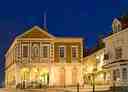
  2. To spot the Windsor Guildhall, just look for the grand stone building on your left, with tall columns and arches out front, an eye-catching statue above the entrance, and a row of…더 보기간략히 보기

    To spot the Windsor Guildhall, just look for the grand stone building on your left, with tall columns and arches out front, an eye-catching statue above the entrance, and a row of large windows gazing out over the bustling High Street. Welcome to the magnificent Windsor Guildhall, where history, tradition, and a pinch of mystery come together right before your eyes! Take a deep breath and imagine the generations of townsfolk, mayors, and even royals gathering here-sometimes for grand ceremonies, sometimes just to haggle over sacks of corn. It all began way back in medieval times, with records from 1369 mentioning a place called the “gildaule,” where residents settled their disputes and planned their markets-even then, Windsor folk liked to keep things official! By the early 1600s, this site was home to a wooden market house, built high up on pillars so farmers could sell their grain rain or shine, protected from England’s unpredictable weather. Now, as you stand before the impressive stone columns of the Guildhall, try to imagine that same bustling scene-the air thick with the smell of fresh bread, farmers shouting, coins clinking--the town alive and thriving beneath these arches. The building you see now started taking shape in 1687. Legend says the famous Sir Christopher Wren himself completed the job after the original architect passed away. Here’s a fun bit: folks claimed that Wren was forced by the town council, who didn’t trust his skills, to add extra columns for support. Undeterred, he’s said to have left them just a hair short, so they don’t quite touch the ceiling-sort of an architectural “I told you so!” A cheeky move, if true. Or is it? Turns out that’s probably just a story, but what’s history without a few tall tales to keep architects on their toes? Wren’s actual connection might be a little more complicated: his son, Christopher Wren Junior, served as Windsor’s Member of Parliament and even put his mark here, commissioning the statue of Prince George of Denmark on the southern end of the building in 1713. Meanwhile, the north side sports a statue of Queen Anne, added by the town council in 1708. It’s hard not to feel the weight of centuries as you look up at these stone rulers keeping watch over the town. Step around to the back, and you’ll find a bit of Victorian flair-an 1829 extension designed by James Bedborough added a two-story wing, and the whole building underwent serious restoration in 1851 and again just after World War II. If these walls could talk, they’d tell stories of Quarter Sessions and justice served until 1971, and perhaps even whisper tales of food rations and wartime hustle during the 1940s. And in more recent times, who would have thought this stately hall would play host to not one but two truly historic weddings-Prince Charles and Camilla Parker Bowles in 2005, and Sir Elton John with David Furnish later that very same year, marking one of England’s first same-sex civil partnerships. Can you hear the church bells and camera shutters snapping? Today, Windsor Guildhall is still the beating heart of the community, home to the borough council’s ceremonies and committee meetings-and since 2011, a delightful museum opened by none other than Queen Elizabeth II herself. Now, before you head off, just remember: there’s no better spot in Windsor to stand still and let almost seven centuries of history swirl around you!

    전용 페이지 열기 →
  3. In front of you, the Print Room at Windsor Castle might not look dramatic from the outside, but if you peek through its stately doorway or windows, you might just spot hints of…더 보기간략히 보기

    In front of you, the Print Room at Windsor Castle might not look dramatic from the outside, but if you peek through its stately doorway or windows, you might just spot hints of art treasures and the quiet hum of scholarly activity inside-keep your eyes peeled for a discreet, elegant sign marking this world of masterpieces. Welcome to the Print Room-a place where the walls themselves seem to buzz with the energy of centuries-old secrets! Imagine stepping through that door and being instantly surrounded by legendary drawings and watercolours that could almost leap off the paper and start telling stories. Here, experts guard and care for an astonishing collection, with names like Leonardo da Vinci, Raphael, Michelangelo, and Hans Holbein the Younger quietly watching you from their masterpieces. George III himself couldn’t resist-he gathered many of these treasures, probably resisting the urge to doodle a mustache on the Mona Lisa! Today, Martin Clayton heads up the careful team who make sure these precious works are preserved for future generations (and for curious noses pressed up against the glass). Just picture it: the scratch of pencils from centuries ago, the swirl of imagination, royal whispers in the corridors, and the thrilling sense that you’re standing where genius lives. If the room were any more magical, I’d have to remind you not to step on a stray paintbrush-who knows what old master might need it back!

    전용 페이지 열기 →
  4. Right in front of you stands a grand, pale stone building with a distinctive balcony and wrought iron gates, the Union Flag flying at half-mast on the roof-just look for the sea…더 보기간략히 보기

    Right in front of you stands a grand, pale stone building with a distinctive balcony and wrought iron gates, the Union Flag flying at half-mast on the roof-just look for the sea of people and floral tributes gathered at the ornate fence to spot this solemn landmark. Now, let me whisk you into one of the most heartfelt and historic moments in recent royal memory-the death and funeral of Prince Philip, Duke of Edinburgh. Imagine the morning of April 9th, 2021: inside Windsor Castle, rain clouds hanging low, the great Duke had just slipped away peacefully at the age of 99, surrounded by the gentle hush of the royal halls and the presence of his beloved Queen. That peaceful end sparked the launch of Operation Forth Bridge-a plan with a name as grand as the bridge itself-meticulously crafted for this very moment. Suddenly, the world was watching. It was a time of COVID-19, and the Queen and royal family had to balance centuries of tradition with very modern restrictions. Across this very town, flags were lowered to half-mast; streets grew hushed as news spread, and a gentle but unmistakable wave of mourning passed through crowds at both Buckingham Palace and Windsor Castle. There was a peculiar quiet to the air, interrupted only by the sound of the Abbey’s tenor bell, which tolled-once for each year of the Duke’s long life. Ninety-nine echoes in the cool evening air. Yet, even as crowds gathered with flowers and cards outside these gates, the Duke’s own wishes were humble. No state funeral, no grand lying in state-just a simple, dignified farewell. Philip had said he wanted "no fuss," and yet the world couldn’t help but pause. On April 17th, visions of regiments in crisp uniforms assembled in Windsor’s Quadrangle; his coffin, covered with his personal standard and naval cap, was carried by eight Royal Marines and followed on foot by his own children, grandchildren, and loyal staff. The Queen herself, ever dignified, watched from her Bentley limousine, her heart surely heavy but her chin held high. This was a funeral as poignant as it was historic-after all, Prince Philip was not just the longest-serving royal consort, but a man who spanned empires, survived world wars, and witnessed the world change beyond recognition during his lifetime. His remains rested first in the Royal Vault beneath St George’s Chapel-alongside kings and queens past, a quiet chamber echoing with the nation’s memory-until, at last, he would join his beloved Queen. Every detail of the service reflected the Duke’s life: military bands playing “Jerusalem,” “Nimrod,” and the sailor’s hymn “Eternal Father, Strong to Save,” echoing his passion for the Royal Navy. The music was more than background-it was a story, a tribute, and a nod to the many countries and people Prince Philip touched. COVID made it all strangely intimate-just thirty mourners inside the chapel, spacing between them like silent reminders of a world in crisis. Masks hid the faces but not the emotion. The Queen, mourning her husband of over 70 years, sat alone-one of the most powerful images of the entire event. The world responded: flags flew at half-mast from Canada to Cyprus, Malta to Australia. Gun salutes thundered on the Thames, in Gibraltar, and in remote islands and embassies. People wrote messages, left flowers, or pulled up digital condolence books online, unable to gather properly but desperate to say thank you and goodbye. Even in far-off Vanuatu, islanders who viewed Philip as a divine figure held ceremonies of mourning unlike any other. In all this, there was deep emotion but also, as Philip himself might have joked, a sense of British stoicism. No matter how many bells tolled or how many dignitaries sent condolences, the Queen summed it up best-saying her husband’s death had left “a huge void.” But through it all, the strength of memory, tradition, and love shone through. Steps away from you stands not just a building, but the living scene of a nation’s collective memory-paying tribute to a remarkable life lived in service, loyalty, and with, if you’ll excuse the royal pun, a slightly mischievous twinkle right to the very end. For a more comprehensive understanding of the health issues and death, operation forth bridge or the funeral, engage with me in the chat section below.

    전용 페이지 열기 →
  5. Look ahead for a solid, dark-brick building with big white letters reading "Victoria Barracks", often with guards in their iconic red coats and tall bearskin hats marching right…더 보기간략히 보기

    Look ahead for a solid, dark-brick building with big white letters reading "Victoria Barracks", often with guards in their iconic red coats and tall bearskin hats marching right out front. You’re standing at the famous Victoria Barracks, just a stone’s throw south of Windsor Castle. Take in the crisp sound of boots on pavement and a flash of red and black-this is where the world-famous Changing of the Guard begins its dramatic parade. Picture it: since 1853, soldiers have been calling this spot home, although the building you see now is the shiny, modern version built in the late 20th century. But, oh, the stories these bricks could tell! Imagine the air buzzing with excitement as the 1st Battalion, Coldstream Guards-tough as nails and sharply dressed-prepare for action, whether that’s keeping royal traditions alive or something more mysterious. Speaking of mystery, just in 2022, the barracks hosted an unexpected guest: a cheeky intruder who claimed to be a priest, slipped inside, and even had dinner with senior officers! No ID, no credentials-just a great story. Don’t try it yourself, though; the Army (and perhaps the Queen) weren't amused. As you watch the troops, imagine the history marching alongside them and listen for the echoes of centuries past-Victoria Barracks is where tradition, intrigue, and a splash of royal spectacle come to life!

    전용 페이지 열기 →
  6. To spot St John the Baptist Church, just look past the leafy trees ahead and to your right-you’ll see the church’s tall stone tower with dramatic pointed spires rising above the…더 보기간략히 보기

    To spot St John the Baptist Church, just look past the leafy trees ahead and to your right-you’ll see the church’s tall stone tower with dramatic pointed spires rising above the rooftops, standing a little apart from the bustling shops and cafes. Welcome to St John the Baptist Church-the heart of Windsor’s community spirit for centuries, and the keeper of more than a few dramatic secrets. If you pause right here, you might almost hear the faint echo of tolling bells above you, as the church’s tower stands watchful over the street. Let’s step back in time. The story of St John’s reaches all the way to the earliest days of Windsor. Long before the church towered over this spot, Windsor’s first settlement was down the road in Old Windsor. Things got interesting when Henry I decided that Windsor Castle would be his new pad, shifting the community to where you’re standing now. There was a church here by the time of Henry II, and over the centuries, it changed and grew, just like the town around it. Imagine the old church-a building filled with wooden pews, the gentle flicker of candlelight, and the buzz of hearty townsfolk gathering for news and prayer. By the early 1800s, though, the poor church was falling apart-no amount of prayer could stop the rain leaking in! So, the townspeople rallied, and in the 1820s, architect Charles Hollis was called in to create the Gothic Revival beauty in front of you. Look up and see those classic quatrefoil columns and the solid ashlar stonework, still as imposing as the day they went up. But, oh, if these stones could talk, they’d have tales both dark and daring to share! Back in the reign of Henry VIII, when England was tearing itself in two over religion, Windsor became the unwilling stage for a deadly drama. In 1543, Anthony Pearson, a fiery Protestant preacher, sent shockwaves through this very church with his bold words. He inspired Henry Filmer, a local tailor and churchwarden, who then clashed with their own vicar, Thomas Meister. Talk about drama down at the local church! News of their rebellious ideas soon reached the ears of William Simmonds, the mayor-a man with sharp eyes and an even sharper quill. The authorities swooped in, arrested Pearson, Filmer, and a few others, and brought them before a jury just itching to convict. The result? Pearson, Filmer, and chorister Robert Testwood paid the ultimate price, burned at the stake north of the castle-right where Windsor & Eton Riverside railway station now stands. Heavy stuff for a peaceful church, right? But time brings change. In the 1800s, Windsor’s spirit of renewal transformed the church once more. New stone, a fresh chancel designed by the ever-creative Samuel Sanders Teulon, and a grand reopening attended by Princess Christian herself. Inside, if you sneak a peek, you’ll find a sweeping semi-circular apse, colourful polychrome arches, and spectacular mosaics by Venetian maestro Antonio Salviati. Above the west gallery sits a real gem-an immense painting of the Last Supper, gifted by George III, which was once the star of St George’s Chapel next door. This painting has seen more church drama than most bishops! But there’s more-a Royal Pew, a gift from Princess Augusta, sits waiting for royal bottoms, fronted by an exquisite screen carved by none other than Grinling Gibbons, famous for his talent and, I hear, his moustache. And don’t miss the cushion for the mayoral mace-a reminder that this is the civic heart of Windsor. While you’re here, listen out for the peal of the eight bells in the tower, some of which first rang out in the 1700s, and the mighty organ-a true tale of musical musical-chairs, moving from chapel to church to chapel again, until finally finding its voice here, thanks in part to Andrew Carnegie’s generous donation. St John the Baptist Church has been led by an eccentric parade of vicars-from antiquary George Evans, to Ralph Creed Meredith, George VI’s chaplain and champion badminton player. Its graveyard is the resting place of mayors, MPs, physicians to royalty, and even an abbess from the 1300s. Every stone, every name, whispers Windsor’s story, woven through with courage, politics, artistry, and the simple faith of generations. Isn’t it amazing what you can find behind a Gothic tower and some leafy trees?

    전용 페이지 열기 →
  7. To spot the Military Knights of Windsor, look for a group of distinguished men in bright red military dress uniforms with white sashes and black hats, often marching or standing…더 보기간략히 보기

    To spot the Military Knights of Windsor, look for a group of distinguished men in bright red military dress uniforms with white sashes and black hats, often marching or standing with the grand windows of St George’s Chapel as their impressive backdrop. Now, let’s step into the world of the Military Knights of Windsor. Imagine yourself right here centuries ago: the year is 1348, and King Edward III has just founded the Order of the Garter after a dramatic victory at the Battle of Crécy. Suddenly, the air is filled with the echoing footsteps of weathered warriors, some with battle scars, each one a veteran looking for purpose and a home. Edward’s answer? The Alms Knights-brave but often penniless soldiers who’d served their king but lost fortunes to war and ransom. Their destiny wasn’t just to relax in their slippers! They were called to “serve God continually in prayer.” I like to think they were the medieval version of multitaskers-praying, protecting, and providing a bit of polished pageantry. Six hundred years ago, if you’d wandered the grounds here early in the morning, you might’ve heard the low, resonant murmur of prayers echoing through the stone corridors, four times a day. The Poor Knights, as they were informally called (not because of their table manners, but their wallets!), had a most humble routine. They’d receive twelve pennies a day, forty shillings a year, and a bed in Windsor Castle. But there was a catch: acquire too much wealth, and you’d be kicked out faster than you could say “long live the King!” Poverty, oddly enough, was a requirement for the job. As royal tides changed, so did the rules. King Henry VIII, known for making more than just marital cutbacks, halved their number to thirteen, while Queen Elizabeth I swept in with a reform of her own in 1559. Later, King Charles II thought bigger was better and upped the roll call to eighteen, while King William IV gave the Knights their current name in 1833: the Military Knights of Windsor. If you’re thinking these changes sound like someone constantly tweaking their fantasy football team, you’re not wrong! Unlike many orders, these knights aren’t actual knights of the Garter-they don’t automatically get a shiny sir or “my lady” before their name. Still, today’s Military Knights are retired officers who have swapped battlefields for these hallowed walks. Their role? To escort the Knights and Ladies of the Garter, march in grand processions, and add a sense of splendor and continuity to centuries-old traditions. During ceremonies, you might see their crisp red uniforms gleaming in the sun, gold epaulettes blazing, and stern faces barely hiding a moment of pride. Commanding this band of scarlet storytellers is always a senior retired officer-think of him as head teacher, drill master, and very patient cat herder rolled into one. From John Moulsworth in the 1500s to Lieutenant General Peter Pearson today, each Governor has kept these traditions vibrant and alive. So, the next time you glimpse those red coats disappearing into St George’s Chapel, remember you’re seeing living history-a bridge from medieval times, through royal reforms and raucous parades, right up to this very moment. And who knows, maybe behind one of those stern gazes, there’s a twinkle of a joke just waiting for the right knight to tell it.

    전용 페이지 열기 →
  8. You’re now looking at St George’s Chapel-just gaze slightly to your left and you’ll spot its grand stone walls, ornate towers, and tall, elaborate windows rising above the green…더 보기간략히 보기

    You’re now looking at St George’s Chapel-just gaze slightly to your left and you’ll spot its grand stone walls, ornate towers, and tall, elaborate windows rising above the green lawn, standing like a glorious ship of honey-coloured stone ready to set sail through time. Now, ready for a royal tale or two? Imagine yourself in the late 1300s, walking these very grounds as King Edward III dreams up a chapel fit for legends and heroes. This isn’t your average Sunday church-St George’s Chapel would become the king’s own special chapel, for royalty only, and the heart of the Order of the Garter. So, if you’re feeling knightly, it’s the perfect place to let your imagination run wild. The chapel grew and changed over hundreds of years: from the sturdy medieval walls and soaring windows filled with colored light, to the roof where, perched high, seventy-six stone beasts stand guard. If you listen closely, you might even imagine wind whistling around the lion, the dragon, and even the unicorn towering above you. These aren’t just decoration; they’re royal heraldic animals, each with a story and a family tree almost as tangled as a box of Christmas lights. Let’s pop back to the 1400s-Edward IV and later Henry VII pull out all the stops for a total chapel makeover, transforming it into a sweeping Gothic marvel. There were moments of drama too! During the English Civil War, the chapel had its fair share of rough times-raiders ransacked treasures, stole lead from the roof, and even pinched bits from Henry VIII’s never-finished funeral monument. When Charles I met his untimely end, he was taken here in the dead of night and tucked into a simple vault alongside Henry VIII and Jane Seymour. The chapel might seem peaceful now, but its floors and vaults hide secrets and royal stories almost everywhere you look. Next, close your eyes for a second and picture George III, the so-called “Mad King” (but really, just a big fan of Windsor Castle), attending Sunday services and lovingly restoring the neglected chapel. Thanks to his enthusiasm, the crumbling walls got a new lease on life and the chapel became a royal favourite once again. And it’s not just kings and queens who’ve left their marks: in the early 1900s, when the winds and rain had battered the building nearly to ruin, fresh restorations began-one sculptor even created falcons and unicorns anew for the rooftops. But St George’s Chapel isn’t just about the big, dramatic moments. Think of the College of St George: deans, canons, and staff keeping the ancient rituals alive, or the choristers singing high above it all, their voices floating through the arches. And if your curiosity (or sweet tooth) is twitching, here’s a quirky bit: Just outside the Rutland Chantry inside, you’ll find a monument to Anne of York-and thanks to the magic of embroidery, panels depicting everything from the Annunciation to the Miracle at Cana, made by a modern needlework wizard. Want a bit of pageantry? Every June, the Order of the Garter knights don gleaming robes and sashes, processing from the grand castle down to the chapel for their ancient service. Here’s the twist: their banners, swords, and shining helmets go up above their choir stalls, and after they pass away, all but a beautiful little nameplate are removed, leaving behind a sparkling patchwork of nearly eight hundred plates, each telling a slice of history. Not bad for a set of choir benches! Of course, St George’s Chapel has been the backdrop for royal weddings (and a little bit of drama!)-from Queen Victoria’s children to Charles and Camilla’s blessing in 2005. And it’s the final resting place for Henry VIII, Charles I, George VI, Elizabeth the Queen Mother, and even the most recent monarchs, Elizabeth II and Prince Philip, who returned here for their last chapter. So really, you’re standing in a place where centuries of kings, queens, legends, and a few spectacular creatures have come and gone, but the sense of awe and royal magic? Well, that never leaves. Curious about the dean and canons, chantries or the weddings? Don't hesitate to reach out in the chat section for additional details.

    전용 페이지 열기 →
  9. Right ahead of you, you’ll spot a large, glass-fronted display glowing softly in the shadows-a perfect little Georgian mansion with three intricate levels, each glowing with light…더 보기간략히 보기

    Right ahead of you, you’ll spot a large, glass-fronted display glowing softly in the shadows-a perfect little Georgian mansion with three intricate levels, each glowing with light and tiny masterpieces, just waiting for you to peer inside at all its magical details. Now, get ready to feel like a giant in a fairy tale, because this is Queen Mary’s Dolls’ House, and if you’ve ever thought your childhood dollhouse was impressive, you haven't seen anything yet! Picture yourself back in the 1920s, in a time when the world was fast changing after the Great War. Queen Mary’s cousin, Princess Marie Louise, was chatting away with the famous architect Sir Edwin Lutyens-yes, the very man who designed bits of New Delhi-while browsing the Royal Academy’s Summer Exhibition in 1921. The princess had an idea: what if they could capture the spirit of an entire royal household, but on a scale small enough to fit in a single room? Not just for fun-though it’s hard to ignore the fun of it-but as a historic snapshot for generations to marvel at. Sir Edwin was immediately hooked. With a wink and a flourish, he began drawing up plans, dreaming of a miniature palace packed with more luxury than you could shake a tiny scepter at. Princess Marie Louise, meanwhile, put her rolodex to shame, calling upon Britain’s finest artists, craftsmen, and even superstar authors-pretty much anyone who was anyone at the time. By 1924, the result was unveiled: a house built at the scale of one twelfth real size, with every inch packed with jaw-dropping detail. Look closely now-yes, even closer-because what you see inside is truly mind-boggling. There are carpets and curtains handwoven to match those in Windsor Castle. See those electric lights? They actually work. The taps run with real water, and the toilets even flush! That’s right, the house is plumbed, wired, and even sports a tiny lift and a garage full of truly miniature (but operational!) cars. Imagine spending an afternoon with a magnifying glass, just hunting for hidden royal treasures! And the library… oh, you’ll love this! It’s probably the smallest and most star-studded book collection in the world. Some of your favorite authors-Sir Arthur Conan Doyle, A. A. Milne, even M. R. James-wrote stories at one-twelfth scale just for this house. Sir Conan Doyle actually created a brand-new Sherlock Holmes mystery only a few inches tall, while A. A. Milne penned “Vespers.” Imagine the pressure: “No, Sir, your handwriting is still too big!” There are also tiny bottles of real wine and spirits in the cellar, and monogrammed linens that could fit in a thimble. Every detail comes alive when you peek inside: from breakable tiny shotguns, to a full set of needlework carpets by Dorothy Rogers, whose work became famous thanks to the Queen's interest. And here’s a secret to share-there’s a hidden garden underneath! Pull out a giant drawer and you’re greeted by a perfectly arranged English garden, designed by Gertrude Jekyll, complete with mini garden tools and a maze of tiny greenery. When it debuted at the British Empire Exhibition in 1924-1925, more than 1.6 million people lined up to marvel at its treasures. It raised piles of money for Queen Mary’s charities-now that’s one impressive “housewarming”! Over the years, the dolls’ house has only grown richer in story. Just this year, Queen Camilla helped add a fresh batch of miniature manuscripts to the library, featuring top British authors to reflect a whole new century of storytelling. So take a good look, let your imagination shrink down, and picture yourself living in these golden halls-a place where every door leads to wonder, and sometimes, the most magical palaces fit right in the palm of your hand.

    전용 페이지 열기 →
  10. Right in front of you, you'll spot Windsor Bridge stretching across the Thames with its three gracefully arched spans of iron and strong granite piers-it’s easiest to find by…더 보기간략히 보기

    Right in front of you, you'll spot Windsor Bridge stretching across the Thames with its three gracefully arched spans of iron and strong granite piers-it’s easiest to find by looking for the row of ornate lampposts on top and the steady flow of pedestrians and cyclists crossing from one bustling riverside town to the other. Now, as you stand beside the cool breeze coming off the river, imagine you’re about to walk a path once trod by medieval merchants, regal dignitaries, and maybe a cheeky bargeman or two. Windsor Bridge isn’t just any old bridge; it’s a hardworking link with a sense of style and a few secrets beneath its iron ribs. The very first bridge here dates back to the 1100s, when the biggest complaint wasn’t the weather or the traffic, but the tolls the sly Osbert de Bray collected from riverboats-no contactless payments in sight, mind you! Fast forward to the 1200s, and they were chopping down mighty oak trees from Windsor Forest to keep this vital route standing strong. The bridge breathed timber for centuries, but wooden beams didn’t stand a chance against centuries of wagon wheels, weary horses, and the odd thunderstorm spat. By the early 19th century, Windsor and Eton demanded something fresher, sturdier, and grander. Enter the current iron and granite beauty, built in the early 1820s. Imagine the clang of hammers and the creak of cranes as seven iron segments were slotted together for each arch, the stones hauled and set by hand-no room for shaky hands with a river as stubborn as the Thames below. Even after opening, this bridge made sure crossing wasn’t too easy on the wallet. Tolls lived on-a bumpy ride for locals-until a determined crowd took the mayor to court in the late 19th century and finally freed up travel for everyone in 1897. Cheers echoed on both banks that day! For a time, the old bridge stood up to roaring cars and rumbling trucks, but years of loyal service caught up with it in 1970. Cracks appeared, and in a nail-biting decision, engines were banished and calm returned. Today, only feet and pedals tread here-no car horns, just birdsong and chatter. After a sparkling makeover in 2002, with fresh stone and new lights, Windsor Bridge is more welcoming than ever. So, stroll across and soak in the story. Look out for swans gliding below and picture yourself waving to a friend in another century-after all, you’re standing on centuries of crossings, in a spot that’s always been the heartbeat between Windsor and Eton!

    전용 페이지 열기 →
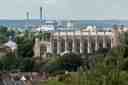
  11. To spot Eton College Chapel, look for the large, pale stone building crowned with tall arched windows and decorative spires rising above the treetops on your right; it’s almost…더 보기간략히 보기

    To spot Eton College Chapel, look for the large, pale stone building crowned with tall arched windows and decorative spires rising above the treetops on your right; it’s almost impossible to miss-it looks like a castle and a cathedral had a very grand baby! Alright, take a good look at those soaring windows and fortress-like towers-this place is no ordinary school chapel. Imagine yourself back in the 1400s: the air is filled with the sound of boys’ laughter echoing off stone walls, horses clopping down muddy lanes, and everyone’s craning their necks to see what King Henry VI is building in little old Eton. If Henry had his way, this chapel would have been twice as long-but, as luck (or royal drama) would have it, his grand plans were quite literally cut short. There’s even a plaque down the street showing where the building should have reached. Talk about a renovation project that ran out of steam! Standing here, you’re face to face with the late Gothic-Perpendicular, if you want to impress your friends-masterpiece. Now, don’t forget to look up inside if you get the chance; that marvel of fan vaulting overhead was actually added in the 1950s after the original timber roof was attacked by deathwatch beetles. Deathwatch beetles! No, they aren’t an ancient Eton tradition, just some very hungry bugs. The new ceiling took three years, plus a lot of concrete, steel trusses, and expertly hand-carved stone ribs to put together. This place isn’t just for show: it hums with life, and almost every morning you’ll find boys shuffling in (sometimes more awake than others) for a quick 20-minute service. Imagine-over 500 years ago, the founder Henry VI wanted fourteen services a day! He even hired what was practically a small army of priests, chaplains, clerks, and choristers. Why? Well, aside from wanting to hurry a few souls through Purgatory, Henry saw this chapel as a beacon of faith for all of Europe. For a decade, crowds absolutely flocked here every August, drawn by the promise of relics and indulgences. The fair in the fields nearby lasted six days-Eton probably felt more like a bustling market town than a quiet village. It wasn’t all organs and incense, though. Once things quieted down, the crowds vanished just as suddenly as they’d arrived, and the grand team of clergy was trimmed down to a more manageable size. But the chapel has never lost its central role in college life. Today, the choir-made up mostly of boys who’ve already sung at cathedrals-fills the space with music during services. They’ve even had to cut down on the singing (maybe to save the boys’ voices, or let them catch up on sleep), so now you’ll catch them at their best on Fridays, Saturdays, and Sundays. Here’s a piece of drama fit for a movie: during World War II, a bomb went off nearby and nearly all the historic glass windows shattered-except, miraculously, the one over the organ. Ever the optimists, the college filled the empty frames with modern stained glass by artists like Evie Hone, John Piper, and Patrick Reyntiens. Now, the glass tells miraculous stories on one side and famous parables-like the Lost Sheep and the House Built on the Rock-on the other. Inside, the walls hold an even bigger secret: hidden masterpieces painted in the 1400s. On the north side, there’s a lovely parade of scenes dedicated to the Virgin Mary; on the south, an entire medieval fable about a mythical empress. But in 1560, these treasures were whitewashed and forgotten for almost 300 years-nobody realized the dazzling color and drama were hiding just out of sight until 1847, when they were rediscovered and finally restored in 1923. This chapel isn’t just the heart of the school-it’s a living witness to centuries of devotion, drama, disaster, and song. So as you stand here, let your imagination fill the space with kingly ambition, schoolboy mischief, and soaring music. If you listen closely, you might almost hear the footsteps, the prayers, and the echoes of history swirling through these ancient stones. And don’t worry-if you hear a mysterious scratching sound, it’s probably not a ghost… just one very ambitious beetle with a taste for English heritage! Interested in knowing more about the services, founder or the the choir

    전용 페이지 열기 →
  12. It’s hard to believe, but the roots of this club stretch all the way back to 1859. Picture it: the Victorian era. The world was changing, and the former pupils of Eton College at…더 보기간략히 보기

    It’s hard to believe, but the roots of this club stretch all the way back to 1859. Picture it: the Victorian era. The world was changing, and the former pupils of Eton College at Oxford and Cambridge weren’t about to miss out on all the fun-or the football. Their early matches weren’t quite what we know today. They played by Eton’s own “Field Game” rules, where you needed both legs and a good amount of nerve. The annual matches between the old boys and the school, with long coats flapping and hair perfectly in place, must have been quite a sight. By 1863, these Old Etonians wanted a bigger challenge and took on non-Etonians for the first time at Westminster School. The rules changed with every venue, so it was as much a battle to remember who could use their hands as it was to win the game. The club’s official foundation date is marked as 1865, thanks to Arthur Kinnaird-a name worth remembering, since he later became one of the FA’s founding fathers. Fast-forward just a few years, and things got serious. In 1873-74, the Old Etonians entered the world-famous FA Cup. Their first attempt? Well, they scratched-no, not like a dog with fleas-they pulled out before playing, as their best players were helping the Wanderers club at the time. But soon, the Eton boys were back for glory. In 1875, they made it to the final against the Royal Engineers. The final was played at Kennington Oval, in a wild match with a howling wind. Ends were swapped only after goals: this caused so much trouble that the law was changed soon after. Talk about a sporting rule change sparked by bad weather and clever old boys! Unfortunately, the Etonians lost the replay, missing several key players due to mysterious pre-final injuries. But they pressed on with a stiff upper lip. Over the next few years, matches often turned into heroic dramas. There were last-minute injuries, replay after replay, and epic battles with fierce rivals-the Wanderers-where the entire mood of the Victorian footballing world seemed to hang in the air. In 1879, they finally raised the FA Cup for the first time, with players like Goodhart and Clerke combining for a famous goal. Imagine muddy boots, freezing breath, and the crowd roaring! These Etonians were always true amateurs-“true blue”-and proud of it. In 1882, they became the last amateur club ever to win the FA Cup, beating the mighty Blackburn Rovers 1-0. The next year, they lost to Blackburn Olympic after extra time, but by then their legend was written: six FA Cup finals in just nine years, with two wins and four runners-up medals. Not bad for a team that started out mostly playing against their own school! But the Old Etonians didn’t just conquer the Cup-they sent players to the England national team, too. Imagine, three Etonians putting on the famous white shirt together in 1879 against Wales! On that day, Herbert Whitfeld even bagged a winning goal. Club founder Lord Kinnaird even played for Scotland in the second-ever international football match. Who says school pride can’t cross borders? As the decades rolled on, Old Etonians continued to chase glory, turning out sides in the Arthurian League, fielding multiple teams, and winning league titles and the Arthur Dunn Cup. They aren’t the same cup-chasing giants of the Victorian era, but the atmosphere here crackles with heritage every Saturday during the season. You might not see top-hatted fans lining the touchline anymore, but you will see sporting tradition alive and well. Here’s an extra slice of history for you-during the off-season, some of these Etonians played cricket as the Eton Ramblers, taking to the pitch in purple, gold, green, and red. Can you imagine playing football with a cricket ball? Well, in 1882, the Ramblers did just that, using a much smaller Eton Field Game ball in a FA Cup match. No VAR in those days! So, as you stand here, close your eyes and let yourself drift back to those lively, muddy Victorian pitches. The slap of leather on laces, the roar of well-bred voices, and Eton’s history written not just in books, but in passes, tackles, and cheers. Thank you for joining me at the Old Etonians FC-a club where old school never gets old! Want to explore the international players, records or the eton ramblers in more depth? Join me in the chat section for a detailed discussion.

    전용 페이지 열기 →

자주 묻는 질문

투어는 어떻게 시작하나요?

구매 후 AudaTours 앱을 다운로드하고 교환 코드를 입력하세요. 투어를 바로 시작할 수 있습니다 - 재생을 탭하고 GPS 안내 경로를 따라가시면 됩니다.

투어 중 인터넷이 필요한가요?

아닙니다! 시작 전에 투어를 다운로드하면 완전히 오프라인으로 즐길 수 있습니다. 채팅 기능만 인터넷이 필요합니다. 모바일 데이터 절약을 위해 WiFi에서 다운로드하시는 것을 권장합니다.

이것은 가이드가 안내하는 단체 투어인가요?

아닙니다 - 이것은 셀프 가이드 오디오 투어입니다. 폰을 통해 오디오 나레이션을 들으며 나만의 속도로 독립적으로 탐험합니다. 투어 가이드도, 단체도, 일정도 없습니다.

투어는 얼마나 걸리나요?

대부분의 투어는 60-90분이 소요되지만, 속도는 전적으로 본인이 조절합니다. 원할 때 언제든지 일시정지하거나, 정류장을 건너뛰거나, 휴식을 취하세요.

오늘 투어를 끝낼 수 없으면 어떻게 하나요?

괜찮습니다! 투어는 평생 이용이 가능합니다. 원할 때 언제든지 일시정지하고 다시 시작하세요 - 내일, 다음 주, 또는 내년에도. 진행 상황이 저장됩니다.

어떤 언어를 이용할 수 있나요?

모든 투어는 50개 이상의 언어로 이용 가능합니다. 코드를 교환할 때 원하는 언어를 선택하세요. 참고: 투어 생성 후에는 언어를 변경할 수 없습니다.

구매 후 투어는 어디에서 이용하나요?

App Store 또는 Google Play에서 무료 AudaTours 앱을 다운로드하세요. 교환 코드(이메일로 전송됨)를 입력하면 라이브러리에 투어가 나타나며, 다운로드하여 시작할 수 있습니다.

verified_user
만족 보장

투어가 마음에 들지 않으시면 환불해 드립니다. 문의: [email protected]

안전한 결제

Apple PayGoogle PayVisaMastercardPayPal

AudaTours: 오디오 투어

재미있고, 경제적이고, 자유로운 셀프 가이드 워킹 투어

앱 체험하기 arrow_forward

전 세계 여행자들에게 사랑받고 있습니다

format_quote 이 투어는 도시를 보는 정말 좋은 방법이었습니다. 이야기들이 너무 대본처럼 느껴지지 않으면서도 흥미로웠고, 나만의 속도로 탐험할 수 있어서 좋았습니다.
Jess
Jess
starstarstarstarstar
Tbilisi 투어 arrow_forward
format_quote 관광객처럼 느끼지 않으면서 Brighton을 알아가는 훌륭한 방법이었습니다. 내레이션에 깊이와 맥락이 있었지만 과하지 않았습니다.
Christoph
Christoph
starstarstarstarstar
Brighton 투어 arrow_forward
format_quote 크루아상을 한 손에 들고 아무 기대 없이 시작했습니다. 앱이 그냥 자연스럽게 함께해 주는 느낌이에요, 부담도 없고, 그냥 나와 이어폰과 멋진 이야기들.
John
John
starstarstarstarstar
Marseille 투어 arrow_forward

무제한 오디오 투어

전 세계 모든 투어의 잠금을 해제하세요

0 투어·0 도시·0 국가
all_inclusive 무제한 탐험