
세인트 올번스 오디오 투어: 파인트, 전투, 그리고 시간을 넘나드는 전설
세인트 올번스의 돌들은 여전히 전투의 천둥소리와 스캔들의 속삭임으로 고동칩니다. 언뜻 보면, 이 시장 거리는 조용한 역사로 빛나지만, 더 자세히 들여다보면 영국의 운명을 영원히 바꾼 비밀들을 발견할 수 있을 것입니다. 수백 년 된 골목과 유서 깊은 광장을 따라 셀프 가이드 오디오 투어를 떠나보세요. 치열한 경쟁, 잃어버린 대의, 그리고 일상적인 반란—들을 곳을 아는 사람들에게는 모두 눈에 띄게 숨겨져 있습니다. 당신의 발밑에서 왕이 자신의 백성들에게 칼을 겨누게 한 것은 무엇이었을까요? 어떤 예상치 못한 건물에서 상인들이 경찰선을 뚫고 돌진하는 것을 목격했을까요? 그리고 지역 선거 뇌물이 어떻게 이 도시 전체의 의회 목소리를 침묵시켰을까요? 반란군이 충돌하고 음모가 펼쳐졌던 곳을 밟아보세요. 한때 군대가 행진했던 길을 따라가 보세요. 모든 모퉁이가 또 다른 전설을 드러낼 때, 공포에 질린 마을 사람들과 승리한 음모가들의 메아리 속에 서보세요. 세인트 올번스의 조용한 외관 아래 묻혀 있던 것을 밝혀낼 준비가 되셨나요? 진정한 이야기들이 기다리고 있습니다—앞으로 나아가 그들의 목소리가 울려 퍼지는 것을 들어보세요.
투어 미리보기
이 투어에 대하여
- schedule소요 시간 40–60 mins나만의 속도로 이동
- straighten3.6 km 도보 경로안내 경로 따라가기
- location_on
- wifi_off오프라인 작동한 번 다운로드, 어디서든 사용
- all_inclusive평생 이용언제든지 다시 재생 가능
- location_on세인트 올번스 제1차 전투에서 시작
이 투어의 정류장
To spot the site of the First Battle of St Albans, look down the historic streets radiating from the city center, where medieval lanes and old market squares still echo the…더 보기간략히 보기
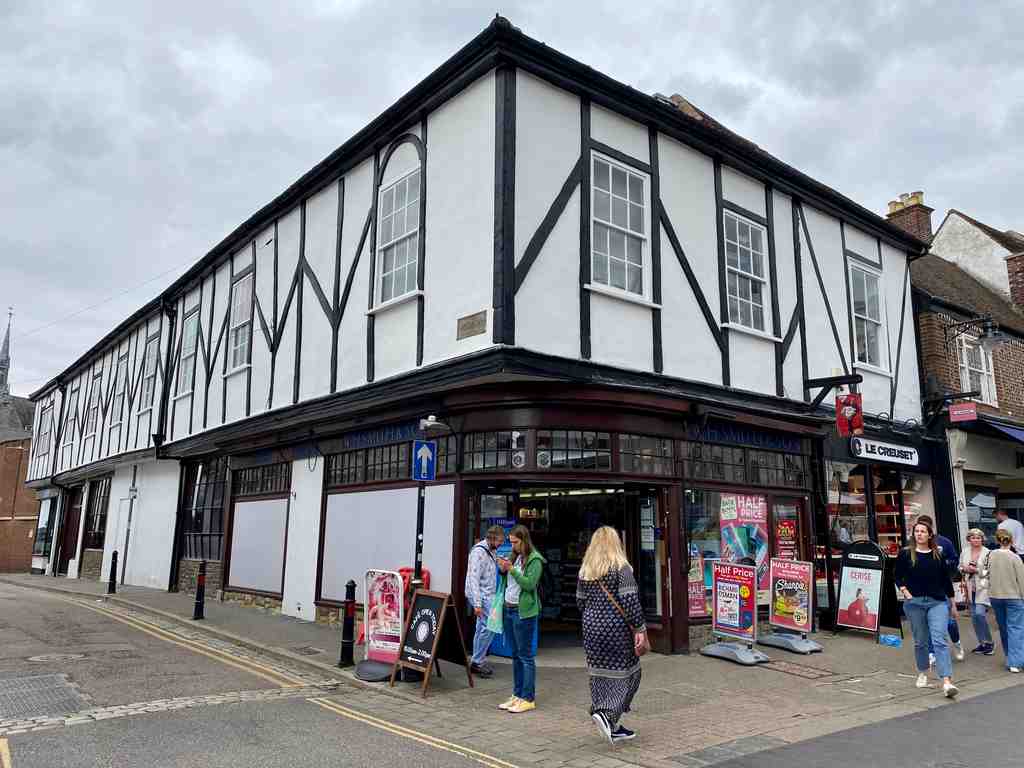
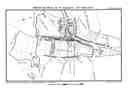
To spot the site of the First Battle of St Albans, look down the historic streets radiating from the city center, where medieval lanes and old market squares still echo the narrow, tangled routes you see on this old battlefield map. Close your eyes for a moment and imagine the town of St Albans as it was in May 1455. The sun is just rising, the streets are narrow, lined by timbered houses, the air filled with the sharp tang of morning and the distant voices of traders. But on this day, there’s a tension running through the town like a tight, invisible wire. St Albans is about to become the unlikely stage for a brutal and messy beginning: the very first clash of the Wars of the Roses. Now, instead of ordinary townsfolk, picture thousands of armed men gathering where you now stand. Richard, Duke of York, has marched south, flanked by his powerful allies, the Neville Earls of Salisbury and Warwick. Their army, almost seven thousand strong, camps to the east in Keyfield, weapons clinking and armour shining in the half light. On the other side are the Lancastrian forces, about two thousand men commanded by Humphrey Stafford, Duke of Buckingham, though much of the planning has come from Richard’s fiercest rival, Edmund Beaufort, Duke of Somerset. The two armies wait, tension thick in the air. The strange part? This isn’t happening in open fields but right here, in the tangled heart of the town itself. Imagine negotiations, frenzied heralds running back and forth along St Peter’s Street, fingers white on sealed letters. Voices echo down alleyways as leaders try, and fail, to avoid violence. At one point, King Henry VI himself stands defiant, refusing to hand over Somerset: “By the faith I owe to St. Edward and the crown of England, I shall destroy every mother's son and they shall be hanged, and drawn and quartered.” There’s no backing down now. Suddenly, swords flash and shouts erupt. The Yorkists charge twice at the barricades near St Peter’s Church, arrows thudding into walls, but are beaten back. The streets fill with the roar of battle. Then, young Richard Neville, known as the Earl of Warwick-the man who will become famed as “the Kingmaker”-spots an opening. He leads his men into the town through back gardens and unguarded lanes, bursting into the market square where the king’s troops, caught without helmets, are lounging, talking, unsuspecting. In an instant, everything changes. Arrows hiss through the air; archers fire into the cluster of guards around the king, leaving several dead and Buckingham wounded. The fighting rages along the streets and spills around the Castle Inn. There, Somerset, knowing he’s lost, bursts out the door, sword swinging, cutting down four men before he’s finally brought down. Allies of Percy and Somerset fall; Northumberland is killed trying to reach the safety of the inn; and Lord Clifford is mercilessly hacked down right on the main street. Within half an hour, it’s over. The barricades crumble, Lancastrians flee, and the stunned townspeople peer out from behind their shutters at the mayhem. When the dust settles, fewer than sixty are dead. But the true victory isn’t in the body count: Richard of York has captured King Henry VI himself. This one decision knocks the whole country off balance. The king, pale and dazed, is escorted back to London the very next day by his captors-and just months later, Richard of York is named Protector of England. The aftershocks of this morning ripple far beyond St Albans. Families are split, loyalties shattered, and the Wars of the Roses, with all their drama and tragedy, have thundered from rumor into bloody reality. Shakespeare would later immortalize this moment, and writers from every century have returned to these streets to imagine the confusion, rage, and wild hope of that day. As you stand here, try to hear the echoes of steel and panic-the sense that what began as political intrigue became, in these very lanes, a legend. Welcome to the beginning of the Wars of the Roses-right under your feet. Want to explore the background, prelude or the battle in more depth? Join me in the chat section for a detailed discussion.
전용 페이지 열기 →
11개 정류장 더 보기정류장 적게 보기expand_moreexpand_less
Look to your right for a low, white building with timber-framed touches, a roof of warm tiles, and windows sparkling beneath bright flower baskets-the sign reading “The Cock” is…더 보기간략히 보기
Look to your right for a low, white building with timber-framed touches, a roof of warm tiles, and windows sparkling beneath bright flower baskets-the sign reading “The Cock” is easy to spot. Standing here in front of The Cock, take a slow breath and imagine the creak of old timber and the hearty laughter that’s echoed from these walls for over four centuries. Built around 1600, this pub has seen travelers stumble in from muddy roads with tales of wild weather, lost fortunes, or secret meetings. In the cold winter air, patrons would have hurried through the green door, eager for the comforting glow of candlelight and the warmth of a crackling fire. Over many years, furniture has scraped across these old floors and pints have been raised to both celebration and sorrow. Some say if you listen closely, you might just catch a whisper of long-gone locals-perhaps a mysterious stranger who left behind nothing but questions, or a mischievous regular laughing at his own jokes. The thick timber beams overhead have quietly watched it all, holding on to secrets from centuries before. And now, as you stand with the flower baskets bursting beside you and the busy street out front, you’re part of a story that stretches all the way back to the days of horses and lanterns-an unbroken line of good company and small-town mystery.
전용 페이지 열기 →Look for a charming black-and-white timber-framed building with old wooden beams and a sign that says "DYLANS" hanging above the doorway-just beside the outdoor benches and a blue…더 보기간략히 보기
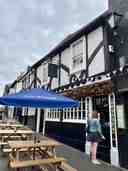
Look for a charming black-and-white timber-framed building with old wooden beams and a sign that says "DYLANS" hanging above the doorway-just beside the outdoor benches and a blue umbrella. Imagine you’re standing here in the fifteenth century, the timber above your head creaking softly as a cold draft slips between the wooden planks. This was the Old Kings Arms, a bustling spot on George Street, where travelers and locals alike would gather for a pint and a slice of gossip. The building you see has stood through centuries of laughter, whispers, and the soft clink of tankards; if these ancient beams could speak, they might tell tales of weary kings’ messengers and secret meetings. For over ten years, it sat silent, its door closed, windows dusted with memories of better days, making the heart of St Albans just a bit emptier. But in 2015, with a joyful burst of new life, the Old Kings Arms was reborn as “Dylans.” Now, you can still sense the echo of medieval voices if you breathe in deeply and listen above the modern chatter-a place where history still leaves a faint trace on the walls, and every glass raised is a tiny celebration of centuries gone by.
전용 페이지 열기 →In front of you stands St Albans Cathedral: look for its grand, creamy stone façade with two striking turreted towers flanking a pointed central gable, and the impressive long…더 보기간략히 보기
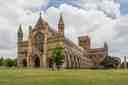
In front of you stands St Albans Cathedral: look for its grand, creamy stone façade with two striking turreted towers flanking a pointed central gable, and the impressive long nave stretching out behind it, capped by a massive square bell tower of mismatched, ancient brick. Imagine yourself stepping into the windswept fields of Roman Britain, where a quiet man named Alban once lived - right here, in the shadow of Verulamium. Back in the 3rd or 4th century, Roman soldiers were hunting for Christians; Alban, moved by the courage of a fleeing priest named Amphibalus, risked his life to shelter him, then traded places to be captured instead. As he marched to his execution, legend says he crossed a river - believed to be the River Ver - and, thirsting on the climb up this very hill, knelt and prayed for water: a spring burst forth at his feet. This became the place of his martyrdom, marked for centuries as holy ground, and the cathedral stands close to where Alban’s head is said to have rolled down and a well gushed up where it stopped. At first, there was just a simple shrine; slowly, through Saxon times, it grew into a mighty abbey, with each era layering another story, stone by stone. In the 8th century, King Offa of Mercia founded a double monastery here, following the strict Benedictine rule. But the abbey saw hard times: attacks by Vikings left it empty for decades, and later, desperate monks scavenged Roman bricks and tiles from the ruins of Verulamium to patch the walls. If you look closely at the flint and brick in the older sections, you can almost see the patchwork-a literal recycling of the past. When the Normans arrived, Abbot Paul of Caen began a colossal transformation. Imagine the clang of hammers on stone and the shouts of masons as the abbey rose ever higher, especially the massive central tower that still stands, a square giant looming at 144 feet. This tower alone weighs over 5,000 tons, its Norman arches still visible under the crossing, evidence of nearly 1,000 years of endurance. Mishaps were common-earthquakes shook the church in 1250, collapsing parts of the nave, and reconstruction raced to match the grandeur of the past. There was extra drama when in the 14th century, a clever abbot called Richard of Wallingford designed a clock so astonishing in its time, people traveled days to see it. Though the clock is long gone, stories linger in the stones. Through the Middle Ages, pilgrims flocked to Alban’s shrine, monks hand-copied illuminated books like the famous St Albans Psalter in candlelit scriptoria, and craftspersons added Gothic windows and glowing stained glass. In the 16th century, the abbey’s peace was shattered by the Dissolution of the Monasteries; treasures were ripped away, monks pensioned off, and the great church sold for £400 to the townsfolk-barely enough to cover repairs. Graves were opened in search of lost gold, and for 200 years, ruins and brambles claimed most of the grounds. The cathedral’s survival was often on a knife’s edge: storms shattered windows, walls leaned dangerously, and once, a scheme nearly succeeded to demolish it altogether in favor of a cheaper church. In the 19th century, a series of passionate, sometimes eccentric restorers made their mark. The architect George Gilbert Scott spent years stabilizing the fabric, sometimes jacking the whole nave wall straight in just three hours. His successor, Lord Grimthorpe-a man both admired and loathed-rebuilt the west front himself, ignoring critics to push through his own bold Victorian vision. Even now, engineers occasionally return to fix the damage from his over-strong cement. Today, St Albans Cathedral holds a special record: at 85 meters, its nave is the longest in England. Walk inside and you’ll notice a blend of Norman arches, medieval paintings, 19th-century decoration, and even 21st-century statues-telling a continuous story of faith, survival, and community. It still rings with music during the famous organ festival, and the bells-some centuries old, others cast as recently as 2010-sound out across the city, just as they have done for generations. Every stone has a secret to share, and every corner has watched rebels, monks, townsfolk, kings-and you-wander by. Yearning to grasp further insights on the britain's first christian martyr, modern times or the dean and chapter? Dive into the chat section below and ask away.
전용 페이지 열기 →To spot the Rose and Crown, look just ahead for a charming old building on your right with a red-tiled roof, white walls, black wooden signs, and vines curling around its…더 보기간략히 보기
To spot the Rose and Crown, look just ahead for a charming old building on your right with a red-tiled roof, white walls, black wooden signs, and vines curling around its front. Imagine stepping back in time to the eighteenth century, when the Rose and Crown was already welcoming weary travelers and locals alike. The air is heavy with the scent of roasting meats and the sweet tang of ale, while the steady hum of laughter and clinking glasses spills out from the low windows. Here, in this Grade II listed pub, every uneven brick and slate on the roof whispers stories from generations past. Picture the crackle of the fire and the soft glow of lanterns, as villagers gather to trade gossip, tell tall tales, and warm themselves against the English chill. Sometimes secrets were shared here-schemes hatched or romances begun over a steaming mug. Through centuries, the Rose and Crown has stood as a safe harbor during stormy times, so beloved that the community fought to have it recognized as an asset of value, a true heart of St Albans. As you stand here, you’re part of that living story-where echoes of old songs and laughter still swirl in the air just beyond the threshold.
전용 페이지 열기 →Look for a long, white timber-framed building with flowers hanging from the windows and a crooked red-tiled roof-The Six Bells stands right along the street, its black beams and…더 보기간략히 보기
Look for a long, white timber-framed building with flowers hanging from the windows and a crooked red-tiled roof-The Six Bells stands right along the street, its black beams and old-fashioned sign making it easy to spot. Now, as you stand here, imagine the centuries melting away under your feet. The Six Bells may look like a cozy English pub, but this ground once rumbled with the sounds of Roman life, for beneath the pub were the baths of ancient Verulamium. Picture the air thick with steam and laughter, until chaos exploded when Boudica’s fiery rebellion swept through in AD 60, leaving the bath house battered and the city in ruins. Years passed, the Romans rebuilt anew, but the echoes of that old spa still haunt these stones. Fast forward to the bustling, timber-framed pub before you-the very name “The Six Bells” rings out from the medieval church nearby, once boasting exactly six bells. Nowadays, the church has even more, but the pub keeps the old name, as if holding onto a secret. Over the centuries, history lovers couldn’t resist; archaeologists dug in both the 20th and 21st centuries, and in 2012, the pub even starred on TV, where fresh trenches were dug in the car park-who knows what ancient ghost might have been disturbed! So listen to the creak of old wood and the laughter inside, and remember: here, every pint is poured over layers of thrilling and mysterious history.
전용 페이지 열기 →Look ahead for a low, rugged building with a red-tiled roof and a square stone tower topped by a weather vane, sitting amidst a grassy graveyard and stands of old yew trees-this…더 보기간략히 보기
Look ahead for a low, rugged building with a red-tiled roof and a square stone tower topped by a weather vane, sitting amidst a grassy graveyard and stands of old yew trees-this is St Michael’s Church. As you stand before St Michael’s Church, imagine the centuries slipping away beneath your feet, all the way back to when Roman Verulamium thrummed with life here, its ancient streets just steps from where you are now. This church, with its weathered walls and that solid square tower rising boldly into the sky, is one of the oldest and most precious survivors of Anglo-Saxon craftsmanship in all Hertfordshire. Picture dusty travelers and pilgrims trudging up the road a thousand years ago, their cloaks whipping in the wind, pausing here on one of the three old routes converging on the sacred city of St Albans, drawn by the promise of the mighty Abbey and the shrine of the first British martyr, Saint Alban. It was Abbot Wulsin, or maybe Ulsinus-records muddle his name-who founded St Michael’s around the year 948, or even earlier. He dreamed up a trinity of welcome points: a church on each main road, to greet the pilgrims flooding in. The stone of St Michael’s was hewn and stacked by those seeking refuge and blessing, using bricks robbed from the very Roman ruins scattered nearby. Even today, if you peer closely, you’ll spot those warm, reddish Roman bricks in the window splays, silent witnesses from a vanished empire. Walk around the church and you’ll notice how it doesn’t quite match from side to side-one set of arches is uneven, another a little larger, the south chapel rising higher than the main nave, all growing and shifting as centuries pressed on and different hands shaped the stone. Imagine the sound of stonemasons at work,, building onto what their ancestors had started. The north aisle appeared in the 12th century, then the south; tall lancet windows pierced the walls in the 13th to let in light, but the south aisle became unstable and crumbled away, only to find new life as a chapel. Picture the 15th century, when the great nave roof was hoisted up, its beams resting on sturdy stone corbels. The church was alive with sound and color-wooden screens, a painted ‘Doom’ depicting souls at judgment over the chancel arch, and a bell tower with the clatter of bells calling the faithful. Not all the grandeur survived. The tympanum and its fearsome painting were lost in a later Victorian restoration, the rood screen removed, but you can still find the stairs leading up to where it once stood, hinting at secret rituals and ancient drama. Inside, a strange sense of peace lingers, but also whispers of important guests. Francis Bacon-the great thinker, the man who gave birth to modern science-rests here in a north wall alcove, immortalized in stone, seated as though deep in thought. Look for the 14th-century brasses too: worn yet beautiful, testifying to generations of townsfolk and knights who found rest beneath these shadowed rafters. The bells overhead are a special legacy: originally there were six, famed throughout town and the namesake of a neighboring pub, and now eight, layered over the years by famous foundries, their sound marking coronations, jubilees, and everyday joys and losses. And what about the music? St Michael’s has always filled with song and spirit, its organ evolving through the years. The current one, with pipes partly recycled from its predecessor, stands proudly in oak cases, filling the church with the echoes of centuries’ worth of hymns and hopes. All around you, every stone, pew, and window tells a story-of Roman governors, medieval builders, Elizabethan worshippers, even eccentric Victorian lords tinkering with the design. But through it all, St Michael’s remains a place of gathering, remembrance, and quiet awe, a living link between ages past and present. As you let the breeze carry the faint sound of bells or music, remember you’re part of the next chapter in a tale that began before William the Conqueror set foot in England-here, on the old road through St Albans, where faith, stone, and time are stitched tightly together. To delve deeper into the monuments, bells or the organ, simply drop your query in the chat section and I'll provide more information.
전용 페이지 열기 →



자주 묻는 질문
투어는 어떻게 시작하나요?
구매 후 AudaTours 앱을 다운로드하고 교환 코드를 입력하세요. 투어를 바로 시작할 수 있습니다 - 재생을 탭하고 GPS 안내 경로를 따라가시면 됩니다.
투어 중 인터넷이 필요한가요?
아닙니다! 시작 전에 투어를 다운로드하면 완전히 오프라인으로 즐길 수 있습니다. 채팅 기능만 인터넷이 필요합니다. 모바일 데이터 절약을 위해 WiFi에서 다운로드하시는 것을 권장합니다.
이것은 가이드가 안내하는 단체 투어인가요?
아닙니다 - 이것은 셀프 가이드 오디오 투어입니다. 폰을 통해 오디오 나레이션을 들으며 나만의 속도로 독립적으로 탐험합니다. 투어 가이드도, 단체도, 일정도 없습니다.
투어는 얼마나 걸리나요?
대부분의 투어는 60-90분이 소요되지만, 속도는 전적으로 본인이 조절합니다. 원할 때 언제든지 일시정지하거나, 정류장을 건너뛰거나, 휴식을 취하세요.
오늘 투어를 끝낼 수 없으면 어떻게 하나요?
괜찮습니다! 투어는 평생 이용이 가능합니다. 원할 때 언제든지 일시정지하고 다시 시작하세요 - 내일, 다음 주, 또는 내년에도. 진행 상황이 저장됩니다.
어떤 언어를 이용할 수 있나요?
모든 투어는 50개 이상의 언어로 이용 가능합니다. 코드를 교환할 때 원하는 언어를 선택하세요. 참고: 투어 생성 후에는 언어를 변경할 수 없습니다.
구매 후 투어는 어디에서 이용하나요?
App Store 또는 Google Play에서 무료 AudaTours 앱을 다운로드하세요. 교환 코드(이메일로 전송됨)를 입력하면 라이브러리에 투어가 나타나며, 다운로드하여 시작할 수 있습니다.
투어가 마음에 들지 않으시면 환불해 드립니다. 문의: [email protected]
안전한 결제 


