
Liverpool Audio Tour: Below the Liver Birds
Liverpool's waterfront looks like an empire of merchants but is really a working hierarchy in disguise — clerks pen-pushing at Pier Head, sailors paid off on the dock road, dockers picked at the seven-o'clock pen, and women, children and Black seafarers cut out of the wage but doing the unpaid labour that ran the port. This self-guided audio tour walks the working day of a port city — from the Sailors' Church on Chapel Street, past the Cunard clerks' palace and the Royal Liver Friendly Society founded by nine working men in a pub, into the Albert Dock warehouses that handled bonded tobacco and the gates of the Sailors' Home that tried to break the crimps' racket, through the Bluecoat charity school for the orphans of the port, into the Cotton Brokers' Ring that ran the world cotton market from Old Hall Street, through the Cavern's lunchtime sessions where typists and apprentices spent their dinner-hour, onto the very plateau where on 13 August 1911 the police hidden inside St George's Hall baton-charged a strike rally of eighty-five thousand, up the steps of the Walker — free to the working public since 1877 — past Lewis's 'Friend to the People' department store, into the Catholic Cathedral built on the floor of the Brownlow Hill Workhouse where the city's poor picked oakum twelve hours a day, and finishing at the Philharmonic Dining Rooms — a pub built for the wage-earner by trade-school craftsmen and listed Grade I for its trouble. Walk slowly. The Liverpool you came to see was made by people who paid for it with their working day.
투어 미리보기
이 투어에 대하여
- schedule소요 시간 40–60 mins나만의 속도로 이동
- straighten6.3 km 도보 경로안내 경로 따라가기
- location_on
- wifi_off오프라인 작동한 번 다운로드, 어디서든 사용
- all_inclusive평생 이용언제든지 다시 재생 가능
- location_onChurch of Our Lady and St Nicholas, Liverpool에서 시작
이 투어의 정류장
Ahead of you is a sandstone church with a broad rectangular body and a tall square tower topped by a glazed lantern, the marker that long helped ships find Liverpool. This is…더 보기간략히 보기
전용 페이지 열기 →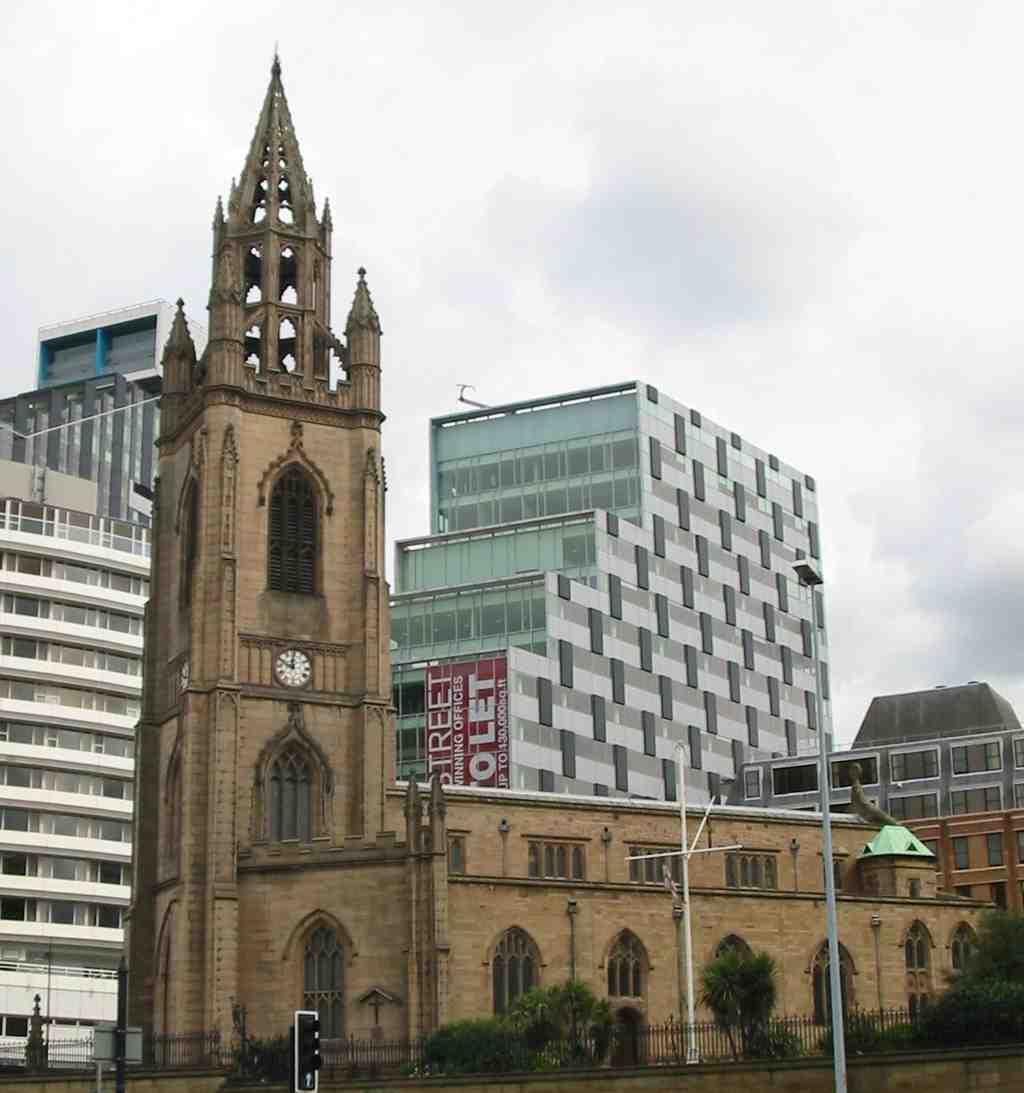
Church of Our Lady and St Nicholas, LiverpoolPhoto: Man vyi, Wikimedia Commons, Public domain. Cropped & resized. Ahead of you is a sandstone church with a broad rectangular body and a tall square tower topped by a glazed lantern, the marker that long helped ships find Liverpool.
This is where Liverpool starts to explain itself. The city’s working life depended less on making things than on moving them: clerks above, dockers below, sailors in between... and around them a missing workforce of Black seafarers, lascars, women, and orphans, people who kept the port alive without always appearing on a wage sheet. For many arriving by sea, this lantern was the first shape of land; for many leaving, the last.
A chapel called St Mary del Quay stood here by the twelve fifties. In thirteen fifty-five, townsmen secured land for a new chapel to St Mary and St Nicholas, patron saint of sailors. Then in seventeen forty-six they added that lantern as a working navigation mark, not just a pretty flourish. Practical, Liverpool’s preferred form of devotion.
Now, tilt your gaze up and notice the join between tower and church. The tower and lantern you see date from eighteen fifteen, rebuilt after the earlier lantern collapsed into the nave in eighteen ten and killed twenty-five people in their pews. If you check the app image, you can see that survivor clearly. Incendiary bombs hit in nineteen forty, the church burned to the ground, and Edward C. Butler rebuilt the body you see today, finished in nineteen fifty-two.
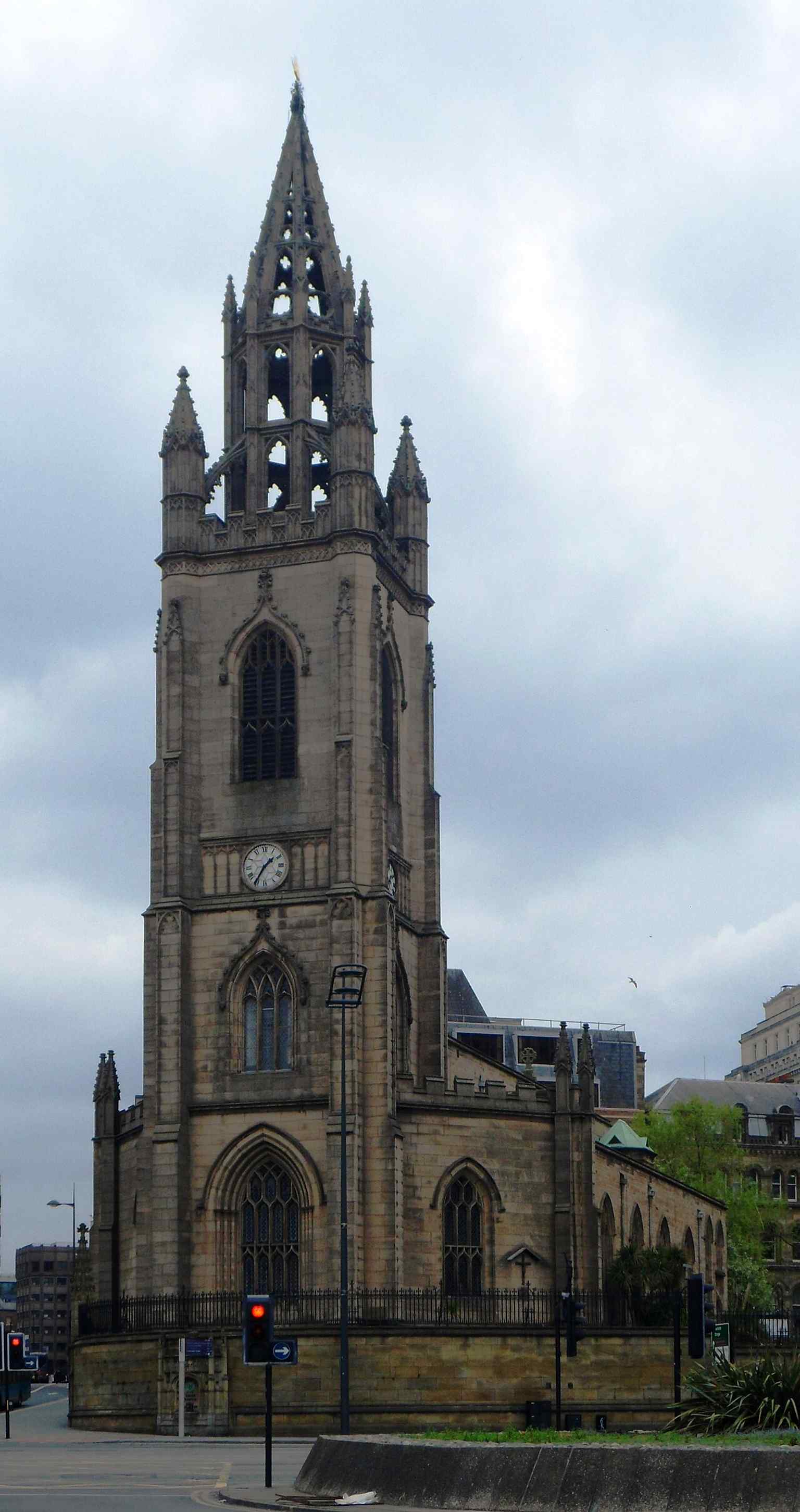
A full-height view of the church on Chapel Street, showing the surviving tower and lantern that once guided shipping on the Mersey.Photo: User:Hassocks5489, Wikimedia Commons, CC0. Cropped & resized. Inside, the Maritime Memorial Chapel holds Books of Remembrance for merchant and fishing crews, including the forty-four crew of the M-V Derbyshire lost off Japan in nineteen eighty. Two streets away, the seven-o'clock hiring pen, where dockers queued for a few days' work, and the Bloody Sunday rally site are waiting for us later. If you want a look inside later, the church generally opens daily from nine to five. From here, glance south for the Three Graces; the middle one with the clock tower is the Royal Liver Building, but for our next stop head about five minutes to the Liverpool Cotton Exchange on Old Hall Street.
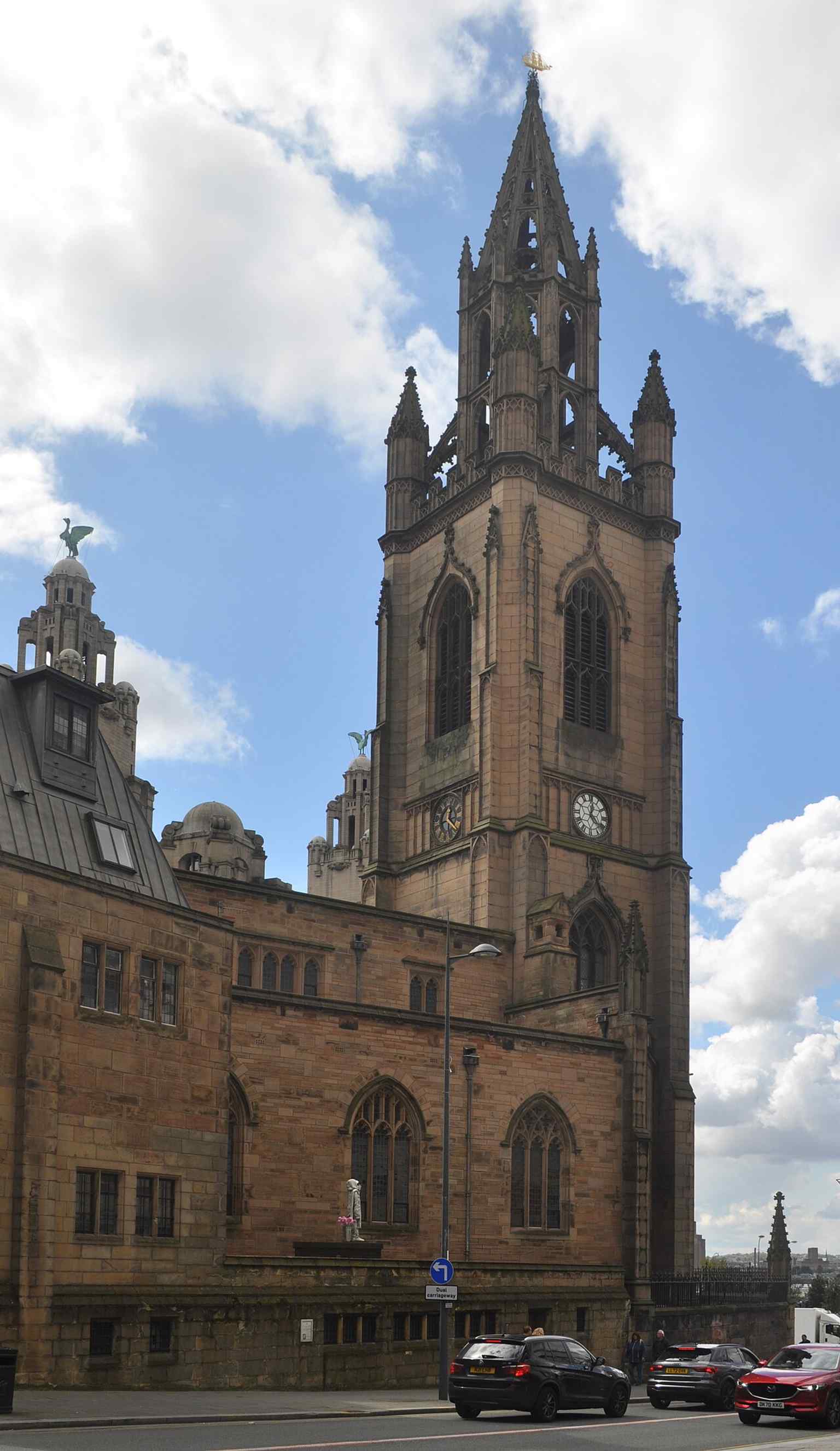
The church’s current exterior, rebuilt after the 1940 Blitz fire that left only the tower standing.Photo: User:Hassocks5489, Wikimedia Commons, CC0. Cropped & resized. 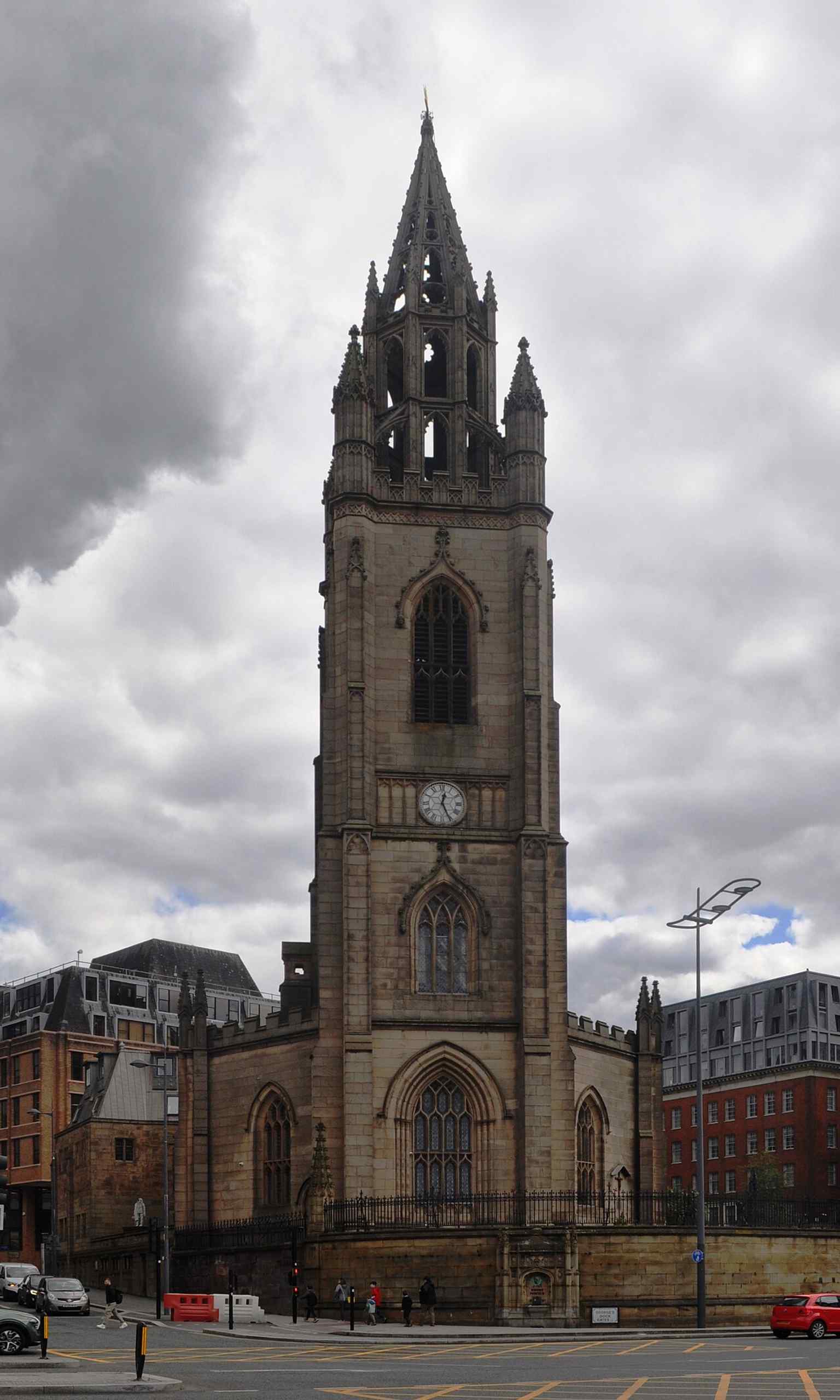
A different modern view of the church, useful for showing how the rebuilt nave sits with the surviving lantern tower.Photo: User:Hassocks5489, Wikimedia Commons, CC0. Cropped & resized. 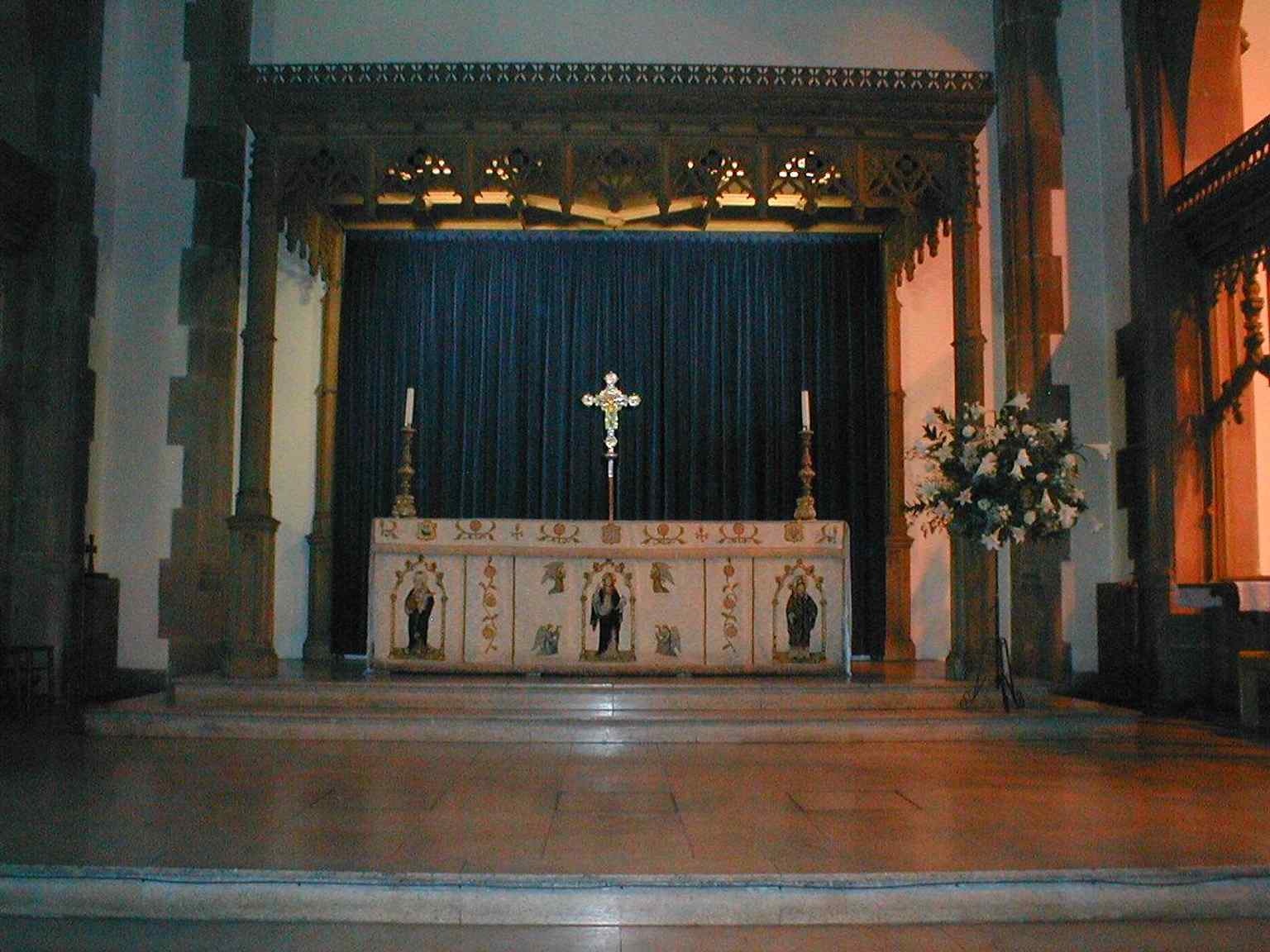
The altar inside the church, part of the living parish used today by dockside congregations and visitors alike.Photo: NeilEvans, Wikimedia Commons, Public domain. Cropped & resized. On your right rises a pale stone-and-concrete giant with twin square clock towers, each topped by a great copper Liver bird. This place starts, not with boardrooms, but with the…더 보기간략히 보기
전용 페이지 열기 →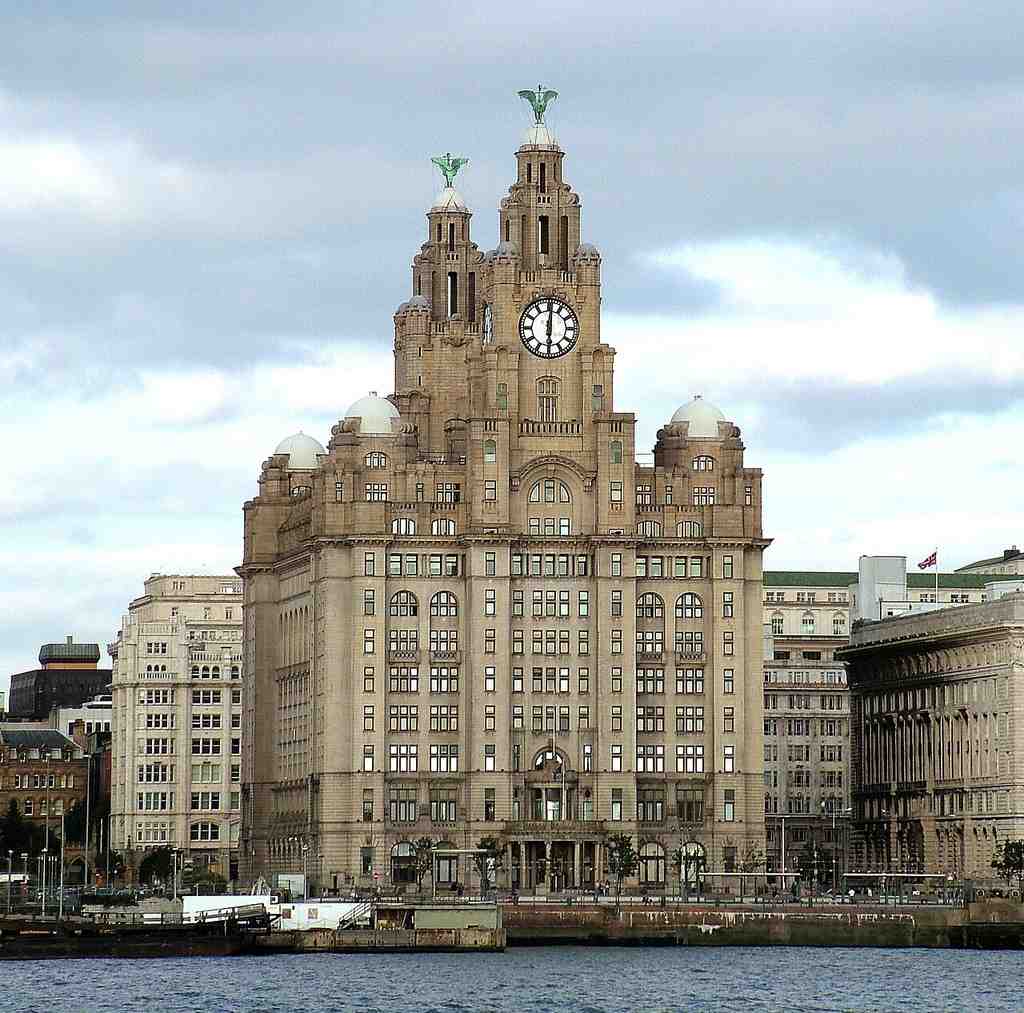
Royal Liver BuildingPhoto: Wikimedia Commons contributor, Wikimedia Commons, CC BY-SA 3.0. Cropped & resized. On your right rises a pale stone-and-concrete giant with twin square clock towers, each topped by a great copper Liver bird.
This place starts, not with boardrooms, but with the working-class friendly societies... Liverpool’s burial and mutual-aid clubs, born in pubs in the hard years after the Irish Famine. On the twenty-fourth of July, eighteen fifty, nine working men met at the Lyver Inn on St Anne’s Street and founded the Royal Liver Friendly Society. Their aim was plain and urgent: to spare the post-Famine Irish poor the shame of a pauper’s burial. John Bates Lawrence became the driving force behind its early growth, and the system itself was brilliantly practical. Agents went door to door every week to collect tiny premiums, mainly from the woman of the home, because she usually kept the household sums and knew what could be spared.
That modest, stubborn model worked. For decades, a Royal Liver collector with his book of houses was one of the familiar figures in working streets from Liverpool to Glasgow, Manchester, and Dublin. In time, the Society grew into Royal Liver Assurance, and it wanted a headquarters big enough to announce itself properly... which is how you get this great waterfront heavyweight, one of Liverpool’s Three Graces.
The foundation stone went down on the eleventh of May, nineteen oh eight. Walter Aubrey Thomas designed the building in Edwardian Baroque - grand, muscular, and a little theatrical, in the best possible way. He used reinforced concrete, still a daring choice then, and some people genuinely thought the whole scheme would be impossible to build. Edmund Nuttall’s firm built it anyway, and Lord Sheffield officially opened it on the nineteenth of July, nineteen eleven. If you glance at the façade image in the app, you can see how the whole front rises in stages toward those towers, like a civic palace with a very firm opinion of itself.
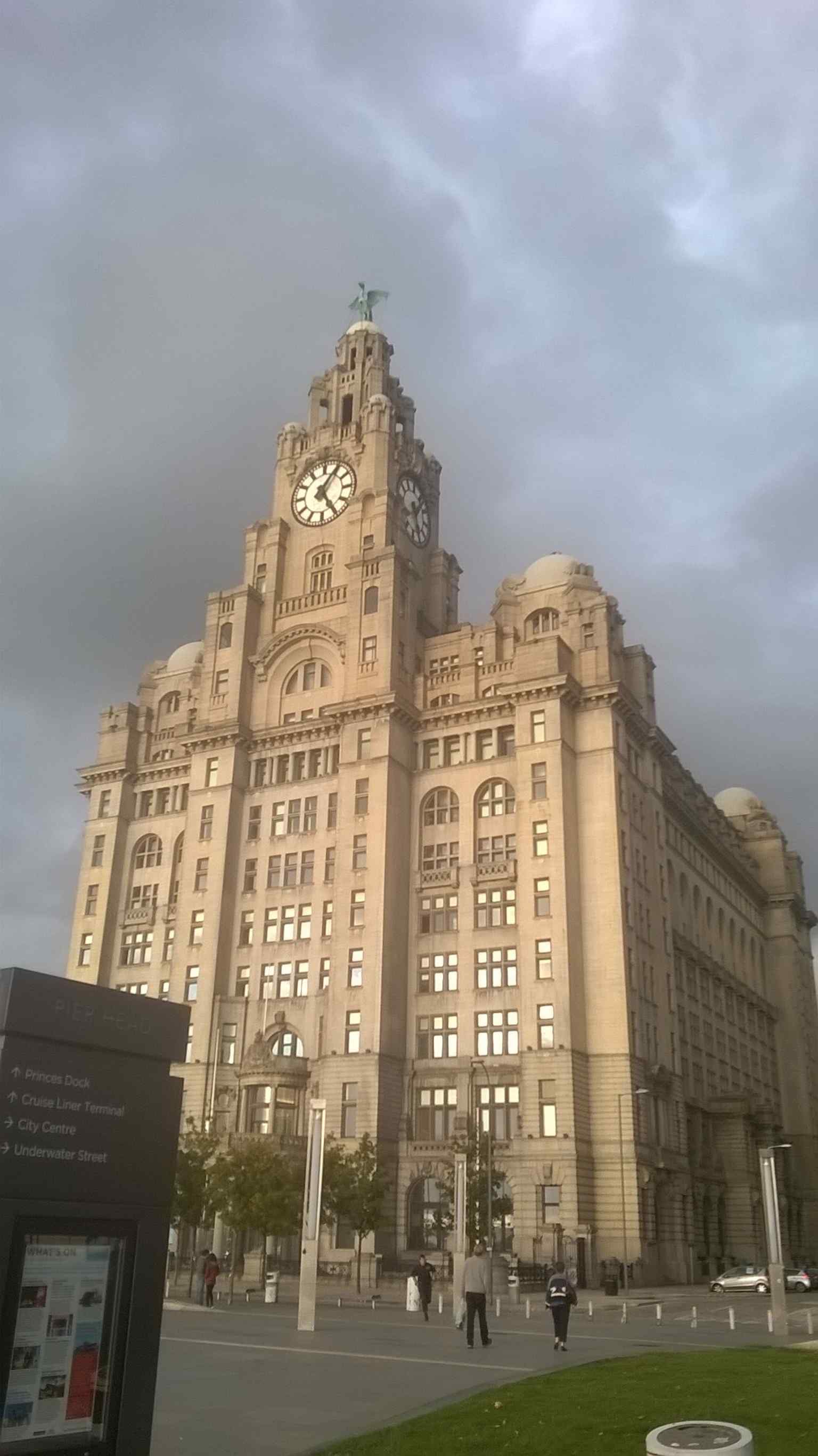
A front façade view that emphasizes the building’s monumental Edwardian Baroque design and imposing clock towers.Photo: BigJB63, Wikimedia Commons, CC BY-SA 4.0. Cropped & resized. And then there are the clocks. Each face measures about twenty-five feet across, larger than the clock faces at Westminster - what most people, a bit lazily, call Big Ben. They are still among the largest electronically driven clocks in Britain. Liverpool did not really go in for modesty when it had a skyline to design.
Now look up to the birds... or, if your neck objects, peek at the close-up on your screen. Each copper Liver bird stands eighteen feet tall. A German immigrant sculptor named Carl Bernard Bartels won the national competition to design them, and the Bromsgrove Guild crafted the final figures. Bartels gave Liverpool its most famous symbols.
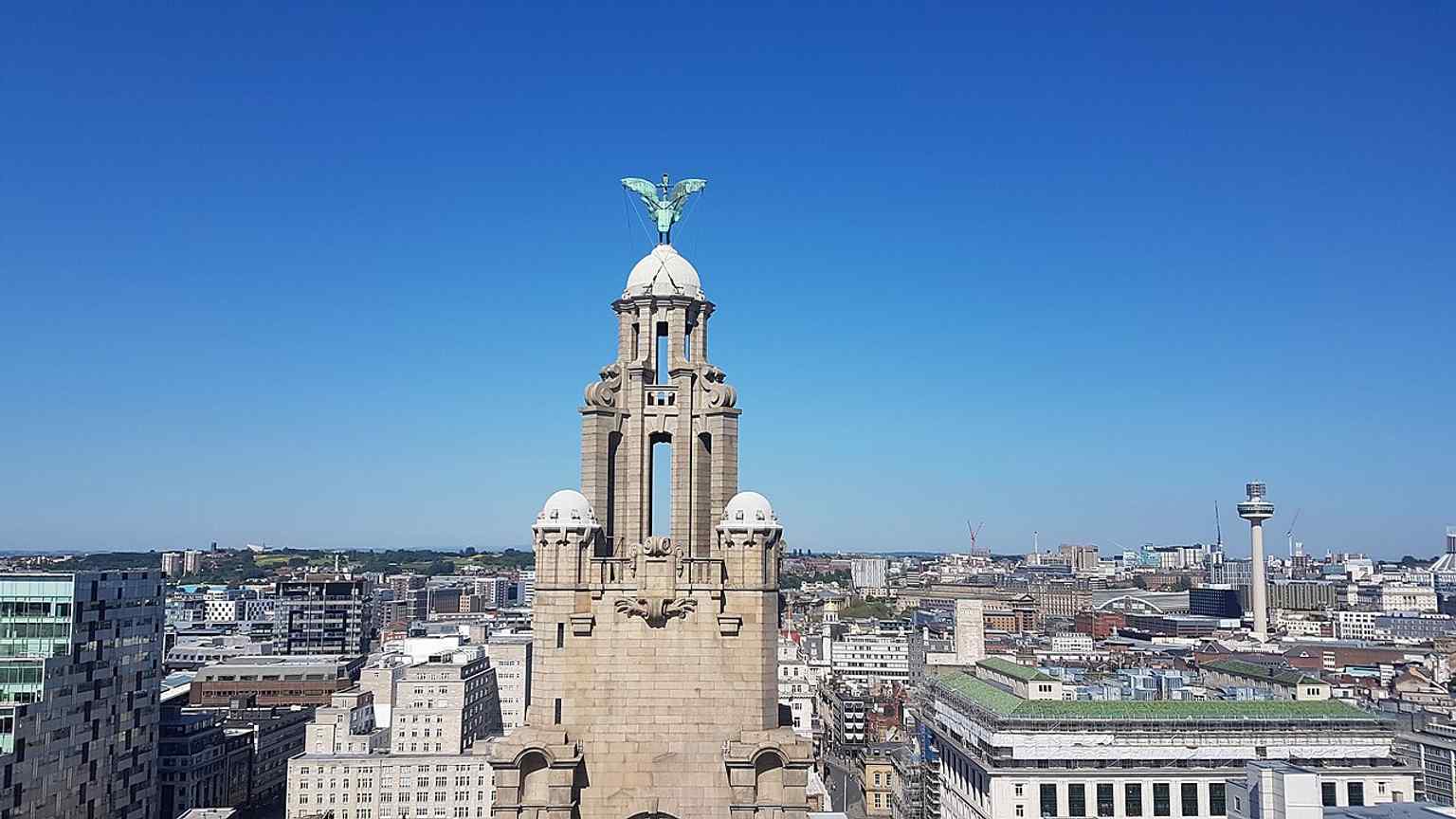
Close on the East Clock Tower and one of the famous Liver birds — the bronze guardians that watch over the city and the sea.Photo: Mmcdade, Wikimedia Commons, CC BY-SA 4.0. Cropped & resized. Then came the bitter part. When war broke out in nineteen fourteen, authorities interned Bartels as an enemy alien. After the war, they forced him back to Germany and made him leave his wife and children behind. His blueprints and sketches for the birds were destroyed, and his name was wiped from the records. So there is the sting in this story: the city’s best-known icons were designed by a worker the city later deported.
Walk a few yards south. The next Grace - the one that looks like a Florentine palazzo, all Portland stone - is the Cunard Building.
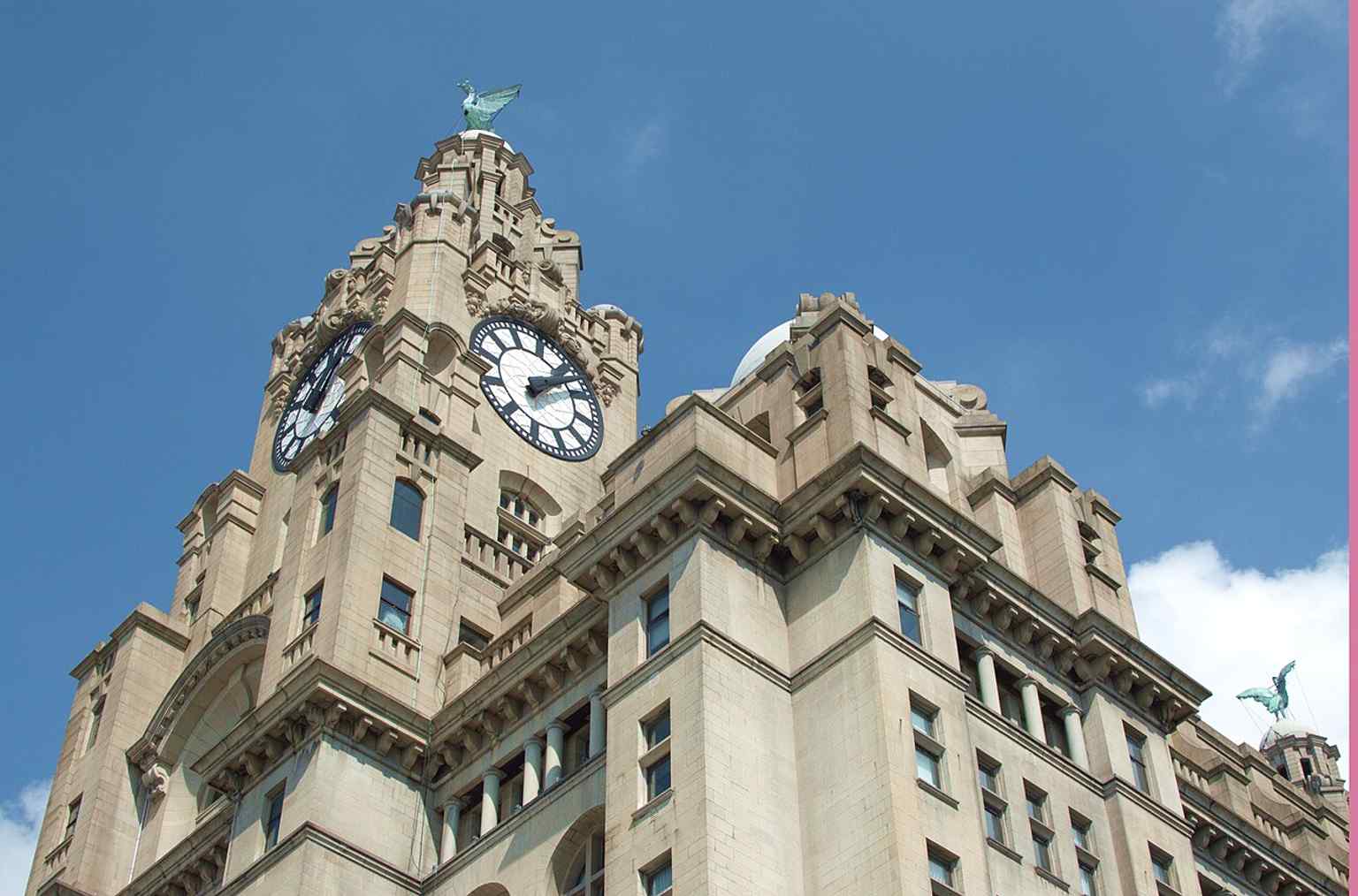
A classic full view of the Royal Liver Building on Liverpool’s waterfront, where it stands as one of the Three Graces at Pier Head.Photo: Dalvinder Singh Basi, Wikimedia Commons, CC BY-SA 3.0. Cropped & resized. 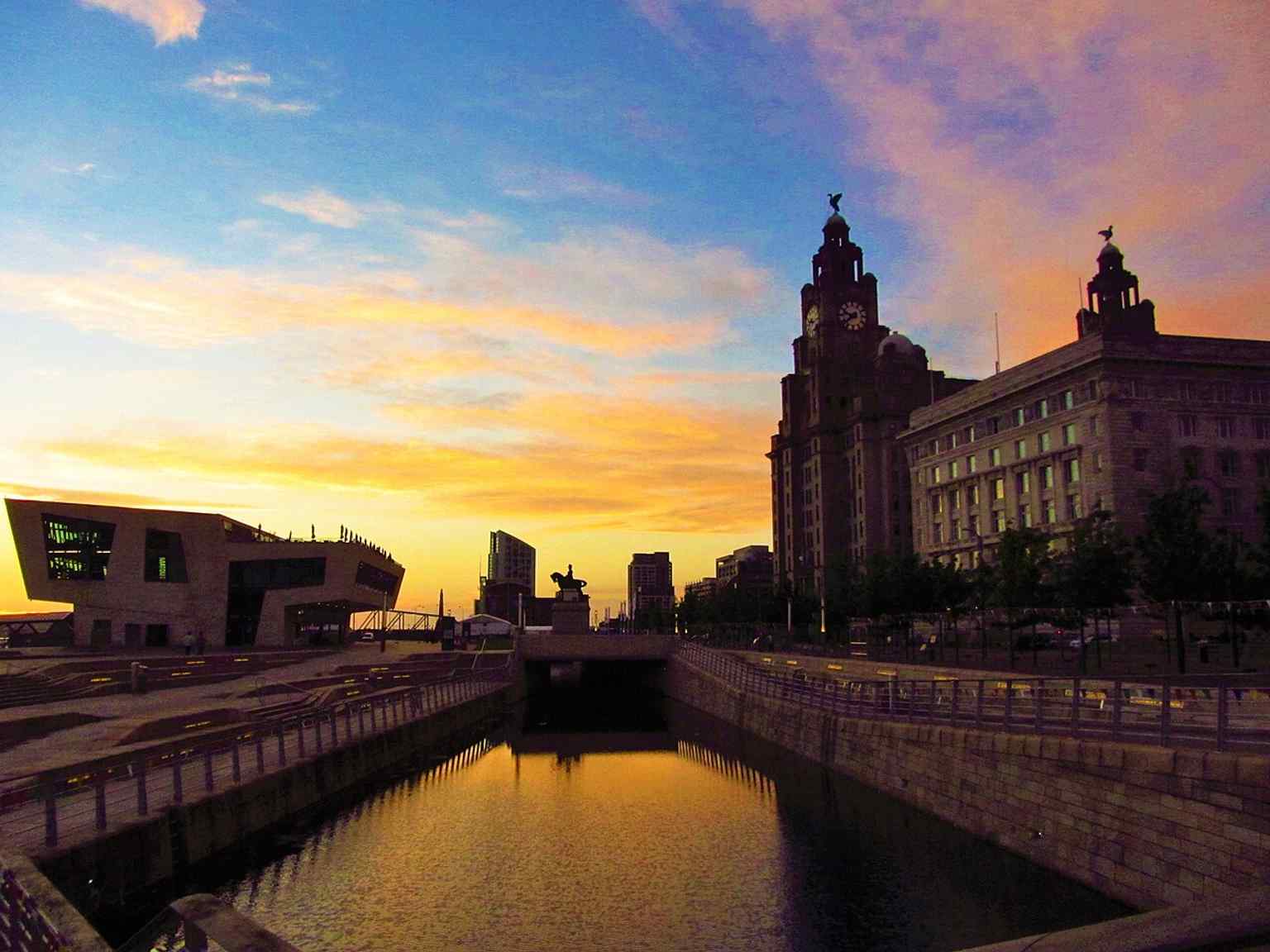
The building beside its waterfront neighbours, showing the Royal Liver Building as part of Liverpool’s famous Three Graces and World Heritage dockland.Photo: Joan Sanders, Wikimedia Commons, CC BY-SA 4.0. Cropped & resized. 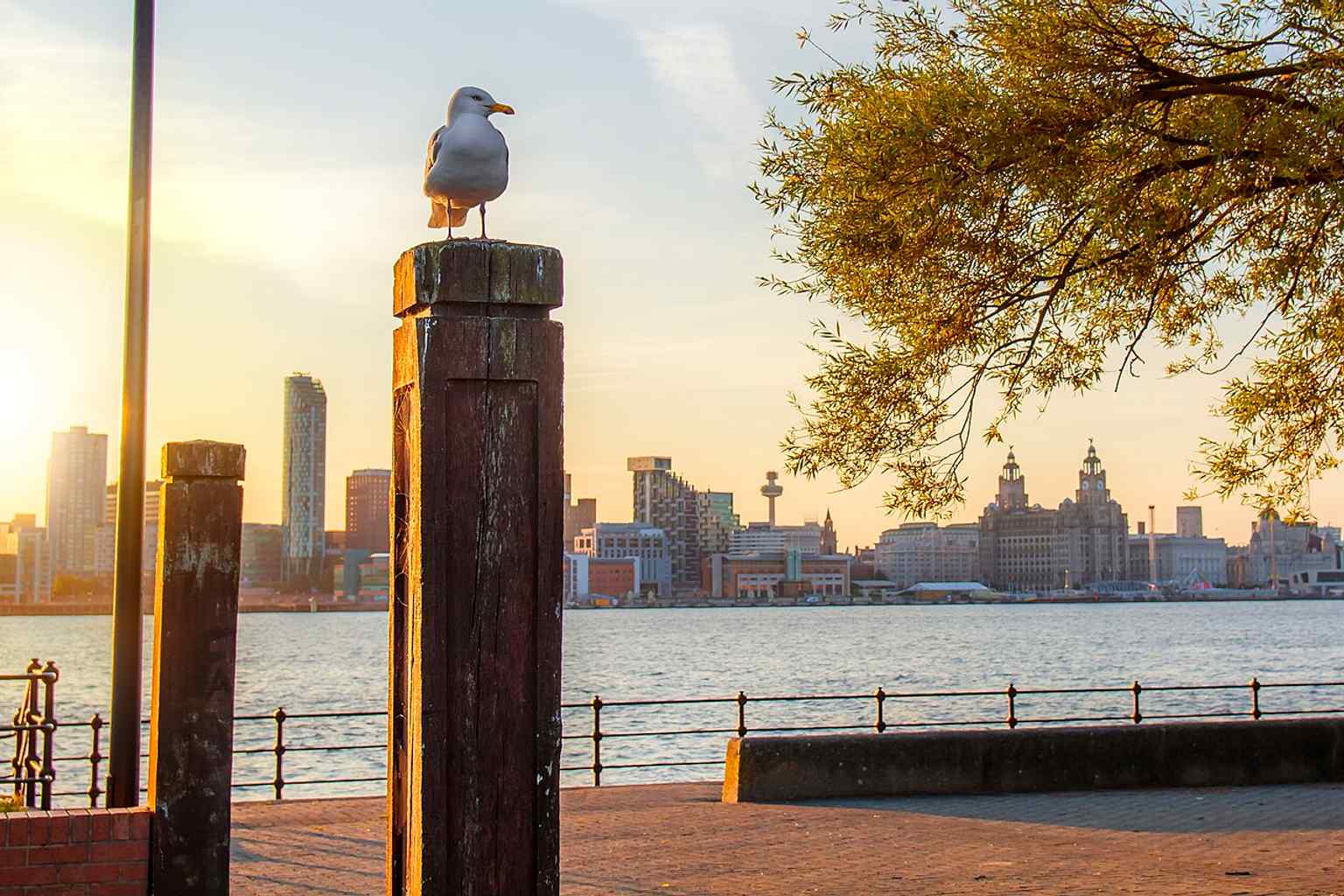
Seen across the Mersey, this wider river view highlights the building’s commanding waterfront position and its role as a city landmark.Photo: Mark Warren 1973, Wikimedia Commons, CC BY-SA 4.0. Cropped & resized. 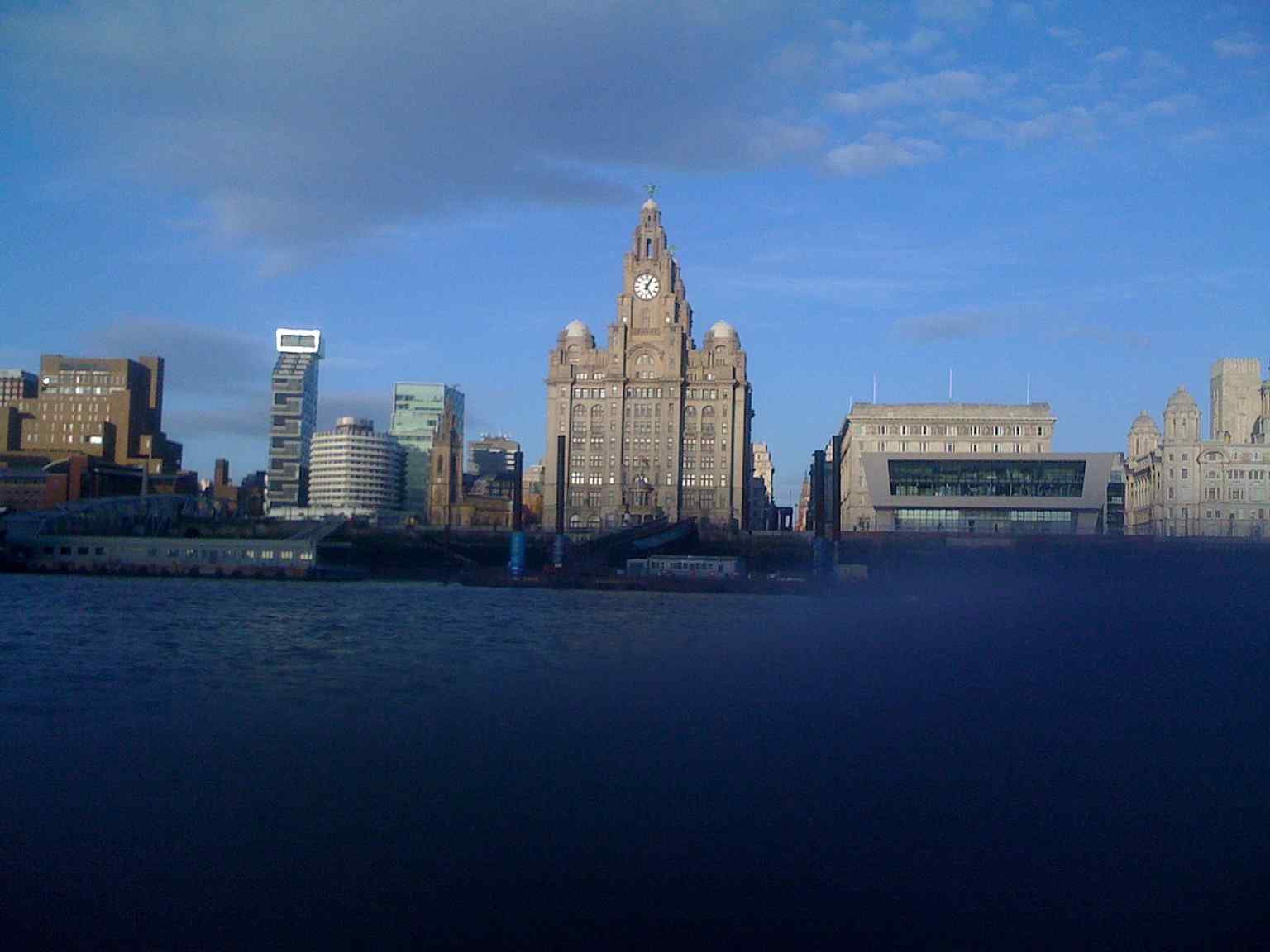
The Royal Liver Building from the Mersey, echoing the way generations have approached Liverpool by river and seen the landmark first.Photo: Mmcdade, Wikimedia Commons, CC BY-SA 4.0. Cropped & resized. 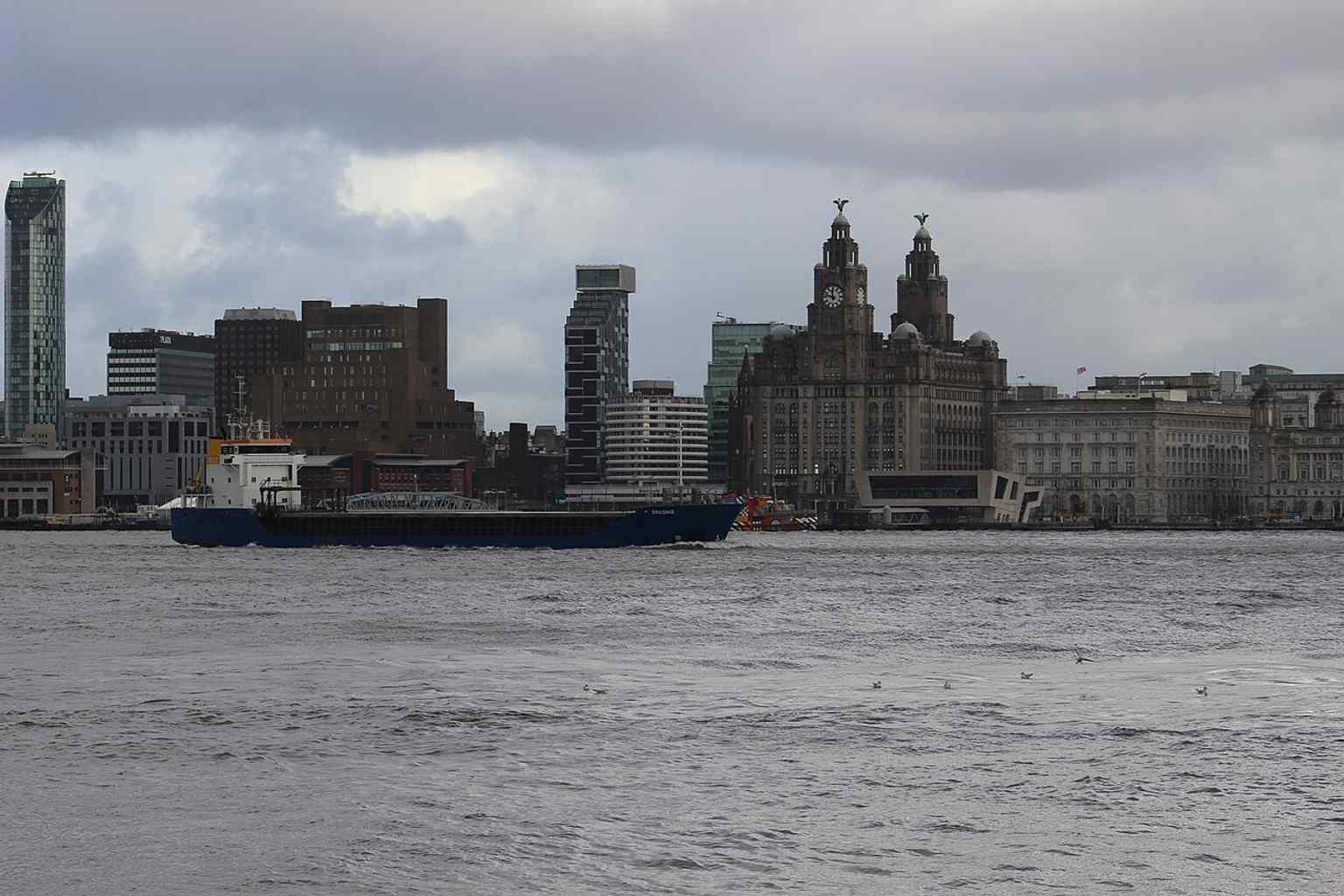
A riverside view with a ship in the foreground, linking the building to Liverpool’s maritime heritage and dockside skyline.Photo: Beep boop beep, Wikimedia Commons, CC BY-SA 4.0. Cropped & resized. 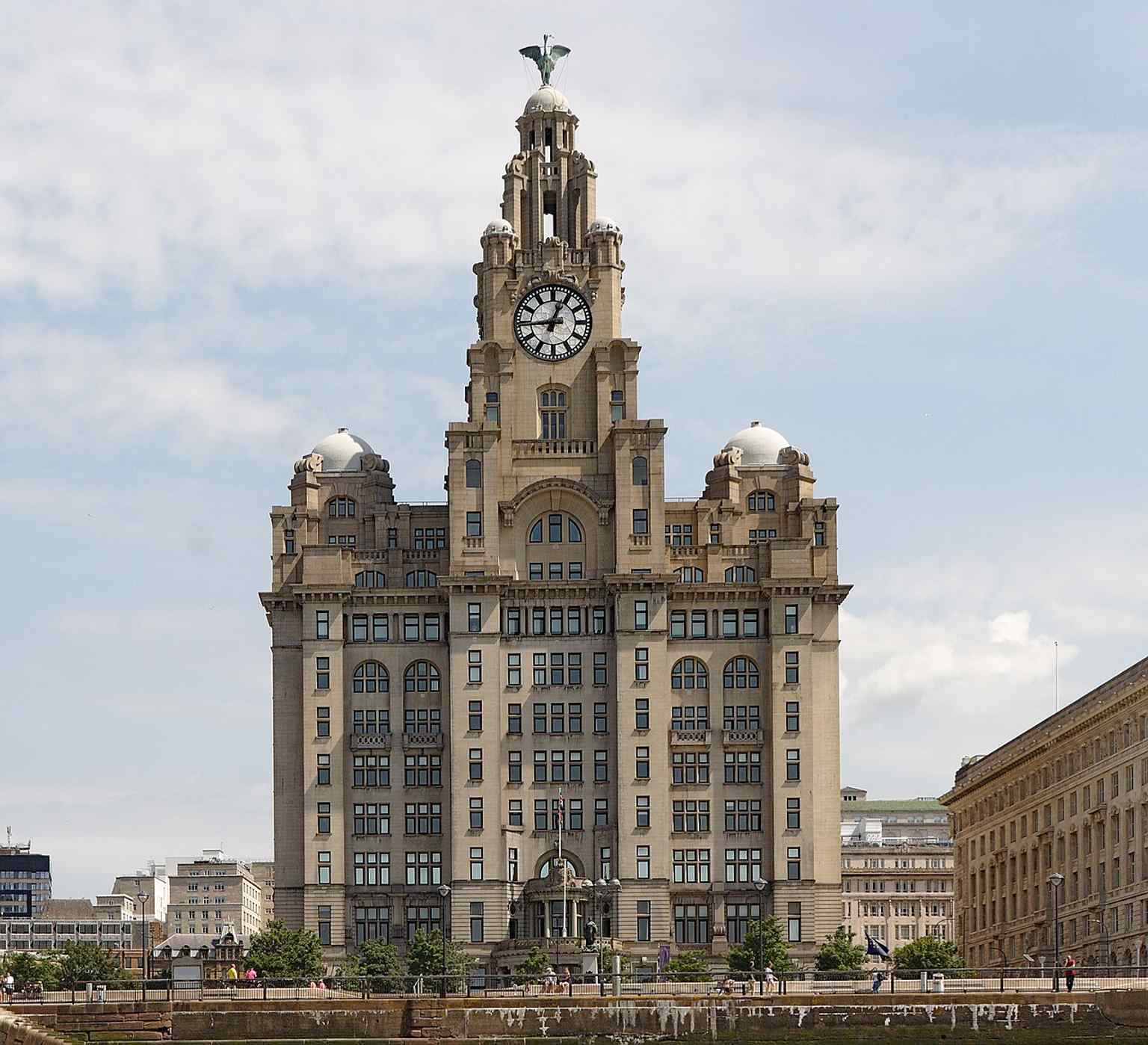
A ferry-side view that places the Liver Building in the working waterfront context that helped make Liverpool a global port city.Photo: Rodhullandemu, Wikimedia Commons, CC BY-SA 4.0. Cropped & resized. 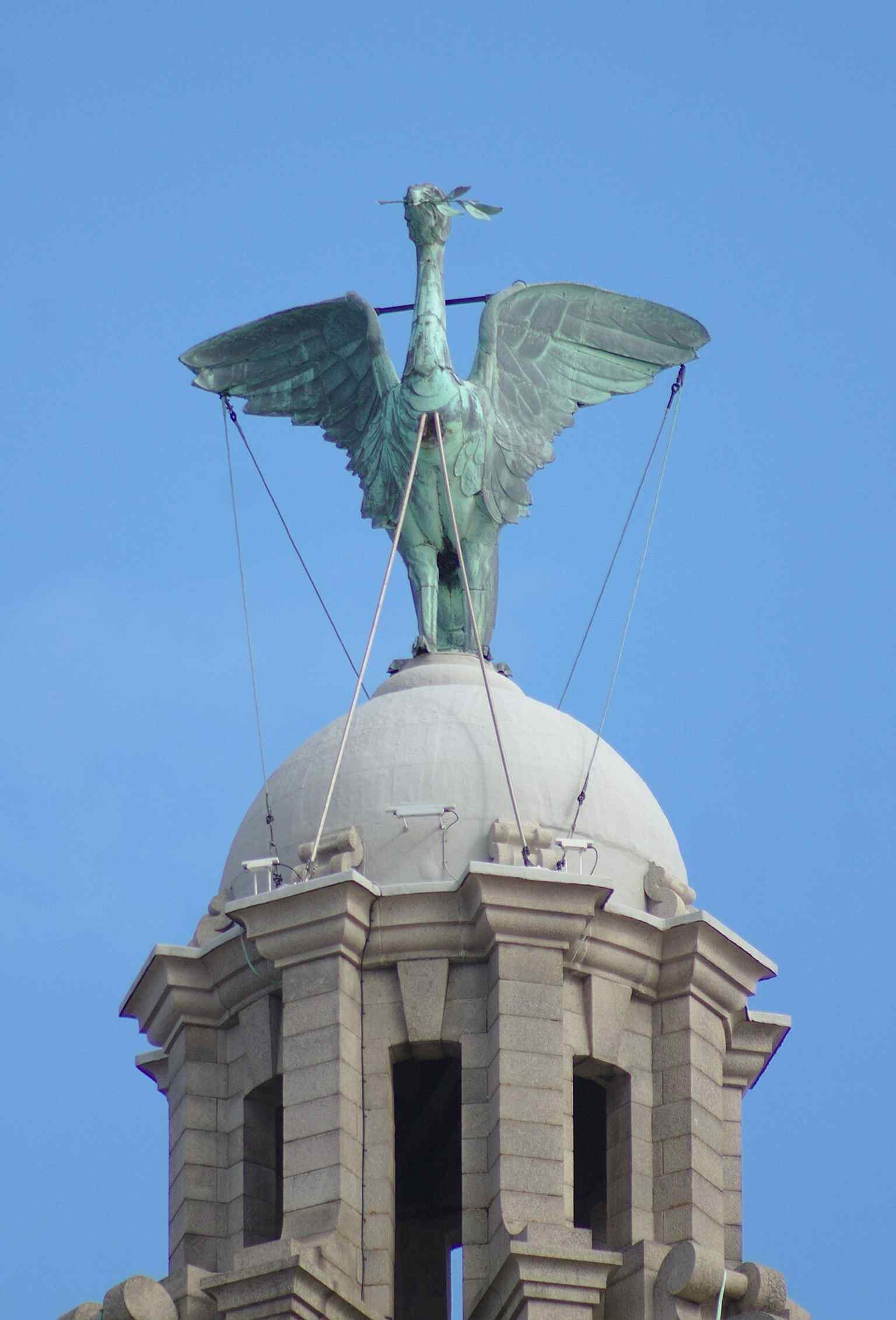
Bella the Liver Bird looks out over the Mersey — part of the pair of birds that have become symbols of Liverpool itself.Photo: Rodhullandemu, Wikimedia Commons, CC BY-SA 4.0. Cropped & resized. 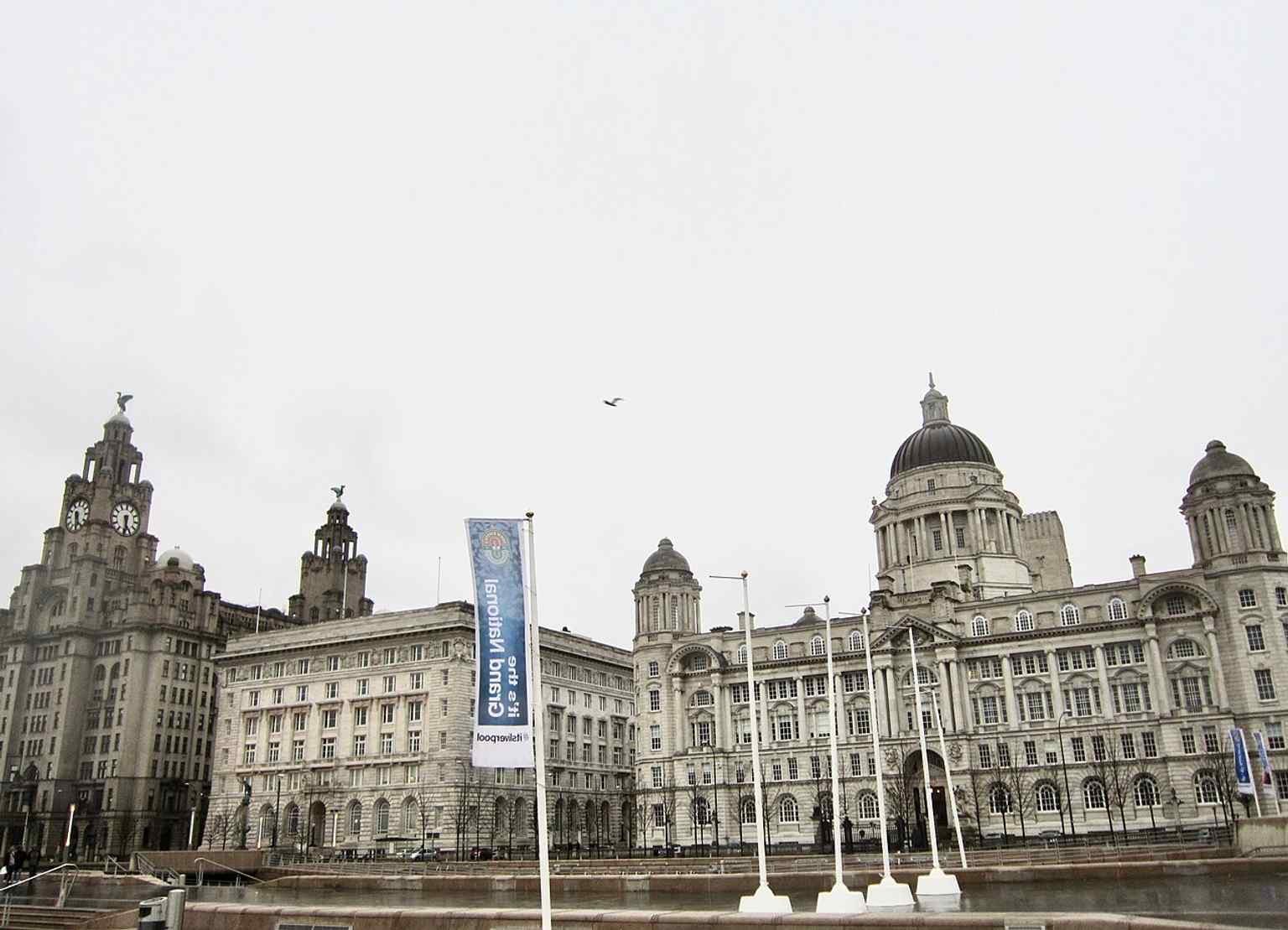
A broad portrait of the building and its twin Liver birds, with the captioned history tying it to architect Walter Aubrey Thomas and its 1911 completion.Photo: Ank Kumar, Wikimedia Commons, CC BY-SA 4.0. Cropped & resized. 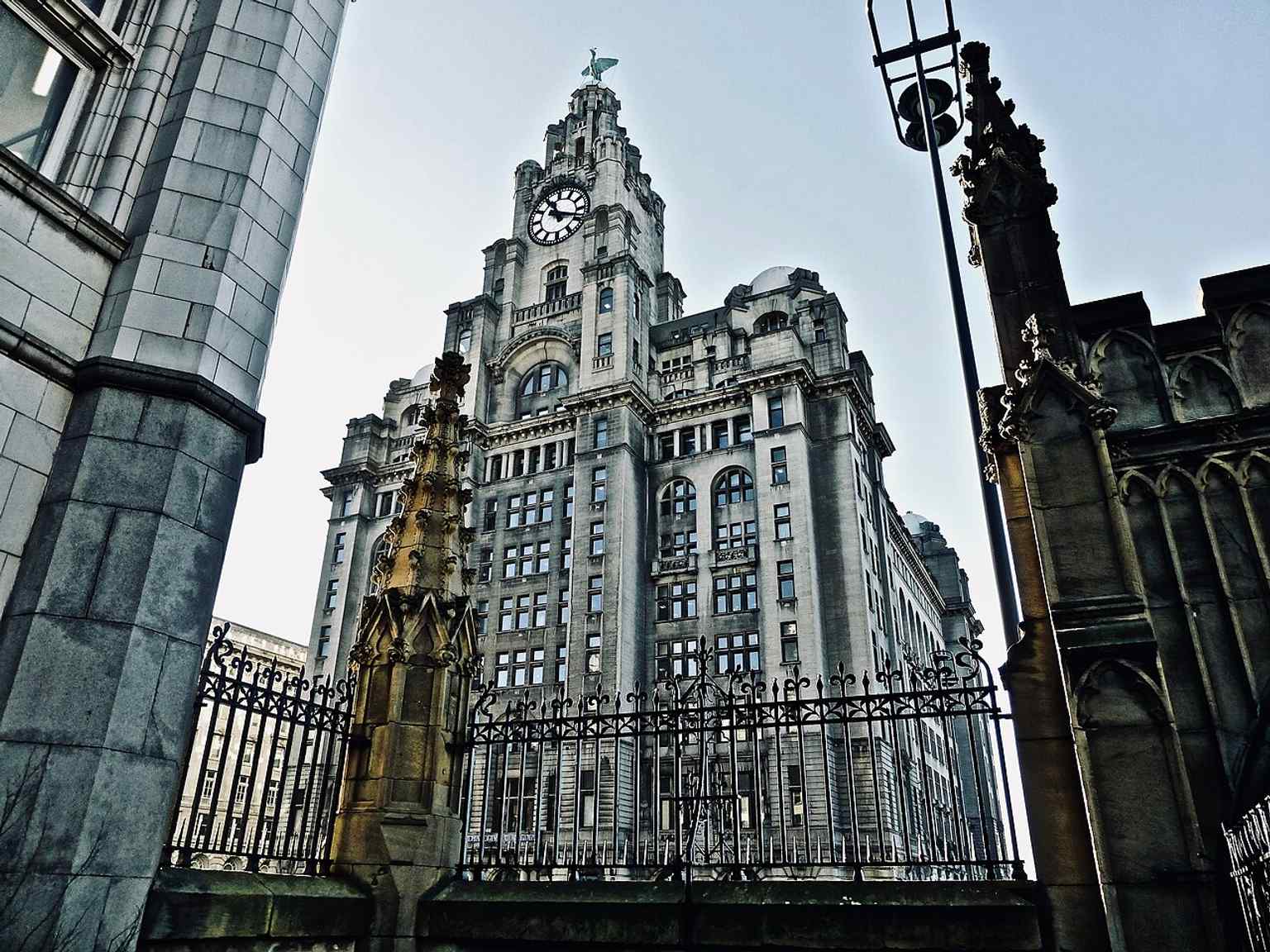
Viewed from St Luke’s churchyard, this angle shows how the Royal Liver Building rises above the city centre, not just the waterfront.Photo: LiverpoolJane, Wikimedia Commons, CC BY 4.0. Cropped & resized.
10개 정류장 더 보기정류장 적게 보기expand_moreexpand_less
On your left is a long, pale Portland-stone block with a flat roofline, rows of tall windows, and carved classical figures spread across the façade. This is the Cunard…더 보기간략히 보기
전용 페이지 열기 →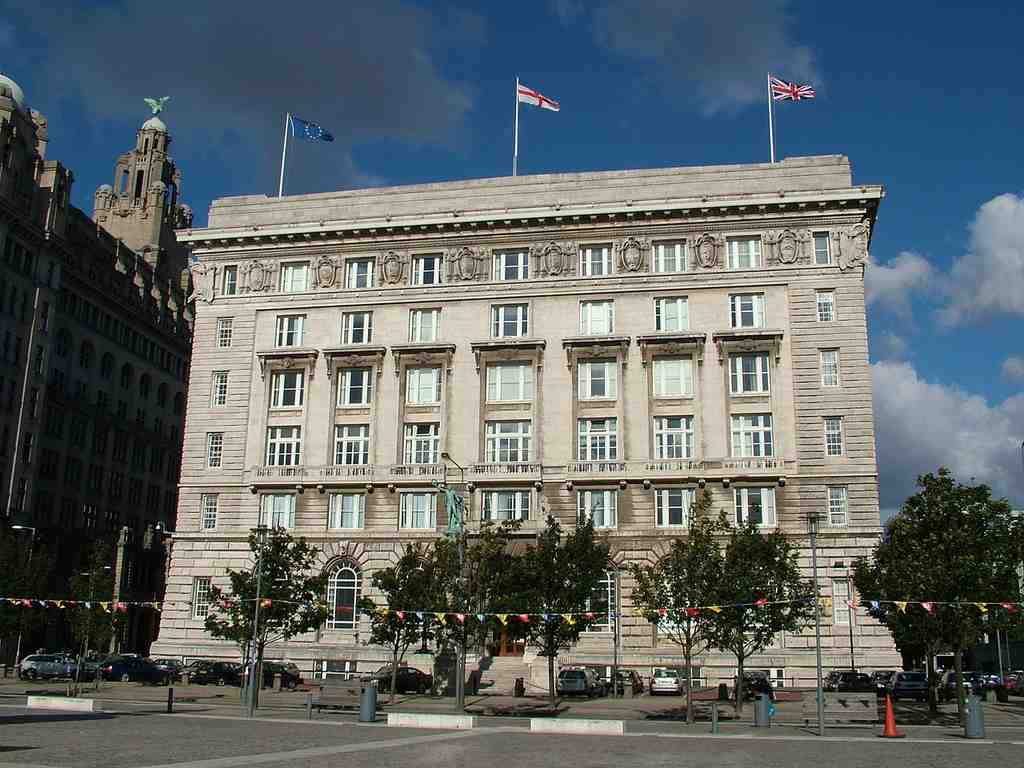
Cunard BuildingPhoto: Wikimedia Commons contributor, Wikimedia Commons, CC BY-SA 3.0. Cropped & resized. On your left is a long, pale Portland-stone block with a flat roofline, rows of tall windows, and carved classical figures spread across the façade.
This is the Cunard Building... a shipping company headquarters designed with absolutely no intention of looking modest. William Edward Willink and Philip Coldwell Thicknesse drew it up between nineteen fourteen and nineteen seventeen as a kind of shoreside palace, borrowing from the Farnese Palace in Rome. The structure underneath is reinforced concrete, modern for its day, but the face it shows the world is grand theater: around one hundred and eighty thousand cubic feet of Portland stone outside, and about fifty thousand cubic feet of Italian marble inside. Clerks, apparently, deserved a Roman palazzo.
If you want the full exterior in one glance, take a look at the app image now. You can see how deliberately this building holds its own between its famous waterfront neighbors.
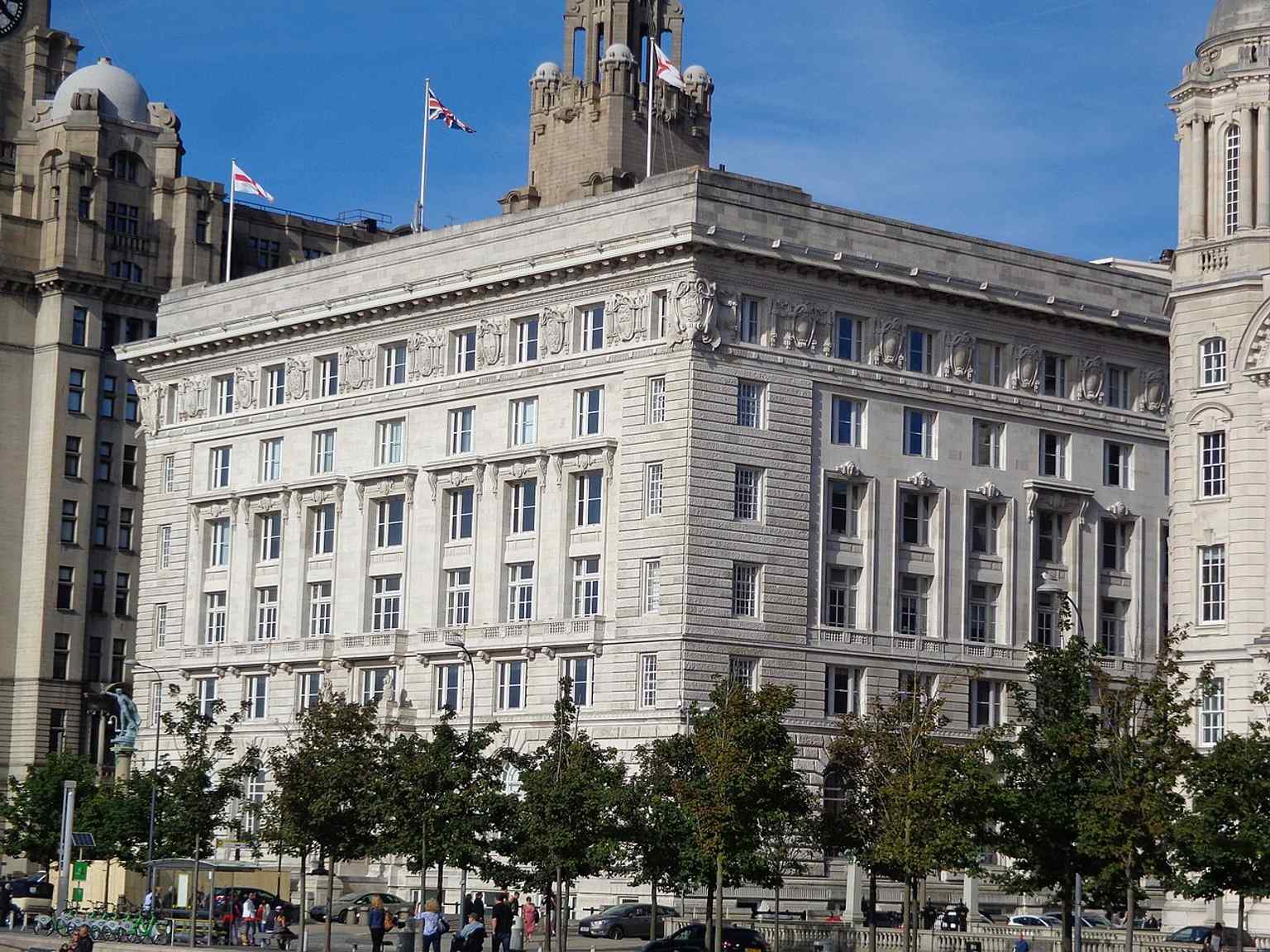
A clear modern exterior view of the Cunard Building, the Italian-palazzo-inspired headquarters built for Cunard between 1914 and 1917.Photo: Superchilum, Wikimedia Commons, CC BY-SA 4.0. Cropped & resized. Cunard commissioned it because the company had outgrown its old offices on Water Street. And the move here did not come with trumpets. Staff started relocating in June nineteen sixteen, while the First World War was still raging, so the opening happened without ceremony. Just desks, papers, and people getting on with it.
At peak periods, more than one thousand employees worked here, handling ticket sales, passenger bookings, and executive decision-making for the company's fleet operating across the Atlantic, the Mediterranean, and other routes. Some of the great liners were planned from this address, including the Queen Mary and Queen Elizabeth 2. So while the river carried the glamour, this was the machine room of the business... made of ledgers, timetables, and very sharp pencils.
The lower floors dealt with passengers directly. Cunard gave first, second, and third class their own separate waiting and booking spaces, plus luggage storage and a currency exchange. Even before you boarded, the Atlantic had a class system. Above, clerks worked in marble-lined corridors; outside and at dock level, dockers hauled trunks and cargo. Only a wall of Italian marble separated white-collar paperwork from hard waterfront labor.
One of the few workers here we can name as more than a job title is John H. Chadwick, a Cunard accountant whose poems survive. That matters, because buildings like this often preserve executives better than ordinary staff. Chadwick reminds us that the empire of ocean travel ran on people with ink on their cuffs as much as captains on the bridge.
If you glance at the sculptural detail on your screen, you’ll see how the building advertised Cunard’s world: gods, symbols, and imperial confidence carved in stone.
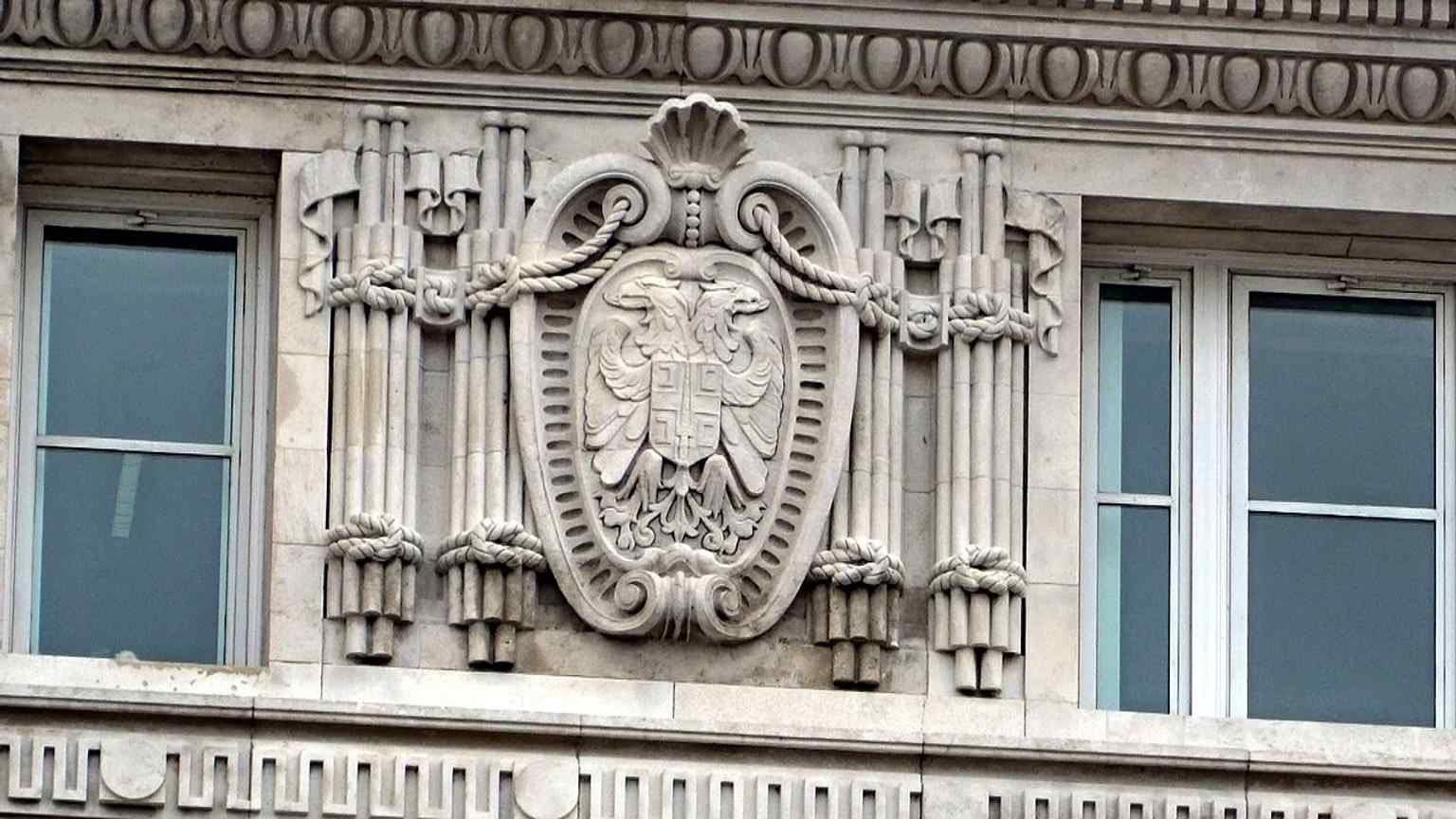
Close-up of the Cunard Building’s decorative stonework, echoing the ornate sculptures that celebrate Britannia, Neptune and the global Cunard story.Photo: Tobyqbot, Wikimedia Commons, CC BY-SA 4.0. Cropped & resized. And that is the real trick of this place. The famous Atlantic crossings did not begin at sea. They began here, at desks, counters, and booking halls. A surprising amount of world history passed through this building’s revolving door.
Walk south along the waterfront for about three minutes, past the floating Mersey ferry terminal and the new docks complex. The big red-brick warehouse group around a square of water is the Royal Albert Dock.
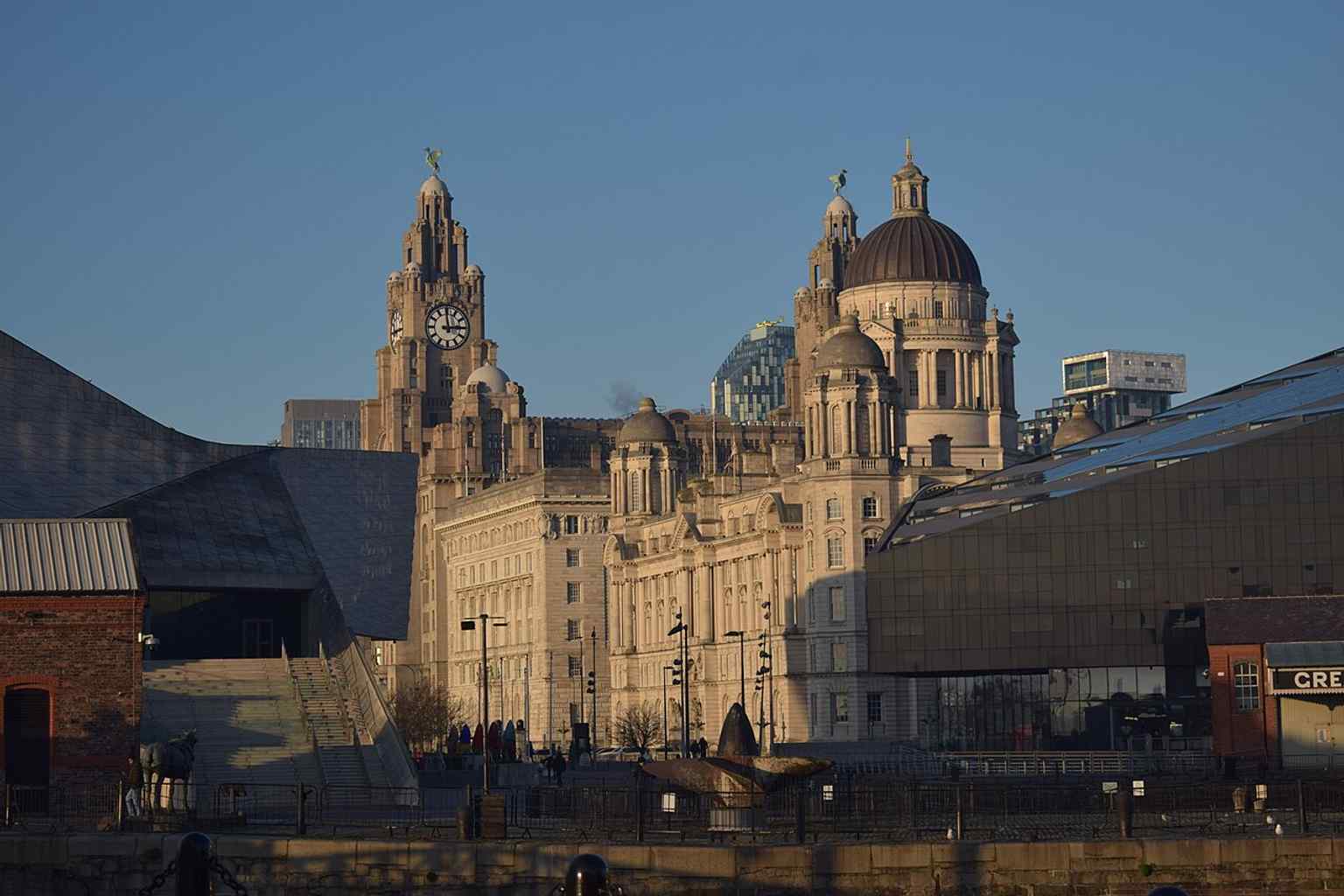
A recent high-resolution street-level photo of the Cunard Building, useful for showing the building’s current condition and stone façade.Photo: Mystery_Ray, Wikimedia Commons, CC BY-SA 4.0. Cropped & resized. 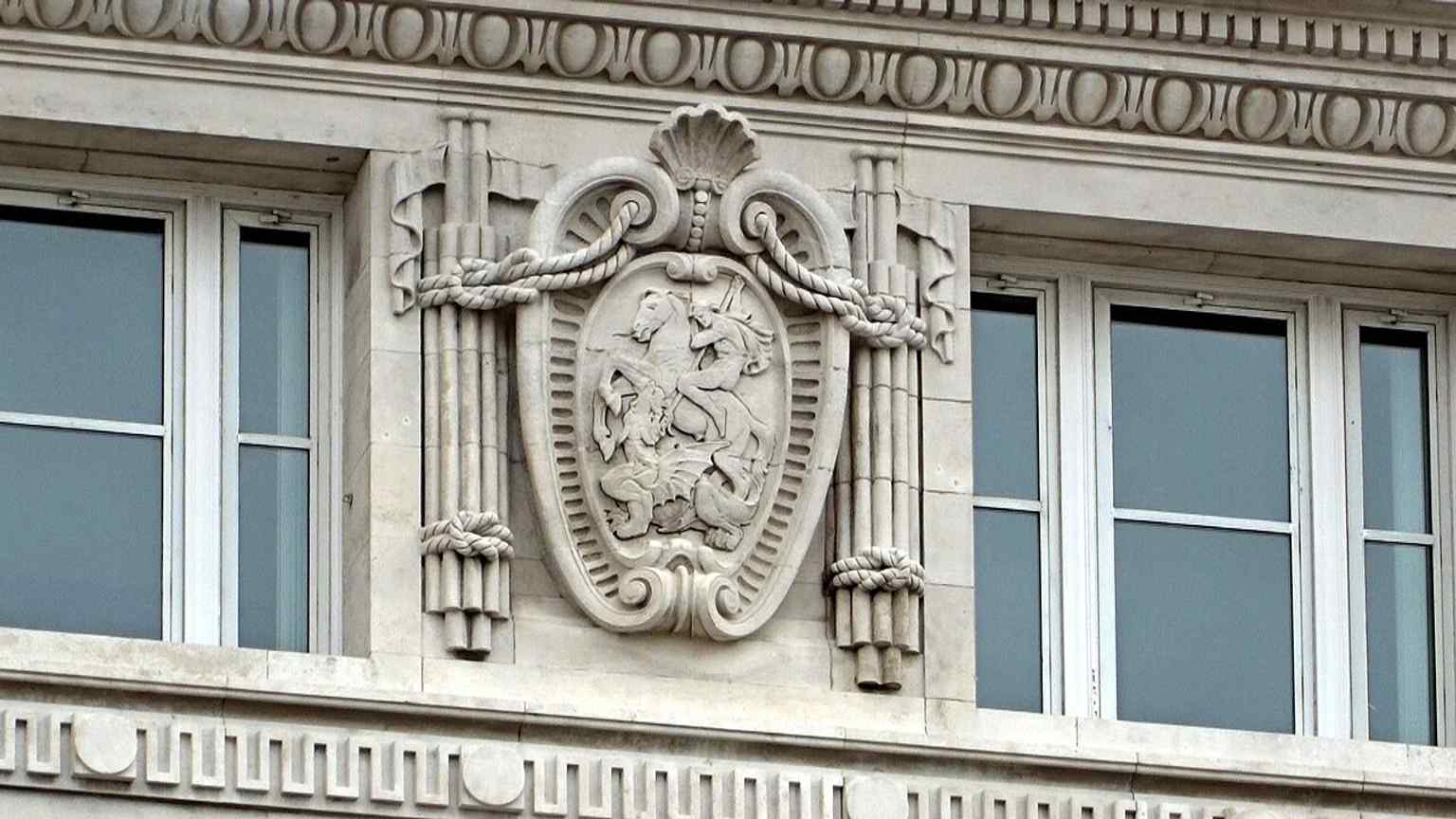
Another sculptural detail on the Cunard Building, helping illustrate the building’s richly carved exterior and World War I-era symbolism.Photo: Tobyqbot, Wikimedia Commons, CC BY-SA 4.0. Cropped & resized. 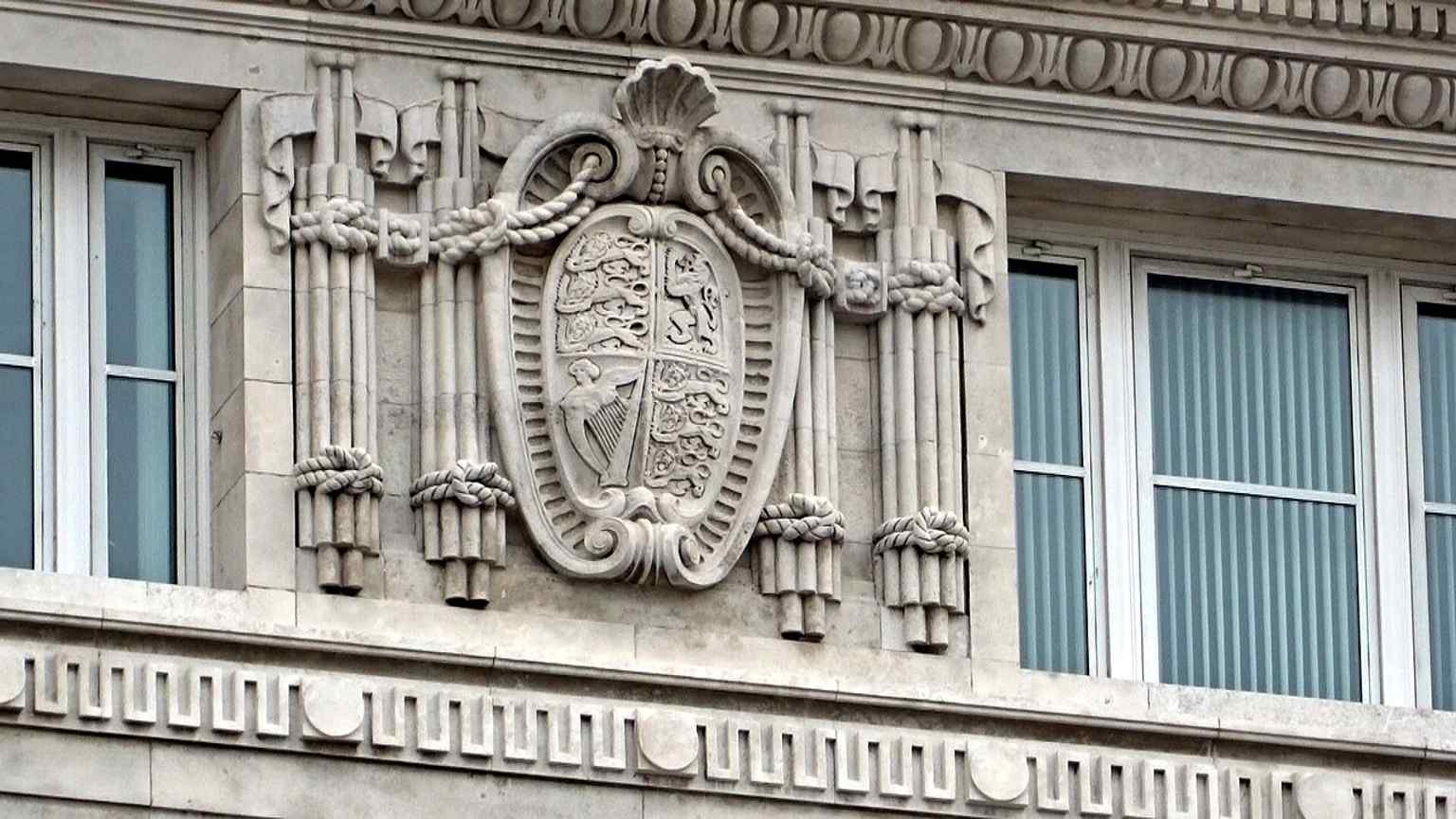
The country shield details on the façade reflect Cunard’s international reach and the building’s role in trans-Atlantic shipping.Photo: Tobyqbot, Wikimedia Commons, CC BY-SA 4.0. Cropped & resized. On your left, look for a long wall of red-brick warehouses carried on dark cast-iron columns, wrapping around a rectangular dock basin like a stern industrial cloister. This…더 보기간략히 보기
전용 페이지 열기 →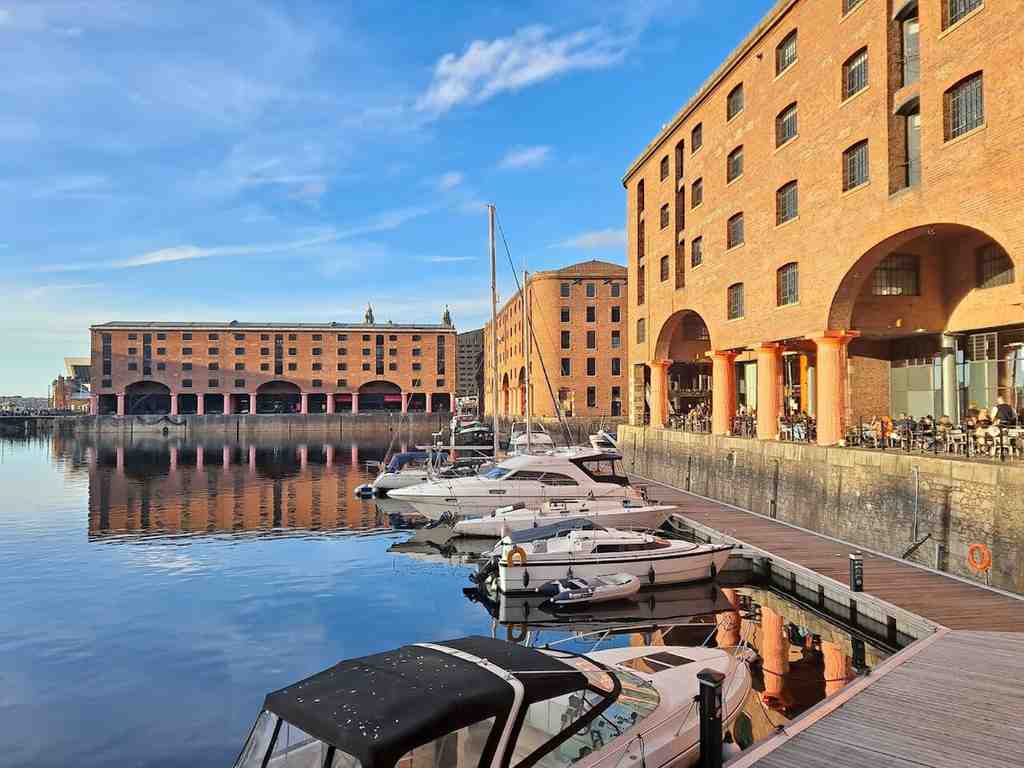
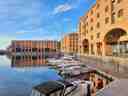
Royal Albert Dock, LiverpoolPhoto: BCDS, Wikimedia Commons, CC BY-SA 4.0. Cropped & resized. On your left, look for a long wall of red-brick warehouses carried on dark cast-iron columns, wrapping around a rectangular dock basin like a stern industrial cloister.
This place began as a very practical argument with fire. In eighteen forty-six, engineer Jesse Hartley and architect Philip Hardwick opened Albert Dock with a bold idea: build the whole working structure from brick, cast iron, stone, and granite, with no wood in the frame at all. That made it the first non-combustible warehouse system in the world. Hartley did not leave that to faith. He built an eighteen-foot by ten-foot test structure, packed it with timber and tar, and set it alight. A fairly lively form of quality control.
The design was radical because ships could load and unload directly into the warehouses here, without goods trundling off to somewhere else first. And these were not humble sacks of potatoes. The dock stored bonded goods - meaning Customs kept them under lock while import duty was still unpaid - including brandy, cotton, tea, silk, tobacco, ivory, and sugar. If you glance at the image on your screen, the restored interior gives you a sense of the scale of those stores.
Cotton matters here, too. These warehouses handled bonded cotton long before the price was struck across town at the Cotton Exchange, where paper deals later outran the bales themselves. That market finally closed at noon on the thirty-first of March, nineteen forty-one.
In eighteen forty-eight, Hartley added the world’s first hydraulic cranes. Suddenly heavy lifting had muscle made of water pressure. Useful, yes. Gentle, no. Dock work stayed tough and sharply ranked. Coopers repaired the barrels, hookers-on fastened cargo to the hoists, and gangers supervised crews hauling casks and bales through this machine of trade.
Then shipping changed faster than the dock could. Steamships grew larger, containerisation slashed the need for old break-bulk handling, and the work drained away. Albert Dock closed in nineteen seventy-two. If you look at the app image of the silted basin, you can see how low it sank before rescue. By nineteen eighty-six, the Merseyside Maritime Museum had moved in, and the warehouses that once held tobacco and spirits began storing memory instead.
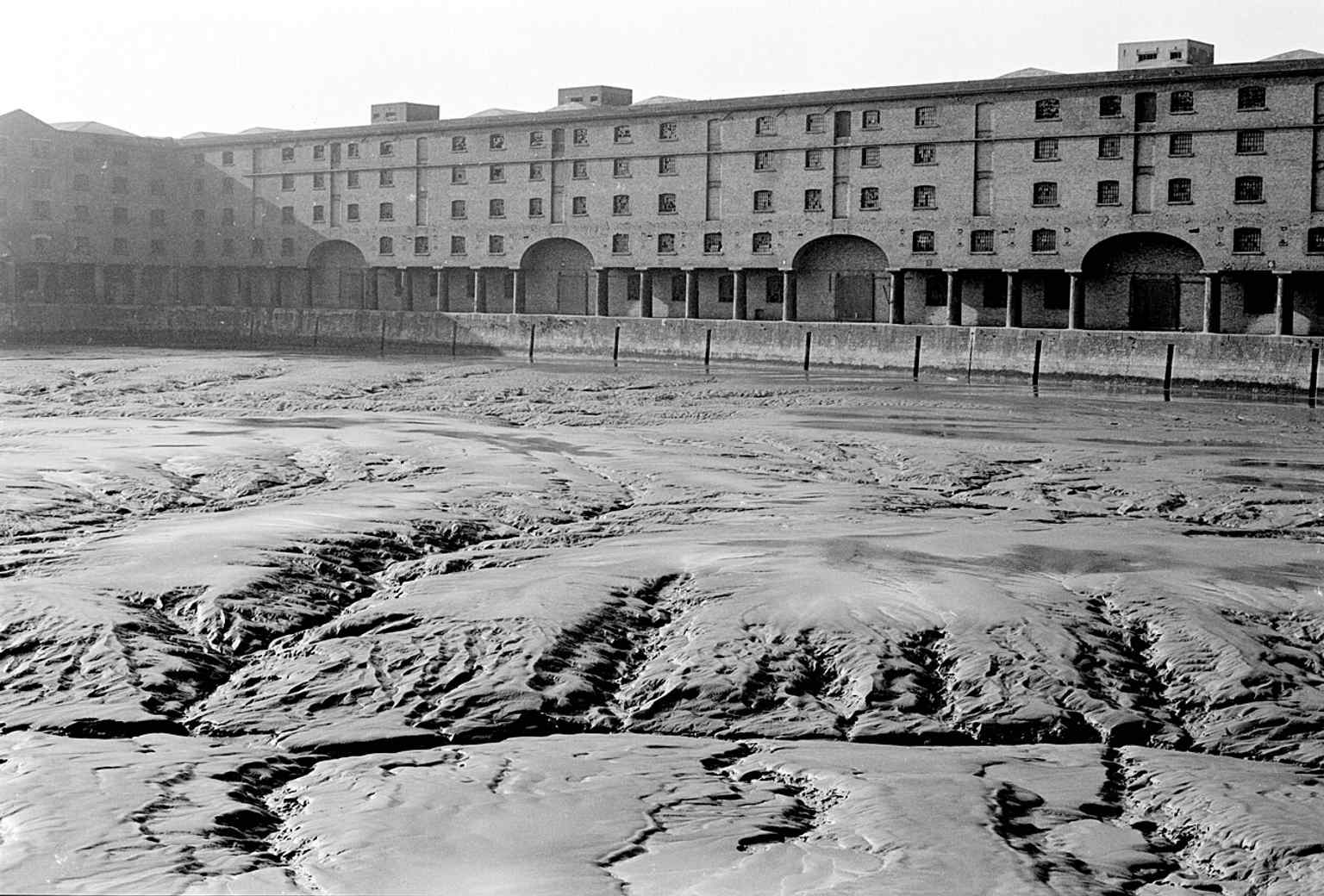
A view inside the silted dock basin before demolition plans were dropped, showing how far the once-busy dock had fallen after closure in 1972.Photo: TeddyBear1963, Wikimedia Commons, CC BY-SA 4.0. Cropped & resized. One of the museum’s most important stories sits in the Black Salt gallery, about Black sailors in Britain’s maritime world. Historian Ray Costello put it plainly: “It had to be Liverpool, of all locations, as its old black community is largely derived from seafarers.” He also notes that by the end of the British slave trade, at least three percent of all crewmen were Black. So this dock was never worked by one kind of Liverpool alone.
When you’re ready, walk east out of the dock complex into the Liverpool ONE shopping district. The pair of wrought-iron gates standing free in Canning Place, with mermaids and ropework worked into them, are the Sailors’ Home Gateway. That’s your next stop, about seven minutes away.
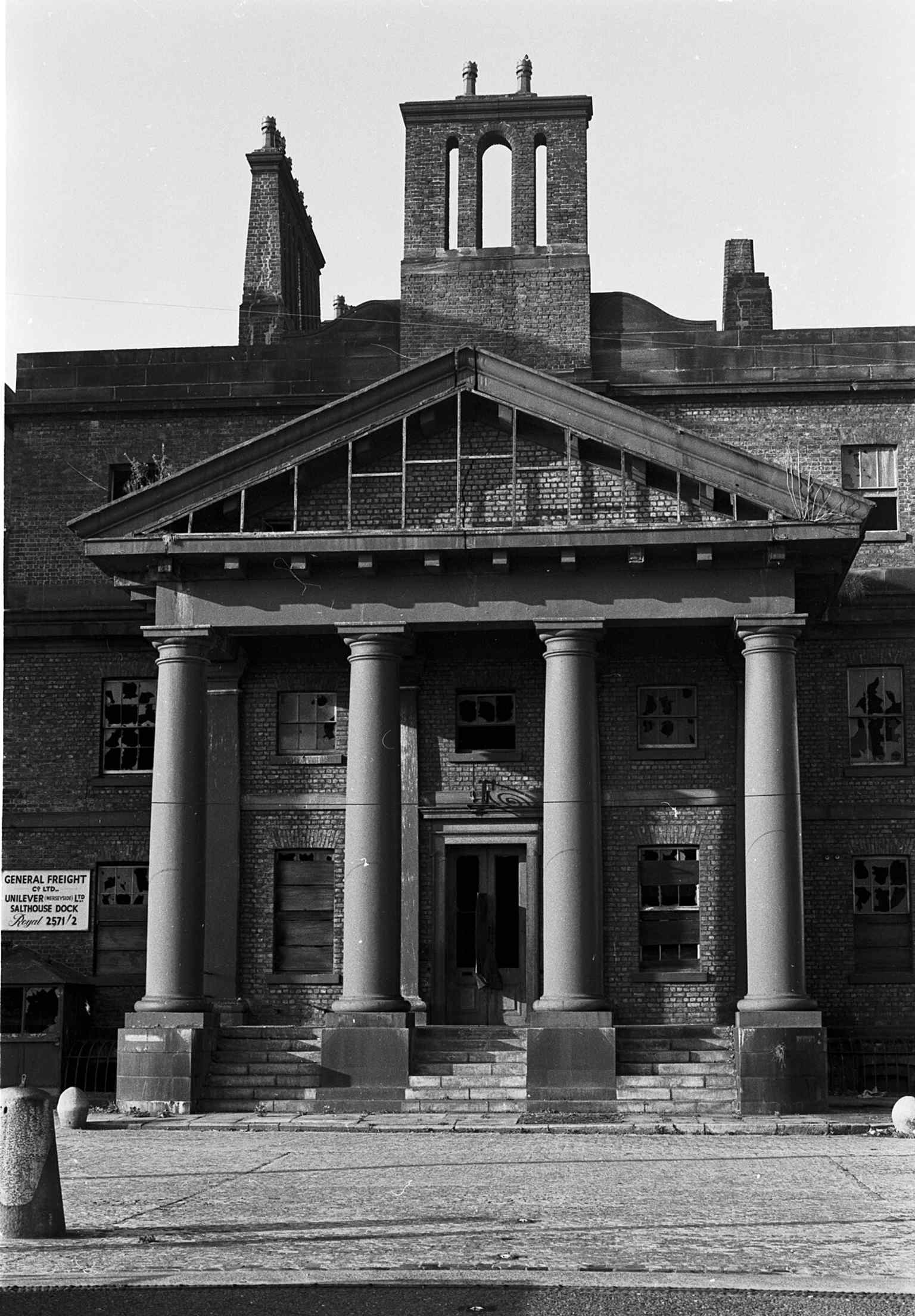
The dock office in 1982, just before regeneration began, captures the period when the Albert Dock was still derelict and its future was uncertain.Photo: TeddyBear1963, Wikimedia Commons, CC BY-SA 4.0. Cropped & resized. 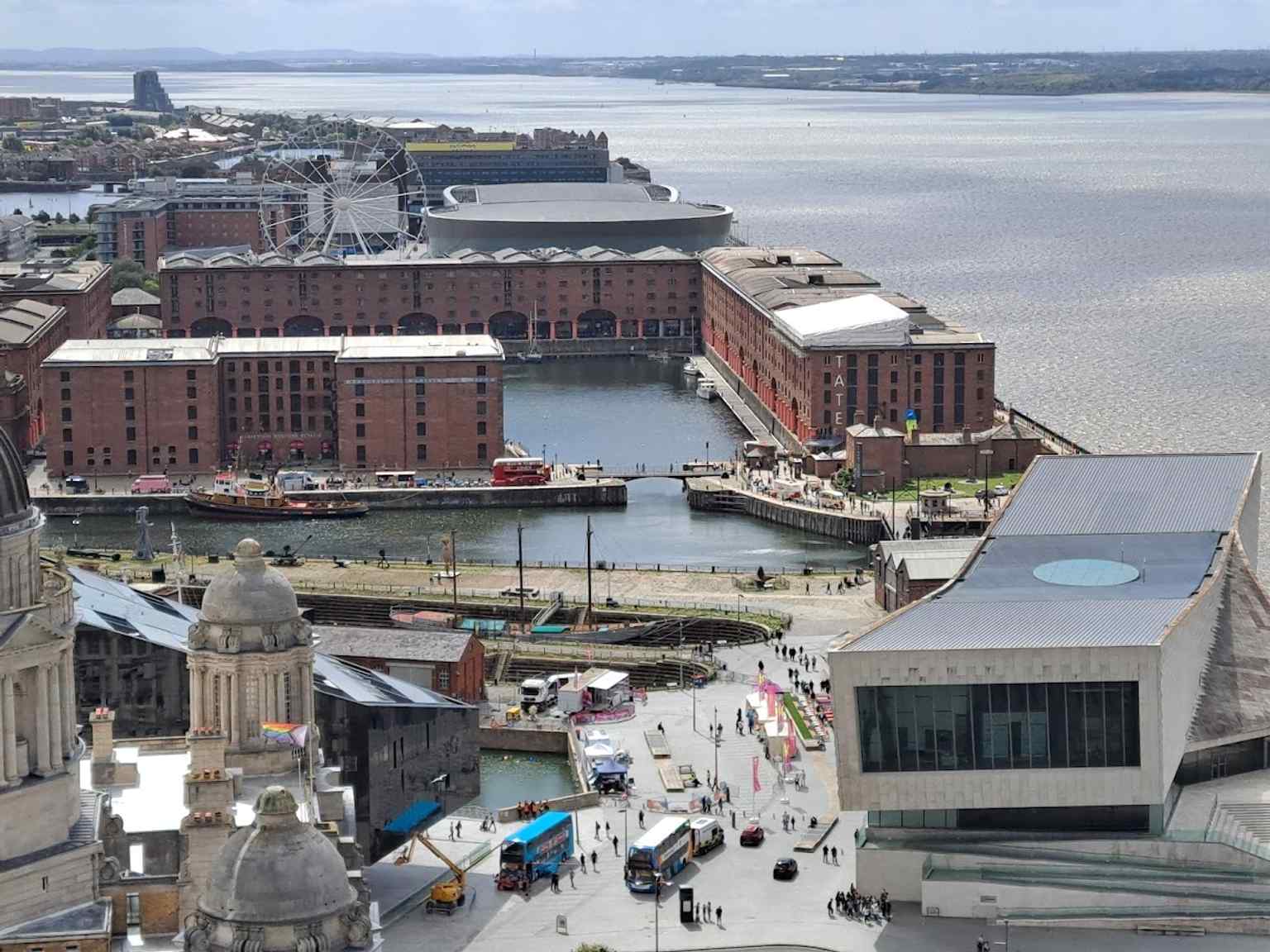
An aerial view of the Liverpool waterfront that helps explain how the dock sits beside the Pier Head and the wider historic dock system.Photo: BCDS, Wikimedia Commons, CC BY-SA 4.0. Cropped & resized. On your left is a long red brick Georgian facade with pale stone trim, a central pedimented doorway, and a small octagonal cupola with a clock rising above the middle. You are…더 보기간략히 보기
전용 페이지 열기 →On your left is a long red brick Georgian facade with pale stone trim, a central pedimented doorway, and a small octagonal cupola with a clock rising above the middle.
You are looking at one of the oldest surviving buildings in central Liverpool. Its story starts in seventeen oh eight, when the Reverend Robert Styth, Liverpool’s rector, joined Bryan Blundell, a master mariner, to found a school for poor children to “read, write and cast accounts,” meaning learn basic literacy, writing, and arithmetic. That sounds admirable, and in one sense it was. In another sense, it is pure Liverpool: charity on the front page, harder truths in the ledger. Blundell built much of his fortune in the Atlantic trade, including slavery, and the school cared for children left fatherless by the same port economy that enriched men like him.
The foundation stone went down in seventeen sixteen. By seventeen eighteen, the first fifty boarders had moved in, and by seventeen twenty-five the whole place was complete, costing just under two thousand three hundred pounds, roughly half a million pounds in today’s money. People often call this Queen Anne architecture, which means that balanced early eighteenth century style with symmetry, classical stone details, and an air of orderly virtue. Orderly enough, anyway, that the clock above the center has only an hour hand... apparently the minute hand could fend for itself. If you check the image on your screen, the doorway close-up shows the carved stonework and columns in crisp detail. Above the gate and doorways, you can also spot some of Liverpool’s earliest Liver Birds, already perched there like tiny civic supervisors.
But this was never just a school in the modern sense. It was training for work. Two thirds of the day went on income-producing tasks, spinning, picking, sewing, and only one third on lessons. Then many boys were apprenticed, mostly into maritime trades. So the route ran from dormitory to workroom to dockside with grim efficiency. The courtyard in front of you still keeps the scale of a space a child would have crossed at dawn, heading to meals, prayers, labor, and lessons. The Bluecoat’s own contemporary brochure title - Subscriptions, Schooling and Slavery - is refreshingly blunt. It admits what the records show: the same Atlantic system filled ships, funded subscriptions, and shaped the futures of the children sent through this place.
After the school moved to Wavertree in nineteen oh six, demolition threatened the building. Artists rescued it. The Sandon Studios Society moved in, campaigners fought for it, and the old charity school slowly became the Bluecoat arts center. Even bomb damage in the Liverpool Blitz in nineteen forty-one did not finish it; people restored it and carried on. That matters, because this is not just a handsome old building. It is a place where, for some children, working life began at six years old.
If you want to come back inside later, the Bluecoat usually opens from ten to five Tuesday to Saturday, from eleven to five on Sunday, and closes on Monday.
When you’re ready, walk north up College Lane, cross Lord Street and Whitechapel, and turn into Mathew Street. The narrow cobbled alley, with the bronze statues and the Beatles tributes, is home to the Cavern Club, about six minutes away, and a very different kind of Liverpool classroom.
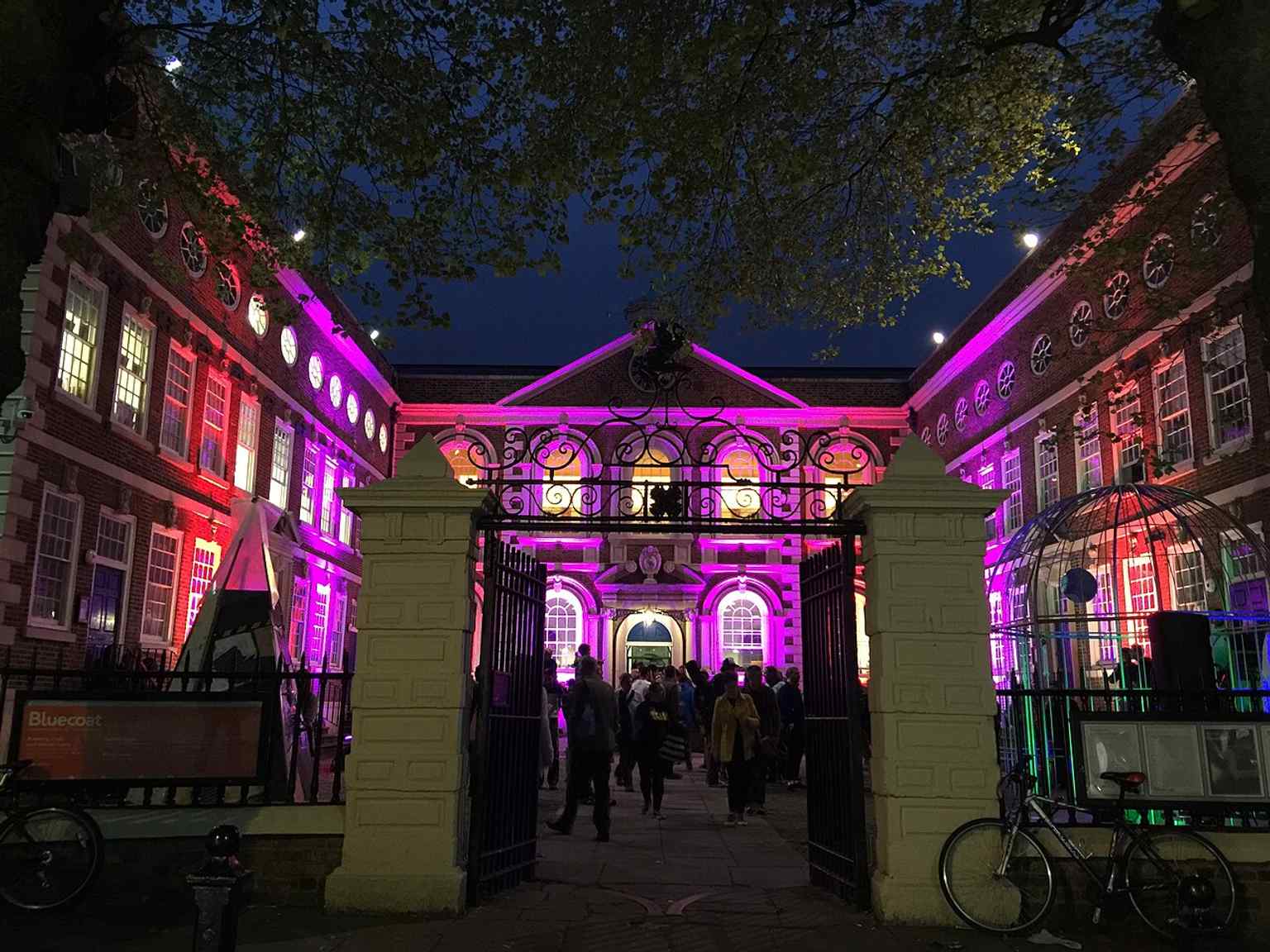
The Bluecoat’s front façade lit up for the 2016 festival — this is the oldest surviving building in central Liverpool, originally built as a charity school in 1716–17.Photo: DyGokce, Wikimedia Commons, CC BY-SA 4.0. Cropped & resized. On your left, look for a low red-brick frontage with rounded arches and the curved Cavern Club sign above the entrance. Alan Sytner, a twenty-one-year-old jazz fanatic, came…더 보기간략히 보기
전용 페이지 열기 →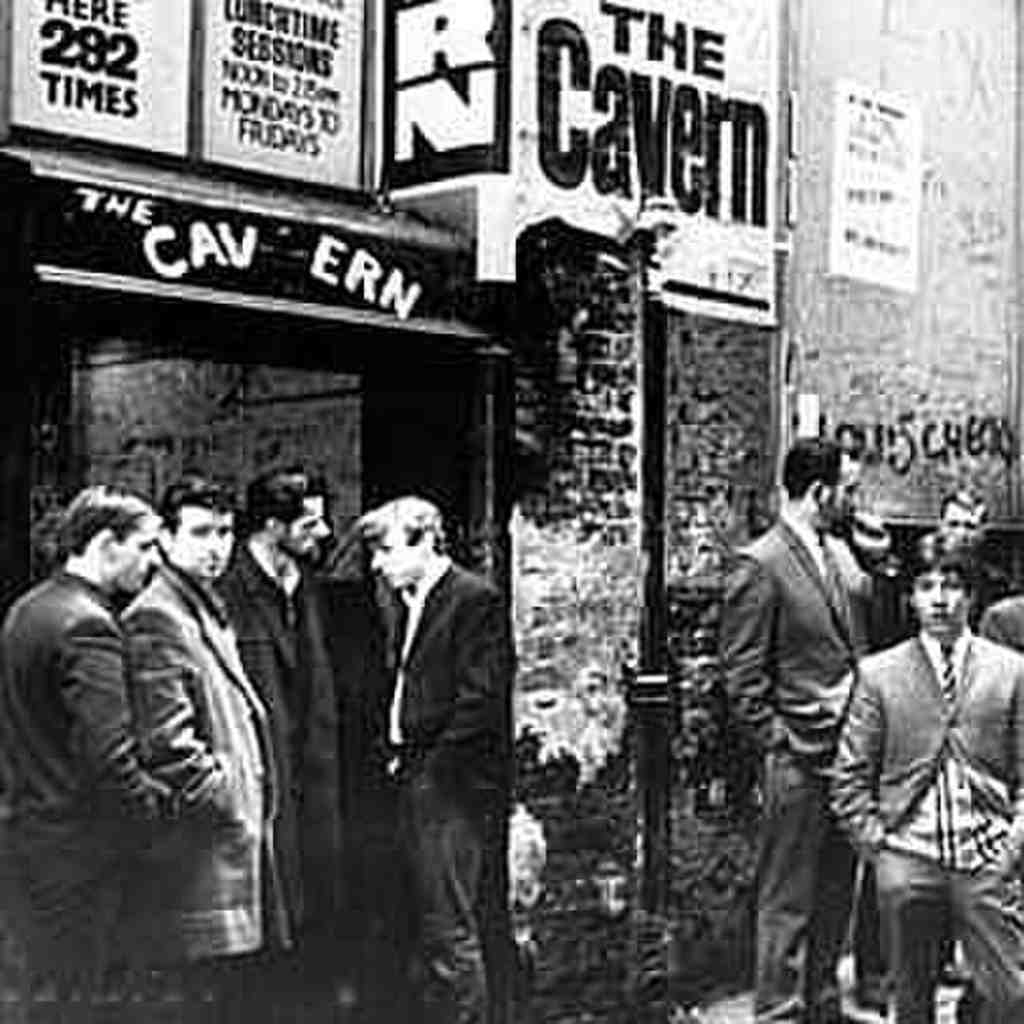
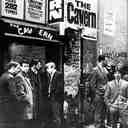
The Cavern ClubPhoto: The Cavern of the Cavern Club, 2009.jpg, Wikimedia Commons, CC BY 3.0. Cropped & resized. On your left, look for a low red-brick frontage with rounded arches and the curved Cavern Club sign above the entrance.
Alan Sytner, a twenty-one-year-old jazz fanatic, came back from Paris obsessed with Le Caveau de la Huchette and opened a cellar club here on the sixteenth of January, nineteen fifty-seven. The first night packed in six hundred jazz fans, with hundreds more queuing on Mathew Street.
Then the place found its real Liverpool rhythm: lunch break. By early nineteen sixty-one, Bob Wooler became the full-time host and organizer, turning noon into a gig slot for office workers. Shorthand typists from the Cotton Exchange, apprentices, bank clerks... they came down here on their dinner hour for live beat music.
The Beatles first played here at lunchtime on the ninth of February, nineteen sixty-one, earning five pounds between them. From then to the third of August, nineteen sixty-three, they racked up two hundred and ninety-two Cavern shows. Not bad for a cellar job.
The original club closed in May nineteen seventy-three, when British Rail compulsorily purchased the site for a Merseyrail ventilation shaft; the cellar was buried beneath a car park. If you like, check the before-and-after image - it shows how Mathew Street shifted from celebrating the club to preserving the entrance itself as heritage. In nineteen eighty-two, crews saved fifteen thousand bricks, and the rebuilt Cavern reopened in nineteen eighty-four on about seventy percent of the original site.
Walk east up Mathew Street to Lord Street, cross Whitechapel, and turn right onto William Brown Street; in about five minutes, stand before St George's Hall, and we’ll pick up the Walker nearby. If you want to return, it opens at eleven every day and closes around midnight or later.
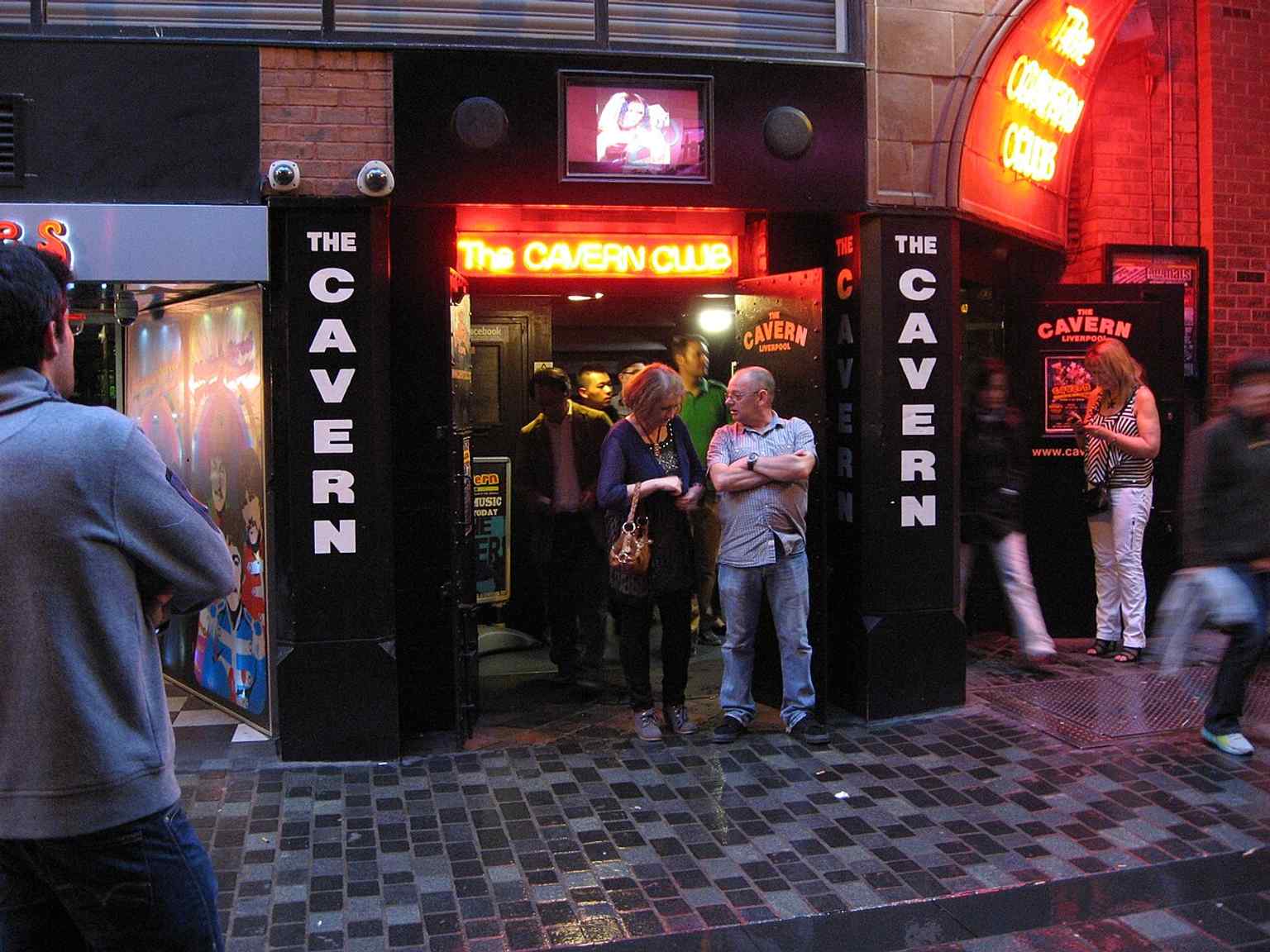
The Cavern Club exterior with its iconic brick arch and signage, evoking the underground venue where the Beatles played hundreds of times.Photo: Alankang, Wikimedia Commons, CC BY-SA 4.0. Cropped & resized. On your left, the Walker Art Gallery rises in pale stone with a broad classical frontage, a row of tall columns, and a carved pediment above the main entrance. This street tells…더 보기간략히 보기
전용 페이지 열기 →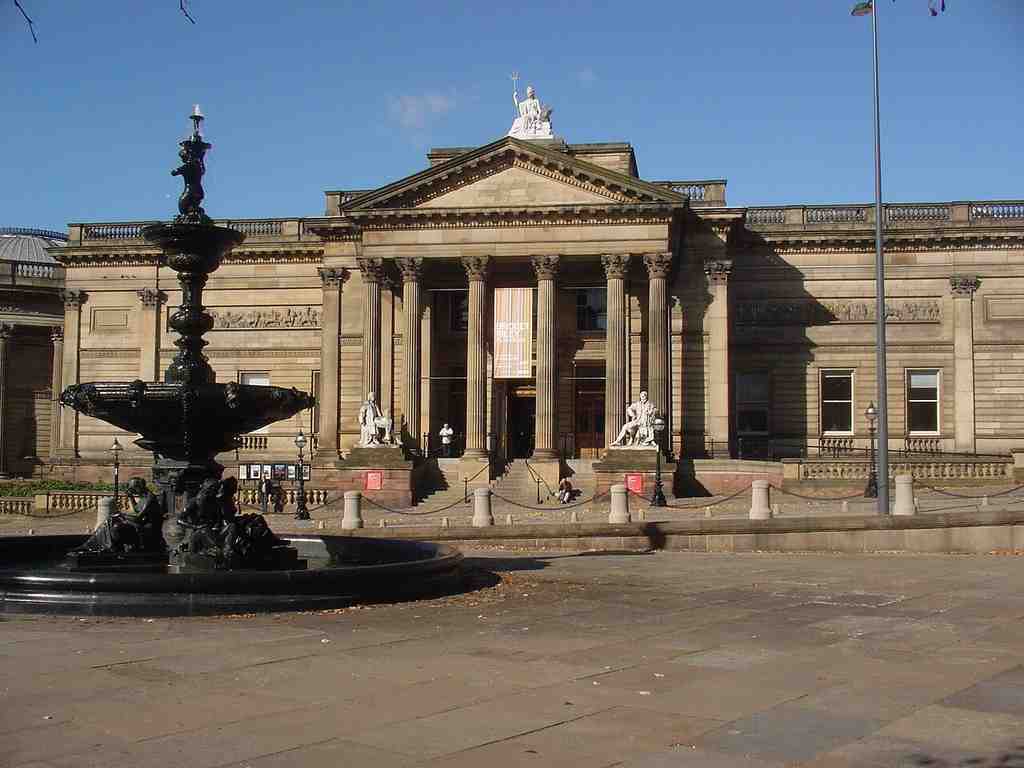
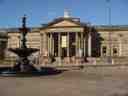
Walker Art GalleryPhoto: Rept0n1x, Wikimedia Commons, CC BY-SA 3.0. Cropped & resized. On your left, the Walker Art Gallery rises in pale stone with a broad classical frontage, a row of tall columns, and a carved pediment above the main entrance.
This street tells one of Liverpool’s most revealing stories. In 1845 and then in 1850 and 1852, Parliament passed the Museums Act and the Public Libraries Acts, which let boroughs raise money from the rates - local taxes, in plain English - to fund museums and libraries. For working people, that changed the rules completely: you could read, learn, and look at great art without paying at the door.
This fed what people called the working-class self-improvement movement. Liverpool’s nineteenth-century answer to working-class poverty was not just charity, but access: William Brown paid for a free library and museum, Andrew Barclay Walker paid for a free gallery, David Lewis launched penny readings to help workers learn to read, and William Rathbone started district nursing in eighteen fifty-nine by paying his late wife’s nurse to care for the poor in their own homes. The city’s merchants, it seems, occasionally found that conscience could loosen a purse string.
Brown, a Belfast-born Liverpool merchant, banker, and member of Parliament, agreed in eighteen fifty-six to pay the full cost of a building for Liverpool’s free library and museum. That building officially opened on the eighteenth of October, eighteen sixty, just along this same street, and it set the tone for the whole quarter: serious culture, openly available.
Then came the brewer. In eighteen seventy-three, Andrew Barclay Walker, a Liverpool brewer and alderman, offered the city twenty thousand pounds - roughly a couple of million pounds in today’s money - to build a public art gallery to mark his term as mayor. Local architects Cornelius Sherlock and H. H. Vale designed the building in front of you, and Edward Henry Stanley, the fifteenth Earl of Derby, opened it on the sixth of September, eighteen seventy-seven.
Liverpool answered with its feet. In the first four months alone, three hundred and twenty-four thousand, one hundred and seventeen visitors came through the doors. That number is the punchline, really... working people did not need to be convinced that art mattered. They needed someone to stop putting a price on entry.
Inside now sits one of the largest art collections in England outside London, still free under National Museums Liverpool. The collection itself stretches back to eighteen nineteen, when friends saved thirty-seven paintings from William Roscoe’s collection after his banking business collapsed, preventing them from being scattered. If you look at the image on your phone, you can see the kind of interior this free idea created: large, formal galleries built for the public, not for one rich collector’s drawing room. Another image shows Rossetti’s Dante’s Dream, one of the major works bought for Liverpool’s permanent collection as the city grew more ambitious about what ordinary people should be able to see.
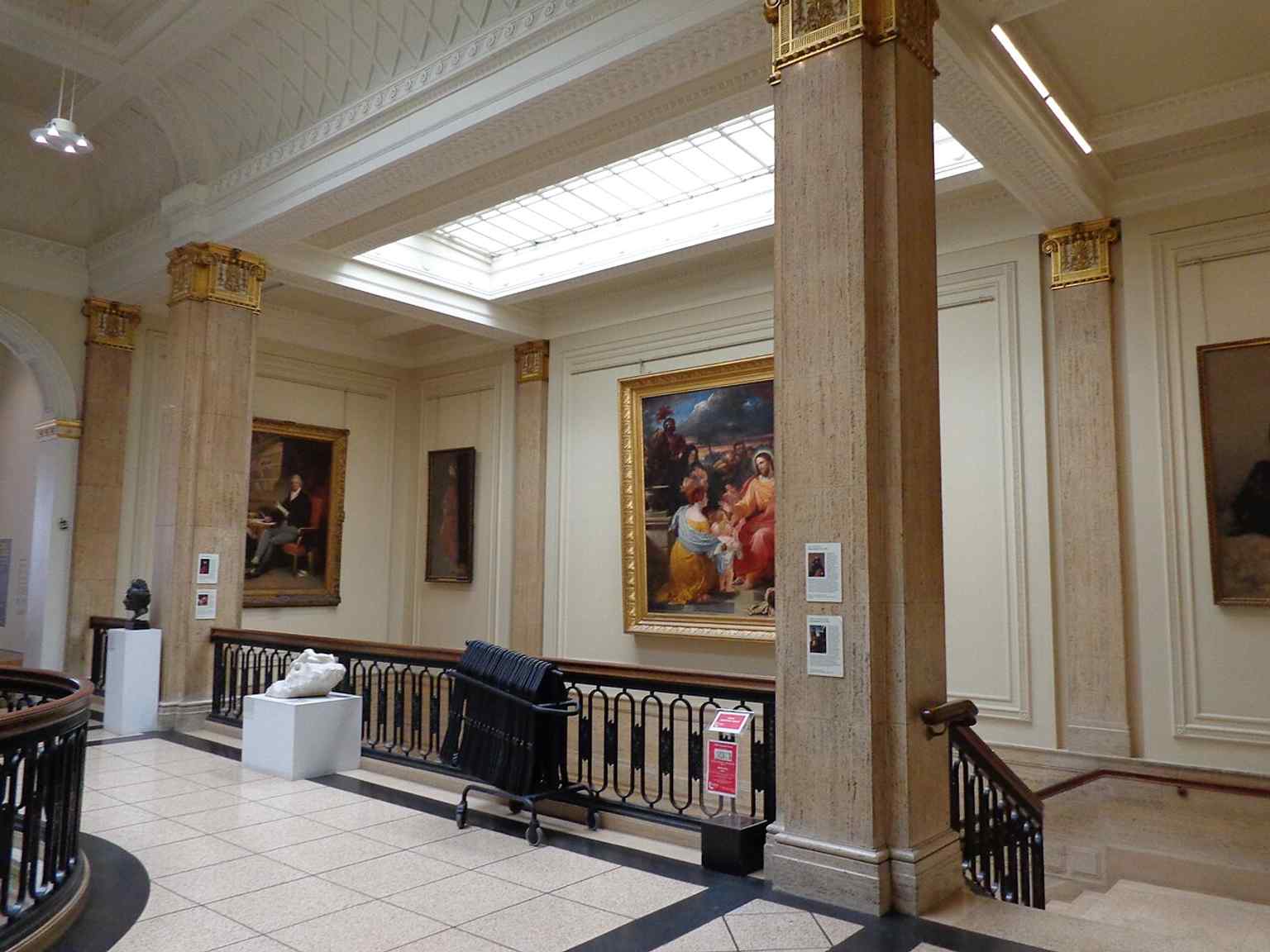
An interior gallery space showing the Walker’s museum atmosphere, where visitors can explore the collection free of charge just as the city intended from the start.Photo: Superchilum, Wikimedia Commons, CC BY-SA 4.0. Cropped & resized. So William Brown Street is not just handsome civic scenery. It is one of the densest clusters of civic gifts in nineteenth-century Europe - one banker’s money, one mayor’s backing, one brewer’s money - all handed over to the people who built Liverpool.
If you want to go inside later, the gallery is usually open Tuesday to Sunday from ten to five, and closed on Mondays.
For your next stop, head south toward St George’s Hall, only a couple of minutes away; later, you’ll continue down past Lime Street Station to the big stone-clad Lewis’s Building on Ranelagh Street, the one with the naked bronze figure over the entrance.
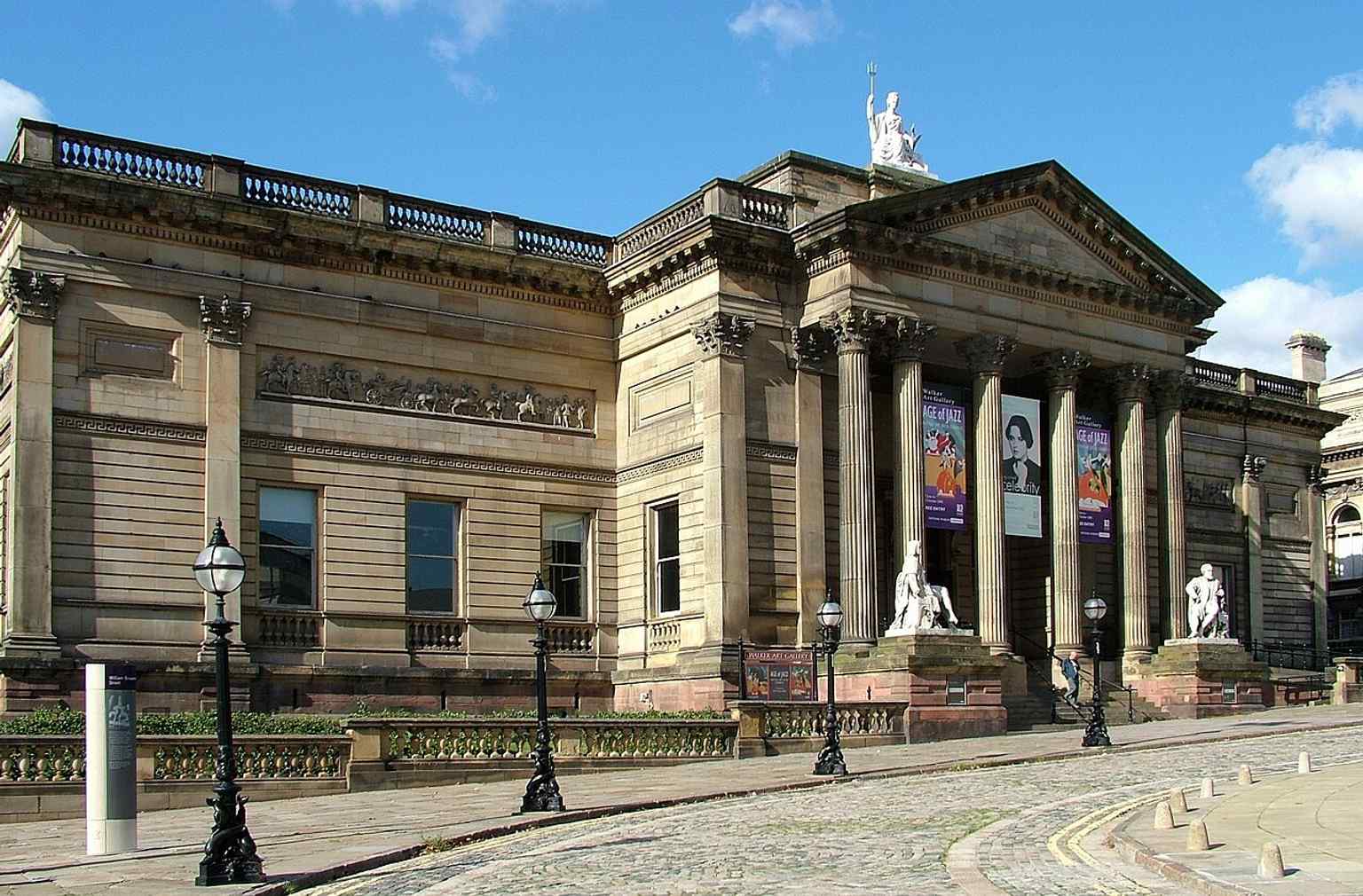
A clear front view of the Walker Art Gallery’s neo-Classical façade on William Brown Street, the free public gallery opened in 1877 and still one of Liverpool’s landmark civic buildings.Photo: The original uploader was Chowells at English Wikipedia., Wikimedia Commons, CC BY-SA 3.0. Cropped & resized. 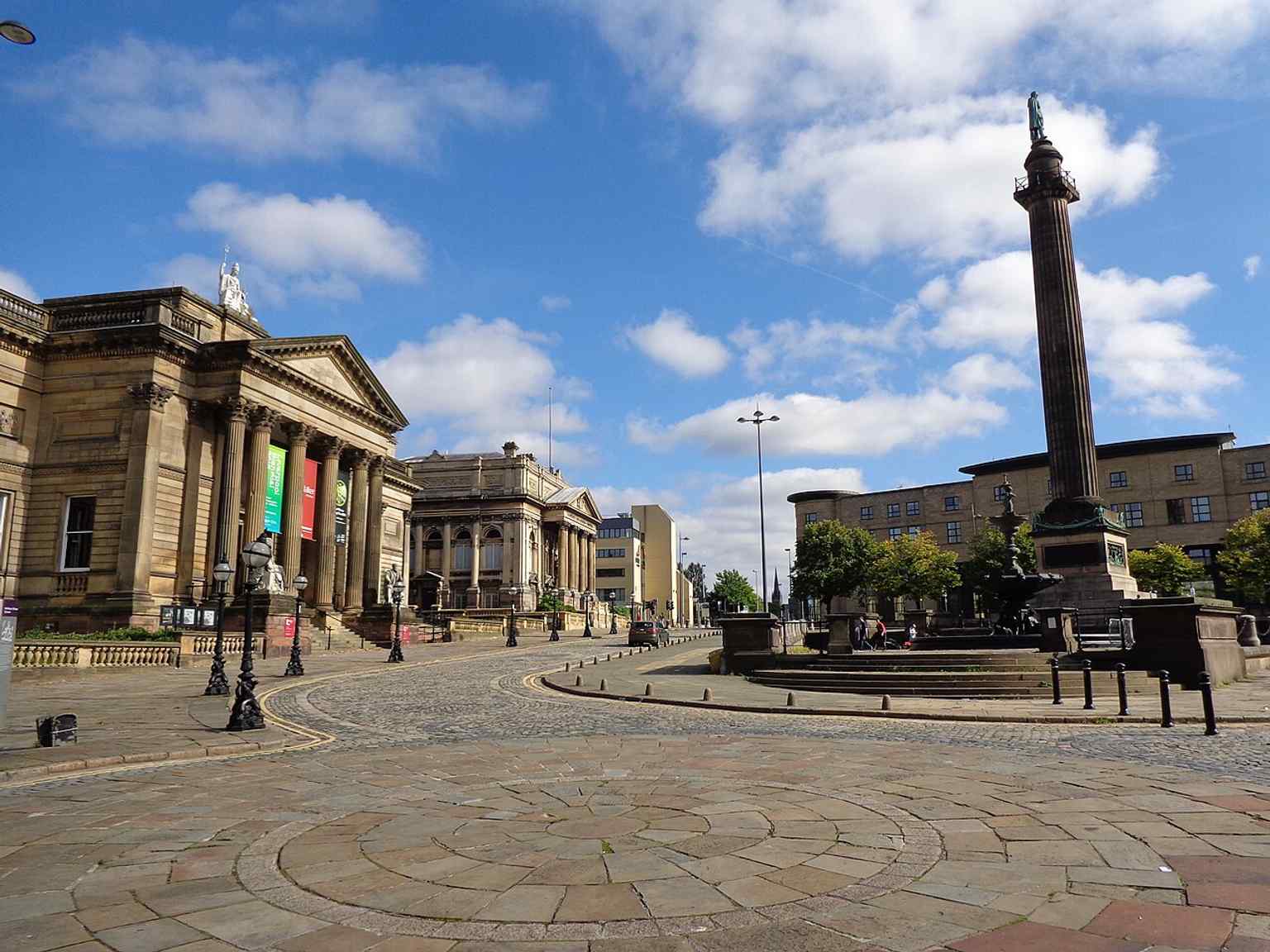
The gallery seen with Wellington’s Column, placing it in Liverpool’s great 19th-century cultural quarter alongside the World Museum and William Brown Library.Photo: Superchilum, Wikimedia Commons, CC BY-SA 4.0. Cropped & resized. 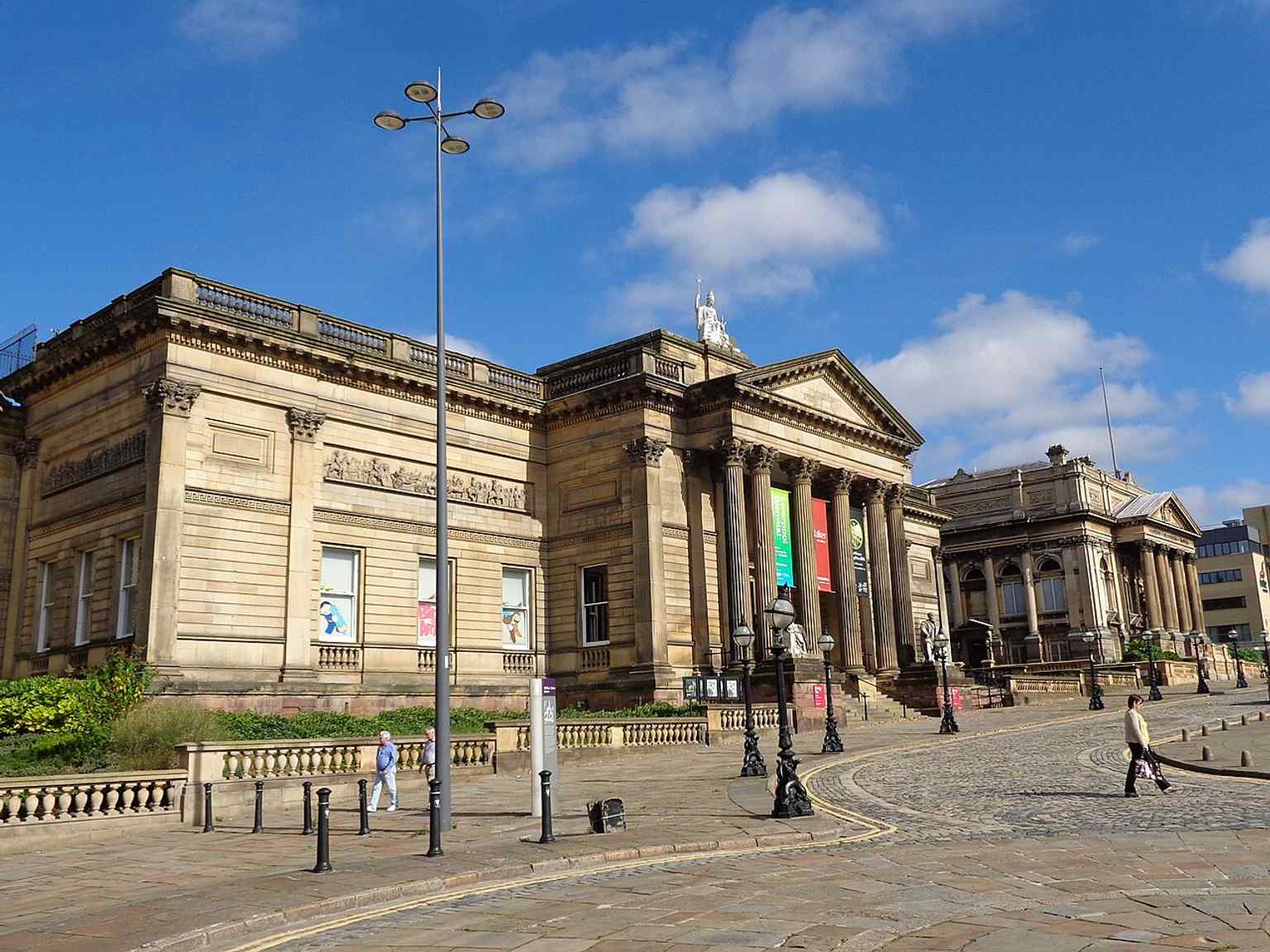
A modern exterior view that shows the Walker’s grand stone frontage, reflecting the building’s place in the civic ensemble funded by Liverpool’s Victorian benefactors.Photo: Superchilum, Wikimedia Commons, CC BY-SA 4.0. Cropped & resized. 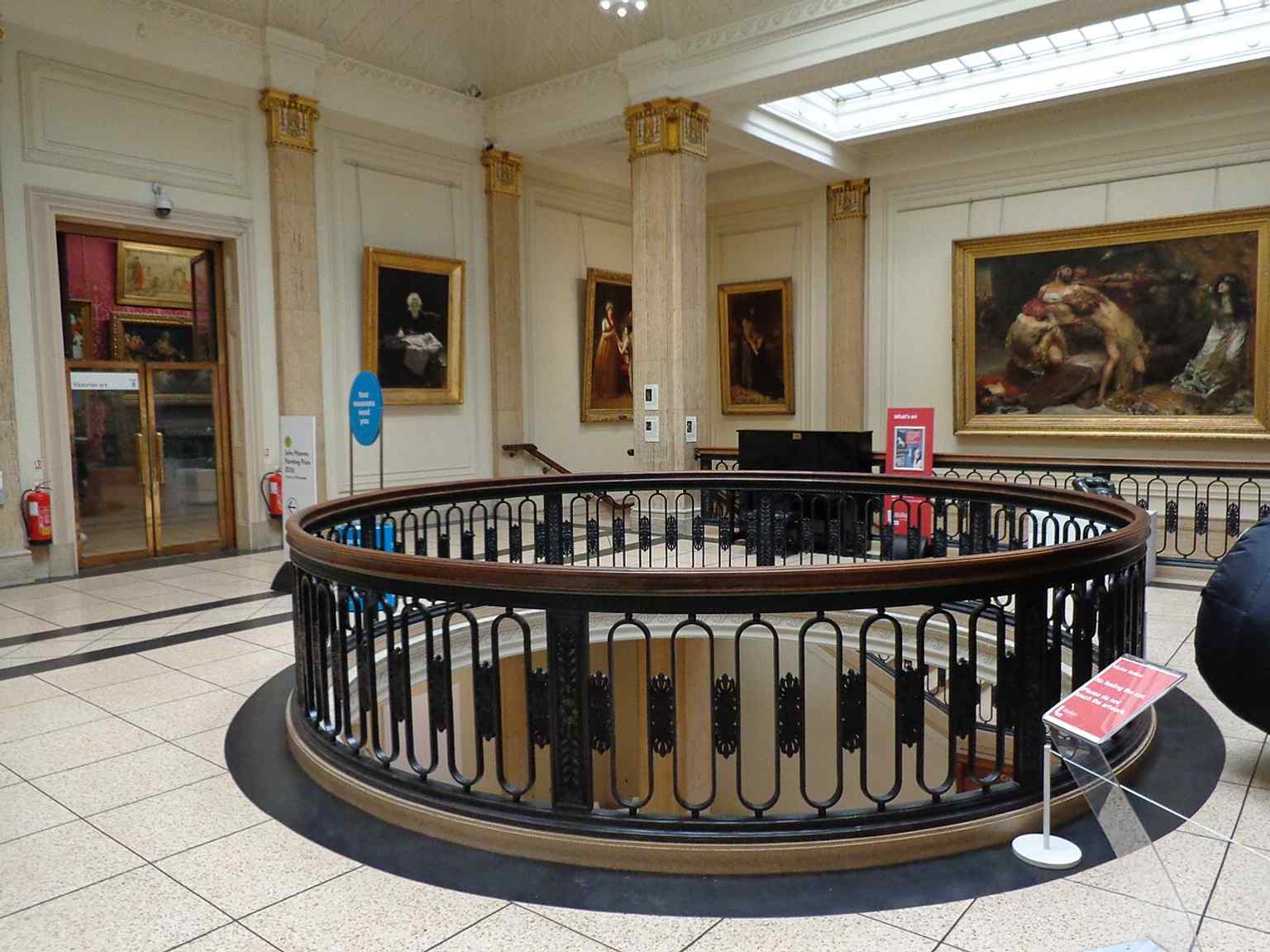
Another interior view of the Walker Art Gallery, useful for conveying the scale and formal display style of one of England’s largest collections outside London.Photo: Superchilum, Wikimedia Commons, CC BY-SA 4.0. Cropped & resized. 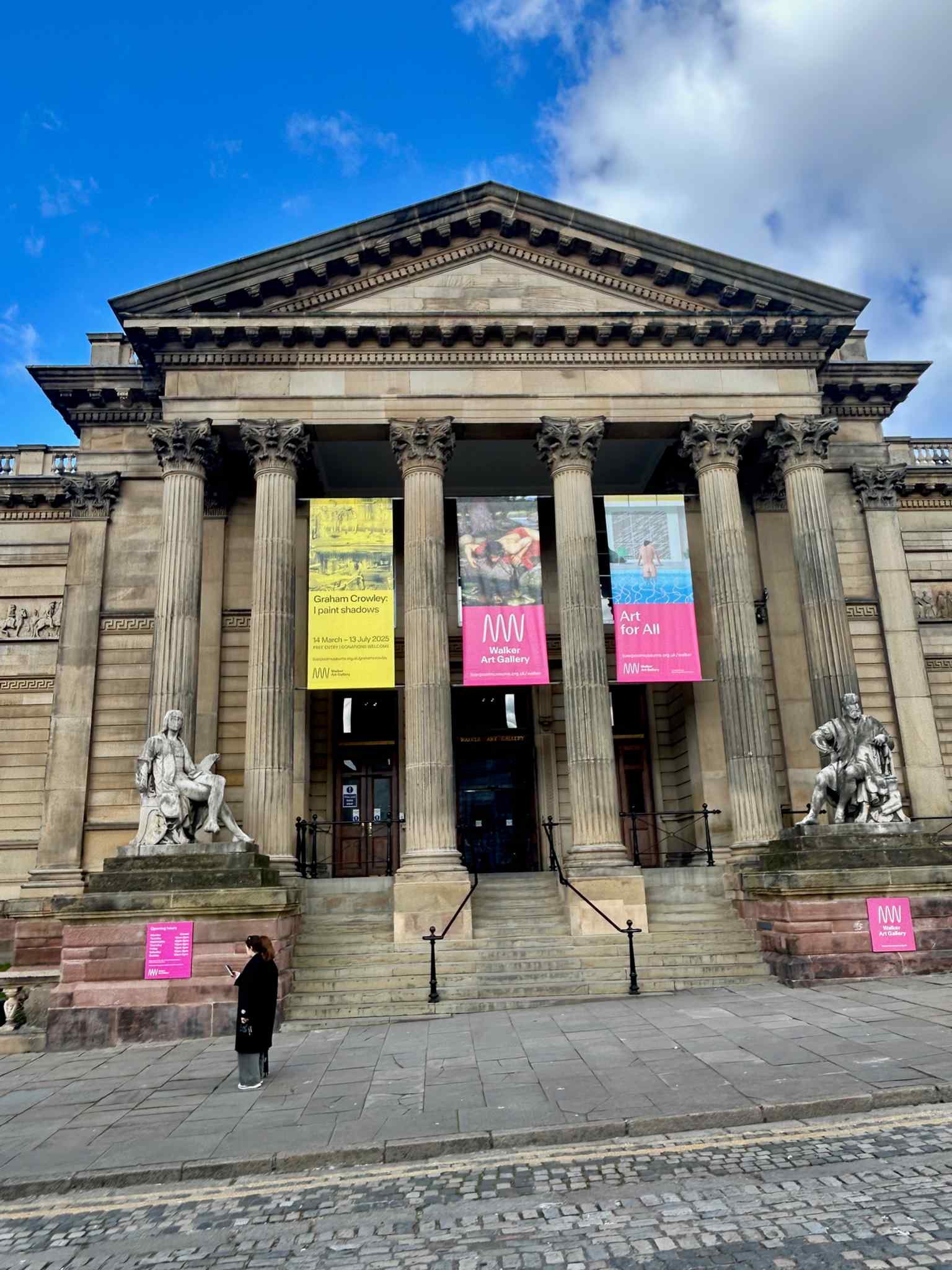
The Walker’s entrance dressed for a contemporary exhibition, showing how the historic building continues to host major temporary shows while remaining a free public gallery.Photo: Jonathan Deamer, Wikimedia Commons, CC BY 4.0. Cropped & resized. 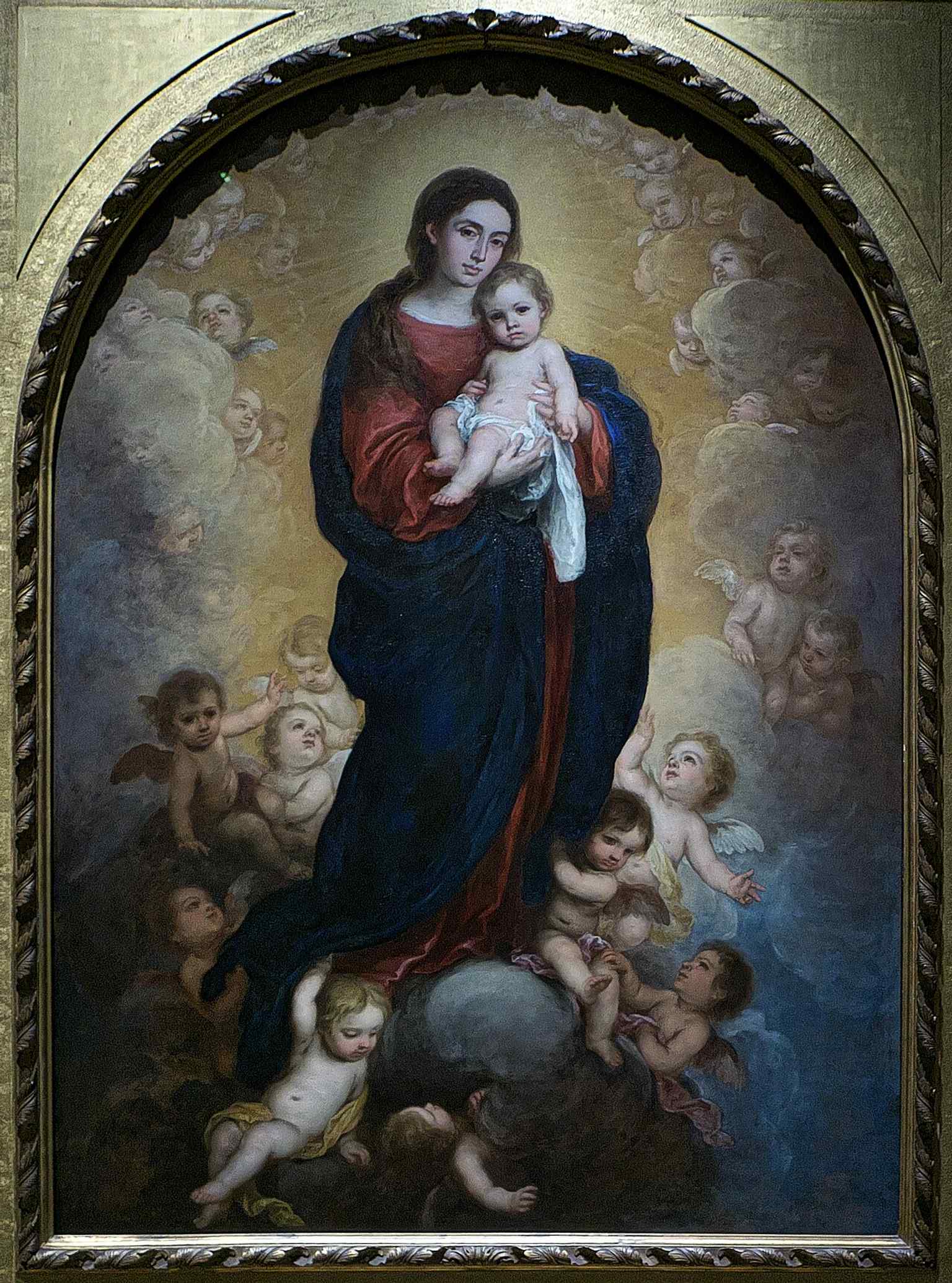
Murillo’s La Virgen con el Niño represents the Walker’s strong holdings in old master painting, part of the collection that grew from Liverpool’s 19th-century civic gifts.Photo: Jl FilpoC, Wikimedia Commons, CC BY-SA 4.0. Cropped & resized. 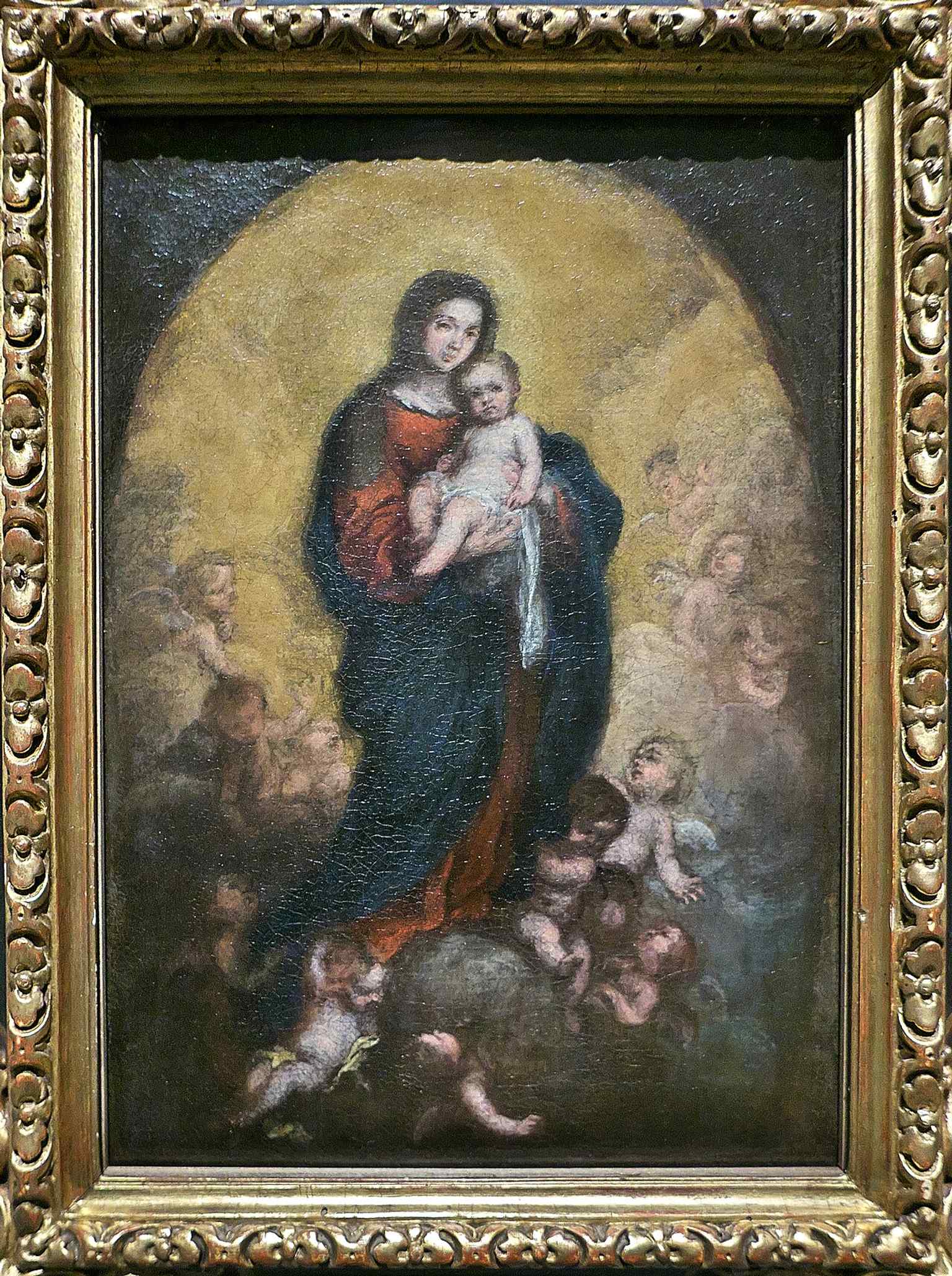
A preparatory sketch for Murillo’s La Virgen con el Niño, a glimpse into the workshop process behind one of the gallery’s devotional masterpieces.Photo: Jl FilpoC, Wikimedia Commons, CC BY-SA 4.0. Cropped & resized. On your right is a vast sandstone hall shaped like a classical temple, with a long row of Corinthian columns, a triangular pediment, and a huge ceremonial staircase rising to the…더 보기간략히 보기
전용 페이지 열기 →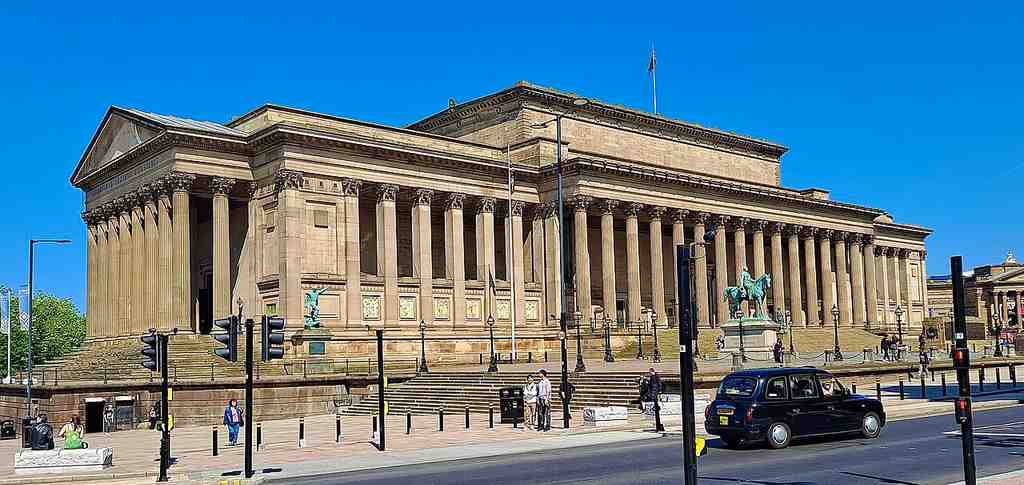
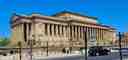
St George's Hall, LiverpoolPhoto: Brit in Seoul, Wikimedia Commons, CC BY-SA 4.0. Cropped & resized. On your right is a vast sandstone hall shaped like a classical temple, with a long row of Corinthian columns, a triangular pediment, and a huge ceremonial staircase rising to the entrance.
Saint George's Hall opened in eighteen fifty-four, the grand vision of Harvey Lonsdale Elmes, who won the design competition at just twenty-five. He gave Liverpool a Greek Revival landmark - borrowing the language of ancient temples - and put two very different jobs under one roof: a concert hall for thousands and assize courts, the old higher criminal courts. Liverpool liked ambition in stone, and this place practically shouts it... in excellent proportions.
But the sharper story happened out here, on the plateau between the hall and Lime Street. If you like, check the before-and-after image in the app: the road and city around it change completely, but the hall still dominates the scene.
Bloody Sunday, the thirteenth of August, nineteen eleven, grew out of a summer of labor unrest. On the fourteenth of June, seamen struck. On the twenty-eighth of June, four thousand dockers walked out. Soon carters and railwaymen joined them, and Tom Mann chaired a joint strike committee, trying to keep all those trades speaking with one voice.
Then this plateau filled with people. Around eighty-five thousand gathered here to hear Mann speak. From the platform he declared, "A hundred thousand people have come to the centre of Liverpool this afternoon." The rally itself stayed peaceful. What the crowd did not know was that the Head Constable had concealed police from Birmingham and Leeds inside Saint George's Hall, together with one hundred soldiers.
At about four o'clock, the trap snapped. Officers came out from the hall behind the crowd and, as the police's own history later admitted, "the Police emerged from Saint George's Hall and baton charged the crowd." Mounted police charged as well. More than three hundred and fifty people were injured, and close to one hundred arrests followed. So this grand building, raised for arts, law, and civic dignity, also became the stage for a very direct lesson in how authorities answered mass protest.
Two days later, on Vauxhall Road, the Eighteenth Hussars opened fire. They killed John Sutcliffe, a carter, and Michael Prendergast, a docker. It remains the only occasion in twentieth-century Britain when troops shot civilians dead during an industrial dispute.
Inside the hall stands Kitty Wilkinson, the only woman among its honored statues: an Irish washerwoman whose copper boiler helped launch Liverpool's first public washhouse during the cholera crisis of eighteen thirty-two. A useful reminder that cities do not run on marble alone.
Walk a few yards north of the Hall. The grand classical building on your left, with the wide steps, is the Walker Art Gallery, and from there you’ll head on to Lewis's Building on Ranelagh Street, about eleven minutes away. If you want to come back inside Saint George's Hall, it usually opens Monday to Saturday and stays closed on Sunday.
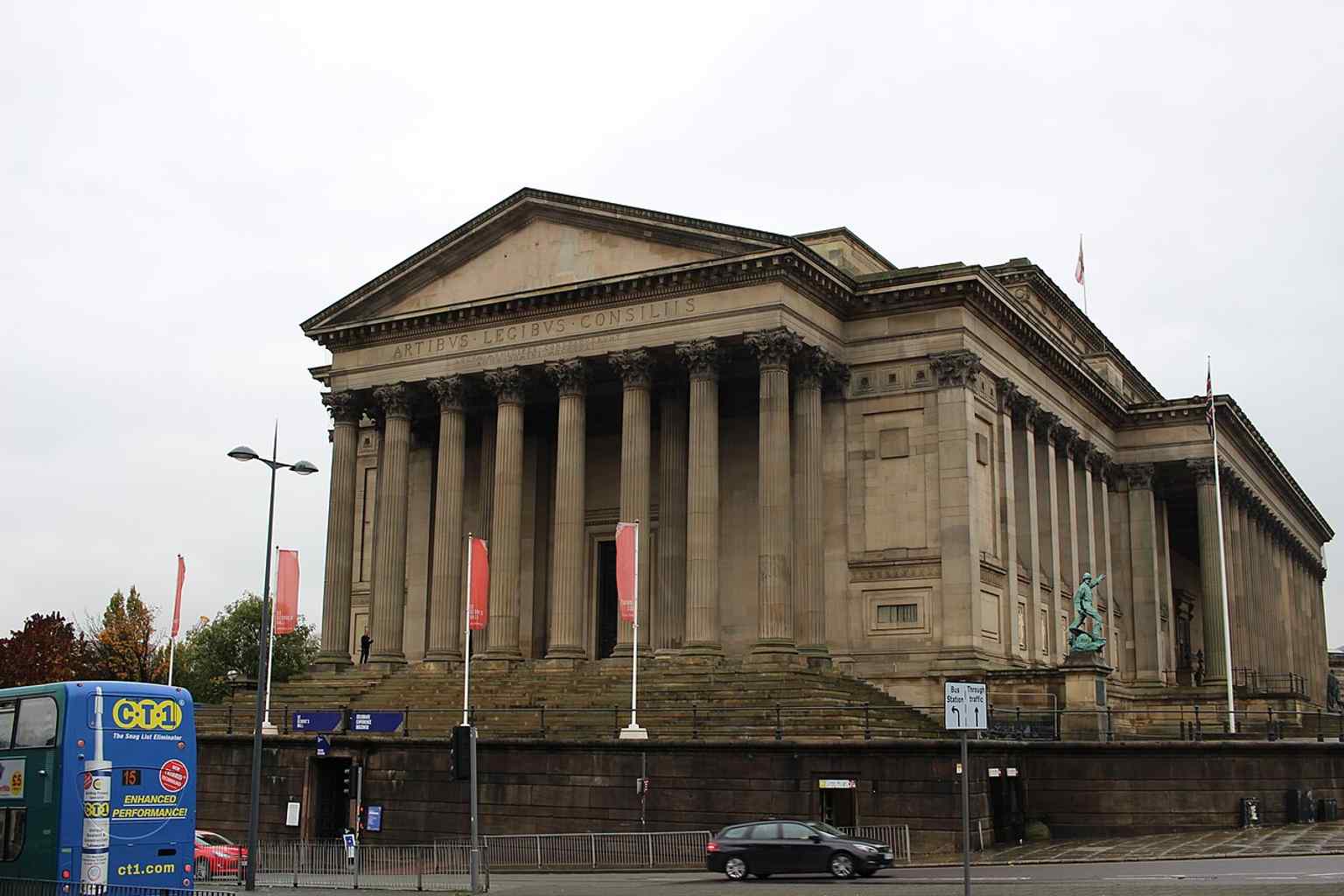
A classic street view of St George’s Hall’s east front, the ceremonial entrance opposite Lime Street station.Photo: Beep boop beep, Wikimedia Commons, CC BY-SA 4.0. Cropped & resized. 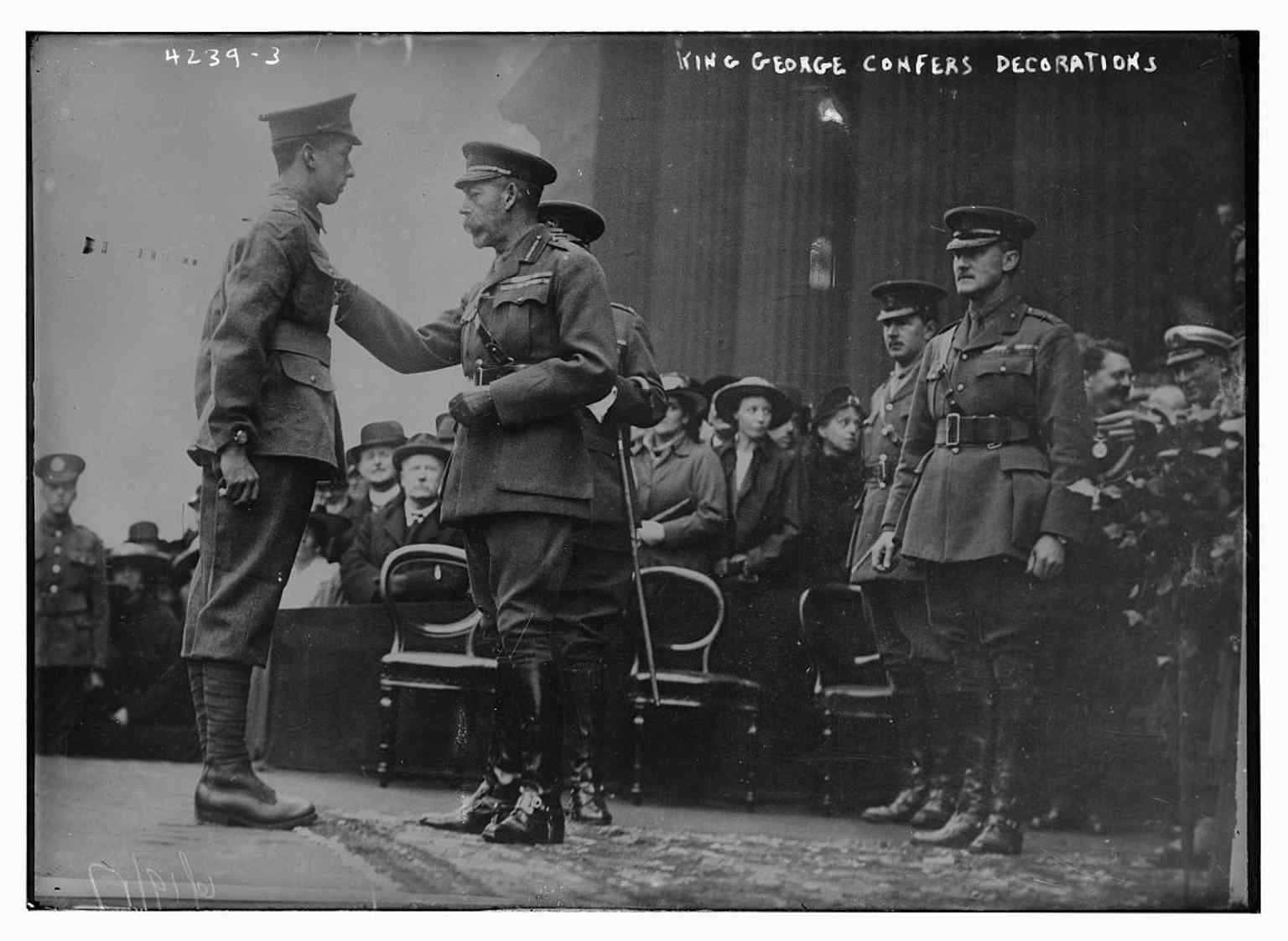
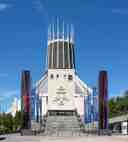
King George V presenting medals at St George’s Hall in 1917, one of the building’s wartime ceremonial roles.Photo: The Library of Congress, Wikimedia Commons, Public domain. Cropped & resized. On your right, look for the pale Portland-stone circle of the cathedral, its concrete ribs leaning inward like a tent and its lantern rising above like a jagged crown. This…더 보기간략히 보기
전용 페이지 열기 →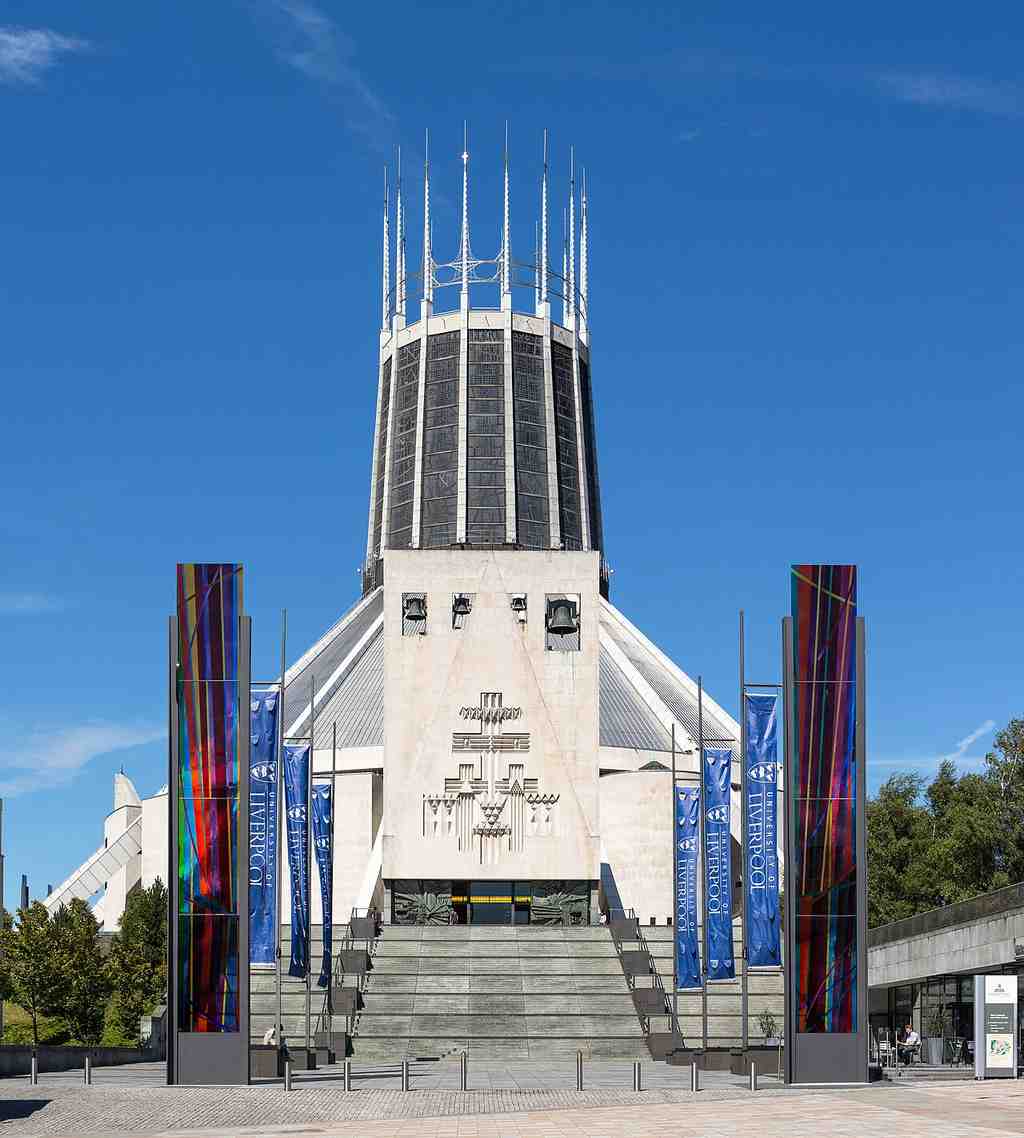
Liverpool Metropolitan CathedralPhoto: Diliff, Wikimedia Commons, CC BY-SA 3.0. Cropped & resized. On your right, look for the pale Portland-stone circle of the cathedral, its concrete ribs leaning inward like a tent and its lantern rising above like a jagged crown.
This Brownlow Hill Workhouse and Catholic Cathedral story starts with a hard truth: before this great round church stood here, this nine-acre site held one of the biggest workhouses in England. Brownlow Hill Workhouse began life between seventeen sixty-nine and seventeen seventy-two as a House of Industry. In time it had an official capacity of more than three thousand inmates, and on some occasions it crammed in as many as five thousand. That is a small town's worth of poverty on one patch of ground.
The labor here was meant to be useful and miserable in equal measure. One task was dry picking oakum - old tarred rope fibers used for sealing ships. Workhouse records describe it plainly: old shipping ropes were cut into short lengths, then untwisted, teased apart, and reduced to shreds by hand. The hours were brutal too: from six in the morning to six in the evening in summer, and from eight until four in winter, with only half an hour for breakfast and one hour for dinner. Kitty Wilkinson, later celebrated for her lifesaving washhouse work during the cholera years, spent time here in the eighteen twenties. So this ground has known religion, yes... but long before that, it knew hunger, discipline, and the grind of survival.
The workhouse closed in nineteen twenty-eight, and demolition followed in nineteen thirty-one. Then the Catholic archdiocese bought the site and aimed, in classic Liverpool fashion, not for something modest but for something enormous. Sir Edwin Lutyens designed a cathedral intended to be the second-largest church in the world after Saint Peter's in Rome, with a vast dome at its centre. The foundation stone went down on the fifth of June, nineteen thirty-three. If you glance at the app, image five shows Lutyens's model and just how vast that dream really was.
Then war, cost, and reality stepped in. Construction stopped, and only the crypt - the underground church and foundation structure - eventually made it through, finished in nineteen fifty-eight. For a while, the grand plan above it remained a ghost.
So in nineteen fifty-nine, Liverpool held a fresh competition. Frederick Gibberd won with the opposite approach: not a giant dome towering over distant worshippers, but a circular cathedral gathering people around a central altar, with light pouring down from the lantern above. Work started in October nineteen sixty-two, and the building opened, formally dedicated for worship, on the fourteenth of May, nineteen sixty-seven. Locals, being both affectionate and unsentimental, nicknamed it Paddy's Wigwam and the Mersey Funnel.
One more twist: the broad ceremonial steps in front of you are newer than the cathedral itself. They were only completed in two thousand and three, after an obstructing building came down. If you want, check the before-and-after image in the app to see how much this entrance changed from a plain forecourt to this full processional climb.
So that is the real marvel here: a buried cathedral inside the foundations of the visible one, and a buried workhouse inside both. Three layers of working life, stacked on the same ground.
If you want to look inside later, the cathedral generally opens daily from around seven-thirty in the morning until six in the evening.
Walk down Mount Pleasant for about five minutes, then turn right onto Hope Street; the big red-brick pub on the corner with Hardman Street, with wrought-iron gates and a dome of glass over the door, is the Philharmonic Dining Rooms.
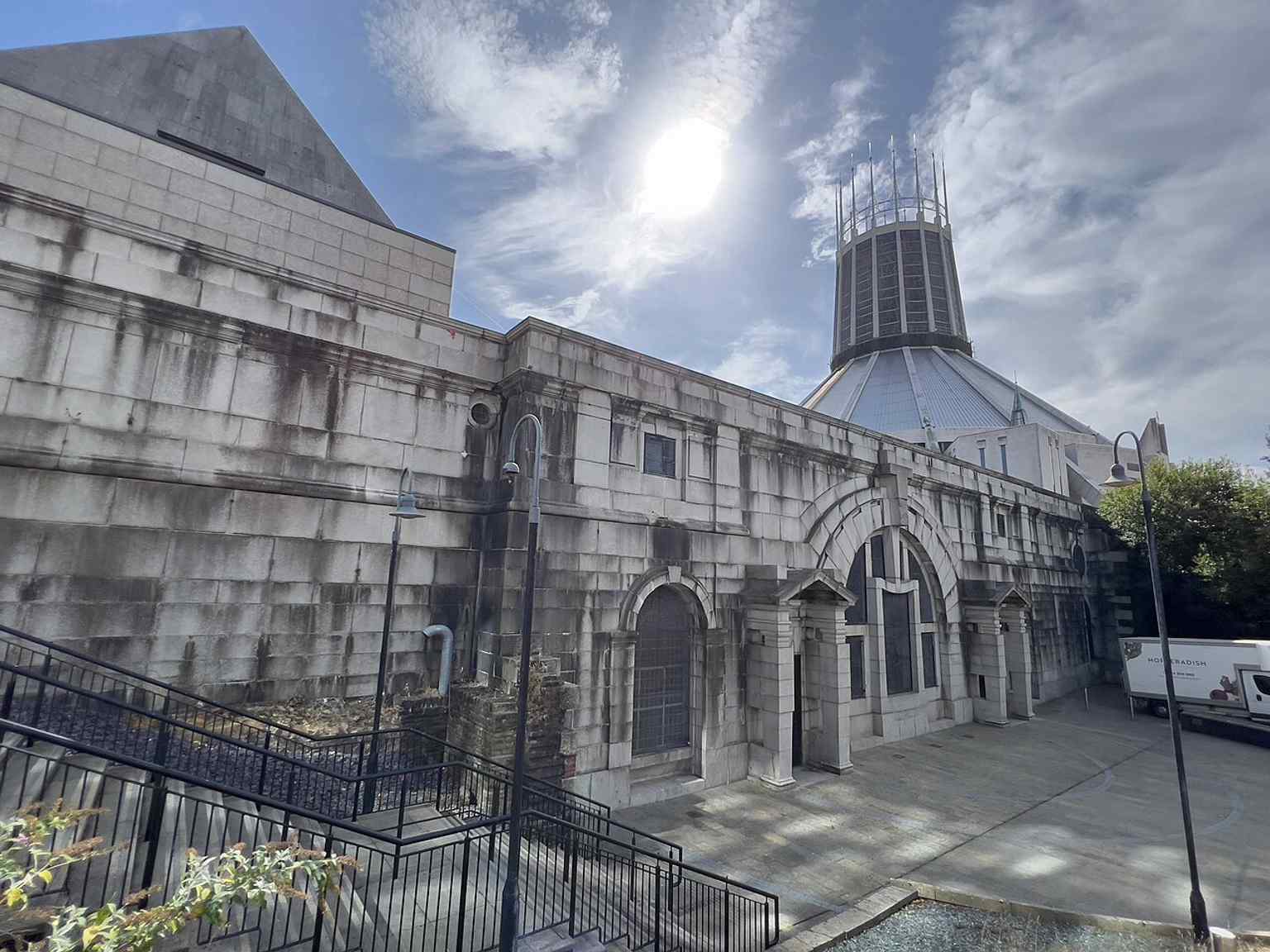
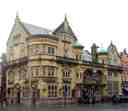
A view of the completed Lutyens crypt beneath the present cathedral, linking the modern church to its interrupted 1933 design.Photo: Talsarnau Times, Wikimedia Commons, CC BY 4.0. Cropped & resized. On your right is a red sandstone corner pub with rounded bays, tall arched windows, and ornate wrought-iron gates that make it look more like a civic palace than a place for a…더 보기간략히 보기
전용 페이지 열기 →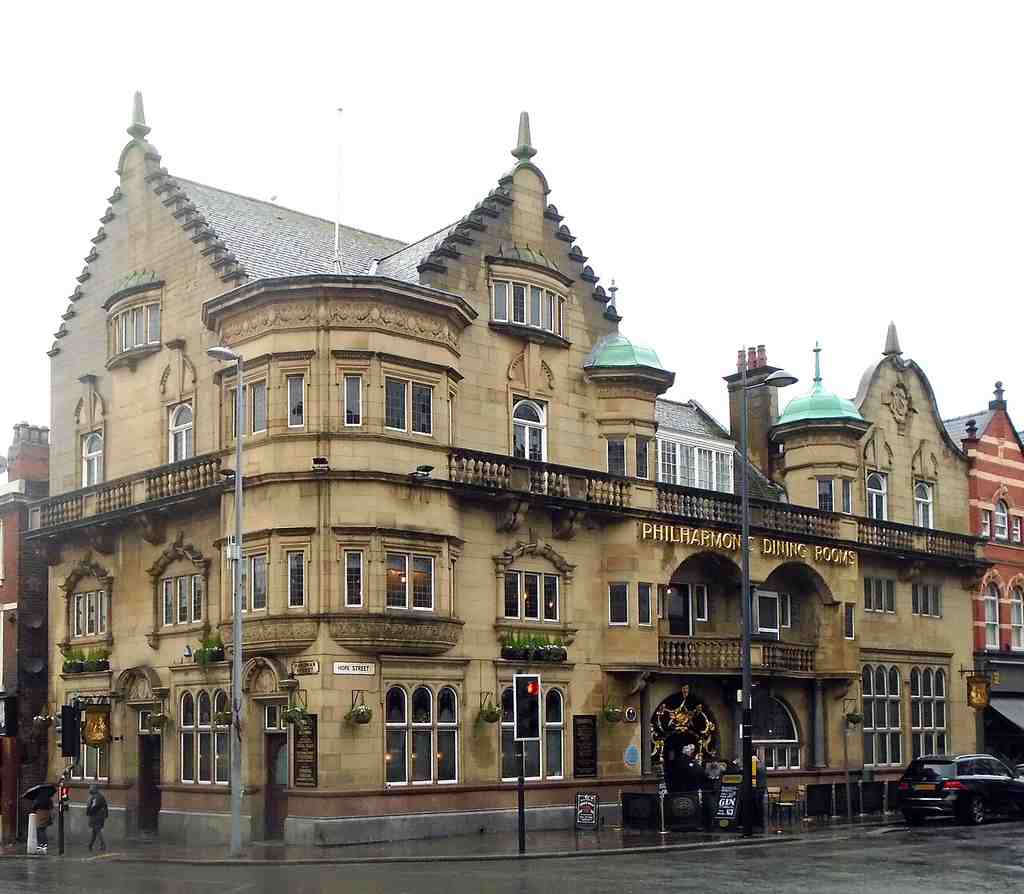
Philharmonic Dining RoomsPhoto: Rodhullandemu, Wikimedia Commons, CC BY-SA 4.0. Cropped & resized. On your right is a red sandstone corner pub with rounded bays, tall arched windows, and ornate wrought-iron gates that make it look more like a civic palace than a place for a quiet pint.
Robert Cain, Liverpool’s brewer-tycoon, planted this showpiece here between eighteen ninety-eight and nineteen hundred, and architect Walter W. Thomas gave him exactly the right amount of swagger. But the real heart of the place sits in who made it: craftsmen from the School of Architecture and Applied Arts at University College, now the University of Liverpool, working under G. Hall Neale and Arthur Stratton. Henry Bloomfield Bare and Thomas Huson shaped the copper repoussé - that is, copper hammered from behind so the design rises out - and C. J. Allen handled the plasterwork. In other words, this grand pub came from students, teachers, and skilled hands... not just a rich man’s checkbook.
If you glance at the image on your screen, you can see the exterior’s theatrical confidence. Pollard and Pevsner called it “the most richly decorated of Liverpool’s Victorian public houses... of exceptional quality in national terms.” For a pub, that is about as close as architecture gets to showing off.
And then there is the famous gents’. Take a look on your phone. It has pink-marble basins and pink imitation-marble urinal surrounds, and yes, it is the only Grade I-listed pub urinal in Britain. Liverpool does occasionally choose glory by unusual routes.
That feels fitting. The working week ends here in marble designed by an architect, crafted by apprentices, and used by wage-earners. That is the end of the tour. Step inside and have a pint where the working week ended - and where it has ended, for visitor and worker alike, for one hundred and twenty-five years. If you do, it generally opens from eleven and prices are moderate.
자주 묻는 질문
투어는 어떻게 시작하나요?
구매 후 AudaTours 앱을 다운로드하고 교환 코드를 입력하세요. 투어를 바로 시작할 수 있습니다 - 재생을 탭하고 GPS 안내 경로를 따라가시면 됩니다.
투어 중 인터넷이 필요한가요?
아닙니다! 시작 전에 투어를 다운로드하면 완전히 오프라인으로 즐길 수 있습니다. 채팅 기능만 인터넷이 필요합니다. 모바일 데이터 절약을 위해 WiFi에서 다운로드하시는 것을 권장합니다.
이것은 가이드가 안내하는 단체 투어인가요?
아닙니다 - 이것은 셀프 가이드 오디오 투어입니다. 폰을 통해 오디오 나레이션을 들으며 나만의 속도로 독립적으로 탐험합니다. 투어 가이드도, 단체도, 일정도 없습니다.
투어는 얼마나 걸리나요?
대부분의 투어는 60-90분이 소요되지만, 속도는 전적으로 본인이 조절합니다. 원할 때 언제든지 일시정지하거나, 정류장을 건너뛰거나, 휴식을 취하세요.
오늘 투어를 끝낼 수 없으면 어떻게 하나요?
괜찮습니다! 투어는 평생 이용이 가능합니다. 원할 때 언제든지 일시정지하고 다시 시작하세요 - 내일, 다음 주, 또는 내년에도. 진행 상황이 저장됩니다.
어떤 언어를 이용할 수 있나요?
모든 투어는 50개 이상의 언어로 이용 가능합니다. 코드를 교환할 때 원하는 언어를 선택하세요. 참고: 투어 생성 후에는 언어를 변경할 수 없습니다.
구매 후 투어는 어디에서 이용하나요?
App Store 또는 Google Play에서 무료 AudaTours 앱을 다운로드하세요. 교환 코드(이메일로 전송됨)를 입력하면 라이브러리에 투어가 나타나며, 다운로드하여 시작할 수 있습니다.
투어가 마음에 들지 않으시면 환불해 드립니다. 문의: [email protected]
안전한 결제 


%20(April%202014).jpg)
%20(April%202024)%20(1).jpg)
%20(April%202024)%20(6).jpg)


%2001.jpg)


.jpg)
%2C%20Walker%20Art%20Gallery.jpg)


