
Leeds Audio Tour: The Bell, the Bandsaw and the Bridge
A 15-stop walking tour of the working day of Leeds — from Michael Marks's 1884 penny stall in Kirkgate Market, through the 1711 White Cloth Hall and the ghost of the 1758 Coloured Cloth Hall under City Square, to John Barran's 1858 band-knife and the Hispano-Moorish tailoring palace it paid for, the Holbeck mills where Salamanca rolled out in 1812 and flax was spun under a grass-and-sheep roof, and finally to Leeds Bridge where the everyday traffic was filmed in October 1888 and a working morning became the oldest cinema in Britain.
투어 미리보기
이 투어에 대하여
- schedule소요 시간 40–60 mins나만의 속도로 이동
- straighten6.0 km 도보 경로안내 경로 따라가기
- location_on
- wifi_off오프라인 작동한 번 다운로드, 어디서든 사용
- all_inclusive평생 이용언제든지 다시 재생 가능
- location_onKirkgate Market에서 시작
이 투어의 정류장
Look for a long pale-stone frontage with repeated arched openings at street level, topped by a jagged skyline of balustrades, domes, and a slim little steeple. This is Kirkgate…더 보기간략히 보기
전용 페이지 열기 →Look for a long pale-stone frontage with repeated arched openings at street level, topped by a jagged skyline of balustrades, domes, and a slim little steeple.
This is Kirkgate Market, and it tells you a lot about Leeds before you even step inside. Leeds built its reputation on cloth, tailoring, engineering, and hard practical trade, and the working day here began not in a boardroom but in a market. In earlier centuries, over on Briggate, Daniel Defoe described the cloth market opening with a bell at seven, finishing by half past eight, and the trestles cleared by nine. Bell, shift, break, homeward walk... that rhythm ran the city. You can feel the same pulse here.
Lift your eyes to the frontage. The brothers John Leeming, born eighteen forty-nine, and Joseph Leeming, born eighteen fifty, both London architects, won the design competition with a prize of one hundred and fifty pounds. They finished this grand front hall in nineteen oh four. And they did not exactly die wondering whether they’d been decorative enough. The skyline piles on elaborate chimneys, balustrades, domes, and that steeple, while the style mixes Flemish revival with Art Nouveau - meaning curving, ornamental detail that enjoyed showing off a bit. If you want a peek at the interior elegance under the glazed roof, have a look at the image on your screen now.
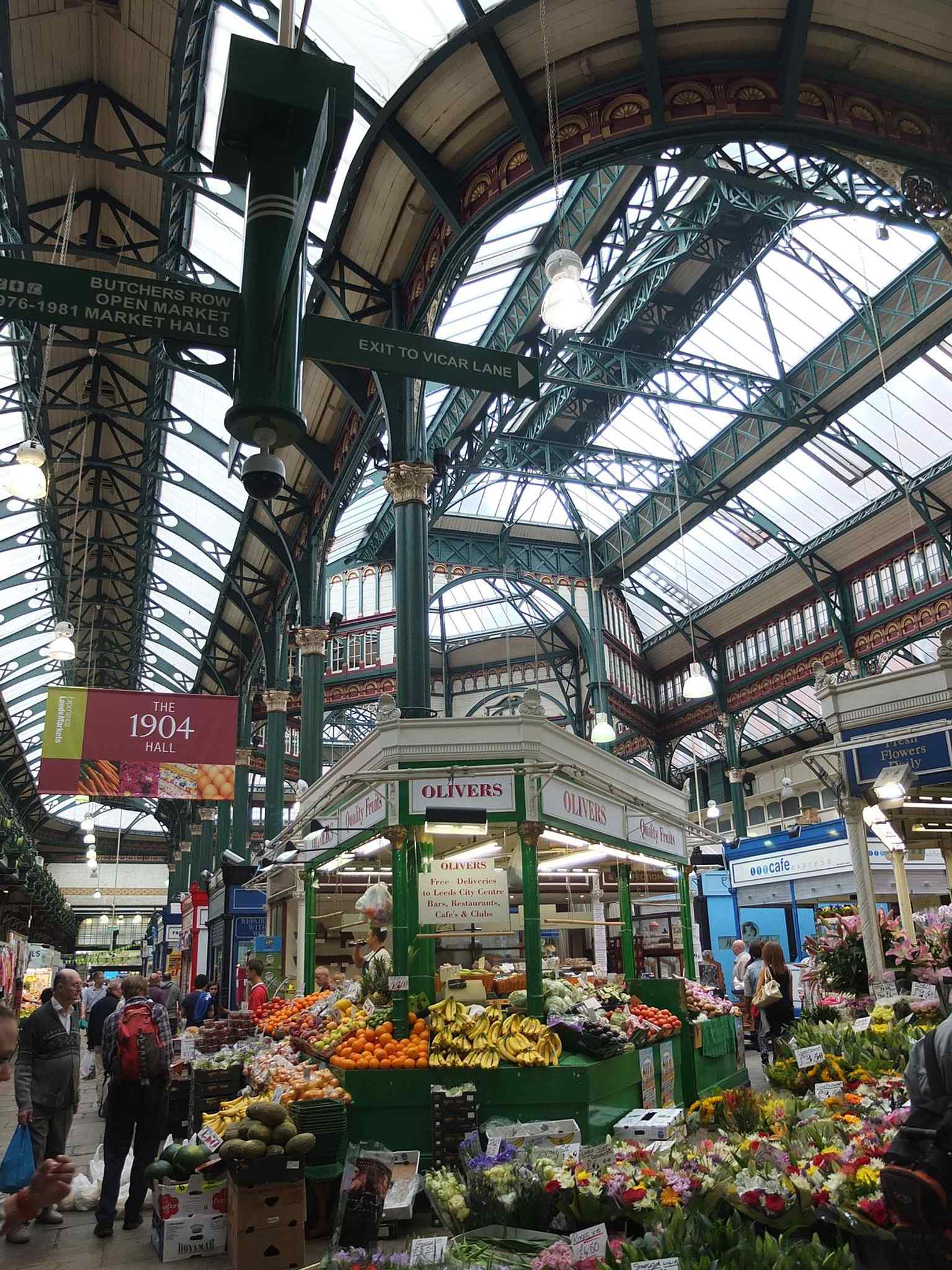
Inside the 1904 hall beneath the glazed roof — the elegant front hall that opened in 1904 after a controversial design competition.Photo: Sirenuk, Wikimedia Commons, CC BY-SA 3.0. Cropped & resized. But Kirkgate matters just as much at ground level, where retail history began with a stall and a good idea. In eighteen eighty-four, Michael Marks, a Russian-Polish immigrant, borrowed five pounds from Isaac Dewhirst and opened his Penny Bazaar here in the outdoor market. He arranged goods by price, with one section costing a penny and carrying the line, “Don’t ask the Price, It’s a Penny.” Which, to be fair, is about as clear as retail messaging gets. By eighteen eighty-six he could afford an indoor pitch here, and in eighteen ninety-four Tom Spencer invested his life savings. That was the moment Marks and Spencer was born.
Inside, the centenary clock marks the spot linked to that story, and a heritage stall opened here in March twenty thirteen. If you want to see the clock, it’s on your phone screen here.
Kirkgate began as an open-air market in eighteen twenty-two, then grew into covered halls between eighteen fifty and eighteen seventy-five. Today it’s a Grade I listed building and still a working institution rather than a museum with better lighting. By the nineteen fifties, Saturdays drew enormous crowds.
And then came the fire. On the thirteenth of December, nineteen seventy-five, flames tore through the halls. No one ever pinned down the cause. More than one hundred firefighters fought it, two-thirds of the market was destroyed, and yet this ornate nineteen oh four hall survived completely undamaged. Three days later, the market reopened. That is a very Leeds response: terrible disaster, quick cup of tea, back to work.
When you’re ready, leave by the Vicar Lane entrance, cross over, and walk about a hundred metres south toward Call Lane. You’ll catch sight of Cuthbert Brodrick’s Corn Exchange dome nearby, but keep on toward Briggate for our next stop.
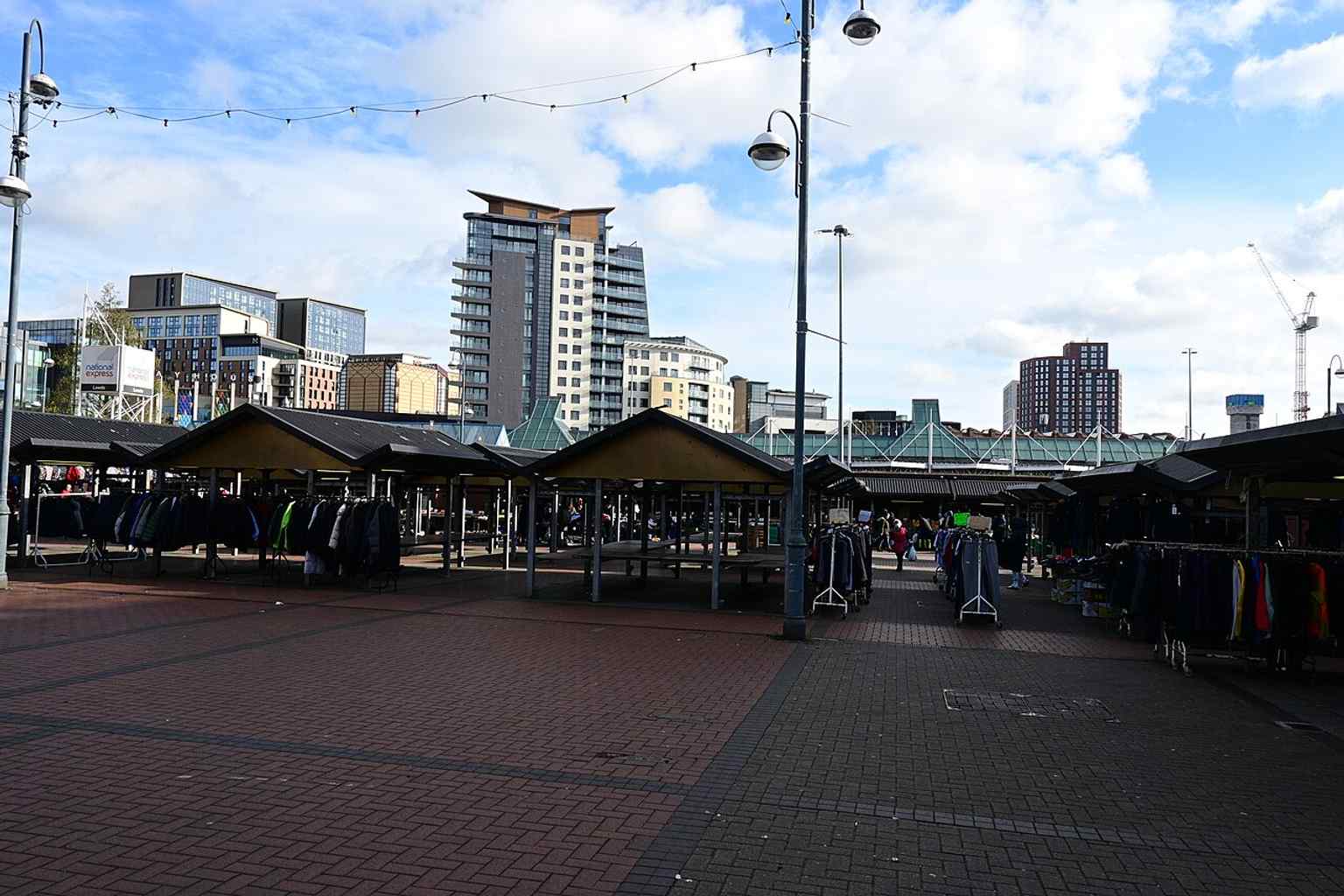
Another exterior view of the outdoor market, showing the modern stalls that sit behind the historic covered halls.Photo: Hullian111, Wikimedia Commons, CC BY-SA 4.0. Cropped & resized. 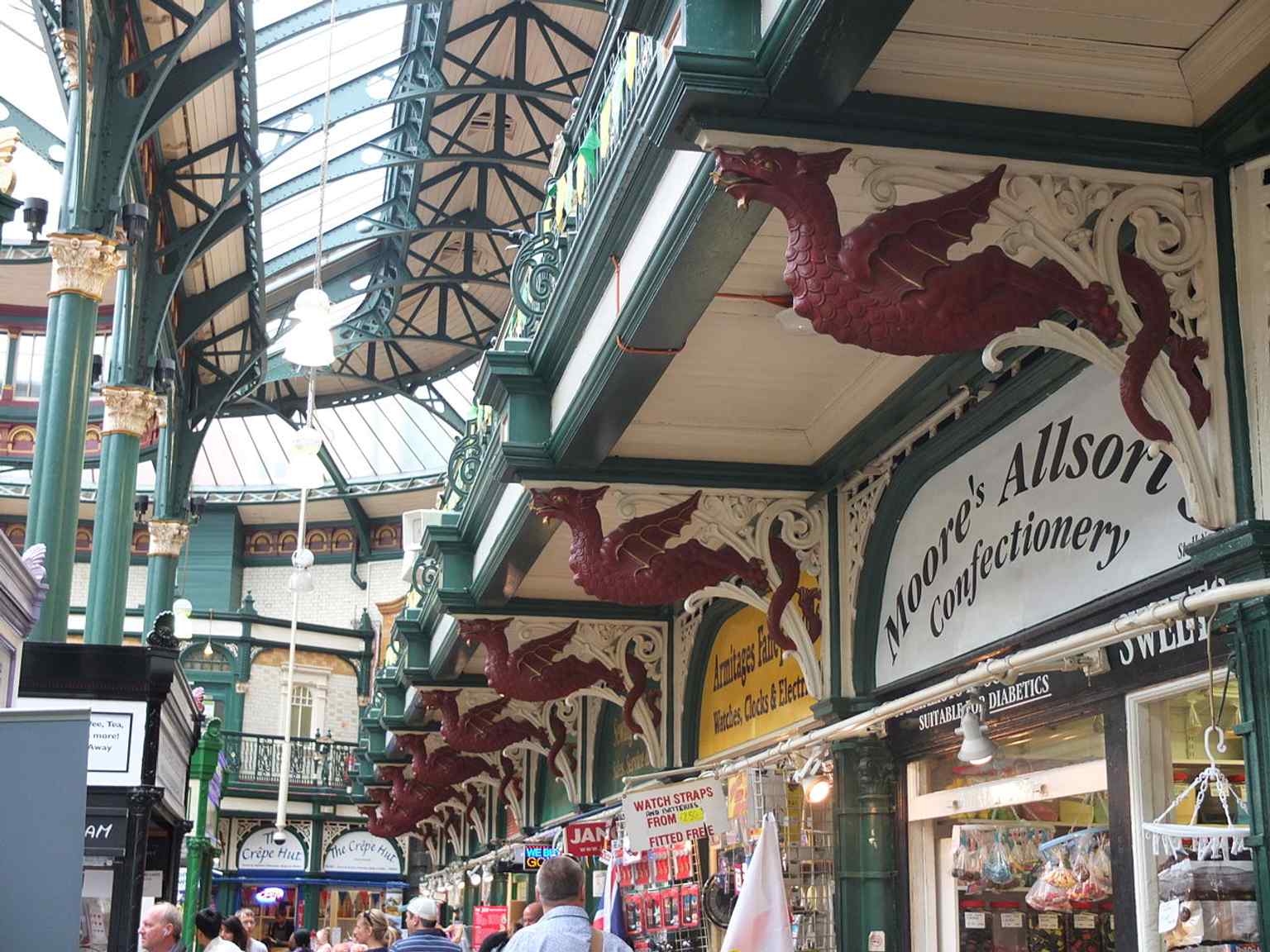
A close look at the market’s decorative dragons, part of the ornate Edwardian frontage that gave the hall its grand civic look.Photo: Sirenuk, Wikimedia Commons, CC BY-SA 3.0. Cropped & resized. 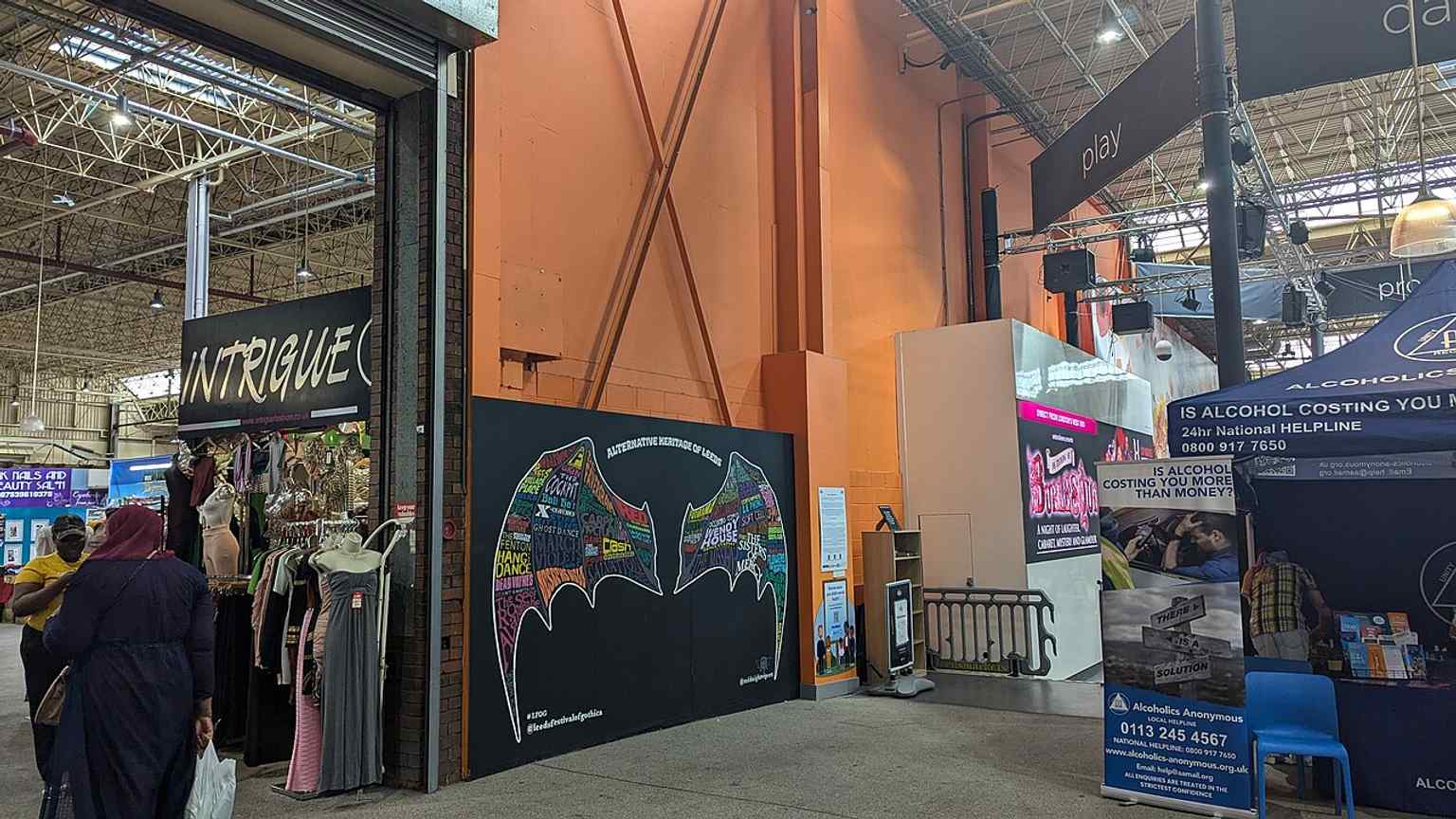
A mural on the market’s walls, showing how Kirkgate Market has become part of Leeds’s wider heritage and street culture.Photo: Lajmmoore, Wikimedia Commons, CC BY-SA 4.0. Cropped & resized. 
Vicar Lane outside Kirkgate Market, where the market frontage faces the city centre and the bus station sits just to the east.Photo: Mtaylor848, Wikimedia Commons, CC BY-SA 4.0. Cropped & resized. Look for the broad stone-paved street framed by tall stone and brick shopfronts, with the narrow arched entrance of Thornton's Arcade cutting into the building line like a…더 보기간략히 보기
전용 페이지 열기 →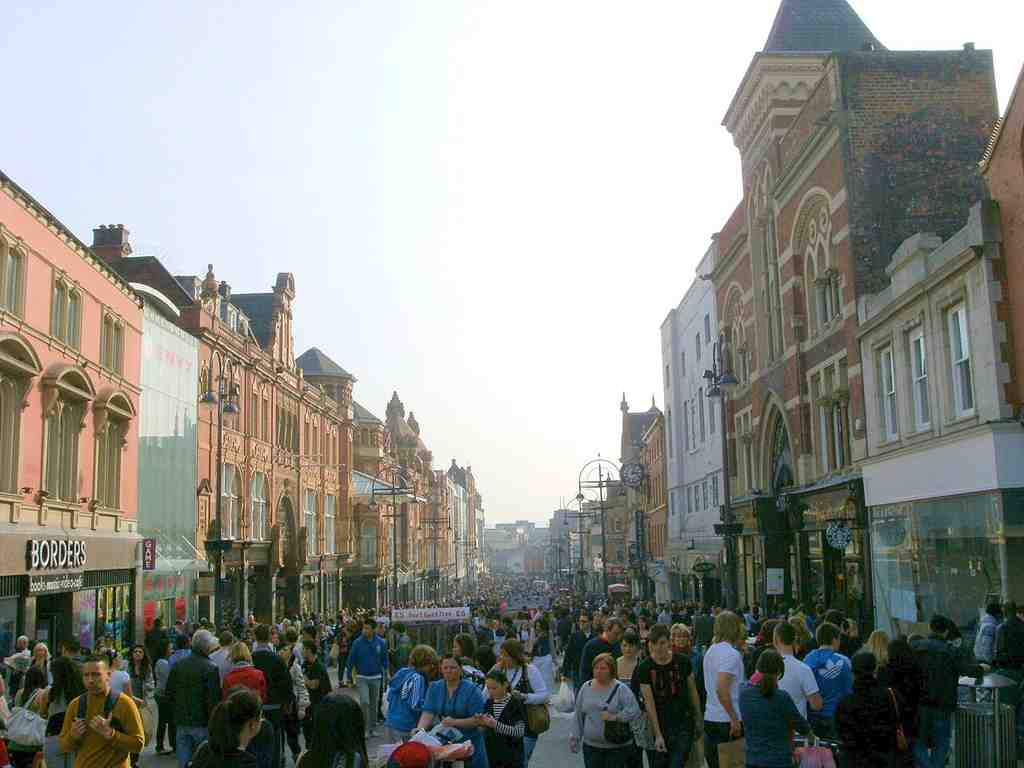
BriggatePhoto: Razorlax, Wikimedia Commons, CC BY-SA 3.0. Cropped & resized. Look for the broad stone-paved street framed by tall stone and brick shopfronts, with the narrow arched entrance of Thornton's Arcade cutting into the building line like a Victorian passageway.
Briggate is the spine of old Leeds... the street where the town first learned how to do business properly. Its name tells you the job: brycg, Old English for bridge, and gata, Old Norse for street or way. So this is, quite literally, the road from the bridge.
Back in twelve oh seven, the lord of the manor, Maurice Paynall, set out the new borough here and declared, "I Maurice Paynall have given and granted and by this charter confirmed to my burgesses of Leeds and their heirs franchise and free burgage." That sounds grand and slightly lawyerly because it is. In practice, he laid out about thirty burgage plots on each side of this road. A burgage plot was a long, thin strip of property for trade and living... shop or workshop at the front, yard and buildings stretching behind. That medieval arrangement still shaped Briggate for centuries, and if you pay attention to the rhythm of the frontages, you can still feel it underneath the later architecture.
By the early seventeen hundreds, this street turned into a cloth market so efficient it impressed Daniel Defoe, which was not a man given to casual praise. He described rows of trestles set out along Briggate, boards laid across them from one end of the street to the other, making long counters in the open air. At seven o'clock, the market bell rang. Buyers inspected the cloth, deals were done, fortunes nudged up or down... and by nine, the boards were gone, the trestles removed, and the street looked as if nothing had happened. Imagine that level of tidiness from retail now.
That same commercial pulse never really left. By the late nineteenth century, the cloth trade had moved indoors, and developers began roofing over those old burgage strips to create arcades. Right beside you is Thornton's Arcade, opened in eighteen seventy-eight, designed by Charles Fowler for Charles Thornton... the very same Charles Thornton who also ran the City Varieties. If you glance at the image on your screen, you can spot the arcade's famous clock with its Ivanhoe figures, one of Briggate's little bits of theatrical showing-off.
After Thornton's came Queen's Arcade in eighteen eighty-nine and the grander County Arcade in nineteen oh three. Same narrow plots underneath, new clothes on top. That's Briggate in one sentence, really: Leeds keeps rebuilding the shopfront, but the urge to buy, sell, and bustle along this line stays stubbornly the same.
Even now, the street keeps reinventing itself; if you want, take a quick peek at the before-and-after image of the old Debenhams site to see one of Briggate's latest costume changes.
So here you are on a street that worked hard in seventeen twenty-four, worked hard in eighteen seventy-eight, and still works hard now... just with better paving and fewer sheep underfoot.
When you're ready, turn right off Briggate into Swan Street - the City Varieties is the green-and-cream theatre frontage forty metres in.
Ahead of you is a narrow green-and-cream theatre front, faced in painted stone and plaster, with tall rectangular windows and the name City Varieties set proudly across the…더 보기간략히 보기
전용 페이지 열기 →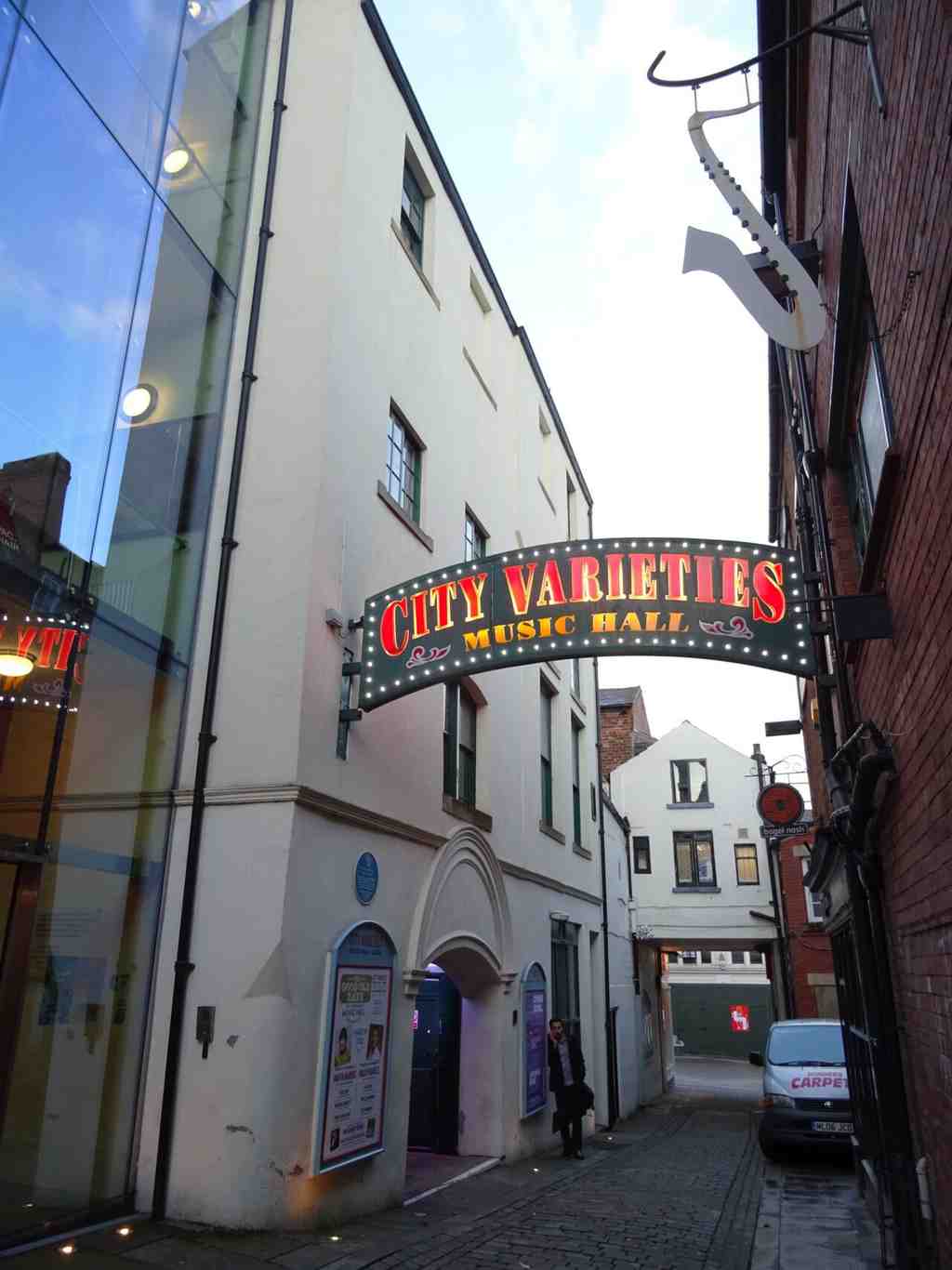
Leeds City VarietiesPhoto: Spudgun67, Wikimedia Commons, CC BY-SA 4.0. Cropped & resized. Ahead of you is a narrow green-and-cream theatre front, faced in painted stone and plaster, with tall rectangular windows and the name City Varieties set proudly across the facade.
This place catches an important Leeds habit. Working people here did not just clock off and vanish home; they organized, learned, argued, and entertained themselves. The Mechanics' Institute offered lectures for working men, Mill Hill Chapel helped shape reformers and mayors, and here, above a pub, Charles Thornton provided the noisier branch of self-improvement... if we are being generous.
Thornton took over the White Swan in eighteen fifty-seven. Locals called it the Mucky Duck, which tells you the place did not lean too heavily on polish. He hired George Henry Smith to rebuild the old singing room above the inn, and on the thirteenth of March, eighteen sixty-five, he opened Thornton's New Music Hall and Fashionable Lounge. "Fashionable lounge" is marvelous optimism for a room where, by later accounts, Leeds's working class drank, sang along, and shouted vulgarities at the performers.
And that was the point. This was live entertainment with its sleeves rolled up. In eighteen ninety-seven, one of the Eight Lancashire Lads danced here, with a young Charlie Chaplin possibly among them. In eighteen ninety-eight, Lily Langtry, the Jersey Belle, took the stage. In nineteen oh-two, according to Leeds Heritage Theatres, Harry Houdini brought his Handcuff King act here and turned escape into high drama. Not bad for a room over a pub.
If you glance at your screen, the interior image shows what survives inside: a long rectangular auditorium with two bow-fronted balconies, held up by cast-iron columns with leafy capitals, meaning their tops are decorated like carved foliage. It is one of the rare surviving Victorian music halls in the country, and that rarity matters.
Then came a second life. From nineteen fifty-three to nineteen eighty-three, the BBC turned this theatre into The Good Old Days. The first program aired on the twentieth of July, nineteen fifty-three, and the final episode arrived with an eight-year waiting list for seats. Leeds had found a way to make nostalgia competitive.
The blue plaque on your app marks the roll call plainly enough: Chaplin, Houdini, and a hall opened in eighteen sixty-five that refused to quit. It finally closed, for the first time since eighteen sixty-five, in two thousand and nine. Ken Dodd performed the last show before a nine point nine million pound restoration, then returned for the reopening gala in two thousand and eleven.
When you're ready, head west across Vicar Lane and onto Park Square; we'll meet you at the south-east corner of Park Square - the brick-and-terracotta minareted facade is St Paul's House, you can't miss it.
11개 정류장 더 보기정류장 적게 보기expand_moreexpand_less
Ahead of you is a red-and-pink brick warehouse crowned with pierced parapets and little minaret-like turrets. Look up. This odd, glorious thing starts with a machine. In…더 보기간략히 보기
전용 페이지 열기 →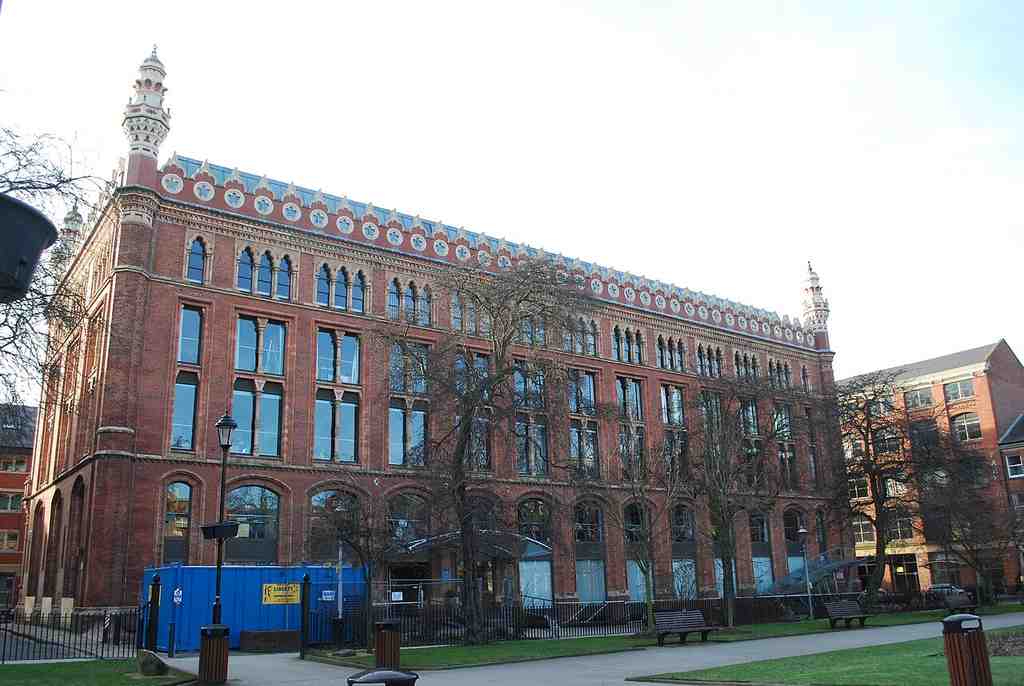
St Pauls House, LeedsPhoto: Eric Carter, Wikimedia Commons, Public domain. Cropped & resized. Ahead of you is a red-and-pink brick warehouse crowned with pierced parapets and little minaret-like turrets.
Look up. This odd, glorious thing starts with a machine. In eighteen fifty-eight, John Barran, a Leeds clothier and the son of a Hampshire merchant, watched a band-saw cut wood veneer and thought, in effect, why not cloth? He adapted it into a band-knife that could slice through eight, sixteen, even twenty layers at once. That was the moment ready-made tailoring stopped being a neat idea and became an industry.
Barran scaled fast. By the eighteen seventies he had two thousand machines, and by nineteen oh four he employed three thousand people, many using the new American Singer sewing machines. In eighteen seventy-eight, he asked the Leeds architect Thomas Ambler to give that industrial muscle a dramatic face, and Ambler obliged with this Hispano-Moorish showpiece. It is Grade II* listed, one of the higher levels of protection, and it earned that status in September nineteen sixty-three.
If you check the close-up in the app, you can see the minaretlets clearly. The originals were terracotta; the ones above you now are fibreglass copies from the nineteen seventy-six restoration. Even architectural fantasies sometimes need practical replacement parts.
The cloth was cut here, but much of the sewing went out to tiny workshops in the Leylands, the immigrant Jewish district between Vicar Lane, North Street, Eastgate and Regent Street. Leeds built its tailoring empire with invention at one end and punishing subcontracted labour at the other. Then came another immigrant story: in nineteen hundred, a fifteen-year-old Lithuanian called Meshe David Osinsky arrived in Britain alone. Leeds later knew him as Montague Burton. By nineteen twenty-one he was building Hudson Road Mills, which grew into the largest clothing factory in the world, with around ten thousand workers making more than thirty thousand suits a week.
When Barran died in nineteen oh five, thousands lined the streets of Leeds.
When you are ready, leave Park Square the way you came, cross East Parade, and walk into Park Row. On the south side you will spot the small grey-stone Gothic chapel, Mill Hill, and from there continue toward City Square.
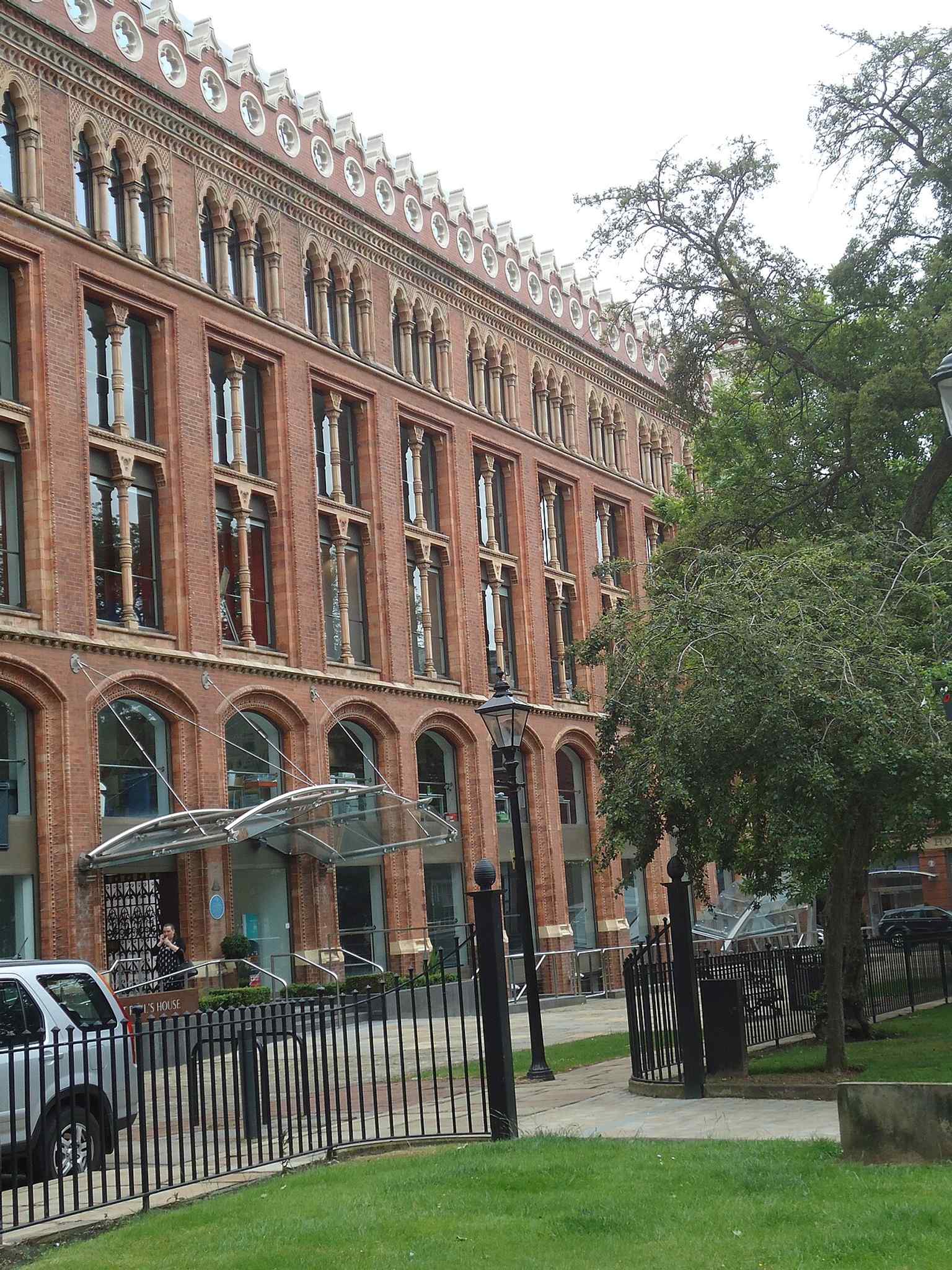
A clear front view of St Pauls House, the ornate former cloth-cutting works built in 1878 for Sir John Barran.Photo: Eric Hindle, Wikimedia Commons, CC BY-SA 4.0. Cropped & resized. On your left is a pale stone Gothic chapel with a steep gabled front, tall pointed windows, and a slender spire lifting above the entrance. Look up at that spire for a second...…더 보기간략히 보기
전용 페이지 열기 →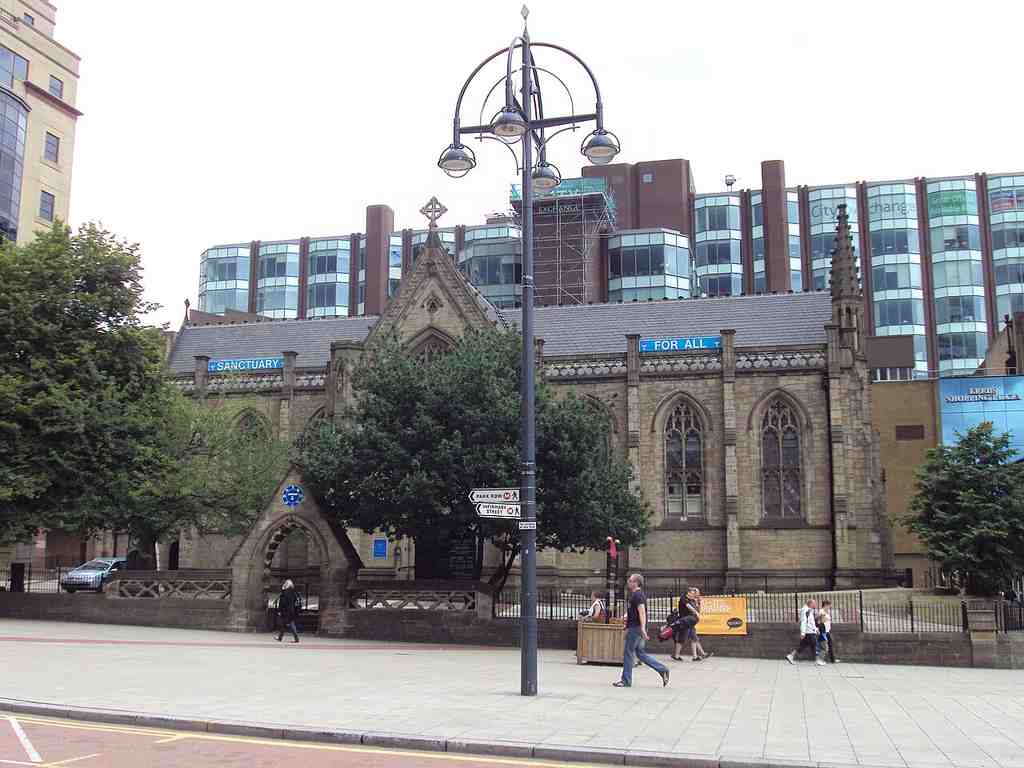
Mill Hill ChapelPhoto: Rept0n1x, Wikimedia Commons, CC BY-SA 3.0. Cropped & resized. On your left is a pale stone Gothic chapel with a steep gabled front, tall pointed windows, and a slender spire lifting above the entrance.
Look up at that spire for a second... because one of the sharpest minds in eighteenth-century Britain once preached here. Joseph Priestley served as minister from seventeen sixty-seven to seventeen seventy-three, and while he stood at Mill Hill he nudged this congregation toward Unitarianism, a form of Christianity that prizes reason, conscience, and belief in one God rather than the Trinity. Priestley also believed churches should educate their young, not just scold them. During his Leeds years, his scientific work turned toward chemistry and pneumatics, which is just the study of gases with a less friendly name. A year after he left, he isolated oxygen. Not a bad side project.
That tells you a lot about Mill Hill. This was never just a place for quiet piety. It began as a Dissenter chapel in the sixteen seventies, when Dissenters meant Protestants outside the Church of England, and it grew into one of the oldest and most respected nonconformist congregations in the country. Over time, it became so packed with civic influence that people nicknamed it the “mayors’ nest.” Which sounds cozy, but also faintly dangerous. Prominent Leeds families like the Luptons, Marshalls, and Kitsons supported it, along with merchants, industrialists, and politicians. The same world of trade and manufacturing we keep bumping into on this walk also prayed here, argued here, and backed campaigns from the abolition of slavery to women’s suffrage.
The building in front of you is younger than the congregation. In eighteen forty-seven the old chapel came down, and Henry Bowman and J. S. Crowther replaced it on the same site in eighteen forty-eight. They chose what became known as Dissenting Gothic: all the moral seriousness and upward reach of Gothic church design, but claimed by people who did not fancy taking orders from the established church. Builders brought the stone from Meanwood and Potternewton and spent seven thousand three hundred pounds on the project... something like a million pounds in today’s money. Leeds later gave it Grade II* listed status, one of the higher levels of protection, which is the official way of saying, “hands off, this matters.”
If you fancy it, check the before-and-after image in the app; the streetscape shifts around it, but Mill Hill keeps anchoring the square with a kind of stubborn calm.
And this corner mattered. Park Row became Leeds’s banking street from the eighteen sixties onward, lined with banks, insurers, and the machinery of respectable money. Beckett’s Bank, Leeds’s first bank, established in seventeen fifty-eight, stood nearby in a grand Gilbert Scott building from eighteen sixty-seven. So this chapel sat right beside the city’s ledgers and loan books, close enough to hear the rustle of commerce and, now and then, answer back.
Take a look at the interior photo on your screen and you’ll see the Gothic rebuild carries on inside as well, right down to the pulpit. The original Victorian pews are still there, and the plaque outside marks another first too: this was the first place of worship in central Leeds to conduct a same-sex wedding.
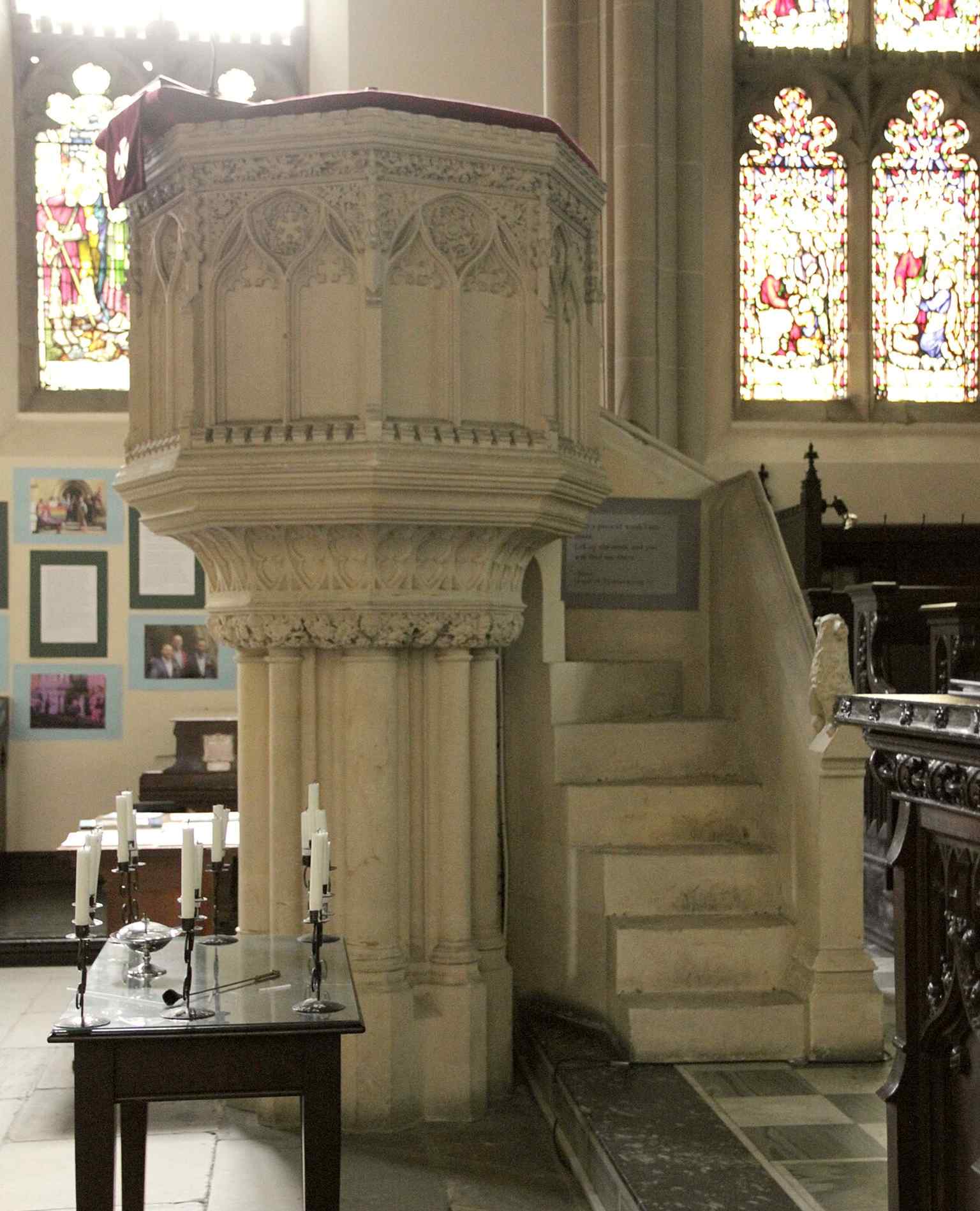
The pulpit inside Mill Hill Chapel, part of the 1848 Gothic rebuild that replaced the original 17th-century chapel.Photo: Storye book, Wikimedia Commons, CC BY-SA 4.0. Cropped & resized. If you ever catch it open-usually Wednesday from noon to two or on Sunday mornings-it is well worth a peek inside. Now cross Park Row and walk into the square - we’ll meet you at the equestrian Black Prince in the centre, before we turn south toward Round Foundry.
Look for sturdy red-brick industrial blocks with rectangular windows and heavy double doors, gathered around courtyards on Water Lane where the original circular foundry itself…더 보기간략히 보기
전용 페이지 열기 →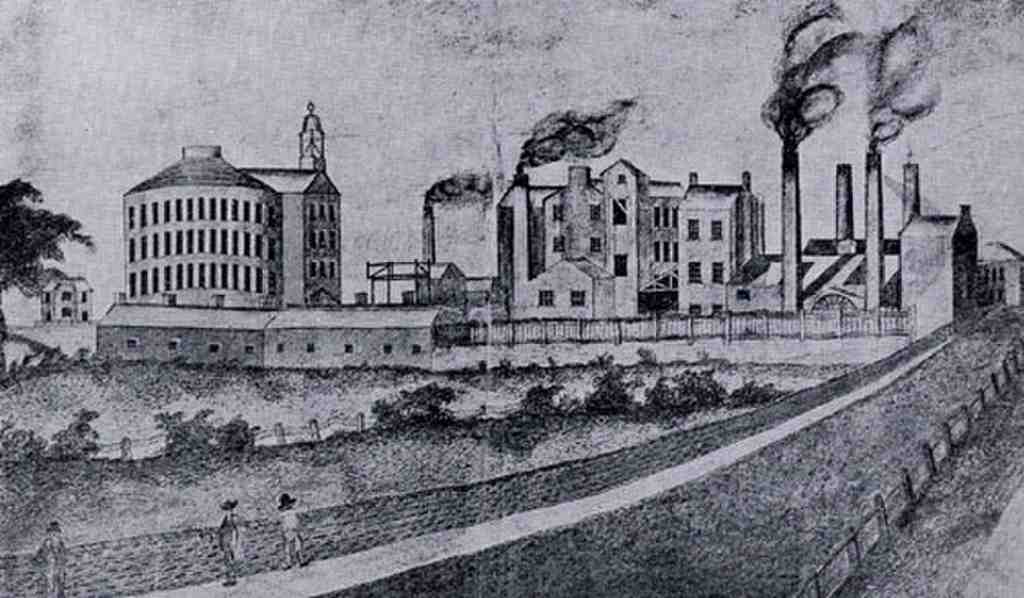
Round FoundryPhoto: Unknown author, Wikimedia Commons, Public domain. Cropped & resized. Look for sturdy red-brick industrial blocks with rectangular windows and heavy double doors, gathered around courtyards on Water Lane where the original circular foundry itself has long since vanished.
This site starts with a partnership, not a single genius in a flash of glory. In seventeen ninety-five, engineer Matthew Murray joined David Wood and set up works here in Holbeck. Then James Fenton and the millwright William Lister came in with the money and backing to make the whole thing real. Together, between seventeen ninety-five and seventeen ninety-seven, they created the Round Foundry, one of the world’s first specialist engineering foundries. That matters because this was not just a place that made iron things... it was a place built to solve industrial problems on purpose, day after day.
Murray designed a huge three-storey circular engine-assembly building here, the rotunda that gave the foundry its name. He even built himself a house next door, heated by steam, which locals called Steam Hall. A man who brings central heating to his own house before most people had decent drains was not exactly lacking in confidence.
And confidence paid off. This is where Leeds helped crack the practical steam locomotive. In eighteen twelve, Murray built Salamanca here for John Blenkinsop’s Middleton Railway. Salamanca was the first commercially successful steam locomotive. Not the first idea, not the first experiment that sort of coughed along and hoped for the best... the first one that truly worked in commercial service. It even predated Stephenson’s Rocket by seventeen years.
Salamanca also carried some smart engineering. It had two cylinders, unusual at the time, and it used a rack-and-pinion system, which simply means a gear on the engine meshed with a toothed rail beside the track. That gave it grip enough to haul heavy loads from the Middleton collieries. The Middleton Railway became the first commercial railway to use steam locomotives successfully, and a lot of that story began right here behind these walls.
If you check the picture on your screen, image three shows one of the surviving early buildings at one-oh-one Water Lane, linked to Murray’s works from roughly seventeen ninety-five to eighteen oh two. These survivors are fragments, but they still hold the shape of the old enterprise.
Salamanca took its name from the Duke of Wellington’s victory at the Battle of Salamanca in eighteen twelve. Its own end was less triumphant: six years later, its boiler exploded and destroyed the engine. Early steam power was brilliant, but it did not do gentle.
Murray died in eighteen twenty-six, aged sixty, and people buried him at St Matthew’s Churchyard in Holbeck. His workers topped his tomb with a cast-iron obelisk made here at the foundry. That feels fitting... the men who built engines with him also built his memorial.
One more twist: in eighteen seventy-five, fire tore through the site and destroyed the great rotunda itself, along with other original buildings. What remains, including listed structures and fabric dating back to seventeen ninety-eight, now forms the Round Foundry Media Centre. Creative and digital businesses moved into old workshops and foundry yards, and the redevelopment won a shelf full of awards. If you glance at image one, you can see how the preserved buildings still frame the courtyard like a working set of industrial bones.
When you’re ready, walk west along Water Lane and turn into Marshall Street - the long six-storey brick building on your right is Marshall’s Mill of seventeen ninety-one.
On your left, Marshall's Mill is a long red-brick block, six storeys high, with strict rows of windows and a slightly projecting central section that breaks the flat facade.…더 보기간략히 보기
전용 페이지 열기 →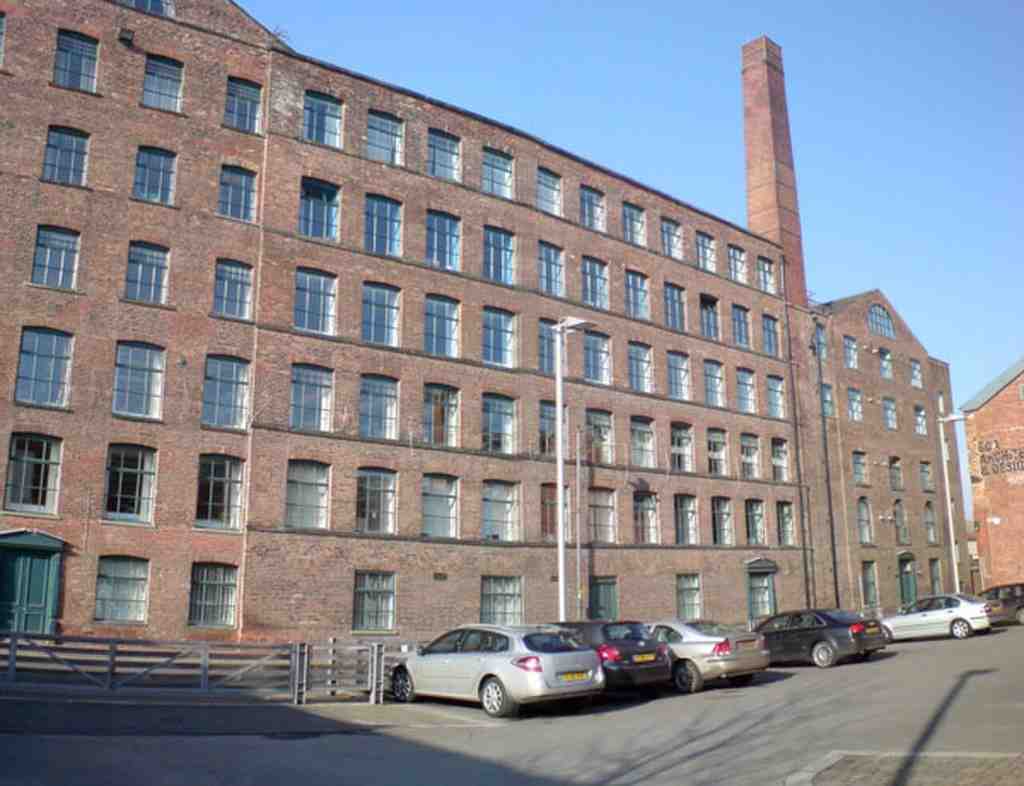
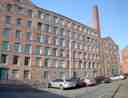
Marshall's MillPhoto: Steve Buxton, Wikimedia Commons, CC BY-SA 4.0. Cropped & resized. On your left, Marshall's Mill is a long red-brick block, six storeys high, with strict rows of windows and a slightly projecting central section that breaks the flat facade.
Stand on Marshall Street and look up... this place began in seventeen ninety-one to seventeen ninety-two, when John Marshall started the mill complex here. He had already teamed up with Samuel Fenton and Ralph Dearlove in Marshall, Fenton and Company, first leasing a mill at Adel, then moving to Water Lane and building a six-storey, water-powered mill that drew from nearby Hol Beck to spin yarn.
This was the opening move in John Marshall's flax empire: Marshall's Mill from seventeen ninety-one, then Temple Works from eighteen thirty-six to forty, a spinning shed so vast it was described as the biggest single room in the world, almost two acres, with sheep grazing on its grass-covered roof to keep the air humid. Industrial grandeur, Leeds-style. By eighteen fifty, Marshall's mills used ten percent of all the flax imported into Britain.
Leeds had long thrived on wool, but Marshall helped apply cotton machinery to flax, and the result was enormous. This site became the biggest flax mill in Europe. At its peak, Marshall had enough power here to run seven thousand spindles and employ around two thousand factory workers.
But scale always came with a bill. Two-fifths of Marshall's workforce were young women aged thirteen to twenty, and about one fifth were under thirteen. Before the Sadler Committee, a parliamentary inquiry into factory conditions, Leeds mill worker Elizabeth Bentley said she started at six years old. She worked from five in the morning till nine at night when the rooms were busy, went home covered in dust, and said she had been strapped severely. Her job as a doffer meant stopping the frames, removing full bobbins, carrying them off, fitting empty ones, and starting the machinery again.
If you fancy it, have a quick look at the before-and-after image in the app; the mill stays recognisable while the city around it changes completely. The site was comprehensively redeveloped in the late nineteen nineties, and now it serves as office space.
When you're ready, keep walking down Marshall Street - the Egyptian temple front coming up on your left is Temple Works.
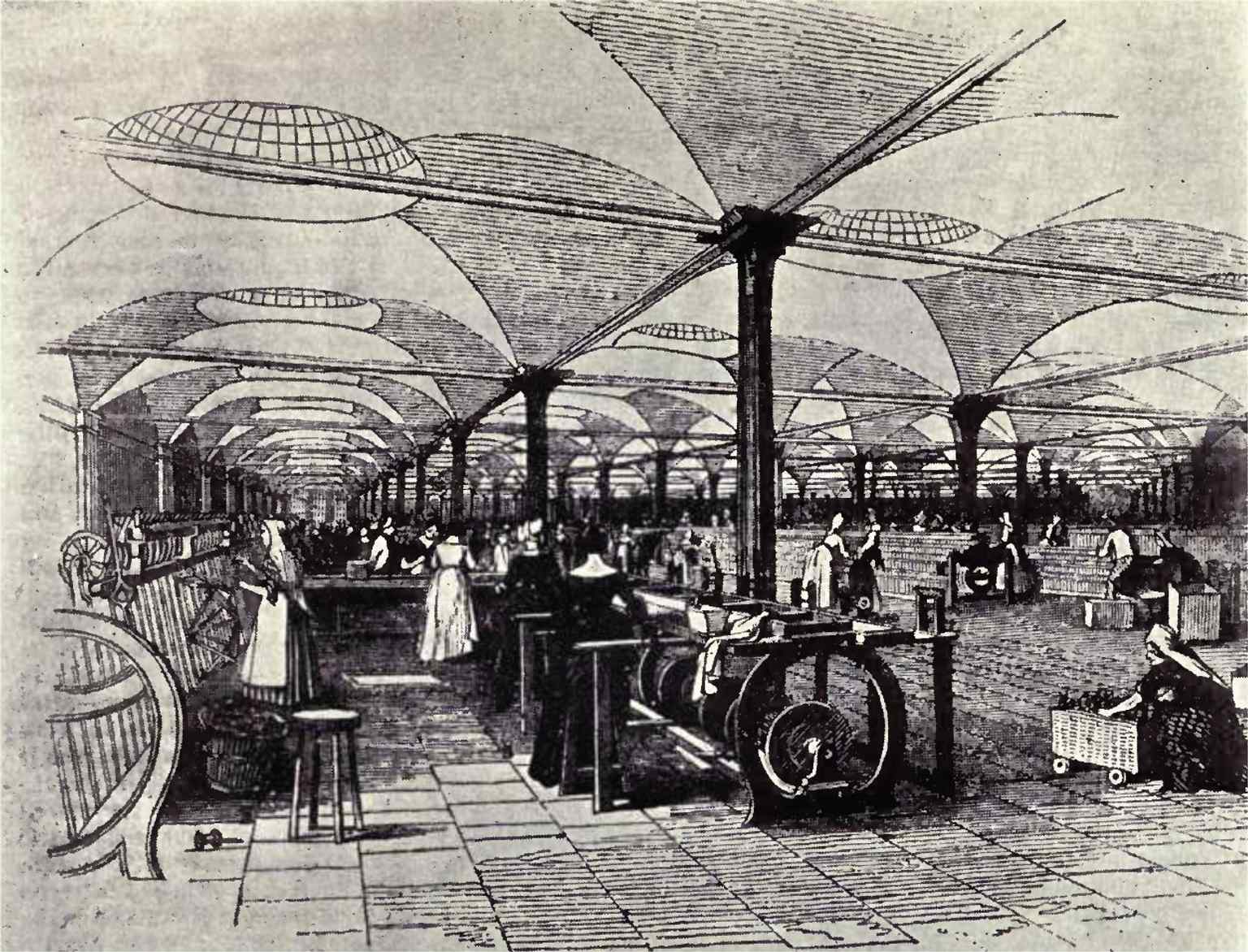
Workers at Marshall’s flax mill show the kind of machinery John Marshall introduced in the 1790s, when the site became a major flax factory in Holbeck.Photo: No picture credit in book, Wikimedia Commons, Public domain. Cropped & resized. On your right, look for a long stone building with a flat, temple-like front, sloping walls, and a heavy Egyptian cornice crowning the facade. Temple Works is Leeds in full…더 보기간략히 보기
전용 페이지 열기 →On your right, look for a long stone building with a flat, temple-like front, sloping walls, and a heavy Egyptian cornice crowning the facade.
Temple Works is Leeds in full industrial swagger... dressed as ancient Egypt. John Marshall commissioned it between eighteen thirty-six and eighteen forty, and engineer James Coombe, painter David Roberts, and architect Joseph Bonomi the Younger gave him an Egyptian Revival mill - meaning a modern factory wrapped in the language of ancient temples. This frontage borrows from temples at Antaeopolis and Edfu, while the great factory behind it took cues from Dendera. There was even a chimney designed like an obelisk. Because if you are spinning flax in Leeds, why not borrow a little Pharaoh.
At its opening in June eighteen forty, Marshall celebrated with a Temperance Tea for two thousand six hundred workers. Respectable, efficient... and probably less exciting than some had hoped. If you glance at the image on your screen, you can catch the temple styling more clearly in the stonework.
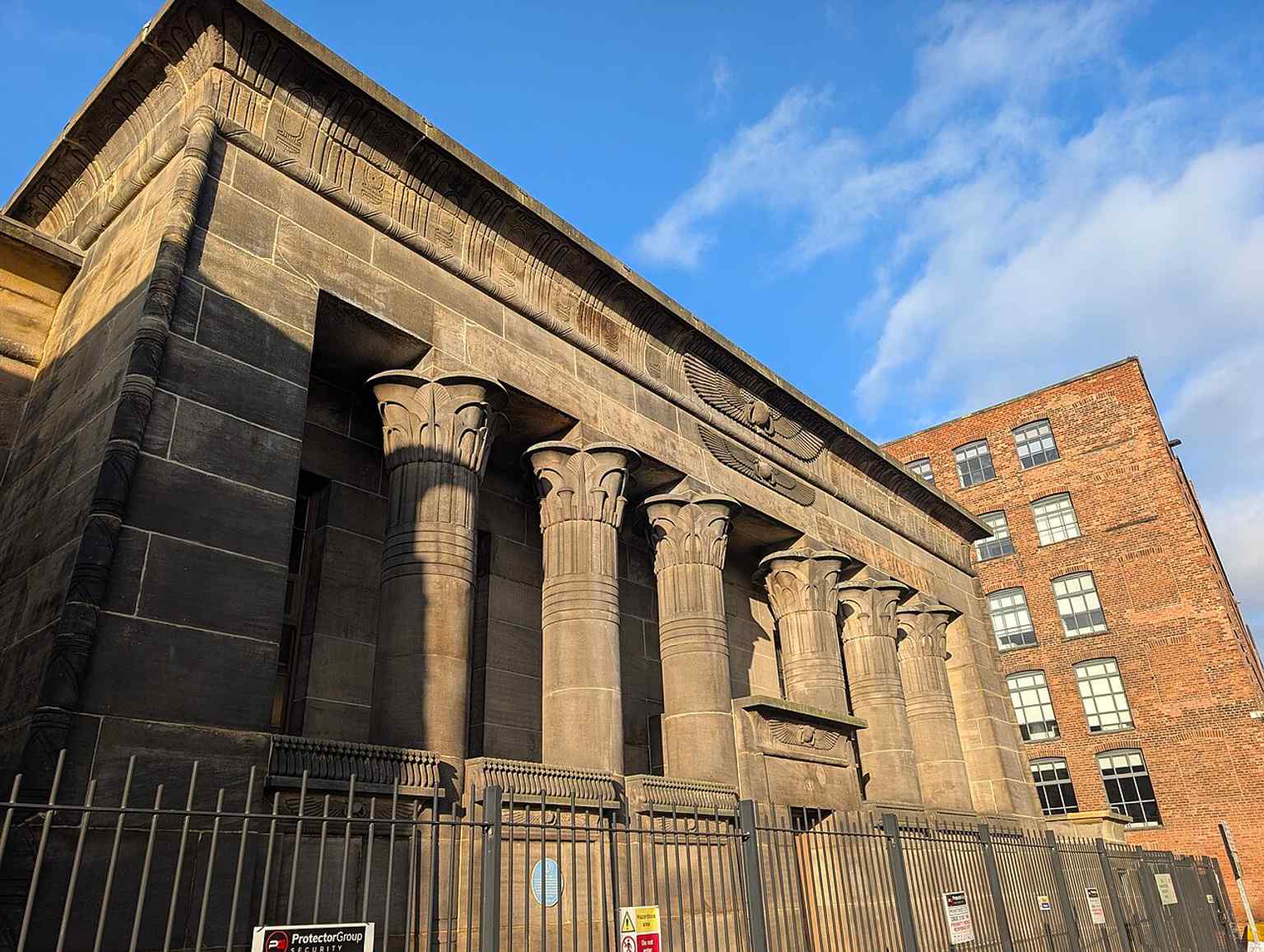
A close exterior detail of Temple Works, useful for its Egyptian-inspired stonework and the distinctive temple-like design linked to Edfu and Dendera.Photo: Igor_Sivolob, Wikimedia Commons, CC BY-SA 4.0. Cropped & resized. Inside stood what people called the biggest single room in the world: three hundred and ninety-six feet long by two hundred and sixteen and a half feet wide, nearly two acres under one roof. Around a thousand people worked that floor. The roof above them carried eight inches of earth and grass, and yes, sheep grazed up there. Marshall's team even devised the world's first hydraulic lift to get them onto the roof, because the grass helped hold moisture in the mill below, stopping flax thread from drying out and snapping. The old interior scene on your phone hints at the scale.
But grandeur came with a hard edge. Workers labored seventy-two hours a week in heat and humidity; about forty percent were young women aged thirteen to twenty, and about twenty percent were under thirteen. Marshall did provide baths - cold free, hot one penny - and tradesmen's shops, which feels caring right up until you remember the hours.
After Marshall died, the business declined and ended in eighteen eighty-six. The building suffered a major collapse in two thousand and nine, but its Grade I listing helped secure restoration money: twenty-five million pounds in twenty twenty, then another ten million in February twenty twenty-five to bring it into public ownership for the future British Library northern site.
When you're ready, walk back along Marshall Street, cross Water Lane and head east along Hunslet Road - about ten minutes - to the Art Deco brick block known as The Tetley. Public access can be limited, so check the app before you set off.
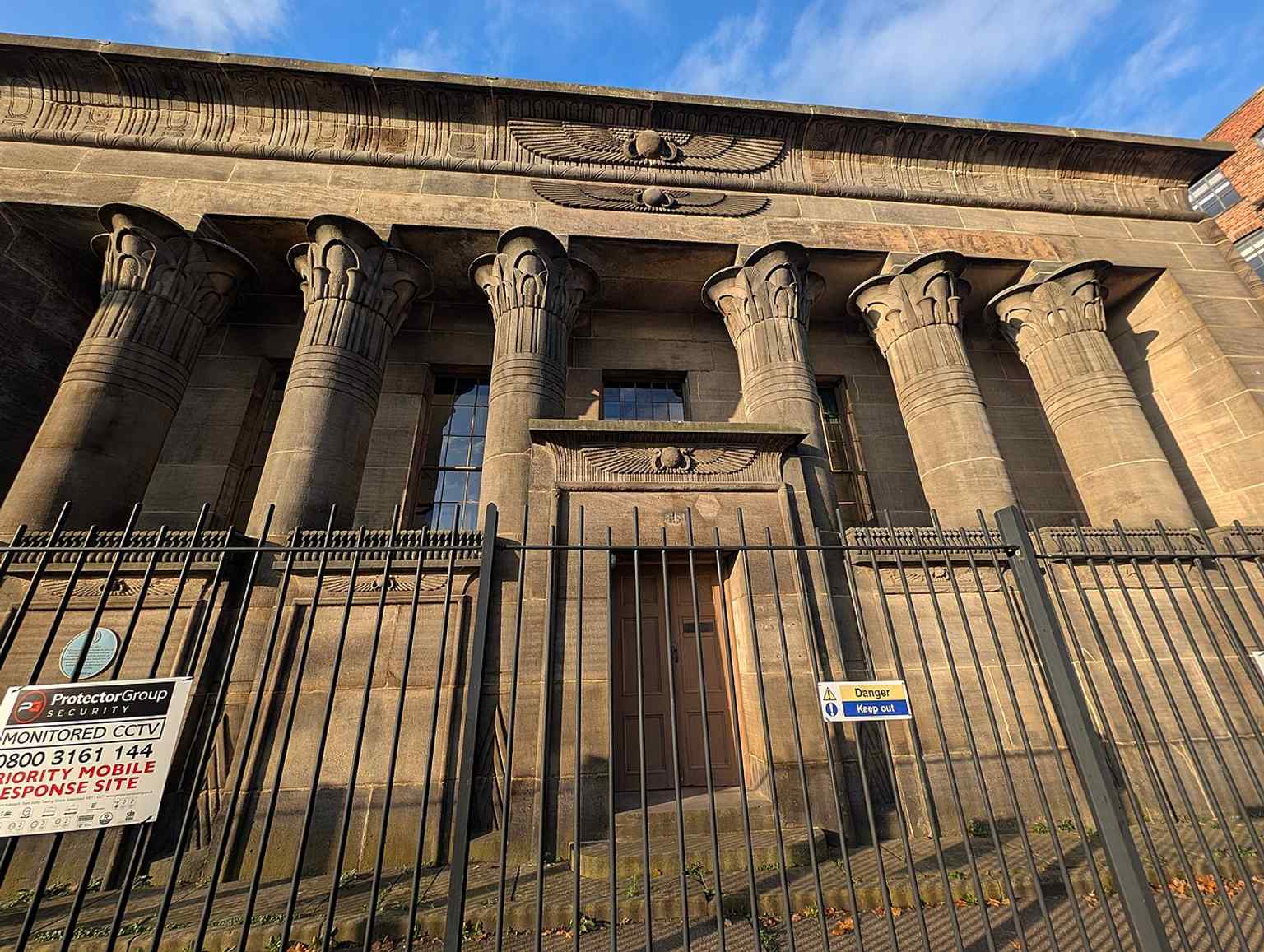
One of the modern exterior views of Temple Works, showing the Grade I listed mill that once housed what was said to be the biggest single room in the world.Photo: Igor_Sivolob, Wikimedia Commons, CC BY-SA 4.0. Cropped & resized. 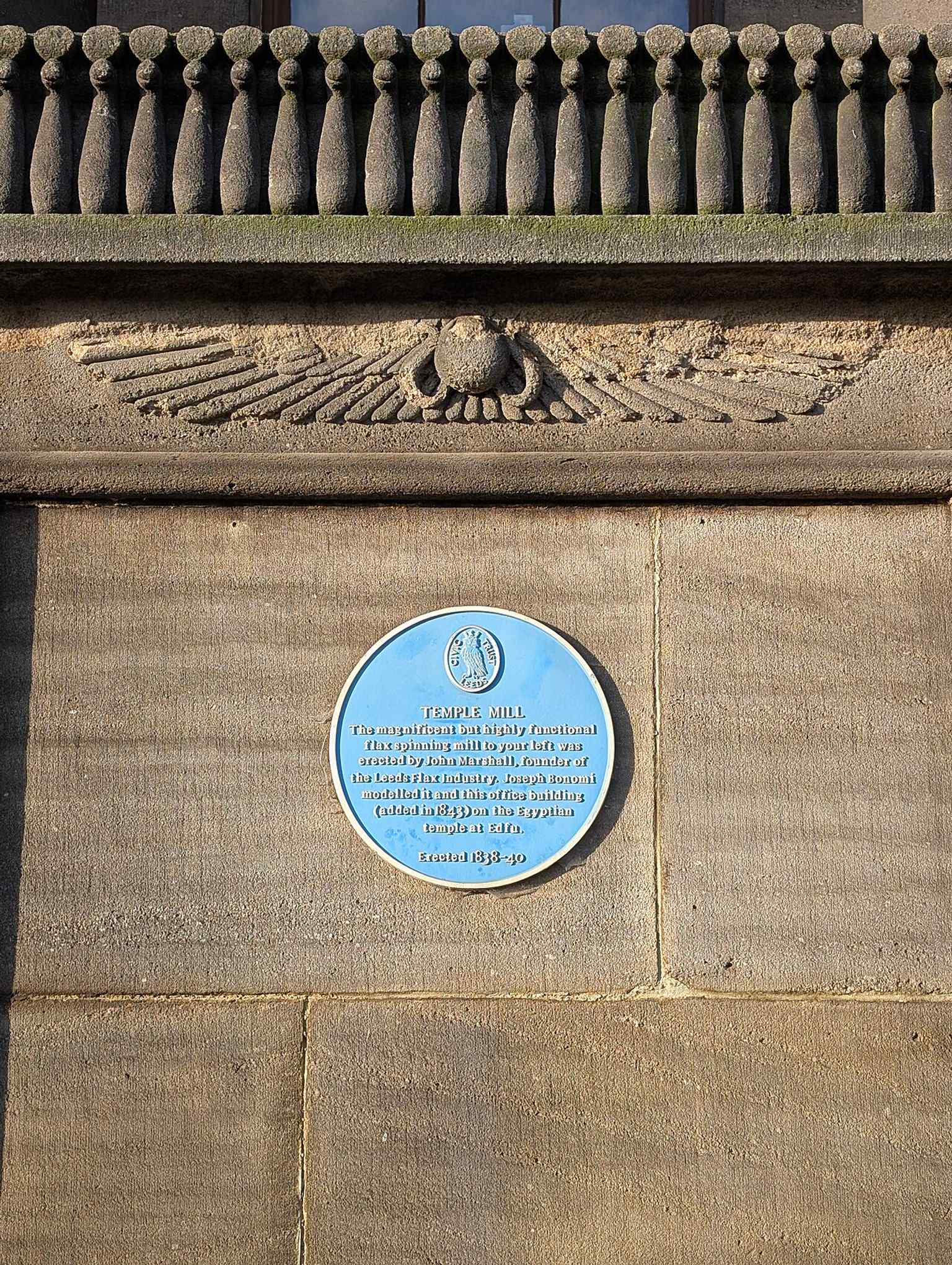
Another exterior detail from Temple Works, highlighting the building’s unusual façade rather than the wider frontage.Photo: Igor_Sivolob, Wikimedia Commons, CC BY-SA 4.0. Cropped & resized. Directly in front of you is an oval stone building with a ribbed dome, walls patterned in diamond-cut rustication, and semicircular porches framed by chunky Tuscan columns. Look…더 보기간략히 보기
전용 페이지 열기 →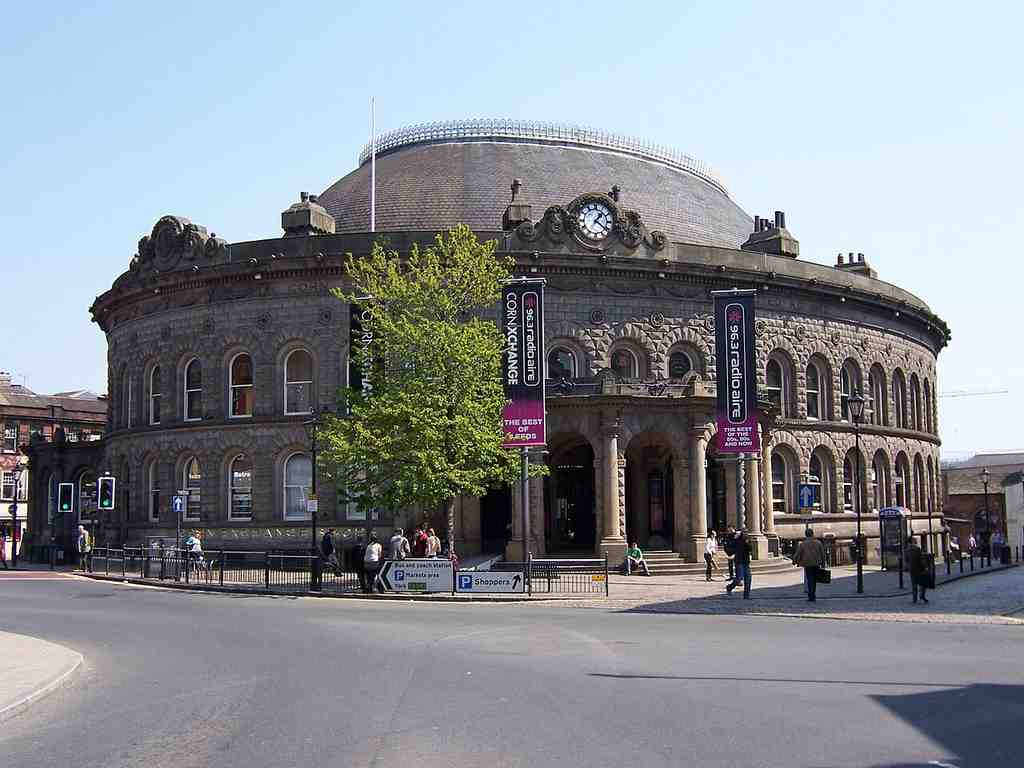
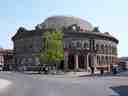
Leeds Corn ExchangePhoto: Jungpionier, Wikimedia Commons, CC BY-SA 3.0. Cropped & resized. Directly in front of you is an oval stone building with a ribbed dome, walls patterned in diamond-cut rustication, and semicircular porches framed by chunky Tuscan columns.
Look up first. That dome is the show-off here, and for once the building has earned it. Hull-born architect Cuthbert Brodrick, the same man behind Leeds Town Hall, gave Leeds this Italianate design in the early eighteen sixties; he completed it in eighteen sixty-three, and traders opened it as the city’s new Corn Exchange in eighteen sixty-four. If you check the image on your screen, you can see how boldly that roof rises above the curved façade.
Brodrick did not invent the dome from thin air. He copied it quite deliberately from the Bourse de commerce in Paris, designed by François-Joseph Bélanger and François Brunet and finished in eighteen eleven, itself standing on the site of the older Halle au Blé, the old wheat market. Leeds, in other words, borrowed a bit of Paris and put it to work selling grain. Sensible, really.
Inside, the drama continues. Historian Asa Briggs said the roof feels like “the inverted hull of a ship,” and once you see the interior image, that comparison sticks. But this was not architecture for posing. Farmers and corn factors - grain merchants, basically - gathered on the main floor to strike deals. A cast-iron gallery ran around above, separating first-floor offices from the trading floor, while corn sat in basement stores below. Elegant, yes... but also ruthlessly practical.
Trade here faded after the late nineteenth-century farming slump hit British agriculture hard. In the late nineteen eighties, Speciality Shops plc rescued the building and turned it into retail space, and new owners relaunched it in November two thousand and eight as a boutique shopping centre. Above the doorways, look for the carved stone keystone heads representing countries Leeds traded with - a nice Victorian way of saying, “business reached far beyond Yorkshire.”
Turn left out of the Corn Exchange and walk along Cloth Hall Street into Kirkgate - the seventeen eleven First White Cloth Hall is on your left... then continue on to Third White Cloth Hall, Crown Street, about four minutes away. If you want to step inside later, it usually opens from ten to six most days, later on Thursday, and from half past ten to half past four on Sunday.
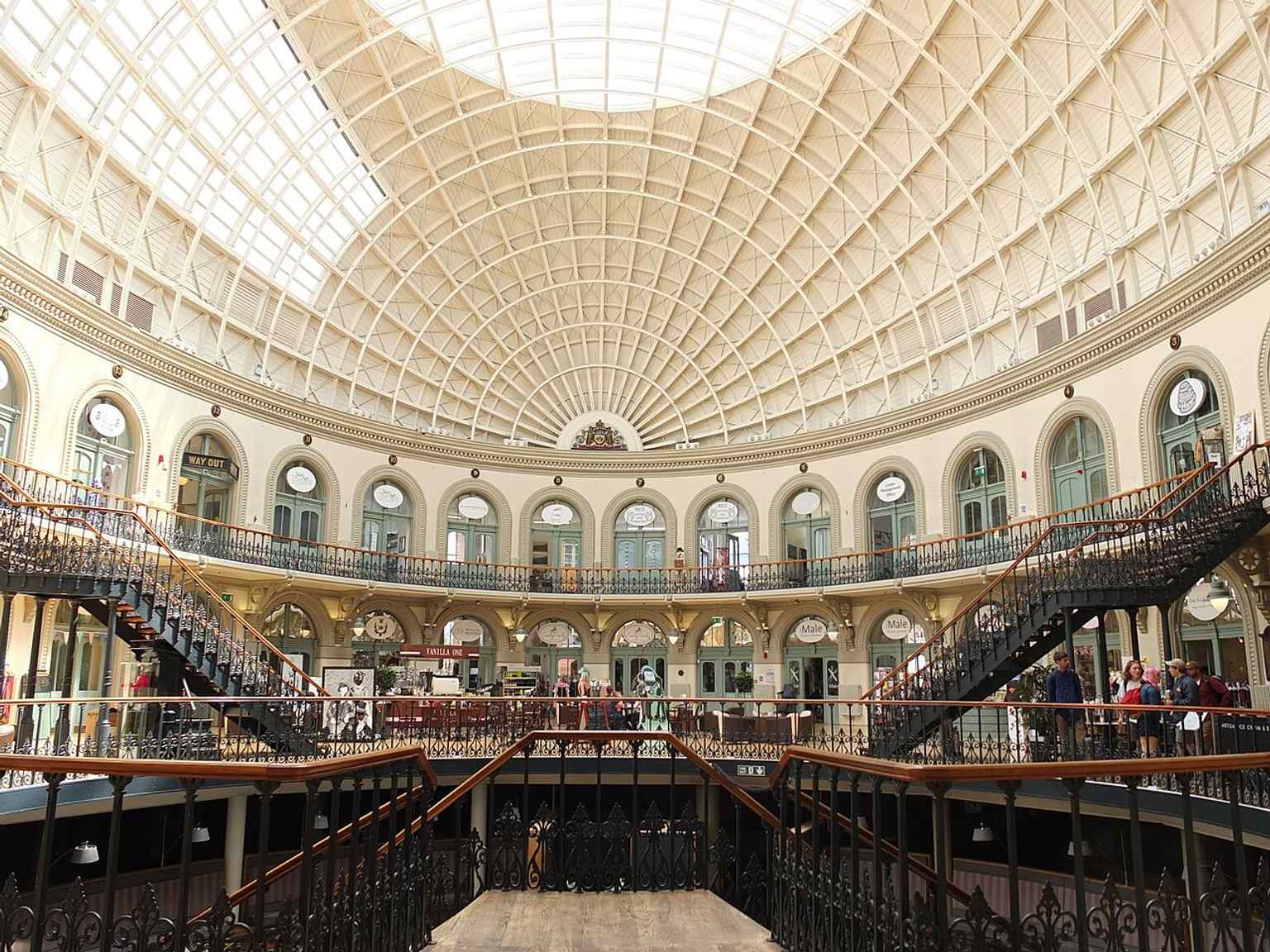
Inside the domed hall, now a shopping centre, where corn traders once gathered under the building’s dramatic roof.Photo: Sirenuk, Wikimedia Commons, CC BY-SA 3.0. Cropped & resized. 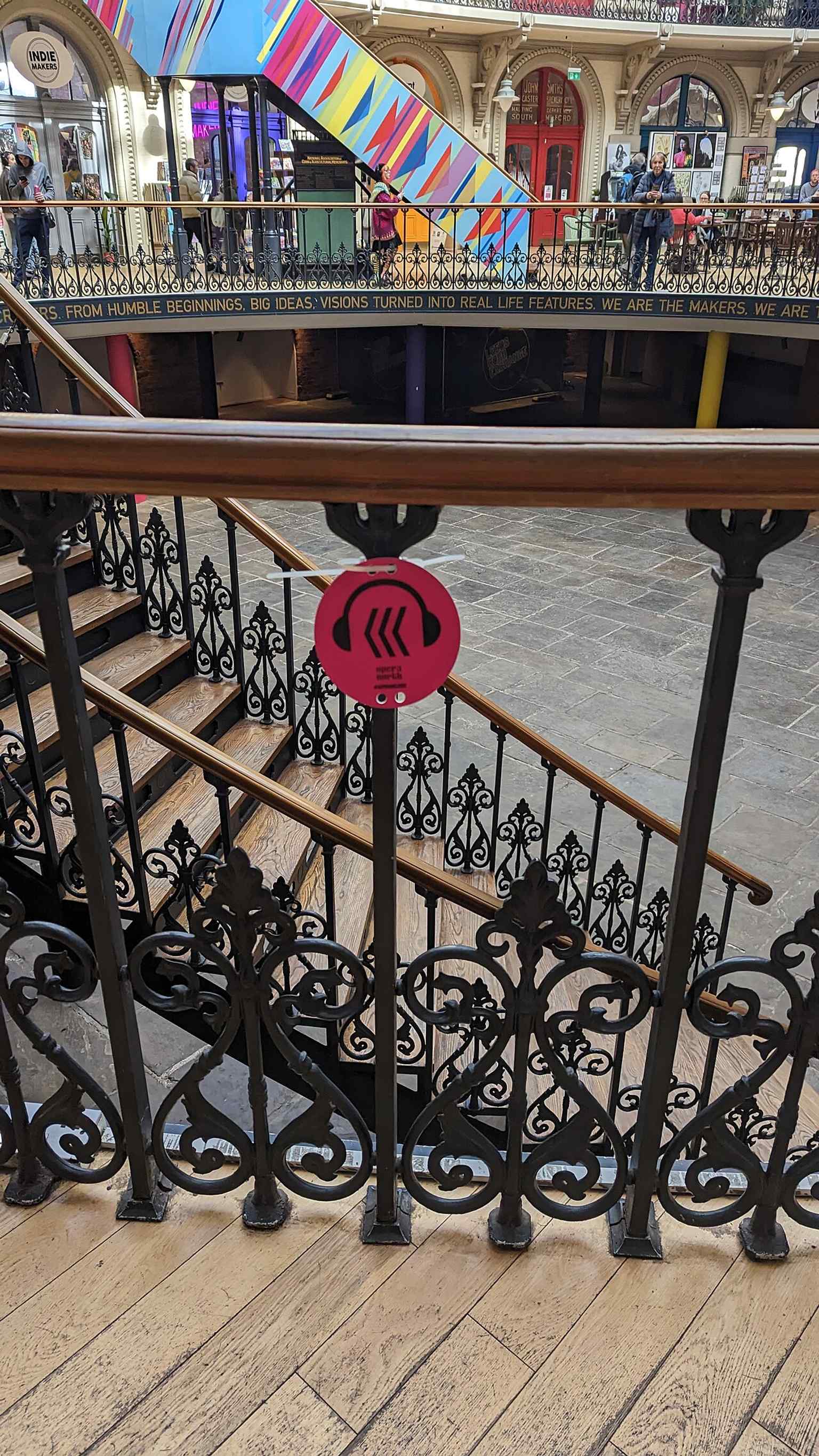
A contemporary audio-trail marker inside the Corn Exchange, showing the building’s current life as a cultural venue as well as a market hall.Photo: Lajmmoore, Wikimedia Commons, CC BY-SA 4.0. Cropped & resized. 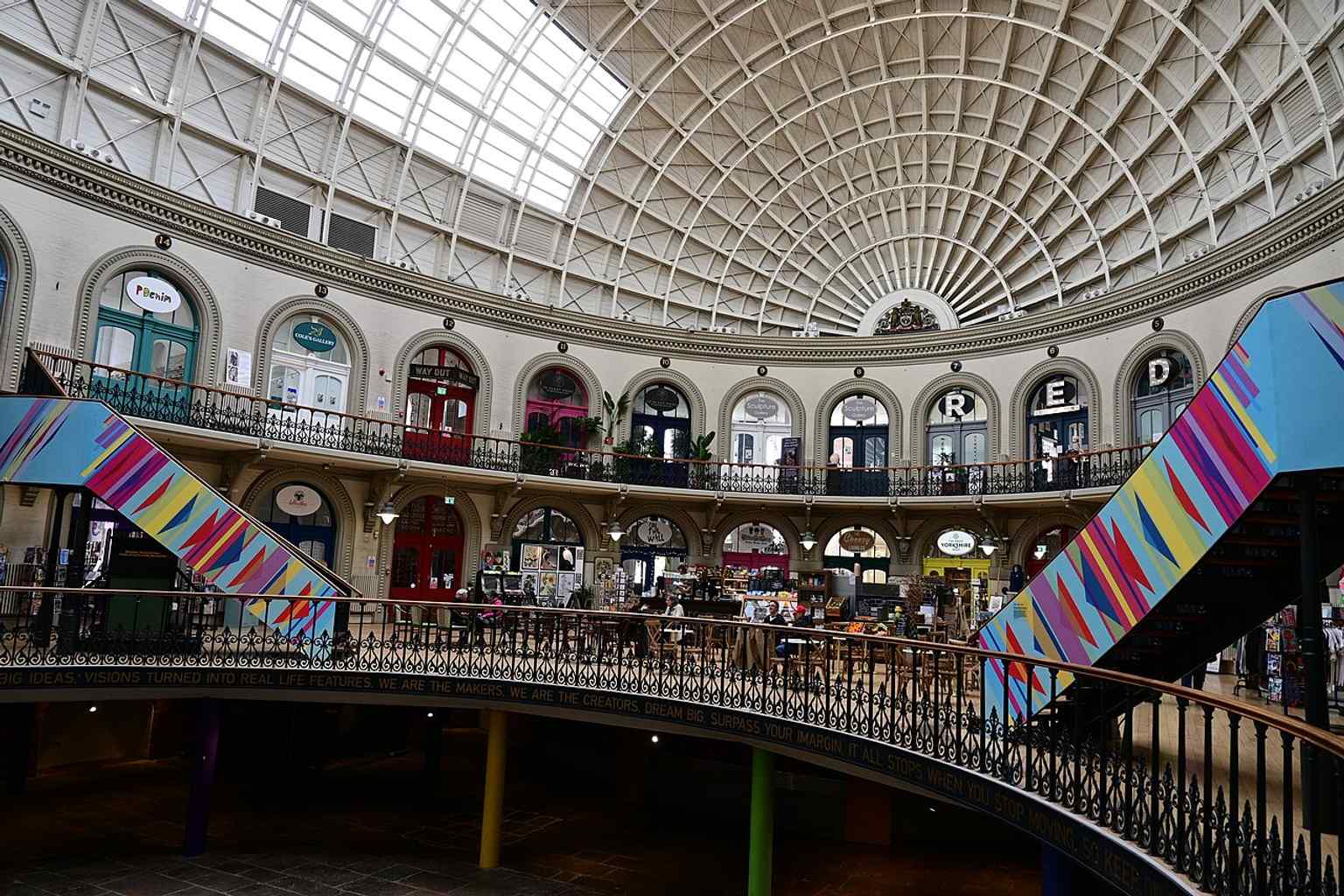
Another view of the decorated stair, highlighting how the restored interior now mixes heritage architecture with contemporary art.Photo: Hullian111, Wikimedia Commons, CC BY-SA 4.0. Cropped & resized. 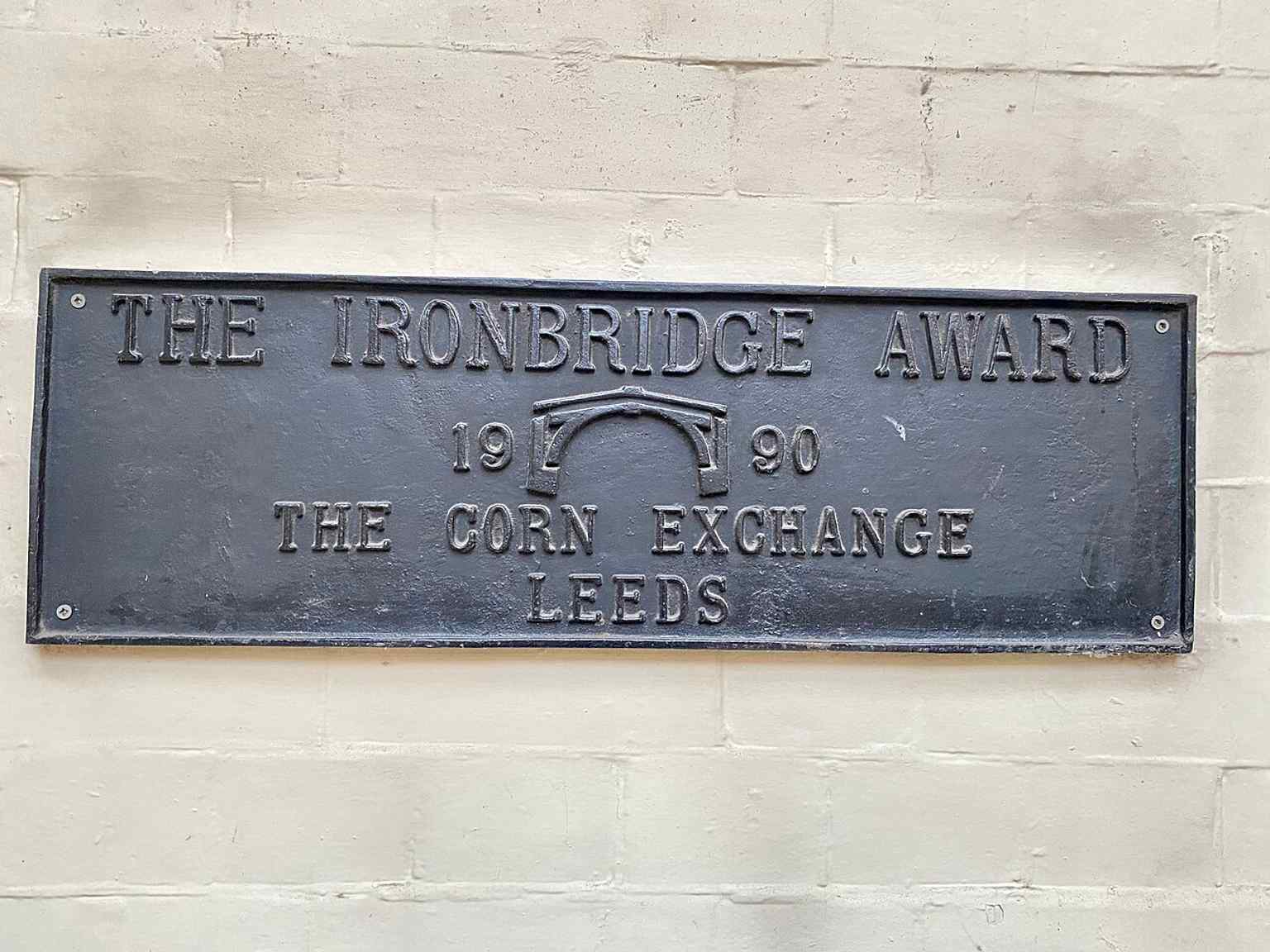
A plaque marking the building’s post-restoration recognition, recalling the Corn Exchange’s long life after its 1980s conversion to retail.Photo: No Swan So Fine, Wikimedia Commons, CC BY-SA 4.0. Cropped & resized. 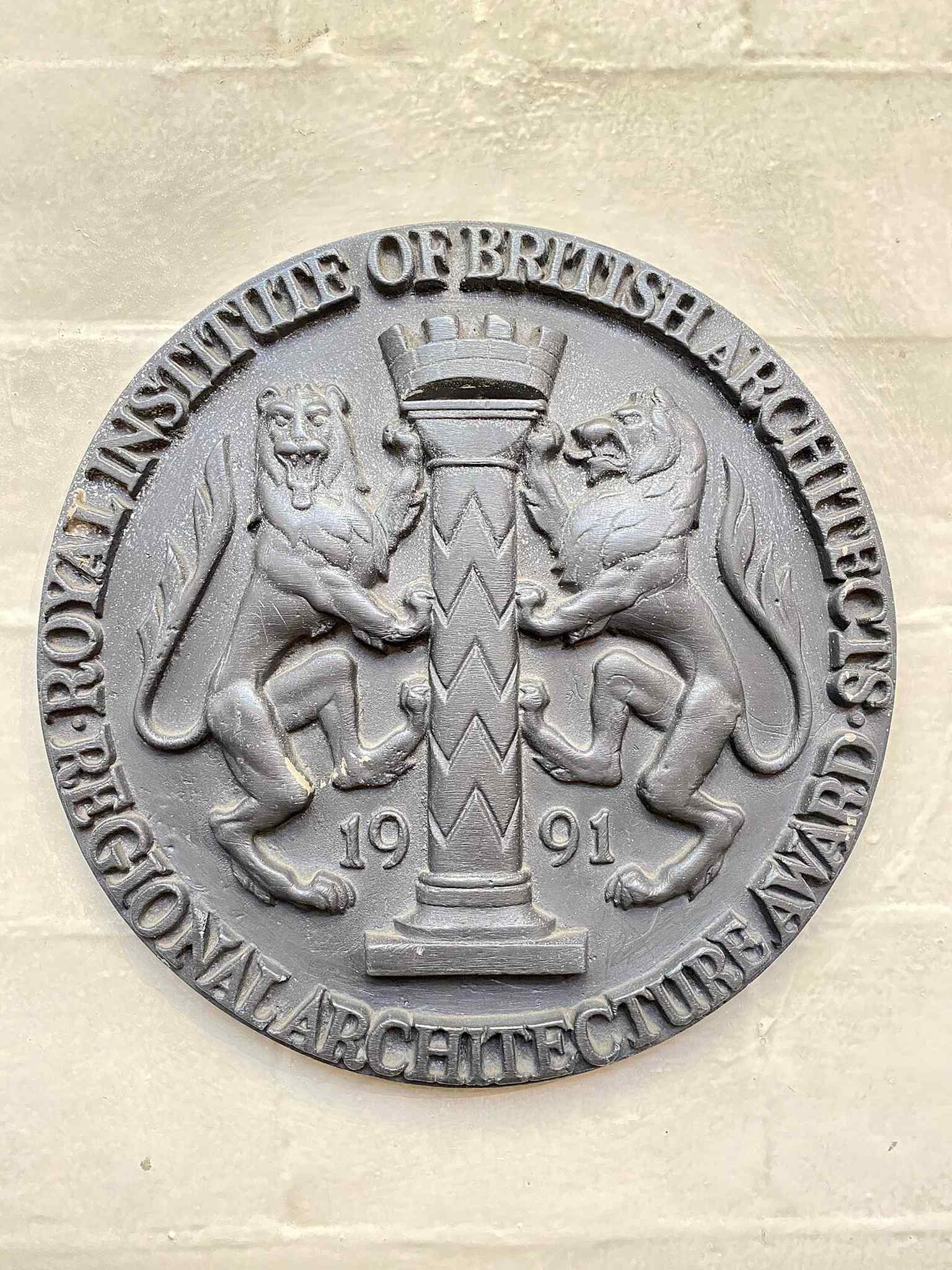
An architectural award plaque celebrating the restoration work that helped bring the Corn Exchange back into use.Photo: No Swan So Fine, Wikimedia Commons, CC BY-SA 4.0. Cropped & resized.
자주 묻는 질문
투어는 어떻게 시작하나요?
구매 후 AudaTours 앱을 다운로드하고 교환 코드를 입력하세요. 투어를 바로 시작할 수 있습니다 - 재생을 탭하고 GPS 안내 경로를 따라가시면 됩니다.
투어 중 인터넷이 필요한가요?
아닙니다! 시작 전에 투어를 다운로드하면 완전히 오프라인으로 즐길 수 있습니다. 채팅 기능만 인터넷이 필요합니다. 모바일 데이터 절약을 위해 WiFi에서 다운로드하시는 것을 권장합니다.
이것은 가이드가 안내하는 단체 투어인가요?
아닙니다 - 이것은 셀프 가이드 오디오 투어입니다. 폰을 통해 오디오 나레이션을 들으며 나만의 속도로 독립적으로 탐험합니다. 투어 가이드도, 단체도, 일정도 없습니다.
투어는 얼마나 걸리나요?
대부분의 투어는 60-90분이 소요되지만, 속도는 전적으로 본인이 조절합니다. 원할 때 언제든지 일시정지하거나, 정류장을 건너뛰거나, 휴식을 취하세요.
오늘 투어를 끝낼 수 없으면 어떻게 하나요?
괜찮습니다! 투어는 평생 이용이 가능합니다. 원할 때 언제든지 일시정지하고 다시 시작하세요 - 내일, 다음 주, 또는 내년에도. 진행 상황이 저장됩니다.
어떤 언어를 이용할 수 있나요?
모든 투어는 50개 이상의 언어로 이용 가능합니다. 코드를 교환할 때 원하는 언어를 선택하세요. 참고: 투어 생성 후에는 언어를 변경할 수 없습니다.
구매 후 투어는 어디에서 이용하나요?
App Store 또는 Google Play에서 무료 AudaTours 앱을 다운로드하세요. 교환 코드(이메일로 전송됨)를 입력하면 라이브러리에 투어가 나타나며, 다운로드하여 시작할 수 있습니다.
투어가 마음에 들지 않으시면 환불해 드립니다. 문의: [email protected]
안전한 결제 


.jpg)

.JPG)


