

브리스틀 오디오 투어: 유산, 문화, 혁신을 통한 여정
브리스틀의 지붕들 사이로 중세 탑이 엿보이고, 햇살 가득한 공원의 유적들은 과거의 혼란과 재탄생을 속삭입니다. 도시는 그 표면 아래에 숨겨진 이야기들을 간직하고 있으며, 어디를 봐야 할지 아는 사람들을 기다리고 있습니다. 이 셀프 가이드 오디오 투어를 따라 진짜 브리스틀을 발견하세요. 고대 수도원에서 전쟁으로 폐허가 된 랜드마크까지 거닐며, 대부분의 방문객들이 그냥 지나치는 반란, 스캔들, 생존의 순간들을 발견하세요. 브리스틀 황금기의 상인들은 왜 해안에 숨어있는 터키 해적들을 두려워했을까요? 수많은 수도원이 무너졌을 때, 어떤 신비한 힘이 세인트 제임스 수도원을 지탱하게 했을까요? 한 도시 병원의 비밀이 어떻게 전국적인 의료 개혁을 촉발했을까요? 번화한 거리와 푸른 안식처를 지나는 모든 발걸음은 묻혀 있던 드라마와 잊혀진 음모를 풀어냅니다. 오후 한나절 만에 수세기를 넘나드세요. 발밑에서 역사가 살아 숨 쉬는 것을 느껴보세요. 브리스틀의 석탑들이 수백 년 동안 지켜온 비밀을 풀 준비가 되셨나요? 지금 바로 모험을 시작하세요.
투어 미리보기
이 투어에 대하여
- schedule소요 시간 40–60 mins나만의 속도로 이동
- straighten5.9 km 도보 경로안내 경로 따라가기
- location_on
- wifi_off오프라인 작동한 번 다운로드, 어디서든 사용
- all_inclusive평생 이용언제든지 다시 재생 가능
- location_on세인트 제임스 수도원, 브리스틀에서 시작
이 투어의 정류장
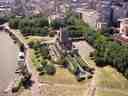
Now, let's delve into the story of Castle Park! Officially known as Castle Green, this charming public space is managed by Bristol City Council. It’s bordered by the Floating…더 보기간략히 보기
Now, let's delve into the story of Castle Park! Officially known as Castle Green, this charming public space is managed by Bristol City Council. It’s bordered by the Floating Harbour to the south, Castle Street to the east, and a mix of streets like Wine Street and Broad Weir to the north. The western boundary is a topic of debate, often considered together with the High Street and the St Mary le Port Church area. Castle Park opened to the public on 30 September 1978, and occupies land that was once Bristol’s main shopping district. Alas, the area succumbed to extensive damage during the Blitz, and by 1969 virtually all that remained had been cleared, including some beloved pubs like the Bear & Ragged Staff and the Cat and Wheel. Today, Castle Park stands as a testament to resilience and history. It’s a sanctuary for anti-fascist memorials, and you'll find a sensory herb garden where St Peter's Churchyard once stood. Don't miss the partially excavated ruins of Bristol Castle’s stone keep, right near the eastern edge of the park. The park is not all about history, though - it's also a lively space for various events, from summer tethered balloon rides near the bandstand to bustling German Christmas markets. Speaking of the bandstand, it’s hosted countless community events over the years. The park sits on historical ground; archaeological digs suggest the original Anglo-Saxon settlement centered just east of St Peter’s Church. Over the centuries, the town evolved, with highlights like the significant but now-ruined Bristol Castle and the architectural marvel of St Peter’s Hospital - unfortunately lost in WWII. So, as you wander through Castle Park, take a moment to soak in the layers of history mingling with the vibrant greenery, perhaps reserved for curious explorers like you. Keep an eye out for those stunning ruins of St Peter's Church - they make for a poignant reminder of Bristol's rich past!
전용 페이지 열기 →As you approach the Bristol Royal Infirmary, look to your left. You'll spot a large, modern building prominently labeled "Bristol Royal Infirmary" at the top. It has a sleek,…더 보기간략히 보기
As you approach the Bristol Royal Infirmary, look to your left. You'll spot a large, modern building prominently labeled "Bristol Royal Infirmary" at the top. It has a sleek, contemporary design with vertical lines running down its facade, and a distinct two-tone look with the bottom section in green and the top section in white and metallic colors. The main entrance is situated below the large sign and features glass doors, perfect for a grand entrance or, in a pinch, a quick escape! Now, let's dive into a bit of history and fun facts about this impressive place! The Bristol Royal Infirmary (BRI) is not just another hospital; it's a veritable institution in Bristol, part of the fabric of the city since 1735. Back in the day, it was founded through public donations, making it one of the oldest infirmaries in the United Kingdom. It's a major teaching hospital with strong ties to both the University of Bristol and the University of the West of England. Picture this: In December 1737, the infirmary opened its doors on Maudlin Lane (now known as Lower Maudlin Street) to 17 male and 17 female patients. Fast forward to 1904, and Sir George White, a Bristol legend who gave the city its first electric tramway, helped pull the hospital out of a financial black hole. His ingenious fundraising carnival at Bristol Zoo raised a whopping £4,000. Combined with generous donations from Sir George and his brother Samuel, they managed to release the hospital from debts of over £15,500. In 1912, the Edward VII Memorial Wing was completed, designed by the renowned architect Charles Holden. During World War I, parts of the infirmary were requisitioned to treat military casualties, turning it into a pivotal medical center. However, not all was smooth sailing. The hospital was at the center of the Bristol heart scandal in the late 20th century, which led to significant changes in clinical governance and transparency within the NHS following the Kennedy Report in 2001. Over the years, the BRI has continued to evolve and expand, with major redevelopments approved and completed in the 21st century, ensuring it remains at the cutting edge of medical science and patient care. So, as you stand here outside the BRI, you’re looking at a place brimming with history, resilience, and a touch of Bristolian ingenuity! Now, on to the next stop!
전용 페이지 열기 →

9개 정류장 더 보기정류장 적게 보기expand_moreexpand_less
As you stand here, you’re gazing at an educational titan that has grown from humble beginnings. Back in the day, University College Bristol started with just 99 students in 1876.…더 보기간략히 보기
As you stand here, you’re gazing at an educational titan that has grown from humble beginnings. Back in the day, University College Bristol started with just 99 students in 1876. Now, this institution is booming with six academic faculties offering over 200 undergraduate courses. Imagine the variety-it's like a buffet of knowledge. Now, grab your mental calculators! In 2023-24, their income reached a whopping £1.06 billion, with a significant chunk, £294.1 million, coming from research grants and contracts. And talk about giving back to the community-they're the largest independent employer in Bristol. The university flaunts an impressive crowd of academics too. Associate yourself with 23 fellows of the Academy of Medical Sciences, 13 fellows of the British Academy, and 48 fellows of the Royal Society, to name a few. Not to mention, the place has nurtured 13 Nobel laureates. Prestige much? Think of Bristol as a well-connected networker on LinkedIn-it's a member of the Russell Group, the Coimbra Group, and the Worldwide Universities Network. Over 500 students benefit from its Erasmus Charter, jetting off to partner institutions across Europe each year. Just don’t forget to send a postcard! Originally a hub for engineering thanks to the Merchant Venturers' Technical College, it soon merged with Bristol Medical School in 1893 and evolved into a modern educational marvel. While the Wills family’s tobacco money and the Fry family’s chocolate legacy helped with its founding, it’s important to remember these funds were marred by exploitation. Fast forward to 1909, and the university's doors opened wide, welcoming women on the same basis as men-well, almost. It took until 1906 for women to take exams in medicine. And where would a tour be without some drama? Henry Overton Wills III, the university’s first chancellor, got such a grand birthday gift-a university with a royal charter! The Wills Memorial Building, begun in 1913 and completed in 1925, now proudly stands as a tribute. Today it houses earth sciences and law, and if you’re ever invited to a graduation ceremony in its Great Hall, consider yourself lucky. So, ready to dive into some serious academic excellence? You’ve arrived at the right place! For a more comprehensive understanding of the campus, organisation and governance or the academics, engage with me in the chat section below.
전용 페이지 열기 →Alright, intrepid explorer! You’re approaching St Mark's Church, better known to history buffs as Gaunt's Chapel, and you’ll find it on your left. To spot this treasure among…더 보기간략히 보기
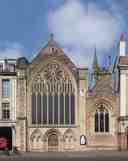
Alright, intrepid explorer! You’re approaching St Mark's Church, better known to history buffs as Gaunt's Chapel, and you’ll find it on your left. To spot this treasure among buildings, look for a grand gothic façade with intricate stonework. The church’s west front boasts a large, decorated arched window with traceries reminiscent of medieval designs, and you can’t miss the wooden doors below with their decorative carvings. By the way, don't be surprised if you spy a sundial on the wall - though time tells us this place dates way back to c. 1230! Nestled on the north-east side of College Green, this church is quite the historical gem: St Mark’s Church, originally built around 1230, served as the chapel of Gaunt's Hospital, a charitable institution established by Maurice de Gaunt. Fun fact: it’s one of just two churches in England privately owned and still used for worship by a city corporation (the other sibling lies in London). But that's not all - this church is like a living history book! It's packed with chest tombs, including those of its founders Maurice de Gaunt and Robert de Gournay, knights of medieval prestige. It’s also the final resting place for many notable figures, including members of the influential Berkeley and Poyntz families. Oh, and let’s not forget the explorer Thomas James, who’s got a whole bay named after him in the Arctic! Peek inside (virtually, of course) and you'll be dazzled by late gothic features and a stunning collection of continental stained glass. It's no wonder this masterpiece was designated a Grade I listed building by Historic England. So, tiptoe carefully, as this place could well be hosting a late-night ghost story bonanza with all those historical VIPs tucked inside! Let's move on to our next adventure. For a more comprehensive understanding of the foundation, notable burials or the dissolution, engage with me in the chat section below.
전용 페이지 열기 →As you're approaching on your right, you'll see an impressive, grand structure with twin towers that resemble something straight out of a medieval fantasy film. The facade of the…더 보기간략히 보기
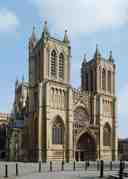
As you're approaching on your right, you'll see an impressive, grand structure with twin towers that resemble something straight out of a medieval fantasy film. The facade of the building boasts intricate Gothic architecture with tall, narrow windows punctuated by striking stonework. At the base, there's a stunning arched entrance with detailed carvings, and if you look carefully, you'll spot a rose window right above it, sparkling like a giant medieval eye. Ah, welcome to the marvelous Bristol Cathedral! Or, if you’re feeling fancy, the Cathedral Church of the Holy and Undivided Trinity. This place is like a living history book, blending architecture through the ages. Founded way back in 1140 by a well-off local landowner named Robert Fitzharding, it was initially an abbey dedicated to St Augustine. It was consecrated in 1148, just in time to catch the High Middle Ages in full swing - thank goodness for that timing. In 1542, after King Henry VIII’s grand ol' dissolution of the monasteries, the abbey got an upgrade to become the seat of the new Diocese of Bristol. Talk about a glow-up! It also took on the role of being the Bishop of Bristol’s fancy office. Now, the cathedral is not only a Grade I listed building, which means it’s of exceptional interest, but it also showcases some groundbreaking architectural bits. The late 12th-century chapter house, for example, is among the first to feature pointed arches in England. If those arches could talk, they’d probably boast about being trendsetters. The Elder Lady Chapel, dating back to the early 13th century, holds the title of the oldest part of the eastern end. The rest of the east side underwent a serious makeover in the 14th century, adopting the English Decorated Gothic style. Think high ceilings and stunning symmetry. Fast forward to the 19th century, the cathedral’s nave was lovingly replaced in the Gothic Revival style by George Edmund Street. And the grandeur we see today spans all the way to the towering designs of John Loughborough Pearson, completed in 1888. Inside, you’ll find an assortment of memorials and a historic organ that still fills the cathedral with music. Mind you, the original stained glass didn’t have much luck surviving - thanks to the Victorian era and World War II’s Bristol Blitz - but what remains still tells the tale. In summary, it’s a mashup of medieval flair and Victorian ingenuity wrapped in one cathedral-shaped package. Enjoy gazing at this piece of history as you soak in the Bristol vibes! For a more comprehensive understanding of the architecture, decoration, monuments and burials or the music, engage with me in the chat section below.
전용 페이지 열기 →Alright, here we are! Look to your right and you should spot the Bristol Old Vic. It’s impossible to miss with that striking modern entrance featuring the signage in bold red…더 보기간략히 보기
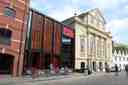
Alright, here we are! Look to your right and you should spot the Bristol Old Vic. It’s impossible to miss with that striking modern entrance featuring the signage in bold red letters against a contemporary facade, and right next to it, the majestic stone Coopers' Hall with its classic architecture and those elegant Corinthian columns. Now, let's dive into the history! Bristol Old Vic is home to the oldest continually-operating theatre in the English-speaking world! This grand establishment was built between 1764 and 1766, so it's a real veteran in the theatre game. It’s like the grandparent who’s seen it all and still has plenty of stories to tell. Founded in 1946 as an offshoot of the Old Vic in London, it’s since become an independent icon with its own unique vibrancy. In fact, it’s so historic that even Daniel Day-Lewis once called it "the most beautiful theatre in England." And who are we to argue with such a legend? The venue also includes the Coopers' Hall, which now serves as the theatre’s elegant foyer. Originally built in 1744 for the Coopers' Guild, it had quite the colorful past - being a public assembly room, a wine warehouse, and even a Baptist chapel at various times. In 2012, the Bristol Old Vic completed a massive £19 million refurbishment. This makeover increased the seating capacity and gifted it with up to ten flexible performance spaces. So, whilst the main Theatre Royal has been astonishing audiences for centuries, the complex now boasts a Studio Theatre, a Side Stage, a Paint Shop, and a Basement performance area. The historical richness of this place, coupled with its cutting-edge renovations, makes it a true gem in Bristol’s crown. So take a moment to soak it all in - you’re standing in front of a piece of performing arts history. To delve deeper into the history of the theatre, formation of the bristol old vic or the refurbishment, simply drop your query in the chat section and I'll provide more information.
전용 페이지 열기 →You're now approaching the splendid Bristol Harbour, and it's just a slight-left turn away! To help you spot it, look for a serene expanse of water lined with boats bobbing at…더 보기간략히 보기
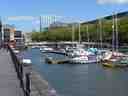
You're now approaching the splendid Bristol Harbour, and it's just a slight-left turn away! To help you spot it, look for a serene expanse of water lined with boats bobbing at their moorings. You'll notice a bustling quay lined with modern buildings to your left, and the water framed by trees and pathways. There are likely to be people strolling along and enjoying the vibrant atmosphere as well. Now, let me paint a picture with words about this enchanting spot! Bristol Harbour, the beating heart of Bristol. Covering a generous 70 acres (that’s 28 hectares if you're keeping track), it’s the watery playground where the River Avon once flowed freely but has since been tamed into a permanent feature since 1809, thanks to some clever engineering to keep those tides in check. Imagine, back in the day, this was a bustling hub for ships and sailors. Ships would navigate through the "Floating Harbour" as it’s often called because the water level stays constant, considerate enough not to be moody like the tides. To do this, a nifty bypass, the "New Cut," was dug through Bedminster's fields, letting the tidal river get on with its business without bothering the harbour. Netham Lock stands as the gatekeeper at the east end of the Feeder Canal, marking the upstream limit of the harbour. Beyond it lie two waterways: the navigable River Avon stretching upstream to Bath and the tidal natural River Avon, pursuing its own adventures. The first mile downstream from Netham Lock takes you through the Feeder Canal until you reach Totterdown Basin, where the harbour reclaims the River Avon’s original route. The "New Cut" takes over for the tidal river, keeping our boats here safe and buoyant, even at low tide-no muddy mishaps here thanks to reduced currents and silting! Historically, this haven was the Port of Bristol, but as the ships grew larger and heavier, Avonmouth and Portbury, which are 7 miles downstream, stepped up to handle the bigger loads. Yet, Bristol Harbour holds a treasure trove of history. In the 13th century, river modifications began shaping this port, with Saint Augustine’s Reach becoming the pulsating core of Bristol’s docks. The dramatic tides of the River Avon fluctuated a whopping 47 feet (14 meters), transforming navigable channels into muddy traps. Ships had to be "shipshape and Bristol fashion" to handle these strandings, a phrase borne right here. Oh, the tales these waters could tell! From the 1420s expeditions to Iceland to the storied journeys to the Americas, even before Columbus. John Cabot himself set sail from here on a scheme to reach Asia in a revolutionary westward route across the North Atlantic. The Society of Merchant Venturers, the brainy merchants of Bristol, sponsored such explorations, leading to the port’s Royal Charter in 1552 by Edward VI. Tobacco imports and the notorious slave trade shaped the shipping legacy further by the late 17th century. So, as you gaze upon Bristol Harbour, remember it’s not just water and boats-it’s centuries of adventure, innovation, and stories waiting to be discovered!
전용 페이지 열기 →As you approach the last stop on our tour, look to your right to spot the grand SS Great Britain. She proudly sits in Bristol Harbour, a majestic testament to maritime history.…더 보기간략히 보기
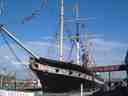
As you approach the last stop on our tour, look to your right to spot the grand SS Great Britain. She proudly sits in Bristol Harbour, a majestic testament to maritime history. You’ll see a beautifully restored iron hull adorned with black and white paint, and towering masts decked with colorful maritime flags. Her bow is embellished with a striking golden figurehead, hinting at her storied past. Now, let’s dive into her fascinating history! The SS Great Britain is no ordinary ship - she's a museum ship and a former passenger steamship that was quite advanced for her time. Imagine this: between 1845 and 1853, she was the largest passenger ship in the world. Designed by the ingenious Isambard Kingdom Brunel for the Great Western Steamship Company, she was built for transatlantic voyages between Bristol and New York City. What made the SS Great Britain truly special was her combination of iron hull and screw propeller, the first large ocean-going ship to sport both features - a real trailblazer! She crossed the Atlantic Ocean in just 14 days in 1845, powered by twin two-cylinder engines and supplemented with sails. Can you believe she was 322 feet long and had space for 360 passengers and a crew? Her four decks had cabins, dining areas, and even saloons for promenading. Despite her impressive features, her journey wasn't smooth sailing at first. After launching in 1843, financial troubles and mishaps plagued her, including running aground due to a navigation error. Eventually, she sailed again and carried thousands to Australia. Retired to the Falkland Islands in 1884, she served as a warehouse, quarantine ship, and coal storage until she was scuttled in 1937. The story of her revival is just as impressive. In 1970, Sir Jack Arnold Hayward, a generous businessman, financed the effort to raise and tow her back to Bristol, bringing her back to the very dry dock where she was built. Now part of the National Historic Fleet, she's a top visitor attraction in Bristol Harbour, drawing hundreds of thousands each year. So, take a moment to appreciate this grand dame of maritime history, now standing proudly as a testament to human ingenuity and resilience. Welcome aboard - metaphorically speaking, of course! To expand your understanding of the development, launch or the description, feel free to engage with me in the chat section below.
전용 페이지 열기 →

자주 묻는 질문
투어는 어떻게 시작하나요?
구매 후 AudaTours 앱을 다운로드하고 교환 코드를 입력하세요. 투어를 바로 시작할 수 있습니다 - 재생을 탭하고 GPS 안내 경로를 따라가시면 됩니다.
투어 중 인터넷이 필요한가요?
아닙니다! 시작 전에 투어를 다운로드하면 완전히 오프라인으로 즐길 수 있습니다. 채팅 기능만 인터넷이 필요합니다. 모바일 데이터 절약을 위해 WiFi에서 다운로드하시는 것을 권장합니다.
이것은 가이드가 안내하는 단체 투어인가요?
아닙니다 - 이것은 셀프 가이드 오디오 투어입니다. 폰을 통해 오디오 나레이션을 들으며 나만의 속도로 독립적으로 탐험합니다. 투어 가이드도, 단체도, 일정도 없습니다.
투어는 얼마나 걸리나요?
대부분의 투어는 60-90분이 소요되지만, 속도는 전적으로 본인이 조절합니다. 원할 때 언제든지 일시정지하거나, 정류장을 건너뛰거나, 휴식을 취하세요.
오늘 투어를 끝낼 수 없으면 어떻게 하나요?
괜찮습니다! 투어는 평생 이용이 가능합니다. 원할 때 언제든지 일시정지하고 다시 시작하세요 - 내일, 다음 주, 또는 내년에도. 진행 상황이 저장됩니다.
어떤 언어를 이용할 수 있나요?
모든 투어는 50개 이상의 언어로 이용 가능합니다. 코드를 교환할 때 원하는 언어를 선택하세요. 참고: 투어 생성 후에는 언어를 변경할 수 없습니다.
구매 후 투어는 어디에서 이용하나요?
App Store 또는 Google Play에서 무료 AudaTours 앱을 다운로드하세요. 교환 코드(이메일로 전송됨)를 입력하면 라이브러리에 투어가 나타나며, 다운로드하여 시작할 수 있습니다.
투어가 마음에 들지 않으시면 환불해 드립니다. 문의: [email protected]
안전한 결제 


