
이스탄불 오디오 투어: 이스탄불 도보 투어
이스탄불에서는 빛바랜 모자이크와 고요한 돌 아치 뒤에 고대 비밀이 숨겨져 있습니다. 이 셀프 가이드 오디오 투어는 제국들이 충돌하고 신앙이 얽혔던 엽서 속 인파를 넘어 도시의 겹겹이 쌓인 심장을 드러냅니다. 에큐메니컬 총대주교청의 홀에서는 어떤 치명적인 대결이 울려 퍼졌을까요? 수세기 동안 그 정체에 대해 논쟁이 벌어졌던 귈 모스크의 벽을 어떤 미해결 미스터리가 맴돌고 있을까요? 은퇴한 황후는 왜 에스키 이마렛의 정상에 올랐으며, 그 선택이 콘스탄티노플의 운명을 어떻게 바꾸었을까요? 구불구불한 뒷골목을 거닐며 정치, 종교, 잊혀진 삶의 극적인 충돌을 목격하세요. 이스탄불의 침묵하는 수호자들이 음모, 스캔들, 헌신의 이야기를 밝히는 동안 발밑에서 긴장감 넘치는 역사가 펼쳐지도록 하세요. 진정한 도시는 그 그림자 속에 기다리고 있습니다. 지금 걷기 시작하여 다른 사람들이 간과하는 것을 발견하세요.
투어 미리보기
이 투어에 대하여
- schedule소요 시간 30–50 mins나만의 속도로 이동
- straighten6.2 km 도보 경로안내 경로 따라가기
- location_on
- wifi_off오프라인 작동한 번 다운로드, 어디서든 사용
- all_inclusive평생 이용언제든지 다시 재생 가능
- location_on콘스탄티노플 세계 총대주교청에서 시작
이 투어의 정류장
Throughout history, this church has been at the center of the Orthodox faith, serving as the mother church for many Orthodox churches worldwide. The Ecumenical Patriarch, who…더 보기간략히 보기
Throughout history, this church has been at the center of the Orthodox faith, serving as the mother church for many Orthodox churches worldwide. The Ecumenical Patriarch, who resides here, is considered the spiritual leader and representative of Eastern Orthodox Christians. Interestingly, while the Ecumenical Patriarchate is highly regarded within Orthodoxy, its official recognition is not recognized by the Republic of Turkey. Nevertheless, the Ecumenical Patriarchate continues to promote the expansion of the Christian faith and Orthodox doctrine, championing ecumenism, interfaith dialogue, charitable work, and the defense of Orthodox Christian traditions. In the 21st century, the Ecumenical Patriarchate faces various challenges. These include ensuring the safety of believers in the Middle East, working towards reconciliation between the Eastern Orthodox and Catholic churches, and advocating for the reopening of the Theological School of Halki, which was closed down by Turkish authorities in 1971. As you explore this landmark, take a moment to soak in its rich history and significance. From its role as the heart of the Byzantine Empire to its position as a beacon of hope and faith for Orthodox Christians, the Ecumenical Patriarchate of Constantinople stands as a testament to the enduring strength and resilience of the Orthodox Church.
전용 페이지 열기 →As you stand here in the district of Fatih, Istanbul, you can't help but admire the commanding view it offers. Positioned at the end of the valley between the fourth and fifth…더 보기간략히 보기
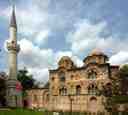
As you stand here in the district of Fatih, Istanbul, you can't help but admire the commanding view it offers. Positioned at the end of the valley between the fourth and fifth hills of Constantinople, the Gül Mosque overlooks the sparkling Golden Horn. Now, let's delve into the intriguing problem of identification that surrounds this remarkable building. Scholars have debated the dedication and construction date of the Gül Mosque, creating an air of mystery. Some believe it may have been the church of the nunnery of Saint Theodosia or the monastery of Christ the Benefactor. In the late 15th century, it was identified as the church of Hagia Theodosia en tois Dexiokratous, thanks to the research of Stephan Gerlach. However, Jules Pargoire challenged this theory at the beginning of the 20th century, proposing that it was the church of Hagia Euphēmia en tō Petriō from the reign of Basil I. More recent investigations by the German archaeologist Hartmut Schäfer shed light on the possible construction period. He estimated that the Gül Mosque was built between the late 11th and early 12th century during the Komnenian period. Schäfer also questioned the belief that this was the church where Hagia Theodosia's body was brought at the end of the Iconoclasm period. The uncertainty surrounding its history only adds to the allure of the Gül Mosque. As you explore its intricate architecture and soak in its peaceful atmosphere, take a moment to appreciate the layers of mystery that shroud this remarkable conversion from a Byzantine church to an Ottoman mosque.
전용 페이지 열기 →Eski Imaret Mosque Stop 3: Welcome to the Eski Imaret Mosque, a truly fascinating landmark with a rich history. This beautiful mosque was actually once a Byzantine church that…더 보기간략히 보기
Eski Imaret Mosque Stop 3: Welcome to the Eski Imaret Mosque, a truly fascinating landmark with a rich history. This beautiful mosque was actually once a Byzantine church that was later converted into a mosque by the Ottomans. It has the distinction of being the only surviving intact 11th-century church in Istanbul, making it a truly remarkable piece of middle Byzantine architecture. The church was traditionally associated with the Monastery of Christ Pantepoptes, which translates to "Christ the all-seeing." This name suggests a deep spiritual significance, as if the church had a direct connection to the eyes of God Himself. Located in Istanbul's Fatih district, specifically in the neighborhood of Zeyrek, this mosque is in a rather humble area. It's surrounded by the old walled city and is just a short distance away from the impressive Zeyrek Mosque. The identification of the Eski Imaret Mosque as the old Pantepoptes church was done by Patriarch Constantius I in the 19th century. However, there have been arguments about its true identity. Some experts, like Cyril Mango, have questioned the church's location as it doesn't provide a complete view of the Golden Horn. Mango suggested an alternative site, which is now occupied by the Yavuz Sultan Selim Mosque, as a possible location for the Pantepoptes Monastery. The history of this place is quite intriguing as well. It was around the year 1087 when Anna Dalassena, the mother of Byzantine Emperor Alexius I Comnenus, built a convent dedicated to Christos Pantepoptes on the summit of one of Constantinople's seven hills. She retired here at the end of her life, following the customs of the imperial family. The convent included the church we see today, which was also dedicated to Pantepoptes. Imagine the historical events that took place here. During the siege of Constantinople in 1204, Emperor Alexios V Doukas Mourtzouphlos even established his headquarters near this very spot. This goes to show the significance and strategic value of this area. The Eski Imaret Mosque is not as well-studied as some other buildings in the city, despite its historical importance. However, it still stands as a testament to the resiliency of Byzantine architecture and the complex layers of history that make Istanbul such a culturally rich city. Now, let's continue our journey to the next stop on our tour, the Zeyrek Mosque. It's just a short walk from here, so let's follow the path and continue exploring the wonders of Istanbul.
전용 페이지 열기 →

6개 정류장 더 보기정류장 적게 보기expand_moreexpand_less
ş) and a hospice (darüzziyafe). These additional buildings created a center for religious and educational activities, as well as a space for social gatherings and support for the…더 보기간략히 보기
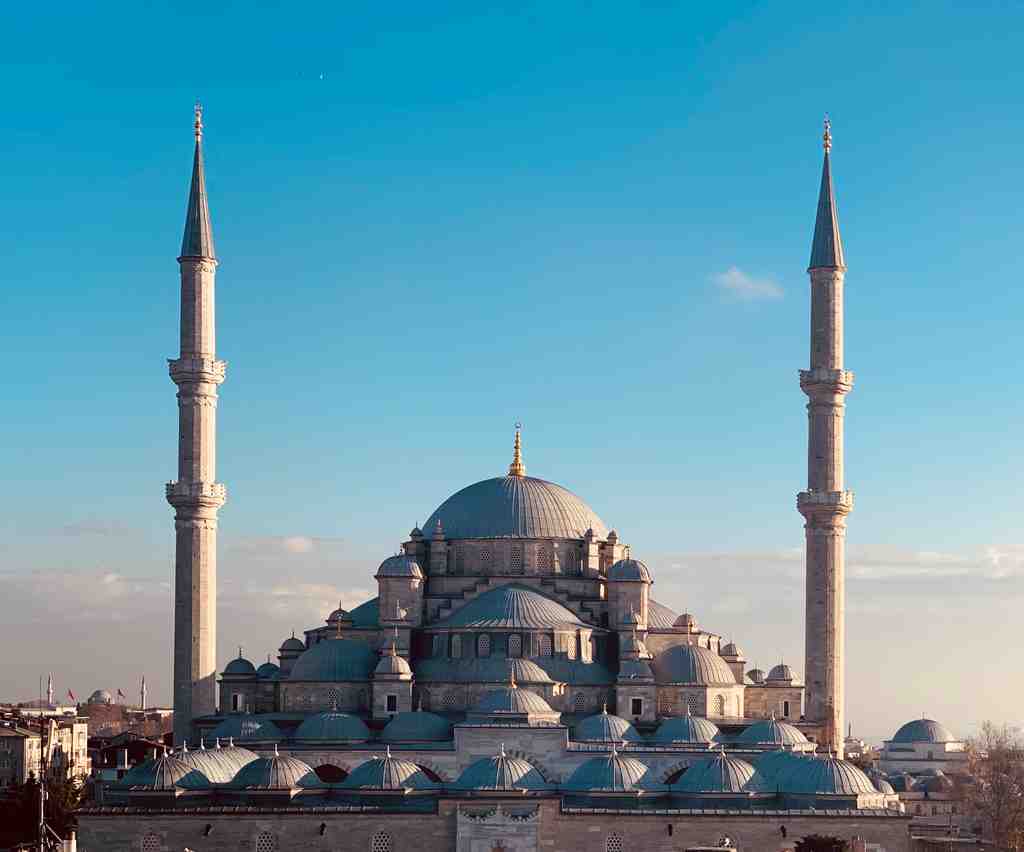
ş) and a hospice (darüzziyafe). These additional buildings created a center for religious and educational activities, as well as a space for social gatherings and support for the community. During the 1766 earthquake, the mosque suffered significant damage and was in need of restoration. In 1771, under the direction of the Ottoman architect Mimar Mehmet Tahir Ağa, the mosque was rebuilt in a different design. This new design incorporated elements of both Ottoman and Baroque architecture, creating a unique blend that showcases the cultural influences of the time. One notable feature of the Fatih Mosque complex is the Sahn-ı Seman Medrese, a theological school that was once an important center for the study of various disciplines including theology, law, medicine, astronomy, physics, and mathematics. It was founded by the renowned Turkic astronomer Ali Qushji, who was invited to the court of Mehmed the Conqueror. Over the centuries, the Fatih Mosque complex has undergone several renovations and restorations to preserve its historical and architectural significance. The most recent restoration took place in 2009 and was completed in 2021, allowing the mosque to reopen to worshippers. Today, the Fatih Mosque stands as a magnificent example of Ottoman architecture and serves as an important religious and cultural landmark in Istanbul. Its grand dome, elegant minarets, and intricate interior decorations continue to captivate visitors from around the world, providing a glimpse into the rich history and architectural heritage of Istanbul. As you explore this remarkable mosque, take a moment to appreciate the centuries of history and the enduring legacy of Mehmed the Conqueror, the great sultan who left his mark on both the city and this mosque.
전용 페이지 열기 →completed in 550 and stood as a magnificent example of Byzantine architecture. It featured a large central dome, supported by four massive piers, and was adorned with beautiful…더 보기간략히 보기
completed in 550 and stood as a magnificent example of Byzantine architecture. It featured a large central dome, supported by four massive piers, and was adorned with beautiful mosaics and intricate marble decorations. The Church of the Holy Apostles became not only a place of worship but also a burial site for the Byzantine emperors and their families. The Imperial Polyándreion, an underground tomb, housed the remains of numerous emperors, including Constantine himself. The splendor of the church and the significance of the burials within it added to its prestige and importance within the city. However, the church's fate took a turn with the fall of Constantinople to the Ottomans in 1453. The city was captured by Mehmed the Conqueror, who converted the church into a mosque. For a brief period, it served as the seat of the Ecumenical Patriarch, before the decision was made to move the patriarchate to the Theotokos Pammakaristos Church. Sadly, the Church of the Holy Apostles fell into disrepair and was ultimately demolished by the Ottomans in 1461. Its destruction made way for the construction of the Fatih Mosque, which stands in its place today. Although the original church no longer stands, its remains and rich history continue to fascinate visitors who come to explore the layers of Istanbul's cultural heritage. As we stand at this historical site, it's fascinating to imagine the grandeur and magnificence that once filled this space. The Church of the Holy Apostles was not only a place of worship but a symbol of imperial power, a resting place for emperors, and a testament to the rich Byzantine history. Its story reminds us of the ever-changing nature of cities and the layers of history that lie beneath our feet.
전용 페이지 열기 →tokos Pammakaristos Church, making it the last pre-Ottoman building to house the Ecumenical Patriarchate. However, in 1591, during the Ottoman period, the church was converted…더 보기간략히 보기
tokos Pammakaristos Church, making it the last pre-Ottoman building to house the Ecumenical Patriarchate. However, in 1591, during the Ottoman period, the church was converted into the Fethiye Mosque, which means "mosque of the conquest". Despite its conversion, the Pammakaristos Church still retains its historical and architectural significance. The Pammakaristos Church is a stunning example of Byzantine architecture, specifically the Palaiologan style. It showcases intricate details, elegant domes, and beautiful archways. As you step inside, you will immediately be captivated by the grandeur and splendor that surrounds you. One of the highlights of the Pammakaristos Church is its collection of Byzantine mosaics. These mosaics depict various religious figures and scenes, telling stories from the Bible and the lives of saints. The incredible craftsmanship and vibrant colors of the mosaics are truly awe-inspiring. Since the conversion into a mosque, the Pammakaristos Church has undergone some changes. However, it has managed to preserve its original beauty and historical significance. Today, it is partly a museum, giving visitors the opportunity to admire the stunning mosaics and learn about the rich history of this remarkable structure. Located in the Çarşamba neighborhood of the Fatih district, inside the walled city of Istanbul, the Pammakaristos Church is surrounded by an old-world charm. As you explore the area, you can immerse yourself in the vibrant atmosphere, taking in the sights, sounds, and flavors of Istanbul. So, come with me as we step back in time and discover the enchanting beauty of the Pammakaristos Church. Let the mosaics transport you to a different era, and let the history of this place captivate your imagination. There is so much to see and learn, and I promise you, this journey will be an unforgettable experience. Are you ready? Let's continue our tour to the next stop!
전용 페이지 열기 →
자주 묻는 질문
투어는 어떻게 시작하나요?
구매 후 AudaTours 앱을 다운로드하고 교환 코드를 입력하세요. 투어를 바로 시작할 수 있습니다 - 재생을 탭하고 GPS 안내 경로를 따라가시면 됩니다.
투어 중 인터넷이 필요한가요?
아닙니다! 시작 전에 투어를 다운로드하면 완전히 오프라인으로 즐길 수 있습니다. 채팅 기능만 인터넷이 필요합니다. 모바일 데이터 절약을 위해 WiFi에서 다운로드하시는 것을 권장합니다.
이것은 가이드가 안내하는 단체 투어인가요?
아닙니다 - 이것은 셀프 가이드 오디오 투어입니다. 폰을 통해 오디오 나레이션을 들으며 나만의 속도로 독립적으로 탐험합니다. 투어 가이드도, 단체도, 일정도 없습니다.
투어는 얼마나 걸리나요?
대부분의 투어는 60-90분이 소요되지만, 속도는 전적으로 본인이 조절합니다. 원할 때 언제든지 일시정지하거나, 정류장을 건너뛰거나, 휴식을 취하세요.
오늘 투어를 끝낼 수 없으면 어떻게 하나요?
괜찮습니다! 투어는 평생 이용이 가능합니다. 원할 때 언제든지 일시정지하고 다시 시작하세요 - 내일, 다음 주, 또는 내년에도. 진행 상황이 저장됩니다.
어떤 언어를 이용할 수 있나요?
모든 투어는 50개 이상의 언어로 이용 가능합니다. 코드를 교환할 때 원하는 언어를 선택하세요. 참고: 투어 생성 후에는 언어를 변경할 수 없습니다.
구매 후 투어는 어디에서 이용하나요?
App Store 또는 Google Play에서 무료 AudaTours 앱을 다운로드하세요. 교환 코드(이메일로 전송됨)를 입력하면 라이브러리에 투어가 나타나며, 다운로드하여 시작할 수 있습니다.
투어가 마음에 들지 않으시면 환불해 드립니다. 문의: [email protected]
안전한 결제 


