
라 오로타바 오디오 투어: 데헤사 알타의 역사, 미스터리 & 정원
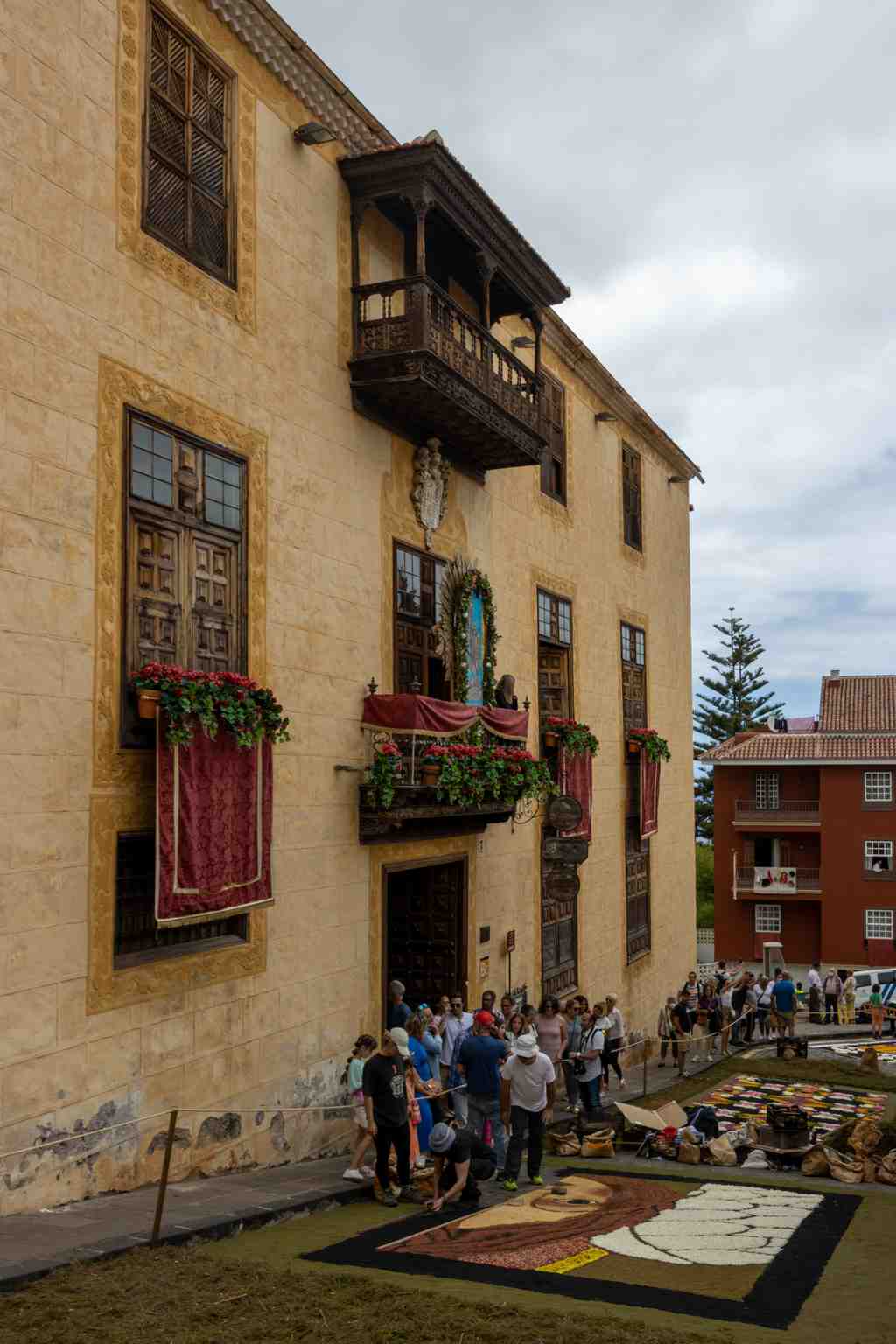
데헤사 알타 위로 솟아오른 종탑, 풍화된 돌들은 오래된 카나리아 권력 다툼의 비밀을 속삭입니다. 라 오로타바의 골목에는 그림자가 숨어 있고, 웅장한 외관은 수세기 동안의 스캔들과 충성심을 감추고 있습니다. 이 셀프 가이드 오디오 투어는 도시의 영혼을 열어주며, 대부분의 여행자들이 결코 알아차리지 못하는 황금 예배당, 숨겨진 기록 보관소, 과학적 경이로움을 통해 여러분을 안내합니다. 자신만의 속도로 탐험하며 익숙한 것들 바로 아래에 숨겨진 이야기들을 발견하세요. 콘셉시온 교회의 매끄러운 벽 안에서 어떤 무자비한 음모가 한때 울려 퍼졌을까요? 콘셉시온의 보물에 있는 금지된 유물들은 어떻게 파괴를 면했을까요? 카나리아 오로타바 과학사 재단에는 어떤 기발한 발명품이 잠들어 있을까요? 관광객의 발길을 넘어보세요. 모든 모퉁이가 반란, 기적, 발견의 에너지로 고동치게 하세요. 거닐면서 도시의 미스터리에 맞서고, 자갈길을 통해 숨겨진 드라마가 숨 쉬는 것을 느껴보세요. 베일을 걷어내세요. 지금 라 오로타바의 가장 놀라운 이야기 속으로 여정을 시작하세요.
투어 미리보기
이 투어에 대하여
- schedule소요 시간 40–60 mins나만의 속도로 이동
- straighten4.0 km 도보 경로안내 경로 따라가기
- location_on
- wifi_off오프라인 작동한 번 다운로드, 어디서든 사용
- all_inclusive평생 이용언제든지 다시 재생 가능
- location_on카나리아 오로타바 과학사 재단에서 시작
이 투어의 정류장
To spot the Canaria Orotava Foundation for the History of Science, look for a stately, two-story, cream-colored building with tall windows and a small iron balcony, set right at…더 보기간략히 보기
To spot the Canaria Orotava Foundation for the History of Science, look for a stately, two-story, cream-colored building with tall windows and a small iron balcony, set right at the corner where two narrow streets meet-almost like it’s keeping watch over the neighborhood. Now, let’s pull you back in time-imagine the year is 1999, just before the dawn of the new millennium. The streets here buzz with excitement and curiosity as a group of professors, brimming with enthusiasm and coffee, decide that history and science are simply too fascinating to be left gathering dust in musty old books. So, in the heart of La Orotava, they unite and create this very foundation. Here, the air always seems tinged with the soft hum of scholarly debate, bouncing around these sunlit rooms. But before this chapter began, roll the tape back to 1990. Here you’d find the curious birthplace of the story-a humble seminar called the Orotava Science History Seminar. Founded by teachers from local high schools-IES Villaba Hervás, IES Rafael Arozarena-and professors from the University of La Laguna, this was no boring book club. These folks were on a mission to unravel how science changed the world, particularly from a Canary Islands perspective. The debates sometimes lasted so long the janitors probably saw more scientific breakthroughs than the students! With passion and growing momentum, the little seminar needed a bigger stage. That’s when the foundation was officially born, gaining important champions: the local government, university hotshots, and even the mayor-all of them now part of the foundation’s patronage. As you stand outside today, imagine meetings filled with laughter, debate, and a shared sense of purpose echoing inside these walls. But what actually happens inside? Well, the foundation is like the Indy 500 of history and science events. It runs digital projects, like the Humboldt and Agustín de Betancourt projects, which bring dusty old scientific documents into the digital age, helping future historians avoid sneezing fits over ancient paper. It also hosts research groups, diving into everything from famous Spanish scientists to the often-unheard stories of women in science, or how genius minds like Einstein found their way into local classrooms. No two days here are ever the same-one day it’s packed with international experts arguing whether Newton would’ve preferred the beach or the blackboard, the next there could be a congress on the curious connections between New Spain and the Canaries. Even if you’re not a scientist, you’re welcome, too. There’s a conference room for riveting talks and a treasure trove of a library-over five thousand books! If only those shelves could talk, right? The Foundation’s efforts even spill onto its website, crammed full of free articles and education materials for everyone from kids to curious grown-ups. You might be wondering: is this just a local gig? Not at all! The list of collaborators reads like the guest list from a science-nerd’s dream party, with institutions from Mexico to Russia bringing their expertise. In the end, whether you’re a wandering student, a passionate teacher, or just happened to take a wrong turn while looking for ice cream, this building stands as a powerhouse of curiosity, discovery, and the sheer joy of learning-and who knows, maybe you’ll catch the buzz that’s kept this place busy for decades!
전용 페이지 열기 →You’ll spot Los Cuartos Municipal Stadium right in front of you-a broad, grassy field enclosed by white stands and advertising boards, with a tall floodlight tower rising above…더 보기간략히 보기
You’ll spot Los Cuartos Municipal Stadium right in front of you-a broad, grassy field enclosed by white stands and advertising boards, with a tall floodlight tower rising above the rooftops on the left side. Now, imagine it’s 1953: football fans fill the air with shouts and laughter, and the field out there-it was just a dirt pitch back then, not a single blade of grass in sight! Local heroes, Unión Deportiva Orotava, finally swapped the old Quiquirá ground for this one, and their first matches here kicked off a new era of excitement for the town. By 1971, things got fancier-they laid down real turf, and on a warm August evening, the stadium buzzed with anticipation as Orotava battled Real Club Deportivo de La Coruña in the very first Trofeo Teide, cheered on by fans from all over the Canary Islands. That trophy match has become a legendary summer event, drawing crowds and making memories every year. Not long ago, in 2022, there was even talk of renaming the stadium after Buenaventura Machado Melian, the beloved club president who helped transform this very ground. Generations have cheered, groaned, and maybe even prayed for a lucky goal-so much history on this grass! Bet your shoes can feel the energy, just standing here.
전용 페이지 열기 →Right in front of you, you'll see a magnificent stretch of gardens layered in seven wide, colorful terraces, with elegant flower beds, winding paths, bubbling fountains, and at…더 보기간략히 보기
Right in front of you, you'll see a magnificent stretch of gardens layered in seven wide, colorful terraces, with elegant flower beds, winding paths, bubbling fountains, and at the very top, a striking white marble mausoleum with columns shining in the sunlight-just look up the slope and you can’t miss it! Now, let me whisk you back in time: you’re in 19th-century La Orotava, where the tale spins around a bit of drama and a touch of stubborn elegance. These gardens, known as the Gardens of the Marquisate of the Quinta Roja or Jardines Victoria, aren’t just a feast for your eyes-they hide a saga worthy of a telenovela! Imagine whispers of scandal floating through the air because Diego Ponte del Castillo, the eighth Marquis, clashed with the church so much that when he died, they refused to bury him in the local cemetery. His mother, not one to let things slide, hired the French architect Adolphe Coquet to build this grand mausoleum here on the highest terrace, complete with marble columns, engraved names, and noble crests-an eternal “so there!” to her son’s critics. Here’s the twist: after all that fuss, Diego ended up being buried in the cemetery after all, and the splendid mausoleum remains as empty as a magician’s hat when the bunny escapes! Today, these peaceful terraces echo with the laughter of visitors and the mystery of stories never quite finished. So pause for a moment, feel the sun on your face, and imagine the heated debates and heartfelt hopes that shaped this dramatic corner of La Orotava.
전용 페이지 열기 →
9개 정류장 더 보기정류장 적게 보기expand_moreexpand_less
Through the centuries, more and more vineyards appeared, giving way to the famous wines of Orotava. But wait - plot twist! Along came banana plantations, slowly taking over from…더 보기간략히 보기
Through the centuries, more and more vineyards appeared, giving way to the famous wines of Orotava. But wait - plot twist! Along came banana plantations, slowly taking over from the 20th century onwards. It was the great Banana vs. Grape Showdown. Grapevines lost some ground, but today, around 671 hectares of vineyards are still registered and proudly carrying the Denominación de Origen label since 1995. The climate here is like a spa day for grapes: sultry, humid, and sunny, with Mediterranean warmth thanks to the Atlantic. But nothing is ever too easy, right? Mist from trade winds often wraps the vines in a dreamy shroud, while storms sometimes sweep through, keeping the grapes on their toes (if grapes had toes, that is). And let’s not forget the real stars of the show: the grapes. Reds with names like Castellana Negra and Negramoll, and whites like Malvasía Volcánica and Vijariego, give wines with flavors as enchanting and mysterious as the valley itself. Sip local wine here and you’re tasting history-volcanic, dramatic, and with just a hint of rebellion against those pushing bananas!
전용 페이지 열기 →Looking ahead, you'll spot an impressive cream-colored church with striking dark volcanic stone corners, tall arched windows, and a large pink-and-white dome rising behind two…더 보기간략히 보기
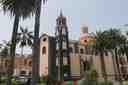
Looking ahead, you'll spot an impressive cream-colored church with striking dark volcanic stone corners, tall arched windows, and a large pink-and-white dome rising behind two palm trees-just lift your eyes above the greenery and you'll see it clearly! Alright, picture this: the sound of church bells mixing with the breeze as you stand before the Parroquia Matriz de Nuestra Señora de la Concepción-the brightest jewel in Canary Islands’ baroque crown. No wonder folks around here like to call it the “Cathedral of La Orotava,” even though, technically, it’s not a cathedral or a basilica-but with that enormous dome, inspired by none other than the grand dome of Florence, who could blame them for getting carried away? Travel back with me to the end of the 15th century-Tenerife has just been conquered. The very first settlers, likely covered in dust and with hopes high, built a modest hermitage on this spot, dedicated to the Immaculate Conception of the Virgin Mary. Their town began to spring up around it, a bit like mushrooms after rain, thanks to land handouts by Alonso Fernández de Lugo. In 1502 came the big land lottery and, just a year later, the hermitage became a full-fledged parish-by 1516, it was officially a church. Talk about a growth spurt! Through the centuries, La Concepción grew and transformed. By the 16th century, it started adding chapels and collecting treasures. In 1587, a remarkable wooden sculpture-the Cristo de la Misericordia-arrived, carved in 1585 and carefully carried here from a nearby hospital. But a church this grand comes with its share of drama. In the 17th century, earthquakes-caused by the local volcano-rocked the valley. The townspeople, nervous and desperate, made an annual vow to the Virgin of Candelaria in exchange for peace and quiet under the dome. Just imagine the trembling walls and prayers echoing through stone corridors! As the years rolled on, the church faced crumbling walls, collapsing towers, and repairs that seemed to never end. Eventually, the whole place was so battered that by 1758, the Spanish crown agreed: time to build anew! Plans went back and forth-one by a military engineer, then passed to the great Ventura Rodríguez-before a local master, Patricio García, rolled up his sleeves and got things moving. By 1768, the old church was gone, and a whirlwind of construction began. Deadlines were... well, let’s just say optimistic, but by 1788, a hundred years after starting, La Concepción was officially inaugurated in a ceremony practically bursting with pride. No one could accuse the people of La Orotava of lacking patience! Inside, the style is as grand as you’d expect: baroque blended with neoclassical touches, like marble works by Giuseppe Gaggini from Genoa and elegant ironwork shipped all the way from London in 1822. And talk about holy furniture-the pulpit is magnificently perched on the shoulders of a marble angel, while the main altar is crowned by a miniature marble temple, complete with eight Corinthian columns and a parade of little angels. Even the statues got an upgrade, thanks to local sculptor Fernando Estévez, who filled it with beauty and perhaps a bit of friendly rivalry with those Genoese imports. Of course, that wasn’t the end. Royalty paid frequent visits; repairs were made, stained glass was shipped from Zaragoza, electric lights were fitted (which probably impressed the saints), and even an organ from Germany arrived in 1914. In 1948, the Spanish government finally declared the church a National Historic Monument-a well-deserved honor. Restoration work at the end of the 20th century meant moving the parish briefly, but like any good Canarian comeback story, it reopened with newfound glory in 1999. In the 21st century, La Concepción continues to dazzle. Its treasury of art, from paintings and sculptures to gold and silver, is now preserved in a special museum next door. All in all, this majestic church has survived volcanoes, earthquakes, royal visits, and the changing tides of art and architecture, standing tall as the heart of La Orotava-and, just maybe, keeping an eye on the rest of us with a twinkle under that spectacular dome.
전용 페이지 열기 →This museum sits right inside the Parish Church of Nuestra Señora de la Concepción, and believe it or not, its story reaches all the way back to the early 1500s. Over 500 years,…더 보기간략히 보기
This museum sits right inside the Parish Church of Nuestra Señora de la Concepción, and believe it or not, its story reaches all the way back to the early 1500s. Over 500 years, the parish, local families, and a colorful cast of collectors gradually filled these rooms with thousands of pieces. The collection today spills across seven rooms and two levels-paintings, sculptures, carved furniture, dazzling textiles, and some truly breathtaking silverwork. And if you think church treasures are stuffy, wait until you see their Gothic monstrance, crafted around 1520 in that incredibly intricate Portuguese Manueline style. Talk about old-school bling! Some of the textiles here are among the most important in Spain. You’ll find elaborate chasubles, lace-trimmed altar cloths, bishop’s regalia-the kind of heavenly fashion that would make any red carpet jealous. But it wasn’t all peaceful collecting. Imagine the drama during the 1800s: Between 1835 and 1869, several monasteries in La Orotava closed down and their precious art and luxuries found a new home right here. Suddenly, the parish was richer than a royal wedding, and the museum gained exquisite altarpieces, statues, and paintings-some of which had to be squeezed into every nook and cranny. By the mid-20th century, somebody realized that all this splendor deserved a spotlight. In 1942, after some heavy-duty reorganizing-think musical chairs for museum cabinets-the upper rooms above the main sacristy were turned into “the Treasure.” Thanks to generous donations from families like the Cullen-Calzadillas, this museum now safeguards the magnificent pontifical wardrobe of Tenerife’s first bishop, Luis Folgueras y Sión. Fun fact: It took a drawn-out legal wrangle with the Granada cathedral to bring those vestments back to the Canary Islands. Now, after bouncing between relatives for generations, they rest peacefully here-no lawyer required. Let’s appreciate the variety: Marvelous paintings cover every era of Canarian art. There’s a moving Immaculate Conception by Juan de Miranda, acquired to decorate the church in 1781, along with portraits of bishops and local dignitaries. Scenes from Christ’s Passion, created by Seville’s painters in the late 1500s, hang beside Italian masterpieces like Domenico Fetti’s Penitent Magdalene-donated by the Marquis of San Andrés in 1978. Talk about a family heirloom. There’s even more upstairs! The south wing, transformed most dramatically, is like a pirate’s trove of silver relics. The display cases glitter under the restored chestnut wood ceiling, said to have been repurposed from the old parish and probably carved in the 1670s. Now, these chambers hold shimmering chalices, ornate processional litters, and even altar pieces once hidden away in convents-reimagined as the stars of this show. Over time, secularization meant private oratory treasures-belonging to families like the Monteverdes, Zárates, and Ascanios-made their way into the museum. There’s even a “guide of faith” here, a special booklet tying everything together, just in case you lose your way among the thousands of details. Restoration in 1998-99 gave the museum a modern lift without losing its personality. Armored doors, secret alcoves, and dozens of cataloged collections now lie in wait, ready to surprise every visitor who follows the winding corridors. If you’re lucky, you might sense the pride of La Orotava’s residents, who spent centuries donating and protecting these cultural treasures-making this museum a living tribute to the town’s spirit and devotion. So, are you feeling curious yet? The treasures inside are a tapestry of faith, art, and a few family squabbles along the way. Just think: Every creaking floorboard and whispered prayer is another thread in its remarkable story!
전용 페이지 열기 →Right ahead of you stands Casa Lercaro, easily spotted by its large and elegant façade with creamy stonework, decorative wooden balconies stacked above the main entrance, and…더 보기간략히 보기
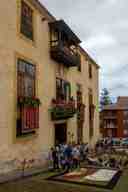
Right ahead of you stands Casa Lercaro, easily spotted by its large and elegant façade with creamy stonework, decorative wooden balconies stacked above the main entrance, and flower-filled windows-just look for the most grand building on this stretch of Calle Colegio, especially the balcony bursting out just above the doorway. Standing here, you’re in front of a house that’s almost like a “Who’s Who” of Canarian nobility-welcome to Casa Lercaro, or if you want to impress your friends, you can also call it Casa de Ponte-Grimaldi or Casa de Ponte-Fonte. Let’s set the scene: It’s the 17th century, and you’re walking past the home of Jerónimo de Ponte-Fonte y Pagés, whose marriage to Catalina Grimaldi Rizo de Lugo started a family line that would shape La Orotava’s story for generations. The house itself is no shrinking violet, taking up over 3,000 square meters if you count the gardens and orchard, and almost 900 for the main building-rumor has it, you’d need roller skates just to get from one end to the other. Look up at that striking U-shaped building. The grandeur is no accident! Its main face is decked out in true baroque style, showing off a keen sense for symmetry: two windows on either side of the door, stacked balconies in the center creating a sense of importance that climbs upward-each balcony is more grand than the last. The top floor once served as a granary, so not only did the family live in style-they also stashed their potatoes and wheat right above their heads. If you peek closer at the carved balconies, you’ll spot intricate wooden work, iron railing, and Corinthian columns that seem to say, “We may be in the Canaries, but we know all about Italian flair.” You’ll notice the façade itself mimics solid stone blocks, even though it’s all clever craft, and every opening-doorways and windows alike-are dressed up with etched floral designs. The noble ground-floor door is a masterpiece, a mix of armored studs and panels, a real showstopper. If you’re curious whether symmetry ever met a challenge, take a look to the right: there are two tiny windows for balance-because, thanks to this street’s steep slope, the architect had to get a little creative. Here’s a fun detail: right above the broad main door, you’ll find a family crest carved in marble. That’s a mashup of every big name in the family: Ponte, Lugo, Grimaldi, Fonte, and Rizo. If only they had Instagram back then! During festivals, imagine this house bustling with life. The noble floor-where the family actually lived-would glow with light from inside as nobles entertained guests, and people hurried about on the ground floor taking care of food, deliveries, or everyday business. Walk just a bit inside (don’t worry, you’re safe with me), and you’d encounter a vestibule flanked by a stone-forged iron gate dated 1913, hinting at later family pride. The main patio-open to the north-features chunky corinthian columns atop what, believe it or not, are old millstones buried as foundations. On the upper levels, a closed gallery with sash windows creates a bright passageway above street level, offering sweeping views-and maybe a spot for peeking at the neighbors’ gossip. The house is topped with classic Arabic roof tiles, and a little glassed-in lookout towers at the southeast corner, like a perching spot for daydreams. If you stood here centuries ago, you could have seen carriages arriving, animals clattering by, and the occasional flourish of a cloak and powdered wig. The back garden once overflowed with fruit trees, and the patios echoed with footsteps and laughter. Today, its massive doors may be quieter, but Casa Lercaro stands as a testament to the ambition, style, and resilience of La Orotava’s most distinguished families. And now, you’re part of its story-so give your best aristocratic wave before we move along!
전용 페이지 열기 →Right in front of you is a large three-story house with a pale façade, wide wooden balconies running along the top, and windows on the middle floor decorated with flowers and…더 보기간략히 보기
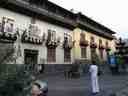
Right in front of you is a large three-story house with a pale façade, wide wooden balconies running along the top, and windows on the middle floor decorated with flowers and colorful artwork-just look for the long balcony crowded with wooden railings and vibrant blooms! Now, imagine stepping back into 1632: the Casa de los Balcones, or the Fonseca House, is rising from the cobblestones, and carpenters are busy carving elaborate wood for the balconies and the now-famous inner courtyard. By 1675, the house stands proud, with its upper balcony stretching the full length, and five smaller balconies below, all made from Canarian pine, creaking ever so slightly in the breeze. Walk inside and you’d find a sun-soaked courtyard bursting with green, almost like nature’s living room. But this is no ordinary house. For centuries, the Casa de los Balcones has been the heartbeat of Canarian craft: intricate lacework, basket weaving, embroidery, and more. Picture friendly artisans chatting as they pass thread through their fingers, surrounded by the spicy scent of fresh wood. The house is alive every day-not just a museum, but a living workshop and school, where generations learn and keep alive the traditional crafts of the Canaries. You’ll spot displays from the famous workshop of Eladia Machado, where dexterous hands have been turning thread into treasures since 1932. Today, thousands come here to browse embroidered cloth, handwoven baskets, colorful ceramics, and even traditional costumes. It’s hard not to fall under the spell-whether you’re here for the culture, the crafts, or just to see if the balcony can really hold that many people at Carnival time!
전용 페이지 열기 →Inside, these elegant halls buzz with meetings where the mayor and city councillors-now led by Francisco Linares of the Coalición Canaria-make the decisions shaping La Orotava’s…더 보기간략히 보기
Inside, these elegant halls buzz with meetings where the mayor and city councillors-now led by Francisco Linares of the Coalición Canaria-make the decisions shaping La Orotava’s future. Since 1979, every mayor has been democratically chosen by triumphant waves of universal suffrage, a real upgrade from the old days when getting a say was harder than finding your car keys after a fiesta. The council itself is a lively mix of diverse voices-13 councillors from the Coalición Canaria-Partido Nacionalista Canario-Centro Canario Nacionalista, a trio from the Partido Popular, another three from the Spanish Socialist Workers’ Party, another three from the Partido Popular again (sorry, no double vision, just politics!), and two from Iniciativa por La Orotava. The financial tales inside these walls could fill a soap opera. The “deuda viva,” or living debt, only counts the debts with banks-so, at least the coffee bills don’t get quite as dramatic. So, the next time you vote, remember you’re sending someone into this beautiful hive of debate, decisions, and probably plenty of strong local coffee!
전용 페이지 열기 →To spot the Parish of San Juan Bautista, look ahead for a bright cream-colored church with a clock-towered belfry on the left and a sturdy wooden door framed by stone right in the…더 보기간략히 보기
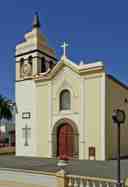
To spot the Parish of San Juan Bautista, look ahead for a bright cream-colored church with a clock-towered belfry on the left and a sturdy wooden door framed by stone right in the center-its clean lines and cross on top make it hard to miss. Now, imagine yourself standing right where the drama of La Orotava’s history unfolded! Long before this impressive parish rose before you, there was just a humble little hermitage built by the hardworking locals way back in the 1600s. But the story gets spicy: these villagers wanted their own church, free from the rule of the big parish down in town. So, after twenty years of persistence-let’s call it stubbornness with a twist of Canarian spirit-they turned old sugarcane fields once owned by a Genoese merchant, Tomás Justinianeo, into the proud grounds for their parish. Building it was no walk in the park. There were decades spent hauling stones, scraping together funds, and negotiating with bishops. Oh, the excitement when, in 1861, they finally placed the Holy Sacrament inside! But with freedom comes a bit of chaos-arguments flared when the main parish wanted to control certain ceremonies in San Juan. (Church politics: always lively, even back then.) As you stand here, imagine August 1747, when the building was finally blessed, though the iconic tower you see now wouldn’t appear until years later thanks to Bishop Delgado and one generous Don Mateo González Grillo-a local hero who donated so much, he almost deserves a statue out front. Inside today, you’ll find a treasure trove of art: centuries-old silver, oil paintings, and beloved statues like the Señor Atado a la Columna and the enchanting Virgen del Carmen, each with their own tales of processions, devotion, and maybe a little bit of village gossip whispered through the ages. So, take a breath: right here, you’re surrounded by stories that still warm the heart of La Orotava!
전용 페이지 열기 →Directly ahead, you’ll spot a tall, elegant pale stone monument with crisp golden letters and floral carvings, rising above flower-filled niches and framed by shady green…더 보기간략히 보기
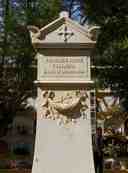
Directly ahead, you’ll spot a tall, elegant pale stone monument with crisp golden letters and floral carvings, rising above flower-filled niches and framed by shady green trees-just keep your eyes level and look for the grand structure with the classic triangular top. Welcome to the La Orotava Cemetery, a place where stories linger in the warm Tenerife breeze. Imagine the year 1823: the town’s churches could no longer keep up with the growing population-too many souls, not enough resting space! So, the good people of La Orotava turned to the talented Fernando Estévez, their hometown sculptor, who designed this cemetery not just as a burial ground, but as a romantic garden-making even the afterlife feel a bit like a park stroll. As you look around, you’ll notice family mausoleums of local legends, like the Marquises of Quinta Roja and the Monteverdes. At the heart stands a chapel, its doorway saved from an old monastery, now whispering secrets of past fires and faithful restoration. The cemetery is still alive today, growing as time marches on. Every stone and flower here urges you to remember: history isn’t just written in books-sometimes, it rests quietly beneath your feet. Now, who said cemeteries couldn’t be lively places full of history and art?
전용 페이지 열기 →



자주 묻는 질문
투어는 어떻게 시작하나요?
구매 후 AudaTours 앱을 다운로드하고 교환 코드를 입력하세요. 투어를 바로 시작할 수 있습니다 - 재생을 탭하고 GPS 안내 경로를 따라가시면 됩니다.
투어 중 인터넷이 필요한가요?
아닙니다! 시작 전에 투어를 다운로드하면 완전히 오프라인으로 즐길 수 있습니다. 채팅 기능만 인터넷이 필요합니다. 모바일 데이터 절약을 위해 WiFi에서 다운로드하시는 것을 권장합니다.
이것은 가이드가 안내하는 단체 투어인가요?
아닙니다 - 이것은 셀프 가이드 오디오 투어입니다. 폰을 통해 오디오 나레이션을 들으며 나만의 속도로 독립적으로 탐험합니다. 투어 가이드도, 단체도, 일정도 없습니다.
투어는 얼마나 걸리나요?
대부분의 투어는 60-90분이 소요되지만, 속도는 전적으로 본인이 조절합니다. 원할 때 언제든지 일시정지하거나, 정류장을 건너뛰거나, 휴식을 취하세요.
오늘 투어를 끝낼 수 없으면 어떻게 하나요?
괜찮습니다! 투어는 평생 이용이 가능합니다. 원할 때 언제든지 일시정지하고 다시 시작하세요 - 내일, 다음 주, 또는 내년에도. 진행 상황이 저장됩니다.
어떤 언어를 이용할 수 있나요?
모든 투어는 50개 이상의 언어로 이용 가능합니다. 코드를 교환할 때 원하는 언어를 선택하세요. 참고: 투어 생성 후에는 언어를 변경할 수 없습니다.
구매 후 투어는 어디에서 이용하나요?
App Store 또는 Google Play에서 무료 AudaTours 앱을 다운로드하세요. 교환 코드(이메일로 전송됨)를 입력하면 라이브러리에 투어가 나타나며, 다운로드하여 시작할 수 있습니다.
투어가 마음에 들지 않으시면 환불해 드립니다. 문의: [email protected]
안전한 결제 


