

바르셀로나 오디오 투어: 바르셀로나 역사적 랜드마크 오디오 투어
솟아오르는 첨탑과 고대 석조물의 그림자 아래, 바르셀로나는 햇빛이 드러내는 것보다 더 많은 비밀을 숨기고 있습니다. 조각상으로 가득 찬 궁전, 구불구불한 중세 골목, 그리고 카탈루냐 이야기의 신비로운 심장을 가로지르는 셀프 가이드 오디오 투어를 통해 흥미로운 이야기의 층층을 풀어보세요. 긴급한 도시 변화 중에 수백 년 된 저택 아래에서 로마 유적이 나타난 이유는 무엇일까요? 번화한 외관 뒤 조용한 안뜰에는 어떤 고딕 양식의 수수께끼가 남아있을까요? 부채와 열쇠에 대한 어떤 악명 높은 수집가의 집착이 귀족 사회에서 스캔들의 속삭임을 불러일으켰을까요? 프레데릭 마레스 박물관에서 역사 박물관의 웅장한 홀을 거쳐 미로 같은 골목 깊숙이 이동하며 반란, 예술 혁명, 잃어버린 보물의 흐름을 따라가 보세요. 한 걸음 한 걸음이 바르셀로나의 숨겨진 드라마와 빛나는 매력 속으로 당신을 더 깊이 빠져들게 할 것입니다. 대부분이 힐끗 보기만 하는 곳으로 들어갈 준비가 되셨나요? 지금 바르셀로나의 가장 잘 보존된 이야기 속으로 여행을 시작하세요.
투어 미리보기
이 투어에 대하여
- schedule소요 시간 40–60 mins나만의 속도로 이동
- straighten1.8 km 도보 경로안내 경로 따라가기
- location_on
- wifi_off오프라인 작동한 번 다운로드, 어디서든 사용
- all_inclusive평생 이용언제든지 다시 재생 가능
- location_on프레데릭 마레스 박물관에서 시작
이 투어의 정류장
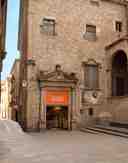
Welcome to the Museu Frederic Marès. This art and sculpture museum is located in Barcelona, Spain, near the Barcelona Cathedral. The Museu houses a vast collection of thousands of…더 보기간략히 보기
Welcome to the Museu Frederic Marès. This art and sculpture museum is located in Barcelona, Spain, near the Barcelona Cathedral. The Museu houses a vast collection of thousands of items created by the sculptor Frederic Marès. Its collection includes statuary dating back to pre-Roman times and spanning almost to the present day. Notably, the museum has a strong focus on medieval Christian art. Additionally, the Museu features a distinctive 'Collector's Cabinet' showcasing artisan items like fans and keys. This museum offers a unique opportunity to explore the artistic legacy of Frederic Marès and appreciate the rich history of Barcelona. Now, let's move on to our next stop, the Barcelona Cathedral.
전용 페이지 열기 →The Museum of the History of Barcelona (MUHBA) is a prestigious institution that preserves and showcases the historical heritage of Barcelona. Its main headquarters are situated…더 보기간략히 보기
The Museum of the History of Barcelona (MUHBA) is a prestigious institution that preserves and showcases the historical heritage of Barcelona. Its main headquarters are situated on Plaça del Rei in the Gothic Quarter. However, the museum also manages several other significant sites throughout the city, ranging from ancient Roman remains to medieval landmarks such as the Jewish quarter and the Palau Reial Major. Additionally, it curates contemporary sites related to renowned architect Antoni Gaudí and the Spanish Civil War. The museum was officially opened on April 14, 1943, under the guidance of historian Agustí Duran i Sanpere. It operates under the City Council of Barcelona as part of the Culture Institute. The museum's origins can be traced back to the late 19th century, with early attempts to establish a museum dedicated to the history of Barcelona. These efforts gained momentum during the 1929 Barcelona International Exposition when a temporary exhibition showcasing the city's past, present, and future was organized. The construction of Via Laietana created the need to relocate Casa Padellàs, a late Gothic palace dating back to the 15th-16th centuries. During this relocation, significant remnants from the ancient city of Barcino were discovered. This discovery prompted an archaeological investigation, leading to the unearthing of an entire Roman quarter. Unfortunately, the Spanish Civil War interrupted these excavations. Nonetheless, the importance of the findings solidified the location as the optimal site for the long-awaited historical museum. In 1943, after the war had concluded, the Museum of the History of Barcelona finally opened to the public. At the heart of the museum were the archaeological remains of the Roman and late antique city, coupled with the medieval Palau Reial Major on Plaça del Rei. The Palau Reial Major houses notable spaces such as the Saló del Tinell and the palatine chapel dedicated to Saint Agatha. Casa Padellàs also displayed objects that presented the history of Barcelona from the late medieval period to the beginning of the 20th century, encompassing various aspects such as governance, guilds, civic celebrations, wars, crafts, trade, and the city's industrial era. Over time, the museum expanded, including the incorporation of new sites such as the Temple of Augustus and the Roman funeral way in Vila de Madrid square. The archaeological area on Plaça del Rei underwent significant renovations, with updated museography that reflects the latest knowledge on the city during the Roman and late antique periods. In recent years, the museum has undergone further transformations. The permanent exhibition in Casa Padellàs was closed around 1990, and the space is now utilized for temporary exhibitions that offer dynamic and thought-provoking overviews of key aspects of Barcelona's history. Simultaneously, the archaeological area underwent a complete revamp, incorporating new insights into Roman and late antique times, culminating in its inauguration in 1998. The Museum of the History of Barcelona stands as a place of reverence for the city's past, providing an invaluable resource for visitors to explore and understand Barcelona's rich historical tapestry.
전용 페이지 열기 →
9개 정류장 더 보기정류장 적게 보기expand_moreexpand_less
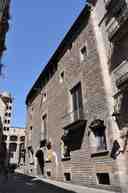
The Basilica of Saints Justus and Pastor, also known as Església dels Sants Just i Pastor in Catalan, is a remarkable basilica located in Barcelona, Catalonia. It received the…더 보기간략히 보기
The Basilica of Saints Justus and Pastor, also known as Església dels Sants Just i Pastor in Catalan, is a remarkable basilica located in Barcelona, Catalonia. It received the prestigious title of minor basilica in 1948, making it the sixth church in Barcelona to be bestowed with this honor by Pope Pius XII. The construction of this Gothic church commenced on February 1, 1342 and continued until 1574. The basilica was built upon the foundation of the previous Romanesque church and the site of the former chapel of Sant Celoni. The initial three sections of the nave were completed in 1363, with the vault of the feet following suit in the subsequent century. The construction of the façade and belfry extended until the 16th century, under the watchful guidance of master builders Pere Blai, Joan Safont, and Joan Granja. In the 19th century, significant renovations took place, including the relocation of the choir from the center of the nave to the apse. To accommodate this change, the altar was moved forward. Between 1880 and 1887, the façade was reconstructed in the Gothic Revival style by the skilled hands of architect Josep Oriol Mestres. Additional renovations were carried out in 1904 by August Font i Carreras, focusing on the chapel of the Santíssim. In 1944, the polychromy of the nave and 19th-century vaults were removed, and in 1946, the basilica underwent restoration under the supervision of architect Jeroni Martorell i Terrats. As a testament to its grandeur and significance, the Basilica of Saints Justus and Pastor was granted the title of minor basilica in 1948, signifying its esteemed place within the Catholic Church.
전용 페이지 열기 →During the late 13th century, the renowned medieval rabbi Shlomo ben Adret served as the leader of this synagogue for an impressive 50 years. However, after the Jewish population…더 보기간략히 보기
During the late 13th century, the renowned medieval rabbi Shlomo ben Adret served as the leader of this synagogue for an impressive 50 years. However, after the Jewish population of Barcelona was tragically massacred in 1391, the building was repurposed and its original use was forgotten. It was not until 1987, when Jaume Riera y Sans began researching the location of the Sinagoga Major, that the synagogue was rediscovered. The building's structure was found to align with religious requirements, facing Jerusalem and featuring two windows, suggesting its original purpose as a synagogue. In 1995, Miguel Iaffa purchased the building and initiated its restoration, leading to its reopening as a synagogue and museum in 2002. Although no congregation regularly prays here, the Ancient Synagogue is used for special occasions such as B'nei Mitzvah and weddings. This remarkable landmark has drawn thousands of visitors since its opening and holds significant historical and cultural value. It is a testament to the rich Jewish heritage of Barcelona and serves as a reminder of the diverse history of the city.
전용 페이지 열기 →The name "El Call" comes from the Catalan language, meaning "little street" or "alley," referring to the narrow streets that were inhabited by the Jewish population. The community…더 보기간략히 보기
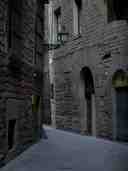
The name "El Call" comes from the Catalan language, meaning "little street" or "alley," referring to the narrow streets that were inhabited by the Jewish population. The community of Jews living here was known as the aljama. The presence of Jews in Barcelona dates back to soon after 70 CE when small groups arrived in Europe, fleeing Roman repression during the First Jewish-Roman War. By 1079, the Jewish population in Barcelona had grown to around 70 families. Over time, the Jewish population became concentrated within the Call, which expanded to include Carrer del Call, Carrer de Sant Domènec del Call, Carrer Marlet, and Arc de Sant Ramón del Call. As the community continued to grow and Jews expelled from France arrived, the Call Menor, or Minor Call, was established alongside the Call Major. By the 13th century, the Call had become the largest Jewish quarter in Catalonia. During its golden age, around 15% of medieval Barcelona's population was Jewish, with the majority residing in the Jewish quarter. Jews held important positions as doctors, scientists, merchants, and money lenders for the Catalan aristocracy. Legislation even made Jews the official financiers of Catalonia's sovereigns. However, life became more challenging for the Jewish community in Barcelona. At the Fourth Lateran Council in 1215, Jews were required to wear hoods and a red button sewn into their clothes for identification. King James I later removed this requirement in 1268. The situation worsened in the 14th century when Barcelona faced famines and the devastating Black Death in 1348, which took the lives of many residents, including Jews. Blaming the Jewish community, an attack on the Jewish quarter occurred in 1349. The violent pogroms of 1391 across Spain essentially eradicated the Jewish quarter, with approximately 300 Jews being killed in Barcelona alone. During the Spanish Inquisition, the Jewish population in Barcelona suffered greatly. King Ferdinand imposed restrictions on the size of synagogues and nearly wiped out the community. Nonetheless, in the center of the Jewish quarter stands the Ancient Synagogue, also known as the Sinagoga Major. This synagogue is believed to have existed since the 5th century and is one of the oldest synagogues in Europe. It underwent restoration in the 1990s and reopened to the public in 2003. In the 21st century, Barcelona is home to an estimated 3,500 Jews, marking the largest concentration of Jews in Spain. The Jewish quarter, with its rich history and the Ancient Synagogue, serves as a reminder of the vibrant Jewish community that once thrived in Barcelona.
전용 페이지 열기 →Plaça de Sant Felip Neri is a significant and somber landmark located in the Gothic Quarter of Barcelona. This small square, situated in the district of Ciutat Vella, showcases…더 보기간략히 보기
Plaça de Sant Felip Neri is a significant and somber landmark located in the Gothic Quarter of Barcelona. This small square, situated in the district of Ciutat Vella, showcases various architectural styles, including Renaissance and Baroque buildings. It derives its name from the Church of Saint Philip Neri, which stands prominently in the square. To the right of the church, you will find the School of Saint Felip Neri, utilizing the square as a playground for its students. On the left side of the church, there is a house used by the Oratory of Saint Philip Neri. In the center of the square lies a notable octagonal fountain, symbolizing the essence of life. The square was once home to the Palace of Neri, constructed in 1752. In an attempt to preserve the gothic style of the square, Renaissance buildings from other parts of the city were carefully relocated here during the mid-20th century. Additionally, the hotel Neri was constructed with gothic stone to maintain the square's unique character. Tragically, Plaça de Sant Felip Neri holds a painful history dating back to the Spanish Civil War. In the midst of the conflict, on January 30th, 1938, Franco's forces besieged Barcelona, and one of their bombs struck the church. The devastating explosion resulted in the loss of 30 lives, predominantly children from the School of Sant Philip Neri and orphaned refugee children from Madrid. As the community rallied to rescue survivors, a second bomb tragically fell on the square, claiming the lives of 12 more individuals, bringing the total death toll to 42. The church's walls still bear the scars of these bombings, serving as a chilling reminder of the past. It is worth mentioning that during the Francoist regime, authorities spread a false myth suggesting that the pockmarks on the church's stone facade were the result of an anarchist execution targeting church priests. This fabrication aimed to conceal evidence of the bombings that took place in 1938. Although the Museu del Calçat, a museum dedicated to footwear, closed its doors in 2015, the building remains unused. However, the tragic history and architectural significance of Plaça de Sant Felip Neri continue to attract visitors who seek to understand Barcelona's past. For those using public transportation, the closest metro stations are Jaume I (L4) and Liceu (L3). Additionally, several bus lines, including 45, 59, 91, 120, V13, V15, V17, and the Barcelona tourist bus, provide convenient access to the square. It is also in close proximity to the Barcelona Cathedral, located at the end of Carrer de Montjuïc del Bisbe.
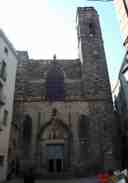
전용 페이지 열기 →The Church of Saint Philip Neri, known as Església de Sant Felip Neri in Catalan, is an impressive example of baroque architecture. It is situated in the Plaça de Sant Felip Neri,…더 보기간략히 보기
The Church of Saint Philip Neri, known as Església de Sant Felip Neri in Catalan, is an impressive example of baroque architecture. It is situated in the Plaça de Sant Felip Neri, within the historic Gothic quarter of Barcelona, Catalonia, Spain. Construction of the church took place between the years 1721 and 1752, resulting in the magnificent structure you see before you today. This church holds a tragic piece of history, as it endured the ravages of the Spanish Civil War. On January 30, 1938, it became a target for Franco's air forces, and the impact of the bombardment can still be observed on its facade. This event left a lasting impact on the church, serving as a grim reminder of the destruction caused during that period. Adjacent to the church stands a convent belonging to the Oratory of Saint Philip Neri. Within these sacred walls, the composer Francesc Queralt created a collection of oratorios specifically crafted for performance in this very church. The Church of Saint Philip Neri is not only a religious landmark but also an embodiment of history, resilience, and the enduring spirit of Barcelona.
전용 페이지 열기 →The Roman Catholic Archdiocese of Barcelona, officially known as the Archidioecesis Barcinonensis, is a significant religious institution in the Catalonia region of northeastern…더 보기간략히 보기
The Roman Catholic Archdiocese of Barcelona, officially known as the Archidioecesis Barcinonensis, is a significant religious institution in the Catalonia region of northeastern Spain. The archdiocese is centered around the Catedral Basílica Metropolitana de la Santa Creu i Santa Eulàlia, Barcelona, which holds the status of a Minor Basilica. In addition to the cathedral, the archdiocese has nine more Minor Basilicas. The current Archbishop of Barcelona is Juan José Omella Omella, who was appointed by Pope Francis on November 6, 2015. Within the ecclesiastical province of Barcelona, there are two suffragan sees: the Roman Catholic Diocese of Sant Feliu de Llobregat and the Roman Catholic Diocese of Terrassa. As of 2014, the archdiocese served approximately 2,116,479 Catholics, accounting for 79.7% of the total population of 2,657,000 in the area. The pastoral care is carried out in 214 parishes and 153 missions, with the assistance of 826 priests (396 diocesan and 430 religious), 46 deacons, 3,092 lay religious (639 brothers and 2,453 sisters), and 19 seminarians. While there are claims of the diocese dating back to the time of the apostles, historical evidence primarily supports its existence from the third century onwards. Barcelona was one of the fourteen dioceses of the ecclesiastical province of Tarragona during the Visigothic Kingdom. In the fifth century, it temporarily lost territory to establish the Diocese of Egara but regained it later. After the Christian fall in 712, a long period of sede vacante, meaning a vacant see, ended with the appointment of Bishop Joan in 850. At this time, the diocese became subordinated to the Carolingian See of Narbonne. During the Reconquista, Bishop Oleguer assumed the archiepiscopal seat of Tarragona in 1017 while maintaining his position in Barcelona. Barcelona then became suffragan to Tarragona once again. In 1237, it lost its Balearic territory to establish the Diocese of Mallorca. Throughout the Middle Ages, the bishops often resided in pontifical or royal courts rather than in the city itself. Bishop Jaume Caçador introduced reforms according to the Council of Trent in the 16th century. Except for a period of sede vacante from 1808 to 1814 during the Napoleonic Wars, Barcelona and its diocese continued to grow in wealth and influence. On March 25, 1964, Pope Paul VI elevated the Diocese to the level of a non-Metropolitan Archdiocese. However, it only gained the status of a Metropolitan Archdiocese in 2004 when Pope John Paul II divided its territory into the Archdiocese of Barcelona and the suffragan sees of Sant Feliu de Llobregat and Terrassa, appointing Archbishop Sistach. The Archdiocese of Barcelona has seen important visits from Pope John Paul II in February 1982 and Pope Benedict XVI in November 2010. Throughout its history, the source of the diocese's bishops can be traced back to apostolic times, as documented in various catalogs. These catalogs, though not entirely authentic, have preserved the names of numerous bishops who played significant roles in the diocese's development.
전용 페이지 열기 →The cathedral features a neo-Gothic façade added in the late nineteenth century, transforming its previously nondescript exterior into a more grandiose structure commonly seen in…더 보기간략히 보기
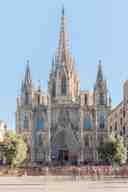
The cathedral features a neo-Gothic façade added in the late nineteenth century, transforming its previously nondescript exterior into a more grandiose structure commonly seen in Catalan churches. The interior is designed in a pseudo-basilica style, with five aisles that are vaulted and divided into chapels. The transept of the cathedral is truncated, and the east end showcases a chevet consisting of nine radiating chapels connected by an ambulatory. The high altar is elevated, offering a clear view into the crypt beneath. This crypt is where the body of Saint Eulalia, the co-patron saint of Barcelona, is entombed. According to Catholic tradition, she was a young virgin who suffered martyrdom during Roman times in the city. One story recounts that she was exposed naked in the public square, and a miraculous snowfall covered her nudity in mid-spring. The enraged Romans then rolled her down a street in a barrel filled with knives. If you take a look at the choir stalls, you will notice the coats-of-arms belonging to the knights of the Order of the Golden Fleece. It is worth noting that in his first visit to Spain, Charles, the eventual Holy Roman Emperor, chose Barcelona as the site for a chapter of his Order. The cathedral's large proportions made it suitable for the grand ceremonies he intended. The Barcelona Cathedral also showcases the Chapel of the Holy Sacrament and the Holy Christ of Lepanto, which houses a cross believed to date back to the Battle of Lepanto in 1571. Additionally, several tombs can be found within the cathedral, including those of Saint Raymond of Penyafort, Count Ramon Berenguer I, his third wife Almodis de la Marche, and several bishops. Within the Gothic cloister of the cathedral, you will find 13 white geese. It is said that there are precisely 13 geese because Saint Eulalia was 13 years old when she was martyred. To learn more about the history of the cathedral, you can visit the Barcelona City History Museum, which displays parts of the early Christian and Visigothic episcopal complex that once stood in this location. This complex included a baptistery, a basilical hall, a cross-shaped church, and a bishop's palace. Thank you for your attention.
전용 페이지 열기 →Via Laietana is always bustling with both locals and tourists who are drawn to its stunning Modernista Art Nouveau, Art Deco, and Noucentista neo-classical architecture. Its…더 보기간략히 보기
Via Laietana is always bustling with both locals and tourists who are drawn to its stunning Modernista Art Nouveau, Art Deco, and Noucentista neo-classical architecture. Its proximity to the Ramblas and the quiet pedestrian streets of Barri Gòtic adds to its appeal. Additionally, this avenue is home to the headquarters of various banks and institutions, including the historic building of the old Caixa Catalunya. The construction of Via Laietana was first planned in 1879 and commenced in 1907. However, it faced much controversy due to the need to demolish a significant number of houses and rearrange the streets in the area. As a result, traditional guilds of the city, some dating back to the Middle Ages, had to be relocated, notably to Plaça de Sant Felip Neri. The first section to be built was named Carrer de Bilbao, which now exists as a separate, shorter street branching off from Via Laietana. Finally, in 1926, the avenue was completed. During the Spanish Civil War from 1936 to 1939, it was temporarily renamed Via Durruti. As an avenue constructed in the early 20th century, the buildings along Via Laietana reflect the aesthetic ideals of the time and the influence of different political regimes. The architectural style of some buildings is unique to Barcelona and has greater similarities to the architecture seen in Madrid. Interestingly, several of these buildings are currently undergoing conversion into hotels. Throughout Via Laietana, you can admire notable structures such as the Conservatori Superior de Música del Liceu, Casa Bulbena-Salas, Edifici del Col·legi d'Enginyers Industrials, Casa Artur Suqué, Caixa Catalunya building (formerly Banco de España), Casa dels Velers, Foment del Treball building, Edifici de Tabacs, and Edifici de Correus. Please take a moment to appreciate the grandeur and architectural diversity of this avenue. Thank you for joining me on this tour of Barcelona's historical landmarks!
전용 페이지 열기 →



리뷰
자주 묻는 질문
투어는 어떻게 시작하나요?
구매 후 AudaTours 앱을 다운로드하고 교환 코드를 입력하세요. 투어를 바로 시작할 수 있습니다 - 재생을 탭하고 GPS 안내 경로를 따라가시면 됩니다.
투어 중 인터넷이 필요한가요?
아닙니다! 시작 전에 투어를 다운로드하면 완전히 오프라인으로 즐길 수 있습니다. 채팅 기능만 인터넷이 필요합니다. 모바일 데이터 절약을 위해 WiFi에서 다운로드하시는 것을 권장합니다.
이것은 가이드가 안내하는 단체 투어인가요?
아닙니다 - 이것은 셀프 가이드 오디오 투어입니다. 폰을 통해 오디오 나레이션을 들으며 나만의 속도로 독립적으로 탐험합니다. 투어 가이드도, 단체도, 일정도 없습니다.
투어는 얼마나 걸리나요?
대부분의 투어는 60-90분이 소요되지만, 속도는 전적으로 본인이 조절합니다. 원할 때 언제든지 일시정지하거나, 정류장을 건너뛰거나, 휴식을 취하세요.
오늘 투어를 끝낼 수 없으면 어떻게 하나요?
괜찮습니다! 투어는 평생 이용이 가능합니다. 원할 때 언제든지 일시정지하고 다시 시작하세요 - 내일, 다음 주, 또는 내년에도. 진행 상황이 저장됩니다.
어떤 언어를 이용할 수 있나요?
모든 투어는 50개 이상의 언어로 이용 가능합니다. 코드를 교환할 때 원하는 언어를 선택하세요. 참고: 투어 생성 후에는 언어를 변경할 수 없습니다.
구매 후 투어는 어디에서 이용하나요?
App Store 또는 Google Play에서 무료 AudaTours 앱을 다운로드하세요. 교환 코드(이메일로 전송됨)를 입력하면 라이브러리에 투어가 나타나며, 다운로드하여 시작할 수 있습니다.
투어가 마음에 들지 않으시면 환불해 드립니다. 문의: [email protected]
안전한 결제 


