AudaTours logoAudaTours

톨레도 오디오 투어: 톨레도의 신성한 과거의 태피스트리

오디오 가이드11 정류장

톨레도에서는 돌들이 세 가지 언어로 속삭이고, 빛나는 하얀 아치 아래에서 신념들이 충돌합니다. 이곳의 모든 구석에는 수세기 동안의 비밀과 예상치 못한 동맹이 발견되기를 기다리고 있습니다. 이 셀프 가이드 오디오 투어는 엽서에 담긴 풍경을 넘어, 대부분의 방문객이 놓치는 이야기들을 드러내며 여러분을 여정으로 이끌 것입니다. 호기심을 따라 이 경외로운 건물들과 잊혀진 골목들 뒤에 얽힌 역사들을 풀어보세요. 누가 왕실 칙령에 맞서 모든 것을 걸고 금지된 회당을 대놓고 지었을까요? 엘 살바도르 모스크-교회 내부의 신비로운 조각들은 고대 기적과 잃어버린 의식을 암시하는 무엇일까요? 그리고 왕실과 연줄이 있던 강력한 재무관은 왜 궁궐 안에서 끔찍한 최후를 맞이했을까요? 황금빛 회당, 그림자 진 모스크, 그리고 개조된 교회들을 거닐며 여러분의 발자국 아래에 시간의 흔적이 겹겹이 쌓여 있는 것을 느껴보세요. 모든 돌에서 울려 퍼지는 음모, 헌신, 배신, 그리고 희망을 만나보세요. 톨레도의 눈부신 표면 아래 숨겨진 것을 발견할 준비가 되셨나요? 한 걸음 더 다가가 도시가 여러분에게 그 비밀을 드러내도록 하세요.

투어 미리보기

map

이 투어에 대하여

  • schedule
    소요 시간 30–50 mins나만의 속도로 이동
  • straighten
    3.3 km 도보 경로안내 경로 따라가기
  • location_on
  • wifi_off
    오프라인 작동한 번 다운로드, 어디서든 사용
  • all_inclusive
    평생 이용언제든지 다시 재생 가능
  • location_on
    산타 마리아 라 블랑카 회당에서 시작

이 투어의 정류장

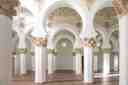
  1. As you’re walking, keep an eye out for a stunning building with crisp white walls and beautiful horseshoe arches-almost like something out of an ancient storybook. You’ll spot…더 보기간략히 보기

    As you’re walking, keep an eye out for a stunning building with crisp white walls and beautiful horseshoe arches-almost like something out of an ancient storybook. You’ll spot rows of thick, bright columns that lead your eye upward to intricate, almost lace-like carvings at the top. The outside almost whispers for you to peek in, promising a world of history just beyond its doors. Listen closely-imagine the echo of footsteps on old stone as you enter. You’re now standing in front of the Synagogue of Santa María la Blanca, a masterpiece built back when knights rode through the city and merchants traded silk for stories. This building, once a proud synagogue, stands right in the former Jewish quarter. It’s in the company of two ancient friends-the Monastery of San Juan de los Reyes and the Synagogue of El Tránsito. Not a bad neighborhood for a house of worship! What’s so special about these walls? Well, they’re a dazzling blend of styles-created by Jewish hands, in Moorish fashion, with Christian rulers calling the shots. Talk about teamwork! The columns almost look like a row of people holding up the sky, and those decorations up there-they wouldn’t be out of place in a royal palace. But, shhh-come a bit closer. If you listen, maybe you can hear a whisper of the past. This place may be called “Saint Mary the White” now, but it was once ringing with Hebrew prayers. Built around the late 1100s or early 1200s, it’s watched centuries roll by, changing names and purposes like someone changing hats. Synagogue, church, barracks, dancehall… It’s seen almost everything-except maybe a marching band. That might be next! The story of Santa María la Blanca is full of twists. It may have been built after part of Toledo’s Jewish community was attacked. The floor plan might even be borrowed from a mosque that stood here before. Even the experts scratch their heads trying to figure out exactly when and why it was built. But one name keeps popping up: Joseph ben Meir ben Shoshan. He was close to the king and is believed to have brought the building back to life after dark days. After some very tough times-including being taken by the Catholic church, turned into a church, and even used by armies and dancers-this remarkable space was finally restored. Now, people from around the world step inside and look up, and just like you, feel that mix of wonder and mystery. Go on, let your eyes trail along those creamy white arches and imagine lights from ancient candles flickering here centuries ago. The echoes you hear aren’t just your footsteps-they’re the footsteps of history, whispering right back. If you’re ready, let’s wander on and see what tales Toledo still has to tell!

    전용 페이지 열기 →
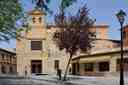
  2. You’re just steps away from the Synagogue of El Tránsito! To spot it, look for a building in front of you made from warm, sandy-colored bricks, with a simple, fortress-like facade…더 보기간략히 보기

    You’re just steps away from the Synagogue of El Tránsito! To spot it, look for a building in front of you made from warm, sandy-colored bricks, with a simple, fortress-like facade and small windows. There’s a flagpole near the main entrance, and the building also has a little tower rising above its stone base. The windows are covered, hinting at the treasures hidden inside, while the nearby tree gives the place a cool patch of shade-perfect for a pause before stepping into history. Now, imagine yourself in mid-14th century Toledo. The streets around you would have echoed with the chatter of merchants, the toll of distant church bells, and maybe the occasional musician’s tune floating in on the breeze. Here stands the Synagogue of El Tránsito, built in 1357, thanks to Samuel HaLevi-a man with one of the trickiest jobs in Spain: being both the king’s treasurer and a leader of Toledo’s Jewish community. He had a palace right next door, and this synagogue was his private masterpiece. Imagine the whispers-“How did Samuel manage to build such a grand place when synagogues were supposed to be banned?” Some say it was all thanks to his close friendship with King Peter of Castile. Others reckon it helped that the synagogue was technically part of Samuel’s home. I mean, who could turn down a royal accountant, right? Take a closer look at the walls: see those delicate patterns carved in plaster? That’s the Mudéjar style, created by Muslim artisans at a time when cultures mixed (sometimes peacefully, sometimes not). There were whispers of poetry, Torah debates, and prayers here. High above, a wooden balcony-known as the women’s gallery-once hushed with secret conversations. But not all the stories are peaceful. Samuel himself fell victim to palace scheming-arrested and tortured to death. The building changed hands: from synagogue to church, to barracks for Napoleon’s troops, and now, a museum honoring Sephardic Jewish heritage. Stand here a little longer, and just maybe, you’ll feel the echo of centuries-a mixture of sorrow, hope, and the endless turning of Toledo’s historic wheel. And remember: if a building could talk, this one would have stories to keep you entertained until next Tuesday!

    전용 페이지 열기 →
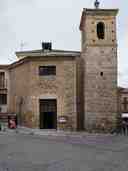
  3. Look just ahead! You’ll spot the Mezquita-Iglesia de El Salvador right in front of you-small but mighty, with its tall, solid stone tower standing at the edge of the street like a…더 보기간략히 보기

    Look just ahead! You’ll spot the Mezquita-Iglesia de El Salvador right in front of you-small but mighty, with its tall, solid stone tower standing at the edge of the street like a watchful old guardian. The brick arch over the dark wooden door has seen so many eras come and go. There’s almost a patchwork feeling, with rough stone blocks next to tan bricks, hinting that this building is hiding a thousand stories stacked right on top of each other. Imagine standing here over 800 years ago, as the call to prayer echoed from the skinny minaret-the same tower you see today! So, here’s the secret under your feet: this church is like a historical sandwich with four different layers! The 12th-century Christians built their church right on top of a mosque from the 11th-century, and that mosque was itself built over an older, smaller mosque from the 9th century, which had already taken the place of a Visigothic church. That’s a lot of construction workers down through the ages! If you squint at the entrance, you might just be able to imagine queens and playwrights stepping through. This is where Joanna of Castile-yes, Joanna the Mad herself-was baptized. And if you ever read Lazarillo de Tormes, you’ll find this church mentioned right there on the page. The odd angle of the church isn’t a mistake! It’s because the mosque was always pointed toward Mecca, and the Christians just kept that orientation. There’s something magical about the old horseshoe arches still clinging on inside-ancient Visigothic stones carved with wild and almost mysterious decorations: men with blindness healed, Lazarus rising, the touch of the Samaritan woman. You can feel the texture, rough where time has chipped away, but the stories still linger. Look up at the tower. See how it’s a bit mismatched at the top? That’s a baroque bell loft stuck onto the old minaret, complete with centuries-old masonry and later brickwork-proof of a couple of extreme renovations (and at least one dramatic fire). Álvarez de Toledo led the repairs after the flames, even adding a new chapel just next door! So, here you are, right where prophets, princesses, and stonemasons once stood, all of them probably complaining about the Toledo heat. Every block and arch hides a hint of their stories, and the church, with its many faces, is still watching the world go by one century at a time.

    전용 페이지 열기 →
8개 정류장 더 보기정류장 적게 보기expand_moreexpand_less
  1. Look straight ahead-see that grand, light-colored stone building rising above the square, with the tall, jagged tower that seems to scratch the sky? That’s the Cathedral of…더 보기간략히 보기

    Look straight ahead-see that grand, light-colored stone building rising above the square, with the tall, jagged tower that seems to scratch the sky? That’s the Cathedral of Toledo! Notice all those arches and statues carefully carved into the stone above the triple doorways. And just to your right, there’s a massive dome crowned with a round lantern. If you look up to the left, the Cathedral’s tower stands guard, keeping an eye on everyone below. You really can’t miss it-this place was built to impress. Now, as you’re standing here in front of this masterpiece, imagine the year is 1226. Picture workers dragging enormous blocks of smooth, white Olihuelas stone through the square, carving and hammering away while monks shuffle by in heavy robes. There’s a sense of excitement and seriousness in the air, like everyone knows they’re part of something legendary. This isn’t just any church-it’s the Cathedral of Santa María, known as the first cathedral of Spain! Some folks say it’s the greatest Gothic cathedral in the whole country, and honestly, it’s easy to see why. The giants who built this began their work under King Fernando the Saint, and it took over two centuries to reach the soaring vaults you see today. But here’s where it gets dramatic. Before this grand cathedral rose, this very spot was a battleground of faith and tradition. Legend says the first bishop, Eugenio, had a church here way back in the days of kings and Visigoths. In 587, after invading armies and changes, the building was reborn again-proof is literally carved into its walls. The city was once the religious heart of the old Spanish kingdom; even the famous Councils of Toledo were held here. But hold onto your hat, because Toledo’s invaders were more than just kings. When the Muslims came to town, they built a great mosque right where we stand. Even now, you can play detective and find clues from that era-like marble columns reused in the choir, or the crisscrossing arches that whisper of Cordoba’s style, though their design is decidedly Christian. It’s like architectural hide-and-seek. Finally, when King Alfonso VI took the city in 1085, he promised to respect every religion here-so the mosque stayed put… for a while! But the story gets spicy: While the king was away, his queen and the local archbishop conspired to seize the old mosque. One day, soldiers burst in, set up a church altar, and slapped a bell on the minaret! The king was so furious when he found out, he nearly condemned everyone involved. And so, this cathedral you see isn’t just stone and glass-it’s a living monument to centuries of faith, rivalry, secrets, and moments that nearly changed Toledo forever. So go ahead, spin around and soak it all in… but don’t worry, I promise no rampaging armies or angry kings today! Interested in knowing more about the the current cathedral building, exterior of the cathedral or the chapels

    전용 페이지 열기 →
  2. You’re just in front of the Church of San Lorenzo, and if you look up, you’ll spot its tall, square bell tower poking above the rooftops like it’s keeping a secret lookout over…더 보기간략히 보기

    You’re just in front of the Church of San Lorenzo, and if you look up, you’ll spot its tall, square bell tower poking above the rooftops like it’s keeping a secret lookout over the narrow street. The church is tucked between rough stone and brick walls, with small windows and odd angles-the kind of place that feels like you’ve stumbled onto a hidden piece of Toledo. To find it, watch for the old tiled roof and the Moorish-style arched doorway behind the iron gate right ahead of you. Now, let your imagination step back in time with me. These remains sit atop what was once an early Muslim mosque, and the building itself forms an uneven quadrangle. It might look a little rough around the edges-don’t worry, you didn’t take a wrong turn, this is exactly where layers of history like to hide. Back in 1936, a huge fire swept through this place. Only the sturdy tower and some walls survived, while the rest was swallowed by the flames. If it feels a bit mysterious, that’s because the church keeps its scars out in the open. Look closely at the walls-you’ll spot patches of old plaster with curious drawings faintly hanging on, like doodles from centuries ago. You might wonder about that odd little shelf, or corbel, sticking out where the wall meets the tower. If you squint, you’ll see an angel carved into it, holding a shield. But this isn’t your average shield-it's decorated with two dragon heads, joined by a bar held in their mouths. Now, if that doesn’t sound like something out of a fantasy novel, I don’t know what does. If you could step into the atrium, you’d be standing under a roof held up by wooden beams, with old Spanish tiles above your head and arches framing shadows-perfect for a dramatic entrance. And if you listen for the echo of bells, that comes from the three-part bell tower: two levels are built in the intricate Mudejar style, while the top is pure Baroque grandeur, all separated by a distinct ledge. Built from stone and brick, the upper section has arches on every side to let light spill in. The Church of San Lorenzo is both a survivor and a storyteller-the kind of place where every brick has a story, sometimes a fiery one, too. And if you ever meet a pair of arguing dragons here, well, don’t say I didn’t warn you! Ready to keep going?

    전용 페이지 열기 →
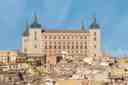
  3. Look ahead and up above the rooftops-see that massive, square-shaped building rising high above Toledo, with four striking corner towers that look like they could poke a hole in…더 보기간략히 보기

    Look ahead and up above the rooftops-see that massive, square-shaped building rising high above Toledo, with four striking corner towers that look like they could poke a hole in the clouds? That’s the Alcázar! Its pale stone walls and neat, peach-colored façade stand out sharply over the maze of tan houses below. You really can’t miss it-it dominates the skyline like a king keeping watch over his city. Now, let your imagination take you back to the hot summer of 1936. The grand fortress you’re standing before wasn’t just a pretty face-it was the heart of an explosive drama at the start of the Spanish Civil War. Picture this: the thick air buzzing with excitement and fear, streets filling with the echo of marching boots, and eyes darting up to the Alcázar, where hundreds of defenders and civilians were trapped inside. The siege started on July 21. Republican forces-thousands of militia with artillery, a few rattling armored cars, and even some tanks-surrounded the fortress. Day after day, bombs thundered down, shaking the mighty walls and rattling everyone’s nerves. Inside, it was crowded-crammed with soldiers, officers, over 500 women, and a whole bunch of kids. Even a couple of newborn babies joined the party! The women didn’t fight, but their courage, filling the halls with laughter and stories, helped everyone hold on just a little longer. The Republican side thought the Alcázar would fall easily-the place was isolated, a tiny knot of defenders with just a handful of old weapons and some stubborn leaders. But the fortress and those inside refused to give in. When they were offered a chance to surrender, their answer was always “No.” Even with bombs shaking the walls, they kept going. The city was full of tension, whispers of spies and escapes, daring raids and even secret prisoners hidden in the cellars. Finally, after 70 days-a lifetime for those trapped inside-help arrived. Franco’s Army of Africa stormed in, breaking the siege and claiming a victory that would fill the headlines. The Alcázar stood battered but unbroken, a symbol of stubborn hope and the fierce will to survive. So as you stand here in front of this giant, just imagine the thunder of cannons, the cries, the tension, and the strange hope that echoed inside these ancient walls. The Alcázar isn’t just a building; it’s a witness to one of history’s most dramatic stand-offs-and you’re standing right where it all happened. Not bad for a day’s sightseeing, right? For further insights on the background, siege or the relief, feel free to navigate to the chat section below and inquire.

    전용 페이지 열기 →
  4. Keep your eyes peeled for a tall, square bell tower made of tan stone, standing proudly above a jumble of honey-colored tile roofs. The tower features twin arched windows that…더 보기간략히 보기

    Keep your eyes peeled for a tall, square bell tower made of tan stone, standing proudly above a jumble of honey-colored tile roofs. The tower features twin arched windows that look like they’re keeping secret watch over the city. There’s an old stone entrance with a dark doorway beneath the leafy trees, and if you look up, you might spot a little orange banner fluttering in the breeze. That’s your clue you’ve arrived at the Convent of the Franciscan Conceptionists. Now, imagine yourself back in the late 1400s. Picture the streets quieter than today, maybe the air filled with the echoes of soft prayers and the gentle rustle of robes. The convent was founded in 1484 by none other than Saint Beatrice of Silva-think of her as the original “Girl Boss” of the convent world. Back then, she planted the seeds for a community devoted to living a pure and humble life, right here in this spot. There’s a sense of calm surrounding these old stones, almost as if the walls themselves are whispering stories. Can you feel the hush, broken only by the occasional toll from the bell tower? Maybe you can even catch the faint scent of old wood and wax from inside. This place has survived centuries of Toledo’s wild history-wars, kings, and who knows, maybe a lost ghost or two peeking out during siesta! The convent and its Chapel of Saint Jerome are so precious, the Spanish government made sure they’re protected as treasures of cultural heritage. That means people have cared for this place, inside and out, for hundreds of years-kind of like Toledo’s version of bubble wrap! So, while you stand here, just imagine nuns gliding past, the echo of ancient chants filling the courtyard, and the constant, quiet presence of faith that’s lasted for generations. Ready to head to the next stop? Let’s see what other secrets Toledo has in store!

    전용 페이지 열기 →
  5. To spot the Mosque of Cristo de la Luz, look for a small, square-shaped building made of warm red bricks and stones, sitting neatly at the edge of the narrow street. Its walls are…더 보기간략히 보기

    To spot the Mosque of Cristo de la Luz, look for a small, square-shaped building made of warm red bricks and stones, sitting neatly at the edge of the narrow street. Its walls are filled with rows of arches-some in horseshoe shapes, others more rounded-with intricate brick patterns at the top. The structure almost looks like an ancient treasure chest, sitting slightly lower than the sidewalk and protected by an old iron fence. It’s tucked among taller, lighter-colored houses, but those repeating brick arches are hard to miss! Now, imagine the year is 999. The scent of spices fills the air, and the sound of distant market chatter echoes through these old streets. You’re standing outside one of Toledo’s oldest buildings-the Mosque of Cristo de la Luz. Once called the Mezquita Bab al-Mardum, this little square mosque is like a time machine made of brick and stone. Back then, the wealthy and powerful of the city walked past here, perhaps glancing up at its elegant arches, each patterned just a bit differently. Listen closely. Did you hear that? That could be Ahmad Ibn Hadidi himself, striding by, proud of his latest project, hoping it’ll earn him a fine seat in paradise. There’s even a message written in ancient script on one side, woven into the bricks-almost like a very old tweet: “Hey, everyone, I built this with my own money! (Please remember me, up there!)” As you stand before the mosque, picture its first days: no bell towers, no stained glass, just a quiet prayer hall facing east, sunlight shimmering through horseshoe-shaped arches. People would step inside, bowing quietly toward the qibla wall. If you look at the far end, imagine a small mihrab, softly glowing in the filtered light, showing worshippers the way to Mecca. But the story doesn’t end here. In 1085, legend says King Alfonso VI rode up with his army to take Toledo back. Suddenly, his horse stumbled-right here!-and as the dust settled, a mysterious light shone from a crack in the old wall. In that beam, they found a crucifix that had hidden here through centuries of secrets. The king, amazed, left his shield behind as a thank-you, and declared the first Christian Mass would be held on this very spot. Through time, the mosque was transformed-first a chapel, then the home of knights, even gaining that rounded apse on the far side to suit its new purpose. But look at those original bricks, those arches. They’re straight from the Caliphate of Córdoba-imagine borrowing design ideas from your coolest neighbors hundreds of kilometers away! Today, if you listen carefully, you might hear the bubbling of the little garden fountain nearby. Or maybe it’s just history itself whispering in your ear, asking: What legends will you find on these ancient stones?

    전용 페이지 열기 →
  6. Right in front of you is the Puerta del Sol, one of Toledo’s most striking old city gates. To spot it, look for a tall, stone structure with a hint of reddish brick, almost like a…더 보기간략히 보기

    Right in front of you is the Puerta del Sol, one of Toledo’s most striking old city gates. To spot it, look for a tall, stone structure with a hint of reddish brick, almost like a small castle wall standing proudly at the edge of the city. Its thick walls are topped with a row of castle-like battlements. If you look closely just above the main archway, you'll notice a carved medallion with an image inside-that's your historical clue! The gate is attached to the ancient city wall, so just follow the wall along until you see this impressive entrance. Now, let's go back in time for a second. Imagine you’re a traveler many centuries ago, arriving at the gates of Toledo. Dusty roads behind you, the city walls rise in front like the gateway to a different world. In front of you stands the Puerta del Sol, built all the way back in the late 14th century by a group called the Knights Hospitaller. These guys didn’t just know how to throw a medieval party-they also knew a thing or two about defense! Up above the arch, the medallion shows Toledo’s patron saint, Ildephonsus, being made a bishop, while the sun and the moon-once painted on either side-would’ve greeted anyone coming from the east. It was literally the gate where the sun would rise each morning, just like a royal “Good Morning!” from the city itself. These days, the gate is retired from its official duty-no more knights keeping watch-but you can almost feel the history buzzing in the stones. So as you stand here, listen for the echoes of horses’ hooves, the clanking of armor, and the shouts of travelers coming and going. If you’re feeling dramatic, you can even give a little wave to the ghosts of old Toledo. And if anyone asks why it’s called the Puerta del Sol, just say: “Because even doors like a good sunrise.” Shall we march onward?

    전용 페이지 열기 →
  7. To spot the Church of Santiago, let your eyes search for a large, strong-looking building of brownish stone right in front of you. Its walls are made of a patchwork of brick and…더 보기간략히 보기

    To spot the Church of Santiago, let your eyes search for a large, strong-looking building of brownish stone right in front of you. Its walls are made of a patchwork of brick and rough stones, with three levels rising like giant steps above the street. The big wooden door is framed by rows of arches, and there are two tiny round windows like watchful eyes on either side of the central wall. If you see something that reminds you of an ancient fortress, that’s your spot! You’re now standing at the famous Church of Santiago, or as the locals call it, Iglesia de Santiago el Mayor. Picture yourself nearly 800 years ago, when this site was alive with builders hauling bricks, and the sounds of hammers and laughter echoed under the sun. The story of this church goes back to the time of King Sancho II. Imagine him, a powerful figure with a grand vision, ordering that this sanctuary rise where older buildings once stood. Before these sturdy walls, there was even a mosque here, filled with the call of prayer, and even before that, a Visigothic building whose stones whispered tales from long ago. Suddenly, Sancho II died, and everything stopped-the tools dropped, the plans were left half-finished. For years, the church sat lonely, wanting to come to life. But then, the Diosdado family swept in. Members of the Order of Santiago, they rolled up their sleeves and brought the work roaring back to life. Look up at those arches-they’re pure Mudéjar style, which means Muslim artisans crafted them with the same skill they’d use in a mosque, but for Christian prayers. You’ll also spot hints of the Romanesque style. It’s a true architectural mash-up, Toledo-style! And here’s a fun detail: the bell tower over there was actually built using parts of the old mosque’s minaret. So if you stand here quietly, you might just imagine the ancient echoes of both bells and calls to prayer mixing in the breeze. By the way, what you’re seeing now is thanks in part to a major restoration job from the 1950s and 70s. Without it, this old church might have been just a pile of stones-now it’s ready for a selfie. Just don’t trip on the steps dreaming about knights and kings! Ready to head to our next stop?

    전용 페이지 열기 →
  8. Look straight ahead-can you see that thick, solid stone gateway rising up before you? Notice how the gate almost looks like a fortress, with rough-hewn grey stones and a shape…더 보기간략히 보기

    Look straight ahead-can you see that thick, solid stone gateway rising up before you? Notice how the gate almost looks like a fortress, with rough-hewn grey stones and a shape that reminds you of a castle’s tower, topped with squared battlements. If you see a large arch in the center, flanked by two bulky piers and a row of small square windows above, you’re looking at the Puerta de Bisagra! Now, imagine the year is sometime in the 10th century. As you stand here, you’d be surrounded by the sounds of merchants calling out, horses’ hooves on stone, and muffled voices traveling through the thick walls. The gate was built back when this city was part of Islamic Al-Andalus, and was known as Bab al-Saqra-a fancy way to say, “Big, important gate where everyone squeezed through.” It’s also called ‘Bisagra Antigua’-which basically means “the old Bisagra,” because, let’s face it, Toledo loved this doorway style so much, they built an even bigger ‘new’ one up the road in 1559. But nothing beats the original, right? Look at those arches! They’re classic Moorish design-strong, elegant, and just a little bit mysterious. Picture a line of guards standing watch, eyes scanning for wandering knights or nervous traders. Sometimes you get the feeling the walls are listening in, collecting drama from a thousand years of comings and goings. So as you stand here, next to these mighty stones, close your eyes for a second and listen. Wouldn’t it be funny if you heard a medieval guard grumble, “Another tax collector today?” You’re right where history passed by-literally. Stories, secrets, and echoes from centuries ago fill the air. Thanks for having me as your guide through Toledo. What a journey, right?

    전용 페이지 열기 →

자주 묻는 질문

투어는 어떻게 시작하나요?

구매 후 AudaTours 앱을 다운로드하고 교환 코드를 입력하세요. 투어를 바로 시작할 수 있습니다 - 재생을 탭하고 GPS 안내 경로를 따라가시면 됩니다.

투어 중 인터넷이 필요한가요?

아닙니다! 시작 전에 투어를 다운로드하면 완전히 오프라인으로 즐길 수 있습니다. 채팅 기능만 인터넷이 필요합니다. 모바일 데이터 절약을 위해 WiFi에서 다운로드하시는 것을 권장합니다.

이것은 가이드가 안내하는 단체 투어인가요?

아닙니다 - 이것은 셀프 가이드 오디오 투어입니다. 폰을 통해 오디오 나레이션을 들으며 나만의 속도로 독립적으로 탐험합니다. 투어 가이드도, 단체도, 일정도 없습니다.

투어는 얼마나 걸리나요?

대부분의 투어는 60-90분이 소요되지만, 속도는 전적으로 본인이 조절합니다. 원할 때 언제든지 일시정지하거나, 정류장을 건너뛰거나, 휴식을 취하세요.

오늘 투어를 끝낼 수 없으면 어떻게 하나요?

괜찮습니다! 투어는 평생 이용이 가능합니다. 원할 때 언제든지 일시정지하고 다시 시작하세요 - 내일, 다음 주, 또는 내년에도. 진행 상황이 저장됩니다.

어떤 언어를 이용할 수 있나요?

모든 투어는 50개 이상의 언어로 이용 가능합니다. 코드를 교환할 때 원하는 언어를 선택하세요. 참고: 투어 생성 후에는 언어를 변경할 수 없습니다.

구매 후 투어는 어디에서 이용하나요?

App Store 또는 Google Play에서 무료 AudaTours 앱을 다운로드하세요. 교환 코드(이메일로 전송됨)를 입력하면 라이브러리에 투어가 나타나며, 다운로드하여 시작할 수 있습니다.

verified_user
만족 보장

투어가 마음에 들지 않으시면 환불해 드립니다. 문의: [email protected]

안전한 결제

Apple PayGoogle PayVisaMastercardPayPal

AudaTours: 오디오 투어

재미있고, 경제적이고, 자유로운 셀프 가이드 워킹 투어

앱 체험하기 arrow_forward

전 세계 여행자들에게 사랑받고 있습니다

format_quote 이 투어는 도시를 보는 정말 좋은 방법이었습니다. 이야기들이 너무 대본처럼 느껴지지 않으면서도 흥미로웠고, 나만의 속도로 탐험할 수 있어서 좋았습니다.
Jess
Jess
starstarstarstarstar
Tbilisi 투어 arrow_forward
format_quote 관광객처럼 느끼지 않으면서 Brighton을 알아가는 훌륭한 방법이었습니다. 내레이션에 깊이와 맥락이 있었지만 과하지 않았습니다.
Christoph
Christoph
starstarstarstarstar
Brighton 투어 arrow_forward
format_quote 크루아상을 한 손에 들고 아무 기대 없이 시작했습니다. 앱이 그냥 자연스럽게 함께해 주는 느낌이에요, 부담도 없고, 그냥 나와 이어폰과 멋진 이야기들.
John
John
starstarstarstarstar
Marseille 투어 arrow_forward

무제한 오디오 투어

전 세계 모든 투어의 잠금을 해제하세요

0 투어·0 도시·0 국가
all_inclusive 무제한 탐험