

포르드프랑스 오디오 투어: 포르드프랑스의 역사적 경이로움을 통한 여정
카리브해 철제 장식에 햇빛이 반짝이고, 몰락한 황후의 텅 빈 받침대가 포르드프랑스 전역에 긴 그림자를 드리웁니다. 이 도시는 엽서 같은 아름다움이 암시하는 것보다 훨씬 더 기묘한 이야기들을 품고 있습니다. 어디를 봐야 할지 안다면 말이죠. 마르티니크의 숨겨진 드라마와 간과된 경이로움을 드러내는 셀프 가이드 오디오 투어를 시작하세요. 우아한 빌라, 잊혀진 정부 청사, 그리고 혁명의 속삭임이 여전히 바람에 실려 떠다니는 공공 광장을 거닐어 보세요. 어떤 스캔들 같은 비밀이 조세핀 황후의 동상이 하룻밤 사이에 머리를 잃게 만들었을까요? 프레펙처 호텔 내부의 어떤 정치적 싸움이 섬의 운명을 바꾸었을까요? 그리고 왜 현지인들은 해질녘 박물관 복도에 웃음소리가 떠다닌다고 주장할까요? 햇살 가득한 정원에서 웅장한 식민지 시대의 홀로 이동하며, 곳곳에서 미스터리와 묻혀 있던 긴장감을 발견하세요. 한 걸음 한 걸음 내디딜 때마다 반란, 스캔들, 그리고 헤아릴 수 없는 회복력으로 고동치는 도시의 깊숙한 곳으로 들어서게 됩니다. 포르드프랑스를 표면 너머로 볼 준비가 되셨나요? 돌과 이야기 속에서 비밀이 솟아나게 하세요. 당신의 모험은 지금 시작됩니다.
투어 미리보기
이 투어에 대하여
- schedule소요 시간 30–50 mins나만의 속도로 이동
- straighten1.8 km 도보 경로안내 경로 따라가기
- location_on
- wifi_off오프라인 작동한 번 다운로드, 어디서든 사용
- all_inclusive평생 이용언제든지 다시 재생 가능
- location_on마르티니크 지역 역사 및 민족지 박물관에서 시작
이 투어의 정류장
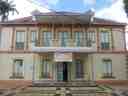
To spot the Regional Museum of History and Ethnography, look for a grand, two-story pastel-colored villa with white shuttered windows, intricate green ironwork, and a charming…더 보기간략히 보기
To spot the Regional Museum of History and Ethnography, look for a grand, two-story pastel-colored villa with white shuttered windows, intricate green ironwork, and a charming balcony above the main entrance, nestled within a lush garden-if you see a house that looks like it could be the Caribbean cousin of a French mansion, you’re in the right place! Now, let’s imagine stepping into the story of this beautiful building, bathed in the golden sunlight filtering through the leaves of mango and mahogany trees. It’s not just a museum-it’s one of the oldest villas right here in downtown Fort-de-France, standing proudly since 1887. But, don’t let its elegance fool you; if these walls could talk, they’d whisper secrets from a time when cannonballs, not curious visitors, were the main attraction. Originally, this stately home was the residence of the head of artillery. Can you picture it? Day and night, the rhythm of soldiers’ boots echoing on the floors, the distant clang of metal, and the thick scent of gunpowder mingling with the aroma of garden flowers blowing through the very same windows you see now. Downstairs, there was a vestibule, dining room and salon buzzing with conversation, while upstairs hid sleeping quarters where, rumor has it, the beds were just squeaky enough to let anyone know if you tried to sneak a midnight snack. For a while, this place even flirted with agriculture-with the chamber of agriculture taking up residence-before changing hands again and again like the prized coconut at a tropical festival. At last, in 1993, the city sold it to the regional council, setting the stage for a marvelous transformation. And then, with a flair worthy of the island’s colorful spirit, it was reborn as the museum you see in front of you. Since its grand opening in 1999, the museum has invited everyone in for a trip through time. Step inside and you’ll find the old life of Martinique reimagined: elegant 19th-century rooms filled with creole jewelry, traditional costumes, and antique books. When the sun catches the glass display cases, for a moment you almost expect a ghostly guest to materialize, telling stories of island life, or maybe just asking when the next exhibition starts. So, if you hear laughter on the breeze or feel a tremor of excitement, that’s just history welcoming you in. And don’t forget-entry’s free on the last Saturday of each month. Now that’s a deal any time traveler would love!
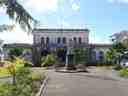
전용 페이지 열기 →To spot the Martinique Prefecture Hotel, look straight ahead for a grand, white building with tall columns and large windows, right at the end of a driveway framed by two matching…더 보기간략히 보기
To spot the Martinique Prefecture Hotel, look straight ahead for a grand, white building with tall columns and large windows, right at the end of a driveway framed by two matching wings and lots of parked cars. Now, let’s step into history-imagine you’ve slipped through time! Before this elegant building was even a twinkle in its architect’s eye, the powerful governors of Martinique ruled from the mighty Fort Saint-Louis. But change was in the Caribbean air: by the late 1600s, they moved to a grand wooden house, right where the Schœlcher Library stands today. Imagine the clatter of horse hooves on the busy street out front! For decades, that old wooden home was the heart of government business. But by the roaring 1920s, officials dreamed of something extraordinary-and new. From 1923 to 1928, architect Germain Olivier, inspired by the Petit Trianon at Versailles, began building a palace not just of style, but substance: the very first reinforced concrete public building in Martinique! Here, under lush palms, you stand before a monument that watched as Martinique became an official French department in 1946. And through hurricanes, politics, and the everyday rush of paperwork, it’s remained the governor’s-now the prefect’s-fortress ever since. If these stately walls could gossip, the stories would surely echo like laughter in the grand hall. Today, this beautiful building is not just the heart of government-it’s a living piece of Martinique’s proud story.
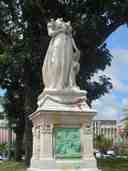
전용 페이지 열기 →If you’re looking for the statue, just glance ahead toward the edge of the Savane park-once, in the middle of a wide open space and framed by tall royal palms, there stood a white…더 보기간략히 보기
If you’re looking for the statue, just glance ahead toward the edge of the Savane park-once, in the middle of a wide open space and framed by tall royal palms, there stood a white marble figure on a grand pedestal; even now, you’ll notice the empty base where she once was, just beside the Rue de la Liberté. Alright, adventurous explorer, take a breath - you’re standing exactly where one of Fort-de-France’s most controversial, mysterious, and dramatic tales unfolded! The Statue of Empress Josephine, or, as she was officially called, the Monument to Empress Josephine de Beauharnais, once dominated this very spot. Imagine shining white marble carved from Carrara, Italy, gleaming in the sun. Josephine’s statue was dressed in a grand imperial cloak, holding Napoleon’s medallion-looking every bit the regal empress. The base was ringed by bronze plaques, each commemorating a highlight of her life: her birth in 1763; marriage to Napoleon in 1796; coronation in Paris in 1804; and, of course, the date the statue was finally unveiled in 1859. Now, picture the scene back in the 1850s. There’s dust and excitement swirling through Fort-de-France as the city prepares for a monument unlike any other. Josephine, born Marie Rose Tascher de la Pagerie right here in Martinique, was already a figure wrapped in both legend and controversy. Generations whispered that, as a young girl strolling the Savane, a cannonball once landed at her feet-don’t worry, she wasn’t practicing for a circus act, she just had an especially dramatic childhood! History and rumor tangled together, setting the stage for what was to come. When Emperor Napoleon III wanted to honor his illustrious step-grandmother-in-law, he kicked off a public subscription in Martinique. The local bigwigs joined in, and Napoleon III himself offered 12,000 francs (imagine getting a generous gift card from your most powerful relative). Meanwhile, the artist Gabriel Dubray traveled to Tuscany to choose the very best Carrara marble for Josephine’s likeness. The initial plaster model of the statue was even shown at the 1855 Paris World’s Fair, dazzling onlookers on the other side of the Atlantic. After three years of anticipation, the big day arrived. The statue rose at the very center of the Savane, surrounded by eight perfectly placed royal palms. Candles flickered in ornate candelabra, and a grand wrought-iron fence glittered around the site. The inauguration was the party of the decade: three days of fireworks, banquet tables piled with Creole delicacies, and enough cannon salutes to keep everyone’s ears ringing. Local governors and foreign dignitaries gathered under brightly colored banners, toasting to the Empress and her fabled - if complicated - life. But, as you might suspect, all that marble and celebration couldn’t smooth over the deeper shadows of Josephine’s history. She was a white Creole whose family owned the “Petite Guinée” plantation-and was suspected of having helped Napoleon reintroduce slavery in 1802. For many in Martinique, the statue began to feel less like a memorial, and more like a reminder of wounds that never truly healed. The city tried to make peace with the past-literally. In 1974, the influential poet Aimé Césaire ordered the statue moved from the Savane’s center to its quieter western edge and stripped away the grand granite base and the dazzling ironwork, making her a little less visible to the crowds. But Josephine’s gaze - at least, what was left of it - lingered. In September 1991, the story took a head-turning twist: one night, a mysterious commando crept up and decapitated the statue, leaving the Empress forever silent. The city left Josephine headless, a stark and unsettling symbol-though the statue was still protected as a historic monument. The years rolled by, but anger and debate never truly faded. In July 2020, amid global protests against racism and colonial legacies, activists demanded the city topple Josephine once and for all. When officials hesitated, the collective Rouge-Vert-Noir took action-within hours, the statue was demolished, crashing down in front of a cluster of stunned onlookers. The Prime Minister of France denounced the destruction, but to others, it was the long-overdue removal of a painful reminder. So as you stand here by the now-empty pedestal, imagine all those decades: the explosion of celebration, the uneasy silences, the moonlit mission that left Josephine headless, and the dramatic final showdown of 2020. History, after all, has a way of sticking around-sometimes on a pedestal, and sometimes only in the stories that get passed down from those who still walk the Savane. Keep your eyes open; here, the past never truly disappears-it just bides its time for the next chapter.
전용 페이지 열기 →

8개 정류장 더 보기정류장 적게 보기expand_moreexpand_less
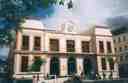
Look for a large, elegant, cream-and-orange building with a clock perched above its arched entrance and tall windows, standing proudly right along rue de la Liberté - you really…더 보기간략히 보기
Look for a large, elegant, cream-and-orange building with a clock perched above its arched entrance and tall windows, standing proudly right along rue de la Liberté - you really can’t miss it! Imagine you’re standing here over a hundred years ago, with the buzz of horse-drawn carts and the salty breeze drifting through the streets. This spot has always pulsed with energy. The first time letters started traveling around Martinique was way back in 1761, mostly for military secrets-imagine the suspense! But then, when the English took over for a bit, things fell silent-no letters, no news, only whispers in the wind. Just three years later, a determined governor, the Comte d’Ennery, brought the post back to life, and suddenly, messages began to fly around the island once more. Look up at the building-the Hôtel des Postes you see opened its doors in 1910, sturdy and determined after its predecessor was lost in a massive fire in 1890. Its stone walls and grand neo-classical style echo the look of the old courthouse that burned down, as if saying, “Try burning me twice!” Once topped with tiles but now metal for extra toughness, this building has been guarding Martinique’s mail ever since. I’d say the only thing it hasn’t delivered is a weather forecast-so keep your umbrella handy, just in case those old rainclouds decide to show up like uninvited party guests!
전용 페이지 열기 →Look straight ahead for a tall, tan-and-brown church with a soaring pointed steeple, standing just behind two royal palm trees at the corner of rue Victor Schœlcher and rue…더 보기간략히 보기
Look straight ahead for a tall, tan-and-brown church with a soaring pointed steeple, standing just behind two royal palm trees at the corner of rue Victor Schœlcher and rue Blénac-the St. Louis Cathedral. Welcome to the St. Louis Cathedral, the Iron Cathedral of Martinique-the grand, gleaming heart of Fort-de-France! If you listen closely, you might almost hear the tropical breeze rustling the palm leaves nearby. This is more than just a church-it’s a survivor with a dramatic past, almost like a cat with nine lives… except in this case, seven! Now, imagine the year is 1657. The first church on this very spot rises up, offering Fort-de-France its own place of hope and peace. But fate, it seems, was feeling extra spicy here. Over the next two centuries, fire, earthquakes, and hurricanes took turns tearing down six different churches. Each time the townsfolk rebuilt, only to stand by helplessly as nature played its wild tricks. The biggest disaster struck in July 1890, when fire roared through, swallowing both the church and three-quarters of the town! That’s when a man named Pierre-Henri Picq stepped in. With the determination of someone who’s lost one too many umbrellas to the wind, he designed a church unlike any other seen here before. Instead of stone, he chose iron-the ultimate superhero of building materials! So, in 1895, rising above the rubble and ash, the magnificent St. Louis Cathedral took its place as not just a house of worship, but a fortress against disaster. Take a good look at that steeple-it climbs nearly 187 feet, tall and proud, as if wagging its finger at the storm clouds. The whole structure is wrapped in flying buttresses for extra strength, and two grand palm trees stand guard in the front. The cathedral’s exterior was repainted during the 1970s, giving it the cozy tan and brown look you see now. Now, if you step inside, you’d be greeted by sunlight spilling through glorious stained glass windows, the deep hum of a grand organ, and the delicate patterns of iron all around. There’s even a crypt under the choir where past governors of Martinique have found a resting place-talk about a VIP seat! So the next time you hear Fort-de-France called the Iron City, remember this “Catholic railway station” standing tall, echoing with history and hope. And if you feel a sudden urge to hum a triumphant tune, well, don’t worry, you’re just channeling the cathedral’s indestructible spirit.
전용 페이지 열기 →To spot the Urban unit of Fort-de-France, look ahead toward the cluster of buildings stretching along the coastline and up into the foothills, framed by the dramatic mountain…더 보기간략히 보기
To spot the Urban unit of Fort-de-France, look ahead toward the cluster of buildings stretching along the coastline and up into the foothills, framed by the dramatic mountain rising up in the distance-the heart of the city’s life and energy is just in front of you. Now, as you stand here, let your eyes wander over the sprawling city before you. Hard to believe, but you’re peering at one of Martinique’s buzzing hubs of activity, known as the "Urban unit of Fort-de-France." Imagine four lively towns-always chatting with each other, sharing stories, gossiping about whose bakery really sells the best baguette! These four communes have stuck together through all the changes since 1999, creating a place where nearly 32% of Martinique’s people live-packed into just about 11% of the island’s land! That’s a lot of neighbors, but hey, more people means more fun, right? In 2022, more than 115,000 people called this area home-making it Martinique’s second-largest urban spot. The funny thing is, while it might look peaceful from here, this “urban unit” has a density of more than 900 people squeezed into each square kilometer! It’s a little like a party that just keeps growing, bursting with energy, music, and delicious Caribbean scents. So, as you stand before this scenic cityscape, picture the daily rhythm of life: bustling markets, laughter rising above the rumble of traffic, all nestled under the protective shadows of the mountain. Here, the spirit of Martinique truly comes alive!
전용 페이지 열기 →Look for a modern building in the heart of the city, accented with bold, red glass panels, X-shaped pillars, and a splash of tropical greenery-just ahead on Victor-Schoelcher…더 보기간략히 보기
Look for a modern building in the heart of the city, accented with bold, red glass panels, X-shaped pillars, and a splash of tropical greenery-just ahead on Victor-Schoelcher street. Welcome to the Court of Appeal of Fort-de-France! Right where you’re standing, imagine a place brimming with the energy of important decisions, lively debates, and the comforting shade of swaying palm trees. The court hears appeals from all over Martinique, so on some days, you might catch the gentle hum of voices, footsteps echoing across the hallways, and the distant as people enter in search of justice. There’s an air of both tension and hope-no wonder, since lives can change right inside these very walls. Now, the Court of Appeal wasn’t always right here. It used to sit on Sainte-Catherine Boulevard, but in 2015, it made a grand move into this fresh, modern building, designed by Gilles Bouchez Architecture. If the outside looks sharp and impressive, the inside is even more high-tech, with two main courtrooms, top-notch video conference systems, and a busy administrative wing. Imagine the first day it opened: the official buzz was so big that Christiane Taubira, the Justice Minister, even showed up for the big event! This courthouse used to serve not only Martinique but even faraway Guyane, with a special chamber in Cayenne, until the two courts parted ways in 2012. Now it’s all about Martinique-the people, the cases, and, yes, the palm trees! Speaking of which, take a glance at the court’s logo: those red panels and X-pillars you see are actually featured right there, along with fresh green palm leaves-designed by some clever students from the Victor Anicet school. A little justice, a little local pride, and a whole lot of style… only in Fort-de-France!
전용 페이지 열기 →To spot the Former courthouse of Fort-de-France, look straight ahead for a grand, rectangular stone building of pale gray with large arched windows and a columned facade, proudly…더 보기간략히 보기
To spot the Former courthouse of Fort-de-France, look straight ahead for a grand, rectangular stone building of pale gray with large arched windows and a columned facade, proudly standing just behind a small green square and a statue at its center. Now, let me whisk you back in time with a tale that’s as dramatic as any courtroom case! Imagine you’re standing where, long ago, the sweet chanting of nuns once floated in the air-right here, in the days when this spot was a convent. Then the 1800s rolled in, and suddenly, the area became home to the town’s gendarmerie, a place full of boots and jingling keys. But fate-always full of surprises-had a plot twist waiting just underfoot. In 1839, a massive earthquake struck Fort-de-France, shaking the ground, rattling windows, and toppling half the city in its wake. The old courthouse crumbled, giving way to dust and silence. But Fort-de-France doesn’t stay down for long! In 1855, imagine the scene: Admiral Louis Henri de Gueydon, very much the hero of the hour, sets the first stone for a new courthouse. Up rises the building you see today! Picture the construction: masons stacking stone for the lower floor, wood beams being raised for the upper levels, and a roof with red tiles all the way from Marseille. When it opened, the governor himself declared it ready for justice-so important, they even built a leafy little square in front, complete with a bubbling fountain. Then, in 1904, the square welcomed a new star: a statue of Victor Schœlcher, champion of freedom, standing with a recently freed young girl. The words at its base were bold: “No French soil can bear slaves.” But, as with many old dramas, tragedy struck again-the whole palace was devoured by flames in 1905. Not to be beaten, the townspeople rebuilt it, this time giving it a touch of Italian flair with flat terraces and elegant columns. The grand voices of famous lawyers like Victor Sévère and Camille Darsières echoed under its high ceilings. Eventually, justice outgrew these grand walls, so the last trial was held in 2001. But instead of fading away, the old courthouse reinvented itself, becoming the Espace Camille Darsières-a palace for arts and culture, filled with music, artists’ workshops, and endless creativity. So, standing here, if you listen closely, you might just hear the echoes of passionate debates, the hum of creation, and-every now and then-the shout of a judge demanding silence in the court!
전용 페이지 열기 →Look just ahead to the corner of rue Antoine-Siger and rue de la République and you’ll spot a pale building with a rounded, turret-like corner topped by a reddish dome, complete…더 보기간략히 보기
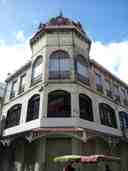
Look just ahead to the corner of rue Antoine-Siger and rue de la République and you’ll spot a pale building with a rounded, turret-like corner topped by a reddish dome, complete with six little round windows-like a curious mechanical crown peeking over the street. Picture yourself here in Fort-de-France at the start of the 1900s-the city’s busiest shopping street is bustling, ladies in flowing skirts and sharp-dressed gentlemen roaming from shop to shop, all eyes drawn to something shiny and new. In 1901, a clever store owner opened this very spot and cheekily “borrowed” the famous Paris department store’s name and elegance, calling it Printemps, though there was no real connection-talk about the original brand influencer, right? The secret to his allure wasn’t just the name: it was this building itself, with its distinct iron skeleton glinting in the Caribbean sun, like the city’s own “mini Eiffel Tower.” The dome you see was designed by the renowned architect Pierre-Henri Picq, who also brought Fort-de-France its cathedral and beautiful library. But here he took on something unusual-a building for a private owner, not a grand public institution. The shop’s elegant ironwork is almost lace-like, supporting two airy stories above its bustling ground floor, and the landmark turret is crowned with that coppery dome pierced by six “bull’s eye” windows. If you were here a century ago, you’d hear the lively clatter of fashion-conscious shoppers bouncing from window to window. Some, probably peeking in just to see if the Parisian glamour rubbed off! Over the decades, this building wore many hats, sheltering shops that shifted with the times. By 1931, Printemps had outgrown the corner and moved into a grand new Art Deco home, but the story was just beginning-the old Printemps became “Au Printemps,” the first grand department store on the island, a source of pride for Martinique. The next time you shop or pass a flashy storefront, give a nod to this plucky landmark. And remember, sometimes a little borrowed style-and a whole lot of daring-can make all the difference!
전용 페이지 열기 →Take a look at the map in front of you-spot the large area in soft pink, right in the heart of Martinique-that’s the Arrondissement of Fort-de-France, stretching inland and…더 보기간략히 보기
Take a look at the map in front of you-spot the large area in soft pink, right in the heart of Martinique-that’s the Arrondissement of Fort-de-France, stretching inland and touching the coast, bordered by neighboring regions like La Trinité and Le Marin. Now, let’s dive into its story! Picture yourself standing at the crossroads of Martinique’s history-this arrondissement is where it all started back in 1947, when Fort-de-France became the very first and only arrondissement of the new department. Imagine the excitement and the buzz in the air as the island was reshaped, communities were drawn together, and administrative lines turned the map of Martinique into something brand new. But the drama didn’t stop there. The heart of the island kept beating, even when Fort-de-France had to “share the love,” losing 10 communes to a neighbor in 1965, 12 more in 1974, and then 8 more in 1995. You could almost hear the arrondissement sigh, “Hey, I’m disappearing faster than my morning coffee!” Despite these dramatic changes, Fort-de-France, with its bustling city, the lively markets, the tree-lined streets of Schœlcher, the riverside charm of Saint-Joseph, and the broad boulevards of Le Lamentin, remains the core of Martinique, home to over 150,000 people. Imagine the voices, the laughter, and the stories woven through these streets-a living tapestry, shaped by change, yet always at the center of it all.
전용 페이지 열기 →




자주 묻는 질문
투어는 어떻게 시작하나요?
구매 후 AudaTours 앱을 다운로드하고 교환 코드를 입력하세요. 투어를 바로 시작할 수 있습니다 - 재생을 탭하고 GPS 안내 경로를 따라가시면 됩니다.
투어 중 인터넷이 필요한가요?
아닙니다! 시작 전에 투어를 다운로드하면 완전히 오프라인으로 즐길 수 있습니다. 채팅 기능만 인터넷이 필요합니다. 모바일 데이터 절약을 위해 WiFi에서 다운로드하시는 것을 권장합니다.
이것은 가이드가 안내하는 단체 투어인가요?
아닙니다 - 이것은 셀프 가이드 오디오 투어입니다. 폰을 통해 오디오 나레이션을 들으며 나만의 속도로 독립적으로 탐험합니다. 투어 가이드도, 단체도, 일정도 없습니다.
투어는 얼마나 걸리나요?
대부분의 투어는 60-90분이 소요되지만, 속도는 전적으로 본인이 조절합니다. 원할 때 언제든지 일시정지하거나, 정류장을 건너뛰거나, 휴식을 취하세요.
오늘 투어를 끝낼 수 없으면 어떻게 하나요?
괜찮습니다! 투어는 평생 이용이 가능합니다. 원할 때 언제든지 일시정지하고 다시 시작하세요 - 내일, 다음 주, 또는 내년에도. 진행 상황이 저장됩니다.
어떤 언어를 이용할 수 있나요?
모든 투어는 50개 이상의 언어로 이용 가능합니다. 코드를 교환할 때 원하는 언어를 선택하세요. 참고: 투어 생성 후에는 언어를 변경할 수 없습니다.
구매 후 투어는 어디에서 이용하나요?
App Store 또는 Google Play에서 무료 AudaTours 앱을 다운로드하세요. 교환 코드(이메일로 전송됨)를 입력하면 라이브러리에 투어가 나타나며, 다운로드하여 시작할 수 있습니다.
투어가 마음에 들지 않으시면 환불해 드립니다. 문의: [email protected]
안전한 결제 


