

티볼리 오디오 투어: 황제들의 메아리와 마법에 걸린 정원
대리석 신들은 한때 헤라클레스 빅토르 성소에서 티볼리의 운명이 고대 하늘 아래에서 번성하고 먼지로 부서지는 것을 지켜보았습니다. 웅장한 외관과 무너져 내리는 정원 아래에는 대부분의 방문객이 결코 볼 수 없는 비밀이 숨겨져 있습니다. 이것은 티볼리의 얽히고설킨 심장을 통과하는 여러분의 셀프 가이드 오디오 여정입니다. 인파를 넘어, 지나갈 때마다 침묵하는 돌들이 속삭이는, 알려지지 않은 이야기, 숨겨진 스캔들, 그리고 수백 년 된 미스터리를 풀어보세요. 빌라 그레고리아나의 우레와 같은 폭포 아래에서 어떤 어두운 음모가 폭군의 통치를 끝냈을까요? 빌라 데스테의 반짝이는 분수들 사이에서 어떤 금지된 사랑이 속삭이는 저주를 불러일으켰을까요? 궁전 계단에서 한밤중 축제 후에 값비싼 조각상이 왜 사라졌을까요? 대리석 사원에서 비밀 동굴로 미끄러지듯 이동하며 티볼리의 기묘한 경이로움을 풀어보세요. 모든 돌, 계단, 정원 구석이 잊혀진 드라마로 반짝이는 도시를 새롭게 바라보세요. 문을 여세요. 티볼리의 진정한 전설이 그 안에 기다리고 있습니다.
투어 미리보기
이 투어에 대하여
- schedule소요 시간 30–50 mins나만의 속도로 이동
- straighten1.6 km 도보 경로안내 경로 따라가기
- location_on
- wifi_off오프라인 작동한 번 다운로드, 어디서든 사용
- all_inclusive평생 이용언제든지 다시 재생 가능
- location_on빌라 그레고리아나에서 시작
이 투어의 정류장
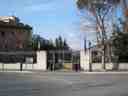
Look down into this plunging, verdant gorge where the sheer limestone cliffs wrap tightly around the thunderous, mist-veiled drop of the Great Waterfall. You are standing at the…더 보기간략히 보기
Look down into this plunging, verdant gorge where the sheer limestone cliffs wrap tightly around the thunderous, mist-veiled drop of the Great Waterfall. You are standing at the edge of Villa Gregoriana, a place where nature and human engineering have been locked in a fierce, endless cycle for millennia. Long before this was a carefully curated romantic park, this dramatic landscape was the very reason the ancient city of Tibur... what we now call Tivoli... existed at all. The geography here formed a natural bottleneck. For centuries, this was a vital crossing point on the ancient transhumance route, the seasonal migration path where shepherds moved massive, valuable flocks of sheep from the freezing high mountains down to the grassy plains. Because so much wealth flowed across this specific river crossing, the Cult of Hercules established a massive presence here, honoring the legendary hero as the divine protector of this highly lucrative trade highway. But the Aniene River was an incredibly violent neighbor. In November 1826, days of relentless rain caused the river to completely burst its banks. It swept away the old dam, obliterated a nearby church, and actually lowered the entire riverbed by a staggering eight meters in just a few hours. To stop the river from erasing the town entirely, a rather severe but highly educated Pope named Gregory XVI took radical action. He hired architect Clemente Folchi, who devised something audacious. He drilled a double tunnel, two hundred and seventy meters long, straight through the solid rock of Mount Catillo to permanently divert the river safely away from the city. By moving the water, they inadvertently exposed this stunning valley. The newly uncovered ruins of a colossal Roman villa belonging to an ancient wealthy consul were transformed into a wild, romantic garden. It quickly became a required stop for European artists. In 1833, a young Danish writer named Hans Christian Andersen climbed down into the valley's damp, echoing hollow known as the Sirens' Cave. The descent was terrifying in those days, often requiring tourists to be lowered down by ropes. At one point, Andersen's guide accidentally dropped their only torch, plunging them into total darkness amid the deafening roar of the water. When he finally saw the churning white rapids again, Andersen noted how the crashing foam looked like living, writhing creatures. Those swirling shapes and the haunting acoustics in the cavern left a lasting impression on him, and locals love to claim it inspired his masterpiece, The Little Mermaid, just a few years later. Yet, time is rarely kind to abandoned things. After the Second World War, this awe-inspiring park was left entirely to rot. It completely devolved into an illegal, open-air garbage dump. Fed up locals even hung a bitter sign at the gate that read, Closed due to apathy. But true to the resilient nature of this valley, it was ultimately rescued. Starting in 2002, the Italian Environmental Fund... essentially a national trust that protects heritage sites... stepped in. Dedicated volunteers hauled out an astonishing twelve hundred tons of dirt, three hundred and fifty tons of rotting wood, and over five tons of assorted trash to restore the gorge to the pristine state you see right now. The sheer force of nature shaped Tivoli's ancient beginnings, but as we move forward, we will see how faith shaped its soul. Let us leave the roar of the natural valley behind and head up into the heart of the religious city. We have a nine-minute walk ahead of us to our next stop, the Tivoli Cathedral.
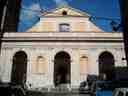
전용 페이지 열기 →Coming up on your left is Tivoli Cathedral, defined by its peach-colored stucco upper level resting on a pale stone portico with three grand arches and a long Latin inscription…더 보기간략히 보기
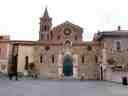
Coming up on your left is Tivoli Cathedral, defined by its peach-colored stucco upper level resting on a pale stone portico with three grand arches and a long Latin inscription across the middle. Please stand toward the front right, where you have a clear view of the main facade, and let us settle in. We just came from Villa Gregoriana, where untamed nature is the star, but here, human ambition takes the stage. This building is a perfect example of how the people of Tivoli did not just abandon their history, they built right on top of it. In fact, this cathedral sits directly over the ancient Roman forum, the bustling center of civic life and trade in the classical city. When the builders constructed this church, they actually reused the massive curved wall at the back, known as an apse, from a first-century BC Roman hall. The shift from Roman civic power to Christian dominance here was championed by a local boy who made good, Pope Simplicius. Serving in the late fifth century, he began the trend of Christianizing these old Roman public spaces, strengthening the political and spiritual bond between Tivoli and Rome. Local legend even says he gifted the town a sacred icon of the Savior that became the absolute center of local devotion. Over the centuries, this site just kept devouring and reinventing itself. In the Middle Ages, it was a grand Romanesque church with three long aisles and a towering, forty seven meter bell tower you can still see peeking out on the side. But by the sixteen thirties, Cardinal Giulio Roma decided the medieval style was outdated. He ordered a massive reconstruction, tearing down the ancient structure to create a single, wide-open central hall, or nave. The locals were highly critical of losing their historic basilica. To compromise, or perhaps just to save materials, the builders quietly hid the original ancient Roman columns right inside the new, thick plaster pillars. Later, the interior received a bright neoclassical facelift under Pope Pius VII. He used to be the bishop of Tivoli before enduring a harsh exile under Napoleon. Funding the cathedral's elegant redesign was his way of celebrating his triumphant return and thanking his old diocese. Inside, the church is a treasure box of survival. It holds a stunning twelfth-century Triptych of the Savior. This three-paneled painting is the focal point of the Inchinata, a centuries-old procession where the icon is carried through the streets to meet an image of the Virgin Mary. The two massive wooden frames are literally made to bow to one another while the crowd shouts for mercy. There is also a striking thirteenth-century wooden sculpture group showing Christ being taken down from the cross. For centuries, people swore the statues miraculously arrived on a driverless camel cart and were carved from exotic Lebanese cedar. Modern chemical testing recently proved the wood is just common European poplar, but the artistry is no less magnificent. You will also find the tomb of Bishop Angelo Leonini. His family was knee-deep in Tivoli's bloody gang wars, yet he somehow became a master diplomat, surviving the cutthroat politics of the Renaissance. The urge to take what is old and forge it into something entirely new is written into every stone here. When you are ready, let us take a brief four minute walk to the Church of San Silvestro, to see how this trend of architectural recycling continued.
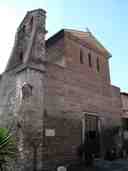
전용 페이지 열기 →Look to your left to spot the Church of San Silvestro, an ancient building easily identifiable by its flat brick facade, its bright white marble doorway, and a strangely squashed…더 보기간략히 보기
Look to your left to spot the Church of San Silvestro, an ancient building easily identifiable by its flat brick facade, its bright white marble doorway, and a strangely squashed bell tower resting on the roof. Assuming you are standing about twelve meters back from the right side of the building, go ahead and plant yourself right there while we unpack the rather ruthless history of this place. This church is another monument built by Pope Simplicius, the native son we met at the cathedral, who continued his trend of Christianizing the landscape. Originally, the interior featured three naves, which are the long, parallel halls where the congregation stands, divided by twelve spectacular columns of cipollino marble, a prized ancient stone known for its striking pale green and white swirls. The dedication to Saint Sylvester was highly symbolic, meant to celebrate the definitive triumph of the new Christian faith over the crumbling Roman past. But reverence for the past rarely lasts here. Fast forward to the sixteenth century, and the powerful Cardinal Ippolito the Second d'Este, who was busy building a lavish villa nearby, casually sliced this church's square bell tower in half and flattened it into a sail shape simply because the original design did not suit his own aesthetic whims. That was just the beginning of the butchery. In the seventeenth century, the church was literally carved to pieces. The side naves were completely demolished just to widen the street and build a parish house. By seventeen sixty-seven, the church was deeply in debt, prompting the local parish priest, Benedetto Nicolai, to take shocking measures. Because earlier renovations had raised the floor, the twelve precious ancient marble columns were half buried in the ground and awkwardly walled up, so Nicolai ripped them out and sold them. He pawned them off to a wealthy cardinal for a mere two hundred and sixty-five scudi, which translates to roughly thirty-five thousand modern American dollars, an absolute steal considering each column was appraised at over triple that amount. Truly brilliant financial management. Yet, despite centuries of petty alterations and deliberate destruction, a massive treasure survived hidden inside. In nineteen eleven, restorers chipped away thick layers of plaster to reveal spectacular frescoes from the thirteenth century. These paintings stretch ten meters high into the apse, the vaulted semicircle at the back of the church. They feature incredibly theatrical legends from the life of Pope Sylvester. In one scene, a magician named Zambri tries to prove his power by whispering a secret word into the ear of a ferocious bull, striking the massive animal dead instantly. Not to be outdone, Pope Sylvester stepped up, whispered the name of Christ, and resurrected the bull right in front of everyone, converting the stunned crowd. The cycle ends with a delightfully dark legend where Sylvester descends into a cavern under the Roman Forum to face a dragon whose venomous breath was killing hundreds of men a day. He boldly tied the beast's jaws shut, a vivid metaphor for silencing the old pagan ways. It is a miracle those frescoes survived the wrecking crews. To get a better sense of what this church's original medieval architecture looked like before the centuries of demolition took their toll, let us walk over to San Pietro alla Carità, which is just a five minute walk away.
전용 페이지 열기 →
5개 정류장 더 보기정류장 적게 보기expand_moreexpand_less
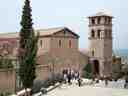
Looking to your left, you will spot the San Pietro alla Carità, a simple brick structure with a prominent square bell tower featuring open arched windows, and a modest facade…더 보기간략히 보기
Looking to your left, you will spot the San Pietro alla Carità, a simple brick structure with a prominent square bell tower featuring open arched windows, and a modest facade boasting three white stone doorways, though the outer two are completely sealed shut. This modest exterior hides a stubborn survivor. Its story perfectly captures how the past here refuses to be buried, no matter how many times people try to build over it. Once again, we find the legacy of Pope Simplicius, determined to establish a Christian Tivoli, building this church directly on top of the ruins of a massive ancient Roman villa. In fact, inside the nave, the soaring central hall of the church, you will see eleven columns made of cipollino marble. Those were scavenged straight from the Roman rubble beneath the floorboards. Over the centuries, the church lived many lives. By the Middle Ages, its walls and apse, the semi circular space behind the altar, were entirely covered in vibrant frescoes. It even housed the highly revered thirteenth-century wooden sculpture of Christ being taken down from the cross, kept safely here until sixteen forty-one when it was moved to the Cathedral we saw earlier. But survival here is never guaranteed. In the sixteenth century, the church almost vanished. An ambitious architect named Pirro Ligorio was drawing up plans for the grand gardens of the adjacent Villa d'Este. Ligorio wanted a blank canvas, so he planned to just bulldoze this church and clear out the old town. Luckily, the Pope stepped in and forbade the destruction, forcing a very frustrated architect to build his garden around the medieval structures instead. Later, Carmelite monks completely overhauled the interior, covering the medieval stonework with lavish Baroque stucco. That opulent disguise lasted until nineteen forty four, when devastating Allied bombings severely damaged the building. Left in ruins, the city had a choice to make. During the rebuilding in nineteen fifty one, restorers made the drastic decision to strip away every last piece of the damaged Baroque plaster to expose the original medieval bones. That aggressive restoration is why the two side doors on the facade are permanently sealed today. Despite war, ambitious architects, and changing tastes, pieces of its original beauty survive today. Inside, you can still find vibrant fragments of those original medieval frescoes, and walk across the intricate, geometric marble mosaic of the historic cosmatesque floor. It is a quiet, resilient place. But just a five minute walk away, we will see what happened when that frustrated architect finally got to build his masterpiece. Let us head over and prepare for the ultimate expression of wealth and power at the spectacular Villa d'Este.
전용 페이지 열기 →Here we are at Villa d'Este, coming up on your right. Take a good look at this sprawling estate. Today, it is known worldwide as a masterpiece of Renaissance architecture and…더 보기간략히 보기
Here we are at Villa d'Este, coming up on your right. Take a good look at this sprawling estate. Today, it is known worldwide as a masterpiece of Renaissance architecture and garden design. But do not let all that refined beauty fool you. This place was born from a cocktail of fabulous wealth, bruised ego, and pure spite. The story revolves around Cardinal Ippolito the Second d'Este, whom you might remember for casually slicing San Silvestro's bell tower in half. He was the son of the infamous Lucrezia Borgia, and he was staggeringly rich. He pulled in an annual income of roughly one hundred and twenty thousand scudi, a Renaissance currency that translates to tens of millions of dollars in today's money. Ippolito was well-connected, cultured, and his ultimate goal was to sit on the papal throne. He ran for Pope five different times. And five times, the other cardinals looked at his incredibly lavish lifestyle and his cozy ties to the French crown, and they simply said no. Finally, in fifteen fifty, Pope Julius the Third decided he had enough of Ippolito hanging around Rome causing friction. So, the Pope handed him a massive political consolation prize. He made Ippolito the governor of Tivoli. It was a calculated move to get a powerful rival out of the city and confine him to the suburbs. When Ippolito arrived here expecting a grand residence, he found out he was supposed to live in an old, drafty convent run by the Franciscans, a religious order dedicated to living in absolute poverty. Ippolito was absolutely furious. But instead of sulking, he decided to turn his exile into a spectacular display of power. He would build a villa that would make Rome jealous. He used architecture as a tool for his political ambition, constructing a physical billboard to remind everyone of the grandeur they had rejected. But creating a paradise requires raw materials. And Ippolito was not one to wait for new stones to be cut. He hired Pirro Ligorio, the frustrated architect from our last stop, and essentially gave him a license to pillage. Together, they orchestrated the deliberate destruction of nearby Roman ruins, systematically looting the ancient estate of Emperor Hadrian. They ripped out enormous quantities of ancient marble, towering columns, and classical statues, completely stripping an emperor's home to decorate a cardinal's new playground. The transformation of this landscape was brutal. To make room for the villa's legendary gardens and its massive terraces, Ippolito simply demolished an entire local neighborhood, tearing down homes and public buildings. The locals were so outraged that they filed twelve different lawsuits against him, but no legal action could stop a man with his kind of money and influence. To feed the hundreds of fountains he planned, his engineers dug a tunnel over six hundred meters long straight under the city of Tivoli. They channeled water from the Aniene river, funneling three hundred liters a second into the gardens. And they did it all without mechanical pumps, relying entirely on gravity and natural pressure. Ippolito barely got to enjoy his masterpiece. He died just months after the grand inauguration. But his legacy of reshaping this land by recycling its ancient past remains. Let's step back into the town to see where this incredible ambition collided with the everyday lives of the locals. It is just a quick one minute walk to our next stop, the Church of Santa Maria Maggiore, right where Ippolito's drafty old convent used to be.
전용 페이지 열기 →You are looking at a beautifully textured brick and stone facade featuring a large circular rose window and a deeply recessed, pointed Gothic archway framing the main wooden…더 보기간략히 보기
You are looking at a beautifully textured brick and stone facade featuring a large circular rose window and a deeply recessed, pointed Gothic archway framing the main wooden doors. Just a minute ago, we were exploring the magnificent Villa d'Este, but the history of the ground right in front of you reveals exactly how this town constantly builds its present directly on top of its past. Long before any church stood here, this exact spot was a sprawling Roman estate. Today, underneath the floorboards of the church, lie the repurposed ruins of that ancient residence, which once belonged to the Roman historian Sallust. Local tradition claims that Pope Simplicius built the very first church over those Roman ruins back in the fifth century. You might remember Simplicius from our earlier stop at the Cathedral. Well, to complete his grand vision for the town, he supposedly donated two sacred icons painted by Luke the Evangelist. He gave an image of the Savior to the Cathedral, and an image of the Virgin Mary right here to Santa Maria Maggiore. Those famous icons are the very ones used in the Inchinata procession we learned about at the Cathedral. Every year, the piazza right in front of you becomes the destination for that centuries-old ritual. When the image of the Savior finally arrives to meet the Madonna here, the two sacred frames are tilted to bow to each other underneath arches made of myrtle branches. But high-stakes spirituality often breeds charming local folklore. Legend has it that one year, an overly curious elderly woman decided she wanted to know exactly what the statues of the Mother and Son talked about when left alone overnight in the nave. She secretly hid inside to eavesdrop. The divine punishment for spying on a sacred mystery was swift. When she was finally discovered the next morning, she had been struck completely deaf and mute. While the common folk were busy weaving legends, the powerful were actively reshaping the stone. When Cardinal Ippolito d'Este arrived in fifteen fifty, he took the old Franciscan convent attached to this church and transformed it into the lavish villa you just saw. Yet, despite his incredible wealth, he died deeply disillusioned by court politics. He was buried inside this very church. His nephew later hired a sculptor to build a massive, monumental tomb, but the project mysteriously fell apart before it even began. As a result, the incredibly powerful Este cardinals remain buried under a remarkably simple stone slab in the floor. Even the sacred art inside had to survive this constant cycle of chaos. In sixteen eighty-seven, a lightning bolt struck the main altar, nearly destroying a priceless thirteenth-century painting. A flawless copy was quickly painted to replace it, a clever trick that actually fooled modern art scholars for decades. The wheel of history never stops turning here. Now, let us direct our steps toward an imposing fortress that changed the city skyline forever. We will head to Rocca Pia, which is just a brief three-minute walk away.
전용 페이지 열기 →So, on your left is Rocca Pia. It is quite a contrast to the elegant Church of Santa Maria Maggiore we just saw a few minutes ago, is it not? There is nothing subtle or welcoming…더 보기간략히 보기
So, on your left is Rocca Pia. It is quite a contrast to the elegant Church of Santa Maria Maggiore we just saw a few minutes ago, is it not? There is nothing subtle or welcoming about this massive stone block. Back in the middle of the fifteenth century, Tivoli was tearing itself apart. The city was exhausted by deadly plagues, earthquakes, and endless, bloody feuds between two powerful noble families, the Colonna and the Orsini. By 1461, Pope Pius the Second decided enough was enough. But he did not build Rocca Pia to protect the people of Tivoli from outside invaders. He built it to protect himself from the people of Tivoli. The Pope considered the locals to be turbulent and rebellious. This fortress, with an armed garrison stationed inside, was a direct, physical threat. The inscription over the entrance basically says I am kind to the good, but an enemy to the proud, because the Pope says so. Very neighborly. But here is where the brutal, military pragmatism of the project really shows its dark side. The architects, Niccolò and Varrone, needed a prominent, secure spot just outside the historic walls. Unfortunately for history, the perfect spot was right next to a grand, ancient Roman arena that had survived for centuries. But the architects saw it only as a tactical liability. Terrified that enemy forces or local rebels might use the ancient ruins for cover, they gave a ruthless order. Every single Roman wall taller than three meters was systematically smashed to pieces. The debris was then swept up and dumped to fill in the trenches around the new castle. They literally crushed the city's ancient heritage to build a cage for its citizens. The fortress itself is made of local tufo, a porous volcanic rock, shaped into four massive circular towers connected by high, thick walls. The tallest tower, the keep or main defensive stronghold, stands over thirty six meters high. Pope Pius tried to incorporate cutting edge military technology, making the walls incredibly thick to withstand the newly invented gunpowder cannons. But military technology moved fast, and Rocca Pia was almost immediately obsolete. In fact, German mercenaries easily breached it during the Sack of Rome in 1527. As its military value vanished, it entered a strange new phase of life. When Cardinal Ippolito d'Este arrived to build his nearby villa, he simply fenced off the surrounding area as his private hunting reserve. Later, another Cardinal added a massive stable right against the fortress walls to hold over a hundred horses. Eventually, the fortress found a much grimmer purpose. For over a century and a half, right up until 1960, it served as a prison. It crammed up to a hundred inmates into these circular towers. Older residents of Tivoli still vividly remember hearing the prisoners shouting out to the streets through the heavy iron grilles. For over five hundred years, Rocca Pia was an alien, oppressive presence. But the story does not end there. In December 2018, the structure was finally handed over to the town and opened to the public. The ultimate symbol of papal control became a public space. Now, I want to show you the scale of what was sacrificed to build this fortress. Let us take a short, one minute walk over to what remains of the Amphitheater of Bleso, just to the north.
전용 페이지 열기 →Look to your left for a sweeping, sunken oval of green grass bordered by low, curving walls built using opus mixtum, a Roman construction technique blending volcanic tuff and…더 보기간략히 보기
Look to your left for a sweeping, sunken oval of green grass bordered by low, curving walls built using opus mixtum, a Roman construction technique blending volcanic tuff and travertine stone. We just walked away from the Rocca Pia, and right here in its shadow lies the Amphitheatre of Bleso. For centuries, historians and locals alike believed this amphitheater had been completely wiped off the map during the Renaissance. It was entirely forgotten. Then, in 1948, construction crews were tearing through the earth to build a new road connecting two city streets. They were completely unaware of what rested below. Suddenly, their heavy equipment scraped against ancient masonry. It was a total shock. The sudden emergence of these ancient walls halted construction immediately, saving the site at the very last second from being paved over and lost forever. This amphitheater originally dates back to the second century of the Roman Empire, and its creation was fueled purely by political ambition. In the year 184 AD, a wealthy local figure named Lurius Lucretianus funded a massive spectacle featuring wild beasts and twenty gladiators fighting to the death. What a generous guy, right? Actually, it was a calculated political stunt. He was celebrating his election to the quinquennalità, which was a supreme local magistrate position that gave him ultimate control over the city census and public buildings. The citizens were so thrilled by the violent spectacle that they literally passed a hat around, organizing a public collection to erect an honorary statue of him. Another prominent figure, Marcus Tullius Blesus, gave the site its name. He was the administrator of the famous Sanctuary of Hercules Victor, and he poured two hundred thousand sestertii into this project. Sestertii were ancient Roman coins, and that staggering amount would be roughly equivalent to a few million dollars today. He also contributed two hundred days of labor. Before it echoed with the clash of swords, this specific area was a highly productive industrial zone. Excavations revealed ancient molds and fragments of high-quality Roman chalices, proving it was once a busy pottery district. But how did such a massive structure, capable of holding two thousand cheering spectators, get reduced to the low foundations you see today? Well, the destruction was not random vandalism. It was a cold, calculated military decision. As we learned at the Rocca Pia, the fortress architects panicked that these towering ruins could provide cover for local rebels. So, they ordered that any wall taller than three meters be violently torn down. The stone rubble from the destroyed seating tiers was carelessly dumped into the surrounding valleys to level out the land. Decades later, as you might recall, the flattened grounds where gladiators once bled were fenced off as Cardinal Ippolito d'Este's private hunting reserve. In the early 1600s, it found a strange sort of peace when it was converted into a carefully manicured vegetable garden. Take a moment to look over the remaining stones. This space shows how everything built here is destined to be torn apart and reshaped by the hands of the next generation. Now, we are heading to the grand finale of our tour. It is about a fifteen-minute walk from here, but absolutely worth it. Let us make our way to the monumental Sanctuary of Hercules Victor.
전용 페이지 열기 →


자주 묻는 질문
투어는 어떻게 시작하나요?
구매 후 AudaTours 앱을 다운로드하고 교환 코드를 입력하세요. 투어를 바로 시작할 수 있습니다 - 재생을 탭하고 GPS 안내 경로를 따라가시면 됩니다.
투어 중 인터넷이 필요한가요?
아닙니다! 시작 전에 투어를 다운로드하면 완전히 오프라인으로 즐길 수 있습니다. 채팅 기능만 인터넷이 필요합니다. 모바일 데이터 절약을 위해 WiFi에서 다운로드하시는 것을 권장합니다.
이것은 가이드가 안내하는 단체 투어인가요?
아닙니다 - 이것은 셀프 가이드 오디오 투어입니다. 폰을 통해 오디오 나레이션을 들으며 나만의 속도로 독립적으로 탐험합니다. 투어 가이드도, 단체도, 일정도 없습니다.
투어는 얼마나 걸리나요?
대부분의 투어는 60-90분이 소요되지만, 속도는 전적으로 본인이 조절합니다. 원할 때 언제든지 일시정지하거나, 정류장을 건너뛰거나, 휴식을 취하세요.
오늘 투어를 끝낼 수 없으면 어떻게 하나요?
괜찮습니다! 투어는 평생 이용이 가능합니다. 원할 때 언제든지 일시정지하고 다시 시작하세요 - 내일, 다음 주, 또는 내년에도. 진행 상황이 저장됩니다.
어떤 언어를 이용할 수 있나요?
모든 투어는 50개 이상의 언어로 이용 가능합니다. 코드를 교환할 때 원하는 언어를 선택하세요. 참고: 투어 생성 후에는 언어를 변경할 수 없습니다.
구매 후 투어는 어디에서 이용하나요?
App Store 또는 Google Play에서 무료 AudaTours 앱을 다운로드하세요. 교환 코드(이메일로 전송됨)를 입력하면 라이브러리에 투어가 나타나며, 다운로드하여 시작할 수 있습니다.
투어가 마음에 들지 않으시면 환불해 드립니다. 문의: [email protected]
안전한 결제 


