
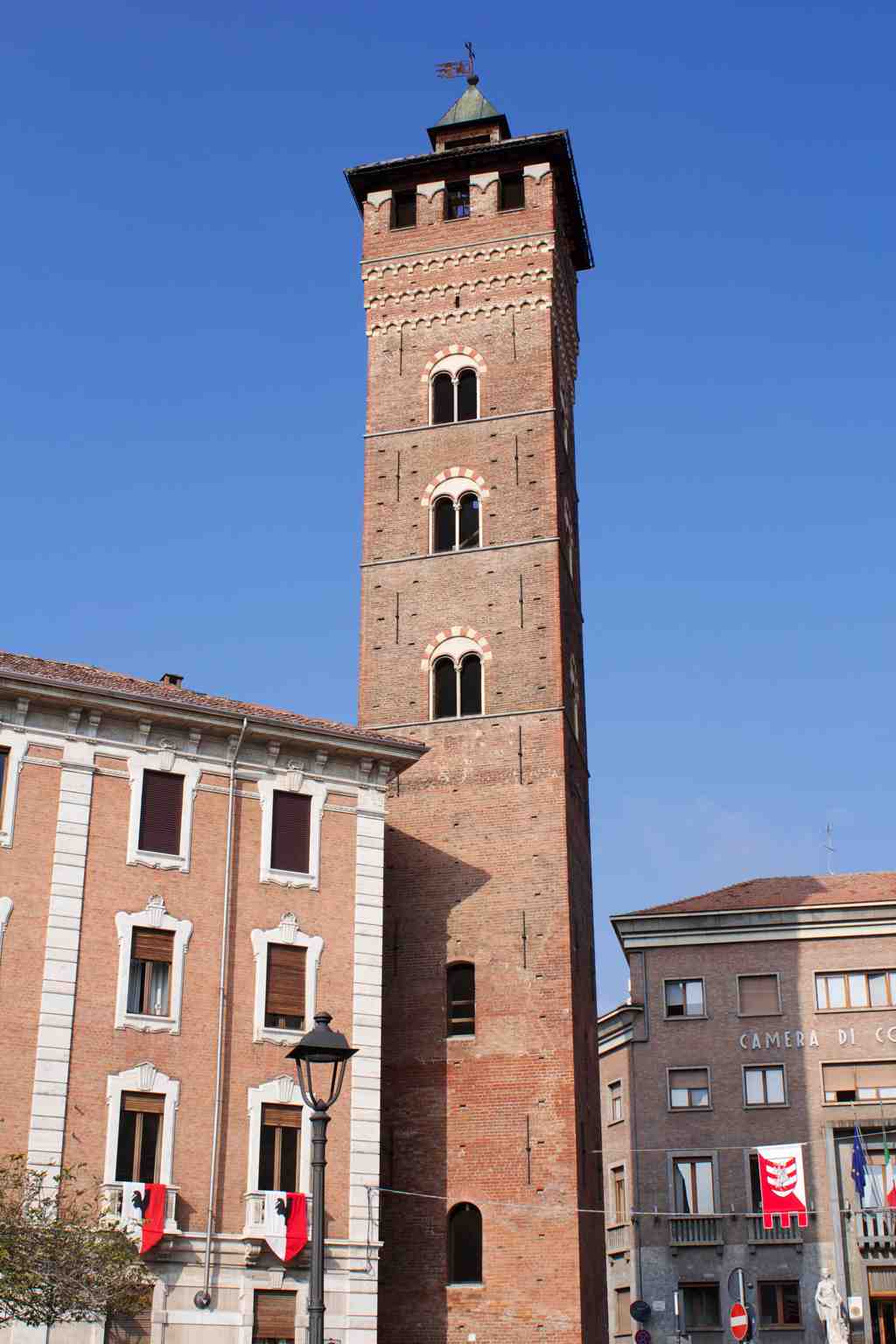
Look straight ahead at the striking, tall square brick tower with wide arched windows and a pointed roof with a metal spire: that's the Troyana Tower, easily recognizable next to the palace on the edge of Piazza Medici.
Imagine, you're now standing at the foot of the sturdy 44-meter-high Troyana Tower, also known as the Torre dell’orologio, or the clock tower. Yes, exactly: here in the heart of the city, this brick giant has seen and heard everything for centuries. Rich families once built these towers not to dry their laundry, but to show who was in charge! And at the end of the twelfth century, the construction of this tower began. Well, the first owners have disappeared into the mists of time-or maybe they just don't like empty bricks...
Initially, the tower probably belonged to an influential patrician family, but it wasn't long before the banking family Troya used their fortune - no, not in bitcoins but in hard cash - to complete the tower. Around 1250, they added those beautiful large arched windows, and between 1260 and 1280, the tower got its impressive battlements at the top, as you see now. A bit of showing off prestige, you might say. You're actually looking at a kind of medieval "skyline statement."
But wait, the story takes another twist! In the fifteenth century, this tower became the property of the Asinari family. They decided to install the clock mechanism, a bit like a modern smartwatch, but for the whole city. The clock was the boss: it indicated when the city should go to bed, when schools opened, and when shops had to close. Imagine everyone here simultaneously starting to pack up their market stalls when that clock moved! In the Middle Ages, the heavy bronze bell rang loudly over the streets of Asti, sometimes the only noise in the quiet evening air.
But it didn't stop there… Public punishments were even carried out in the square here, while the clock marked the rhythm of day and night. So be careful if you arrived late in the square-you'd rather not catch a punishment here.
Throughout the centuries, the tower's function constantly changed. After the arrival of the Dukes of Orléans, it became the center of power in the city - the governor spoke to the people from its windows above, while below, merchants hastily sold their last wares. In 1560, Emanuele Filiberto of Savoy definitively donated the tower to the city of Asti, so when you call your friends later to say you're in the Troyana Tower, you can proudly say you're part of the city's heritage!
Let's not forget: the bell in this tower is a true giant. With a diameter and height of 1.20 meters and a weight of almost 1,400 kilos, it is not only old (from the sixteenth century) but also the oldest still active hourly bell in Piedmont. So every hour, you get a piece of history for free here. The bell features beautiful Gothic inscriptions, as well as images of Archangel Michael, the Madonna with child, and the coat of arms of the city of Asti. Believe it or not, even now its tone rings clearly over the rooftops of Asti, keeping everyone in line.
In the twentieth century, our tower finally received some love: the arched windows were reopened after centuries of being bricked up, and the walls have been solidly restored-as if your grandpa finally got to go to the spa.
So, as you stand here, look up at that proud tower. Imagine that every chime not only marks time but also drives centuries of stories, scandals, market fun, and medieval tension through the streets. A piece of Asti that has seen everything for almost a thousand years... and heard everything. Perhaps you'll hear the bell ring soon - and if you're not paying attention, you might even get a surprise from the Middle Ages yourself!
For more insights into the architecture, construction, or the bell, feel free to navigate to the chat section below and inquire.




