
코치 오디오 투어: 코치의 역사적인 보물 탐험
포트 코치의 흔들리는 야자수 아래에는 탐험가, 반역자, 예술가들이 만들어낸 유산이 숨 쉬고 있으며, 그들의 비밀은 모든 조수와 첨탑을 가로질러 퍼져나갑니다. 이 셀프 가이드 오디오 투어는 숨겨진 골목길과 전설적인 랜드마크를 열어주며, 대부분의 여행자들이 결코 듣지 못하는 이야기들을 드러냅니다. 포르투갈군의 포화 속에서 엠마누엘 요새 성벽에서 한밤중 탈출을 누가 계획했을까요? 성인과 화가들의 운명이 교차했던 산타 크루즈 대성당 바실리카의 고대 돌들에는 어떤 미스터리가 남아있을까요? 그리고 영국 병사들은 왜 달 없는 밤에 코친의 심장부에서 성스러운 유물들을 조용히 지워버렸을까요? 포트 코치 해변의 짠 내 나는 바람을 가로질러 동양과 서양이 경이로움과 격변의 순간에 만났던 바실리카의 돔형 침묵 속으로 걸어보세요. 도시의 드라마가 한 걸음 한 걸음 펼쳐지면서 음모, 신앙, 스캔들과 함께 걷는 자신을 발견하게 될 것입니다. 코치의 비밀은 용감한 탐험가들을 기다립니다—여정을 시작하고 표면 아래에 숨겨진 것을 풀어보세요.
투어 미리보기
이 투어에 대하여
- schedule소요 시간 30–50 mins나만의 속도로 이동
- straighten3.0 km 도보 경로안내 경로 따라가기
- location_on
- wifi_off오프라인 작동한 번 다운로드, 어디서든 사용
- all_inclusive평생 이용언제든지 다시 재생 가능
- location_on포트 코치 해변에서 시작
이 투어의 정류장
Ah, the Roman Catholic Diocese of Cochin! Quite a mouthful, isn't it? Well, let me break it down for you in a fun and easy way. So, this place is basically a big deal in the…더 보기간략히 보기
Ah, the Roman Catholic Diocese of Cochin! Quite a mouthful, isn't it? Well, let me break it down for you in a fun and easy way. So, this place is basically a big deal in the Catholic Church here in Cochin, India. It's like the headquarters, if you will. The diocese covers a little over 235 square kilometers and serves the Latin Catholics of Malabar. Now, let's talk about its location. It's surrounded by the Arabian Sea on the west, the Archdiocese of Verapoly on the north and east, and the Diocese of Alleppey on the south. Talk about being in the middle of everything! The cathedral church and the bishop's castle, I mean, cathedral, can be found at the Santa Cruz Basilica in Fort Cochin. It's a beautiful place, and you can't miss it! Fun fact, the current bishop is Joseph Kariyil, appointed by Pope Benedict XVI in 2009. That's quite the prestigious title, don't you think? But wait, there's more! The Diocese of Cochin used to be a big shot in the past. It was the mother of many other dioceses in this part of the world, stretching all the way from Malabar to Cape Comorin (which is now Kanya Kumari), and even reaching as far as Sri Lanka, Nepal, Bangladesh, Myanmar, Hong Kong, and Macau. Impressive, right? The history of this place is pretty fascinating too. It all started when the Portuguese missionaries arrived here back in 1498 with good old Vasco da Gama. They set up a Portuguese Mission and started spreading the Catholic faith among the St. Thomas Christians in Cochin. More missionaries, including the famous Father Francis Xavier, arrived and established monasteries and colleges. It was a pretty happening place back then! But as with any story, there were some ups and downs. The Dutch came along in 1663 and destroyed most of the Catholic churches and institutions, except for the cathedral and the Church of St. Francis Assisi. And let's not forget about the British conquest of Cochin, which also caused some challenges for the diocese. Talk about a rollercoaster ride! Well, that's the story of the Roman Catholic Diocese of Cochin in a fun and nutshell. It's a historic and important place for the Catholic community here in Cochin. So, shall we move on to our next stop? Let's keep this tour rolling!
전용 페이지 열기 →Now, this church has a long and fascinating history. It all started back in 1500 when Portuguese missionaries arrived here in Kochi. The King of Cochin was so excited to see them…더 보기간략히 보기
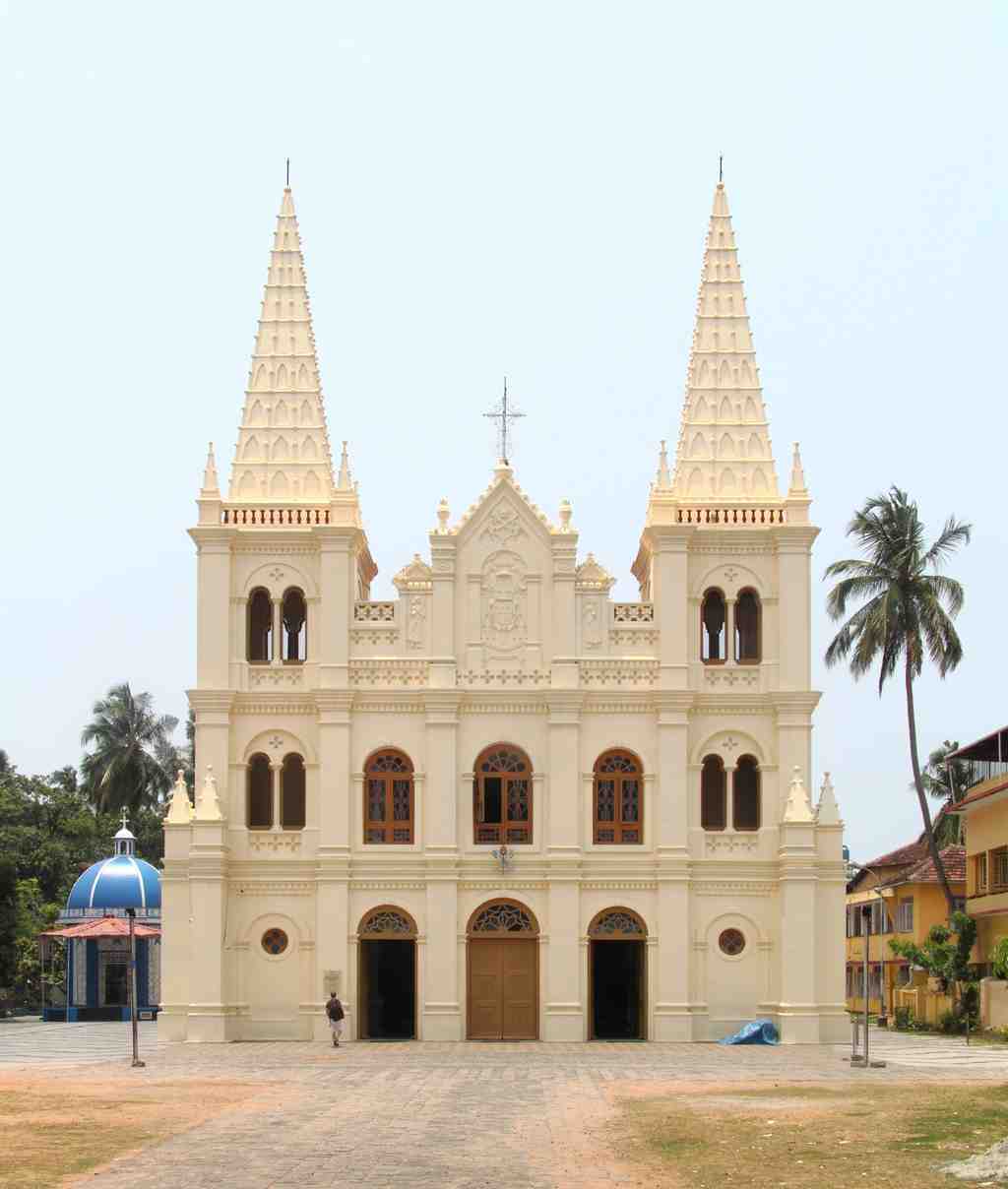
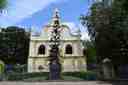
Now, this church has a long and fascinating history. It all started back in 1500 when Portuguese missionaries arrived here in Kochi. The King of Cochin was so excited to see them that he welcomed them with open arms. Well, that caused a bit of a ruckus with the Zamorin of Calicut, who declared war against the Kingdom of Cochin. Drama, right? But don't worry. The Portuguese army came to the rescue and defeated the enemies. As a token of gratitude, the King of Cochin allowed them to build a fort in Kochi. And guess what? They decided to build a church using stones and mortar, even though that was a bit unconventional at the time. They laid the foundation stone on the feast day of the Invention of the Holy Cross, so they named the church Santa Cruz. Fast forward to 1558, when Pope Paul IV elevated the Santa Cruz Church to a cathedral and established the Diocese of Cochin. Talk about a promotion! Unfortunately, when the Dutch came and conquered Cochin in 1663, they destroyed most of the Catholic buildings. But guess what? Our cathedral and the St. Francis Church managed to escape their wrath. Then, the British took over Cochin in 1795 and decided to demolish the cathedral. I guess they didn't appreciate its beauty like we do. But fear not, because Bishop João Gomes Ferreira and Bishop Mateus de Oliveira Xavier came to the rescue. They took it upon themselves to re-erect the cathedral and bring it back to its former glory. It was finally consecrated in 1905. Now, here's something tragic and fascinating. The famous Italian painter Fra Antonio Moscheni decorated the main altar of the newly built church. But sadly, he passed away just four days before the consecration. His disciple De Gama of Mangalore completed the work, though. The Santa Cruz Cathedral Basilica was proclaimed a basilica by Pope John Paul II in 1984. And let me tell you, it's a sight to behold. You'll notice the two lofty spires and the bright, white-washed exterior. And when you step inside, the pastel-colored interior will take your breath away. It's mostly Gothic, thanks to Fra Antonio Moscheni's artistic touch. Oh, and before I forget, the basilica houses the Relic of The Holy Cross of Our Lord Jesus Christ. You can find it on the right side of the church. Pretty amazing, isn't it? Well, my friend, I hope you enjoyed this little journey through the history of the Santa Cruz Cathedral Basilica. Let's move on to our next stop and see what awaits us there!
전용 페이지 열기 →
7개 정류장 더 보기정류장 적게 보기expand_moreexpand_less
Ah, welcome to Vasco House in Fort Kochi! This place is a real treat for history buffs and photo enthusiasts alike. So, Vasco House is believed to be the residence of none other…더 보기간략히 보기
Ah, welcome to Vasco House in Fort Kochi! This place is a real treat for history buffs and photo enthusiasts alike. So, Vasco House is believed to be the residence of none other than the great explorer himself, Vasco da Gama. Legends say that he lived here back in the 16th century, although there's no concrete proof of that, except for a striking picture of him hanging on one of the walls. Imagine living in a house that could potentially have housed such a famous figure! But let's not dwell on the mystery too much, because there's plenty more to admire here. Vasco House is a splendid example of Portuguese architecture, with its dazzling white walls and beautiful Prussian blue glass pane windows. The balcony verandahs add a touch of European charm from that era. And you know what? This place is quite the celebrity in the movie world too! It has appeared in many Malayalam films, including the 2007 hit Big B, starring Mammootty. It's no wonder that it's become one of the most photographed buildings in Fort Kochi. So, make sure you capture a picture or two before we move on to our next stop. But remember, the stars of the show here are the stunning architecture and the hint of mystery surrounding Vasco da Gama's possible abode. Now, let's continue our fascinating journey through historic Kochi!
전용 페이지 열기 →Back in 1503, when Netflix was just a twinkle in someone's eye, this church was built, making it one of the oldest European churches in all of India. Pretty impressive, right?…더 보기간략히 보기
Back in 1503, when Netflix was just a twinkle in someone's eye, this church was built, making it one of the oldest European churches in all of India. Pretty impressive, right? It's been standing here in Fort Kochi, Kochi ever since, serving as a witness to the European colonial ambitions in this part of the world. Now, let me tell you about the famous Portuguese explorer, Vasco da Gama. Picture this: It's the year 1524, and good ol' Vasco is on his third visit to India. Unfortunately, this trip took a turn for the worse because Vasco da Gama actually died right here in Kochi. But fear not! This church served as his temporary resting place. They buried him here, but after fourteen years his remains were relocated to Lisbon and now rest at the Jerónimos Monastery. Talk about an adventurous afterlife journey! Now, let me rewind a bit and take you back to when it all began. The Portuguese first arrived in India in 1498, thanks to Vasco da Gama's discovery of the sea route from Europe. They landed near Kozhikode (Calicut) and were followed by a bunch of other explorers. Pedro Álvares Cabral and Afonso de Albuquerque joined the party, and together, they decided to build Fort Emmanuel at the Fort Kochi Beach with permission from the Raja of Cochin. Inside that fort, they constructed a church with a unique twist - it had a wooden structure! This church was dedicated to St. Bartholomew. Fast forward a bit, and in 1506, the Portuguese viceroy, Francisco de Almeida, got permission from the Raja of Cochin to give the church a makeover. Now, instead of wooden walls, it was reconstructed with sturdy stone and masonry. Talk about an upgrade! But here's where things twist and turn like a Bollywood dance scene. The Dutch swooped in and captured Kochi in 1663. Now, while the Portuguese were Roman Catholics, the Dutch government and colonialists were Protestant. They weren't too keen on these churches, but guess what? They decided to spare this one! Yep, they demolished all the other churches in the area, but our beloved Church of Saint Francis survived the chopping block. The Dutch weren't heartless, though. They reconditioned the church and turned it into a government church. And that, my friend, is the roller coaster history of the Church of Saint Francis, Kochi. So, let's take a moment to appreciate this remarkable piece of history, and if you're feeling adventurous, we can move on to the next stop on our exciting tour of Kochi!
전용 페이지 열기 →Ah, Fort Emmanuel, or as some like to call it, Fort Manuel! This place is just brimming with history and strategic awesomeness. Located right here at Fort Kochi Beach in beautiful…더 보기간략히 보기
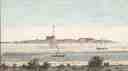
Ah, Fort Emmanuel, or as some like to call it, Fort Manuel! This place is just brimming with history and strategic awesomeness. Located right here at Fort Kochi Beach in beautiful Kochi, Kerala, India, this fort is a real gem. Back in the day, it was the stronghold of the Portuguese. Yep, those Portuguese folks were pretty serious about staking their claim here in Asia. They even named this fort after their King, Manuel I of Portugal. Talk about leaving a mark! Now, let me take you back to September 1503. Imagine the chief of Kochi giving permission to a Portuguese guy named Afonso de Albuquerque. He was given the green light to build this magnificent fort near the waterfront of the Arabian Sea. Construction started on 26 September, and boy, did it take some time to put together! The fort had a square shape, with these tall bastions at each corner, all decked out with powerful weapons. The walls were made by lashing together the stems of coconut trees (yes, coconut trees!) and filling the gaps with compacted earth. And just to make sure it was extra secure, they even had a wet ditch surrounding it. I guess the Portuguese were really serious about keeping intruders out and coconuts in! On the morning of 1 October 1503, they christened the fort with the name "Emmanuel," after their King. Can you imagine all the fanfare and celebrations that must have happened? Probably lots of feasting and dancing, I'd say! But wait, the fort's story doesn't end there. The Dutch had their eyes on this beauty and snatched it away from the Portuguese in 1663. They didn't waste any time destroying everything the Portuguese had built here. Talk about savage! And, of course, history loves a good twist. The British stepped in and took control from the Dutch in 1795. Those Brits always seemed to be in the right place at the right time. Funny how that works, huh? By the time 1806 rolled around, both the Dutch and the British had done some serious damage to the fort. It's a bit of a sad sight, with most of the walls and bastions being reduced to ruins. But fear not, my friend! There are still some remains of ramparts and fortifications scattered around Old Kochi and the Fort Kochi beach area. It's like a treasure hunt for history buffs! So, let's go explore this partially restored gun battery and other cool remnants together. Trust me, this place is a whole lot of fun, even if things have crumbled a bit over the years. Onward to adventure at Fort Emmanuel!
전용 페이지 열기 →Alright folks, hold on tight because we've arrived at our eighth stop on this whirlwind tour! Welcome to the St John De Britto Anglo-Indian High School in Fort Kochi! Now, this…더 보기간략히 보기
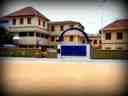
Alright folks, hold on tight because we've arrived at our eighth stop on this whirlwind tour! Welcome to the St John De Britto Anglo-Indian High School in Fort Kochi! Now, this isn't just any old school - it's got a fascinating history and an inspiring namesake. The school is named after John de Britto, a Portuguese Jesuit missionary from the 17th century who was known for his outstanding dedication and, sadly, martyrdom. And let me tell you, this school lives up to his legacy! Back in 1945, on a glorious Monday, the school opened its doors under the guidance of Rev. Fr. Jose Maria Das Noves. Can you imagine, they started with just 7 staff members and 91 eager students? My, my, how times have changed! Now, this school was unique because it was established specifically for the Anglo-Indian community - a minority group - so the medium of education here has always been good old English. They were sticklers for it, I tell you! Only later on did it come under the board of secondary education of the Government of Kerala. I must say, their dedication and hard work paid off. The first batch of students to proudly graduate with the tenth-grade certificate, also known as the Secondary School Leaving Certificate or SSLC, was the mighty 1986 batch. Prior to that, they followed the Madras Syllabus. Ah, the olden days! And hey, this school is no stranger to excellence. In fact, in 2009, they won the overall wrestling championship at the district mini games held in Muvattupuzha. Talk about muscle power, right? So there you have it, folks - the St John De Britto Anglo-Indian High School. A place of learning, legacy, and some serious wrestling skills. Shall we head to our next stop?
전용 페이지 열기 →Now, Fort Kochi is not just your ordinary neighborhood. It's actually part of a group of water-bound islands and islets, collectively known as Old Cochin or West Cochin. It's like…더 보기간략히 보기
Now, Fort Kochi is not just your ordinary neighborhood. It's actually part of a group of water-bound islands and islets, collectively known as Old Cochin or West Cochin. It's like a little slice of paradise surrounded by water, and adjacent to it is the lively locality of Mattancherry. Speaking of Mattancherry, it's the nerve town of old historic Cochin. Back in the day, when Malayalam was spoken a little differently, it was called Maadan-cheri, meaning "town of Maad." Now, you might be thinking, what on earth is Maad? Well, it's actually the stamp of the Old Royal Fort of the Rajah of Cochin. And guess what? The rajah built his palace here after a gigantic tsunami hit the port of Kodungallur or Muziris in 1341 AD. Talk about making a stylish comeback! But let's not forget the main star of the show, Fort Kochi itself. This place is steeped in heritage and culture, making it a popular destination for tourists from all around the world. In fact, it was even ranked ninth among the top 25 tourist destinations to explore in 2020 by National Geographic. So, you're in for a treat! To reach Fort Kochi, you can either take the roadways or the waterways. There are private buses as well as government transport buses that travel from different parts of the city to this amazing neighborhood. And to cater to the high volume of tourists, the government introduced low floor Volvo buses specifically for this route. They're like the fancy ones, you know? Now, let's dive into some history. Fort Kochi used to be a fishing village in the Kingdom of Kochi way back in pre-colonial Kerala. But everything changed when the Portuguese arrived on the scene in 1498 through the Age of Discovery. With their arrival at Kappad Kozhikode, they opened up a direct sea route from Europe to India. Talk about convenience! The Portuguese were granted the territory that would later become Fort Kochi by the Rajah of Kochi in 1503. And as a thank you, the Portuguese built a fort called Fort Emmanuel near the waterfront to protect their commercial interests. But the Dutch weren't all that keen on the Portuguese having all the fun, so they came along in 1683 and captured Fort Kochi, destroying many Portuguese institutions in the process. They definitely knew how to shake things up! Fast forward to 1795, and the fort changed hands once again, this time to the British. They must have been really eager to get their hands on it! And they held on to Fort Kochi until 1947, when India gained its independence. Talk about a roller coaster ride of foreign control! Now, if you take a stroll through the streets of Fort Kochi, you'll find a mix of old houses built by the Portuguese, Dutch, and British during their colonial periods. It's like walking through a living museum, blending different architectural styles from around the world. But one structure that definitely stands out is the St Francis Church. Originally built in 1503 by the Portuguese as a Catholic church, it has quite a remarkable history. In fact, the famous explorer Vasco da Gama was once buried here. Don't worry, he's not here anymore, but the church still stands as a national monument, now falling under the Church of South India. And with that, we've come to the end of our tour here in Fort Kochi. I hope you've enjoyed exploring all the wonderful landmarks and learning about the rich history of this incredible neighborhood. If you have any more questions or if you'd like to hear another joke, I'm here to entertain you. Happy travels!
전용 페이지 열기 →

리뷰
자주 묻는 질문
투어는 어떻게 시작하나요?
구매 후 AudaTours 앱을 다운로드하고 교환 코드를 입력하세요. 투어를 바로 시작할 수 있습니다 - 재생을 탭하고 GPS 안내 경로를 따라가시면 됩니다.
투어 중 인터넷이 필요한가요?
아닙니다! 시작 전에 투어를 다운로드하면 완전히 오프라인으로 즐길 수 있습니다. 채팅 기능만 인터넷이 필요합니다. 모바일 데이터 절약을 위해 WiFi에서 다운로드하시는 것을 권장합니다.
이것은 가이드가 안내하는 단체 투어인가요?
아닙니다 - 이것은 셀프 가이드 오디오 투어입니다. 폰을 통해 오디오 나레이션을 들으며 나만의 속도로 독립적으로 탐험합니다. 투어 가이드도, 단체도, 일정도 없습니다.
투어는 얼마나 걸리나요?
대부분의 투어는 60-90분이 소요되지만, 속도는 전적으로 본인이 조절합니다. 원할 때 언제든지 일시정지하거나, 정류장을 건너뛰거나, 휴식을 취하세요.
오늘 투어를 끝낼 수 없으면 어떻게 하나요?
괜찮습니다! 투어는 평생 이용이 가능합니다. 원할 때 언제든지 일시정지하고 다시 시작하세요 - 내일, 다음 주, 또는 내년에도. 진행 상황이 저장됩니다.
어떤 언어를 이용할 수 있나요?
모든 투어는 50개 이상의 언어로 이용 가능합니다. 코드를 교환할 때 원하는 언어를 선택하세요. 참고: 투어 생성 후에는 언어를 변경할 수 없습니다.
구매 후 투어는 어디에서 이용하나요?
App Store 또는 Google Play에서 무료 AudaTours 앱을 다운로드하세요. 교환 코드(이메일로 전송됨)를 입력하면 라이브러리에 투어가 나타나며, 다운로드하여 시작할 수 있습니다.
투어가 마음에 들지 않으시면 환불해 드립니다. 문의: [email protected]
안전한 결제 


