

쾨세그 오디오 투어: 고대 참나무 사이의 성, 신앙, 전설
고대 성벽의 그림자 속에서, 쾨세그의 고요한 거리에는 생존의 속삭임이 울려 퍼집니다. 이 셀프 가이드 오디오 투어는 돌과 기억의 층을 벗겨내어 비밀이 여전히 남아있는 잊혀진 구석으로 여러분을 안내합니다. 쾨세그 공성전에서 영웅들이 침략자들에게 저항했던 곳을 걷고, 쾨세그 유대교 회당의 잊혀진 목소리에 대해 고민하며, 쾨세그 성의 운명을 형성한 조용한 배신을 밝혀내세요. 헝가리 역사의 흐름을 바꾼 저항적인 입장을 촉발시킨 것은 무엇이었을까요? 유대교 회당의 창살 뒤로 사라진 사람들은 누구이며, 왜 그들의 이야기는 전해지지 않았을까요? 수세기 후에도 성벽에 새겨져 있는 수수께끼 같은 상징은 무엇이며, 그것은 무엇을 의미할까요? 엽서를 넘어 쾨세그 과거의 맥박과 힘 속으로 들어가 보세요. 모든 전환점은 생존, 신앙, 음모의 드라마를 드러냅니다. 재생 버튼을 눌러 그림자와 돌이 기억하는 것을 잠금 해제하세요.
투어 미리보기
이 투어에 대하여
- schedule소요 시간 30–50 mins나만의 속도로 이동
- straighten2.6 km 도보 경로안내 경로 따라가기
- location_on
- wifi_off오프라인 작동한 번 다운로드, 어디서든 사용
- all_inclusive평생 이용언제든지 다시 재생 가능
- location_on쾨세그 공성전에서 시작
이 투어의 정류장
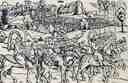
To spot this landmark, look for a depiction of a medieval town surrounded by tall, sturdy walls, pitched tents in the foreground, armies on horseback, and turrets rising above the…더 보기간략히 보기
To spot this landmark, look for a depiction of a medieval town surrounded by tall, sturdy walls, pitched tents in the foreground, armies on horseback, and turrets rising above the horizon-a vision straight out of a dramatic history book, usually found on a mural or in a historic square. Now, let’s dial the time machine back to the summer of 1532, and imagine yourself standing on this very ground as storm clouds gather above, heavy with the promise of rain and thunder-while 700 brave defenders steel themselves behind the battered walls of Kőszeg. You can almost hear the distant thunder of hooves as Sultan Suleiman the Magnificent, emperor of an immense Ottoman army, arrives with over 100,000 soldiers. Their armor gleams; their tents blossom across the fields; their flags flutter like vultures circling the town. Inside, Captain Nikola Jurišić, a determined Croatian, paces atop the ramparts. He surveys his garrison-700, maybe 800 men if you count the lucky ones-armed with hardly any cannons and just a few muskets. If you think your Mondays are tough, imagine being outnumbered a hundred to one and defending a town no one else thought would matter! The Ottomans expected this tiny fort to fall quickly, like a house of cards in a strong breeze. The Ottoman grand vizier, Ibrahim Pasha, has no idea what grit looks like until Kőszeg. The first cannon blast echoes off these walls. The defenders fight fiercely, launching countermines to thwart Ottoman tunneling. The ground shakes, the air thickens with dust, and every new attack-nineteen in all-crashes against the fort. The defenders patch holes in the walls as fast as they appear, and still, the tiny garrison refuses to yield. If this were a movie, you’d see men swapping jokes and prayers by candlelight while the darkness outside boiled with enemy soldiers and strange whispers. Why did the Ottomans care so much? This was the age when Europe trembled at their advance. Ten years earlier, after the Battle of Mohács, Hungary lost its king and independence, and the great empires-Ottoman and Habsburg-scrambled for the throne. With Ferdinand I, the ambitious Habsburg ruler, and John Zápolya, a vassal king promised the crown by Suleiman, every castle along the border spelled another chess move in a much bigger war. So, when the unstoppable Ottoman army reached Kőszeg on their way to Vienna, everyone expected the worst. Instead, to everyone’s surprise-and probably to the Ottomans’ growing annoyance-the siege dragged on for nearly a month. Rain began to fall, heavy and cold, turning the ground to mud. Hungry, tired, and far from home, the Ottoman soldiers lost their patience, while Suleiman eyed the swelling rivers and started thinking Vienna could wait for another day. There are actually two stories about what happened next. In one, Nikola Jurišić turns down the Ottomans’ generous offer to surrender and stays stubborn as a mule till the besiegers withdraw. In the other, the garrison agrees to a peaceful, symbolic surrender, and just a few Ottoman soldiers enter, raise a flag, and call it good. Whichever version you believe, Suleiman soon turns his army back toward home, and Vienna is spared. Historians say the coming of the August rains-and the arrival of a giant Imperial army in Vienna-was the final straw. After the Ottomans left, the Habsburgs hurried to reclaim their lost lands, and the sultans and emperors agreed to a shaky peace, dividing up Hungary but never settling their rivalry. Still, the incredible defense of Kőszeg became a legend. Some even say that, each year, the town’s church clocks are stuck at 11 o’clock, the hour the final attack was supposedly stopped-so if you ever need an excuse for being late, just say you were following Kőszeg time! Standing here, you’re part of a story filled with courage, strategy, and a touch of mystery. As you look around, remember the wind howling, rain falling, swords clashing, and above all-the sound of courage echoing within these ancient walls.
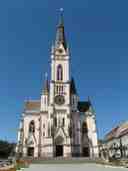
전용 페이지 열기 →To spot the Heart of Jesus Church, just look ahead for the towering, pale neo-Gothic church with its striking patterned spire rising high above the square, crowned with a golden…더 보기간략히 보기
To spot the Heart of Jesus Church, just look ahead for the towering, pale neo-Gothic church with its striking patterned spire rising high above the square, crowned with a golden cross. Now, take a breath and picture yourself here in the heart of old Kőszeg, right at the spot where market streets meet the grand main square-a place where, over a century ago, townsfolk dreamed of something spectacular. Their town was growing, and so the people wanted a church as grand as their hopes. With a bit of everyday Hungarian persistence (and probably more than a few cakes at the fundraising events), the community, led by kind-hearted priests like János Győri and Major János, began collecting coins and planning for years and years. If only they'd had crowdfunding back then! In the early 1890s, the locals watched in awe as bricks began to pile up on what used to be the old Korona Hotel. Designed by Ludwig Schöne from Vienna-because who doesn’t want an architect with a fancy accent?-the church rose skyward. There were tense moments, like when the massive 57-meter tower was topped off: on that special day in 1893, the golden cross shone against the sky after being blessed by the priest, a moment that must have made hearts leap. The cross itself, by the way, got the full gold-treatment from local craftsmen. Once finished in 1894, you’d have seen glazed Moravian tiles gleaming on the roof. Sadly, a wild hailstorm in 1929 smashed most of them-proof that beautiful things also attract the occasional cosmic snowball fight. Step closer and notice those dramatic entrance arches and the rose window above. If you slip inside, you’d see colorful paintings, columns, and windows-gifts from generous families-showing Jesus, Mary, and a lineup of Hungarian saints who probably never imagined their selfie would be in stained glass! Local treasures from medieval and baroque times fill the church, including a golden chalice from 1421 and a monstrance shaped like a tiny church itself. And here’s a little drama for you: by 2020, age and rain had taken their toll, and the tower crown was leaning like it had just heard a surprising sermon-so the community came together again for major rescue works. The scaffolding you’ll see today marks a new chapter of keeping beauty safe, ensuring the bells-one of which can wake half the town-keep ringing, and Händel’s music still drifts out above Kőszeg’s rooftops. It’s a place built with faith, teamwork, and just a touch of weather-related suspense. Intrigued by the construction, the building or the furnishings? Make your way to the chat section and I'll be happy to provide further details.
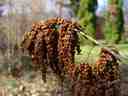
전용 페이지 열기 →Look straight ahead for a patch of tall, lush trees and thick hedges just beyond the open area-if you spot a peaceful green space dotted with towering evergreens and perhaps a…더 보기간략히 보기
Look straight ahead for a patch of tall, lush trees and thick hedges just beyond the open area-if you spot a peaceful green space dotted with towering evergreens and perhaps a glimpse of a charming, yellowish building behind, you’ve found the Chernel Garden Arboretum. Now, let’s step into this living storybook! Picture yourself here over a hundred years ago, when this wasn’t yet a magical arboretum, but simply a sprawling orchard belonging to the Chernel family-just imagine the sound of apples thumping softly on the grass and birds flitting all around. The real magic began with István Chernel, a passionate ornithologist who loved birds more than most people love chocolate. Inspired by both science and heart, István transformed this orchard into a memory garden, a place to celebrate Hungary’s big moments-like when the country joyfully welcomed home the ashes of Kossuth Lajos and Ferenc Rákóczi II. Every time something important happened-or even during family gatherings-István would plant a new tree, as if to say, “Let’s root this memory right here!” But there’s more: István didn’t stop at trees. He filled the park with thick hedges-perfect nests and hideouts for the area’s feathered residents, making it the fanciest bird B&B in town. His love for both birds and plants brought him friends all over Hungary, and he traded unusual trees with nearby arboretums-the park became a true botanical melting pot. A little mystery awaits at the front, where a monument with Chernel’s own portrait stands, gazing forever over his creation-carved in 1931 by sculptor Sándor Mayer. After World War II, the garden almost vanished, but local hero Ernő Horváth swooped in to save it, passing it to the county museum. And with official protection, the garden opened its gates to the public. As you stroll, look for its most precious trees: rare golden larches from China, mighty spruces and firs, and even an atlas cedar. If you hear chirping, you’re right-the bird sanctuary is still here. There’s also a little museum, an outdoor exhibit, and even a hospital for wounded birds from all over the region. Quite the leafy legend, isn’t it? Now, who’s ready for a walk through history and a bit of birdsong?
전용 페이지 열기 →
5개 정류장 더 보기정류장 적게 보기expand_moreexpand_less
To spot Kőszeg Castle, look for a large, tan stone fortress with tall towers and thick walls at the heart of the Old Town, standing boldly above the rooftops like a medieval…더 보기간략히 보기
To spot Kőszeg Castle, look for a large, tan stone fortress with tall towers and thick walls at the heart of the Old Town, standing boldly above the rooftops like a medieval guardian. Now, step a little closer-and let your imagination transport you to a world of princes, invaders, and daring last stands. Kőszeg Castle, also known as Jurisics Castle, isn’t just a lump of ancient bricks; it’s the beating heart of heroic tales and the whispering walls of centuries past. Imagine, for a moment, that it’s 1532: the air is thick with tension, the clang of armor and the nervous whispers of villagers fill the night. Here stood Jurisics Miklós, the most famous castle captain, rallying about a thousand defenders-mostly everyday people with more bravery than battle skills-as Sultan Suleiman’s enormous Ottoman army approached, thundering nearer every day. And what a siege it was! For twenty-five intense days, the defenders faced every trick in the Ottoman playbook: booming cannons, flying arrows, battering rams-the works! But instead of being flattened like a pancake, the town struck a cunning deal. The invaders were allowed to raise Turkish flags on eight towers, just for show. Suleiman’s men could claim a “victory”-and the townsfolk got to keep their lives and their city. If only all arguments today ended with a decorative flag rather than a fight! Now here’s a fun twist: high on the hill known as Sultan’s Knoll, the mighty Suleiman watched the drama below. But victory wasn’t truly his, and the defenders, led by Jurisics, became legends. In fact, the king was so grateful he made Jurisics a baron and gave him the whole town-talk about a reward for a good day’s work! As centuries passed, the castle changed hands-from powerful nobles to kings, bounced between the Garai, Habsburgs, and Esterházy families. It survived fires, countless battles, and even movie crews filming wild adventures in its shadow. The place you’re looking at now was nearly ruined by fire in 1777, then restored by the loving-and probably exhausted-hands of locals and craftsmen. In the modern era, it became a lively cultural center with festivals and open-air theater filling the grounds with laughter and applause. And don’t miss the story of the Esterházy altar, hidden and restored with nearly as much drama as the castle itself! So as you stand here, feel the thick stone walls, sense the echo of drums and shouts, and know you’re sharing the same ground as heroes, artists, and dreamers. You could say, Kőszeg Castle is proof that even the mightiest walls are built on hope, courage, and maybe a good clever trick or two. Watch out for any leftover Turkish flags-they’d make quite the souvenir! Ready to delve deeper into the history of the castle, esterházy altar or the culture, filming? Join me in the chat section for an enriching discussion.
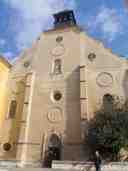
전용 페이지 열기 →To spot St. Jacob’s Church, just look for the broad, pale yellow façade with swirled edges, round medallions, and a small dark bell tower at the top-the entrance sits right behind…더 보기간략히 보기
To spot St. Jacob’s Church, just look for the broad, pale yellow façade with swirled edges, round medallions, and a small dark bell tower at the top-the entrance sits right behind those slim pillars and leafy tree. Step closer, my friend, because you’re right at the doorway to Kőszeg’s own time machine-St. Jacob’s Church! If these worn walls could talk, they’d have a gossip column longer than the Danube. Imagine a church built on layers of legend: back in 1289, this spot saw a minorite church destroyed in a siege, and from those ashes, a brand new life arose, courtesy of the hardworking Franciscans under King Louis, who rebuilt their monastery stone by stone. During the early 1400s, the mighty Garai family got involved, redecorating and leaving behind mysterious carvings of people, animals, and even a serpent-their family mascot. You’ll feel their watchful eyes as you walk in! But all wasn’t calm within these walls. In 1551, the winds of the Reformation swept through, and suddenly the church was Protestant; a few brawls and a trashed medieval altar later, and it had become the town’s favorite tug-of-war toy. Then, just as things were quieting down, Bishop György Széchenyi pops in, talks the town council into returning the church-smooth talking, right? Over the centuries, Jesuits, Piarists, and Benedictines all took a turn calling this place home. The bell tower above you was built in the 15th century, while that cute little Sanctus turret joined the party in 1697. During an 1807 renovation, the church got its stylish baroque outfit, but look inside and you’ll still find a gothic soul. There’s a real treat if you peek inside: frescos that hid for centuries! When they were revealed in 1937, the church finally showed off its Madonna in a Cloak, and St. Christopher looming large in stunning gothic style. And just think-restoration artists even snuck some local celebrities and church VIPs into the frescos. Even in the graveyard, there’s star power: nobles, mayors, even the “Venus of Murány,” all have their resting spots here. So, while St. Jacob’s may look calm and sunny today, beneath its surface, it’s practically humming with the footsteps and secrets of centuries. Every little detail-those chipped stones and iron gates-has a tale to tell if you listen hard enough!
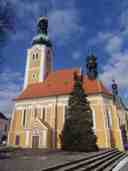
전용 페이지 열기 →To spot St. Emeric Church, just look for a striking yellow building with a towering green onion-shaped dome and a cheerful, sunlit facade standing proudly in the square with stone…더 보기간략히 보기
To spot St. Emeric Church, just look for a striking yellow building with a towering green onion-shaped dome and a cheerful, sunlit facade standing proudly in the square with stone steps leading up to it. Now, as you’re standing here, imagine stepping back through the centuries when things were never quite as smooth as this fresh paint suggests. The story of St. Emeric Church begins in the early 1600s when the city decided, “Let’s build a church!”-but soon found that construction projects have always had their hiccups. The first builder, a bold Austrian named Walent Marx, tried to sneak in a shorter tower and some unplanned vaulted sections-sort of like ordering a three-layer cake and getting just two with extra icing in the wrong places! Fed up, the town hired a new builder, Wolf Zehentmayer, who finally boosted the tower sky-high and finished the job in 1640. Originally home to the Protestants, the church got a baroque makeover in 1670, and only three years later, switched sides to become Catholic. St. Emeric himself, dressed in Hungarian noble robes, proudly greets you from above the main door-he’s been watching over Kőszeg’s faithful since 1722. Inside, the art will sweep you into Hungarian history, with paintings by both Dorfmeister father and son. If you listen carefully, you might still catch the faint echo of Croatian hymns-today, the church is home to local Croatian services. And don’t trip over the past! Old gravestones linger nearby, marking where the town’s medieval cemetery once lay. Quite a place for a walk, right?
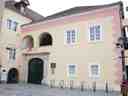
전용 페이지 열기 →Look for a charming yellow and pink building with a tall green door and two arches above the entry, right in the main square-if you spot the Hungarian flag waving above the stone…더 보기간략히 보기
Look for a charming yellow and pink building with a tall green door and two arches above the entry, right in the main square-if you spot the Hungarian flag waving above the stone doorway, you’ve found the General’s House! Step closer, and imagine you’re back in 1617, with the scent of wood smoke in the chilly morning air and the echo of horses’ hooves on these cobblestones. This wasn’t just any old house-it was built to be important! In 1719, Kőszeg’s city leaders transformed it into the headquarters for the highest-ranking general of the mounted garrison stationed here. That’s when locals started calling it the General’s House, or, for you German speakers in the crowd, “Generalhaus.” For centuries, important military decisions and maybe even heated debates over who got the last piece of goulash, all happened within these very walls. Today, though, the building hosts the City Museum-no need to salute before entering, unless you want extra fun points! Inside, you’ll find the Kőszeg Craft and Guild exhibitions, a treasure trove of old tools, weapons, and oddities from watchmakers, candle makers, butchers, and even bookbinders. There are 14 original workshops set up just as they were centuries ago. Don’t miss the quirky Hero’s Tower out back, built where the ancient city gate once stood, now dedicated to local sports heroes. So, whether you’re a history buff or just glad your job doesn’t involve horseshoes and anvils, the General’s House is your passport to centuries of Kőszeg stories-some inspiring, some mysterious, and all waiting for you to explore.
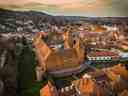
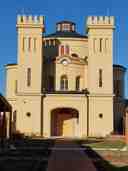
전용 페이지 열기 →You’re looking for a cream-colored building tucked deeper into the lot ahead, with two castle-like towers on either side and a grand round dome rising between them, almost like a…더 보기간략히 보기
You’re looking for a cream-colored building tucked deeper into the lot ahead, with two castle-like towers on either side and a grand round dome rising between them, almost like a fairytale fortress with golden doors inviting you in. Take a deep breath and let’s step back in time-imagine Kőszeg in 1859, a small but bustling town with a proud, resilient Jewish community dreaming of a home for worship and gathering. Right here, thanks to the generosity (and a touch of style) from Philip Schey, the community built this very synagogue. Now, look up at those two robust towers-they look like they could withstand anything, don’t they? That sense of strength was crucial-because, for centuries, Jewish life here was anything but steady. As the story goes, Jews lived in Kőszeg as far back as the Middle Ages, only to be expelled, welcomed back, and chased away again. Royalty granted privileges one decade and yanked them away the next-living here was a bit like riding a medieval rollercoaster, and not the fun kind! In 1420, a powerful lord from Lower Austria expelled all Jews from Kőszeg and Vienna, and over the next centuries, newcomers trickled in from places like Bohemia and Sopron, hoping for peace and a fresh start. Sometimes they were allowed to trade and even skip the weird rules on special clothing, and other times, they had to leave town-or face far worse consequences. But by the late 1600s, a man named Schlesinger Israel managed an unusual feat: he rented the salt chamber and customs rights from the city, and got permission to settle here with his family-practically buying residence, which was rare! Over the next centuries, generations found their footing, contributing to local business and founding important institutions-a savings bank, schools, even a cemetery with a ritual house. By 1910, the Jewish population peaked at 266-just over 3% of the town. Their star seemed brighter than ever. Walk a little closer, and peer through those golden doors in your mind’s eye. Inside, you’d see a round, airy prayer hall, crowned by a dome with painted stars and a wooden Ark for the Torah, with galleries above for women and children. The synagogue’s design is rare-built on a cross-shaped plan with four rounded wings, drawing from ancient and Renaissance architecture. And those bastion-like towers? A whimsical twist, as if the synagogue itself were guarding a secret treasure: the faith and culture of Kőszeg’s Jews. Legend has it there’s even an exquisite painted Star of David above the Torah Ark-something you won’t see in many other synagogues in the country. But just as fortunes can rise, they can fall. The First World War, the Treaty of Trianon, and a stinging economic blow sent many Jewish families seeking opportunity elsewhere. And then, the darkest chapter-World War II. Listen-can you imagine the heavy footsteps echoing on cobblestones, as the Nazis rounded up every Jewish resident in 1944? Over a hundred souls, marched from their small ghetto through town and sent, most of them, to Auschwitz. Only sixteen would return. After the war, the synagogue fell silent-no more prayers, only whispers of memory. For decades, the building’s fate teetered on a knife’s edge. Abandoned and battered by wind and rain, sometimes used for storage, sometimes eyed as a pub or event hall by hopeful entrepreneurs-imagine, a Jewish house of worship nearly reborn as an Irish bar! The paint peeled, pieces of brick crumbled, and wild vines curled through broken windows. At one point, the building was offered as the town library; at another, it was auctioned to private owners with tangled paperwork that made renovation a bureaucratic maze. Backyard mysteries grew as the once-beautiful courtyard became overgrown and silent. Yet, hope found a way. In the 2010s, townsfolk and enthusiasts rallied. With government help and an ambitious restoration under the KRAFT program, workers cleared the brambles, repaired the roof, restored the dazzling dome, and brought the synagogue back from the brink. On an August day in 2022, after more than half a century in limbo, the doors opened once again-not just as a survivor of history, but as a memorial and cultural center. Today, you’re standing in front of a unique jewel, with its playful towers, curling corners, and walls now echoing new stories. Kőszeg’s synagogue is far more than a building-it’s a survivor. Its stones remember joy, sorrow, resilience, and rebirth. If these walls could talk, I bet they’d crack a joke about almost becoming a pub, then remind us all that every community, no matter how small, can light up a town like a candle in the dark. Seeking more information about the history, history or the renovation? Ask away in the chat section and I'll fill you in.
전용 페이지 열기 →
자주 묻는 질문
투어는 어떻게 시작하나요?
구매 후 AudaTours 앱을 다운로드하고 교환 코드를 입력하세요. 투어를 바로 시작할 수 있습니다 - 재생을 탭하고 GPS 안내 경로를 따라가시면 됩니다.
투어 중 인터넷이 필요한가요?
아닙니다! 시작 전에 투어를 다운로드하면 완전히 오프라인으로 즐길 수 있습니다. 채팅 기능만 인터넷이 필요합니다. 모바일 데이터 절약을 위해 WiFi에서 다운로드하시는 것을 권장합니다.
이것은 가이드가 안내하는 단체 투어인가요?
아닙니다 - 이것은 셀프 가이드 오디오 투어입니다. 폰을 통해 오디오 나레이션을 들으며 나만의 속도로 독립적으로 탐험합니다. 투어 가이드도, 단체도, 일정도 없습니다.
투어는 얼마나 걸리나요?
대부분의 투어는 60-90분이 소요되지만, 속도는 전적으로 본인이 조절합니다. 원할 때 언제든지 일시정지하거나, 정류장을 건너뛰거나, 휴식을 취하세요.
오늘 투어를 끝낼 수 없으면 어떻게 하나요?
괜찮습니다! 투어는 평생 이용이 가능합니다. 원할 때 언제든지 일시정지하고 다시 시작하세요 - 내일, 다음 주, 또는 내년에도. 진행 상황이 저장됩니다.
어떤 언어를 이용할 수 있나요?
모든 투어는 50개 이상의 언어로 이용 가능합니다. 코드를 교환할 때 원하는 언어를 선택하세요. 참고: 투어 생성 후에는 언어를 변경할 수 없습니다.
구매 후 투어는 어디에서 이용하나요?
App Store 또는 Google Play에서 무료 AudaTours 앱을 다운로드하세요. 교환 코드(이메일로 전송됨)를 입력하면 라이브러리에 투어가 나타나며, 다운로드하여 시작할 수 있습니다.
투어가 마음에 들지 않으시면 환불해 드립니다. 문의: [email protected]
안전한 결제 


