
데브레첸 오디오 투어: 유산과 현대성을 통한 여정
전설이 지붕 위에서 속삭이고 혁명이 붐비는 홀을 통해 울려 퍼졌던 도시: 데브레첸은 발걸음을 늦추고 귀 기울여 들을 때 다른 얼굴을 드러냅니다. 이 셀프 가이드 오디오 투어는 엽서 속 풍경을 넘어, 대부분의 방문객이 상상조차 할 수 없는 비밀스러운 구석과 이야기 속으로 여러분을 안내합니다. 개혁교회 소교회(Reformed Small Church)의 군중들은 어떤 이유로 황제의 명령에 감히 저항하며 숨 막히는 순간에 모든 것을 걸었을까요? 초코나이 국립극장(Csokonai National Theatre)의 황금 조각상들은 왜 어둠이 내린 후 피아츠 거리(Piac Street)를 가로질러 슬픈 듯 응시하는 것처럼 보일까요? 그리고 시청 아래 어떤 잊혀진 탈출 경로가 한때 헝가리 왕관을 재앙에서 구했을까요—모두의 눈에 띄는 곳에 숨겨져 있었는데도 말이죠? 활기찬 대로를 지나고 고대 돌 속에 숨겨진 상처들을 지나가세요. 각 랜드마크는 드라마, 웃음, 반란 또는 희망을 불러일으킵니다. 데브레첸을 새롭게 발견하세요: 그 전투, 그 비밀, 그 심장을. 역사가 진정으로 살아 숨 쉬는 곳을 걸을 준비가 되셨나요? 데브레첸의 이야기가 여러분을 이끌 것입니다.
투어 미리보기
이 투어에 대하여
- schedule소요 시간 30–50 mins나만의 속도로 이동
- straighten2.4 km 도보 경로안내 경로 따라가기
- location_on
- wifi_off오프라인 작동한 번 다운로드, 어디서든 사용
- all_inclusive평생 이용언제든지 다시 재생 가능
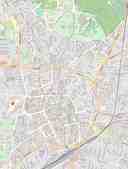
- location_on개혁교회 소교회에서 시작
이 투어의 정류장
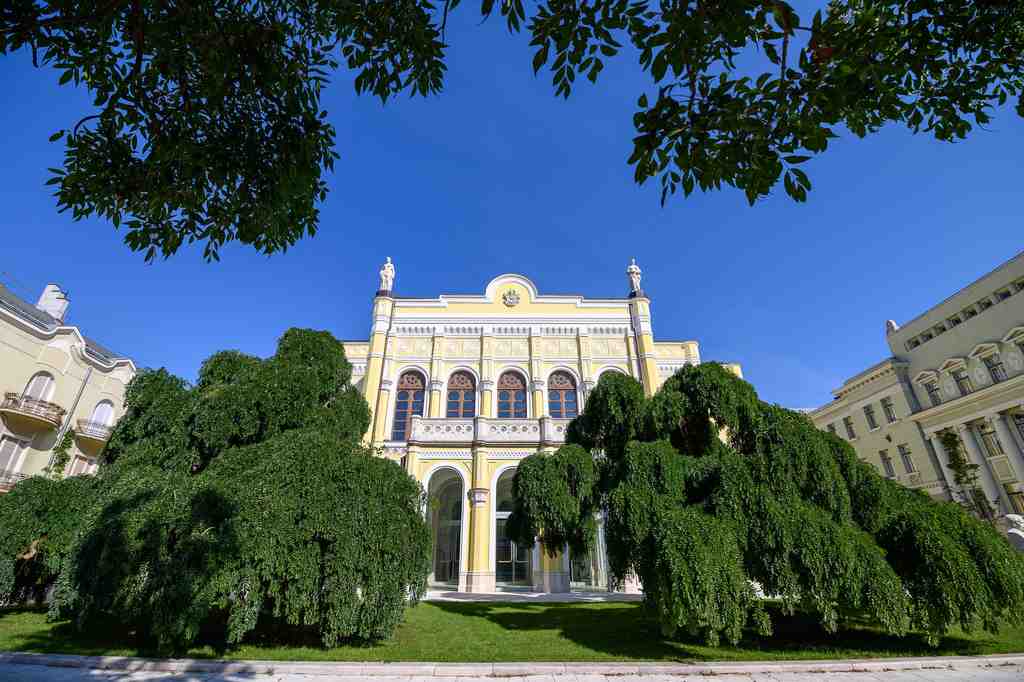
Right in front of you, the Csokonai National Theatre stands proudly with its grand yellow façade, arched windows, decorative statues on the roof, and lush green trees framing the…더 보기간략히 보기
Right in front of you, the Csokonai National Theatre stands proudly with its grand yellow façade, arched windows, decorative statues on the roof, and lush green trees framing the entrance-just glance beyond the branches for this eye-catching landmark. Now, let’s take a step back in time and imagine Debrecen, long before the days of spotlights and stage curtains. Picture a town alive with curiosity, where the very first theatre performance happened not in a fancy building, but in a converted barn behind an inn called the White Horse-imagine dusty floors, candlelight wavering, and excited whispers as people squeezed together to see something brand new. This was 1798, and the entire city seemed to catch the theatre bug! Of course, in classic theatrical fashion, early venues like the “comedians’ house” burned down not once, but twice. You could say Debrecen’s love for drama started with a bit of drama itself! Luckily, help was on the way-courtesy of a generous countess who donated her entire family theatre set, props and all. For years, makeshift stages popped up all over town: in barns filled with grain, at the corner of busy streets, and even in the old salt warehouse where winter performances were held. The people of Debrecen simply couldn’t get enough. The city hosted traveling actors, local stars, and legends of the Hungarian stage, including names like Déryné and Szentpéteri Zsigmond. Eventually, with all this enthusiasm, the city decided enough was enough-it was time for a real, permanent theatre of their own. So, they called upon the famous architect Antal Szkalnitzky, who-after a few twists, turns, and a bit of confusion with the legendary Miklós Ybl-designed the elegant building in front of you. Construction began in 1861, replacing an old granary where even literary giants like Arany János and Petőfi Sándor had once performed. The costs were so high that the city even sold some of its meadows to fund the dream… talk about putting your money where your stage is! At last, in 1865, the stunning theatre opened its doors with a performance of “Bánk bán,” led by a famous local tenor and featuring the dazzling Laborfalvi Róza. Imagine the gasps as people stepped inside: soaring ceilings, golden decorations, and a blend of Moorish and Byzantine designs that felt as magical as the performances themselves. Over the years, the Csokonai Theatre became the beating heart of Debrecen’s cultural life. Operas, comedies, tragedies-they were all at home here. Famous actors like Mensáros László and Latinovits Zoltán began their glittering careers on this very stage, while legendary directors kept innovation and creativity alive-even during tough times. The building survived wars, financial crises, and (perhaps most dramatic of all!) endless renovations and upgrades. In the 20th century, the theatre faced everything from power struggles to a revolving door of managers, some of whom spent their own savings just to keep the lights on. Ever since 1915, the theatre has proudly carried the name of Csokonai Vitéz Mihály, a poet beloved in Debrecen. Today, it’s more than just a building; it’s a living, breathing testament to the city’s passion for art. With a reputation as one of Hungary’s national theatres, it boasts multiple stages and a bustling company, along with youth programs and brand-new venues. After a spectacular three-year renovation, the theatre reopened in 2023 with all the drama and excitement you’d expect from such an old star. If these walls could talk, they’d share more stories than even the best playwright could dream up: of raucous opening nights, actors battling nerves backstage, thunderous applause, and moments of silence when the magic on stage took everyone’s breath away. So, as you look up at the grand yellow façade and fancy statues, remember: in Debrecen, the real magic isn’t just on the stage-it’s everywhere the city gathers to dream, laugh, and maybe, just maybe, shed a tear or two. And if you ever hear a little rustle in the trees on a quiet night, don’t worry… it’s probably just the ghosts of actors past, waiting for their next great part! Want to explore the early theatrical life in debrecen, the theatre or the company of the csokonai theatre in more depth? Join me in the chat section for a detailed discussion.
전용 페이지 열기 →
8개 정류장 더 보기정류장 적게 보기expand_moreexpand_less
To spot the Debrecen Lycium Tree, look for a small, twisting tree with a thick, gnarled trunk and tangled branches, growing right behind a decorative wrought-iron fence near the…더 보기간략히 보기
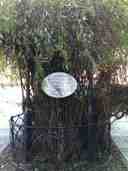
To spot the Debrecen Lycium Tree, look for a small, twisting tree with a thick, gnarled trunk and tangled branches, growing right behind a decorative wrought-iron fence near the corner of Museum Street and Calvin Square, with a round information plaque hanging on it. Now, take a slow breath in-you’re standing in front of something far older and more storied than it first appears: the Debrecen Lycium Tree. At first glance, it might just look like an oddly-shaped bushy tree intent on doing acrobatics with its twisting trunk. But believe it or not, it’s a true survivor, a botanical rarity, and the star of a centuries-old legend! Imagine it’s the 18th century, on a quiet corner by the then recently built bishop’s residence-this wasn’t always just a regular street corner. The tree you see began its life in the garden of a bishop’s house, twisting its way up and, over time, becoming one of the very few Lycium barbarum plants to ever decide “bush life is too easy, let’s try being a tree!” Most Lycium are happy as shrubs, but this one grew and grew, splitting into two thick branches at its base, and sporting a trunk you’d need a big bear hug to surround, if you want an idea of its size. Some believe this tree could be almost 200 years old, and some optimists say perhaps 250-making it practically the oldest local! But our leafy friend isn’t just a marvel of fitness and longevity; it’s also a living monument to religious history. Way back, in the days of the Reformation, Debrecen was a hotbed of religious debate. And here’s where the legend blooms: the story goes that a fierce debate happened at this very spot. On one side was Bálint the priest, who had been “reformed” in his thinking, and on the other Ambróziusz, a Catholic canon who’d even seen Rome. Tempers flared, arguments buzzed, and words flew. The two continued their back-and-forth even after the official debate had ended, and finally-right here-Ambróziusz snapped a Lycium branch, jammed it into the earth, and declared, “Faith will only take root here when this weed becomes a tree!” Bálint, maybe with a wink and probably a good sense of humor, replied, “Well, then, a tree it shall be.” The little stick, the story goes, actually took them up on their dare and grew into the very tree before you-becoming a symbol of faith and the strong Hungarian Reformed tradition. True or not, you have to admit, it’s a story worthy of a blockbuster film… or at least a good campfire tale! But wait, there’s more! This spot hasn’t had an easy time. Debrecen has seen revolutions and wars, and so has the Lycium tree. In 1956, during the Hungarian Revolution, a Soviet tank rumbled through, and in its confusion, nearly flattened our tree-not out of malice, just a little tank clumsiness. The tank dented the beautiful iron window grille that the tree had wrapped itself around and even bent the tree a bit. But, just like an old dog who takes a tumble and keeps on wagging, the Lycium tree stood strong. Even in more recent times, geocachers have hidden treasure nearby, and in 2012 the tree competed for the title of “Tree of the Year” in Hungary-although, with so many beauties in the running, it didn’t quite make the finals. Still, how many trees can say they’ve made it into works of art, novels, travel books, and the hearts of local people? Famous writers like Szabó Magda and Móricz Zsigmond have woven the tree into their stories, while scientists and botanists have marveled at its persistence and uniqueness. So here you are, in the company of one of Debrecen’s oldest living locals, a tree that’s heard whispered prayers, heated arguments, roaring tanks, curious botanists, and laughing schoolchildren. Rub your eyes, you’re not just looking at branches and leaves-you’re standing before a living legend whose roots run deep into the very soul of the city. Take a good look… and maybe whisper your own wish to the Lycium-it’s been keeping secrets for centuries!
전용 페이지 열기 →To spot the Memorial Garden, look for a peaceful green space tucked between the grand Reformed Great Church and the historic College-just beside the Bishop’s Office on Kálvin…더 보기간략히 보기
To spot the Memorial Garden, look for a peaceful green space tucked between the grand Reformed Great Church and the historic College-just beside the Bishop’s Office on Kálvin Square. Now as you’re standing here, take a slow breath and let your eyes wander across this quiet little park, right in the heart of Debrecen. Over 150 years ago, this space was just an empty patch, but in 1861 some residents decided it needed a touch of magic. Why leave a plain square between the College and the grand church, when you can fill it with the memories of great Hungarian thinkers, fighters, and heroes? The very first statue here was, believe it or not, a stone lion, made to honor Hungarian soldiers who fell during the 1849 Battle of Debrecen. Imagine, a lion standing guard, silent and proud! But the lion didn’t last forever-he was rolled away to the Heroes’ Cemetery and a new “Liberty Statue” marched in. This gigantic bronze figure, meant to show off Hungarian freedom, ended up with an unexpected nickname-the “iron hen”! The locals, let’s just say, weren’t exactly charmed. Eventually, the enormous bronze bird was whisked off to City Hall’s yard, and melted down during World War I. I guess sometimes even statues have dramatic exits. But not all memorials are gone. The striking Bocskai statue went up at record speed in 1906, celebrating Debrecen’s own founder of the Hajdú towns, Bocskai István. Even the base of this statue is impressive, surrounded by fierce-looking bronzed Hajdú warriors. Over there, you might spot the Gályarabok Memorial Column-a stone pillar with a small bronze galley ship. It’s a tribute to Protestant pastors who were dragged off to row in the galleys of Naples for their faith, back in the 1600s. Their rescue sounds like the plot of a pirate movie: a courageous Dutch admiral set them free against all odds. So as you wander this patch of memory and hope, just picture the echoes of protests, parades, and daydreams-where every breeze seems to whisper an old secret or a joke about an iron chicken.
전용 페이지 열기 →To spot the Déri Museum, look for the imposing neobaroque building right ahead of you in Déri Square, with its grand façade and elegant entrance-just follow the line of statues…더 보기간략히 보기
To spot the Déri Museum, look for the imposing neobaroque building right ahead of you in Déri Square, with its grand façade and elegant entrance-just follow the line of statues that seem to be greeting visitors at the front! Alright, step right up-don't trip on any ancient artifacts! You’re now facing one of Debrecen’s greatest treasures, the Déri Museum. Imagine this: the year is 1930, the world is bustling with jazz and inventions, and right here, a brand-new museum is about to open its doors in a botanical garden where lilies might’ve once whispered secrets to the wind. The museum itself is a masterpiece, designed by architect Dénes Györgyi in collaboration with Aladár Münnich-a stately neobaroque palace that looks as if it could have leapt out of a storybook. Its harmonious proportions and calm, tidy lines are so satisfying, it’s almost as if geometry and beauty shook hands and decided to become best friends in Debrecen! Notice how every side of the building seems to pose calmly for a photo-no wonder it’s the pride of the city center. But wait, let’s not overlook the guardians standing watch outside. Those striking statues? They’re the work of Ferenc Medgyessy, capturing the very spirit of the museum inside-Archaeology, Science, Art, and Ethnography-each one ready for a selfie, but be warned, they don’t smile much. Around the square you might even spot the mysterious “Debrecen Venus” gazing serenely, a dancer frozen mid-twirl, or the pensive writer Móricz Zsigmond, all masterpieces by Medgyessy, as well as Debreczeny Tivadar’s thoughtful “Merengő.” It’s a team of stone celebrities! The museum’s story begins with Artúr Löfkovics, a local jeweler and collector, who, back in 1902, dreamed of sharing his treasures with the people. His generous donation sparked the founding of Debrecen’s first city museum. Fast forward to the roaring 1920s, when silk magnate Frigyes Déri burst onto the scene. With a collection bigger than most attic cleanouts, he gifted Debrecen art, artifacts, and curiosities from Europe and the Far East, everything from samurai armor to ancient coins. This transformed the little city museum into a serious heavyweight, and in a few years, construction began on this grand new home. Inside, the museum is a world unto itself-a treasure trove through time and culture. You’ll find natural wonders like fossils, dazzling minerals, and relics from lost civilizations; archaeological finds from the stone age to the migration era; paintings that chronicle city life through centuries; and the stories of Debrecen’s craftsmen, merchants, and great families. There are rooms filled with the tools of old guba-makers, the shops of honey-cake bakers, even a pharmacy called the Golden Unicorn-don’t worry, it’s more healing herbs than horn dust! But the real showstopper, the reason art lovers hold their breath as they walk these halls, is the legendary Munkácsy Trilogy. Picture it: three colossal masterpieces by Mihály Munkácsy-“Christ Before Pilate,” “Golgotha,” and “Ecce Homo”-paintings so powerful they’re like a punch to the soul, and together express the hopes, doubts, and humanity at the heart of Europe’s Christian tradition. Here’s a fun fact: the artist himself never saw all three together in his lifetime! It wasn’t until 1995, right here in Debrecen, that the trilogy reunited after decades apart-just imagine the drama. For years, one painting even hid backstage while ownership battles raged on. But in 2019, the Hungarian state finally bought “Golgotha,” ending a century-long legal saga and securing the trio here in Debrecen forevermore. So, as you stand before this remarkable building, take a moment to imagine all the stories swirling inside-from pharaohs and samurai to poets and revolutionaries. If walls could talk, these would probably ask for a glass case too! Let’s continue onward-next stop, a modern oasis of art and inspiration! If you're curious about the building, the statues or the history, the chat section below is the perfect place to seek clarification.
전용 페이지 열기 →To spot the MODEM Center for Modern and Contemporary Art, look for a striking, round, modern building with clean lines and a green rooftop garden right in the heart of Debrecen’s…더 보기간략히 보기
To spot the MODEM Center for Modern and Contemporary Art, look for a striking, round, modern building with clean lines and a green rooftop garden right in the heart of Debrecen’s historic city center-it stands out like a futuristic spaceship landed among traditional buildings. Alright, time to let your imagination wander with me for a moment: you’re standing outside a building that’s more like a piece of modern art itself-a perfect circle of glass and concrete with a living carpet of grass on top. If you listen closely, you might even imagine the distant, excited murmur of visitors as they shuffle through exhibitions. People have been stepping through these doors since 2006, when prize-winning architect András Kováts gave Debrecen this gleaming, three-story cultural hub. Once inside, you could get lost (in a good way) among nearly 2,500 square meters of contemporary art-some pieces are so fresh you can almost smell the paint drying. And honestly, nothing says 'contemporary' like a building where you could sip your coffee in the Zöld Kilincs Café, listening to live music or poetry, only to find yourself bumping into a giant duck sculpture, or a video installation that makes you question your very existence! Debrecen’s MODEM isn’t just for looking; it’s a place for thinking, feeling, and sometimes even scratching your head in confusion. But here’s a little secret-MODEM’s mission goes way beyond just displaying art. Its founders dreamed of connecting Hungary’s creative energy not just across the country, but across the globe. Across these halls, you’ll find regular international exhibitions and bold experiments in painting, sculpture, photography, and digital wonders. Here, artists and scientists rub elbows at late-night lectures, and teachers from all over the region bring their students to learn how to tell stories through color, form, and sound. And just when you think you’ve seen everything, MODEM changes things up. One week, you might find yourself wandering through a century-old collection, the Antal-Lusztig Collection-a goldmine of 20th and 21st-century masterpieces, showing off everything from Hungarian abstract art to surreal sculptures that look like jellyfish on vacation. Another week, there’s a temporary exhibit about experimental puppetry in avant-garde Paris, or a daring look at social commentary through “Kis magyar pornográfia”-an exhibition about the world we live in, warts and all! MODEM is also famous for its partnerships. Young artists and curators cut their teeth here; the institution gives out scholarships, holds art residencies (including the Debrecen International Artist Colony), and introduces art students to their future mentors-or at least to some really strange installations. It’s a laboratory of ideas, pushing the boundaries of what art can be, and constantly asking the whole city to join in. But the real magic happens when MODEM uses art to shine a light on life in East-Central Europe. Through festivals, conferences, and wild late-night projects, it studies what makes the region tick-how history and society get tangled up in brushstrokes and photographs. Sometimes you’ll see an emotionally charged show about the wild years of Polish painting, a haunting photo collection of the Hungarian countryside, or an explosive celebration of Chinese art that fills the space with color and confusion. MODEM welcomes it all: sculptures you want to reach out and touch, photography that looks into your soul, and video art that sometimes makes you say, “Wait, was that a flying potato?” And as you stand out here, you’re surrounded by stories-stories of teachers and schoolchildren, wild-eyed young artists, and international guests here for only one dazzling evening. Don’t forget that MODEM’s heart is always beating for the next idea and the next wild collaboration. So whether you want to get lost in art history, discover the magic of experimental puppets, or just enjoy an excellent coffee while watching life happen in the courtyard, Debrecen’s MODEM is ready to challenge, delight, and maybe perplex you. And if you do happen to spot a visitor staring at the ceiling-or debating the true meaning of a banana sculpture-just nod knowingly. You’re in on the secret now!
전용 페이지 열기 →To spot the Debrecen Reformed Theological University, look for a proud building set just behind the Great Church on Calvin Square, often marked with the university’s coat of…더 보기간략히 보기
To spot the Debrecen Reformed Theological University, look for a proud building set just behind the Great Church on Calvin Square, often marked with the university’s coat of arms-a shield featuring a white lamb with a red flag and an open book, along with the Latin motto “Orando et Laborando” (by praying and working). Welcome to the final stop on our journey-a place where echoes of ancient hymns, heated debates, and footsteps of future preachers fill the corridors with stories! You’re now standing before the Debrecen Reformed Theological University, a direct descendant of the historic Reformed College founded way back in 1538. Now, I know what you’re thinking-1538? That’s even older than my favorite pair of socks! But seriously, this institution has watched almost five centuries of history unfold right on this very ground. Imagine the 16th century: Debrecen is bustling-a city crossroads where new ideas are exchanged as often as loaves of bread. The Reformed College wasn’t just a school; it was described as a “garden of the church,” where young minds were nurtured like rare flowers. By day, students wrestled with Latin, Greek, a bit of Hebrew on brave mornings, and tackled the fine arts, logic, and of course, theology. All this just to prepare them for the real meat-the Scriptures! Picture it: chilly stone halls, the scratch of quills on parchment, and the occasional nervous cough when someone forgot their Hebrew vowels. Out of this environment emerged generations of ministers who would go on to serve Calvinist parishes across Hungary and Transylvania. They were more than just preachers-they were teachers, community leaders, sometimes even secret keepers and peace brokers in turbulent times. I like to think they had good coffee, but that might be my own wishful thinking. Fast forward to 1912, when the Hungarian Parliament decided it was time to level up! They transformed the Reformed College into part of the shiny new Hungarian Royal University of Debrecen. Imagine university founders in heavy coats, looking very serious as they merged centuries of tradition with the promise of modern higher education. One of the university’s proudest sections? The Faculty of Reformed Theology, carrying forward the legacy of faith and learning-right here where you’re standing. Yet, history never flows in a straight line. In 1949, when Hungary came under Communist rule, things took a dramatic twist. The theological faculty was separated from the university-no more mingling with the scientists or literary scholars in the canteen! Instead, the new Debrecen Reformed Theological Academy was born, keeping the faith alive even when times were tough and the atmosphere a bit...well, let’s just say “cold.” The winds of change swept through again in 1989 with Hungarian independence. The Academy became what you see today: the Debrecen Reformed Theological University, reconnecting with its sibling universities through the Universitas Association. Misty history and modern aspirations-all layered together like a delicious Hungarian strudel! Since 2011, this place also houses what used to be the Ferenc Kölcsey Teacher Training College. Now with two campuses and a host of institutes and departments-covering everything from Old and New Testament Studies to Pastoral Care and even Library Sciences-it’s not just a place for would-be preachers. It’s a mini-universe of knowledge, serving about 1,200 students bent over books, laptops, and probably one or two oversized mugs of tea. The main building you see connects to its 16th-century roots, right on Calvin Square, home to both the Institute of Theology and the Institute of Applied Theology. Just a few yards away, the Péterfia Campus bustles with students of education, communication, and technology-the future teachers, journalists, and computer scientists of Hungary. So here you are, standing on centuries of determination, faith, and a dash of scholarly stubbornness. Listen closely, and you might just hear the echoes of past debates about free will or the best way to conjugate a Greek verb. And hey, if you’re ever inspired to dive into Latin, or simply want to feel the pulse of nearly 500 years of history, this university stands with its doors-and its stories-wide open. Congratulations on reaching your final stop, where wisdom, tradition, and the promise of tomorrow all meet in the heart of Debrecen!
전용 페이지 열기 →


자주 묻는 질문
투어는 어떻게 시작하나요?
구매 후 AudaTours 앱을 다운로드하고 교환 코드를 입력하세요. 투어를 바로 시작할 수 있습니다 - 재생을 탭하고 GPS 안내 경로를 따라가시면 됩니다.
투어 중 인터넷이 필요한가요?
아닙니다! 시작 전에 투어를 다운로드하면 완전히 오프라인으로 즐길 수 있습니다. 채팅 기능만 인터넷이 필요합니다. 모바일 데이터 절약을 위해 WiFi에서 다운로드하시는 것을 권장합니다.
이것은 가이드가 안내하는 단체 투어인가요?
아닙니다 - 이것은 셀프 가이드 오디오 투어입니다. 폰을 통해 오디오 나레이션을 들으며 나만의 속도로 독립적으로 탐험합니다. 투어 가이드도, 단체도, 일정도 없습니다.
투어는 얼마나 걸리나요?
대부분의 투어는 60-90분이 소요되지만, 속도는 전적으로 본인이 조절합니다. 원할 때 언제든지 일시정지하거나, 정류장을 건너뛰거나, 휴식을 취하세요.
오늘 투어를 끝낼 수 없으면 어떻게 하나요?
괜찮습니다! 투어는 평생 이용이 가능합니다. 원할 때 언제든지 일시정지하고 다시 시작하세요 - 내일, 다음 주, 또는 내년에도. 진행 상황이 저장됩니다.
어떤 언어를 이용할 수 있나요?
모든 투어는 50개 이상의 언어로 이용 가능합니다. 코드를 교환할 때 원하는 언어를 선택하세요. 참고: 투어 생성 후에는 언어를 변경할 수 없습니다.
구매 후 투어는 어디에서 이용하나요?
App Store 또는 Google Play에서 무료 AudaTours 앱을 다운로드하세요. 교환 코드(이메일로 전송됨)를 입력하면 라이브러리에 투어가 나타나며, 다운로드하여 시작할 수 있습니다.
투어가 마음에 들지 않으시면 환불해 드립니다. 문의: [email protected]
안전한 결제 


