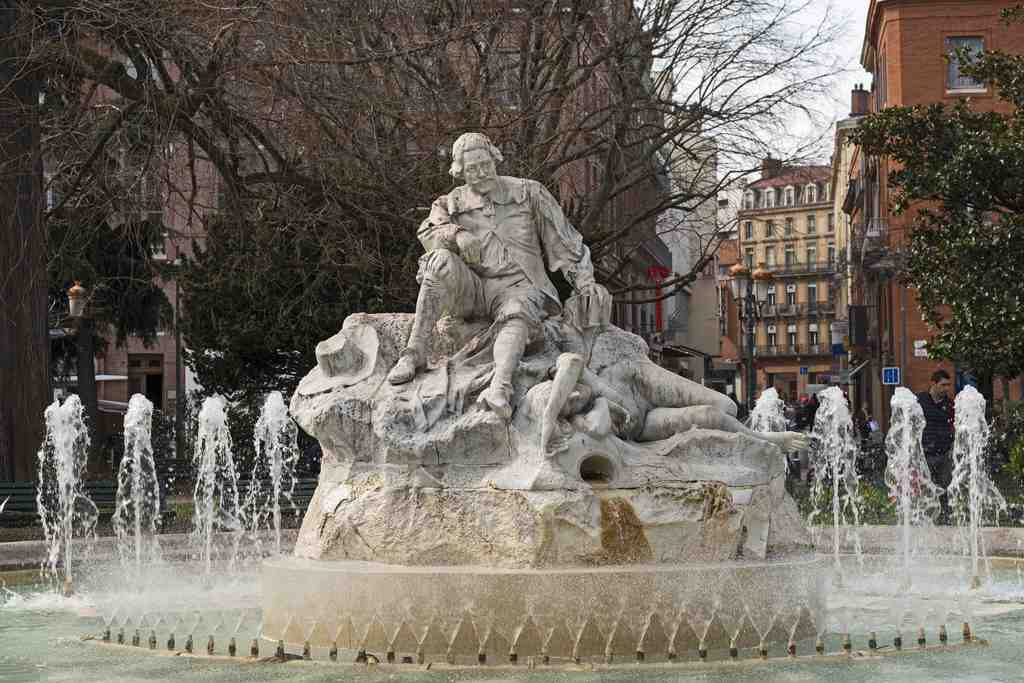
툴루즈 오디오 투어: 광장과 신성한 영광의 메아리
툴루즈의 따뜻한 분홍빛 아래, 수세기 동안의 웃음과 혁명 아래 비밀들이 물결칩니다. 대부분의 사람들이 결코 알아차리지 못하는 것을 밝히기 위해 만들어진 셀프 가이드 오디오 투어를 통해 활기찬 광장, 웅장한 대성당, 번화한 연구소 사이를 거닐어 보세요. 윌슨 광장의 자갈길 위에서 카페 수다와 정치가 만나고, 솟아오른 생 세르냉 대성당에 고대 드라마가 남아있는, 눈에 띄는 곳에 숨겨진 이야기들을 발견하세요. 맹렬한 시위가 이 거리들을 휩쓸었을 때 무슨 일이 일어났을까요? 악명 높은 학생 반란 동안 폐쇄된 대학 문 뒤에서 누구의 야망이 충돌했을까요? 단순한 화단 하나가 왜 정치인들 사이에서 도시 전체의 소동을 일으켰을까요? 이 여정은 툴루즈의 생생한 심장을 가로지르며 기념비적인 전설에서 속삭이는 스캔들과 잃어버린 순간들로 여러분을 이끌 것입니다. 발밑에서 역사가 한 걸음 한 걸음 솟아오르는 것을 느끼고, 눈앞에서 각 랜드마크가 변모하는 것을 보세요. 도시의 미스터리가 여러분을 끌어들이게 하세요—툴루즈는 아직 알려지지 않은 면을 드러내기를 기다리고 있습니다. 걷기 시작하세요.
투어 미리보기
이 투어에 대하여
- schedule소요 시간 40–60 mins나만의 속도로 이동
- straighten5.1 km 도보 경로안내 경로 따라가기
- location_on
- wifi_off오프라인 작동한 번 다운로드, 어디서든 사용
- all_inclusive평생 이용언제든지 다시 재생 가능
- location_on윌슨 광장에서 시작
이 투어의 정류장
To spot Place Wilson as you’re walking, look for a large, circular open space lined with tall pink-brick buildings-those famous Toulouse rose bricks! There’s a sparkling fountain…더 보기간략히 보기
To spot Place Wilson as you’re walking, look for a large, circular open space lined with tall pink-brick buildings-those famous Toulouse rose bricks! There’s a sparkling fountain splashing right in the center, usually with children darting around and folks relaxing on the benches beneath rows of shade trees. The cafés and cinemas around have awnings stretching onto the sidewalks, spilling out the buzz of laughter and coffee spoons. If you see a ring of cheerful flowerbeds and hear the bustle of Toulouse life, you’ve made it! Now, just imagine yourself a couple of centuries ago, right here where Place Wilson spreads out like a stage, the star of Toulouse’s nightlife. Even now, you can feel its energy-students gathering for an espresso or a midnight movie, the smell of fresh croissants fighting for attention with popcorn from the cinemas. This has always been a meeting spot, for locals and travelers alike. And what a cheeky thing this place has been, changing its name more times than some people change their socks! First it was Place Villeneuve, thanks to a fancy family who hung around the abbey up the road. Then, in classic Toulouse fashion, the politicians couldn’t decide who they liked best-French dukes, American presidents, or the mysterious Marquis de Lafayette. Even Napoleon and his relatives tried to leave their mark, but the local folks here, they always seem to rewrite the story. But Place Wilson isn’t just about names. For centuries, this was the edge of the city, by the old gate where, during fierce times, the Protestants were shown the way out. Picture the clang of heavy wooden doors, the anxious crowds, the sense that every cobblestone could hold a secret. Today, when you stand here, you’re surrounded by layers of history and the heartbeat of modern Toulouse-a place where students and artists mix, where change is always right around the corner. So, grab a spot, soak it in, and maybe wonder: if these stones could talk, what tales would they whisper after all these years? Probably something like, “Relax, order a coffee, and enjoy the show!”
전용 페이지 열기 →To spot the Basilique Saint-Sernin, just look up and ahead-you’ll see a massive structure built from pale reddish bricks, with a grand, fortress-like façade. It has tall arched…더 보기간략히 보기
To spot the Basilique Saint-Sernin, just look up and ahead-you’ll see a massive structure built from pale reddish bricks, with a grand, fortress-like façade. It has tall arched doorways and, rising skyward, an impressive octagonal bell tower, layered almost like a wedding cake, that really steals the show. If you see a soaring tower peeking above the rooftops and a church so big you wonder how it fits in the city, you’re in the right place-just follow the crowd of people who, like you, can’t help but stop and stare. Now that you’re standing out front, let’s step back in time for a moment. Imagine a thousand years ago, the sun rising over the city as crowds of dusty pilgrims arrive, their feet aching and spirits lifted, eager to see the legend that’s Saint-Sernin. This is the most important Catholic building in Toulouse, right in the heart of the city that was once ancient Tolosa. And it’s enormous-not just for today, but even compared to churches in Germany and Spain. This basilica was built at the end of the 11th century, big enough to shelter thousands-and even bigger in legend. Why is it so important, you ask? Well, Saint Saturnin-known as Sernin-was the first bishop of Toulouse and is one of the earliest and most revered Roman-Gallic Christian martyrs. Here’s where the story gets dramatic: picture ancient Toulouse, about the year 250, where Saturnin, refusing to bow down to Jupiter, finds himself in real trouble. Instead of a polite disagreement, he’s tied to a bull and dragged through the city! (Not the best way to see the sights.) Two brave young women, the “saintes Puelles”, cared for him after his martyrdom and buried him where the basilica now stands. Centuries later, his grave is discovered by an early bishop, and from that discovery grew one of the largest pilgrimage sites in medieval Europe. Pilgrims streaming to Santiago de Compostela all stopped here, hoping for miracles, adventure, maybe a little divine intervention with their blisters. The basilica wasn’t just a church-it became the beating heart of the city’s power struggles, art, and urban growth. Imagine the city buzzing with merchants, stonemasons, architects and nobles, all competing or cooperating to leave their mark. The church even had its own community of canons-think of them as a combo of monks and managers-who gathered great riches thanks to the generosity of visitors. During the Middle Ages, politics and religion were tangled tighter than a knotted shoelace. The abbey’s canons, the local counts, the bishop, the king of France... everyone wanted a piece of Saint-Sernin’s pie. It was all a bit like medieval reality TV, except with less Instagram and more incense. Now look up at the architecture: this basilica is the perfect model for grand pilgrimage churches. Pilgrims could walk around the relics, soaking up the atmosphere without disturbing worshippers. And if walls could talk, these ones would sing-the basilica is decorated with hundreds of Romanesque capitals (those carved tops of the columns), each one telling scenes of faith, miracles, and maybe a few fierce dragons. Long after medieval times, Saint-Sernin faced revolutions, remodeling, and even demolition of its cloister and nearby buildings. But people of Toulouse always recognized how exceptional it was. Even today, the church draws admiration and debate over how best to preserve-and show off-this treasure. And since 1998, it’s a UNESCO World Heritage site, saluted by pilgrims of every stripe. So, don’t just snap a photo-take a second to soak up the ancient energy, the drama, the mystery, and maybe even the odd bull-related legend. With every brick, Saint-Sernin whispers its story to you... if you promise to listen. Seeking more information about the description, evolution of the status of the basilica or the catholic parish? Ask away in the chat section and I'll fill you in.
전용 페이지 열기 →You’re now standing in front of the Institut d’études politiques de Toulouse-more commonly known as Sciences Po Toulouse. Imagine you’re stepping into the heart of French…더 보기간략히 보기
You’re now standing in front of the Institut d’études politiques de Toulouse-more commonly known as Sciences Po Toulouse. Imagine you’re stepping into the heart of French political training-where future presidents, ministers, and policy wizards sharpen their minds. The building before you might look calm now, but picture a flurry of students rushing between lectures, their conversations buzzing with debates about the world’s next big problem. This place has been shaping sharp minds since 1948. It all started with a decree and a bit of post-war French determination-General de Gaulle himself wanted to educate leaders who could run France with both brains and a bit of flair. Think Ivy League, but with more baguettes and berets! This school’s reputation for high standards is legendary. To get in, students face an entrance challenge so tough it could make even Sherlock Holmes sweat. But once you’re in, you’re off on a five-year adventure through law, economics, history, and political science, taught by professors with stories and knowledge you can almost feel in the air. You might also hear stories about its famous past directors. There’s a long list-professors of law, history, and political science-each with their own unique style. Some were known to grill students like a master chef at a barbecue. Others guided with a gentle hand, passing on wisdom quietly, but with lasting effect. Here’s a fun fact: students get to spend their third year out in the world, sometimes interning at embassies or studying in foreign lands. So, you can’t just be book smart-you have to put those skills to the test on the world stage. Just imagine the echoing steps of determined young minds setting off for Brussels, New York, or maybe even Tokyo! Sciences Po isn’t just about diplomas-though theirs is as valuable as gold in France-it’s about transforming students into generalists who one day might be running the country, a major company, or maybe just the best crêpe stand in Toulouse. Who knows? So as you stand here, take in the sense of possibility swirling through the air, and remember: in these halls, the next big decision-makers are learning how to change the world. And maybe, just maybe, the person next to you is already dreaming up the next grand idea-politics with a touch of Toulouse charm!
전용 페이지 열기 →
11개 정류장 더 보기정류장 적게 보기expand_moreexpand_less
As you’re approaching Toulouse Capitole University, look for a bold splash of red with crisp white lettering on the facade-it’s hard to miss! The emblem in the center, showing a…더 보기간략히 보기
As you’re approaching Toulouse Capitole University, look for a bold splash of red with crisp white lettering on the facade-it’s hard to miss! The emblem in the center, showing a scholarly figure in white lines, seals the academic vibe. You’ll spot this modern sign right in front of you, usually surrounded by the steady hum of students chatting or heading to class. Welcome to the heart of student life in Toulouse! Just imagine, right where you’re standing now, generations of scholars, poets, and a few coffee-fueled law students have hurried through these doors. Founded all the way back in 1229, this place has seen more history than most French cheese recipes! It was the second university in France, beating everyone except the mighty Sorbonne. Can you picture it? Dusty robes, serious faces, and maybe an argument or two over grammar or law echoing off these ancient walls. And here’s a fun twist-back in 1902, Marguerite Dilhan, the first woman to ever practice law before a criminal court in France, strutted out these doors with her diploma in hand. Talk about making history in heels! After the French Revolution, the university had to close its doors for a spell-no textbooks, no exams, just the sound of pounding hooves as the world around it changed. But the spirit of learning was just too stubborn to keep down. It bounced back, split into different branches, and became the busy, lively campus you see today. Now, over 20,000 students call this home, and you’ll hear conversations in languages from around the world. The university welcomes everyone-no stuffy entrance interviews required! It’s even part of a huge group of European universities, all working together to prepare students for the big questions of our time, from digital life to how we’ll live as we all get older. So, take a deep breath of that scholarly air. Who knows? Maybe you’ll catch a whiff of inspiration-or just the scent of fresh croissants from a nearby café. Either way, welcome to a university that’s spent centuries brewing brilliant minds and unforgettable stories. Seeking more information about the academics, research or the location? Ask away in the chat section and I'll fill you in.
전용 페이지 열기 →Straight ahead, looming proudly over the giant open square, you’ll see the Capitole de Toulouse. You can’t miss it: look for a long pink-brick palace stretching across the whole…더 보기간략히 보기
Straight ahead, looming proudly over the giant open square, you’ll see the Capitole de Toulouse. You can’t miss it: look for a long pink-brick palace stretching across the whole square, lit up like a stage set at night. Its huge central doorway sits right in the middle, crowned with a triangular pediment and a clock above. Eight tall Corinthian columns stand in the center, like ancient giants guarding the city hall. The walls gleam rose and cream, with dozens of windows lined up in perfect rows. Now, imagine you’re standing here in front of the majestic Capitole. If these walls could talk, they’d have stories wilder than any reality show-let’s journey back a bit. It all began in 1190, when the local bosses-called the Capitouls-needed a super fancy spot to rule from. They built the first buildings here, naming it the “Capitole,” in a nod to the famous Roman Capitol. Pretty clever-when in Toulouse, do as the Romans do! Things weren’t always as peaceful as they look now. Picture the air filled with the tense clatter of cannon wheels and angry shouts. In 1562, the tower over there-the donjon-was fiercely fought over by two sides, with cannon fire echoing across the square. It saw rebellion, trials, and even a dramatic decapitation in the Henri IV courtyard. Let’s just say, some folks truly lost their heads for politics around here. The grand building in front of you, sparkling with neoclassical elegance, took shape in the 1760s. Its eight showy columns represent the eight original Capitouls. Imagine them lined up with their finest Toulouse mustaches, trying not to look nervous. Inside, grand halls once glittered with art-some of which, sadly, didn’t survive the Revolution’s wild parties. In 1871, crowds gathered outside these doors, shouting for revolution. But don’t worry-it all fizzled out peacefully a few days later. Even the French president, Charles de Gaulle, used the balcony to greet crowds, waving like royalty. So, as you stand here under the rosy brickwork and tall windows, think of all the deals, power struggles, and parades that played out on this very spot. And just for fun, give a little bow to those grumpy old Capitouls you can almost imagine peering out one of those windows, still keeping an eye on the city!
전용 페이지 열기 →Look ahead and you’ll spot Place Saint-Georges just beyond the café terraces and leafy plane trees. It’s like a cozy, bustling patchwork hidden away from Toulouse’s busier…더 보기간략히 보기
Look ahead and you’ll spot Place Saint-Georges just beyond the café terraces and leafy plane trees. It’s like a cozy, bustling patchwork hidden away from Toulouse’s busier boulevards. The square is shaped like a quirky five-sided puzzle piece-this pentagon wraps you in a circle of gentle townhouses, hanging flower boxes, and outdoor tables. To your right, children might be laughing in the small playground of Square Jean-Calas, while to the left, the streets split off at odd angles: Rue de la Pomme, Rue Paul-Vidal, and others, each promising a new adventure. Listen for the sound of wheels on cobblestones or the clink of coffee cups, and you’ll know you’re in the middle of Place Saint-Georges. Now, let’s travel back in time. Imagine you’re standing here in the Middle Ages-as you walk, you feel the uneven stones underfoot and catch the scent of fresh bread from a nearby bakery. Back then, the square wasn’t just a pretty spot-it was alive with the chatter of merchants, the creak of carts, and the ring of wine glasses being filled at the market. Here, people traded stories as well as goods. The market, sheltered under the covered arcades you see almost circling the square, was famous for its wine. And let’s just say, it sometimes got noisier than a flock of geese at a bakery! But not everything was about food and fun. This square felt the weight of history: in 1762, Jean Calas was executed here-the crowd would have been hushed, the air heavy with tension. For a while, they even renamed the square after him. Then, like someone rearranging their living room furniture, the city kept swapping names-Paul Vidal, Saint-Georges, Calas-until finally, good old Saint-Georges got the sign back. If you’d been here centuries ago, you'd bump into monks, hear the chapel bell tolling from the oratory dedicated to Saint George himself, and maybe meet someone looking for help at the old hospitals nearby. Legend has it, the oratory’s origins are mysterious-like it just appeared one foggy morning. The boundary cross in the middle once marked turf for the chapter of Saint-Étienne, staking out sacred ground. Today, Place Saint-Georges is all about that easy Toulouse vibe: friends lingering at café tables, kids zipping through the playground, and the sun painting warm stripes across the pink stone. Take a moment to soak up this inviting space. If the square’s stones could talk, they’d have enough tales to fill every café menu in town-and probably a few wine bottles, too!
전용 페이지 열기 →You’re getting close to the heart of old Toulouse. Right in front of you, Saint-Etienne Square opens up like a movie set. Look for a broad, cobbled triangle, edged by tall,…더 보기간략히 보기
You’re getting close to the heart of old Toulouse. Right in front of you, Saint-Etienne Square opens up like a movie set. Look for a broad, cobbled triangle, edged by tall, classic Toulouse brick buildings with shutters painted white and blue. It’s almost like the buildings are having a staring contest with the enormous Saint-Etienne Cathedral, looming off to your right. The cathedral’s tall tower, rose window, and chunky archway are hard to miss-it looks ready to tell you a story from the Middle Ages. If you see a fountain in the center and the streets spreading out like the arms of friendly giants, you’re in the right spot! Now, just imagine this place a few hundred years ago. Carriages clattering over the cobblestones, vendors shouting in Occitan (that’s the local language), and maybe a few chickens dashing between people’s legs. Saint-Etienne Square is shaped a bit like a squished triangle-some say it’s about as easy to navigate as a French cheese plate after two glasses of wine! The south and west sides spread out more than 100 meters, while the east side narrows at the famous Rue Samuel-Paty. This is the busy, beating heart of the Saint-Etienne district. Streets like Rue Croix-Baragnon and Rue Boulbonne feed into the square from all sides, bringing in the daily drama of city life. It’s also been a crossroads for centuries. In fact, the oldest recorded name for the place goes all the way back to 1226-“platea Sancti Stephani.” That’s Latin for “Saint Stephen’s Square,” named after the impressive cathedral you’re standing beside. If these cobbles could talk, they’d tell you about revolutions too! During the French Revolution, for a short time, folks wanted less “saint” and more “reason,” so they renamed this the “Place de la Raison.” Thankfully, today it’s not a temple to reason, but a peaceful spot where kids ride bikes and locals argue about rugby and cheese. Look around at all the streets and alleys with the Saint-Etienne name-clearly, Toulouse really loves Saint Stephen! Even small paths and hidden corners are linked to him. And a modern note: in 2021, the passage under the cathedral was named after Samuel Paty-a moving tribute to a teacher who represented the courage and spirit of free thought. Breathe in the air-can you smell the hint of pastry from a nearby bakery? Maybe hear the laughter of people weaving through this maze of history? There may not be a bike lane, but there’s plenty of space for your imagination to run wild. Go ahead, soak up the spirit of Saint-Etienne Square. Don’t worry, there are no quiz questions-just keep your eyes open for the next adventure! Ready to head to the next stop? Interested in a deeper dive into the location and access, odonymy or the heritage and places of interest? Join me in the chat section for an insightful conversation.
전용 페이지 열기 →To spot the Toulouse Cathedral, look for a unique blend of red brick and white stone rising ahead of you. Its tall, slightly awkward tower with big Roman numerals on the clock and…더 보기간략히 보기
To spot the Toulouse Cathedral, look for a unique blend of red brick and white stone rising ahead of you. Its tall, slightly awkward tower with big Roman numerals on the clock and the bold, circular rose window right above the entrance make it stand out compared to anything else on the square. The front door looks like it’s wearing a crown of stone arches and is guarded by sculpted details. Now, imagine you’ve arrived almost 1000 years ago. You’re standing where people would gather-merchants, pilgrims, maybe even a stray chicken or two-listening as the giant bell above chimes across the rooftops. Beneath your feet are layers of history. The very first stones of this cathedral were laid where a tiny chapel stood in the days of the Romans, built by Saint Saturnin, who had come all the way to Toulouse to convince the locals to swap their many gods for just one. That didn’t end well for him-let’s just say you wouldn’t want his fate on your travel itinerary! Over centuries, each bishop who ran out of space or outgrew fashion added their own twist, like an ancient DIY project that sometimes went sideways. Notice how the cathedral’s parts don’t seem to line up perfectly? The first Gothic side wanted to show off its Parisian style, but its brick-built neighbor wasn’t going anywhere. Folks in Toulouse marched to their own drum, or maybe their own church bell, and didn’t get too fussy about everything matching. In fact, if you squint at the side walls, you’ll see thick, sturdy buttresses pressed right up against them, as if the cathedral is bracing itself for a game of medieval rugby. That’s southern Gothic style for you-practical, bold, and a bit quirky. Inside, the walls have held secrets, prayers, and echoes of immense ceremonies. And sometimes, the mysterious creak of old wooden doors makes you wonder if Saint Saturnin himself is checking up on things. So as you stand here, feel the sunlight on the stones, imagine the crowds, and let the mixture of Romanesque and Gothic styles remind you-just like in Toulouse, sometimes life’s most fascinating stories come from a bit of chaos and a lot of character. Ready for the next chapter? If you're curious about the exterior, interior or the art and decoration, the chat section below is the perfect place to seek clarification.
전용 페이지 열기 →Look ahead-do you spot that long, red-brick building with tall windows and a heavy wooden doorway? That’s the Musée des Augustins! You can’t miss the medieval touch: high stone…더 보기간략히 보기
Look ahead-do you spot that long, red-brick building with tall windows and a heavy wooden doorway? That’s the Musée des Augustins! You can’t miss the medieval touch: high stone arches, a tracery of carved details, and if you look up, a hint of gothic magic in the old roofline. Stand still for a second, take in the cool shade of the ancient cloister trees just behind those thick walls, and let your imagination wander for a moment. Picture this: it’s the early 1300s. Monks in long robes glide silently through these halls, carrying candles that cast flickering shadows on stone walls-probably whispering secrets about the best bread in Toulouse. Back then, this wasn’t a museum at all, but a huge convent for Augustinian monks-humble, peaceful, a little smoky from incense, echoing with prayers (and, likely, a few snores from the back pews). Then, everything changes in the late 1700s. The French Revolution turns the old convent upside down! Monks are sent packing, the building loses its holy hush, and suddenly, people with wild ideas come in: “Let’s fill this place with paintings and statues! Let’s make it a treasure house for everyone in Toulouse!” And so began its new life-as a museum, right on the heels of the Louvre in Paris. If these walls could talk, they’d brag about centuries of famous art, dusty relics, and maybe even a painting or two that snuck in from Napoleon’s travels. Think of all the masterpieces that found a new home right here: French, Italian, Dutch-enough culture to make your head spin faster than a monk late for prayer! So, as you stand in front of this grand old convent-turned-museum, try to picture a pageant of history marching by: monks, revolutionaries, artists, architects… and now, you, right here in the heart of historic Toulouse. And just a tip: if any statues inside wink at you, it’s probably just your imagination… or maybe they’re just happy to see someone appreciating them after centuries on their pedestals! Shall we move onward, art lover? Want to explore the historical, the garden or the the collections in more depth? Join me in the chat section for a detailed discussion.
전용 페이지 열기 →To spot Place Etienne-Esquirol as you walk, look for a broad rectangular square lined with tall, sand-colored brick buildings, their rows of pale shutters catching the afternoon…더 보기간략히 보기
To spot Place Etienne-Esquirol as you walk, look for a broad rectangular square lined with tall, sand-colored brick buildings, their rows of pale shutters catching the afternoon light. The trees here form a soft barrier between the busy roads and the elegant facades. On one side, you’ll notice bustling cafés under red awnings, and if you look down, you’ll spot tram tracks, a bike station, and the swirl of city life. Welcome to Place Etienne-Esquirol! Take a deep breath: you’re right in one of Toulouse’s liveliest hubs. You can almost feel the heartbeat of the city thumping beneath your feet. But right here, a few centuries ago, things sounded a bit different. Imagine a cramped little market square, packed with traders and farmers weighing out sacks of wheat and gossiping over the commotion of clucking chickens. This was the old “Halle de la Pierre,” a place where Toulousains argued over the price of bread before heading home to bake it. Eventually, that noisy old market was knocked down in 1863-no doubt to the relief of anyone who had ever stepped in a stray chicken’s path. And now, instead of a stone marketplace, you’ve got a grand open square-a busy crossroads where boulevards like Rue de Metz and Rue d’Alsace-Lorraine meet under the watch of these stately buildings. Under your feet, there’s even a metro station and a car park hidden from view. Who knew so much modern life could be squeezed into a patch that once held a Roman forum? Toulouse owes this spot’s name to Jean-Étienne Esquirol-a local born just around the corner! He was a famous doctor who changed the way France cared for people with mental illnesses. So, when you’re passing through here today, remember: this has always been a place where people, ideas, and history come together, creating a bit of everyday magic. Now, onward: the city’s calling us to our next adventure! Eager to learn more about the location and access, odonymy or the heritage and places of interest? Simply drop your inquiries in the chat section and I'll provide the details you need.
전용 페이지 열기 →Take a look around you-Trinity Square is a cozy, triangular slice of Toulouse charm right in front of you. You’ll spot the square not by size, but by atmosphere: it’s wrapped by…더 보기간략히 보기
Take a look around you-Trinity Square is a cozy, triangular slice of Toulouse charm right in front of you. You’ll spot the square not by size, but by atmosphere: it’s wrapped by lively terraces, the laughter from cafés, and the kind of tile-roofed houses that look like someone paused a scene from a French film. The little fountain in the center is your beacon-a perfect place for pigeons and people to gather and gossip about the day. Now, imagine you’re standing where ancient Romans would've crossed paths every day nearly 2,000 years ago. Yep, right here! This spot was the crossroads of two great Roman roads, making it the original heart of the city-a meeting place where the cardo maximus and decumanus maximus intersected. Back then, a busy crowd of traders, artisans, and townsfolk buzzed about, probably bartering, haggling, and maybe, just maybe, sneakily swapping the latest city rumors. In the Middle Ages, Trinity Square was still just as lively. Merchants set up their stalls, craftsmen hammered away, and even the important city leaders, called capitouls, were drawn to this side of town. The square didn’t always look like this, though. For centuries, it was little more than a widened crossroads, not the cute triangle you see now-but that all changed in the 1800s when the city gave it a facelift. The architect Virebent rolled in, did a bit of city magic, cleared away old buildings, and voilà! A lovely, airy place appeared, complete with the fountain by Urbain Vitry, glistening in the Toulouse sun. And here’s a little twist: the square’s name comes from monks-the Trinitarians-who settled down nearby in the 1300s. Fast forward to the French Revolution, and for a few dramatic months, the square even got the bold name “Place du Contrat-Social.” Revolutionary spirit in a small package! Today, the traffic has calmed, the square is an easy pedestrian zone, and, honestly, if you listen carefully, you might almost hear the echoes of old market day buzz, or the soft debates of students carrying fresh croissants. So, take a moment and soak it in-this is one of the coziest, most “Toulouse” corners of the whole city. And watch out for the café chairs-they’re always threatening to claim more space! If you're curious about the location and access, odonymy or the heritage, the chat section below is the perfect place to seek clarification.
전용 페이지 열기 →As you come up to Place Rouaix, look ahead for an elongated triangle of a square-about 150 meters long-where roads seem to flow around it like a gentle stream. You’ll see a ridge…더 보기간략히 보기
As you come up to Place Rouaix, look ahead for an elongated triangle of a square-about 150 meters long-where roads seem to flow around it like a gentle stream. You’ll see a ridge that peaks here: this is the highest point in ancient Toulouse. The ground under your feet rises just slightly, and in the middle, you might spot the modest fountain marking the spot where the city once reached for the sky, as much as 146.5 meters above sea level. To your left and right, narrow streets crisscross-Rue du Languedoc and Rue de la Trinité are just nearby, and the traffic seems to circle about politely, as if careful not to disturb history. This is where the Roman aqueduct ended its long journey, delivering water to the very heart of the ancient city. Imagine, centuries ago, Roman engineers bustling about in togas, maybe grumbling about leaky pipes, herding crystal-clear water from the countryside to this very spot. The Lardenne aqueduct, an unsung hero, brought in a river of fresh water-19,000 cubic meters every day! Now, think of the relief on everyone’s face the first time they heard that water bubbling up here. No bottled water, no thirst, just pure refreshment. You might say this was the “high” point of Roman hydration! But Place Rouaix is more than a faucet for thirsty Romans. For generations, it was one of the city’s most strategic places, the meeting point of important Roman roads. Shopkeepers, traders, and even the odd pickpocket might have gathered here, weaving between busy townsfolk and the shade of a mighty elm tree that stood at the center for centuries. In fact, the place was once known as the Place of the Elm of Rouaix-not for an evil wizard, but for a tree so loved that it gave its name to the square. Oh, and about the name! Some say it comes from the Roaix family, a local dynasty who hit the jackpot-56 of them became city leaders over the years. Others argue the area was named for the old fountain itself-'ros' in Latin, meaning water falling in drops. Either way, this was the place everyone came for a drink, to gossip, or simply to show off a new toga. When the French Revolution hit town, Place Rouaix was hastily renamed Place Marat, after a revolutionary hero who met a rather dramatic end. Don’t worry, the name didn’t last long, and today, Place Rouaix is still a hub for locals hurrying home, students cycling by, and curious visitors like you pausing to take in its layered past. So as you stand here, imagine the echoes of splashing water, the clatter of Roman sandals, the shuffle of medieval markets, and the hum of modern life. This spot has always been the city’s crossroads-where everyone passes by, but few stop to listen to the stories under their feet. And lucky you! Today, you’re part of its never-ending story. Intrigued by the description, odonymy or the heritage and places of interest? Explore further by joining me in the chat section below.
전용 페이지 열기 →Alright, if you look straight ahead, you should see a broad cobblestone street lined with rows of elegant old buildings that stretch several stories high, each one crammed with…더 보기간략히 보기
Alright, if you look straight ahead, you should see a broad cobblestone street lined with rows of elegant old buildings that stretch several stories high, each one crammed with windows and balconies. Some of the shops and storefronts have awnings, and you’ll spot a mixture of businesses hugging the street-the likes of a butcher, maybe a bakery or two, and street market stands just spilling out onto the pavement. There’s a lively hum in the air, with people strolling, stopping to chat, maybe a cyclist or two breezing past. This is the heart of Place des Carmes. Now, imagine you’ve traveled back a couple centuries. The air is full of chatter, thumping carts, and laughter curling out from cafés. Place des Carmes, with its patchwork of streets-Rue des Prêtres, Rue du Languedoc, Rue du Canard, and so on-was once dominated by a massive Carmelite convent. If you feel a ghostly breeze, don’t panic; it’s probably just the memory of monks hurrying across the square! But here’s the twist: this place has changed names almost as many times as Toulouse has changed its mind about who’s in charge. At one point, it was Place Bourbon, then Place d’Orléans, then Place de la République, and back again, all according to which royal or republic was sitting atop the throne in Paris. It’s like the square couldn’t decide what to wear to the political costume party! In those days, the convent was surrounded by streets with names that told the truth about who lived there-a rue du Juif-Provençal, a rue du Crucifix, a rue de l’Arc-des-Carmes where the monks had even built an archway over the street. Imagine being a tailor in the 1500s explaining that your shop’s at ‘the archway near the convent, you know, next to the guys in brown robes.’ Eventually, after the Revolution, the grand convent came down, and the Place as you see it now took shape-a space always alive with markets, moody in rain, dazzling in sun, hopping with locals, and always a little bit different every few decades! Today, if you hear the rumble beneath your feet, that’s not revolution but the Carmes metro station, carrying people here from all over town. Take a moment-listen to the sounds, smell the bakery, look at those old shutters and shop signs. It’s a place layered with stories, ready for you to walk right into the next chapter. And if you get lost, just pick a shop, say bonjour, and let the locals guide you-after all, Place des Carmes has been helping people find their way for centuries! Seeking more information about the location and access, odonymy or the heritage and places of interest? Ask away in the chat section and I'll fill you in.
전용 페이지 열기 →You’re doing great-now, as you walk along rue de la Dalbade, keep your eyes peeled for a building that looks almost like a medieval fortress, standing tall with thick, reddish…더 보기간략히 보기
You’re doing great-now, as you walk along rue de la Dalbade, keep your eyes peeled for a building that looks almost like a medieval fortress, standing tall with thick, reddish brick walls. Spot the pointed turrets sprouting from the corners? That’s your clue. Right in the center, above the entrance, you’ll see a dazzling round rose window, and below it, a burst of colorful ceramic figures above a grand doorway. You can’t miss it! Now let's soak it all in. Imagine yourself back in Toulouse in the late 1400s. This neighborhood buzzes with life, but suddenly, a devastating fire sweeps through. The original church-known as "the white one" for its chalky coating-goes up in flames along with much of the area. But Toulouse doesn’t give up easily. From the ashes, this new church rises, more solid, determined, and monumental than ever. You’re standing in front of the Church of Our Lady of Dalbade, and just to be clear-don't mix it up with the basilica of the Daurade. The Dalbade’s very name means "the white one," remembering the whitewashed church that stood here centuries ago. Now, the outside might seem a bit serious and strict, but don't let that fool you! Just look at the Renaissance portal-with statues standing guard and a vibrant ceramic scene above the door. It’s like a brilliant pop of color on a redbrick canvas. If you gaze at the doorway, read the poetic line carved into the stone-it asks passersby to pause, offer a prayer, and maybe even reflect on love (or just how tired their feet are after exploring Toulouse!). The gentle Virgin Mary stands proudly in the center, with saints flanking her left and right. Above, Gaston Virebent's ceramic panel retells a dramatic story: The Crowning of the Virgin, inspired by Fra Angelico. It’s almost like a medieval comic strip, except a lot more elegant. And drama? Oh, this church has seen its share. The bell tower, once the highest point in town, collapsed tragically one night in 1926-the noise must have echoed for blocks, and it left the city in shock. Even now, the church stands unbroken, a little scarred, but filled with resilience. Step inside, and the scent of old wood, candle wax, and history lingers. Statues of Mary as protector of mothers and children catch the light-each chapel tells its own story. There’s Saint Thérèse of Lisieux, the brave Joan of Arc, and Saint Peter walking right over the water (no lifeguard on duty, I’m afraid). The battered statue of Saint Peter survived even the tower’s collapse-it may be a bit weathered, but hey, wouldn’t you be after that kind of adventure? So, as you stand here, take a deep breath and run your hand along the ancient brick. Imagine centuries of Toulouse locals doing the same-seeking comfort, sharing stories, or just catching their breath after a long walk through these twisting streets. This church is full of surprises, and now you’re part of its story too. Don’t forget to look up-sometimes, the best details are right above your head!
전용 페이지 열기 →
자주 묻는 질문
투어는 어떻게 시작하나요?
구매 후 AudaTours 앱을 다운로드하고 교환 코드를 입력하세요. 투어를 바로 시작할 수 있습니다 - 재생을 탭하고 GPS 안내 경로를 따라가시면 됩니다.
투어 중 인터넷이 필요한가요?
아닙니다! 시작 전에 투어를 다운로드하면 완전히 오프라인으로 즐길 수 있습니다. 채팅 기능만 인터넷이 필요합니다. 모바일 데이터 절약을 위해 WiFi에서 다운로드하시는 것을 권장합니다.
이것은 가이드가 안내하는 단체 투어인가요?
아닙니다 - 이것은 셀프 가이드 오디오 투어입니다. 폰을 통해 오디오 나레이션을 들으며 나만의 속도로 독립적으로 탐험합니다. 투어 가이드도, 단체도, 일정도 없습니다.
투어는 얼마나 걸리나요?
대부분의 투어는 60-90분이 소요되지만, 속도는 전적으로 본인이 조절합니다. 원할 때 언제든지 일시정지하거나, 정류장을 건너뛰거나, 휴식을 취하세요.
오늘 투어를 끝낼 수 없으면 어떻게 하나요?
괜찮습니다! 투어는 평생 이용이 가능합니다. 원할 때 언제든지 일시정지하고 다시 시작하세요 - 내일, 다음 주, 또는 내년에도. 진행 상황이 저장됩니다.
어떤 언어를 이용할 수 있나요?
모든 투어는 50개 이상의 언어로 이용 가능합니다. 코드를 교환할 때 원하는 언어를 선택하세요. 참고: 투어 생성 후에는 언어를 변경할 수 없습니다.
구매 후 투어는 어디에서 이용하나요?
App Store 또는 Google Play에서 무료 AudaTours 앱을 다운로드하세요. 교환 코드(이메일로 전송됨)를 입력하면 라이브러리에 투어가 나타나며, 다운로드하여 시작할 수 있습니다.
투어가 마음에 들지 않으시면 환불해 드립니다. 문의: [email protected]
안전한 결제