알렉산드리아 오디오 투어: 알렉산드리아 오디세이
알렉산드리아의 반짝이는 거리 아래에는 제국, 음모, 사라진 세계의 속삭임으로 빚어진 도시가 숨 쉬고 있습니다. 어디에서 귀 기울여야 할지 안다면 고대 홀과 고요한 방에 그 메아리가 남아 있습니다. 구불구불한 길을 따라가는 셀프 가이드 오디오 투어로 이 전설적인 항구의 비밀을 풀어보세요. 가이드북을 넘어 반란 음모, 잊혀진 권력 투쟁, 햇빛에 바랜 외관 뒤에 숨겨진 영적인 성소를 발견하세요. 왜 한때 폭동을 일으킨 군중들이 너무 위험하다고 여겨지는 유물을 두고 박물관 기둥 아래에서 충돌했을까요? 엘리야후 하나비 유대교 회당의 그림자 속에서는 어떤 신비한 의식이 거행되었을까요? 알렉산드리아 국립 박물관의 심장부에서 어떤 잃어버린 유물이 수십 년간의 분쟁을 촉발했을까요? 오래된 돌들이 이야기를 들려주는 숨겨진 단서들을 따라가 보세요. 발밑에서 역사가 떨리는 것을 느끼고, 모든 구석에 드라마, 경이로움, 그리고 계시가 담겨 있는 알렉산드리아를 새로운 눈으로 바라보세요. 지금 바로 듣기 시작하여 알렉산드리아의 비밀이 시대를 초월한 먼지 속에서 솟아나게 하세요.
투어 미리보기
이 투어에 대하여
- schedule소요 시간 40–60 mins나만의 속도로 이동
- straighten5.8 km 도보 경로안내 경로 따라가기
- location_on
- wifi_off오프라인 작동한 번 다운로드, 어디서든 사용
- all_inclusive평생 이용언제든지 다시 재생 가능
- location_on그리스-로마 박물관에서 시작
이 투어의 정류장

To spot the Graeco-Roman Museum, just look up the street for a grand cream-colored building with six enormous columns and the word “MOUSEION” in Ancient Greek letters above its…더 보기간략히 보기
To spot the Graeco-Roman Museum, just look up the street for a grand cream-colored building with six enormous columns and the word “MOUSEION” in Ancient Greek letters above its entrance. Now, let’s travel back through time-imagine Alexandria in 1892, bustling with traders, scholars, and dreamers. Picture a tiny five-room apartment filled with mysterious treasures, ancient coins, and the odd mummy or two-that was the first home of this mighty museum! But it didn’t stay cramped for long. Soon, Alexandria gifted it a grander stage, the very building in front of you, with its classic neoclassical columns and a name that literally means “place of the Muses”-those ancient goddesses who inspired art and music. Step closer to the doors and picture the museum on opening day in 1895. Khedive Abbas II himself came to cut the ribbon-well, maybe not with golden scissors, but you get the idea. The museum quickly became a treasure chest, with wealthy Alexandrians donating their hidden finds and famous directors-like Giuseppe Botti and Evaristo Breccia-risking sand in their shoes to dig up the past around town. Inside, you’d find a sacred bull sculpture carved from shiny black granite, dazzling tapestries, mummies with a thousand-year-old secrets, and coins that might have jingled in a toga’s pocket. If you listen closely-well, not too closely, we’re outside!-some say you can almost hear the footsteps of curators and archaeologists echoing through those 27 halls. After years of excitement and a pinch of dust, the museum closed for renovations-nearly 18 years! But like any good mystery, it finally resurfaced in 2023, sparkling and ready to enchant a new generation. So, take a deep breath and imagine centuries of stories swirling just across that threshold. And hey, if you hear someone whisper “MOUSEION,” it might just be the Muses welcoming you inside!
전용 페이지 열기 →To spot the Mausoleum of Yacoub bin Abd al-Rahman, look for a weathered building on Fouad Street with red and yellow striped stonework and a prominent domed shrine set between two…더 보기간략히 보기
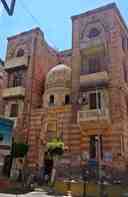
To spot the Mausoleum of Yacoub bin Abd al-Rahman, look for a weathered building on Fouad Street with red and yellow striped stonework and a prominent domed shrine set between two tall balconies right in the center of the facade. Now, as you stand in front of this unique building, let’s take a little journey back through time-no time machine required, just your imagination! Imagine Alexandria almost 1,300 years ago: the city buzzing with merchants, the scent of spices floating through the air, camels snorting as they haul goods across the ancient streets, the clamor of footsteps, and maybe the occasional donkey. Into this lively city came Yacoub bin Abd al-Rahman and his loyal friend Abdullah ibn Ali Zayn al-Abidin, fleeing the chaos and bloodshed of Iraq after the tragic killing of Husayn. Yacoub, originally from Medina-so you could say he was on quite a road trip-wasn’t just any traveler. He was a master storyteller and teacher, known for passing on the sayings of the Prophet, and a man with a deep, steady voice that made even the sternest listeners stop and pay attention. Along with his aunt and companion, he made Alexandria their new home and chose this very spot to share knowledge, comfort the troubled, and guide those seeking the light of faith. Maybe imagine him here, robes fluttering in the sea breeze, teaching groups of eager learners gathered under the shade. The shrine in front of you is small-just about 25 square meters inside-but its spirit is big! Step in and you’d see the gracefully carved Ayat al-Kursi on the dome above, and beneath it, a wooden cenotaph covered in green cloth marks Yacoub’s resting place. It’s peaceful now, but this place has seen excitement too: just a few years back, in 2018, disaster struck when an electrical fire broke out-smoke rising, shouts echoing, flames licking the walls- luckily, no one was hurt, and after a massive restoration, the shrine was brought back to life. So next time you walk by, remember: beneath that humble dome, legends and lessons have been passed from one generation to the next. Take a moment to listen. Who knows? You might catch a whisper of ancient wisdom drifting on the Mediterranean breeze!
전용 페이지 열기 →Look for a grand white mansion with three floors, elegant arched windows, and a tall iron gate-right behind the fence with a big red sign that says Alexandria National…더 보기간략히 보기
Look for a grand white mansion with three floors, elegant arched windows, and a tall iron gate-right behind the fence with a big red sign that says Alexandria National Museum. Now, take a moment to soak in the old-world charm of this mansion-can you almost feel the suspense of history waiting inside? Over 90 years ago, in 1926, this very building stood as the stylish home of a wood salesman, and soon after, it would become the glamorous headquarters of the U.S. consulate in Alexandria. Imagine elegantly dressed guests arriving in shiny vintage cars, their footsteps echoing on the marble floors as they discussed both local gossip and world-changing politics. But today, this palace holds treasures even more fascinating than mysterious consular meetings! Within its three sunlit floors, nearly 1,800 artifacts call out to the curious. If you step inside, you’ll start your journey with ancient Egyptian mummies-resting in a dimly lit chamber designed to recreate the feel of a real tomb. Can you imagine the chill running down your spine as you look into the eyes of someone who lived thousands of years ago? Traveling upstairs, the museum takes you back to the days when Alexandria rivaled Rome and Athens for glory. There are elegant canopic jars, Roman statues, and even a portrait mosaic of Queen Berenice II, whose hair was legendary-let’s just say she never had a bad hair day. Keep your eyes open for objects from the lost cities of Heraklion and Canopus, raised from the depths of the sea! And if you’re the type who loves a twist ending, the top floor brings you right into the Coptic, Islamic, and even modern times. From sparkling jewelry to coins and ancient glassware, Alexandria’s story continues up to recent centuries. Somewhere among these halls stands a sculpture believed to be Alexander the Great himself-so keep your smile ready for the world’s oldest photobomb. So, what do you think? Ready to explore a palace where every floor and artifact tells a new chapter of Alexandria’s dazzling history?
전용 페이지 열기 →
11개 정류장 더 보기정류장 적게 보기expand_moreexpand_less
You’ve arrived at the famous Green Synagogue, and no, it’s not called that because it’s jealous of the Blue Mosque! Take a moment to look around; picture yourself over a hundred…더 보기간략히 보기
You’ve arrived at the famous Green Synagogue, and no, it’s not called that because it’s jealous of the Blue Mosque! Take a moment to look around; picture yourself over a hundred years ago, right here on this very street in the Moharam Bek neighborhood. It’s 1901, and Alexandria is a city full of bustle and possibility. People from all corners of the world walk these roads, their voices mixing in a joyful, multilingual song. Abraham Green, the synagogue’s architect, must have stood right where you are now, watching as bricks and dreams stacked atop each other. That’s how the Green Synagogue got its name-straight from the man with the plan, not the color scheme! Maybe Green himself had a favorite bench here, nervously hoping his work would stand strong for generations. As you imagine the doors wide open, picture men and women gathering, dressed in their finest, the air filled with whispers, greetings, and laughter. Sunlight would have poured through the windows, shining on the faces of families who made this their spiritual home. For some, it was a shelter; for others, a place to find hope. Sadly, the synagogue is no longer in use, but its memory lingers on like the sweet aftertaste of your favorite pastry. If only these walls could spill secrets! Don’t worry, though-on this tour, I’m the only one doing the talking. Let’s head to our next piece of Alexandria’s story together!
전용 페이지 열기 →Picture this: Alexandria is in turmoil. The sun beats down on the city’s white stone walls, glinting off shields and armor. Mark Antony-Rome’s great general, Caesar’s old friend,…더 보기간략히 보기
Picture this: Alexandria is in turmoil. The sun beats down on the city’s white stone walls, glinting off shields and armor. Mark Antony-Rome’s great general, Caesar’s old friend, and now hopelessly in love with Cleopatra-prepares his forces. He’s a man caught between love and duty, pride and desperation. His relationship with Cleopatra set the world’s tongues wagging, and Octavian-his one-time ally and now bitter enemy-was not amused. It wasn’t just love that pulled Antony eastward; no, it was politics too. Octavian had inherited Caesar’s name and fortune, but Antony wanted his own legacy. He had grown close to Cleopatra-and, let’s be honest, Alexandria's sunshine probably helped too. The Roman Senate, meanwhile, saw things very differently. They didn’t like Antony acting like a pharaoh, and especially not elevating Caesarion, Cleopatra’s son with Julius Caesar, to the throne-calling him “King of Kings.” That was a big no-no for Rome, which liked to pretend it didn’t do kings anymore. Soon, propaganda was flying thicker than arrows. Octavian painted Antony as a traitor: a man spellbound by Cleopatra, planning to turn Rome into a monarchy with Alexandria as its capital. Probably didn’t help that Antony had left his Roman wife-Octavia, by the way, was Octavian’s own sister-for Cleopatra. Awkward at family dinners, to say the least. So, by the time July 30 BC rolled around, neither side was going to send a fruit basket. Antony’s troops-tough veterans, many with twenty years under their belts-clung to hope behind Alexandria’s defenses. Even after his crushing defeat at Actium, and watching his army wither from desertions, Antony wasn’t about to roll over. In the blazing heat of July, the city braced as Octavian set in for a siege. Tensions would have hung in the air thicker than the Alexandrian dust. For weeks there was fighting here-probing attacks, bloody clashes at the city’s hippodrome, desperate last stands. Imagine the screams, the thunder of hooves, the clang of sword on shield. Neither side gave in easily. Antony’s men weren’t just defending walls; they were defending dreams-his, Cleopatra’s, maybe even their own hopes for the East. But hope, like wine at a Roman banquet, eventually ran dry. Octavian’s army grew; Antony’s shrunk with every desertion and loss. On July 30, in a final, ferocious assault, Octavian’s troops broke through. Antony lost nearly everything: the city, his hope, and finally-his will to live. Rather than be paraded through Rome as a war trophy, Antony-legendary until the end-chose to die on his own terms. Cleopatra followed suit nine days later, presumably still waiting for her asp delivery. Octavian didn’t stop there. He made sure Caesarion and Antony’s eldest son didn’t threaten his power-both were executed. But in an odd twist, Octavian sent Antony and Cleopatra’s surviving children to be raised by his own sister, Octavia, as Romans. Remarkably, their blood lived on-woven into the very fabric of Rome. Through Antony’s other children, three future emperors would claim his legacy: Claudius, Nero, and Caligula. Talk about an ancestor who makes every family reunion exciting! Alexandria itself would never be the same. Octavian annexed Egypt and made sure only his loyal officials (and nobody from the Senate) could visit. With Antony and Cleopatra gone and Egypt a Roman province, Octavian-just thirty-three-became master of the known world. He ended the Roman civil wars with a golden age, but at a heavy price: rivers of Roman blood and the loss of Alexandria’s independence. Peace at last, but you could say it was the "peace that launched a thousand therapists." So as you stand here, take a moment. Imagine the dust settling, swords dropping, a city forever changed. And if you ever feel like you’ve had a dramatic breakup-just remember, your ex probably didn’t start a war over it… or maybe you just haven’t met the right Cleopatra.
전용 페이지 열기 →To spot Alexandria Stadium, look ahead for a huge, oval stadium with tall metal floodlights towering above a field of green grass, surrounded by rows of white stands nestled in…더 보기간략히 보기
To spot Alexandria Stadium, look ahead for a huge, oval stadium with tall metal floodlights towering above a field of green grass, surrounded by rows of white stands nestled in the heart of the city. Now, take a moment to soak in the scene-imagine the echo of thousands of fans bustling with excitement even before you step inside. Back in 1929, when King Fouad I himself opened this grand stadium, it became the pride and joy of Alexandria and the oldest stadium in all of Egypt and Africa. Can you picture the anticipation hanging in the air, as if the next legendary match is about to begin at any moment? The stadium has stood strong through time, unveiling its new modern look in 2017, and it can now roar with the cheers of over 13,000 fans. If you listen closely, you might almost hear the thudding of running feet and the excited chant of the crowd as local heroes like Al-Ittihad take the field. This arena has been the stage for truly epic events-it's seen the first ever Mediterranean Games in 1951 and countless unforgettable moments from the Africa Cup of Nations, right up to 2019. Designed by Russian architect Vladimir Nicohosov, its arches and details have a touch of Islamic grace, making it not just a sports ground but a little slice of Alexandria’s unique soul. So, whether you’re here for the games, the history, or just to imagine kicking the winning goal, Alexandria Stadium never disappoints. And remember, here in Alexandria, even the grass has stories to tell!
전용 페이지 열기 →In front of you, you’ll see grand historic buildings with tall columns and elegant arches, surrounded by palm trees and that impressive mosque minaret soaring into the sky-just…더 보기간략히 보기
In front of you, you’ll see grand historic buildings with tall columns and elegant arches, surrounded by palm trees and that impressive mosque minaret soaring into the sky-just look for the beige stone architecture mixed with a buzz of city life all around. Welcome to Alexandria’s Central District-a place where you can practically hear the city’s heartbeat under your feet! If the scent of fresh bread from a nearby bakery doesn’t get you, maybe the laughter from friends at a coffee shop will. This area, known as Wust El Balad, is the soul of Alexandria, holding stories of shoppers rushing between quirky stores, friends haggling for the best deal, and families coming together for a meal at colorful restaurants. Imagine the clatter of old trams rolling through the streets and the hum of street vendors calling out their daily specials-a place where each shop seems to be a gateway to another time. But don’t let its cozy atmosphere fool you! The Central District has seen sirens blare on wild game nights when the local stadium is packed, and felt the thrill of national celebrations marching right past these very pavements. Wandering here, you’re in good company-generations of Alexandrians have met under these palm trees, sharing secrets, telling jokes, and, of course, trying to find the best falafel in town. So take a breath, let the city’s energy pull you in, and maybe, just maybe, try some shopping… but watch out, the bargains here might just charm you into buying something you’ll never need!
전용 페이지 열기 →Look ahead for a grand, rosy-beige building with dramatic curved rooftops and elegant columns-just follow the fancy script that says “Mohamed Feiter” over the antique shop…더 보기간략히 보기
Look ahead for a grand, rosy-beige building with dramatic curved rooftops and elegant columns-just follow the fancy script that says “Mohamed Feiter” over the antique shop windows. Alright, take a deep breath and imagine yourself travelling back a hundred years, right here on busy Istanbul Street. The Mohammed Feiter Building in front of you bursts onto the scene like something out of a stylish European fairy tale-a little bit Italy, a little bit Bond Street, and maybe a hint of show-off flair! It all began with a Greek resident of Egypt, who poured their heart into its construction in the early 20th century. But the winds of history soon swept through Alexandria, and by 1965-after the Egyptian Greek exodus-this beautiful building found a new guardian: Mohammed Feiter, once just a tenant, now the proud owner. But Feiter wasn’t content to just live in an old shell-oh no, he razzle-dazzled the facade, drawing inspiration from Italian palazzos and none other than London’s Harrods department store. Look closely, and you’ll spot his initials, “M. F,” woven right into the decorations, like a secret signature left just for you. Today, his son keeps the family magic alive, filling the place with antiques and stories of old Alexandria. And who knows-maybe if you look hard enough, you’ll find a hidden treasure, or at the very least, a story to take home with you. This isn’t just a building; it’s a wink from the past dressed up for a party!
전용 페이지 열기 →You’re looking for a wooden doorway with a brass plaque and a white sign on the second floor that reads “Cavafis’ House” in three languages-it’s right up ahead, so keep your eyes…더 보기간략히 보기
You’re looking for a wooden doorway with a brass plaque and a white sign on the second floor that reads “Cavafis’ House” in three languages-it’s right up ahead, so keep your eyes on the wall to your left! So, here we are at the entrance of one of Alexandria’s most enchanting spots-the Cavafy Museum. You’re just steps away from where the legendary Greek poet Constantine P. Cavafy spent most of his days, crafting poetry that would echo through time. Imagine squeezing through these narrow, bustling streets-the air thick with old-world magic, laughter drifting from nearby cafés, the traffic humming along Fouad Street as you turn into Cavafy Street. It wasn’t always called Cavafy Street, you know! In the poet’s lifetime, this little road was Lepsius Street. It went through a few identity crises over the years-Sharm El Sheikh Street, then finally, in loving tribute, Cavafy Street. If streets could talk, this one would surely recite poetry. There’s something delightfully mysterious about entering a poet’s world through their front door. Behind these walls, Cavafy lived a quiet, rather modest life. You’d never guess from the outside that inside is a treasure trove of handwritten manuscripts, intimate letters, and portraits brimming with secrets and stories. Even the walls themselves seem to whisper lines from his verses-the kind that made even bohemian wanderers like Lawrence Durrell write about him in the famous Alexandria Quartet. Now, you might imagine museum curators as a serious bunch, but the journey to opening this museum was anything but a dull stroll through paperwork. First, Cavafy’s memory got a little help from a Greek Consul General, Nikolaos Kapellaris, who kickstarted the idea in 1977. But it wasn’t until 1991 that a wild bunch of dreamers decided, “Let’s turn the poet’s actual apartment into a shrine to his genius!” Thankfully, with a sprinkle of Greek sponsorship and a hefty dose of stubborn optimism, they sealed the deal with a nine-year lease and transferred all sorts of fascinating artifacts from the old Consulate museum here. Today, as you step inside, you’ll find Cavafy’s poems in a kaleidoscope of languages, shelves groaning under the weight of over 3,000 scholarly articles, and even a room dedicated to his dear friend, Stratis Tsirkas. The air itself is heavy with nostalgia-each photograph, each book thick with the ghosts of conversations held late into Alexandria’s sultry nights. Imagine Cavafy himself, pen in hand, gazing out onto the lively street below-who knows, maybe you’ll leave with a poetic line of your own humming in your mind. And don’t worry, tickets are a bargain; for the price of a spicy Alexandrian coffee, you get to step foot right into history.
전용 페이지 열기 →Look just ahead for a grand building with tall, twin bell towers adorned in Coptic engravings and a columned entrance-if you spot marble pillars and a facade echoing Byzantine and…더 보기간략히 보기
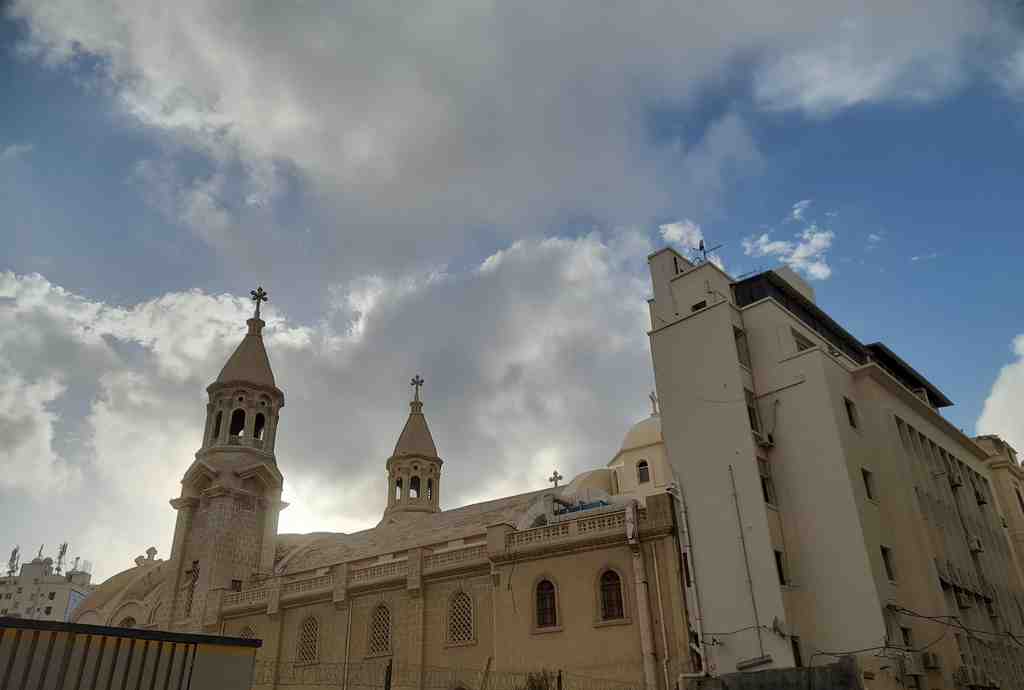
Look just ahead for a grand building with tall, twin bell towers adorned in Coptic engravings and a columned entrance-if you spot marble pillars and a facade echoing Byzantine and basilica styles, you’ve found the Saint Mark’s Coptic Orthodox Cathedral! Ah, here you are, standing at the heart of Alexandria’s spiritual story-welcome to the legendary Saint Mark’s Coptic Orthodox Cathedral! Imagine yourself stepping onto the very site where, almost two thousand years ago, a traveler with dusty sandals named Mark the Evangelist arrived after a long journey from Jerusalem. Locals say he showed up around AD 42, and, with the faith of a mountain goat and the energy of five espresso coffees, planted the first seeds of Christianity in this city. Here, he’s believed to have founded the first church, and the echoes of his presence still seem to hum in the breeze. Now, fast-forward a couple centuries-by the year 311, this spot had a small, humble chapel cradling the remains of Mark and some of his successors, creating a deep sense of sacredness that drew worshippers from all around. But faith, as you’re about to learn, sometimes needs strong bricks and even stronger nerves. The church was expanded in the days of Pope Achillas but soon found itself, like a favorite old sweater, pulled apart and stitched back together, torn by time and war. In 641, the Arab armies swept through Alexandria, leaving behind rubble and heartbreak. Out of the ashes, Pope John III rolled up his sleeves-well, his robes-and rebuilt the church in 680. Alexandria, ever the crossroads, saw intrigue and drama that could rival a Netflix mini-series. In 828, a band of crafty Venetian merchants pulled off what might be history’s oddest “souvenir” heist: they stole most of Saint Mark’s body and whisked it off to Venice! Only Mark’s head stayed behind in Alexandria, watching over the faithful, perhaps shaking just a little in disbelief at the state of medieval international shipping. Not to be outdone by invaders, the church was battered once again during the Crusades in 1219-destroyed, then revived like a phoenix by generations determined not to give up on their holy place. French explorers swung by in the 1500s, noting the ongoing saga. Later, in the chaos of the French invasion of 1798, Alexandria’s war drums echoed as the church was-once again-flattened, only to be rebuilt in 1819. One wonders if the congregation kept hard hats ready at the door! By the twentieth century, the cathedral’s troubles weren’t over. In the 1950s, much of the building was torn down-this time not by invaders, but by its own beloved community eager to create something grander for the future. The bell towers, wise and stoic, were spared and reinforced with concrete. If you look up, you might just imagine the craftsmen carving delicate Coptic engravings into the stone, their hammers tapping softly. Step closer to those marble pillars-once inside, imagine the six of them standing in the portico as proud survivors from the older church, quietly greeting each new generation. The cathedral was widened again between 1985 and 1990, doubling its space to cradle even more worshippers. Yet, for all its beauty and grandeur, tragedy struck on Palm Sunday in 2017-a bomb shattered the peaceful sanctuary, claiming lives and wounding many hearts. But the bells still rang, and the prayers kept rising, because, if this place has taught us anything, it’s that faith here is as hard to break as marble itself. Of course, there’s still an air of mystery-a sacred relic, the head of Saint Mark, is believed to rest within these walls. Each year, on the 30th day of Paopi, the church comes alive in celebration, the relic displayed for all to see, connecting the congregation with ancient stories and distant lands. And, in a twist worthy of an epic tale, some of Saint Mark's relics even made their way back from Rome in 1968, welcomed home by joyous crowds. So take a moment, listen for the faint chime of the bells above, and look around-every stone in this cathedral tells a tale of resilience, devotion, and a city’s unbreakable heart. And don’t forget to wave to Saint Mark’s head-he’s had quite a journey, and he enjoys the company!
전용 페이지 열기 →Look for a grand cream-colored building with big arched windows, pretty columns, and a Star of David up high above the entrance-just walk up the wide steps to spot it right in…더 보기간략히 보기
Look for a grand cream-colored building with big arched windows, pretty columns, and a Star of David up high above the entrance-just walk up the wide steps to spot it right in front of you. Welcome to the Eliyahu Hanavi Synagogue, where every stone and echo tells a tale! Imagine yourself back in 1354-old Alexandria buzzing with life, prayers drifting through the air. But in 1798, Napoleon’s army crashed the party-literally-bombing the original synagogue into rubble. Yet, the story didn’t end there. In 1836, thanks to the pockets of the Muhammad Ali Dynasty and some help from the famous Sir Moses Haim Montefiore, a shining new synagogue began to rise from the ashes. By 1850, the building before you was finished, flaunting Neoclassical elegance mixed with flashes of Gothic and Byzantine flair-clearly, they couldn’t decide on just one style, so they chose them all! Fast-forward to more recent times: the doors closed in 2012 for security reasons, and silence crept in. Luckily, in 2017, the Egyptian government-and worldwide friends-vowed to restore this treasure. Now, it's rededicated and sparkling, guarding stories of a dwindling but proud Jewish community. Services are rare, but the spirit of Eliyahu Hanavi still whispers through these halls, a secret waiting to surprise every visitor!
전용 페이지 열기 →You’ll spot the Caesareum site right in front of you by the tall, stone pedestal topped with a striking statue of a man standing majestically above the crowds-just look for the…더 보기간략히 보기
You’ll spot the Caesareum site right in front of you by the tall, stone pedestal topped with a striking statue of a man standing majestically above the crowds-just look for the upraised figure with palm trees swaying nearby and you’re in the right place. Now, let’s peel back the layers of time! Imagine the ancient city buzzing around you, with the salty Mediterranean breeze swirling through marble columns and the shouts of traders from the distant harbor drifting through the air. Over two thousand years ago, this very ground was chosen by Queen Cleopatra herself, the legendary last pharaoh of Egypt. But Cleopatra wasn’t just here to organize grand parties-she had something far bigger in mind! She wanted to build a monument that would leave Rome’s jaws on the floor, a temple to honor either her great love Julius Caesar… or maybe Mark Antony. Love triangles and ancient politics, always a winning combination! But here’s where history throws a twist: after Cleopatra and Mark Antony lost their final battle, the victorious Roman emperor Augustus silenced the memory of Antony and-like any good conqueror-dedicated the temple to himself instead. Talk about an awkward housewarming party, right? As the centuries rolled on, the Caesareum transformed. In the fourth century, it became a Christian church and the power seat of Bishop Cyril, as Alexandria’s skyline began to bristle with church domes instead of obelisks. It also became infamous-right here, the brilliant mathematician and philosopher Hypatia met a tragic and mysterious end at the hands of a mob in 415 AD, a tale of knowledge clashing with fear that still echoes through Alexandria’s stones. But if you’re looking for Cleopatra’s famous Needles, those ancient obelisks she moved here, you won’t find them-they migrated all the way to New York and London! Instead, today, the statue of Saad Zaghloul, a leader from the 20th century, stands tall where armies, lovers, and philosophers once moved through history. So look up, take a deep breath, and let the echoes of emperors, queens, and revolutionaries mingle in the Alexandrian air with you.
전용 페이지 열기 →To spot the Alexandria Naval Unknown Soldier Memorial, look directly ahead for a grand, sweeping white stone structure with a curved row of tall columns and a black flag waving…더 보기간략히 보기
To spot the Alexandria Naval Unknown Soldier Memorial, look directly ahead for a grand, sweeping white stone structure with a curved row of tall columns and a black flag waving high above, standing proudly at the edge of the busy Corniche. Now, take a deep breath and listen as Alexandria’s salty sea breeze mixes with stories of heroism! Imagine ships lined up along the coast, their sails flapping, while the air thrums with the tension of naval battles long ago. Right where you stand, this grand memorial honors the unknown sailors who vanished beneath the waves, defending Egypt’s coast. The story begins under the wise watch of Muhammed Ali of Egypt, a ruler with dreams as big as the Mediterranean. He made Alexandria the heart of his navy, and his son, Ibrahim Pasha, sailed off from here to Greece, chasing glory in the roar and chaos of the Greek War of Independence. Picture cannon fire echoing over the water as the Battle of Navarino erupts-ships clash, smoke billows, and heroes are made, though not all return to tell the tale. Funny enough, this spot didn’t always belong to lost sailors. Built by Alexandria’s Italian community, it first celebrated Khedive Ismail. But after the whirlwind of Egypt’s 1952 revolution, its purpose changed, giving silent thanks to those brave, nameless souls who never sailed home. So, as you gaze at its columns, imagine their stories drifting on the sea breeze, honoring lives lost but never forgotten. The next time you complain about losing your keys, remember, these sailors lost a lot more and still sailed on!
전용 페이지 열기 →To spot the Menasce Synagogue, look up for a sand-colored building with pointed arched windows and two Star of David symbols right above the entrance on Ahmed Orabi…더 보기간략히 보기
To spot the Menasce Synagogue, look up for a sand-colored building with pointed arched windows and two Star of David symbols right above the entrance on Ahmed Orabi Square. Alright, adventurer, your final stop awaits! Imagine standing here in the bustling heart of Alexandria, the warm sun on your face as you gaze up at these grand, faded walls. It’s 1872, and the streets are humming with excited voices. Suddenly, a wave of applause and footsteps fills the air as the Menasce Synagogue opens its doors for the very first time. Founded by the Menasce family-a family with more stamps in their passports than your average travel blogger-they came here via Morocco and Palestine, bringing their dreams and fortune. Jacob Levi Menasce, also known as Baron Jacob de Menasce, wasn’t your usual local; he’d even been given a fancy title by an emperor after the Suez Canal’s grand opening! But every good story has a little drama-the Menasces didn’t exactly see eye-to-eye with Alexandria’s old guard, so they built their own stunning synagogue, and even the Ottoman Governor showed up for the opening. Fast-forward ten years, and as bombs fell across the city in the Anglo-Egyptian War, the synagogue stood strong, a stubborn survivor. Today, thanks to Egypt’s heritage list, this beautiful building remains protected-a resilient piece of Alexandria’s soulful mosaic. Stand here, and you’re not just seeing stone; you’re feeling the echoes of passionate dreams, grand ceremonies, and a little bit of family rivalry that shaped this corner of the city’s story.
전용 페이지 열기 →
자주 묻는 질문
투어는 어떻게 시작하나요?
구매 후 AudaTours 앱을 다운로드하고 교환 코드를 입력하세요. 투어를 바로 시작할 수 있습니다 - 재생을 탭하고 GPS 안내 경로를 따라가시면 됩니다.
투어 중 인터넷이 필요한가요?
아닙니다! 시작 전에 투어를 다운로드하면 완전히 오프라인으로 즐길 수 있습니다. 채팅 기능만 인터넷이 필요합니다. 모바일 데이터 절약을 위해 WiFi에서 다운로드하시는 것을 권장합니다.
이것은 가이드가 안내하는 단체 투어인가요?
아닙니다 - 이것은 셀프 가이드 오디오 투어입니다. 폰을 통해 오디오 나레이션을 들으며 나만의 속도로 독립적으로 탐험합니다. 투어 가이드도, 단체도, 일정도 없습니다.
투어는 얼마나 걸리나요?
대부분의 투어는 60-90분이 소요되지만, 속도는 전적으로 본인이 조절합니다. 원할 때 언제든지 일시정지하거나, 정류장을 건너뛰거나, 휴식을 취하세요.
오늘 투어를 끝낼 수 없으면 어떻게 하나요?
괜찮습니다! 투어는 평생 이용이 가능합니다. 원할 때 언제든지 일시정지하고 다시 시작하세요 - 내일, 다음 주, 또는 내년에도. 진행 상황이 저장됩니다.
어떤 언어를 이용할 수 있나요?
모든 투어는 50개 이상의 언어로 이용 가능합니다. 코드를 교환할 때 원하는 언어를 선택하세요. 참고: 투어 생성 후에는 언어를 변경할 수 없습니다.
구매 후 투어는 어디에서 이용하나요?
App Store 또는 Google Play에서 무료 AudaTours 앱을 다운로드하세요. 교환 코드(이메일로 전송됨)를 입력하면 라이브러리에 투어가 나타나며, 다운로드하여 시작할 수 있습니다.
투어가 마음에 들지 않으시면 환불해 드립니다. 문의: [email protected]
안전한 결제