
호바트 오디오 투어: 호바트의 역사적인 심장 박동
한때 폭풍이 절박한 선원들의 함대를 호바트의 심장부로 곧장 쓸어 넣었습니다. 컨스티튜션 독의 반짝이는 물결 아래와 아가일 스트리트의 위풍당당한 사암 벽 뒤에는 눈에 보이지 않는 비밀들이 소용돌이치고 있습니다. 호바트의 해안가와 문화 중심지를 따라 셀프 가이드 오디오 투어를 시작하세요. 번화한 항구에서 신성한 박물관 홀로 이동하면서 현지인조차 놓치는 스릴 넘치는 이야기와 숨겨진 역사를 발견하세요. 악명 높은 동상이 태즈메이니아 주지사를 모두가 보는 앞에서 조롱했을 때 어떤 스캔들이 터졌을까요? 정치적 대결이 왜 하룻밤 사이에 귀중한 소장품들을 의사당 밖으로 내몰았을까요? 그리고 어떤 보잘것없는 어선이 조용한 부두를 신문 1면을 장식하는 역사적인 장소로 만들었을까요? 한 걸음 한 걸음이 또 다른 막을 걷어냅니다. 바람에 휩쓸린 해양 전설, 잃어버린 반군, 기이한 예술가, 그리고 대담한 선구자들의 유령과 함께 움직이세요. 미스터리로 겹겹이 쌓여 있고 드라마로 살아 숨 쉬는 호바트를 새롭게 만나보세요. 표면 아래로 뛰어들 준비가 되셨나요? 이야기가 돌 위에 파도처럼 부서지는 곳에서 여정을 시작하세요.
투어 미리보기
이 투어에 대하여
- schedule소요 시간 40–60 mins나만의 속도로 이동
- straighten5.0 km 도보 경로안내 경로 따라가기
- location_on
- wifi_off오프라인 작동한 번 다운로드, 어디서든 사용
- all_inclusive평생 이용언제든지 다시 재생 가능
- location_on컨스티튜션 독에서 시작
이 투어의 정류장
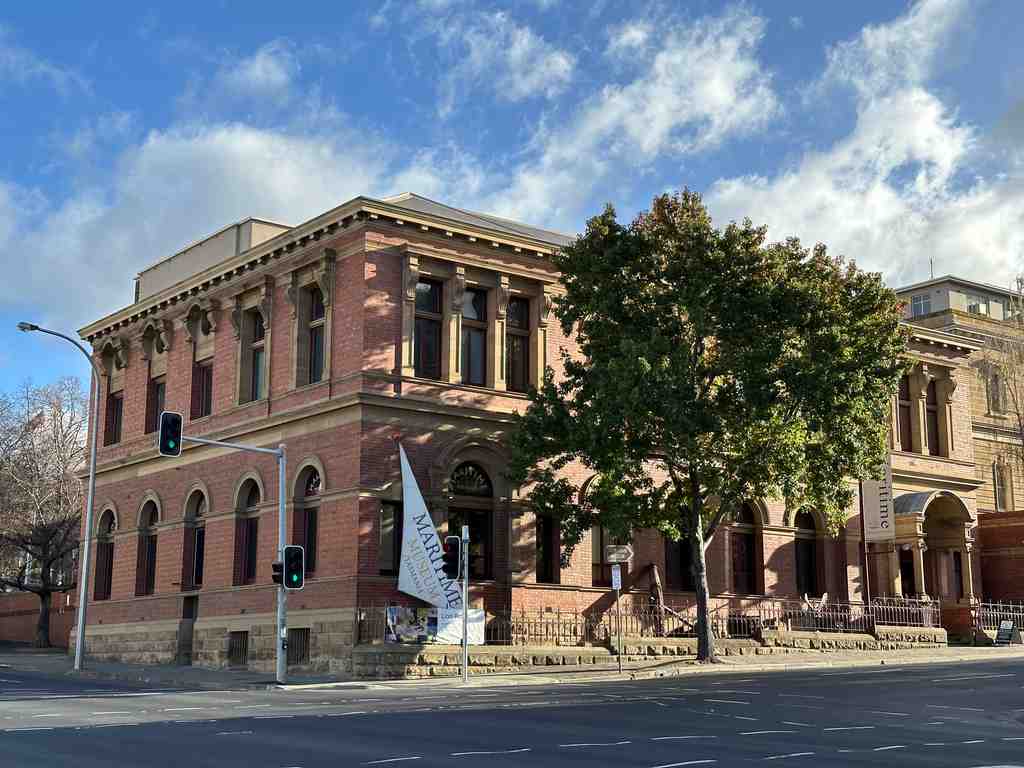
Ahoy there! You're now approaching the Maritime Museum of Tasmania, located in the stately Carnegie Building. To spot it, look for a lovely two-story red brick building with tall…더 보기간략히 보기
Ahoy there! You're now approaching the Maritime Museum of Tasmania, located in the stately Carnegie Building. To spot it, look for a lovely two-story red brick building with tall arched windows and decorative stone accents around the windows and doors. The building sits on a raised stone foundation, and there's a railing along the steps leading to the entrance. You'll also see a large banner hanging near the entrance with the words "Maritime Museum" boldly displayed. And just in case that didn’t catch your eye, the lovely green traffic light in front might help guide you! Now, let's dive into some history, matey! The Maritime Museum of Tasmania is dedicated to chronicling the rich maritime legacy of the island state. Tasmania and the sea are like peanut butter and jelly-inseparable. The indigenous peoples had strong ties to the ocean long before the British arrived by sea in 1803. Since then, Tasmania has become a hub for maritime trade, fishing, and ship-building. Did you know that maritime enthusiasts started lobbying for a museum room dedicated to this heritage as far back as the 1930s? However, the idea set sail only in 1972 when six volunteers decided to create a museum, initially housed in St. George's Church. The museum later moved to Secheron House in 1983 before anchoring itself at the Carnegie Building in 2000, with Queen Elizabeth II herself officiating the grand opening. One of the museum's fascinating artifacts is a quirky 1836 sandstone statue likely carved by Daniel Herbert. It humorously portrays Governor George Arthur in a somewhat compromising position, believed to be part of a fountain where he was shown "gifting" the colony in a rather unique way! So, step inside, me heartie, and embark on a voyage through Tasmania's seafaring past!
전용 페이지 열기 →
10개 정류장 더 보기정류장 적게 보기expand_moreexpand_less
As you walk along, keep an eye to your left. You'll spot the Hobart Private Hospital quite easily-it's that distinctly modern building with reflective glass windows gleaming in…더 보기간략히 보기
As you walk along, keep an eye to your left. You'll spot the Hobart Private Hospital quite easily-it's that distinctly modern building with reflective glass windows gleaming in the sunlight, flanked by tall, cylindrical concrete structures that give it a unique look. Alright, now that you've found it, let's dive into some fun facts! The Hobart Private Hospital, boasting a whopping 146 beds, is right in the heart of Hobart's central business district. It's cheek-to-cheek with the Royal Hobart Hospital, creating quite the medical powerhouse duo. Owned by Healthscope, one of Australia's top providers of hospitals and medical centers, this hospital covers almost every health specialty you can think of - from emergency and cardiac care to maternity and orthopedics, and even gastroenterology and plastic surgery. And here's a fun twist in its story: In December 2019, after some nail-biting negotiations, they renewed the lease with Healthscope for another 20 years. So, this landmark isn’t just a nice view; it's a cornerstone of Hobart's healthcare community for years to come! Onwards to the next stop!
전용 페이지 열기 →As you approach St. Mary's Cathedral, keep your eyes slightly to the left. You're looking for a striking Gothic Revival structure with a golden-tan sandstone facade, intricate…더 보기간략히 보기
As you approach St. Mary's Cathedral, keep your eyes slightly to the left. You're looking for a striking Gothic Revival structure with a golden-tan sandstone facade, intricate arch detailing around the doors and windows, and a picturesque, spired roof. The building’s imposing size and stunning architecture make it hard to miss! Plus, if you spot the beautiful rose window on the front facing you, you're definitely in the right place. Now for a bit of history. St Mary's Cathedral in Hobart, Tasmania, Australia, is the Roman Catholic cathedral here and is where the Archbishop of Hobart, currently Julian Porteous, carries out his duties. Its origins trace back to 1822 when the first permanent Tasmanian priest, Philip Conolly, built a wooden chapel dedicated to St. Virgilius, an Irish Saint, near this very site. Located on Harrington Street, the cathedral's first foundation stone was laid in 1860, designed by William Wardell, a student of the famous architect Augustus Pugin. The building was consecrated in 1866 but due to some construction hiccups, it had to be largely dismantled and re-constructed by architect Henry Hunter in 1878. You've got to love old buildings with character, right? The cathedral boasts a Norman-era baptismal font believed to be from the period of about 1170 to 1200. The first organ here was relocated, but worry not, as the present organ was installed in 1895 after winning first prize at the 1894 International Exhibition of Industry, Science, and Art in Hobart. Pay close attention to the exquisite Hardman Studio window from 1869, a Gothic beauty featuring five lance windows depicting pivotal scenes from the Gospels and heavenly images in the tracery. Marvel at the rose window on the west end and don't miss the other splendid windows like the Pentecost window and the Heroic and Saintly Women window. St. Mary's is not just a cathedral but a repository of history and craftsmanship. Enjoy exploring this architectural marvel!
전용 페이지 열기 →As you approach the intersection, look to your right and you'll see a modern building with large, reflective glass windows. The structure has three main visible stories adorned…더 보기간략히 보기
As you approach the intersection, look to your right and you'll see a modern building with large, reflective glass windows. The structure has three main visible stories adorned with horizontal bands giving it a sleek, contemporary look. Pay attention to the sign near the entrance that reads "State Library of Tasmania" - that's your landmark! Now, let's dive into the wonderful world of the State Library of Tasmania! Established initially as the "Tasmanian Public Library" in 1849, this library has gone through quite the adventure. Initially opened in a house thanks to a government grant, it became public property in 1860, though it faced some rocky roads early on and had to shut down in 1867 due to financial difficulties. The magic wasn't lost though - in 1870, a new public reference library opened in the Hobart Town Hall, To add some sparkle to this tale, American philanthropist Andrew Carnegie decided to fund the library's move in 1907, with one condition: offering a free lending service. Now that’s a deal we can all get behind, right? Fast forward to 1943, the Libraries Act was passed, formally establishing the State Library of Tasmania. Over time, its footprint spread across the state, though government rationalizations led to the closure of some branches. Then came 2006, a year of integration, where the Library combined forces with the Archives Office, Adult Education, and online access centers to form the Community Knowledge Network - later known as LINC Tasmania in 2009, and ultimately Libraries Tasmania in 2018. Today, this cornerstone at the corner of Murray and Bathurst Streets isn't just home to a vast collection of over 200,000 books, periodicals, and more; it's also a hub for historical and ongoing research. The W. L. Crowther Library, part of this institution, brims with historical treasures amassed by Sir William Crowther. And let’s not forget the wonderful Allport family collection featuring colonial-era artworks, Georgian furniture, and a lot more. If that wasn’t enough, in 1998 the State Library began the "Our Digital Island" project to preserve selected Tasmanian websites for posterity. Imagine a time capsule for the internet, with over 9000 captures available for public viewing! So go ahead, step inside, and dive into the rich heritage that this library proudly protects and shares!
전용 페이지 열기 →Look to your left and you’ll see an impressive, towering structure of golden sandstone standing proudly at the intersection of Macquarie and Murray Streets. This is St David's…더 보기간략히 보기
Look to your left and you’ll see an impressive, towering structure of golden sandstone standing proudly at the intersection of Macquarie and Murray Streets. This is St David's Cathedral, with its striking Gothic Revival architecture. It has a prominent square tower made of Oatlands stone, capped with crenellations and intricate arched windows. Don’t miss the arcaded entrance and the large, decorative west window above it. Now, let’s dive into the fun bits about this majestic cathedral! The Cathedral Church of St David is the Anglican cathedral in Hobart, Tasmania, Australia, and has been a spiritual anchor since its consecration in 1874. It’s the headquarters for the Diocese of Tasmania and the home base for the Bishop of Tasmania, the Right Reverend Richard Condie. Not only does this place have a bishop, but it also boasts an impressive lineup of deans, with the reigning dean being the Very Reverend Richard Humphrey. St David’s Cathedral grew up fast. Hobart was declared a city in 1842, and the little old St David's Church suddenly got a promotion and became a cathedral. They even laid the foundation stone for this spectacular new building in January 1868, and none other than Prince Alfred, Duke of Edinburgh, son of Queen Victoria, did the honors. This cathedral is a Gothic Revival masterpiece designed by the English architect George Frederick Bodley. The construction was a long-term project, spanning from 1868 to 1936. If you peek around inside, you’ll find flags dating back to when Tasmania was more of a convict hotspot. The stained-glass windows are nothing short of a mini-cinema, showcasing saints, knights, kings, and biblical figures. Memorial plaques along the walls pay homage to the dearly departed Tasmanians. Keep an eye out for the cathedral’s hallmark features: a fancy arcaded entrance, a massive west window, and those robust buttressed turrets. There’s also a close on the southern side with ancient trees adding to the charm. This place is prime real estate, sitting at the corner of Macquarie and Murray Streets, and forms a pristine Georgian streetscape - considered one of the finest in Australia. Don’t miss the unique quatrefoils perched on the pinnacles of each gable. Like a diligent symphony conductor, the organ here has evolved over time, with origins in the 19th century and multiple upgrades making it one of Australia’s top-notch instruments. The acoustics and seating for 650 have guaranteed its reputation as a concert hub. The cathedral’s tower houses a peal of 10 bells, dating mostly from 1935, with a few newer additions from 2005, lovingly crafted by John Taylor & Co. They’re rung with aplomb by the Australian and New Zealand Association of Bellringers. This cathedral's mission is all about "Proclaiming Jesus as Lord in the Heart of Hobart," aiming to foster a community brimming with faith, hope, and love. It’s renowned for its contemporary Anglican liturgy and creative worship environments. St David’s serves the city and community with vigor, hosting events from law openings to school gatherings. They even hold a memorial service for the Port Arthur tragedy in the serene Hope Chapel within the cathedral. A notable memorial inside honors Alec Campbell, the last ANZAC soldier, who passed away at 103 in 2002. So there you have it - a cathedral bursting with history, spirituality, and a sprinkle of grandeur that’s sure to leave you in awe!
전용 페이지 열기 →Alright, as you're walking, keep your eyes peeled to the right. Look out for a panorama of fishing boats docked by the serene waters, with a picturesque backdrop of charming…더 보기간략히 보기
Alright, as you're walking, keep your eyes peeled to the right. Look out for a panorama of fishing boats docked by the serene waters, with a picturesque backdrop of charming buildings and the striking kunanyi / Mount Wellington looming in the distance. The surroundings look absolutely postcard-worthy! Welcome to Hobart! Pronounced HOH-bart, or as the Indigenous palawa kani language calls it, nipaluna, it's the lively capital of Tasmania. This city is perched on the estuary of the River Derwent and holds the title of the southernmost capital in all of Australia. Even though almost half of Tasmania's population resides here, it's the least-populated state capital in the country. Kunanyi / Mount Wellington, which stands at 1,271 meters (4,170 feet), dominates Hobart's skyline. Fun fact: Hobart's harbour is the second-deepest natural port in the world, and much of the waterfront is on reclaimed land. Before the British set up shop here, the land had been home to Aboriginal Tasmanians for up to 35,000 years. Hobart was founded in 1804 as a British penal colony, making it the second-oldest capital city in Australia. It's had quite the journey, from being a whaling hub to experiencing growth spurts and downturns, transforming through the ages with waves of immigration and economic booms. Hobart is the financial and administrative heart of Tasmania today, and it's known for its Antarctic operations. It's also a hot tourist spot, famous for its convict-era architecture, quirky Salamanca Market, and the world-renowned Museum of Old and New Art (MONA). The city's name has evolved over time, from Hobart Town and Hobarton to simply Hobart. And yes, the locals here are called Hobartians. As you stroll along and soak in the harbor’s vibrant atmosphere, you're standing in a place with rich and varied history, embracing both its ancient roots and contemporary charm. Enjoy the beautiful sights and the unique tales Hobart has to offer! Exploring the realm of the name, geography or the urban structure? Feel free to consult the chat section for additional information.
전용 페이지 열기 →As you approach Hobart Town Hall, look to your right. You'll spot a grand sandstone building that's impossible to miss! Its Victorian elegance is pronounced, with three large…더 보기간략히 보기
As you approach Hobart Town Hall, look to your right. You'll spot a grand sandstone building that's impossible to miss! Its Victorian elegance is pronounced, with three large arches welcoming you at the entrance, reminiscent of the Palazzo Farnese in Rome. The structure is topped with a flagpole, soaring high above, proudly displaying a flag. The windows are adorned with decorative pediments, and there's an overall sense of historical charm mixed with ornate detailing. ### Fun Fact: Hobart Town Hall isn't just a pretty face! This landmark sandstone beauty is the heart of the City of Hobart's local government. Hosting council meetings and featuring a public auditorium, it's a hub of local activity. Need a venue for an event? You can hire the auditorium from the council. Plus, it’s a blast from the past with periodic public tours showcasing its ornate Victorian auditorium and the Town Hall organ, in use since 1870! Here’s a nugget of history for you: Construction kicked off in 1864. The foundation stone? Laid on April 14, which was such a big deal it turned into a public holiday with a parade. Fast forward two years, and on September 25, 1866, the completion was celebrated with another holiday and a grand gala ball. Designed by Henry Hunter, this hall was initially inspired by the grandeur of Rome’s Palazzo Farnese. Originally, it housed the city council chambers, police offices, a municipal court, and even the State Library of Tasmania. Imagine that! For nearly fifty years, it was a bustling center of activity. By 1925, though, the prominent portico had seen better days, leading to major restoration work. And in the spirit of keeping things sparkly, the well-known chandeliers in the ballroom were added by former Lord Mayor Doone Kennedy. Take a moment to admire this piece of history before we move on to our next stop. Enjoy!
전용 페이지 열기 →As you approach the last stop, the Anglesea Barracks will come up on your right. Keep an eye out for a grandiose sandstone building with a reddish roof and symmetrical window…더 보기간략히 보기
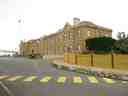
As you approach the last stop, the Anglesea Barracks will come up on your right. Keep an eye out for a grandiose sandstone building with a reddish roof and symmetrical window layout. You'll spot a flagpole hoisting the Australian flag at the front, alongside historical cannons that seem to be standing guard. The building is fronted by a neatly manicured lawn, bordered by a distinctive yellow fence that contours the area. Anglesea Barracks is an Australian Defence Force barracks in central Hobart, Tasmania. This military outpost's site was handpicked by Lachlan Macquarie in December 1811, and construction of the first buildings kicked off in 1814. Not only does it hold the title of the oldest Australian Army barracks still in use, but it also celebrated its bicentenary in December 2011. Named after Henry Paget, 1st Marquess of Anglesey, who had ties with the Board of Ordnance, the barracks serves as the administrative hub for all Defence sites in Tasmania. Inside the barracks, you'll find a blend of civilian and military units like the Battalion HQ, the Royal Tasmania Regiment, and the Australian Army Band - Tasmania. Plus, it's home to the Navy Headquarters Tasmania and even has a medical center, making it both a bustling administrative and healthcare hub. The barracks also boast an Officers' Mess and Sergeants' Mess, ideal for social and ceremonial gatherings. Don't miss the Army Museum of Tasmania, located in the old gaol, offering a glimpse into the storied past of the Australian Army. Adding to its significance, Anglesea Barracks is one of the locations for a Defence National Contact Centre, partnering with another in Cooma, NSW. From the rich history to its modern-day importance, the Anglesea Barracks is indeed a fitting end to your Hobart tour. So, salute to the history in every brick and enjoy your visit!
전용 페이지 열기 →




자주 묻는 질문
투어는 어떻게 시작하나요?
구매 후 AudaTours 앱을 다운로드하고 교환 코드를 입력하세요. 투어를 바로 시작할 수 있습니다 - 재생을 탭하고 GPS 안내 경로를 따라가시면 됩니다.
투어 중 인터넷이 필요한가요?
아닙니다! 시작 전에 투어를 다운로드하면 완전히 오프라인으로 즐길 수 있습니다. 채팅 기능만 인터넷이 필요합니다. 모바일 데이터 절약을 위해 WiFi에서 다운로드하시는 것을 권장합니다.
이것은 가이드가 안내하는 단체 투어인가요?
아닙니다 - 이것은 셀프 가이드 오디오 투어입니다. 폰을 통해 오디오 나레이션을 들으며 나만의 속도로 독립적으로 탐험합니다. 투어 가이드도, 단체도, 일정도 없습니다.
투어는 얼마나 걸리나요?
대부분의 투어는 60-90분이 소요되지만, 속도는 전적으로 본인이 조절합니다. 원할 때 언제든지 일시정지하거나, 정류장을 건너뛰거나, 휴식을 취하세요.
오늘 투어를 끝낼 수 없으면 어떻게 하나요?
괜찮습니다! 투어는 평생 이용이 가능합니다. 원할 때 언제든지 일시정지하고 다시 시작하세요 - 내일, 다음 주, 또는 내년에도. 진행 상황이 저장됩니다.
어떤 언어를 이용할 수 있나요?
모든 투어는 50개 이상의 언어로 이용 가능합니다. 코드를 교환할 때 원하는 언어를 선택하세요. 참고: 투어 생성 후에는 언어를 변경할 수 없습니다.
구매 후 투어는 어디에서 이용하나요?
App Store 또는 Google Play에서 무료 AudaTours 앱을 다운로드하세요. 교환 코드(이메일로 전송됨)를 입력하면 라이브러리에 투어가 나타나며, 다운로드하여 시작할 수 있습니다.
투어가 마음에 들지 않으시면 환불해 드립니다. 문의: [email protected]
안전한 결제 


