
シアトル・オーディオツアー:先駆者たち、映し出されたビジョン、そしてグローバルなイノベーション
シアトルの洗練されたスカイラインには、秘密の対話、数十億ドル規模の戦い、そして決して眠らないイノベーションの静かな番人たちの網が隠されています。このセルフガイド・オーディオツアーで、鉄骨の下に隠された魂を解き明かしましょう。パイクプレイスや絵葉書の向こうにある街の鼓動、そして街角でさえグローバルな野心を秘めている場所をあなたに示すためにデザインされています。 鏡張りのガラスの裏にある隠された研究所では、どのような冷戦が繰り広げられていたのでしょうか?誰が未来の世代のために、静かな彫刻の中に暗号化されたメッセージを忍ばせたのでしょうか?そして、一杯のリサイクル水がどのようにして役員会全体を驚かせ、世界を変えたのでしょうか? 輝く公共アートから最先端の疾病研究所、そして伝説的なゲイツ財団へと足跡をたどってみましょう。曲がり角ごとに、反乱、科学、スキャンダル、そして驚くべき希望の物語が弾けます。これらのブロックを歩き、シアトルが一つずつ囁かれる秘密とともに明らかになるのを目の当たりにしてください。 好奇心に導かれましょう。旅を始め、ほとんどの人が垣間見ることを夢見るだけの街を解き放ちましょう。
ツアーのプレビュー
このツアーについて
- schedule所要時間 30–50 mins自分のペースで進める
- straightenウォーキングルート 1.4kmガイド付きパスに沿って進む
- location_on
- wifi_offオフライン対応一度のダウンロードでどこでも使える
- all_inclusive無期限アクセスいつでも、ずっと再生可能
- location_onミラルから開始
このツアーのスポット
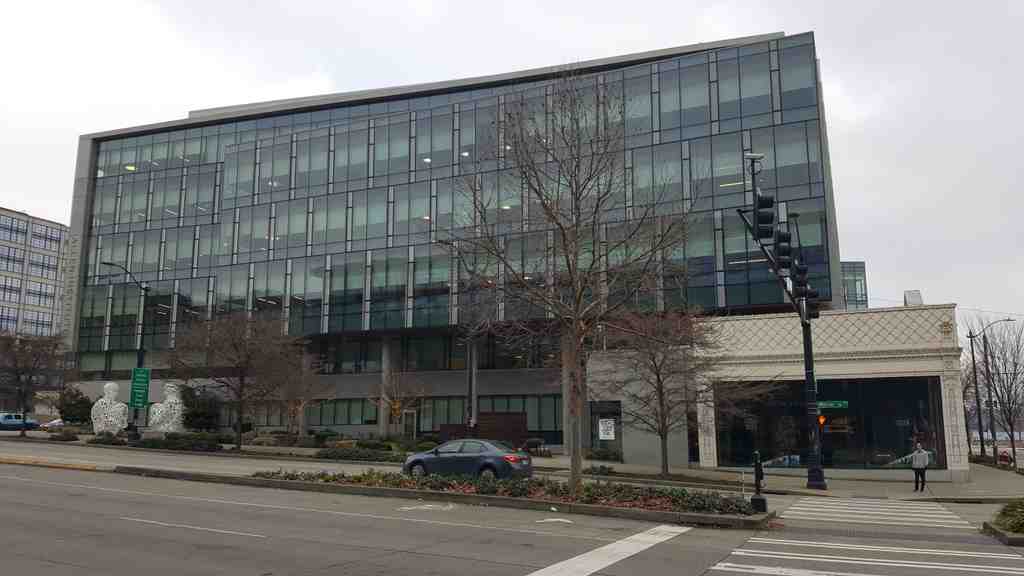
If you look to your left, right outside the glass-walled Allen Institute building at the corner of Mercer Street and 9th Avenue North, you’ll spot two large white figures sitting…もっと読む折りたたむ
If you look to your left, right outside the glass-walled Allen Institute building at the corner of Mercer Street and 9th Avenue North, you’ll spot two large white figures sitting quietly face-to-face, their bodies made out of a swirling mesh of letters. Standing in front of Mirall feels a bit like stumbling into a secret meeting between old friends who speak in silent riddles. Made by the artist Jaume Plensa, this sculpture isn’t just a pair of giant seated figures-they’re woven from the alphabet soup of eight different languages! Peer closely and you’ll find Arabic curves, Greek twists, Chinese brushstrokes, Hindu dots, Hebrew lines, Japanese brush flips, the stately Roman alphabet, and even Russian Cyrillic. It’s almost as if language itself got tired of being spoken and decided to take a seat right here in South Lake Union. Isn’t it wild to think these two are always mid-conversation, but you’ll never hear a sound? It’s a silent banter where every word is written but never spoken-sort of like texting under a strict librarian’s watch. Imagine all the stories-love letters, scientific ideas, jokes about Seattle rain-they might spell out if only they came to life for a minute! Take in the gleaming stainless steel, reflecting both the city’s energy and the soft gray skies above, and just for a second, wonder what you might say if you could join their mysterious, everlasting chat.
専用ページを開く →Look ahead for two large, modern buildings with a striking green roof and plenty of glass walls-right across from the Seattle Center-those are the Gates Foundation…もっと読む折りたたむ
Look ahead for two large, modern buildings with a striking green roof and plenty of glass walls-right across from the Seattle Center-those are the Gates Foundation headquarters. Alright, take a moment and let your eyes wander across those long, grassy rooftops and glassy facades. This isn’t your average office park. Here’s where philanthropy gets a Seattle twist-big, bold, and a bit high-tech, just like the city itself. Now, let’s step back in time for a second, because the story of this place is bigger than what you see in front of you. It started quietly back in 1994, when Bill Gates-yes, the computer guy with that “Windows” thing-and his wife, Melinda, decided they wanted to do more good with their mountain of fortune. But it wasn't until the year 2000 that things really leveled up: the Gates Foundation was officially launched. Imagine the buzz-people wondered; what would two of the world’s wealthiest do now? Build another tech giant? Nope. Instead, they set out to squish global poverty and wipe out diseases that most people here in Seattle only read about. Every year, this Foundation has to give away 5% of its assets-currently, over seventy billion dollars. That’s a lot of zeros. Their mission? It’s massive: better health for everyone, everywhere, along with more opportunities in education, and a world where everyone can have clean water and decent toilets-really, they even reinvent toilets here. Can you picture a toilet that turns waste into clean water? Bill Gates actually drank a glass of that water once for a TV audience. If that’s not commitment, I don’t know what is! But hold on. The story isn’t all smooth, echoing halls and happy board rooms. There’s been drama-big decisions, some controversy, even world-shaking moments. In 2006, Bill decided to leave his daily role at Microsoft. He wasn’t getting bored; he just wanted to focus all his brainpower here, fighting malaria, funding scholarships, and basically trying to outdo Santa when it comes to giving things away. Rubbing shoulders with him is a hall-of-fame team, including Warren Buffett-yep, that Warren Buffett-who pledged his own billions to the cause. In 2010, the Gateses kicked off a project to reimagine global health education. They even teamed up with Hillary Clinton on projects for women and girls, and when COVID-19 hit, the Foundation had already built relationships worldwide, making it possible to move fast in getting help where it was needed most. Now, the building you’re in front of-it’s not just stylish. When they opened these shiny headquarters in 2011, it was Seattle’s newest eco-friendly trophy, decked out with solar panels, a “living roof,” and rainwater pools. Even the land it stands on has a cool story-it used to be a city bus base. Now, instead of the hum of buses heading out, there are conference rooms buzzing with discussions about how to end polio, send girls to school, or create a rice that saves millions of lives from Vitamin A deficiency. Over the decades, they’ve weathered a few storms, too-public criticism, legal changes, and even the challenge of keeping the founders working together after their divorce. As of 2024, Melinda stepped down, but the Foundation kept on rolling-scheduled, believe it or not, to spend itself out of existence by 2045. No trust funds lingering for centuries-just an all-in push to give it all away within 20 years of Bill Gates’ passing. It’s like a superhero promising to retire once the world’s safe. So as you stand here, right at the edge of this campus, picture not just the dollars and the headlines, but the millions of lives changed-vaccines in remote clinics, life-changing scholarships at Cambridge, or a simple, clean toilet where there wasn’t one before. You’re in the presence of Seattle’s powerhouse for hope, a machine for optimism, and perhaps the most ambitious “give it all away” project the world has ever seen. I have to say, if these walls could talk, they’d be arguing about whether to fund a new malaria vaccine or build a better toilet. Not your usual office gossip! Ready to head to our final stop? Let’s walk-who knows what future trailblazer might have just walked past you! Yearning to grasp further insights on the activities, financials or the global development division? Dive into the chat section below and ask away.
専用ページを開く →

さらに1件のスポットを表示表示するスポットを減らすexpand_moreexpand_less
To spot the Impatient Optimist, look up above the open plaza in front of the Bill & Melinda Gates Foundation-you’ll see a massive, colorful net floating in the air, glowing like a…もっと読む折りたたむ
To spot the Impatient Optimist, look up above the open plaza in front of the Bill & Melinda Gates Foundation-you’ll see a massive, colorful net floating in the air, glowing like a dreamcatcher for the whole city. Now, take a deep breath and listen closely-you’re standing beneath a sculpture with a secret. Back in 2015, artist Janet Echelman and her team wanted to capture the very shape of a Seattle day, but not with paint or clay. Instead, they snapped a photo of the sky every five minutes for 24 hours and then, like digital wizards, spun all that color data into this huge, swooping net above you. At 120 feet long and 80 feet wide, “Impatient Optimist” isn’t just any net; it’s the heartbeat of the Gates Foundation campus, connecting Seattle to sister campuses all over the world. At night, the net comes alive, glowing with the colors of sunrise as it happens-in real time-in places as far away as Africa and Asia. It’s almost as if the sculpture is playing an epic, cosmic game of telephone. The whole thing, with its shifting lights and shimmering threads, was built to remind us how one person can change the world-or at least brighten up a rainy Seattle day. Pretty dazzling, right? And you didn’t even need to climb a ladder to get this view!
専用ページを開く →

よくある質問
ツアーはどうやって始めますか?
購入後、AudaToursアプリをダウンロードして引き換えコードを入力してください。ツアーはすぐに開始できます。再生ボタンをタップして、GPSガイド付きルートに従うだけです。
ツアー中にインターネットは必要ですか?
いいえ!開始前にツアーをダウンロードしておけば、完全にオフラインで楽しめます。チャット機能のみインターネットが必要です。モバイルデータを節約するため、WiFi環境でのダウンロードをお勧めします。
これは団体ツアーですか?
いいえ、これはセルフガイド式のオーディオツアーです。ガイドや団体、決まったスケジュールに縛られることなく、スマホから流れるナレーションを聴きながら自分のペースで自由に探索できます。
ツアーの所要時間は?
ほとんどのツアーは60〜90分で完了しますが、ペースは完全に自由です。好きな時に一時停止したり、スポットを飛ばしたり、休憩を取ったりできます。
今日中にツアーを終えられない場合は?
問題ありません!ツアーには無期限でアクセスできます。明日、来週、あるいは来年でも、好きな時に再開できます。進行状況は保存されます。
どの言語が利用可能ですか?
すべてのツアーが50以上の言語に対応しています。コードを引き換える際にお好みの言語を選択してください。注意:ツアー生成後に言語を変更することはできません。
購入後、どこからツアーにアクセスできますか?
App StoreまたはGoogle Playから無料のAudaToursアプリをダウンロードしてください。メールで届いた引き換えコードを入力すると、ライブラリにツアーが表示され、ダウンロードして開始できるようになります。
もしツアーを楽しめなかった場合は、返金いたします。お問い合わせ先: [email protected]
以下の決済で安全にチェックアウト 


