
ベンチュラ・オーディオツアー:アドベの残響、ミッションの鐘、そして海岸の伝説
ベンチュラのヤシの木陰の通りには、秘密の世界が広がっています。そこには、古代の鐘、法廷での反乱、そして語られざる物語を隠す質素な市場があります。 これはただの散歩ではありません。街の隠れた一角を解き放ち、ほとんどの訪問者が見過ごしてしまう物語を明らかにする、セルフガイドのオーディオツアーです。 ベンチュラ郡裁判所の階段で正義が揺らいだとき、何が起こったのでしょうか?日没後、サン・ブエナベンチュラ伝道所で響き渡る謎の足跡は誰のものでしょうか?ペイラノ市場の質素な食料品店が、禁断の取引や深夜の会合のささやきを引き起こしたのはなぜでしょうか? 聖なる伝道所の庭園から、スキャンダルが繰り広げられた賑やかな街角まで、光と影の中を進みましょう。失われた伝説、政治的な陰謀、そしてベンチュラの活気ある中心部を形作った見過ごされたドラマを解き明かしながら、古いライバル関係の緊張を感じてください。 ベンチュラの秘密を解き明かし、最も魅力的な登場人物たちの足跡をたどる準備はできていますか?旅を始めましょう。目に見えるもの以上のものが、その表面の下に隠されています。
ツアーのプレビュー
このツアーについて
- schedule所要時間 30–50 mins自分のペースで進める
- straightenウォーキングルート 4.0kmガイド付きパスに沿って進む
- location_on
- wifi_offオフライン対応一度のダウンロードでどこでも使える
- all_inclusive無期限アクセスいつでも、ずっと再生可能
- location_onサン・ミゲル礼拝堂跡から開始
このツアーのスポット
To spot the San Miguel Chapel Site, look for an open, park-like area with palm trees and a lamp post right at the corner of Thompson Boulevard and Palm Street, where the land dips…もっと読む折りたたむ
To spot the San Miguel Chapel Site, look for an open, park-like area with palm trees and a lamp post right at the corner of Thompson Boulevard and Palm Street, where the land dips slightly and is surrounded by greenery. Welcome to the humble beginnings of Ventura! Right where you’re standing, surrounded by palms and the soft buzz of the city, history is hiding just beneath your feet. Imagine this spot over 200 years ago-it was the center of action, with the very first outpost built for Mission San Buenaventura. Workers, friars, Chumash people, and laborers bustled about, constructing adobe walls, bringing water through stone aqueducts, and creating what would become the heart of this growing community. The San Miguel Chapel itself stood just outside the mission’s walled garden, a simple structure that was alive with the sounds of prayer, conversation, and maybe the odd complaint about hard labor-everyone gets tired of carrying rocks, right? This land is more than a footnote; it’s a treasure chest for archeologists. In the 1970s, eager students from Moorpark College dug deep and discovered old rock foundations, a painted wall, and even the aqueduct that once slaked the thirst of mission builders. Every shovel of earth has yielded hints of Ventura’s past-from fancy shell beads, crafted long before Europeans arrived, to artifacts from the county’s very first courthouse, jail, and hospital. But wait, there’s more! Humans have wandered here for at least 10,000 years. Down the way, the Chumash village of Shisholop was once a busy hub full of those famous plank boats-Tomols-setting sail for the Channel Islands. And don’t miss the grand old Coast Live Oak at this corner-believe it or not, it’s nearly 200 years old! Here, by the mission bell marking El Camino Real, history feels very much alive. Take a deep breath. Picture yourself in a world where ocean breezes mixed with the clang of mission bells, and every stone told a story. You’re not just standing in a park-you’re walking on layers of adventure, mystery, and the building blocks of Ventura itself.
専用ページを開く →Right in front of you, you’ll spot a giant, sprawling Moreton Bay fig tree that looks like nature’s idea of a massive umbrella-just look for the huge, shady green canopy low to…もっと読む折りたたむ
Right in front of you, you’ll spot a giant, sprawling Moreton Bay fig tree that looks like nature’s idea of a massive umbrella-just look for the huge, shady green canopy low to the ground, standing proudly on a carpet of grass. Welcome to Plaza Park, or as some old-timers call it, Cannon Park-a true living time machine right in downtown Ventura. Imagine stepping into 1869, when Ventura was just getting its wheels turning in California’s first big land boom. This very spot, now all green and peaceful, once echoed with the gentle munching of livestock-it was used more for grazing than for strolls or picnics. Can you picture it? Fast forward to 1874: someone plants this enormous Moreton Bay fig tree, not knowing it would become a local legend. By the 1990s, this gentle giant had stretched its leafy arms over 128 feet, soaring up to 70 feet high, earning its title as one of the oldest and largest fig specimens in all of California. If this tree could talk, wow, the stories it would spill-like the time President Theodore Roosevelt campaigned right here! The park’s paths crisscrossed with gravel, and there was even a grand, central fountain and a bandstand for toe-tapping tunes. In the early 1900s, a local beautification squad zipped in, planting more trees and making the place sparkle with new paved streets. The gazebo? That vanished before World War II, but echoes of celebrations and rallies still linger in the air. Ah, but the park’s real star of mystery is the famed bronze cannon-a forgotten treasure from the Philippines, bearing the name San Buenaventura. Forged in a Spanish church-run foundry, stationed in a Manila fortress, captured by Americans, then left in a scrap pile before a sharp-eyed Ventura official rescued it in 1902. By 1903, it was here for good, standing as a powerful memorial to veterans. Look around and you’ll see echoes of history in the grand Victorian homes of the Mitchell Block, the post office’s WPA mural, and recently a phoenix sculpture rising from a once-burned pine-reminders that Plaza Park is Ventura’s green heart, always growing new stories. And hey, if you can spot the cannon, just remember-it traveled thousands of miles to enjoy this shade with you!
専用ページを開く →Just ahead, you’ll spot the Ventura Theatre by its grand white façade, ornate arches, and the big marquee with “Ventura” gleaming above the entrance-just look to the building with…もっと読む折りたたむ
Just ahead, you’ll spot the Ventura Theatre by its grand white façade, ornate arches, and the big marquee with “Ventura” gleaming above the entrance-just look to the building with the red-tiled roof and eye-catching old Hollywood charm. Take a moment here on the sidewalk and let your mind wander back to 1928-Ventura’s streets were buzzing, oil boom riches shimmering in the salty air, and people in their finest lined up along this very curb to witness a true spectacle. The Ventura Theatre wasn’t just any cinema: it was the only luxury movie palace in Ventura County, built for pure opulence. Step inside in your imagination and you’ll see gilt and grandeur everywhere, from the dazzling chandeliers to the lavish balcony seats-all thanks to the creative minds at Robert E. Power Studios. This Spanish Colonial Revival gem was more than just pretty: when those doors first swung open, folks were treated to organ solos, side-splitting “Our Gang” comedies, a vaudeville act, and Hollywood’s latest flick, “Excess Baggage.” Back then, the whole downtown was springing to life, with elegant banks, bustling meat packing companies, fancy hotels, and secretive Masonic temples all popping up around it. The theater became the heart of Ventura nightlife-if walls could talk, these would probably burst out laughing with stories! Even today, the Ventura Theatre hosts live concerts in style. Declared a landmark in 1976 and honored on the National Register of Historic Places, this theater is the sparkling jewel of Main Street-and tonight, just imagine the echoes of applause still hanging in the air.
専用ページを開く →
さらに8件のスポットを表示表示するスポットを減らすexpand_moreexpand_less
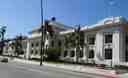
To spot the Ventura County Courthouse, now known as Ventura City Hall, just look up the hill and find the grand, white building with tall columns, arched windows, and a shining…もっと読む折りたたむ
To spot the Ventura County Courthouse, now known as Ventura City Hall, just look up the hill and find the grand, white building with tall columns, arched windows, and a shining copper dome, standing proudly above California Street. Now, step closer and let’s travel through time together! Picture yourself in 1913, the scent of fresh paint and Italian marble in the air, as crowds gather for the courthouse’s grand opening. This wasn’t just any building-Ventura’s Neoclassical courthouse was the crown jewel of the town, gleaming with white terra cotta panels, shiny brass gates, and mischievous little faces of Franciscan friars peeking out from the walls. The whole city seemed to buzz with excitement. Imagine -the dedication celebration lasted two days, with parades, seamen from the USS South Dakota, a “Goddess of Liberty” float, and even a giant lima bean pod float (because nothing says Ventura like a good lima bean). Los Angeles architect Albert C. Martin wanted this place to look as grand as any palace in California. Thanks to him, it’s dressed up not just for business, but like a beautiful woman in a Paris gown, as folks wrote back in the 1920s. The broad fluted Doric columns reach up to a dazzling copper-sheathed dome, and if you squint, you can spot 24 quirky friar faces-like the building itself is eavesdropping on downtown gossip. Actually, this is not the original courthouse. The first one, built in 1873, sat closer to the Mission, but by the early 1900s, it was starting to lean like someone who’d partied a bit too hard at Ventura’s beach. The new site-with clear blue ocean behind and sweeping views over the city-was picked to show everyone Ventura’s ambition. Picture judges in heavy robes and lawyers bustling in and out, with Erle Stanley Gardner, the creator of Perry Mason, scribbling his detective tales just a block away. Through the decades, the courthouse played host to government business, legendary trials, and the kind of courtroom drama that would make any TV show jealous. The trial of Elizabeth Ann Duncan in 1958, with reporters packed wall-to-wall, captivated the nation with its tragedy and headlines. In the 1930s, a new annex was added-complete with jail cells. The most infamous guest? Charles Manson, who had a brief stay here before heading off to infamy. But the building wasn’t done facing danger. By the 1960s, earthquakes were shaking more than just nerves. After a rumble in 1968, judges flat-out refused to step inside. The stained-glass dome was beautiful, but no one wanted it crashing down mid-trial. Eventually, the county said, “enough!” and moved everyone out. The stately old building sat empty until the city decided to give it new life-which cost Ventura about $3.4 million and a lot of crossed fingers. Terra cotta tiles were replaced, the walls were braced with modern engineering magic, and the old courtroom became a sunlit city council chamber with views stretching all the way to the Channel Islands. Since 1974, this courthouse has served as Ventura’s City Hall, persisting through repairs, renovations, and more than a few movie crews. So next time you walk past, think of those friar faces grinning at you and all the stories this hilltop palace holds-more drama, mystery, and memorable moments than you can shake a lima bean at. And don’t forget to look out and savor the breeze, just like the building does, day after day.
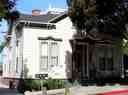
専用ページを開く →To spot the Emmanuel Franz House, just look for a cream-colored Victorian home with tall, narrow windows, a small porch out front, and a fancy white railing topping its roof-right…もっと読む折りたたむ
To spot the Emmanuel Franz House, just look for a cream-colored Victorian home with tall, narrow windows, a small porch out front, and a fancy white railing topping its roof-right beside the tree! Now, picture yourself back in the late 1800s: the air smells of fresh-cut lumber and ocean breezes, and there’s the steady hum of Ventura’s early growth all around. Right before you stands the Emmanuel Franz House, an Italianate Victorian beauty born from wood and brick, taking shape between 1879 and 1891. For more than a decade, builders carefully constructed this place, maybe pausing now and then to joke about who would be brave enough to climb all the way up to the “widow’s watch” on the roof-rumor has it, folks believed you could spot ships returning to Ventura from up there, if you didn’t mind getting a little windblown! With its ornate stoop and elegant trim, this house witnessed so much: horse carriages, the shouts of street vendors, and the city slowly transforming around it. It’s got stories tucked in every corner-imagine the laughter that echoed through its halls or maybe even a grumpy old cat guarding the front step! In 1976, Ventura made sure this house wasn’t going anywhere, declaring it Historic Landmark Number 21, and in 1982 it earned a spot on the National Register of Historic Places. So take in the details and let your imagination roam; you’re standing in front of a true time traveler nestled right in downtown Ventura!
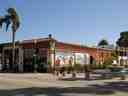
専用ページを開く →To spot Peirano Market, look for a sturdy red-brick building with ornate brickwork and a distinctive Spanish-tile mansard roof, right across the street from Mission San…もっと読む折りたたむ
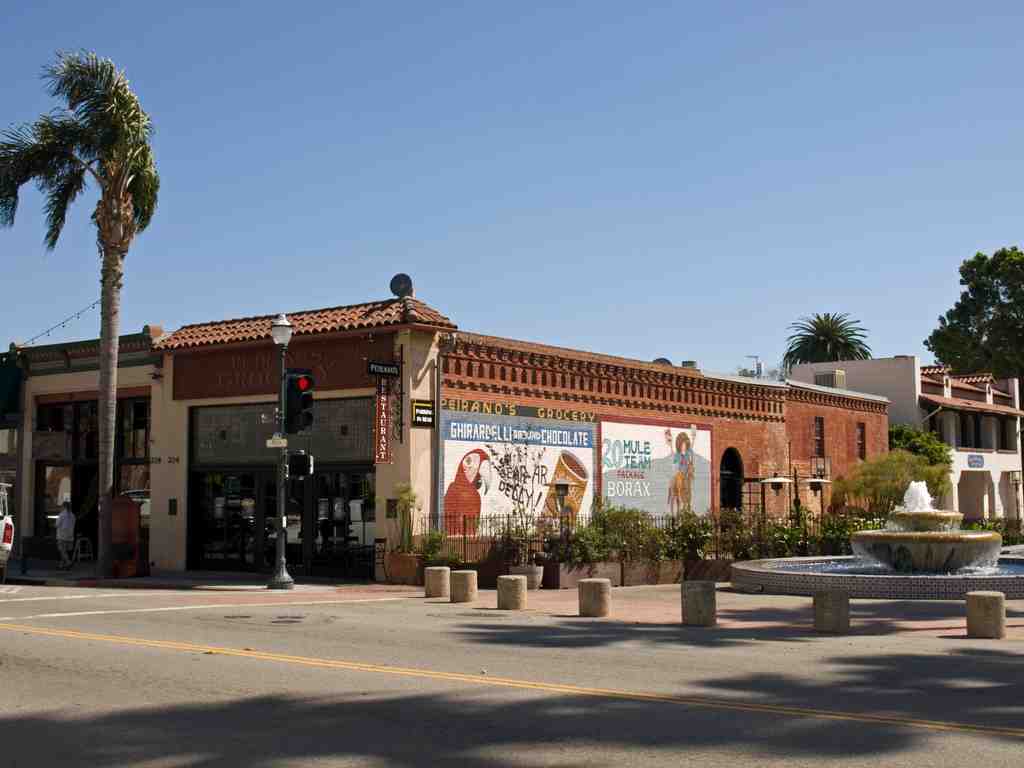
To spot Peirano Market, look for a sturdy red-brick building with ornate brickwork and a distinctive Spanish-tile mansard roof, right across the street from Mission San Buenaventura; it also sports colorful vintage murals for chocolate and borax on its west-facing wall. Alright, you’ve arrived at Peirano Market-take a whiff, and you might even imagine you’re catching a hint of cured salami or old-world pasta wafting through time! Picture it: It’s 1877, and the place in front of you doesn’t just sell groceries, it’s the heart of Ventura’s bustling main street. Built by J.J. Mahoney, who clearly believed that red brick should always look this good, the building welcomed Italian immigrant Alex Gandolfo as its very first tenant. Back then, the streets echoed with wagon wheels and excited chatter. Gandolfo ran a general store out of this very space, serving goods to a growing Italian American community. It wasn’t long before his nephew, Nicola “Nick Sr.” Peirano, sailed over from Genoa, Italy, and joined him. Nick Sr. started out as the world’s most convenient employee-he not only worked the store, but actually slept in a loft above it! That’s what you call a short commute. By the late 1880s, Nick Sr. had taken the reins, and this place became a family-run operation that would last more than a century. If you could step inside the market in those early days, you’d find shelves packed with farm tools, bailing wire, cigars, and enough black powder and shotgun shells to make any spaghetti western jealous. The Peirano family didn’t just sell food-they sold almost everything you could carry home. Nick Sr. and his wife Clara, also Italian-born, raised their six children just a short stroll away in their finely decorated Queen Anne house down the street. Fast forward to the early 1930s: Nick Jr. and Victor, his sons, took over. That’s when Peirano’s shifted its focus fully to groceries, leaning into their Italian roots-pastas, salami, cheeses, olives, and don’t forget those famous Petri cigars. Their Italian goodies drew shoppers from three counties over. Seriously, the line for fresh fava beans would’ve made Disneyland jealous. And if you were lucky, you’d catch sight of some old relics inside: sacks of beans, a glass counter overflowing with pasta, and a grandfather clock earned as a tobacco-purchasing prize! Now, this place is more than a grocery-it’s nostalgia bottled up, with original sugar-pine floors, turn-of-the-century wallpaper, and quirky heirlooms like a Model T lantern and an ancient fire nozzle. One local paper wrote that Peirano's was a world of “nostalgia and Italian delicacies”-and you could see why. Nick Jr. himself became a bit of a living legend; the city even made the building and their old family home official historic landmarks. And in classic fashion, Nick wasn’t thrilled about all the historic-preservation red tape. He just wanted to sell groceries, not navigate city bylaws! But time rolls on, and in 1986, Nick Jr. retired, turning the page on nearly 100 years of Peirano hustle. The building endured a stretch of bad luck: debates about whether it should be saved, suspicions of fire, and growing vacancies. At one point, “Save Peirano’s!” became the rallying cry for locals who didn’t want Ventura to lose its connection to the past. And here’s a twist-during a renovation in 1991, workers discovered something incredible beneath your feet: the remains of the Mission Lavanderia, an old Chumash laundry for the nearby mission gardens! Archaeologists unearthed a treasure trove of artifacts underneath-European ceramics, Mexican glassware, even Chinese opium pipes! The city argued over which bit of history to preserve more: the laundry or the market above. Still, Peirano Market stubbornly survived, switching between vacant years, artsy campaigns, and multiple restaurant owners. At last, in 2022, Peirano’s Market & Delicatessen reopened again, breathing new life into these storied walls. So as you stand here, give a nod to the ghosts of grocers past-Italian newcomers, hard-working families, and every shopper who came for a taste of home. Maybe you’ve felt a shiver of history here, or maybe that’s just the anticipation of your next sandwich. Either way, Peirano Market isn’t just a building; it’s Ventura’s memory, brick by brick, and bite by bite.
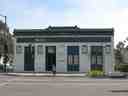
専用ページを開く →Look to the corner where Main Street meets Ventura Avenue and spot a sturdy, low brick building, cream-colored with dark trim and “1903” proudly displayed across the top-if you…もっと読む折りたたむ
Look to the corner where Main Street meets Ventura Avenue and spot a sturdy, low brick building, cream-colored with dark trim and “1903” proudly displayed across the top-if you see Paddy’s Bar & Lounge or some green and white paint, you’ve arrived! Ah, you found it! Now go ahead and imagine yourself standing outside this solid brick store while the sound of distant trains rolls in on Ventura’s fresh coastal air. It’s 1903, and the Second Land Boom is bubbling-people, goods, even a stray horse or two are clopping past while Jules Feraud, a sharply dressed Frenchman with a heart full of dreams (and flour!), is opening up shop. His brand-new building is the toast of town: groceries stacked high, fresh loaves wafting their warm scent out the door, and neighbors stopping to swap news and, let’s be honest, probably a bit of gossip. Jules’ bakery and general store quickly became more than a place to buy bread or beans-it was like Ventura’s own community “chat room.” Folks would come for hay, feed, or just a smile from Jules behind the counter. With his sons hard at work, the Feraud store thrived for decades; the family’s knack for business-and perhaps their secret recipes-kept it humming until the 1940s. But the Feraud story doesn’t stop when the bread runs out. The building reinvented itself faster than you can say “Artisan Soap”-serving as an auto center, then a beloved neighborhood barbershop. That’s where “Phil the Barber”-yes, that Phil, the local legend-snipped and shaped Venturan hair for 63 years. Imagine the stories those walls could tell… secrets trimmed and tangled into every conversation! Today, you’ll still catch a flicker of the past here: vintage photos of Phil Marquez on display, the echoes of old Main Street commerce, and the weight of history in those sturdy 1903 bricks. So stand tall, my friend-you’re not just visiting a shop, but a living timeline, right in the heart of Ventura.
専用ページを開く →Look for a small, rustic one-story house with thick, golden adobe walls and a weathered red-tile roof-it's tucked beneath shade trees and its wooden porch faces toward you right…もっと読む折りたたむ
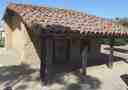
Look for a small, rustic one-story house with thick, golden adobe walls and a weathered red-tile roof-it's tucked beneath shade trees and its wooden porch faces toward you right off Main Street. Alright, traveler, welcome to the legendary Ortega Adobe-the last survivor of what used to be a whole row of adobe homes on Ventura’s Main Street. Take a deep breath and imagine you’ve stepped back to 1857. The air is warm and smells faintly of earth and clay, and the only sound is the shuffle of your boots in the dust. This humble adobe once bustled with the laughter and chatter of the Ortega family, who filled it with thirteen children, crackling firewood, and, believe it or not, the beginnings of California’s famous chile business. Let’s start with how it was built. The land it sits on once belonged to Mission San Buenaventura, and Emigdio Ortega, the proud grandson of a Spanish explorer, set about making a home here. Now, building an adobe in old Ventura wasn’t for the faint-hearted. Wood was so scarce Emigdio had to scavenge massive beams and rafters from an abandoned adobe forty miles away-imagine the scene: a caravan of heavy oxcarts lumbering across the wild, rattling over rocks and creaking under their load for four long days. Those old beams above your head might have heard priests murmuring at the mission, and-if you believe the local legends-even survived a Mojave raid that sent the whole ranch running. When Emigdio finally finished this house, the adobe was topped with roof tiles borrowed from the Mission-tiles famously freed by the 1857 Fort Tejon earthquake, a reminder that California has always liked to keep its residents on their toes! Inside, there were three rooms, just like you see today: a kitchen for roasting chiles, a bright, simple bedroom, and a cozy living room where the family could gather and tell stories after a long day. Life here was never dull, especially in the wild days of 1866, when a furious storm sent the Ventura River on a rampage. The Ortegas were warned in time and hurriedly fled to a nearby frame house, sheep and all. But as the muddy water rose, half the adobe crumbled, and their new refuge-with all their clothes and pets-was swept out to sea. The surviving half of this adobe became a symbol of pure, stubborn survival. But don’t leave yet-the best part of the story is still in the kitchen. In the late 1800s, the Ortegas became chile pioneers, roasting and canning chiles right here, filling the air with spicy, mouthwatering scents. Emilio Ortega, their eleventh child, began the Ortega Chile Packing Company in the shed right next door, eventually canning over 55,000 tins a year and sending them across California. Their label even featured an image of this very adobe, so anyone snapping up Ortega chiles could picture this warm, sun-baked house. The adobe has done more than house families-over the years, it became a restaurant run by a Chinese immigrant, the offices for Shell Oil, a Veterans of Foreign Wars hall, even a boys’ club, a police station, a speakeasy (don’t worry, I won’t tell if you find a hidden flask), and-one of my favorites-a potter’s workshop, echoing with the. By the late 1960s, the old place had seen better days, sagging and cracked. That’s when Ventura’s residents rallied together, restoring it with love, elbow grease, and a few questionable choices-like slathering those historic adobe bricks in cement, not knowing it would make the walls slowly crumble in protest. But hard work paid off, and in 1974, it was declared Ventura’s Historic Landmark No. 2, opening its creaky front door to visitors from near and far. Today, wander inside and you’ll find three rooms set up just like Emigdio’s family would have had them-simple, homely, and full of stories. The old ridge beam is still there, holding up the roof after more than a century of floods, earthquakes, and storms. So, as you stand here, hear the distant mumble of children, the sizzle of roasting chiles, and maybe, just maybe, catch a whiff of that old California magic. Congratulations, explorer! You’ve finished the tour-unless you want to stick around and see if you can spot a ghost or two hiding in the rafters.
専用ページを開く →
よくある質問
ツアーはどうやって始めますか?
購入後、AudaToursアプリをダウンロードして引き換えコードを入力してください。ツアーはすぐに開始できます。再生ボタンをタップして、GPSガイド付きルートに従うだけです。
ツアー中にインターネットは必要ですか?
いいえ!開始前にツアーをダウンロードしておけば、完全にオフラインで楽しめます。チャット機能のみインターネットが必要です。モバイルデータを節約するため、WiFi環境でのダウンロードをお勧めします。
これは団体ツアーですか?
いいえ、これはセルフガイド式のオーディオツアーです。ガイドや団体、決まったスケジュールに縛られることなく、スマホから流れるナレーションを聴きながら自分のペースで自由に探索できます。
ツアーの所要時間は?
ほとんどのツアーは60〜90分で完了しますが、ペースは完全に自由です。好きな時に一時停止したり、スポットを飛ばしたり、休憩を取ったりできます。
今日中にツアーを終えられない場合は?
問題ありません!ツアーには無期限でアクセスできます。明日、来週、あるいは来年でも、好きな時に再開できます。進行状況は保存されます。
どの言語が利用可能ですか?
すべてのツアーが50以上の言語に対応しています。コードを引き換える際にお好みの言語を選択してください。注意:ツアー生成後に言語を変更することはできません。
購入後、どこからツアーにアクセスできますか?
App StoreまたはGoogle Playから無料のAudaToursアプリをダウンロードしてください。メールで届いた引き換えコードを入力すると、ライブラリにツアーが表示され、ダウンロードして開始できるようになります。
もしツアーを楽しめなかった場合は、返金いたします。お問い合わせ先: [email protected]
以下の決済で安全にチェックアウト 


