オークパーク オーディオツアー:芸術と建築を巡る時代を超えた道
かつて一本の光がオークパークのスカイラインを変えました。その下には、色褪せることを拒む物語が残っています。 このセルフガイドオーディオツアーは、街の層を剥がし、ユニティ・テンプルの静かなる天才、フェンウィック高校の秘密の回廊、そしてドラマと発明が衝突した他の場所へとあなたを導きます。観光ルートのすぐ外に隠されたドラマや囁かれる真実を発見してください。 どのスキャンダルが寺院の足元に痕跡を残したのでしょうか?オークパークで最も名門の学校で、謎の真夜中の儀式の最中に誰が姿を消したのでしょうか?そして、なぜ普通の街角が1世紀以上経ってもなお隣人たちを分断しているのでしょうか? 傑作から秘密へ、革命から静かな協定へと歩みを進めましょう。それぞれの立ち寄り場所が新たな視点をもたらし、驚きの感覚を呼び起こし、見慣れた通りを物語の迷宮へと変えます。 好奇心に導かれてオークパークの中心へ。再生ボタンを押して、最初にあなたの目を引いた光を取り戻しましょう。
ツアーのプレビュー
このツアーについて
- schedule所要時間 30–50 mins自分のペースで進める
- straightenウォーキングルート 3.9kmガイド付きパスに沿って進む
- location_on
- wifi_offオフライン対応一度のダウンロードでどこでも使える
- all_inclusive無期限アクセスいつでも、ずっと再生可能
- location_onプレザント・ホームから開始
このツアーのスポット
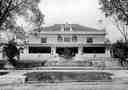
To spot Pleasant Home, just look for a grand, square, cream-colored mansion with a wide porch, perched behind elegant columns and framed by huge old trees at the corner of…もっと読む折りたたむ
To spot Pleasant Home, just look for a grand, square, cream-colored mansion with a wide porch, perched behind elegant columns and framed by huge old trees at the corner of Pleasant Street and Home Avenue. Welcome to Pleasant Home-though, honestly, I think “Grand Home” would have been just as fitting! Picture yourself here in 1897: horse carriages clip-clopping up these steps, the rich scent of fresh-cut grass from the sprawling lawn, and the sound of laughter echoing from the porch as guests arrived for one of John Farson’s famous gatherings. Architect George Washington Maher dreamed up this gem, and you’re now standing outside one of the earliest and grandest Prairie style mansions in the country. The design is clean and horizontal, blending into the landscape and making it feel welcoming-but with a hint of mystery, like it’s keeping Oak Park’s best-kept secrets tucked inside its walls. Stories swirl inside this house. John Farson, the original owner, was known for his generosity and community spirit. Imagine him sweeping through the front door, eager to show off his new “Pleasant Home.” In 1910, the baton was passed to Herbert S. Mills-a man with a knack for novelty, who owned the Mills Novelty Company. Here’s a fun twist for your imagination: deep inside Pleasant Home, the magical, self-playing violin and piano creation called the Mills Violano-Virtuoso once played, filling rooms with music even when no one was near the keys. And yes, a restored one is still here on display! If walls could talk, I bet they’d tell stories of late-night melodies and surprised guests. At one time, the grounds around you were much larger, including a greenhouse bursting with exotic plants and a handsome coach house for horses-and later, fancy new automobiles! As the decades passed, some parts faded away, but the grand spirit of Pleasant Home endured. The house became public property in 1939, thanks to the Park District, and restoration efforts in the late 1960s and 70s made sure its charm would last for generations-complete with careful woodwork repairs and a fresh coat of paint. Pleasant Home is so important, it’s not just on the National Register of Historic Places-it officially became a National Historic Landmark on June 19, 1996. Generations of Oak Parkers visited here, including those who walked these halls for history lessons from the local Historical Society. So as you stand on these steps, remember-you’re part of a story that began over a century ago and just keeps on playing, note after electric violin note. Now, onward to your next adventure!
専用ページを開く →Look for a large, brown home with a shingled exterior and an eye-catching, tall, flat-topped brick chimney right in front-its steep, pointed rooflines make it stand out from the…もっと読む折りたたむ
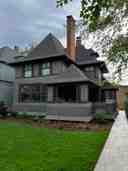
Look for a large, brown home with a shingled exterior and an eye-catching, tall, flat-topped brick chimney right in front-its steep, pointed rooflines make it stand out from the leafy trees around it. Welcome to the George W. Smith House! Take a deep breath and imagine yourself in Oak Park back in the late 1800s. The streets are much quieter, you can almost smell sawdust on the wind, and there’s a sense of excitement in the air-because an up-and-coming architect by the name of Frank Lloyd Wright has just unveiled this striking, shingle-clad creation. Back in 1895, Wright was approached to design a series of affordable homes for an inventor named Charles E. Roberts. But just like many dreams of that era, the plans for the Smith House sat unbuilt for a few years, until George W. Smith, a salesman for the legendary Marshall Field & Company, decided he wanted something unique-something that would impress the neighbors! Take a closer look and you’ll see this house is a bit of a rebel. The angled break in the roofline, the wide, flat chimney at the front-it was full of little experiments, almost as if Wright was warming up for his future masterworks. It’s dressed in what’s called the Shingle style, with brown wooden shingles wrapping around the house, perfectly smooth, without any pesky corner boards to break up the surface. The house looks like it was made with the same hands that built old ships-no wonder it stands out so much from the neighboring homes. One of the most interesting things is how you’re standing in front of what we might call “Wright: The Prequel.” The way the trim folds around the corners and the feeling of a single, unified design-these details popped up again, years later, in the world-famous Unity Temple (which, by the way, you’ll visit later). At the time, most of Oak Park was still catching up. Wright was already veering away from old-fashioned Queen Anne gingerbread and toward the wide-open horizontals and geometric lines that would make him famous. The Smith House is also full of mystery-was it always shingle-clad, or did its look change over the years? Early photos have vanished, so we may never know. But today, we do know this: you’re gazing at a rare early Wright home, one of only two he built in this entire historic neighborhood, and the only one where you might imagine bumping into George W. Smith himself coming home with a cartload of sales samples. And if you listen closely, you might just hear the whispers of architectural experiments in the gentle rattle of those original windows. Ready to continue down the avenue, time traveler? Let’s see what other stories Oak Park has to share!
専用ページを開く →The Oak Park Arms is an impressive four-story red brick building marked by bold white trim, arched windows, and green awnings-look to the corner of Oak Park Avenue and Washington…もっと読む折りたたむ
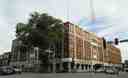
The Oak Park Arms is an impressive four-story red brick building marked by bold white trim, arched windows, and green awnings-look to the corner of Oak Park Avenue and Washington Boulevard, and follow the line of parked cars and the tall radio antenna poking into the sky. You’re standing in front of a place where grand ballroom dances mingled with the hum of live radio broadcasts, and now laughter from toddlers mixes with friendly chatter of lifelong Oak Parkers. When the Oak Park Arms first opened its doors in 1922, it was the height of luxury-imagine shiny marble floors, gents in tuxedos, and maybe even Eleanor Roosevelt checking in for a night! Over the years, this building has welcomed society weddings with cake that could feed a neighborhood and celebrities who knew how to make an entrance. During the lively Roaring Twenties, radio station WTAY sent music and news straight from here, with a young Ray Kroc-who would one day make McDonald’s famous-playing piano live on air. The Arms was a retreat for everyone from Chicago mobsters-who, rumor has it, liked a good view with their morning coffee-to radio hosts debating baseball scores in smoky studios. In 1978, this spot transformed into a retirement community, offering seniors a place filled with friends, independence, and enough events to rival a cruise ship. On the fifth floor today, there’s a daycare for adults, and even a place where big-hearted seniors and tiny tots meet-proving that here, laughter really doesn’t age. And above it all, that radio antenna is still part of the skyline, a reminder that the Oak Park Arms is always ready to broadcast its next great chapter.
専用ページを開く →
さらに8件のスポットを表示表示するスポットを減らすexpand_moreexpand_less
To spot the Oak Park station, just look for the long platform with a metal roof overhead, green-and-white signs saying “Oak Park,” and the classic elevated train tracks stretched…もっと読む折りたたむ
To spot the Oak Park station, just look for the long platform with a metal roof overhead, green-and-white signs saying “Oak Park,” and the classic elevated train tracks stretched out in both directions. Alright, picture yourself here back in 1901: rather than trains whooshing by on high, you’d be dodging rattling horse carts and early automobiles as both the Lake Street line and the old railroads crossed dangerously at street level. You’d have to watch your step-not just because of trains, but those sneaky “horseless carriages” zipping past! By 1909, the adjacent railroad elevated its tracks, making things safer but creating its own mysterious blind spot, keeping folks guessing what was coming next. Then, in 1962, the station itself was hoisted onto an embankment. They squeezed every inch out of the available space, squeezing in a ticket window and even cozy waiting rooms for those cold Chicago mornings-no easy feat. Now, here’s a twist: when the Green Line shut down for renovations in 1994, the Oak Park station nearly closed forever! But the voices (and probably a little shouting) of Oak Park residents saved it. The station reopened in 1996, stubbornly holding on-with a stubborn lack of wheelchair access that still gets protested today. And if you need a quick escape? You’ve got three buses waiting right here. Just another day on the rails, Oak Park style!
専用ページを開く →Look straight ahead to spot Scoville Park-just beyond the trees and sidewalk, you'll see a sturdy stone fountain with sculpted figures under a wide concrete top, and flowers…もっと読む折りたたむ
Look straight ahead to spot Scoville Park-just beyond the trees and sidewalk, you'll see a sturdy stone fountain with sculpted figures under a wide concrete top, and flowers planted around its base. Welcome to Scoville Park, the heart of Oak Park's community and-if you believe the squirrels-a contender for world’s best open-air nut buffet! As you walk past the Horse Show Fountain, picture this: back in 1833, there wasn’t a park but a huge patch of wild prairie. That’s when Joseph Kettlestrings, the area’s first white settler, bought up the land from the government-a whopping 173 acres! Rumor has it he built his second home right about where you’re standing, though the plaque is a bit like a game of “Where’s Waldo?” for history buffs. Some say the real spot is a few steps west. Skip forward a bit to 1855-imagine James Scoville, a man with a plan (and apparently, a taste for big houses). He snapped up this same land, built a grand white mansion right atop the hill, and eventually helped fund what became Oak Park’s library. But nothing lasts forever-except maybe Oak Park’s love for a good park! In 1912, with the threat of a hotel looming over these green lawns, the town banded together and bought Scoville’s estate. After a year, Scoville’s mansion was history, and the great Danish-American landscape architect Jens Jensen stepped in. He designed the park you see now-a place for gatherings, concerts, and sometimes epic snowball fights in winter. Don’t miss the Hero of Hydration: the Horse Show Fountain! This isn’t just a fancy spot for thirsty humans, but for horses and dogs too-kind of like Oak Park’s original pet-friendly happy hour spot. The fountain is a replica from 1969, but the design goes all the way back to 1909, and whispers of Frank Lloyd Wright and sculptor Richard Bock can be heard in its elegant lines. Quench your thirst, tip your hat to the architects, and remember: even fountains here get to reinvent themselves! If you climb up toward the top of the grassy hill, you’ll spot the impressive Peace Triumphant memorial-three tall bronze figures watching over the park as if on guard duty. Dedicated in 1925, it’s here to honor veterans of World War I from Oak Park and River Forest. Picture the dedication day: a crowd gathers as Vice President Charles G. Dawes delivers a mighty speech, and the wind carries through the names of the 2,446 locals who served-including a young Ernest Hemingway, who once went sledding down this hill. They even discovered the foundation of the old Scoville house under the statue during its restoration in 2010, as if history itself was saying, “Hey, don’t forget about me!” Before you wander off, find the bronze bust of Percy Julian, brilliant chemist and Oak Park legend, near the library. It’s a friendly reminder that heroes come in all forms-scientists, soldiers, playful kids on sleds, and anyone who finds a little bit of magic right here in Scoville Park.
専用ページを開く →To spot the Oak Park Public Library, look for a modern three-story building with big rectangular windows, tan stone walls, and “Oak Park Public Library” clearly carved above the…もっと読む折りたたむ
To spot the Oak Park Public Library, look for a modern three-story building with big rectangular windows, tan stone walls, and “Oak Park Public Library” clearly carved above the main entrance facing the intersection. Now, as you stand right in front of this community treasure, imagine the sights and sounds of Oak Park over a century ago. Back in 1902, the people of Oak Park were determined to have a space for everyone to discover new worlds-no secret passwords required, just a little tax money. So, in 1903, the town’s very first public library opened its doors, tucked inside the Scoville Institute at 834 Lake Street. Back then, the library replaced a private club for readers-sort of like the original “members only” book club, but with less velvet rope incidentally! For more than 50 years, the old Scoville Institute was the place to be for a good story or a quiet place to think. But books kept piling up-something libraries are surprisingly good at-so the town decided it was time for a change. Fast forward to 1961, and after a community vote, construction began on a brand-new building, thanks to the design wizards at Holabird and Root. Picture dust, hammers, and the classic sound of construction--as a modern library emerged from the blueprints. But the residents of Oak Park, never fans of running out of shelf space, soon discovered even their shiny new library wasn't quite big enough. In 1977, a facelift gave the second floor a serious growth spurt, creating new children's and audiovisual areas. Fast-forward again to the late '90s: space was tight, and the collection wasn’t getting any smaller. A committee rolled up its sleeves and took a brave leap: why not build something truly big enough for the 21st century? After another round of democratic excitement (also known as a referendum!), the stage was set for a whole new building-more than double the size, ready to hold the stories of tomorrow. But there was a twist in the tale. The library sat next to a historic house called the Hemingway Interim House, which had to be carefully moved, like a king on a chessboard clearing space for a queen-sized library. Once the coast was clear, the old library was demolished in 2002. For a while, you had to trek over to Forest Park for your books-at least you got your steps in! At last, in October 2003, this spectacular, glassy, light-filled new library you see before you opened its doors, perfectly on schedule and under budget. That’s a twist worthy of a Hollywood ending. Step inside (metaphorically for now!), and you’ll find more than just books. This library is a gateway to nearly eight million items, thanks to a superhero-style alliance called SWAN - the System Wide Automated Network - linking libraries across the Chicago suburbs. If you forgot your Oak Park card, no worries: a card from any SWAN library does the trick. And if you’re feeling especially modern, you can download audiobooks, movies, and even call in to hear stories anytime thanks to the rare-and-delightful Dial-A-Story service. There’s even more: the library delivers to your door if you can’t make it in, sends a Book Bike peddling around the community, and gives local creators a spotlight in Oak Park Creates. Special Collections here include rare items from locals like Ernest Hemingway, Edgar Rice Burroughs, and Frank Lloyd Wright-a treasure trove for super fans and history buffs. Recently, the state gave the library a grant to digitize Hemingway’s archives, opening up the vault for everyone. Oak Park’s library is all about celebrating every story, from every walk of life. The Dole Branch houses a Multicultural Collection brimming with artifacts, music, and even a 6-foot replica sarcophagus. Trustees, elected by the people, keep everything running with humor, dedication, and (I imagine) bottomless mugs of coffee. Finally, the Friends of the Oak Park Public Library-an independent troop of book-loving superheroes-raise money to support every chapter of this remarkable story. However many years pass, this place proves that Oak Park’s love for learning is bigger than even the tallest stack of overdue books! To delve deeper into the services, special collections or the multicultural collection, simply drop your query in the chat section and I'll provide more information.
専用ページを開く →To spot Unity Temple, look across the street for a unique, blocky concrete building with straight lines, flat roofs, and tall, geometric windows along the top - it stands out…もっと読む折りたたむ
To spot Unity Temple, look across the street for a unique, blocky concrete building with straight lines, flat roofs, and tall, geometric windows along the top - it stands out without a single tower or spire! Now, take a deep breath and imagine yourself back in 1905, when the original Unity Church across town was struck by lightning and burst into flames, sending smoke curling into the night sky. The congregation was devastated, but there was no time to mope! In classic Oak Park style, neighbors banded together, formed committees left and right, and before you could say “Unitarian Universalist,” they were dreaming up a new temple. And instead of rebuilding exactly what they had, they went for something radically different. Enter the legendary Frank Lloyd Wright, a local architect with ideas bigger than his ego (which, trust me, was quite a feat). The trustees wanted a church, but Wright said, “Let’s make a temple to man!” Instead of brick or spires or a steeple reaching for the sky, he proposed a bold block of concrete right here on Lake Street - flat-roofed, square, modern, with sun streaming in through clerestory windows and natural gravel peeking out from the walls. It was the opposite of old-fashioned, and at first, some folks scratched their heads. No Gothic arches, no stained glass of saints - just an abstract motif, like a puzzle you’re not sure you’ve solved. Fundraising was its own adventure, with worried calls for donations and a series of almost comical misadventures as construction teams tried to decode Wright’s wild blueprints, which probably looked more like modern art than anything they’d ever seen. You can almost imagine the arguments inside as they tried to work out how to mold concrete into these strange, new shapes. But after endless delays, money problems, and even the contractor going bankrupt, Unity House finally opened in 1907, and the main auditorium a year later. When the doors opened in 1908 (but without the pipe organ, which hadn’t arrived on time), it wasn’t long before people started falling in love. Inside, you’d find a Greek cross-shaped auditorium, stair towers spiraling at the corners, two stories of benches circling a bathed-in-light pulpit, and a ceiling punctuated by skylights and abstract windows that poured in sunshine like an invitation. No matter where you sat, you were part of the moment - Unity Temple was for everyone, not just folks in the “good seats.” Here, sermons and music echo just as Wright intended. Over the next century, the building survived sticky summers with no air conditioning, icy winters, leaks, cracks, and more debate about restoration than anyone could count. They patched cracks, replaced skylights, ran concerts in the auditorium, and even had to go on fundraising tours just to keep the walls from crumbling. Famous architects, students, and tourists from all over the world came to marvel at this strange, beautiful cube in Oak Park. Even the building’s worst days couldn’t dampen its spirit. By the 21st century, Unity Temple was still standing proud, one of the first truly modern buildings. It's now a National Historic Landmark, part of a UNESCO World Heritage Site, and a living, breathing hub of community life. Through it all - fire, financial disaster, restoration sagas - Unity Temple’s story is one of resilience, ingenuity, and the kind of teamwork that makes history fun and a little bit unpredictable! Now, take another look and see if you can feel the old energy humming through these concrete walls - and maybe thank a committee member the next time you see one, because in Oak Park, every big idea starts with a committee! If you're keen on discovering more about the temple development, temple usage or the building, head down to the chat section and engage with me.
専用ページを開く →Look just ahead for a chunky, gray concrete structure with a strong, horizontal shape-planters on top and detailed carvings peeking out from a square opening; it’s right on the…もっと読む折りたたむ
Look just ahead for a chunky, gray concrete structure with a strong, horizontal shape-planters on top and detailed carvings peeking out from a square opening; it’s right on the brick-paved plaza, easy to spot if you face the corner of Oak Park Avenue and Lake Street. Alright, as you stand in front of the Horse Show Fountain-officially called the Wright-Bock Fountain-imagine the year is 1909. Horses clip-clop past you, their breath puffing in the cool morning as elegant ladies and dapper gentlemen in hats gather for the grand Oak Park Horse Show. This spot isn’t just for people; it’s a pit stop for humans, horses, and even the occasional parched pup. Now, picture the original fountain right here, just a little closer to the street, its fresh concrete a gathering point for the whole community. But this isn’t *quite* the original you’re seeing-a bit of a magic trick! Over the decades, weather and time wore out the fountain, until in 1969, the town gave it a fresh start, reconstructing it from the ground up and moving it about a hundred feet back to where you stand now. The concrete you see today? It’s rougher, sprinkled with pebble-like textures, and the planters-lined with shiny zinc-overflow with cheerful flowers instead of thirsty hooves. Even the fountains at either side once slaked the thirst of dogs and horses, but today, they’re flower beds. The fountain itself is a puzzle of strong horizontals and sturdy verticals. That big slab on top acts as a planter, and below it, two panels-one from the original-bear interesting inscriptions. Can you spot the one held up by two sculpted figures, almost as if they’re showing off their artwork to all who pass? It reads “Erected in 1909 Oak Park Horse Show Association,” and above it, leafy branches seem to burst out, celebrating the past. Right below, the remake’s dedication panel reminds us: “Wright-Bock Plaza Fountain restored 1969”-like a badge for the work done to bring this landmark back to life. Here comes the twist-nobody’s quite sure who designed it! Sculptor Richard Bock might have dreamed up much of the fountain, but legendary architect Frank Lloyd Wright could not resist putting his own stamp on things. Some say it was Wright who insisted on that striking open center, transforming a simple water trough into architectural art. Turns out, teamwork can make even a drinking fountain legendary, though it sometimes leads to squabbles over who gets credit. At night, hidden lights beneath the dedication plates make the sculpture glow, as if the spirits of Bock and Wright are still arguing gently about who truly designed it. In a playful twist, while Scoville Park itself is an officially recognized historic district, this fountain-because it’s a replica-is the outsider at the party, not quite old enough for full honors. So, while you’re here, touch the rough concrete, trace the triangles and pyramids cut into its surface, and imagine the hundreds of horses, dogs, and people who once lined up for a drink. Even in makeover mode, the Horse Show Fountain still holds a splash of history-and a big pour of local pride.
専用ページを開く →To spot Oak Park, just look ahead for the striking corner where a grand, stone-clad building with distinctive green detailing meets a modern, rounded shopfront with wide glass…もっと読む折りたたむ
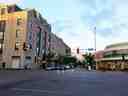
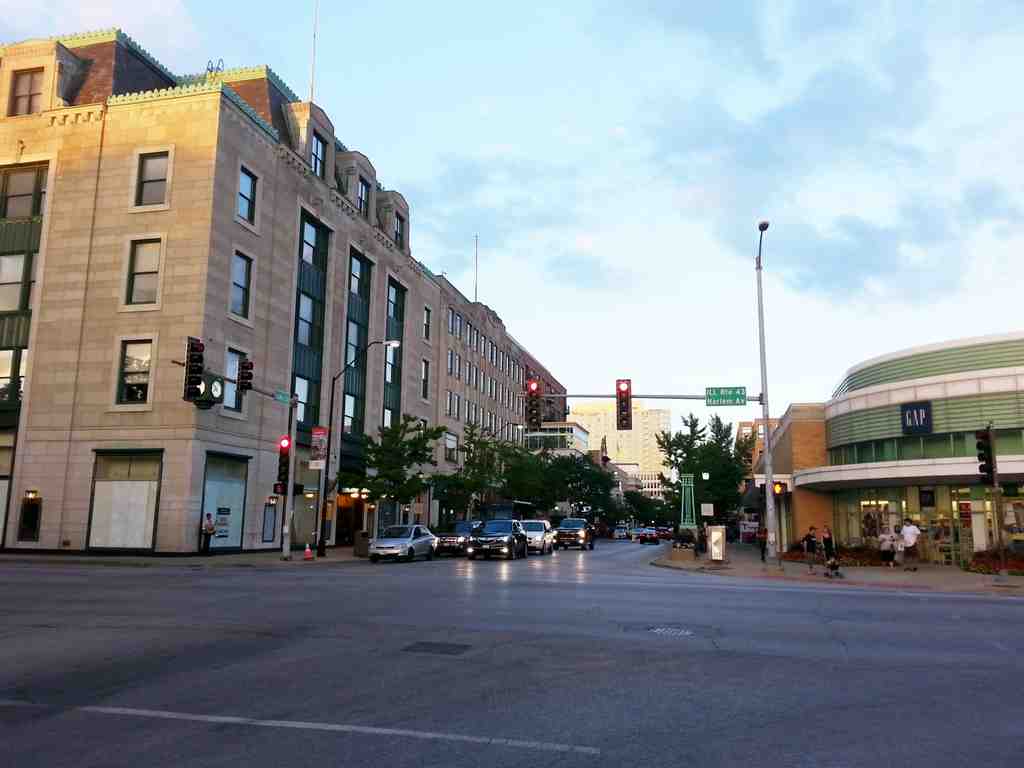
To spot Oak Park, just look ahead for the striking corner where a grand, stone-clad building with distinctive green detailing meets a modern, rounded shopfront with wide glass windows-right at the busy intersection of Lake Street and Harlem Avenue, where you’ll see lots of people and cars buzzing about. Welcome to the beating heart of Oak Park, a village with as many stories as there are bricks in these stately buildings! Imagine the air full of distant city sounds as bustling Chicago once inched ever closer-Oak Park taking shape on the edge of wild prairie land, farmers’ boots crunching on gravel roads. In 1835, Joseph and Betty Kettlestrings rolled in from Yorkshire, England, staking out a farm that became the nucleus of the village. Their story is practically a sitcom: they moved closer to Chicago for schools, only to return and build an even bigger homestead in Oak Park. At first, the place went by all sorts of names-Oak Ridge, Harlem, even Kettlestrings Grove-before finally settling on Oak Park because, believe it or not, “Oak Ridge” was already taken by another post office. What are the odds? Fast forward to the 1850s, and things really started to shake. With the Galena and Chicago Union Railroad slicing through the area, the population ballooned-Chicago's smoke and energy lured folks west after the Great Chicago Fire of 1871. Oak Park’s own depot meant residents could hop on trains to downtown, soon joined by the clickety-clack of streetcars trundling along Madison and Lake Streets. By the early 20th century, Oak Park had become the “World’s Largest Village,” home to nearly 65,000 people-and, perhaps even more impressively, an absolute legend of architecture: Frank Lloyd Wright. Wright settled here with his wife in 1889, leaving his creative fingerprints everywhere. Prairie-style homes still dot the streets, while the Unity Temple stands as a testament to both architectural innovation and stubborn Midwestern spirit-after all, where else would you find entire districts preserved on purpose? That’s right: Oak Park folks love their history almost as much as a good Fourth of July fireworks show (and yes, the football stadium packs out every summer for the big celebration). The village isn’t just about stunning buildings and famous residents-though Ernest Hemingway’s birthplace is right up the street, and the guy who invented Tarzan once lived here, too. Oak Park is a social experiment that worked: in the 1960s, as neighboring areas were torn apart by panic, steering, and resegregation, Oak Parkans instead voted for the Open Housing Ordinance, determined to keep the community integrated. It wasn’t always easy-sometimes it probably felt like trying to hold back Lake Michigan with a shovel-but through tough talks and even a ban on “for sale” signs, the town kept changing while keeping its promise of diversity and neighborly cohesion. Everywhere you look, there’s a sign of Oak Park’s bold, creative soul: theaters, galleries, music wafting through coffee shop doors, and an arts district that’s small in scale but big on heart. And what about the quirks? Well, once upon a time you couldn’t legally grab a beer after mowing your lawn-Oak Park only loosened up its alcohol laws in the ‘70s and 2000s. Now, it’s hard to stroll through downtown without spotting a lively restaurant or cocktail bar. Transportation is still Oak Park’s lifeblood: the Green and Blue Line “L” trains hum through, linking everything back to Chicago. Cyclists zip down tree-lined streets, tapping into a deep tradition of outdoor play. At every turn, you’ll sense Oak Park’s layered past-the whispers of prairie grass, the clang of railways, and the vibrant chorus of voices that still make this village far greater than the sum of its parts. If you're curious about the geography, demographics or the arts and culture, the chat section below is the perfect place to seek clarification.
専用ページを開く →Just ahead, you'll spot a sturdy gray house with a steep, pointy roof, a tall brick chimney, and large porch, standing out with its deep red-trimmed windows-right across the lawn…もっと読む折りたたむ
Just ahead, you'll spot a sturdy gray house with a steep, pointy roof, a tall brick chimney, and large porch, standing out with its deep red-trimmed windows-right across the lawn next to the sidewalk. You’re standing in the heart of the Ridgeland-Oak Park Historic District, where history seems to jostle elbows on every block. This area covers a whopping 539 acres and boasts over 1,500 buildings, each adding a bit of spice to Oak Park’s architectural soup. Now, you might be admiring the George W. Smith House-an early Frank Lloyd Wright creation. He wasn’t quite the “Prairie School” superstar yet, so you’re seeing his more experimental phase, like a chef still playing with recipes. And isn't it thrilling to think you’re near not one but two Wright works here, including dazzling Unity Temple! Yet, most of the homes don’t show off that signature Prairie swagger-those are gathered in another local district. Wander a bit and you’ll find stylish surprises like the Art Deco Medical Arts Building and the Oak Park Post Office, whipped up during the Great Depression by Charles E. White Jr. and Bertram A. Weber. Imagine life unfolding here in the roaring ‘30s: the hum of new ideas, the hopes tucked into elegant facades, and the odd neighbor still debating whether bricks or wood make for better porch gossip.
専用ページを開く →Straight ahead, you’ll spot Fenwick High School by its striking neo-Gothic design-look for tall, stately stone walls and arched windows with a hint of classic, cathedral-like…もっと読む折りたたむ
Straight ahead, you’ll spot Fenwick High School by its striking neo-Gothic design-look for tall, stately stone walls and arched windows with a hint of classic, cathedral-like grandeur. Welcome to the grand finale of our tour-Fenwick High School, where tradition meets top-notch education and sports drama unfolds louder than a gym packed for a rival basketball game! Imagine for a moment: it’s 1929, the world is on the brink of the Great Depression, but here in Oak Park, a group of Dominican friars has a bold idea. They roll up their brown sleeves, call on architect Wilfred E. Anthony, and build this very school, complete with all the pointy arches and carved stone you’d expect from a place that shares design DNA with Notre Dame’s famous Basilica. Right from the start, Fenwick wasn’t your average high school-it was a college prep haven where neckties were nonnegotiable, and blazers signaled assembly days. The friars meant business: every student was trained for the likes of Notre Dame or Georgetown, and the dress code was so sharp you’d think even the chalk dust wore a jacket. But even the most tradition-bound places aren’t immune to change: by the early 1990s, with enrollment and tuition both getting shaky, the school flung open its doors to girls for the first time. The first coed class even had Bridgid Esposito as its valedictorian-talk about smashing the glass ceiling with a graduation cap! Stand here and picture the buzz of the 1945 football championship. Soldier Field, 80,000 fans, Fenwick steamrolling Tilden. The crowd went wild-if you listen, you might just picture the thunder of Fenwick’s fans cheering a touchdown. Wait, it gets better: in 1962, more than 91,000 people watched Fenwick dominate Schurz High. Those moments? They made Illinois football history. And it’s not just about sports. Since the first day of classes, Fenwick has insisted on a 100% college matriculation rate-every last student heads for higher learning. The school is regularly showered with Blue Ribbon awards, and in the 2000s, Fenwick students raked in scholarship offers worth tens of millions of dollars. The class of 2010-2011 alone netted $40 million in merit-based scholarships! I’m willing to bet their mail rooms got a lot of extra use during college acceptance season... Don’t just scan the grand entrance and the neo-Gothic turrets-a lot whirls inside these halls. You’ve got math teams so good they could probably calculate the exact number of bricks in this building before you blink; drama and writing clubs who win as many awards as the school’s athletic teams; and a required Christian Service Project that gets every student into the community doing hands-on good. There’s even an academic club or three for those who prefer algebraic puzzle-solving over free throws. Now, let’s not forget the superstars among the Friars. There’s everyone from Major General Michael D. Healy, a real-life action hero, to Pulitzer-winning writers, Olympic champions, pro athletes, business titans, and even an astronaut who flew on Skylab! A little inspiration for the next generation, right? Fenwick isn’t just a school owned and staffed by the Dominican Order-it’s the only one like it in the United States, a unique experiment in blending rigorous academics, faith, service, and, of course, legendary football. So as you look up at those proud, sky-reaching stone towers, remember: you’re in the company of over ninety years of Friars, each with their own small claim to fame, their own stories of pride and tradition, all within these walls. The spirit here? It doesn’t graduate; it just keeps passing the torch-one tie, one blazer, and one winning play at a time. Yearning to grasp further insights on the academics, extracurricular achievements or the notable alumni? Dive into the chat section below and ask away.
専用ページを開く →
よくある質問
ツアーはどうやって始めますか?
購入後、AudaToursアプリをダウンロードして引き換えコードを入力してください。ツアーはすぐに開始できます。再生ボタンをタップして、GPSガイド付きルートに従うだけです。
ツアー中にインターネットは必要ですか?
いいえ!開始前にツアーをダウンロードしておけば、完全にオフラインで楽しめます。チャット機能のみインターネットが必要です。モバイルデータを節約するため、WiFi環境でのダウンロードをお勧めします。
これは団体ツアーですか?
いいえ、これはセルフガイド式のオーディオツアーです。ガイドや団体、決まったスケジュールに縛られることなく、スマホから流れるナレーションを聴きながら自分のペースで自由に探索できます。
ツアーの所要時間は?
ほとんどのツアーは60〜90分で完了しますが、ペースは完全に自由です。好きな時に一時停止したり、スポットを飛ばしたり、休憩を取ったりできます。
今日中にツアーを終えられない場合は?
問題ありません!ツアーには無期限でアクセスできます。明日、来週、あるいは来年でも、好きな時に再開できます。進行状況は保存されます。
どの言語が利用可能ですか?
すべてのツアーが50以上の言語に対応しています。コードを引き換える際にお好みの言語を選択してください。注意:ツアー生成後に言語を変更することはできません。
購入後、どこからツアーにアクセスできますか?
App StoreまたはGoogle Playから無料のAudaToursアプリをダウンロードしてください。メールで届いた引き換えコードを入力すると、ライブラリにツアーが表示され、ダウンロードして開始できるようになります。
もしツアーを楽しめなかった場合は、返金いたします。お問い合わせ先: [email protected]
以下の決済で安全にチェックアウト