AudaTours logoAudaTours

ニューヨーク市オーディオツアー:シビックセンターにおける正義の響き

オーディオガイド3 か所

ロウアーマンハッタンのきらめく高層ビルの下には、街の洗練された現代的な外観に反する物語が横たわっています。ここでは、大理石のホールにスキャンダルが響き渡り、静かな舗道には失われた墓が隠され、石造りのファサードは暴動や革命を目撃してきました。 このセルフガイドオーディオツアーでは、観光客の道から外れて、シビックセンターのランドマークに埋め込まれた隠された秘密を解き明かし、ほとんどの人が見過ごしてしまう生々しいドラマを発見することができます。 致命的な権力闘争の渦中で、サロゲート裁判所の優雅な扉の裏で全てを危険にさらしたのは誰だったのでしょうか?アフリカ人埋葬地国定記念物の足元には、どのような秘密が眠っているのでしょうか?280ブロードウェイの控えめなロビーが、忘れ去られた反乱の痕跡で輝いているのはなぜでしょうか? 曲がりくねった歩道と影のあるアーチをたどり、陰謀と大胆な抵抗の脈動を追体験してください。ニューヨークの神経中枢を覗き込み、見かけ通りの街ではなく、真の姿を発見してください。 今すぐ飛び込んで、次のステップの下に隠されたマンハッタンの秘密を解き明かしましょう。

ツアーのプレビュー

map

このツアーについて

  • schedule
    所要時間 30–50 mins自分のペースで進める
  • straighten
    ウォーキングルート 0.5kmガイド付きパスに沿って進む
  • location_on
  • wifi_off
    オフライン対応一度のダウンロードでどこでも使える
  • all_inclusive
    無期限アクセスいつでも、ずっと再生可能
  • location_on
    アフリカ人埋葬地国定記念物から開始

このツアーのスポット

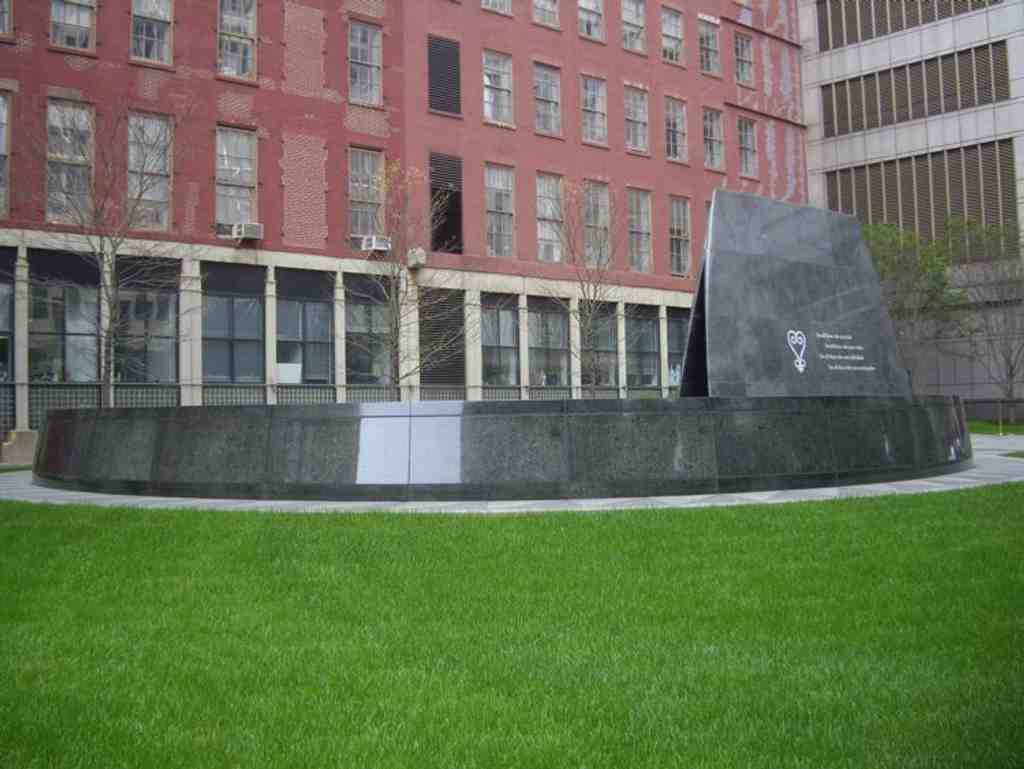
  1. Right ahead, you'll spot a large, circular stone monument with a striking slanted granite structure rising up, set in a patch of bright green grass, right between the red-brick…もっと読む折りたたむ

    Right ahead, you'll spot a large, circular stone monument with a striking slanted granite structure rising up, set in a patch of bright green grass, right between the red-brick building and the more modern high-rise-look for the dark, almost reflective stone against the lighter backdrop. Now, let me whisk you back to a New York City you might not recognize! Imagine standing here, but it’s the late 1600s and 1700s-way before all these skyscrapers. This spot you’re looking at was once a huge cemetery, the final resting place for tens of thousands of Africans and African Americans, both free and enslaved, who built the city’s foundations-yes, literally and figuratively. You’re standing where, for years, history tried desperately to keep its secrets-until they were dug up in a most dramatic fashion. Picture dusty streets at the edge of colonial New York, with people coming from the Congo, Angola, and Guinea, speaking many languages and carrying the sounds, stories, and hopes of their homelands. Some were enslaved, some managed to carve out patches of freedom, and together, they shaped the city’s earliest days. But when the English took over the city and called it New York, rules got stricter, and the men and women who built so much were denied even the right to be buried within city boundaries. So this five to six-acre patch just outside the old town limits became their sacred ground-eventually stretching into what might have been the largest colonial-era African burial ground in North America. Their stories were almost buried forever-quite literally! As New York grew, the cemetery was forgotten under new construction and landfill, so much so that people started putting up buildings and hotels right on top! A department store even opened here in 1846. Every now and then, workers would dig up bones and wonder who they might have been-there were even relic hunters snatching bones as odd souvenirs. Yes, people in the 1800s had some pretty odd ideas for collectibles! Now, fast-forward to 1991. Picture this: heavy construction equipment rumbling down, workers digging deep for a new federal office building, when suddenly-out come eight perfectly intact skeletons. The community was stunned. As more burials were uncovered, New Yorkers protested fiercely to protect this important site. Archaeologists got involved, and by the time the digging stopped, they’d uncovered over 419 burials, half of them children. Those skeletons revealed just how tough life was- think malnutrition, hard labor, disease, and far too many young lives cut short. And yet, there’s a powerful story of resilience here. Even though some bodies had items from Africa-pendants, filed teeth, focused burial rituals-others bore marks of a new American identity, shaped by hardship and hope. The remains were studied with great respect, and in 2003, they were finally reburied in a ceremony that brought together thousands of people in cities all along the East Coast, from Washington D.C. to Manhattan. Behind you, you’ll see the Ted Weiss Federal Building-part of that long, complicated tale of discovery and preservation. The memorial before you was designed to honor this legacy: the tall granite Ancestral Chamber echoes the depth of the original graves, bearing African symbols inviting us to learn from the past. The ringed Circle of the Diaspora shows the Atlantic routes of the slave trade, its stones connecting continents just as fate connected people. Visitors now come from all over the world, often pausing in the quiet, grassy space, maybe hearing distant traffic, but sensing something greater-a connection to those who built New York but were nearly erased from its story. If you walk into the visitor center, you’ll find stories, artifacts, and even a life-sized tableau of a funeral. Funny how a place once hidden beneath feet of dirt now stands at the surface, proud and impossible to ignore! So, take a moment-feel the energy of this sacred ground, where layers upon layers of New York’s history still linger. Not every city gives you the chance to visit a site that rewrote the way we see its past. And hey, whether you’re a local or a visitor, you’ve just uncovered one of New York’s most important stories-without even getting your shoes muddy! Wondering about the africans and african americans in new york city, memorial or the legacy? Feel free to discuss it further in the chat section below.

    専用ページを開く →

  2. Right ahead, you'll spot a large, circular stone monument with a striking slanted granite structure rising up, set in a patch of bright green grass, right between the red-brick…もっと読む折りたたむ

    Right ahead, you'll spot a large, circular stone monument with a striking slanted granite structure rising up, set in a patch of bright green grass, right between the red-brick building and the more modern high-rise-look for the dark, almost reflective stone against the lighter backdrop. Now, let me whisk you back to a New York City you might not recognize! Imagine standing here, but it’s the late 1600s and 1700s-way before all these skyscrapers. This spot you’re looking at was once a huge cemetery, the final resting place for tens of thousands of Africans and African Americans, both free and enslaved, who built the city’s foundations-yes, literally and figuratively. You’re standing where, for years, history tried desperately to keep its secrets-until they were dug up in a most dramatic fashion. Picture dusty streets at the edge of colonial New York, with people coming from the Congo, Angola, and Guinea, speaking many languages and carrying the sounds, stories, and hopes of their homelands. Some were enslaved, some managed to carve out patches of freedom, and together, they shaped the city’s earliest days. But when the English took over the city and called it New York, rules got stricter, and the men and women who built so much were denied even the right to be buried within city boundaries. So this five to six-acre patch just outside the old town limits became their sacred ground-eventually stretching into what might have been the largest colonial-era African burial ground in North America. Their stories were almost buried forever-quite literally! As New York grew, the cemetery was forgotten under new construction and landfill, so much so that people started putting up buildings and hotels right on top! A department store even opened here in 1846. Every now and then, workers would dig up bones and wonder who they might have been-there were even relic hunters snatching bones as odd souvenirs. Yes, people in the 1800s had some pretty odd ideas for collectibles! Now, fast-forward to 1991. Picture this: heavy construction equipment rumbling down, workers digging deep for a new federal office building, when suddenly-out come eight perfectly intact skeletons. The community was stunned. As more burials were uncovered, New Yorkers protested fiercely to protect this important site. Archaeologists got involved, and by the time the digging stopped, they’d uncovered over 419 burials, half of them children. Those skeletons revealed just how tough life was- think malnutrition, hard labor, disease, and far too many young lives cut short. And yet, there’s a powerful story of resilience here. Even though some bodies had items from Africa-pendants, filed teeth, focused burial rituals-others bore marks of a new American identity, shaped by hardship and hope. The remains were studied with great respect, and in 2003, they were finally reburied in a ceremony that brought together thousands of people in cities all along the East Coast, from Washington D.C. to Manhattan. Behind you, you’ll see the Ted Weiss Federal Building-part of that long, complicated tale of discovery and preservation. The memorial before you was designed to honor this legacy: the tall granite Ancestral Chamber echoes the depth of the original graves, bearing African symbols inviting us to learn from the past. The ringed Circle of the Diaspora shows the Atlantic routes of the slave trade, its stones connecting continents just as fate connected people. Visitors now come from all over the world, often pausing in the quiet, grassy space, maybe hearing distant traffic, but sensing something greater-a connection to those who built New York but were nearly erased from its story. If you walk into the visitor center, you’ll find stories, artifacts, and even a life-sized tableau of a funeral. Funny how a place once hidden beneath feet of dirt now stands at the surface, proud and impossible to ignore! So, take a moment-feel the energy of this sacred ground, where layers upon layers of New York’s history still linger. Not every city gives you the chance to visit a site that rewrote the way we see its past. And hey, whether you’re a local or a visitor, you’ve just uncovered one of New York’s most important stories-without even getting your shoes muddy! Wondering about the africans and african americans in new york city, memorial or the legacy? Feel free to discuss it further in the chat section below.

    専用ページを開く →
  3. 280 Broadway is the giant marble building stretching along the corner of Broadway and Chambers Street-just look for its pale stone facade, classic columns, and keep your eyes out…もっと読む折りたたむ

    280 Broadway is the giant marble building stretching along the corner of Broadway and Chambers Street-just look for its pale stone facade, classic columns, and keep your eyes out for the four-sided clock perched above the entrance on the corner. Imagine yourself standing outside this grand, pale building as the city rushes by, horns honking, the air thick with the scent of roasting chestnuts from a nearby vendor. The chill in the air makes the marble sparkle just a bit more. Before you stands not just a building but the “Marble Palace”-a nickname that dates back to when this place dazzled 19th-century New Yorkers, who had never seen anything quite like it. Back in the 1840s, this corner was a leap into the wild future. Alexander Turney Stewart, an enterprising Irish immigrant, saw more than just a chance for a corner shop-he wanted to create a temple to shopping, an architectural marvel of style and commerce. Imagine the sound of horses clopping along an unpaved Broadway while laborers hauled huge marble blocks from Tuckahoe, the ground shaking as temporary railroad tracks clattered by, all to construct the grandest dry-goods store anyone had ever dreamed of. This was New York’s first Italianate commercial building; at a time when most shops were modest brick affairs, Stewart’s store shone with the glow of marble and glittered behind 2,000 panes of imported French plate glass. It had a rotunda so impressive you’d half expect fancy-dressed shoppers to break out in an impromptu waltz-a domed, echoing marvel lined with mahogany counters and a balcony circling above. And instead of haggling over every penny, Stewart introduced the radical idea of fixed prices. Talk about making life easier for those of us with terrible poker faces! But here’s where things get even more interesting: underneath your feet, long before the shoppers came, this ground was part of the old Negros Burial Ground, where the remains of New Yorkers of African descent were laid to rest as far back as the 17th century. These layers of city history sit quietly beneath all the storefronts and marble, reminding us that the city is never just what it seems. Through the decades, Stewart’s Marble Palace grew as fast as the city. Stories were added, annexes sprouted, and next door, clerks lived in a special boardinghouse-sort of the first “work-live” concept, except with stricter dress codes and fewer lattes. Eventually, the wealthy buyers drifted uptown, so Stewart followed, shifting the glitzier shopping north but leaving his wholesale empire right here. In its heyday, this place boasted hundreds of clerks, a vast maze of departments, and enough imported lace to wrap the building twice. After Stewart’s death, the Marble Palace became the Stewart Building, and the grand rotunda was lost to time-replaced by a no-nonsense office courtyard. The city considered demolishing the building more than once, but it had other plans. For a time, newspapers like the Sun occupied these halls, leaving behind the famous four-faced clock and its cheerful motto, “It Shines for All.” Generations of municipal employees have called it home ever since, from overworked clerks hauling ledgers to the modern staff of the Department of Buildings. If you look up, you’ll see not just marble but nearly two centuries of ambition, invention, and reinvention. Notice the big thermometer on Reade Street-added in the 1930s to keep New Yorkers guessing how much more summer they had to sweat through. Or the subtle quirks where old expansions meet, reminding you that this Goliath was stitched together over decades, not built in a day. So, as the traffic rushes by and you stand in the shadow of those old marble walls, you’re gazing at the very birth of American department stores-a stone-and-glass survivor stuffed with secrets, style, a few scandals, and maybe even a ghostly shopper still looking for a bargain on silk gloves. Intrigued by the site, architecture or the impact? Make your way to the chat section and I'll be happy to provide further details.

    専用ページを開く →

よくある質問

ツアーはどうやって始めますか?

購入後、AudaToursアプリをダウンロードして引き換えコードを入力してください。ツアーはすぐに開始できます。再生ボタンをタップして、GPSガイド付きルートに従うだけです。

ツアー中にインターネットは必要ですか?

いいえ!開始前にツアーをダウンロードしておけば、完全にオフラインで楽しめます。チャット機能のみインターネットが必要です。モバイルデータを節約するため、WiFi環境でのダウンロードをお勧めします。

これは団体ツアーですか?

いいえ、これはセルフガイド式のオーディオツアーです。ガイドや団体、決まったスケジュールに縛られることなく、スマホから流れるナレーションを聴きながら自分のペースで自由に探索できます。

ツアーの所要時間は?

ほとんどのツアーは60〜90分で完了しますが、ペースは完全に自由です。好きな時に一時停止したり、スポットを飛ばしたり、休憩を取ったりできます。

今日中にツアーを終えられない場合は?

問題ありません!ツアーには無期限でアクセスできます。明日、来週、あるいは来年でも、好きな時に再開できます。進行状況は保存されます。

どの言語が利用可能ですか?

すべてのツアーが50以上の言語に対応しています。コードを引き換える際にお好みの言語を選択してください。注意:ツアー生成後に言語を変更することはできません。

購入後、どこからツアーにアクセスできますか?

App StoreまたはGoogle Playから無料のAudaToursアプリをダウンロードしてください。メールで届いた引き換えコードを入力すると、ライブラリにツアーが表示され、ダウンロードして開始できるようになります。

verified_user
満足保証

もしツアーを楽しめなかった場合は、返金いたします。お問い合わせ先: [email protected]

以下の決済で安全にチェックアウト

Apple PayGoogle PayVisaMastercardPayPal

AudaTours: オーディオツアー

楽しくて手頃なセルフガイド式ウォーキングツアー

アプリを試す arrow_forward

世界中の旅行者に愛されています

format_quote このツアーは街を見るのに本当に良い方法でした。ストーリーは作り込まれすぎず面白くて、自分のペースで探索できるのが良かったです。
format_quote 観光客気分になりすぎず、ブライトンを知るためのしっかりとした方法でした。ナレーションには深みと文脈がありました。
Christoph
Christoph
starstarstarstarstar
ブライトン・ツアー arrow_forward
format_quote 片手にクロワッサンを持ち、期待ゼロで始めました。アプリはただ一緒にいてくれる感じで、プレッシャーもなく、クールな物語を楽しめました。

オーディオツアー使い放題

世界中のすべてのツアーをアンロック

0 ツアー·0 都市·0 国
all_inclusive アンリミテッドを探索