ロサンゼルス・オーディオツアー:歴史、文化、革新のタペストリー
移り変わる色を冠した超高層ビルが、コンクリートの金庫に埋もれた芸術品や、かつて秘密を轟かせた鉄道車両を見守っています。ロサンゼルスは、その物語をガラス、絵画、古い鋼鉄の間の空間に隠し、好奇心旺盛な人々にもっと深く探るよう挑んでいます。 ダウンタウンを巡るこのセルフガイド・オーディオツアーで、一攫千金を狙う者、先見の明を持つ者、反逆者の影をたどってみましょう。知っていると思っていた場所の知られざる側面を聞き、ほとんどの旅行者が決して発見しない陰謀を明らかにします。 なぜ物議を醸した強盗事件がUSバンク・タワーに衝撃を与えたのか?MOCAからスキャンダラスな傑作を抱えて出てきたのは誰か?エンジェルス・フライトの消えた車掌の運命について、ハトは何を知っているのか? 野心に満ちた路地を抜け、騒乱が脈打つギャラリーを通り抜けましょう。隠された物語があなたを引き込み、そしてスカイラインへと引き上げるにつれて、一歩ごとに感覚が研ぎ澄まされていきます。 LAの重層的なドラマを解き明かしましょう。再生ボタンを押して、あらゆる建物の裏に隠された物語へと足を踏み入れてください。
ツアーのプレビュー
このツアーについて
- schedule所要時間 40–60 mins自分のペースで進める
- straightenウォーキングルート 3.8kmガイド付きパスに沿って進む
- location_on
- wifi_offオフライン対応一度のダウンロードでどこでも使える
- all_inclusive無期限アクセスいつでも、ずっと再生可能
- location_onロサンゼルス水道電力局から開始
このツアーのスポット
Let’s step back and imagine the late 1800s, when Los Angeles was much more Wild West than West Coast chic. Picture dusty streets, the scent of oranges from groves in the warm…もっと読む折りたたむ
Let’s step back and imagine the late 1800s, when Los Angeles was much more Wild West than West Coast chic. Picture dusty streets, the scent of oranges from groves in the warm breeze, and instead of pipes, water running through open ditches across the thirsty city. People here didn’t have running water-you had to wait for a wagon loaded with jugs to clatter up to your house. The great water debate even made the City Council roll their eyes at fancy ideas like “pipes to every home” back in the 1850s-apparently, that was just too luxurious! It wasn’t until the council relented, and a few trailblazing entrepreneurs started laying down wooden pipes under the streets, that the water finally began to flow. If you think your plumbing has issues, just imagine LA’s original pipes washing away in one massive storm in 1861. You’re not really an Angeleno until your infrastructure floods, right? Now fast-forward. By the time the city started to really boom, those little wooden pipes just couldn’t keep up. The Los Angeles City Water Company was born, and-here’s where things get juicy-they managed to sneakily take 150 times more water than their lease allowed by digging secret tunnels under the LA River. Sounds like a water heist movie, but it’s all true! The public got fed up with all the cloak-and-dagger stuff and fought for the city to take control. Enter the public-spirited Fred Eaton, who promised city-funded and free-delivery water. His right-hand guy, William Mulholland, famously claimed he’d memorized the size, age, and location of every single pipe, making him a human plumbing encyclopedia. Honestly, if Jeopardy ever did an LA Infrastructure Week, Mulholland would be the undefeated champ. By 1902, the city formed the LADWP, and soon after, it wasn’t just about water. LA was thirsty for a new kind of power-electricity. By 1917, homes and businesses flickered to life with its first city-run hydroelectric plant, Power Plant No. 1 (still running today!). But, drama alert: the infamous St. Francis Dam-built by LADWP-collapsed in 1928, unleashing disaster and heartbreak, with hundreds of lives lost. Mulholland took full responsibility, retiring soon after, and his tale became part of LA’s stormy legend. The city carried on, learning hard lessons about nature, human error, and the immense, tangled challenge of delivering water and light to millions. As LA grew-movie stars, skyscrapers, and sun, sun, sun-the LADWP became the biggest city-run utility in the country, serving not just Los Angeles, but parts of places like Culver City, West Hollywood, and South Pasadena. Don’t be fooled by these serene fountains out front: inside, folks are wrangling 435 million gallons of water every day, and keeping 8,100 megawatts of power buzzing through the city’s veins. Yes, there’s controversy here too. From brawls over high overtime pay (picture a security guard earning more in overtime than some Hollywood actors), to courtroom showdowns about air pollution from Owens Lake, LADWP is as dramatic as any season of Real Housewives of LA. LA’s green goals are ambitious. With hydroelectricity, solar arrays, and the largest (municipal) wind farm in the US, the utility is determined to ditch coal completely by 2025. Imagine-by 2035, the city hopes to be running solely on renewables. There are even plans to bury those old spaghetti-tangle power lines underground, but that’s as tricky-and expensive-as shooting a blockbuster on a shoestring budget. The building in front of you-renamed the John Ferraro Building-was opened in 1965, its 17 stories soaring over Bunker Hill. Designed to gather all LADWP staff under one roof, it’s now a local icon, even making Hollywood cameos, like in the film Inception. When the sun sets and the fountains glow, some say you can just about hear the hum of LA’s history in the water and the power streaming through every wire-stories of visionaries, disasters, scandals, and a relentless quest to quench a city that would not stop growing. So next time you flick a light switch in LA or fill your glass from the tap, just remember: the real magic runs underground-and the real superheroes aren’t always on movie screens, but working right here, behind these walls. Onward to the next stop-opera, drama, and more stories ahead! To delve deeper into the power system, water system or the service territory, simply drop your query in the chat section and I'll provide more information.
専用ページを開く →To spot the Los Angeles Opera, look for a striking, modernist building with tall, vertical columns and a grand wall of shimmering glass panels curving gently outward-it’s standing…もっと読む折りたたむ
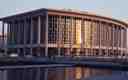
To spot the Los Angeles Opera, look for a striking, modernist building with tall, vertical columns and a grand wall of shimmering glass panels curving gently outward-it’s standing like a regal music box right across from the reflecting pool in front of you. Now, as you stand here, it might look like a serene place of culture, but behind these glassy walls, the LA Opera has a story worthy of its own stage. Imagine: it’s 1986, and Los Angeles is buzzing for a new opera company with big dreams. The city already had some opera in its blood-from performances in a Beverly Hills church (yes, really!) to grand productions flown in by companies from San Francisco and New York since the mid-1900s. But LA was ready for its own voice to ring out, and thus the Los Angeles Opera burst onto the scene at the Dorothy Chandler Pavilion, right where you are now. Picture the glittering lights, the buzz of opening night, and legendary tenor Plácido Domingo performing in their very first show, Verdi’s Otello. The company quickly gained a reputation, not just as LA’s home for opera, but as a magnet for world-class stars and daring productions. You could say they really sang for their supper-and the critics ate it up! Over time, the LA Opera has seen more drama behind the scenes than some of its productions! Its first visionary leader, Peter Hemmings, was tasked with the challenge of building a company truly from scratch-no easy feat in a city known more for movies than Mozart at the time. As generations of talent came and went, the leadership would become a game of musical chairs, sometimes with more suspense than a Puccini opera. Plácido Domingo, the famous Spanish tenor, came on as general director, waving his baton and raising eyebrows alike. Domingo performed over 30 roles here and even conducted 18 different operas-proving that sometimes, it’s good to be the boss. But not every scene was a high note. In 2019, allegations of misconduct surfaced around Domingo, sending tremors through the opera world. The LA Opera responded with the decisiveness of a Wagnerian heroine, commissioning an investigation that ultimately found no professional misconduct or quid pro quo, but recommended stronger safeguards for the future. The company didn't just tiptoe off-stage; they committed to reform and transparency, ensuring that the real drama remains up on the boards-not in the boardroom. There have been many stars here-James Conlon, the dynamic conductor, kept the orchestra in check for decades (and will soon become Conductor Laureate, which sounds fancy and probably comes with a special hat). Upcoming baton-bearers like Domingo Hindoyan and Lina González-Granados promise to keep LA Opera’s sound fresh and fiery. If you’re wondering whether this place is just about the classics, think again. LA Opera has built their reputation on daring premieres and revivals, from the world premieres of operas like Daniel Catán’s Il Postino and Eurydice by Matthew Aucoin, to their blockbuster staging of Corigliano’s The Ghosts of Versailles. They’ve invited Hollywood directors to try their hand at opera-yes, even Woody Allen got a turn! (Don’t worry-nobody had to sing “I’m Just a Gigolo.”) And the Recovered Voices project is perhaps the most poignant act in LA Opera’s repertoire: resurrecting forgotten operas written by composers silenced during the Third Reich, giving these powerful works the applause they never received in their own time. There’s always a current of history here, from intense controversies-like their ambitious staging of Wagner’s Ring Cycle, which sparked both citywide celebration and heated debate-to financial cliffhangers worthy of their own arias. In fact, after producing Wagner’s monumental epic, they famously had to borrow $14 million from the city, but like all great stories, they made a triumphant comeback and paid it all back. But what truly sets LA Opera apart is its embrace of the city. From children’s matinees to free outdoor performances and programs for students and teachers, opera isn’t just for tuxedos and tiaras here-it’s for everyone. So next time you pass this house of music, think of all the voices-onstage and off-that echo through its shimmering halls, and remember: in Los Angeles, the next great moment is only an aria away. Want to explore the leadership, productions of non-standard repertory or the notable guest performers in more depth? Join me in the chat section for a detailed discussion.
専用ページを開く →Here’s how you spot it: just lift your eyes from the sidewalk and look for a wild swirl of shiny silver curves rising up against the blue sky-this is no ordinary building, it’s a…もっと読む折りたたむ
Here’s how you spot it: just lift your eyes from the sidewalk and look for a wild swirl of shiny silver curves rising up against the blue sky-this is no ordinary building, it’s a gleaming explosion of metal petals and waves, as if someone let a spaceship do ballet. Now, picture yourself here in the heart of downtown Los Angeles, surrounded by honking taxis and city crowds, but standing in front of what looks more like a futuristic sculpture than a concert hall. The Walt Disney Concert Hall is the crown jewel of the city’s music center, and trust me, its story is just as twisty as its walls! Imagine it’s the late 1980s. Walt Disney’s widow, Lillian Disney, decided the city needed a new home for music, a gift for all Angelenos and a tribute to Walt’s love for the arts. She started things off with a cool $50 million donation-just some spare change, right? But building magic is never simple, especially when you invite Frank Gehry, the rebel architect of Los Angeles, to the party. Back then, Gehry was famous for bucking tradition, building with cheap materials in ways that shocked the old guard. He was so much of a wild card that even Disney’s family said there was “no way” Walt’s name was going on any Gehry building. Gehry even laughed: “It was the least likely thing that I thought would ever happen to me in my life.” But here’s where it gets good-determined as ever, Gehry cooked up a design so dazzling that Lillian Disney herself said yes. Yet Gehry’s whirlwind of creativity landed him in a sea of trouble. His original plan called for a glowing stone façade, perfect for moonlit evenings. But budgets ballooned, fundraising stalled, and the project turned into a classic LA drama: delays, debt, and a parking garage so expensive-$110 million!-that you’d expect it to come with a gold-plated valet. And so, with the city’s leaders pounding on the calculator and private donors scrambling, they swapped stone for shimmering stainless steel. In the end, the concert hall alone cost a whopping $274 million, making it pricier than all the city’s other music halls combined. And then there were the curves. Oh, those curves! Gehry’s design was so mathematically complex that it actually borrowed software from French fighter jet engineers. Imagine trying to build a spaceship, but with perfect acoustics for a Beethoven symphony! The north columns lean forward seventeen degrees, and the entire shape is meant to “symbolize musical movement and the motion of Los Angeles.” If you suddenly feel like breaking out into a little dance yourself, don’t fight the feeling-it’s what Gehry intended. Inside, that sense of magic continues. The walls and ceiling glow with Douglas-fir, the floors are smooth oak, and the seating wraps all around the stage, part vineyard, part classical shoebox-so every listener, whether you’re a music-lover or daydreamer, gets swept into the sound. And when the LA Philharmonic first rehearsed here, even the most seasoned musicians were stunned. They could hear notes in scores they’d played for decades, hidden details finally revealed, like turning up the lights on a shadowy painting. Former music director Esa-Pekka Salonen said he was “totally happy, and so is the orchestra.” That’s how good the acoustics are-the building sings as much as the musicians. Of course, metal has its quirks. For a while, parts of the building were so shiny they bounced sunlight into nearby condos, turning neighbors’ living rooms into toaster ovens. After some complaints and possibly a few sunburned residents, they toned down the glare by sanding the metal-so don’t forget your sunglasses just in case! And hey, even the concert organ here had a bit of drama. Frank Gehry wanted a one-of-a-kind design, with crazy curves and clustered pipes, like a wild bundle of logs. The final product sounds glorious, with more than 6,000 pipes, from tiny whistles to monsters taller than you. So it’s no surprise the Disney Hall is a star: It’s appeared in everything from The Simpsons (where it doubled as a jail-Frank Gehry's worst nightmare!) to blockbuster movies like Iron Man, and TV shows galore. With world-class dining and an elevated walkway leading straight to the new subway station, this place really does have it all-music, art, and a story as dynamic as Los Angeles itself. If these walls could talk, they’d probably break into song! Yearning to grasp further insights on the design, construction or the acoustics? Dive into the chat section below and ask away.
専用ページを開く →
さらに11件のスポットを表示表示するスポットを減らすexpand_moreexpand_less
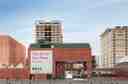
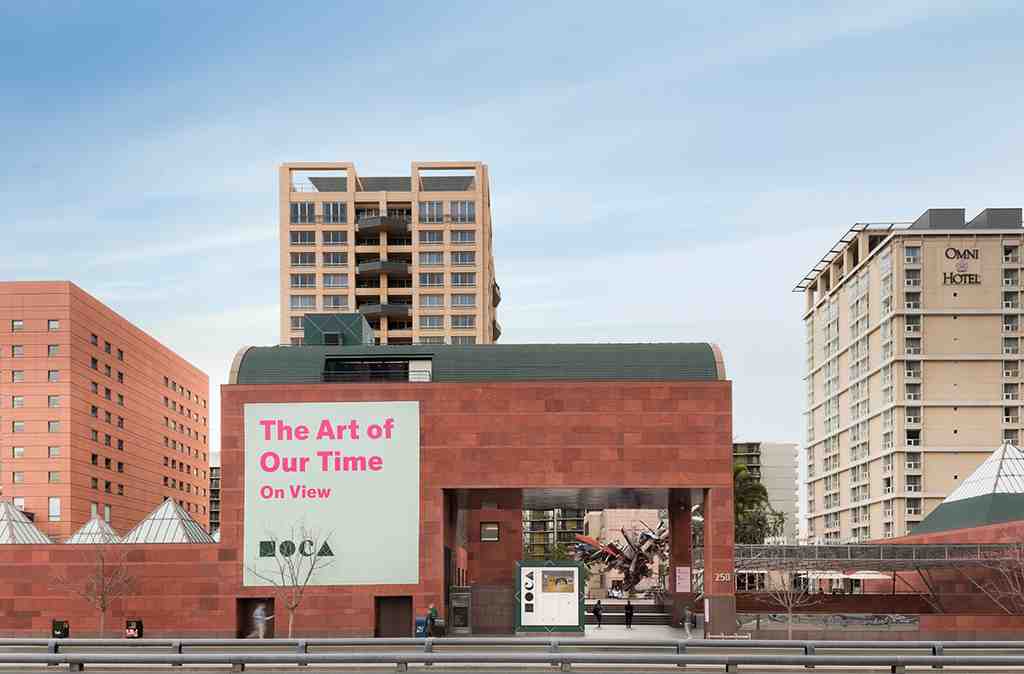
To spot the Museum of Contemporary Art, Los Angeles, look for a blocky red-sandstone building on Grand Avenue with a bold square green sign announcing “The Art of Our Time On…もっと読む折りたたむ
To spot the Museum of Contemporary Art, Los Angeles, look for a blocky red-sandstone building on Grand Avenue with a bold square green sign announcing “The Art of Our Time On View” and a cluster of triangular skylights poking out of the roof-if you’re standing in front of all that, you’re in the right place! Let’s step back in time, and imagine it’s 1979. At a fancy fundraising dinner in the Beverly Hills Hotel, three strangers-Mayor Tom Bradley, Councilman Joel Wachs, and an art-loving philanthropist named Marcia Simon Weisman-end up at the same table, swapping stories and probably making the waiter a little nervous with how passionately they talk about art. That night, in a burst of good ideas and maybe a bit of creative desperation, Weisman insists that Los Angeles needs its very own museum focused on contemporary art. There’s just one problem: they have no museum, no building, no collection-just this dream and a lot of determination. So what happens next? The Mayor’s Museum Advisory Committee springs into action, rolling up their sleeves and wrangling up donations, trustees, and promises of art. Within months, six generous collectors sign on the dotted line, offering pieces from their private stashes-imagine unwrapping art worth millions from grandma’s attic and suddenly it’s museum-worthy. The city’s finest philanthropists compete to make the biggest splash. Instead of a grand building, they start out in a humble office on Boyd Street… proving once and for all, you don’t need marble floors to build an international reputation. By 1986, MOCA lands here on Grand Avenue in dramatic style, thanks to superstar Japanese architect Arata Isozaki, who had never worked in the U.S. before. He crafts this distinctive sandstone structure, with sunlight pouring in from those glass pyramids above-so, you might say, even the ceiling here wants to be a little avant-garde. The first time you walk in, you’ll find most of the artwork displayed below the courtyard level, gently lit from above, almost as if the art is basking in the Los Angeles sun. It’s both cozy and cosmic, a little bit mysterious, and always unexpected. But MOCA isn’t just about Los Angeles or even the United States; its collection now holds nearly 6,000 works from artists all over the globe-though mostly created after 1940. There are heroes of abstract expressionism, pop art, minimalism, post-minimalism, and more; you’ll spot names like Rothko, Lichtenstein, Rauschenberg, Pollock, and even Basquiat. There’s even Michael Heizer’s earthwork lurking out in the Nevada desert, donated to MOCA when someone must have looked around and said, “Hey, we could use a few more tons of dirt in this collection.” And don’t even get me started on the monumental sculpture just out front-Nancy Rubins’ “Airplane Parts”-which makes you wonder if you accidentally walked onto a sci-fi movie set. The exhibitions here have always been bold-a wild mix of the mysterious, the provocative, and sometimes downright weird. From surveys on feminist art revolutions to wild explorations of pop culture, themed shows like “A Forest of Signs” or “Helter Skelter” placed MOCA at the beating heart of the international art scene. Rumor has it, even Hollywood celebrities step out of their limos to catch a glimpse of the next big thing-sometimes curating the shows themselves (for better or worse!). But there’s more: MOCA has never been satisfied with just putting art on a wall. Here, you’ll find programs for local kids, wild monthly workshops, teen gatherings where the next generation of artists get their start, and even roaring biennial media festivals, all led by working artists. The MOCA family is made up of everyone from high school students to collectors to artists whose names you might see in neon lights. And just think, it all began at that one table among political heavyweights, beneath the chandeliers, with a simple dream. So, as you stand here gazing at this bold, blocky building and its futuristic touches, imagine the hum of city traffic blending with the voices of artists, visionaries, and the laughter of people discovering something new. That’s the story-and the spirit-of MOCA. Intrigued by the founding, collection or the exhibitions? Explore further by joining me in the chat section below.
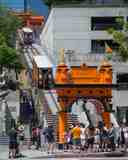
専用ページを開く →Right in front of you, you’ll see a bright orange archway marking Angels Flight, with two old-fashioned, orange-and-black railway cars perched on a narrow, steep set of tracks…もっと読む折りたたむ
Right in front of you, you’ll see a bright orange archway marking Angels Flight, with two old-fashioned, orange-and-black railway cars perched on a narrow, steep set of tracks that climb the hill-just look up the slope and you can’t miss it! Welcome to Angels Flight, the “world’s shortest railway”-though let me tell you, in terms of stories, it’s got more twists and turns than a Hollywood blockbuster! Picture yourself here in 1901, when downtown was bustling with streetcars, and Bunker Hill was where the city’s movers and shakers lived in grand Victorian mansions. A lawyer and engineer named Colonel J.W. Eddy decided Angelenos needed a shortcut up this steep hill. His solution? Build a pint-sized railway, just 298 feet long but brave enough to climb nearly 100 feet, linking the busy markets of Hill Street below to the quieter, leafier Olivet Street up above. If you’d been here back then, you might have joined crowds at the foot of the orange arch, waiting to ride up in the hilariously-named cars, Olivet and Sinai-named for the famous hills of Jerusalem, because, well, L.A. never passes on dramatic flair! Step aboard, and you’d hear the as the cars glided smoothly up and down, perfectly balanced by each other and pulled by a powerful cable. It wasn’t just a thrill ride for tourists either. Office workers, local shoppers, and families used Angels Flight every day to hop between the city’s heart and the hilltop neighborhoods. For 68 years, the original Angels Flight moved millions-yes, millions!-of passengers. There were a few scrapes: a derailment in 1913, and once, in 1937, a salesman fell asleep and got dragged along by the car (he was fine, but probably wide awake after that). Through changing owners, wars, and city drama, the funicular kept chugging along. But then, in 1969, the city decided Bunker Hill needed a “modern makeover.” Almost overnight, whole neighborhoods and historic buildings vanished-along with the railway. The orange cars Sinai and Olivet were packed up, sent to a warehouse, and Angels Flight was left a memory. But in true Los Angeles style, the story didn’t end there. Locals demanded a comeback-because, after all, what’s a city without some romance and quirky history? In 1996, after 27 years in storage, the railway was rebuilt, this time a block south of its original spot, right where you’re standing now. The original cars got a fresh coat of orange paint and returned to action, ready to tackle the hill once more. But the track’s redesign brought new drama. In 2001, disaster struck: a cable snapped, sending one car crashing down and resulting in tragedy. After a national investigation, it turned out the modern system had missed some key safety features that the original-built with 1901 tech!-had gotten right. The city, not willing to let Angels Flight become a ghost story, oversaw years of repairs, upgrades, and added every safety bell and whistle you can imagine. The funicular soldiered on, opening and closing as engineers protected its passengers from every squeak and shimmy. In fact, it became the star of over 100 movies and TV shows, from “La La Land” to classic noir films-can you imagine starlets and detectives dashing up these very steps, trench coats flapping in the Los Angeles breeze? Even with such fame, Angels Flight has always been a lifeline for everyday folks. In the 2000s, it shuttled workers between a city full of skyscrapers to the culture-rich museums and plazas above. Up until June 2025, you could ride for just a dollar-cheaper than most coffee!-before the fare crept up to meet the times. Picture the old days now: Hollywood hopefuls arriving in town, glancing up at Bunker Hill, hearing the and joining locals for that short, steep trip with a big view. Feel the sun on your face, the hopeful chatter of a city always in motion, and just imagine the stories these orange cars could tell if they had voices. Today, you stand where history, movie magic, and the daily commute all collide-under that bold orange arch, at the gateway to one of L.A.’s quirkiest, most beloved rides. So, ready to walk (or ride!) in the footsteps of a century’s worth of Angelenos? Just don’t fall asleep like that salesman.
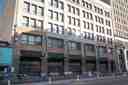
専用ページを開く →To spot the Homer Laughlin Building, look for a tall, tan structure with rows of big windows and green signs that read “GRAND CENTRAL MARKET” right above the ground floor-trust…もっと読む折りたたむ
To spot the Homer Laughlin Building, look for a tall, tan structure with rows of big windows and green signs that read “GRAND CENTRAL MARKET” right above the ground floor-trust me, your nose might lead you here before your eyes do! Picture yourself in downtown LA in the late 1800s. Horse-drawn carriages clip-clop down Broadway, ladies in feathered hats gossip near the streetcars, and a brand new, six-story marvel suddenly appears. That’s the Homer Laughlin Building, planted here in 1896 by-prepare yourself for a name straight out of a comedy club-Homer Laughlin. This Ohio entrepreneur wasn’t just any businessman; he’s the guy who gave us the famous Homer Laughlin China Company, and apparently he thought LA could use a little touch of the future. Not only was this the city’s first fireproof, steel-reinforced building, it was also the pride of local architect John B. Parkinson. Sounds safe enough to survive anything-except maybe a rogue skateboard! Walk closer to those green vertical signs and sniff the air. What you’re smelling is history and tacos: the Grand Central Market, LA’s oldest and largest public market, has been tempting taste buds on this ground floor since 1917. But before the first avocado toast was ever sold, this building was all about fancy shopping-from Coulter’s Dry Goods to the posh Ville de Paris department store. In 1905, the building even grew an extra wing to reach Hill Street, making it the first reinforced concrete structure in the city. Talk about adding on! Here’s where things get spicier than any mole sauce inside. In the roaring 1920s, the offices upstairs hosted the one and only Frank Lloyd Wright as he worked away at another LA icon. By the 1960s, someone thought it’d be a good idea to slap a tile façade on the building and cover the second-story windows-an architectural “makeover” that left many scratching their heads. But even that couldn’t stop its charm. Fast forward to the 1990s: along comes a big renovation, led by Ira Yellin and architect Brenda Levin. The market, the building, the whole block gets a facelift, and for the first time in decades, people start living upstairs again. Now, thanks to another wave led by Adele Yellin in the 2010s, the market is bursting with fresh energy, new flavors, and national foodie fame. So as you stand here, outside this sturdy old landmark, imagine more than a century of Angelenos bargain-hunting, laughing, eating, and dreaming under these windows. Step inside if you’re hungry for history-or just a really good breakfast burrito!
専用ページを開く →You’re looking for a big, brown-brick building with rows of arched windows on the top floor, sitting right on the corner of Broadway and Third-just follow the “Bradbury” sign…もっと読む折りたたむ
You’re looking for a big, brown-brick building with rows of arched windows on the top floor, sitting right on the corner of Broadway and Third-just follow the “Bradbury” sign sticking out and you can’t miss it! So, here you are, standing at the threshold of what might look, at first glance, like a perfectly ordinary old office block-some neat rows of windows, some terracotta trim, and a dash of Renaissance style. But trust me, the Bradbury Building is a master of disguise! Behind that understated brick facade lies one of the most magical sights in all of Los Angeles, a place so jaw-dropping even movie directors have a hard time believing it’s real. Picture this: if buildings went on makeover TV shows, the Bradbury would win, every time. Now, let’s rewind the clock to the late 1800s-gold-mining mogul Lewis L. Bradbury has just struck more gold than you’ll ever find in a jewelry shop. He sets his sights right here, planning to leave his mark on Los Angeles with a building as grand as his dreams. Sumner Hunt, a local architect, draws up a plan, but Bradbury isn’t impressed-talk about picky! Instead, Bradbury picks George Wyman, a young draftsman earning five bucks a week, believing this guy “gets his vision.” Poor Hunt probably wanted to pitch a fit, but history was being made. Some say Wyman just polished up Hunt’s ideas, but whatever the reality, it’s still a riddle-sort of like who really let the dogs out. Construction started in 1892, but here comes the twist-Bradbury died before his building was complete, so his family saw it through, “just” running the bill up to half a million bucks, about triple what they planned. The workers, hammering away, could hardly have guessed the future that awaited. From the moment its doors opened in 1893, the Bradbury’s interior was the talk of the town! You’d walk through a narrow lobby, feeling a bit like you’re about to saunter down a Parisian alley, until-bam!-you’d emerge into a soaring, sunlit court that feels more like a cathedral than an office building. Five stories of glazed brick, gleaming Mexican tiles, and all that intricate wrought iron, balconies, and open “birdcage” elevators that ride up through the light. Much of the ironwork took a detour through France and even got shown off at the Chicago World’s Fair, before coming home to LA. The Bradbury has been more than just a pretty face. While most of its history is as a bustling office building, the city has always known it was something special. In 1977, it was designated a National Historic Landmark-a rare honor for an LA office-following earlier local recognition. As downtown LA boomed and busted, the Bradbury weathered tough years, too. But then along came Ira Yellin in the 1980s, who poured millions into restoring and earthquake-proofing it. He even upgraded the lighting with alabaster sconces from Spain, keeping that golden glow just right, day or night. Let’s jump to the 21st century. The building found itself the star of new adventures-home to the Museum of Architecture and Design, an art gallery, and offices for everything from police internal affairs to world-renowned think tanks. Nowadays, the ground floor is as classic LA as it gets-there’s a sandwich shop, a real estate office, and a cutlery store with a famous (or infamous) history. And as of 2024, Bradbury Studios has moved in-a coworking space in the atrium with plush seating, snazzy meeting rooms, and even a hidden speakeasy, the Wyman Bar. Now, that’s how you keep a building lively through the centuries! And oh, the Bradbury is a movie star. Hollywood loves this place-maybe you remember its gothic sunbeams in Blade Runner’s haunting finale, or in the flips and twists of (500) Days of Summer, The Artist, Good Neighbor Sam, Lethal Weapon 4, and a hundred other films and TV shows. Even Janet Jackson danced here once, and Cher sang her heart out beneath those glassy skies. The Bradbury is now one of the city’s oldest landmarked buildings, open to visitors every day. While you can only go up to the first landing, peer in and you’ll feel you’ve walked onto a page from Los Angeles history. Listen carefully-you might catch the echo of old movie reels spinning, the clang of typewriters, or even the gold-plated dreams of Lewis Bradbury himself. Alright, take it all in-because this is downtown LA magic at its finest! Interested in a deeper dive into the architecture, tourism or the gallery? Join me in the chat section for an insightful conversation.
専用ページを開く →As you stand here, take a slow look around at the grand skyline surrounded by distant mountains-this is the heart of Los Angeles, a sprawling cityscape stretching from the…もっと読む折りたたむ
As you stand here, take a slow look around at the grand skyline surrounded by distant mountains-this is the heart of Los Angeles, a sprawling cityscape stretching from the shimmering Pacific on one side to sunburned valleys and distant snow-capped peaks on the other. Now, close your eyes for a second and listen: imagine the sound of car horns blending with mariachi music, the faint sizzle of street tacos, and the hum of almost four million stories woven together. This isn’t just a city, it’s a living, breathing legend-welcome to Los Angeles, the City of Angels, where almost anything can happen, and usually does! Let’s take a journey through time. Long before there were traffic jams or movie stars, this land was home to the Tongva people, who called it Iyáangẚ, the “valley of smoke.” Their stories linger in the dry desert wind, even as skyscrapers now rise where wildflowers once grew. Then, in 1542, an explorer named Juan Rodríguez Cabrillo came sailing up the coast and (as explorers liked to do back then) claimed the area for Spain. It took another 239 years for the first town, El Pueblo de Nuestra Señora la Reina de los Ángeles, “The Town of Our Lady the Queen of the Angels,” to be founded by just 44 settlers-imagine a group barely big enough for a modern jury, trying to picture this endless sea of buildings and cars! L.A. changed hands like a hot potato: from Spain to Mexico in 1821, then, after a tense war or two, it became part of the United States in 1848. Around then, the city was still just a sleepy pueblo-nobody had invented the Hollywood Walk of Fame yet, and instead of the Oscars, people probably handed out blue ribbons for best cattle. But, as always happens in L.A., things started moving fast: oil was discovered in the 1890s, and thirsty as ever, the city built a massive aqueduct to pipe in water-because what’s a party without drinks, right? And then…boom! Hollywood came to town. By 1921, L.A. had become the center of the film universe. Silent movie stars strolled the boulevards with feathered boas and hopes higher than the palm trees. In 1932 and again in 1984, L.A. dazzled the world by hosting the Olympics, proving it’s a city that loves putting on a show (and, apparently, throwing big summer parties every few decades). But L.A. isn’t only about glitz and glamour. If you ever wonder why the city seems to stretch forever, thank the railroads, the highways, and those stubborn Angelenos who kept building and building, creating a patchwork quilt of neighborhoods-Chinatown, Koreatown, Little Tokyo, Historic Filipinotown, Little Armenia, and more. Each one with its own flavors, languages, and festivals, making L.A. one of the most diverse cities on earth. You can get a bowl of pho for breakfast, tacos for lunch, and Ethiopian spicy stew for dinner, then finish the night with a K-pop dance party. No passport required. Still, there’s always a little drama in La-La Land. Earthquakes keep everyone humble (remember-really sturdy shoes are fashionable here for a reason), fires and droughts remind the city how precious water is, and during certain months, the legendary “June Gloom” blankets the coast in mist, making everyone briefly consider a move to Miami-until the sun returns, hands out sunglasses, and all is forgiven. L.A. loves to reinvent itself-sometimes with whirlwind energy, other times in slow-motion. From the first ARPANET message (yep, the Internet was born right here in 1969), to racial reckoning and moments of protest and unity, the city has weathered storms both literal and social. In 2022, Karen Bass made history as the first female mayor-just another chapter in a story that keeps unfolding. But life here is not all movie magic. Step outside, and you’ll find 12.9 million souls packed into the greater metro area, navigating 80% rush hour congestion (that’s the price for so much stardust, I suppose), where some Angelenos spend more time in their cars each day than many people spend eating or sleeping. Yet, in the same breath, you’ll see coral trees blazing red above Bird of Paradise flowers, hillside bobcats prowling the canyons, and-if the Santa Ana winds are blowing-air so dry it feels like the city is about to burst into song or flames, or maybe both. But maybe the true magic of L.A. is this: wherever you come from, you can find a piece of home here. Mexican, Salvadoran, Filipino, Armenian, Thai, Persian-L.A. doesn’t just welcome you, it invites you to add your own story to the epic. So, as you look out at this mad, magnificent sprawl, remember: in Los Angeles, everyone is a little bit of an angel, a little bit of a dreamer, and always ready for the next big scene. Alright, ready to keep walking? Let’s see what extraordinary landmark is up next on our tour-don’t worry, there’s more history hiding around every palm tree! If you're curious about the toponymy, geography or the demographics, the chat section below is the perfect place to seek clarification.
専用ページを開く →Right in front of you stands a large, elegant white building with ten stories, decorated with rows of black fire escape balconies and intricate Beaux Arts detailing, towering…もっと読む折りたたむ
Right in front of you stands a large, elegant white building with ten stories, decorated with rows of black fire escape balconies and intricate Beaux Arts detailing, towering above the corner of Broadway and 5th-just follow the line of busy storefronts until you spot the “Fallas Paredes” sign, and look up for those fancy ornaments! Welcome to the Metropolitan Building! Now, take a deep breath and step back in time to 1913, when this block was the absolute beating heart of Los Angeles shopping and excitement. Imagine streetcars rattling by, newsboys shouting headlines, and women in big feathered hats peering into glass shop windows. Here, on the bustling corner of Broadway and 5th, the Metropolitan Building sprang to life, replacing an old two-story Romanesque Revival building known as the Mueller Building-named for a German-born patriarch, Michael Mueller, whose descendants would keep this corner in the family for almost a century. As the city boomed, the Muellers decided it was time to build something grand. They teamed up with the Metropolitan Fireproof Building Company-but don’t let that name frighten you; it’s mostly proof that Los Angeles had a thing for dramatic company names! They hired the dynamic duo of architects John Parkinson and Edwin Bergstrom, who were the skyscraper superstars of their era. You might know Parkinson’s work-he gave LA both its first steel-frame building and the city’s first skyscraper. (He clearly liked firsts.) Now, picture the corner as it was in 1913: construction workers bustling about, scaffolding everywhere, and the sound of hammers echoing off the nearby buildings. What arose here was nothing short of magnificent-a Beaux Arts beauty, ten stories tall, with elegant terra cotta, sculpted ornamentation, and those lovely fire escapes you see zigzagging up the façade today. At street level, the building was designed for commerce. Multiple shops vied for attention-can you smell fresh bread from a cafe or hear the gentle jingle as customers walked through the doors of a department store? But the real magic happened inside. Stores hugged the ground floor while the upper levels offered open, versatile office spaces and lofty storage rooms. The marble-clad lobby gleamed with a sense of newness and possibility. Over the years, this building played host to some of LA’s most memorable tenants. On the seventh through tenth floors, the Los Angeles Public Library set up shop-a true information palace in the sky. Imagine readers climbing out of the crowded streets and into rooms filled with sunlight streaming through skylights, where books of all kinds were arranged in open shelving and new departments for art, sociology, and industry blossomed. And then came a parade of retailers. The Owl Drug Company, with its curious little owl signs; Foreman & Clark for men’s suits; Janss Investment Company; and later, the legendary Newberry’s variety store, which turned the ground floor into a single, sprawling shopping destination. If you’d stood here in the 1950s, you might’ve seen terrazzo floors, heard laughter from a bustling food court, or squeezed through a special ramp connecting to the next-door building. They even filmed a “Dragnet” episode here, if you want a bit of TV trivia! But all wasn’t always easy. As LA’s fortunes shifted and suburban malls took over, downtown faced tough times. By the 1990s, the upper floors of the Metropolitan Building were nearly empty, with only the ground floor kept alive by changing stores. Then, like a movie with a happy twist, ownership changed hands and the building found purpose again-the upper floors became loft apartments, echoing with new life. The ground level continues to serve as retail, so the rhythms of city commerce-chatter, music, footsteps-never really left the Metropolitan. Through all these changes, the Metropolitan Building has held fast: a monument to Broadway’s golden era, a testament to LA’s ever-shifting dreams, and a standing invitation to anyone who wants to imagine what came before-if only for a moment as you gaze up at those endless rows of windows and their intricate trim. And hey, next time you’re stuck waiting for the light to change at this intersection, just remember-you’re sharing the sidewalk with over a century of stories.
専用ページを開く →You’ll spot the Palm Court by looking for a grand set of glass doors leading into a ballroom with soaring ceilings, magnificent golden chandeliers, and a glowing stained-glass…もっと読む折りたたむ
You’ll spot the Palm Court by looking for a grand set of glass doors leading into a ballroom with soaring ceilings, magnificent golden chandeliers, and a glowing stained-glass skylight above-just pause and gaze upward to catch the light shimmering through the decorative glass panels. Now, let me whisk you back in time-just imagine you’re standing outside the doors of Los Angeles’ most glamorous ballroom, where history sparkles as brightly as the famous Tiffany skylight overhead. The Palm Court at the Alexandria Hotel wasn’t just another fancy room-it was the beating heart of LA’s high society, the setting for parties, politics, and enough Hollywood drama to fill a dozen movies. From 1911 to the early 1920s, this was where the city’s elite gathered to make deals, dance into the night, or simply be seen by the right people. Picture this: the year is 1911, and the doors swing open to reveal a ballroom that’s practically glowing-a hundred feet long, seventy-five feet wide, with chandeliers blazing and light bouncing across gold-trimmed walls. It’s opening night, and nearly 400 of LA’s fanciest folks have turned up in their finest clothes. The city’s prestigious Alexandria Orchestra is playing, adding a touch of musical magic to the buzz of conversation. People pause in amazement at the threshold, taken aback by the sheer beauty of the room-no wonder a writer once called it “the most beautiful room in Los Angeles!” Throughout its heyday, the Palm Court saw it all: U.S. Presidents William Howard Taft and Woodrow Wilson gave soaring speeches from this very spot, President Taft even dreaming aloud about a world court and the end of war. And who do you see gliding across the dance floor? It might just be Rudolph Valentino-before he became the silver screen icon-dancing with starlets or fellow “$5-a-day extras,” sneaking over by streetcar for a spin beneath the crystal chandeliers. Piecing together stories from those nights, you’d overhear secret deals: Chaplin plotting film empires in the lobby, Tom Mix leading his horse straight through the gilded halls (don’t try this at your next wedding), and more actors, singers, and moguls than you could count on both hands! It wasn’t all just glitz, though. There was real substance-Presidents, generals, industry leaders, and world-famous musicians crossing paths. In 1919, “the Jazz King” Paul Whiteman got his big break here; rumor has it, the dance floor was so packed with “the elite of moviedom” that you’d need serious moves just to get to the punch bowl. Speaking of which, LA’s first subscription ball was held right here-and let’s just say, those punch bowls caused quite the scandal when Prohibition arrived! From Mardi Gras balls with enchanted, mischievous elf faces and glowing strings of lights, to Hollywood’s wildest Thanksgiving bashes and fashion shows with movie stars strutting Parisian styles, every night at the Palm Court was a chapter of LA’s most glamorous fairy tale. Yet even in its golden age, drama lurked around every glamorous corner: lovers’ quarrels, accidental romances snuffed out by strict mothers, surprise dance contests starring the biggest names in silent films, and enough whispered gossip from the balcony to keep a dozen newspapers in business. There were fierce debates-over art, world wars, even prohibition-and the million-dollar rug in the lobby earned its nickname because, according to local legend, more deals happened on its plush surface every day than on Wall Street. When the Biltmore Hotel opened in 1923, the crowds drifted away, and the Palm Court’s tale took some curious turns. The ballroom became a boxing ring, its gold and glass watching over sweaty fighters sparring beneath the chandeliers, punchlines almost as strong as their punches. For a while, you could pay a dollar to see title contenders train right where presidents once spoke. But the story wasn’t over. After decades of ups and downs, the Palm Court was restored in the 1980s, reclaiming its crown as an architectural jewel. The magic returned, whether for ballet extravaganzas or today’s lucky visitors. So as you stand here, just imagine: presidents, jazz kings, silent film stars, and boxers-this room has seen them all. Who knows? Maybe its walls have a few secrets left to share, sparkling up there under that stained-glass skylight. And if you think your parties are wild, well, the Palm Court set the bar pretty high-so don’t be shy, let your imagination dance! Interested in knowing more about the palm court's heyday 1911-1922, notable events from the palm court's heyday or the decline and use for boxing events
専用ページを開く →Directly in front of you, you'll spot a row of grand old buildings, most notably the tall vertical “PALACE” sign hovering over a theater entrance, flanked by beautiful arched…もっと読む折りたたむ
Directly in front of you, you'll spot a row of grand old buildings, most notably the tall vertical “PALACE” sign hovering over a theater entrance, flanked by beautiful arched windows and intricate facades-just keep your eyes on the building frontages along Broadway and you can’t miss the classic elegance! Alright, picture yourself standing here in the sunshine, maybe squinting a little as you take in the legendary Broadway Theater District. Close your eyes and imagine the year is 1925. The sidewalks are packed; ladies in flapper dresses and men in sharp suits stroll past neon marquees as cars honk and streetcars rattle by. You’re in the center of a world that, believe it or not, was once called the movie capital of the universe! What you see around you is the largest collection of movie palaces the United States has ever known-twelve theaters, stretching across six city blocks. These aren’t just regular theaters; they’re palaces, each built as a temple to Hollywood’s golden age. Their styles are just as varied and dramatic as the films they showed: from the Baroque flourishes of the Los Angeles Theatre to the Renaissance-inspired Palace, right in front of you. Look up at those gilded facades, the intricate carvings, the glowing movie marquees. The whole street seems to hum with anticipation-could Clark Gable or Marilyn Monroe be arriving for a premiere tonight? Back in the day, these seats filled with more than 15,000 excited moviegoers! Just imagine the glow of those marquees at night, lighting up Broadway like a river of fire. Downtown L.A. was where legends were made: army nurses laughed alongside pilots, teenagers swooned, and every Saturday meant a ticket to a new, glittering world. For columnist Jack Smith, spending three hours lost in these palaces on a Saturday meant stepping from Renaissance fantasy back to the hard heat and noise of Depression-era L.A. But like a movie plot with a twist, change swept through after World War II. Movie-goers chased glitz out to Hollywood, Westwood, and beyond, chasing newer screens while these grand old dames had to reinvent themselves. As the original crowd faded, the Latino community stepped in, reviving Broadway and filling these theaters with Spanish-language films, music, and vibrant laughter. In fact, by the 1980s, the heart of Broadway was beating thanks to the Latino renaissance, keeping the spirit of the district alive against all odds. Of course, it wasn’t all popcorn and roses. Many of these theaters faced tough times-turning into flea markets, churches, and in some cases, into retail shops. Maintenance was costly, and downtown didn’t always feel so friendly after dark. But never count these theaters out! Efforts to preserve their magic ramped up in the 1980s, sparking events like “Last Remaining Seats,” where classic movies dazzled new audiences under grand chandeliers and next to golden cherubs. Old-timers returned for the nostalgia, while movie buffs showed up to experience classic films as they were meant to be seen, right here-on a big screen, balcony and all. Even now, the story is still unfolding. In 2008, the city launched a $40-million campaign called “Bringing Back Broadway,” sparking new hope and, let's be honest, a little tension as old and new businesses mingle together. Look around and spot the names-Million Dollar, Palace, Globe, Orpheum, United Artists. The air almost shimmers with history, and if it feels a bit familiar, maybe you’ve seen a marquee or two in films like Blade Runner, The Artist, or even Safety Last! It’s easy to imagine you’re on an old film set, just waiting for a stuntman to dangle from a clock or a 1950s detective to wander by. The Broadway Theater District is more than a collection of fancy buildings. It’s the beating heart of L.A. showbiz history-resilient, vibrant, and always ready for its close-up. So, the next time you walk these six blocks, don’t just look-listen. Maybe, just maybe, you’ll catch an echo of laughter, the clink of a soda bottle, or even a line of whispered movie dialogue rising up from the past. Eager to learn more about the description, theaters or the in popular culture? Simply drop your inquiries in the chat section and I'll provide the details you need.
専用ページを開く →To spot The Biltmore Los Angeles, just look for the grand, castle-like building with red-brick walls, cream stone trim, green awnings, and ornate classical details rising several…もっと読む折りたたむ
To spot The Biltmore Los Angeles, just look for the grand, castle-like building with red-brick walls, cream stone trim, green awnings, and ornate classical details rising several stories above the street, nestled right across from Pershing Square. Alright, friend, ready for a trip back through glitz, glamour, and some wild tales? You’re standing before a true Los Angeles legend-the Biltmore Los Angeles! Imagine it’s 1923. The city is buzzing, flappers are doing the Charleston, and this magnificent hotel, with its blend of Spanish-Italian Renaissance, Mediterranean, and Beaux Arts style, opens its doors as the grandest hotel west of Chicago. Back then, the hotel boasted 1,500 rooms-enough for an army of guests-and was basically a “who’s who” factory for celebrities and big names from the roaring twenties onward. Picture stepping through lavish doors surrounded by intricate stone carvings, right under the gaze of the “Biltmore Angel,” a symbol flying across the building’s face and through its elegant halls. The inside dazzles even more-murals and frescos sweep over your head, massive wood-beamed ceilings creak with history, and marble fountains trickle softly. The Crystal Ballroom, painted by the Italian master John B. Smeraldi (yes, the same guy who frescoed the Vatican), bursts with color and mythological figures-Greek gods, cupids, and angels-peering down at decades of deals, dances, and whispered secrets. But the hotel’s history isn’t just beauty and ballrooms. Imagine the Great Depression, the 1930s, when Baron Long, the nightclub king, swoops in, buys up the Biltmore, and sets up the Biltmore Bowl-the world’s largest nightclub-right under the hotel. In the velvet-cloaked basement, jazz and laughter filled those tough years, and somewhere in those dim corners, someone may have tried a sneaky magic trick or two to make their troubles disappear. Walk a few steps in, and the Rendezvous Court-once the grand lobby-is ready for you with gleaming gold accents and plaster ceilings, chandeliers from Italy, and even the original astrological clock ticking away above the door, keeping cosmic time. Hungry for some Hollywood mystery? The Biltmore is the birthplace of the Oscars! In 1927, movie bigwigs gathered for a banquet and, as the legend goes, cracked out a napkin and scribbled the very first design for an Academy Award statue-imagine that linen, forever inked into cinema history. The list of famous feet that have padded across these tiles is a who’s who: The Beatles, landing on the roof by helicopter to escape crowds below; John F. Kennedy, organizing his campaign right here in the so-called Music Room (which you’ll see was later transformed into a swanky lobby); and even the Duke & Duchess of York sipping cocktails during a glitzy gala. During World War II, the grand hotel became a military R&R haven, with soldiers’ cots lined up across the second floor. If these walls could talk-or even whisper-they’d spill secrets about the hundreds of movies filmed within them: scenes from classics like “Chinatown,” “Ghostbusters,” “Rocky III,” and even recent blockbusters like “Oppenheimer” were shot beneath these ornate ceilings. Shows like “Mad Men,” “The West Wing,” and “The Good Place” brought their TV magic here, too. But the hotel wasn’t always so shiny. By the 1970s, it had begun to decay, swapping hands for a fraction of its original worth until it was lovingly restored in the 1980s, unveiling those lost murals and gold filigree again. With new towers and posh renovations, it regained its glam, all while keeping that electric, old Hollywood mystery alive. So, as you stand before the Biltmore now, imagine the laughter, the deals, the heartbreaks, and the parties echoing through nearly a century-and know you’re right where LA’s boldest, brightest, and most mysterious stories were born. And hey-if you feel like the ghosts of movie stars are watching you, don’t worry, they’re just making sure you get their best angle!
専用ページを開く →Look for the tallest tower in front of you with a rounded, segmented top that stands far above its neighbors-almost as if it's trying to high-five the sky. Welcome to the…もっと読む折りたたむ
Look for the tallest tower in front of you with a rounded, segmented top that stands far above its neighbors-almost as if it's trying to high-five the sky. Welcome to the legendary U.S. Bank Tower, towering over Los Angeles like a giant holding a shiny glass crown! At a whopping 1,018 feet tall, this building is so tall that even the clouds have to look up its address. Step a bit closer and look straight up-that’s 73 stories of architectural ambition, topped off by a crown that catches the sunlight by day and glows like a beacon by night. Imagine the wind whistling around the edges, and the hum of city life far, far below. But this skyscraper isn’t just about showing off its height; it’s the third-tallest in California and, for ages, it was even the tallest building with a rooftop heliport on Earth. That’s right, from 1989 to 2010, this was the go-to landing pad for anyone with a spare helicopter-and the nerve to land a whirlybird above the clouds! The reason? Los Angeles building codes once said high-rises need a helipad for safety, making this the high-flying king of emergency exits. Take that, boring old stairs. The U.S. Bank Tower has more stories than your favorite neighborhood barber. It was born out of disaster and determination, built right across from the Central Library after fires gutted the city’s book collection in 1986. The builders bought special “air rights” from the city-in other words, permission to build up, up, and away-to help pay for the library’s comeback. Early on, locals called it the Library Tower before it cycled through names like First Interstate Bank World Center and finally became the U.S. Bank Tower in 2003. Who knew buildings could have identity crises? The genius behind this stacked, futuristic design was Henry N. Cobb, of the world-famous Pei Cobb Freed & Partners. Construction took just two years and cost a jaw-dropping $350 million. Legend has it, you could see the whole city from the top-and probably still spot a few seagulls with altitude envy. But don’t let the sparkle fool you: the U.S. Bank Tower is built to stand strong, even if the ground shakes. Its frame can take an earthquake of up to 8.3 on the Richter scale. If buildings had nerves, you’d say this one is made of steel. Speaking of nerves-did you know it was once in the crosshairs of not just one, but two alleged terror plots after 9/11? Luckily, both were foiled, but the tension back then was so high, you could practically hear people holding their breath all across downtown. Over the years, ownership of the tower has swapped hands in deals worth hundreds of millions of dollars. Recently, it was snapped up by Silverstein Properties-the same folks behind New York’s World Trade Center. Now, the tower has a shiny new lobby, lots of food choices, flexible workspaces, and art installations-so even if you’re just visiting, you’ll feel like you’ve stepped into the future. Once, you could zip up to the OUE Skyspace on the 69th and 70th floors and slide down a glass chute on the outside of the building! It was part of a $31 million renovation and caused a real buzz until the slide made a permanent exit (let’s just say the tenants below were not fans of “screaming tourists at altitude” as part of their office soundtrack). These days, OUE Skyspace is gone, but there are still smart co-working lounges, the ever-stylish 71Above restaurant, and a swanky new event space. Fancy a dinner with a side of vertigo? The U.S. Bank Tower isn’t just a star for people on the ground-it’s a fixture in Hollywood disaster flicks like Independence Day, San Andreas, and 2012, and even makes cameos in video games like Grand Theft Auto and Starfield, standing tall as a beacon of L.A. Cool, right? So next time someone points out Los Angeles on TV, look closely-there’s a good chance you’ll spot this dazzling giant on the skyline, taking a deep breath of that California air. Ready for your next stop? No helicopter required! Interested in a deeper dive into the ownership, major tenants or the tallest rooftop helipad? Join me in the chat section for an insightful conversation.
専用ページを開く →To spot the Westin Bonaventure Hotel, just look for the set of four gleaming, cylindrical glass towers clustered together like a futuristic fortress of mirrors rising above…もっと読む折りたたむ
To spot the Westin Bonaventure Hotel, just look for the set of four gleaming, cylindrical glass towers clustered together like a futuristic fortress of mirrors rising above you-trust me, you can’t miss it! Welcome to your final stop, and what a spectacular finale this is! Take a moment to soak in the sight: the sheer, reflective curves of the Westin Bonaventure Hotel and Suites make it look like LA’s own modern castle-except instead of knights, the only battles happening inside are probably over who gets the best elevator view. You’re standing before a true icon, designed by the legendary John C. Portman Jr., and built between 1974 and 1977, when disco was king and everyone thought the future would look exactly like this. Picture the scene back in the late ’70s: Los Angeles was buzzing with energy, and up popped this 33-story marvel-a design so bold, some folks wondered if it had landed from another planet. With its shimmering cylindrical towers, it’s been called a “miniature city” and “a total space.” At over 360 feet, the Bonaventure isn’t just a place to stay-it’s a world to get lost in. And believe me, people have! The interior was originally so confusing that color-coded elevator systems were brought in later just to help folks find their way out. Sounds like the setting for a spy movie, right? Well, you’ll be thrilled to know that you’re standing in front of a building that’s played a starring role in more films and shows than many Hollywood actors. Let me sweep you up to the top floor, at least in your imagination! Up there, a revolving restaurant and bar lets you sip a drink while the whole city slowly spins beneath you. If you listen closely, you might almost hear the echoes of secret deals, toasts, and maybe the odd wild story from a night out in LA. Now, let’s peek into the Bonaventure’s filmography. Its four glass columns have hosted elevator action scenes in movies like “In the Line of Fire” and “True Lies” (there are bronze plaques inside to prove it). Maybe you recall Tom and Tilly from Tots TV watching tall buildings from the Bonaventure’s roof-or a Power Ranger tumbling down after a fight with a villain. This hotel’s incredible silhouette appears everywhere: in episodes of “Wonder Woman,” “Starsky & Hutch,” “The A-Team,” “L.A. Law,” “Moonlighting,” and movie blockbusters such as “Rain Man,” “Logan’s Run,” and “Escape from LA.” The lobby even hosted a high-stakes “Fear Factor” stunt with plexiglass discs suspended over dizzying heights-a true test of courage (or foolishness, depending on how you look at it!). But it’s not just Hollywood where the Bonaventure shines. Academics have spent hours puzzling over its twisting, mirrored spaces. Legendary theorist Fredric Jameson reflected on this place as a full-on “miniature city,” a world-within-a-world where crowds circulate, mingle, and lose themselves. And no, you aren’t the first to wonder if you’ve accidentally wandered into a new universe-urban theorist Edward Soja described it as “fragmented and fragmenting,” a glittering maze that seems open and inviting but, once inside, might just spin you around in a modern labyrinth. Try not to get lost! Even the elevators have their own story. With twelve glass capsules named Red Circle, Yellow Diamond, Green Square, and Blue Triangle, they’re the keys to navigating the hotel. Only the brave Red Circle dares rise all the way to floor “35” (there’s no 7th or 13th-superstitions, you know), while its companions stop at 32. More than one guest has admitted to choosing their elevator simply by favorite color, rather than trying to map it out-hey, sometimes random chance is the way to go. The Bonaventure keeps finding new ways to make appearances, not just in classics but in video games like Grand Theft Auto: San Andreas and Call of Duty: Black Ops II, not to mention music videos from Aaliyah, Kylie Minogue, and Rihanna’s “Savage x Fenty Show Vol. 3.” Even as the world changes around it, the Westin Bonaventure stands tall-part hotel, part movie star, part urban puzzle, and always an adventure ready to happen. So take a last look, wave goodbye to this futuristic wonder, and remember: if you ever do go inside, bring a map… and maybe leave a trail of breadcrumbs, just in case! If you're curious about the reactions, floors and elevators or the location filming, the chat section below is the perfect place to seek clarification.
専用ページを開く →
よくある質問
ツアーはどうやって始めますか?
購入後、AudaToursアプリをダウンロードして引き換えコードを入力してください。ツアーはすぐに開始できます。再生ボタンをタップして、GPSガイド付きルートに従うだけです。
ツアー中にインターネットは必要ですか?
いいえ!開始前にツアーをダウンロードしておけば、完全にオフラインで楽しめます。チャット機能のみインターネットが必要です。モバイルデータを節約するため、WiFi環境でのダウンロードをお勧めします。
これは団体ツアーですか?
いいえ、これはセルフガイド式のオーディオツアーです。ガイドや団体、決まったスケジュールに縛られることなく、スマホから流れるナレーションを聴きながら自分のペースで自由に探索できます。
ツアーの所要時間は?
ほとんどのツアーは60〜90分で完了しますが、ペースは完全に自由です。好きな時に一時停止したり、スポットを飛ばしたり、休憩を取ったりできます。
今日中にツアーを終えられない場合は?
問題ありません!ツアーには無期限でアクセスできます。明日、来週、あるいは来年でも、好きな時に再開できます。進行状況は保存されます。
どの言語が利用可能ですか?
すべてのツアーが50以上の言語に対応しています。コードを引き換える際にお好みの言語を選択してください。注意:ツアー生成後に言語を変更することはできません。
購入後、どこからツアーにアクセスできますか?
App StoreまたはGoogle Playから無料のAudaToursアプリをダウンロードしてください。メールで届いた引き換えコードを入力すると、ライブラリにツアーが表示され、ダウンロードして開始できるようになります。
もしツアーを楽しめなかった場合は、返金いたします。お問い合わせ先: [email protected]
以下の決済で安全にチェックアウト