マンチェスターオーディオツアー:マンチェスターの記念碑的なモザイクオーディオトレイル
古代の石造りの聖域の隣にガラスの大聖堂がそびえ立ち、巨大なアリーナが列車の頭上で賑わう—マンチェスターは、その最も大胆な物語を人目につかない場所に隠しています。このセルフガイドオーディオツアーは、街の表面の下へとあなたを誘い、訪れるほとんどの人が見逃してしまう鮮やかな物語や秘密の場所を明らかにします。 ある夜、マンチェスター・アリーナでの音楽の響きは、なぜ国全体を揺るがしたのでしょうか?マンチェスター大聖堂の最も古い石に埋め込まれた隠された謎とは何でしょうか?そして、きらめくガラスの建物は、たった一つのサッカーの質問で地元の人々をどのように分断したのでしょうか? そびえ立つアーチからきらめくファサードへ、そして過去のスキャンダル、発明、復活で脈打つ壮大なホールへと進むにつれて、反逆と驚きの高まりを感じてください。ここでは、それぞれの通りが勝利、悲劇、変革の層を明らかにし、足元に街の真の鼓動が響きます。 マンチェスターの最高の秘密を解き明かす準備はできましたか?もっと深く見る勇気があるなら、旅を始めましょう。
ツアーのプレビュー
このツアーについて
- schedule所要時間 40–60 mins自分のペースで進める
- straightenウォーキングルート 4.6kmガイド付きパスに沿って進む
- location_on
- wifi_offオフライン対応一度のダウンロードでどこでも使える
- all_inclusive無期限アクセスいつでも、ずっと再生可能
- location_onマンチェスター・アリーナから開始
このツアーのスポット
Spotting the Manchester Arena is a bit like trying to find the world’s biggest box of music and mayhem! As you walk up-look for a huge, blocky building with shiny, silver upper…もっと読む折りたたむ
Spotting the Manchester Arena is a bit like trying to find the world’s biggest box of music and mayhem! As you walk up-look for a huge, blocky building with shiny, silver upper panels and chunky beige bricks on the walls below. You’ll notice a big glass entrance set back from the road, right above Victoria Station. If you hear the echo of excitement, you’re in the right place! Alright, you’ve arrived at the Manchester Arena, these days also called the AO Arena. It’s a true Manchester giant, literally perched above the trains of Victoria Station. Kind of like someone stacked a spaceship on top of a railway station, just for fun-because why build sideways when you can build up, right? This place is legendary, with enough seats-21,000 at last count-for just about every football fan in town. Sit everyone down here, and you’d still have room for a few rock stars! It’s hosted roaring concerts and nail-biting sporting events, from boxing to swimming. Ever dreamed of watching Olympic athletes sweat it out above a train station? Well, this is as close as Manchester ever got during their Olympic bids. And there’s that roof-stretching an impressive 105 meters across, all held up by a serious bit of engineering muscle. Inside, every seat gives a full 360-degree view. That means whether you’re here to see a boxing match, a packed basketball game, or Jayne Torvill and Christopher Dean gliding across the ice, you’re guaranteed a spectacular show. Now, let’s not forget the mix of triumph and tragedy. The love, the cheers, and, yes, hard times too-like in 2017 when the foyer was attacked after a concert. But Manchester’s spirit? It’s unbreakable. The arena came back stronger, with new spaces, tougher walls, and even more pizzazz. So, take in the view and imagine: one moment, you might hear a pop superstar belting out a tune to thousands of fans, the next, the thunderous chant of sports lovers shaking the rafters. History, heroism, and a whole lot of noise-Manchester Arena is the heart of the city’s nightlife. And don’t worry, they’ve dropped all attempts at glass towers and cinemas-now it’s just about epic nights and unforgettable memories. Ready for the next stop, or shall we see if there’s a ticket going spare tonight? Ready to delve deeper into the arena design, background or the events? Join me in the chat section for an enriching discussion.
専用ページを開く →To spot Urbis, look ahead for a building that looks like a giant glass ship sailing straight up the street. The whole front is a glistening wall of windows, rising up in a…もっと読む折りたたむ
To spot Urbis, look ahead for a building that looks like a giant glass ship sailing straight up the street. The whole front is a glistening wall of windows, rising up in a dramatic, sloping curve that almost looks like it could launch itself into the sky. It’s six storeys tall, and completely covered in thousands of glass panes set in neat, horizontal rows. There might even be a faint reflection of the clouds drifting across its greenish-blue surface if the sun’s out. You can’t miss it, standing proudly at the edge of Cathedral Gardens. Alright, here we are at Urbis! Take in the shimmering glass-it’s almost like a spaceship decided to land here in Manchester just so city folk could argue about football and art in style. When this building first opened in 2002, it was meant to be Manchester’s big symbol of hope after the IRA bombing in the ‘90s. Designed by Ian Simpson and his team, they wanted people to take a lift right to the very top and then wander down the inside, slipping past exhibit after exhibit-all while peering across Manchester from those huge glass panes. But the start? Oh, it was rough. People were supposed to fall in love with Manchester here. Instead, most thought the “Museum of the City” was just too… well, let’s say artsy for its own good. The first director resigned in a storm of criticism, almost like a manager quitting after too many lost matches. Admission was five pounds, but the only thing going up was the grumbling. In fact, some days, you could count the visitors on two hands-and still have fingers left over! But don’t laugh too hard, Manchester sorted it out. They ditched the entrance fee, and suddenly everyone and their gran wanted to visit. The old “white elephant” jokes faded. Then Urbis changed again-no more abstract museum stuff. Now it hosted pop culture, wild exhibitions, even the story of UK hip hop! You could see everything from art about New York City, to videogame history and breakdancing. Finally, the biggest transformation: in 2012, Urbis became the National Football Museum. Now, fans flock here from far and wide, all hoping to catch a bit of history, or maybe learn if their team’s really the best. In the first nine months, over 350,000 visitors came through-now that’s a winning goal. So, while you’re gazing up at all that glass, imagine the buzz, the arguments, and the celebrations that have echoed through this building. If walls could talk, Urbis would probably ask, “Red or Blue?”-and then grin as the debate gets going. Safe to say, it’s never been boring on this patch of Manchester ground!
専用ページを開く →As you walk up Victoria Street, keep your eyes peeled for a huge, ancient-looking building with dark stone and an impressive clock tower sticking straight up into the sky. That’s…もっと読む折りたたむ
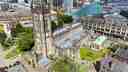
As you walk up Victoria Street, keep your eyes peeled for a huge, ancient-looking building with dark stone and an impressive clock tower sticking straight up into the sky. That’s Manchester Cathedral, right ahead! Its tall pinnacles and Gothic windows really stand out-just look for the countless pointed arches and the row of statues and stonework marching along the roof. The garden around it softens the stone with trees and grass, making the whole spot feel like a little island of history in the busy city. Now, imagine yourself standing here about 600 years ago. The ground you’re standing on has hosted prayers, secrets, celebrations, and maybe even a ghost or two. Manchester Cathedral-officially the Cathedral and Collegiate Church of St Mary, St Denys, and St George-is the beating heart of Manchester’s church life. You’re facing a building that’s seen everything from medieval pageantry to wartime bombing raids: talk about weathering a storm or two! Built with the dramatic style called Perpendicular Gothic, the cathedral’s tower and battlements look ready for a fairytale-if that fairytale involved lots of choir boys and fewer dragons. Step closer and you’ll spot the rich carvings: flying angels, ancient shields, and even gilded musical instruments held by stone figures above your head. And if you hear a creak inside, no, it’s probably not the ghost of James Stanley II-a warden with a penchant for grand designs. He rebuilt much of what you see in the 1400s, and he had quite the eye for detail… and a suspicious fondness for golden paint. There’s a mystery tucked just inside the cathedral too: the Angel Stone. It’s a little carving of an angel with a scroll, discovered hidden in the wall. Some say it’s from the year 700, some argue it’s only from the twelfth century. Either way, its message, written in Latin, says, “Into thy hands, O Lord, I commend my spirit.” Makes you wonder how many people whispered the same thing over the centuries-especially when the Vikings turned up, axes in hand! Once upon a time, a church here even made it into the Domesday Book-nearly a thousand years ago. Overrun by Danish invaders, rebuilt by English kings, and shaped over generations, this patch of ground has seen as much drama as any soap opera. So, while you’re standing here, gaze up at those mighty towers and give a little nod to all the builders, bishops, and brave souls who shaped Manchester itself. And remember: if you spot any angels peeking out from the stone, make sure to wave-they’ve been hanging around waiting for some company!
専用ページを開く →

さらに12件のスポットを表示表示するスポットを減らすexpand_moreexpand_less
Look straight ahead and you’ll spot a tall, white, pointy tent that almost looks like a giant wizard’s hat rising above the crowds. Strings of warm fairy lights zigzag overhead,…もっと読む折りたたむ
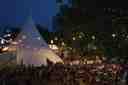
Look straight ahead and you’ll spot a tall, white, pointy tent that almost looks like a giant wizard’s hat rising above the crowds. Strings of warm fairy lights zigzag overhead, making the whole place feel like a magical secret garden party. There are plenty of tables filled with chatting people, and you might even hear the distant hum of a stage or laughter bubbling up from the crowd. If you see those glimmering lights and that sharp white tent under the trees, you’ve found the Manchester International Festival. Now, imagine the city buzzing with artists, performers, and crowds from all over the world, all gathered in Manchester’s heart just to see what’s never been seen before. The Manchester International Festival isn’t just any festival - it’s a creative explosion, dedicated to brand new works that you won’t find anywhere else. Every two years, this space fills up with music, theatre, art, and wild ideas. It all started back in 2007, with a little help from the city’s wild spirit and a few big surprises: Gorillaz played an epic show, 8,000 schoolchildren sang their hearts out, and an art installation filled the Central Library with stories of war and hope. And that was just the warm-up! When the first official festival hit, things really took off: imagine 45 Chinese circus acrobats and Shaolin monks tumbling and flying across the Palace Theatre stage, with a thumping soundtrack from Damon Albarn and breathtaking visuals from Jamie Hewlett - all inspired by the ancient Chinese tale, Journey to the West. Quite the adventure, right? Not to be outdone, Manchester’s own artists and musicians have thrown themselves into the mix ever since. One year, Kraftwerk and Steve Reich lit up the Velodrome with electronic beats. Another, performance artist Marina Abramović turned the Whitworth Gallery into a place where art and life felt like one. Rumor has it, even Elbow and The Hallé Orchestra have made the city’s streets shake with music. Today, the festival’s new home at Factory International is no less spectacular - an architectural wonder, with future legends waiting to be born inside its walls. It’s a place that turns wild ideas into reality, no matter how strange or wonderful. So take it in for a moment. You’re not just at a festival - you’re standing in the middle of Manchester’s imagination. And who knows what the next festival will bring? Maybe you’ll be part of the story next time - just don’t try any acrobatics unless you’ve warmed up first! Fascinated by the pre-festival commissions, mif 07 or the mif 09? Let's chat about it
専用ページを開く →Take a look just ahead-you’ll see a huge shimmering wall of glass, towering up with a jungle of white steel beams criss-crossing behind it. Above your head, in bold red and black…もっと読む折りたたむ
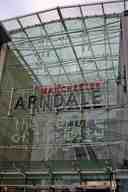
Take a look just ahead-you’ll see a huge shimmering wall of glass, towering up with a jungle of white steel beams criss-crossing behind it. Above your head, in bold red and black letters, “Manchester Arndale” is calling out its name like a proud headline. It’s modern, bright, and impossible to miss. Your reflection might even blink back at you from the giant panels as you get closer. Welcome to the Manchester Arndale! If shopping had a beating heart in Manchester, this would be it. Imagine it’s the 1970s: bell-bottoms, disco music, and the city buzzing with excitement and change. The Arndale was built to be a shining symbol of modern life. It took nearly a decade, cost a fortune-£100 million-and opened its doors piece by piece, like a magician revealing his tricks. But the magic wasn’t all straightforward; before this glass palace stood here, Market Street was cluttered, war-damaged, and stuck in the past. Manchester desperately needed a makeover-and the Arndale was the answer. This isn’t just any old shopping centre. With almost 1.4 million square feet of space, it’s one of the biggest in Europe! If you laid out all the floor tiles, you’d probably have enough to tile the road from here to Liverpool. Over 41 million visitors come each year for a spot of shopping, many of them popping in just to admire the sheer size of it all. The Trafford Centre, Manchester’s other giant shopping spot, gets fewer visitors-so Arndale loves to boast about that! But back to our story. The clever (and slightly odd-couple) team behind the Arndale had real vision. Arnold Hagenbach, the quiet Yorkshireman, and Sam Chippindale, the bold estate agent, joined forces, bought up the land, and convinced skeptical city leaders to let them build their dream. They even named the new centre after their own names: Arnold and Chippindale-a bit of property developer magic. Over the years, the Arndale has seen everything-from a bombing in 1996 that nearly finished it off, to countless shopping sprees and makeovers. Today, as you stand in the shadow of all this bright glass and steel, you’re standing at the heart of the city’s optimism-and its love of a good bargain. Now, if you’re planning on finding just one shop inside, good luck! People say you can enter the Arndale and not see daylight again until you’ve forgotten what you came for… So, ready for some Manchester magic?
専用ページを開く →Directly in front of you stands St Ann’s Church, impossible to miss with its tall, slightly weathered clock tower and striking stonework. Just look for the big square tower with a…もっと読む折りたたむ
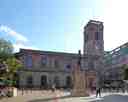
Directly in front of you stands St Ann’s Church, impossible to miss with its tall, slightly weathered clock tower and striking stonework. Just look for the big square tower with a classic clock set high above the street-its face looks out towards the square. The building’s made from a patchwork of sandstone in gentle reds, browns, and greys, telling its own colourful story of centuries’ worth of repairs. The arched windows and chunky columns by the entrance give the church a graceful-but very sturdy-appearance. It’s got an old-world charm, surrounded by city sounds and the cobbled square beneath your feet. Now, step closer and imagine it’s the early 1700s. Manchester isn’t bustling with shoppers or buses yet-back then, this land was known as Acres Field, mostly cornfields and the odd fairground, with the air filled with the sound of livestock and market traders. St Ann’s Church was built when Manchester was barely more than a large country village. Lady Ann Bland, who was as determined as she was stylish, decided the little town needed something grand-and she put her money to good use. In 1709, she laid the very first stone right here, hoping to build a place for gathering and worship amidst fields where fairground tents once stood. The church was named St Ann’s, but don’t forget, that’s a double tribute: one for Saint Anne herself, and a cheeky compliment to Lady Ann Bland and Queen Anne too. The church you see today has changed a bit over the centuries. The walls were once a rich, rosy red from nearby Collyhurst stone, but it was so soft it wore away. So over time, builders mixed in stones from all over the region-think of it as a Manchester patchwork quilt. Picture walking inside two centuries ago: simple furniture, clear windows letting in the pale northern light, and a plain altar. But people here love a bit of colour, so in the 1800s, in came stained glass windows! Some were made just for this church, and others were reused from churches no longer standing. Look for the famous north-side window crafted by William Peckitt, one of the best glassmakers of his day. And up front, a Queen Anne altar table, possibly the last one of its kind. Got an eye for drama? There’s a painting inside-"The Descent from the Cross"-that once hung in St Peter’s Church before it was lost to time and city progress. Now spin around and look at that proud tower. For years, surveyors actually used it to measure distances throughout Manchester! You can still spot their benchmark mark right on the door. St Ann's Square, just outside, used to host a fair every year for centuries, and it’s now home to statues: Richard Cobden gazes out thoughtfully, and a Boer War Memorial stands nearby. Even the bank on the corner is stylish-it’s a copycat of an Italian palace, honestly out-shining everyone else on the high street since 1848. Back in Lady Bland’s day, the line between Manchester’s “old church” and “new church” was like the biggest social decision of the week: do you attend St Ann’s in the morning or afternoon? John Byrom, who wrote “Christians Awake,” liked to keep everyone guessing by popping into both, depending on his mood-and his political loyalties. So here you are, standing at the very heart of the city, where Manchester grew up around stories of fashion, faith, rivalry, and more than a little bit of local pride. Imagine the fields, feel the cobbles, listen out for market sounds long gone, and know you’re treading the same path as centuries of Mancunians before you.
専用ページを開く →Take a look just ahead-there it is, King Street in all its grand, bustling glory. The street here is lined with tall, imposing buildings dressed in all sorts of smart stonework.…もっと読む折りたたむ
Take a look just ahead-there it is, King Street in all its grand, bustling glory. The street here is lined with tall, imposing buildings dressed in all sorts of smart stonework. To your left and right you’ll notice pillars, cornices, and rows of windows marching down the street like a parade of well-dressed Victorian gentlemen. The street narrows a little further down, and if you squint just right you might spot hints of red brick and bits of the city’s older heritage peeking out from behind the more modern facades. That traditional red phone box on the corner is your cue you’re on authentic British soil, and if the double-decker buses don’t convince you, nothing will! Now, as you stand on King Street, let your mind wander back to the 18th century. Imagine this place, not filled with glossy boutique windows, but echoing with the clink of coins and the rustle of banking ledgers. Yes, King Street once ruled as the financial heart of Manchester-the “Wall Street of the North!” Bankers in top hats hurried to grand offices, and carriages clattered over cobblestones. The air then wasn’t filled with the scent of luxury leather handbags, but with the sharp tang of ink and polished brass. But the street is a chameleon! Over decades, it has swapped briefcases for shopping bags. Today, you might catch the faint shimmer of Armani or the bold patterns of Diesel peeking out from shop fronts. If you feel a delicious sense of anticipation, that’s just King Street working its magic-will you stumble on a secret vintage shop, or get swept up in the latest designer trends? And here’s a bit of a twist-the first Town Hall of Manchester stood right here, facing Cross Street. Picture the city’s first politicians striding up the steps, perhaps wishing their wigs would stay on in the Manchester wind! The Town Hall’s old façade was so loved that when it was replaced, they carefully moved it brick by brick to Heaton Park. Imagine the drama, bits of the city literally walking away. Look up now, and you’ll see layers of history-windows and columns from grand banks, the sharp lines of modern offices, all rubbing shoulders on a street where every corner whispers a new story. And if you feel the pull to window-shop your way to bankruptcy, don’t worry-you wouldn’t be the first. Welcome to King Street, where fortunes were made and spent, sometimes all in the same afternoon!
専用ページを開く →Look straight ahead and you can’t miss it - Manchester Town Hall looms up like a palace out of a storybook. It’s a dramatic, grey-brown Gothic building with a tall, pointed clock…もっと読む折りたたむ
Look straight ahead and you can’t miss it - Manchester Town Hall looms up like a palace out of a storybook. It’s a dramatic, grey-brown Gothic building with a tall, pointed clock tower that stretches up towards the sky like it’s trying to catch the clouds. There are arches, spires, and windows everywhere you look. Right in front of you is Albert Square, often alive with the sound of people, buskers, and sometimes, the odd pigeon flapping off with a forgotten sandwich. Now, picture it’s the 1870s. Manchester is bustling-a city of smoky chimneys, clanging trams, and the constant hum of factories. The Town Hall was built right in the middle of all this action, with a mission: to show the world that Manchester deserved to be called a city of greatness, not just cotton. It took nine years, fourteen million bricks, and more than a few sore backs to put this grand building together. The clock tower in front of you is called Great Abel, after the mayor at the time-imagine his surprise having a whole clock named after him! And oh, it’s 280 feet tall, so try not to get dizzy if you look straight up.. Behind these giant stone walls, you'd find fancy meeting rooms, offices for the city’s top brass, and the famous Great Hall, covered with murals that show Manchester’s wild journey from muddy market town to industrial powerhouse. Inside, statues and busts of famous locals-like John Dalton and James Joule-keep a watchful eye on everyone coming and going. If those sculptures had ears, they’d gossip for centuries! The front faces Albert Square; the back looks toward St Peter’s Square, so the building is at the heart of all the city’s action. Sadly, if you’re hoping to sneak in today, the Town Hall and the whole square are shut for a massive makeover-but rumor has it the reopening in 2026 will be a real show-stopper. So, as you stand here, imagine carriages rolling up, city officials striding through, and the bell overhead ringing out through foggy Victorian Manchester. Just don’t try to count all the windows-you’ll run out of fingers and toes!
専用ページを開く →If you’re facing the Free Trade Hall, keep your eyes peeled for a grand, sandy-colored stone building towering above Peter Street. It has two impressive floors with long rows of…もっと読む折りたたむ
If you’re facing the Free Trade Hall, keep your eyes peeled for a grand, sandy-colored stone building towering above Peter Street. It has two impressive floors with long rows of arches on the ground level-almost like you’re about to walk into an old Roman palace rather than a concert hall. Look out for the rounded arches along the sidewalk, each one like an entrance to another story from Manchester’s past. Above, tall windows and carved statues and shields peek out between columns, and if you squint, you’ll spot shields and detailed stonework just over the arches. This is no ordinary building, so if you see a structure that looks like it could host a grand ball or a royal gathering-you're in the right place! Now, let’s imagine we’re standing here on Peter Street, the past swirling around us like a movie set. You’re right outside the Free Trade Hall, a place with stories almost as layered as its stonework! Built back in the 1850s, this magnificent hall actually stands on the same ground where the Peterloo Massacre took place-where crowds once gathered demanding rights and fair laws. The building itself was put up to celebrate the end of the Corn Laws-a pretty dry-sounding thing, unless you were starving in the 1840s, then it was big news! Its architect, Edward Walters, designed it like an Italian palace, with all these elegant arches and columns. The details above your head-carved figures, shields, and statues-represent different trades and places, as if this building wanted to tell the whole world about Manchester’s big ambitions. But this hall hasn’t always been filled with music and applause. During World War II, bombs swept through Manchester, and the Free Trade Hall was just a shell for a while, echoing with memories rather than music. Then, rising from the rubble, it was rebuilt and became the home to the Hallé Orchestra. The music returned, echoing through its walls, and even the Beatles played here once! Eventually, the rattling of pop concerts grew quiet, and in 1996, the Hallé Orchestra moved to the new Bridgewater Hall. Today, this grand old hall hides a hotel inside-so if you’re after a posh night’s sleep, you couldn’t do better than under Manchester history! And by the way, Pevsner-a famous architecture critic-described it as “the noblest monument in the Cinquecento style in England.”
専用ページを開く →To spot the former site of The Haçienda, look to the corner of Whitworth Street West and Albion Street, right by the Rochdale Canal. There aren’t flashing neon signs or a thumping…もっと読む折りたたむ
To spot the former site of The Haçienda, look to the corner of Whitworth Street West and Albion Street, right by the Rochdale Canal. There aren’t flashing neon signs or a thumping bass anymore, just modern apartment blocks standing exactly where a curved, red-brick warehouse once buzzed with some of the wildest nights in Manchester’s history. Walk up close and imagine a big, curved frontage made of dark red brick-if you squint, you might just feel the ghosts of those legendary nights drifting out through the walls. Right where you’re standing used to be the most famous nightclub in Manchester: The Haçienda. You might not hear the boom of rave music now, but trust me, back in the 1980s and ‘90s, this spot was so alive you could almost taste the music in the air. Factory Records, New Order, Tony Wilson-the giants of Manchester music poured heart, soul, and a lot of cash into this place, hoping for endless nights of dancing and big bar tabs. Instead, everyone was too busy enjoying themselves to actually buy drinks. Ecstasy was the drink of choice...the kind you don’t get on tap! It was more than just a club; it was a movement. People flocked here for acid house, rave, and a sense of freedom they couldn’t find anywhere else. Downstairs, you’d find the cocktail bar cheekily named The Gay Traitor. Why? So many spy stories behind those names, you’d think James Bond was DJing. The stage on the main floor hosted legends-The Smiths, Madonna’s first UK performance, German electro pioneers. Crowds packed shoulder to shoulder, mad for the music, swaying as strobe lights flickered overhead. One night, Einstürzende Neubauten brought drills on stage… and actually drilled into the brick walls. Now that’s what I call getting into your work. The wild mix carried on until the party just couldn’t last. With financial woes and a little too much drama, it finally shut its doors in 1997. Bernard Manning, the first act, even said he’d “played some dumps, but this is something else!” (He wasn’t wrong.) So, as you stand here and look up, take a second to picture it all-the pulsing lights, the echoing tunes, a sea of ecstatic faces. What do you think-the ghosts of Manchester’s wildest nights still dancing around you? That’s the Haçienda magic.
専用ページを開く →Look just ahead and slightly to your left and you’ll spot one of Manchester’s most eye-catching giants-the Kimpton Clocktower Hotel. You’ll know it by its striking red brick and…もっと読む折りたたむ
Look just ahead and slightly to your left and you’ll spot one of Manchester’s most eye-catching giants-the Kimpton Clocktower Hotel. You’ll know it by its striking red brick and terracotta walls, looking like something right out of a Victorian postcard, and that whopping great clock tower looming 217 feet over the corner. The roof is capped with little turrets, and the grand entrance looks like it’s just waiting for a parade of Victorian gentlemen to stroll out with umbrellas and bowler hats. Now, imagine standing here over a hundred years ago. People are bustling past in thick coats, horses clatter down the street, and the massive double doors swing open as office workers hurry in-men with neatly trimmed moustaches and ladies in long skirts. Back then, this was the Refuge Assurance Building, as posh as they come. It was built in pieces between 1891 and 1932, designed by the famous Waterhouse architects-the only time a building in Manchester was ever described as “looking positively cheerful in all weathers.” Inside, the business hall was open and echoing, covered in fancy glazed brick. If you listen closely, you might even hear the ghosts of lunchtime dancers in the basement ballroom-turns out, accountants can boogie! Life inside wasn’t all waltzes and cheese sandwiches, though. Around 2,000 people worked here, and the rules were stricter than a vicar on Sunday. Women had to reapply for jobs if they dared to get married, and some areas were for men only. The ballroom, which now throws glamorous parties, was once the staff dining room-men and women sat on different sides, just to keep things proper! As the decades rolled on, the building went from company HQ to a lonely, empty shell-Manchester’s fanciest ghost house. Legend has it, there’s even a real ghost: a sad war widow who flits down the men-only staircase at night. Room 261 is said to be haunted by the sound of children playing, so maybe don’t book that one if you want a quiet night’s sleep! The Refuge Assurance Company moved out in the 1980s, but Manchester’s love for this grand old dame never faded. Over the years, it’s been reborn as a hotel, each time with a new name and fresh chance for glamour. See that glass dome in reception? That was salvaged from a Scottish railway station-talk about travelling in style! Today it’s the Kimpton Clocktower, and it’s as grand as ever, welcoming guests instead of clerks, and throwing more parties than the average office Christmas do. So next time you pass by at midnight, listen out-you might just hear the strains of a ghostly waltz or the giggles of mischievous Victorian children. Manchester never lets its stories sleep!
専用ページを開く →Right in front of you is the Palace Theatre, Manchester-easy to spot with its pale stone façade on the busy corner of Oxford Street and Whitworth Street. Just look for that tall,…もっと読む折りたたむ
Right in front of you is the Palace Theatre, Manchester-easy to spot with its pale stone façade on the busy corner of Oxford Street and Whitworth Street. Just look for that tall, blocky building with big banners advertising the latest shows and the black and gold “Palace Theatre” sign above the main entrance. It has an old-school charm with tall pillars and the theatre’s name gleaming down at you, almost calling you in with the promise of a great night out. Can you imagine standing here back in 1891, people in fancy hats and the clip-clop of horse-drawn carriages passing by? The Palace Theatre was brand new and it proudly showed off its shiny walls and grand entrance, designed by architect Alfred Darbyshire at the price of £40,500-which, in those days, was a small fortune! Inside, the “Grand Old Lady of Oxford Street” once fit nearly twice as many people as today. Between the spectacular decorations by the famous Frank Matcham and the handy little pass door he put in-so the manager wouldn’t have to dash through the Manchester rain to get backstage-comfort was a priority. Imagine thunder rumbling outside while inside, the theatre glowed with lights and excitement. Over the years, the Palace weathered more drama than some of its performers. During the Manchester Blitz in 1940, a German bomb hit the building. The theatre survived, though not without a few new battle scars. It was close to shutting down in the 1970s, but support rolled in and she came roaring back, redone and ready for more showbiz. Today, the Palace Theatre is one of the largest and grandest stages outside of London. From the Royal Opera to ballet, musicals, comedy, and legends like Judy Garland and Laurel and Hardy, its stage has seen it all. Can you hear that applause echoing around you? Even if you can’t spot a celebrity walking by, you’re definitely standing on star-studded ground. And here’s a bit of theatrical irony: When the Palace first opened, its launch production-Cleopatra-flopped! For years, it couldn’t draw big crowds. But as soon as they added more popular acts, it became a hit, showing the people of Manchester simply have great taste. So, next time you see the Palace’s doors open, why not step inside? You never know what magic’s waiting behind the curtain.
専用ページを開く →If you’re scanning Sackville Gardens, look for a bronze figure sitting quietly on a park bench-that’s your man, Alan Turing. He’s not just relaxing-he’s holding an apple, looking…もっと読む折りたたむ
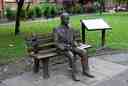
If you’re scanning Sackville Gardens, look for a bronze figure sitting quietly on a park bench-that’s your man, Alan Turing. He’s not just relaxing-he’s holding an apple, looking thoughtful, as if he just cracked the world’s hardest code or maybe he’s wondering if anyone will ever invent Wi-Fi in the park. You can’t miss him. He’s right in the heart of the green, with a plaque at his feet and the University of Manchester to one side, and the legendary Canal Street just a short stroll away. Now as you stand here, picture this: the gentle buzz of the city, students rushing to class, and the laughter drifting over from Canal Street. Sixty years ago, Alan Turing walked these same paths. He’s the father of modern computing-basically, if your phone is clever enough to find the best takeaway nearby, thank Turing. But Turing’s life wasn’t just about logic and numbers. He loved this city, but it didn’t always love him back. In the 1950s, being himself was a crime, but today, he’s a hero to both scientists and the LGBTQ+ community-a symbol that genius can’t be hidden away, no matter how hard the world tries. Take a closer look at the bench. You’ll see those mysterious letters carved into the back-an encoded message, slightly baffling, forever a riddle, just like Alan himself. The apple in his hand is full of stories, too. Some say it hints at the way his life ended, others think it’s a nod to curiosity-the very spark that drove Turing to break the secret Enigma code and save countless lives in World War II. When they built this statue, the sculptor, Glyn Hughes, even buried his old Amstrad computer beneath the bench-just in case Alan ever wanted to get back online. The memorial wasn’t a simple project, either-locals, activists, even actors joined together, raising money through donations and a “village lottery.” So linger here for a moment. Think about courage, about puzzles, and about the beauty of being unapologetically yourself. Alan Turing’s story is Manchester’s story-a bit mysterious, a bit rebellious, and always, always full of heart. And remember: if you ever solve the secret code on the bench, let me know-I promise to be impressed!
専用ページを開く →To spot the Manchester Art Gallery, look directly ahead for a striking, pale stone building that looks like it’s stepped straight out of Ancient Greece. You’ll notice the tall…もっと読む折りたたむ
To spot the Manchester Art Gallery, look directly ahead for a striking, pale stone building that looks like it’s stepped straight out of Ancient Greece. You’ll notice the tall columns along the front, like something you’d expect to see philosophers discussing the meaning of life beneath. Above the main doorway, there’s a big, triangular roof-a “pediment” if you’re feeling posh-and rows of neat windows peeking out from the stonework. If you see banners floating by the columns and a fancy metal fence, you’ve made it! Alright, take a breath and imagine it’s the early 1800s. Horses clop past where trams run now. Scholars and inventors sweep through these doors, eager to dazzle Manchester with new ideas and art. Back then, this building was for a society of serious thinkers-kind of like a genius club, but with way more impressive hats. So, welcome to Manchester Art Gallery! It’s free to visit and stuffed with over 25,000 treasures-paintings, sculptures, and objects both weird and wonderful. The gallery isn’t just one building, either. Two out of the three were created by Sir Charles Barry-the very guy behind the Houses of Parliament. Fancy, right? His work has been standing strong since the 1820s, with grand Ionic columns and an entrance that looks like it could lead to a secret library. Now, imagine the drama: in 1913, three women charged in and smashed the glass over thirteen paintings during a protest for women’s suffrage. Paintings by big names got damaged-just a bit of Victorian chaos for Manchester! Turns out, art galleries aren’t always quiet. The gallery’s collection started with a single painting, James Northcote’s portrait of the actor Ira Aldridge. Could anyone in 1827 have guessed the gallery would draw over half a million visitors a year? Or that it would be managed through a delicate blend of city spirit, charity, and the pure stubbornness of Mancunians determined to show off their art? Step inside, if you like! The Manchester Art Gallery is open almost every day and, sometimes, even late on Wednesdays. If you listen closely, maybe you’ll catch the faint echo of those 19th-century scholars-or just the footsteps of the next art lover on their own adventure. For further insights on the governance, architecture or the collections, feel free to navigate to the chat section below and inquire.
専用ページを開く →Look straight ahead for a grand old building planted right on the corner of Mosley Street and Charlotte Street. It’s all stone, with four huge, ancient-looking columns holding up…もっと読む折りたたむ
Look straight ahead for a grand old building planted right on the corner of Mosley Street and Charlotte Street. It’s all stone, with four huge, ancient-looking columns holding up a triangle-shaped pediment that says “THE PORTICO LIBRARY.” To find it easily, just look for the impressive columns standing out from the more modern glass and brick buildings around it - trust me, this place doesn’t blend in. There are a few steps leading up between the columns, so if you see people popping in and out and a little red postbox, you’ve found your mark. Alright, picture this: It’s the early 1800s. You and a bunch of clever, slightly eccentric Manchester businessmen are huddling on a cold day, dreaming up a plan. “Let’s make a place with all the best books, and newspapers too, where great minds can meet, chat, and maybe have a cuppa!” That spark of an idea is how The Portico Library began-a real life version of the ultimate group chat. When you step closer, take in those grand columns. They aren’t just showing off-they’re Manchester’s first taste of the Greek Revival style, and they were drawn up by Thomas Harrison, a man who clearly liked a bit of drama in his buildings. Inside, you’d find oak shelves stacked with 19th-century literature, the air filled with a comforting musty-paper scent. Back when it opened in 1806, the ground floor was humming with the city’s brightest minds, and you might’ve even bumped into Peter Mark Roget fiddling with his early lists-a little project that later became the famous Roget’s Thesaurus. Imagine nipping inside for a book, only to overhear the secret recipe for a thesaurus being born! For decades, the Portico has perched on this corner, carrying stories from every era. It was built with money collected from 400 locals, all keen to show off Manchester’s brainpower. Over the years, it’s weathered world wars, dodged demolition, and even played host to a bank and a pub downstairs-talk about a side hustle. The inside used to have reading rooms with a shining glass dome high above, and today, its unique collection and archives are just as dazzling. If you love a twist, you’ll be pleased to know that in 2023, the library was awarded a huge grant to turn all three historic floors into one magical space again-complete with a Northern bookshop, events, and dining. Get ready for more secrets, stories, and maybe the odd ghostly page-turner or two. Portico isn’t just about old books and fancy columns either. Literature prizes are judged here, uncovering the next big writer from Manchester or beyond. And in those early days? Even Eric Cantona and Sir Robert Peel have graced this place! So, as you stand here, next to those mighty pillars, imagine the buzz of clever conversation, shuffle of newspaper pages, and maybe, just maybe, the ghostly tap of a thoughtful librarian’s pen. The most refined little building in Manchester, right in front of you-don’t let its calm looks fool you, this place has been a stage for centuries of magnificent Manchester stories. And who knows? Maybe yours will be next!
専用ページを開く →
よくある質問
ツアーはどうやって始めますか?
購入後、AudaToursアプリをダウンロードして引き換えコードを入力してください。ツアーはすぐに開始できます。再生ボタンをタップして、GPSガイド付きルートに従うだけです。
ツアー中にインターネットは必要ですか?
いいえ!開始前にツアーをダウンロードしておけば、完全にオフラインで楽しめます。チャット機能のみインターネットが必要です。モバイルデータを節約するため、WiFi環境でのダウンロードをお勧めします。
これは団体ツアーですか?
いいえ、これはセルフガイド式のオーディオツアーです。ガイドや団体、決まったスケジュールに縛られることなく、スマホから流れるナレーションを聴きながら自分のペースで自由に探索できます。
ツアーの所要時間は?
ほとんどのツアーは60〜90分で完了しますが、ペースは完全に自由です。好きな時に一時停止したり、スポットを飛ばしたり、休憩を取ったりできます。
今日中にツアーを終えられない場合は?
問題ありません!ツアーには無期限でアクセスできます。明日、来週、あるいは来年でも、好きな時に再開できます。進行状況は保存されます。
どの言語が利用可能ですか?
すべてのツアーが50以上の言語に対応しています。コードを引き換える際にお好みの言語を選択してください。注意:ツアー生成後に言語を変更することはできません。
購入後、どこからツアーにアクセスできますか?
App StoreまたはGoogle Playから無料のAudaToursアプリをダウンロードしてください。メールで届いた引き換えコードを入力すると、ライブラリにツアーが表示され、ダウンロードして開始できるようになります。
もしツアーを楽しめなかった場合は、返金いたします。お問い合わせ先: [email protected]
以下の決済で安全にチェックアウト