AudaTours logoAudaTours

ヘレフォード音声ガイドツアー:ヘレフォードの歴史的ハイライトを巡る旅

オーディオガイド15 か所

ヘレフォードの大聖堂の尖塔と緑豊かな広場の静けさの下には、争う貴族、古代の聖歌隊、そして消え去った城壁の秘密が静かに残っています。このセルフガイド音声ツアーは、街の歴史ある中心部を散策し、政治的策略、スキャンダラスな物語、そして何世紀も前の謎を解き明かすよう誘います。ほとんどの訪問者が静かな中庭や空っぽの緑地しか見ない場所で。どの司教が歌手を懲らしめるために大学全体を移転させたのでしょうか?なぜ校長たちはイングランドで最も古い現存する学校の一つで白樺の棒を振るったのでしょうか?ヘレフォード城で、墓地を攻城兵器の備蓄に変えた絶望的な行為とは何だったのでしょうか? 時間を旅し、中世の教区牧師、戦う王、反抗的な学生、忘れ去られた防衛者の足跡をたどります。隠された四角い中庭でのささやくようなメロディーから、幽霊の出る場所でのカタパルトのこだまへと移りましょう。旅の終わりには、ヘレフォードは鮮やかな物語と予期せぬドラマとともにあなたの周りに広がります。さあ、始めてみませんか—あなたの足元に歴史が隠そうとした層を掘り起こしましょう。

ツアーのプレビュー

map

このツアーについて

  • schedule
    所要時間 40–60 mins自分のペースで進める
  • straighten
    ウォーキングルート 4.4kmガイド付きパスに沿って進む
  • location_on
  • wifi_off
    オフライン対応一度のダウンロードでどこでも使える
  • all_inclusive
    無期限アクセスいつでも、ずっと再生可能
  • location_on
    聖歌隊牧師大学から開始

このツアーのスポット

  1. Look ahead for a grand, stone quadrangle with rows of tall chimneys and a peaceful grassy courtyard at its heart-just southeast of the cathedral, it’s hard to miss with its…もっと読む折りたたむ

    Look ahead for a grand, stone quadrangle with rows of tall chimneys and a peaceful grassy courtyard at its heart-just southeast of the cathedral, it’s hard to miss with its stately, historic walls guarding a hidden world inside. Now, imagine yourself stepping back more than 600 years, when this impressive building wasn't just a pretty sight but was filled with the sound of singing voices drifting out from open windows and echoing off the old stone. This is the College of Vicars Choral, a place built to house the men who sang at nearby Hereford Cathedral. In 1395, you’d have met 27 dedicated singers-maybe even caught one humming as he hurried through the cloisters to choir practice. But don’t try to sneak in late, or Bishop Stanberry might move the whole building again, as he did in the 1400s! That’s right, he shifted the college here from Castle Street so the vicars could be just a short dash from their cathedral duties (no excuses for missing rehearsal). Picture them bustling between the quadrangle’s four wings, ducking into the quiet, sun-dappled cloister, or sneaking off for a quick break in the little seventeenth-century chapel. Times changed, and by 1937 the college dissolved, but if you listen closely, maybe you’ll hear the faint chorus of ancient voices still singing just for you. Welcome to the first step of your time-travel adventure in Hereford!

    専用ページを開く →
  2. To spot Hereford Cathedral School, look for the shield-shaped crest topped with bold golden chevrons above large, elegant blue letters spelling out “HEREFORD CATHEDRAL…もっと読む折りたたむ

    To spot Hereford Cathedral School, look for the shield-shaped crest topped with bold golden chevrons above large, elegant blue letters spelling out “HEREFORD CATHEDRAL SCHOOL”-it’s usually on signs or banners right next to the grand Hereford Cathedral. Now, find a comfy spot and picture yourself stepping back more than 1,300 years, when this very school might have been little more than a cluster of hopeful pupils gathered near the shadow of Hereford Cathedral. Imagine the distant sound of bells chiming and the quiet, determined footsteps of monks on ancient stone floors. The origins of Hereford Cathedral School reach right back to the late 7th century-yes, you heard me right!-potentially making it one of the oldest schools in England. It’s as if the walls here have seen more history than a library full of textbooks. The first written record pops up in 1384, with Bishop John Gilbert appointing Richard de Cornwaille as schoolmaster. Picture Richard standing sternly, a birch rod in hand, ruling over his students-discipline, as you might guess, was no laughing matter back then! But don’t worry, these days, the only thing likely to swat you is maybe the odd passing pigeon. Even the school’s library is named after old Bishop Gilbert, while Cornwall House gets its name from Richard-imagine having a house named after you just for being the bossiest teacher around. Over the years, the school was rebuilt more times than a sandcastle at high tide. Generous locals, kings, queens, and even duchesses chipped in-Edward VI gave it a facelift, and Queen Elizabeth I sent along some handy funds. Each century brought new drama: buildings falling into disrepair, heroic fundraising, and, rumor has it, a headmaster or two pulling their hair out over rowdy students. By the 1800s, lessons took place in the headmaster’s own house. Maybe he just wanted to make sure nobody skipped homework, or perhaps he liked the aroma of chalk with his morning tea. By 1875, fresh classrooms were built, and more students arrived each year, with boys in blazers and, eventually, eager girls joining after 1973. Picture a growing tide of students, the chatter of excited voices, and the occasional thump of leather footballs. Hereford Cathedral School is a place of firsts and fascinating traditions. In the junior school, tiny three-year-olds toddle off toward their very first lessons in everything from art to ancient history, exploring a patchwork estate that is part Medieval, part Georgian, and even includes a super-modern building called “The Moat.” Sports? Take your pick: everything from rowing and rugby to fencing and netball. And yes, there’s an annual cross-country race called the Hull Cup. The legend goes that a former Cathedral organist thought the choirboys were looking a bit too round around the edges, so he sent them racing every year. Can you imagine the groans and puffing of the original runners traipsing through the mud? And here’s some fun drama for you-every student becomes part of a house upon arrival. Forget Gryffindor or Slytherin, here it’s Langford, Stuart, Somerset, and Cornwall-named for kings, deans, duchesses, and the very first headmaster. The school’s anthem isn’t just any old song; most gather their voices and belt out the rousing hymn “Jerusalem” when tradition calls. If you ever join in a school assembly, you could be standing with the future’s artists, politicians, scientists, and even celebrity chefs. Old Herefordians, as they call former students, go off and make their own mark-from poets and rugby captains to cider makers (well, this is Hereford, after all). One even returned an overdue library book more than a century later-talk about a late fee! But behind the laughter and lifelong friendships, the school’s journey hasn’t always been easy. Shadows have passed through, as in any long history, but its spirit endures-resilient, resourceful, and still alive with the footsteps and hopes of each new child who runs, sings, and learns here. So, have a look around-imagine the ghosts of centuries past and the students of today interweaving, all connected by a very, very long school day that’s lasted over a millennium. Now that’s what I call homework with history! Curious about the junior school, curriculum or the house system? Don't hesitate to reach out in the chat section for additional details.

    専用ページを開く →

  3. In front of you, standing proudly in the open green space, you’ll see a tall stone column with a decorative top and a blue railing around its base-this striking monument marks the…もっと読む折りたたむ

    In front of you, standing proudly in the open green space, you’ll see a tall stone column with a decorative top and a blue railing around its base-this striking monument marks the heart of what was once Hereford Castle, so look toward the middle of Castle Green. Now, let’s step back in time and let the old stones-and a little imagination-tell their story. Picture the year is sometime before 1052, the air is heavy with smoke and the buzz of anticipation, because Hereford Castle is one of the first castles ever built in England. Instead of this peaceful green and the tall column you see now, picture rambling wooden walls and stone towers, swords and armor glinting in the torchlight as the sun dips behind thick city walls. This castle was first built by a chap named Ralph, the son of the Count of Vexin, who was made Earl of Hereford around 1046. Instead of fixing up Hereford’s broken town walls, young Ralph decided, “Why not build a castle inside the town for a bit of extra flair?” So he did, just where you are now, with the bustling River Wye flowing to the south and busy, crowded Hereford behind him. But poor Ralph, things went a bit sideways. In 1055, Welsh invaders-probably not here for sightseeing-stormed through the area. As the Anglo-Saxon Chronicle puts it, before a single spear was thrown, the English defenders turned tail and fled on horseback, leaving the town and castle to be sacked, burned, and stripped of treasures, relics, and just about anything not nailed down. Harold Godwinson-yes, that Harold who’d later stare down William the Conqueror-came to patch up the city. Yet the fate of the castle was a bit mysterious, like a ruined jigsaw puzzle. After the Norman Conquest in 1066, the castle rose from the ashes again-possibly thanks to William FitzOsbern, who took charge and, if you believe the records, had to put up with a fair bit of trouble. In 1067, the garrison at the castle was harassed by Eadric the Wild, who was clearly not a fan of Norman architecture. Fast-forward to the 12th century and you’ll find Hereford Castle at the centre of more drama than an episode of a medieval soap opera. When King Stephen tried to snatch the throne from the rightful Queen Matilda, Hereford Castle became the target of three memorable sieges. Each time, the defenders-the garrison-put up a brave face but ultimately surrendered. The control of this rocky stronghold changed faster than you could change your socks. Battle after battle took its toll on this place. In April 1138, Geoffrey Talbot nabbed the castle from Stephen’s supporters, but Stephen was not one to give up-he besieged Hereford until the defenders surrendered. And during another fiery siege in 1140, attacking forces even raided a nearby cemetery to build earthworks-imagine that for a bit of dark humor and a whiff of history’s grim realities. All this, while townsfolk cried out as their ancestors’ graves were turned inside out, and catapults-yes, true medieval catapults-were cranked and launched at the mighty walls. You might wonder, where did those epic walls and towers go? After centuries of plots, rebellions, and royal intrigue, Hereford Castle slipped quietly into decline. By the 17th century, after the chaos of the Civil War, the castle was sold off, and its stones were used for other buildings-like a historic form of recycling. The last ruins slowly vanished, as if the ground itself was reclaiming those stories of power and conquest. By the 18th century, the bones of the castle were given over to gentler pursuits. In 1752, the site became Castle Green-a place for strolls, picnics, and memories. And that magnificent column you see, erected in 1809? That’s a monument to Lord Nelson, standing today in the spot that once bristled with the tension of battle. So as you stand here, imagine echoes of armor, the clang of swords, and the shouts of defenders blending with the peaceful songs of birds and the laughter of children-history and present, layered together like stone upon stone. Just goes to show: even the mightiest castle can become a place for reflection, remembrance, and the occasional picnic sandwich. Keep your wits about you-Hereford’s got plenty more secrets to reveal as we roam onward!

    専用ページを開く →
さらに12件のスポットを表示表示するスポットを減らすexpand_moreexpand_less
  1. Alright, stop number seven-Williams’ Hospital! Don’t let the name fool you-no beeping machines or ambulances here! Instead, imagine yourself back in the year 1601. The streets are…もっと読む折りたたむ

    Alright, stop number seven-Williams’ Hospital! Don’t let the name fool you-no beeping machines or ambulances here! Instead, imagine yourself back in the year 1601. The streets are bustling with merchants, horses clip-clopping on uneven stones, and Hereford smells of wood smoke and fresh bread. Right in front of you stands a sanctuary built by a fellow named Richard Williams. He was an attendant of Lord Cobhans-basically the medieval version of a personal assistant, but with fancier hats. Richard looked around his town and thought, “You know, someone ought to help those old chaps struggling to find a place to rest.” And just like that, Williams’ Hospital was born-a home for six elderly men who needed shelter, warmth, and possibly someone to grumble to about the weather. Imagine quiet evenings inside, the men gathered around a fire, swapping tales of their younger days, maybe sneaking an extra biscuit or two. Over 400 years later, Williams’ spirit of kindness still lingers in the air. So next time you grumble about your WiFi signal, remember these lucky chaps-they were overjoyed just to have a roof and a friend. And you’re standing right where their humble adventure began!

    専用ページを開く →
  2. Right in front of you, you’ll spot a grand, face-brick building with decorative domed towers at both ends, fancy windows in rows, and a striking arched doorway in the center-just…もっと読む折りたたむ

    Right in front of you, you’ll spot a grand, face-brick building with decorative domed towers at both ends, fancy windows in rows, and a striking arched doorway in the center-just look for the most elaborate, impressive structure along St Owen’s Street. Welcome to Hereford Town Hall! Imagine you’re stepping back in time, with the steady clop of horse hooves on cobblestones and the voices of busy townsfolk all around. The story of this place starts all the way back in 1620, believe it or not, when the town hall was a quirky, Tudor-style timber building-so eye-catching it would stop even the most serious visitor mid-stride. Back then it looked a bit like a black-and-white wedding cake with gables, towers, and decorations galore. In fact, it was so dramatic that people said it could thrill anyone from anywhere, and if walls could talk, I’m sure these would gossip about who got the biggest turnip at market day! Over time, though, the original wooden hall began to wobble a bit, quite literally. In 1792, uneasy officials chopped the top floor and the tower off, afraid it might all come tumbling down-no one wanted their market sausage with a side of collapsing ceiling! The remaining chunk became part of what folks called Butcher’s Row, a whole series of buildings arching over a lively public market. That market was as wild as any Saturday at the football grounds! Eventually, in 1862, they cleared away the old for the new, demolishing Butcher’s Row to let traffic through. Don’t worry-bits of the past like Grange Court and the Old House still survive nearby. In the late 1800s, city leaders decided Hereford needed something shiny and new-so they picked this very spot, cleared away a row of old houses, and called in the architects. The foundation stone was laid in 1902 by royalty herself, Princess Beatrice. The building you’re looking at is a burst of Edwardian Baroque style, with terracotta facing and super fancy windows. Look up to see its symmetrical front, sturdy domes, and a crest watching over the city, almost like a grand old librarian keeping an eye on the kids. The Town Hall was buzzing with city business for decades-council meetings, grand assemblies, even royal visits! Queen Elizabeth II herself popped by, unveiling a plaque in 1957. Oh, and if you look inside, you’ll find artifacts from HMS Antelope, a warship adopted by Hereford in 1974 but lost in the Falklands War-a reminder that these walls have seen both pride and sorrow. By 1998, the city council moved to new digs, but thankfully, this place was never left to gather dust. Today, Hereford Town Hall is more than just a building; it’s a living witness to the city’s big moments, grand plans, and even the odd royal handshake! And don’t forget to admire the polished facade-its recent facelift in 2019 means it looks as grand as ever. Now, shall we continue our journey through Hereford’s tales and treasures?

    専用ページを開く →
  3. To spot The Old House, look ahead for a striking black and white, three-gabled building with timber beams crossing its walls, standing proudly near the centre of High Town. Now,…もっと読む折りたたむ

    To spot The Old House, look ahead for a striking black and white, three-gabled building with timber beams crossing its walls, standing proudly near the centre of High Town. Now, get ready to step right into the pages of history-welcome to The Old House! Just imagine, you’ve traveled back 400 years without even leaving the pavement. This beautiful, black and white half-timbered house has been standing since 1621, back when it was just one of a whole row of buildings buzzing with butchers chopping and chattering. By the early 1800s, the rest of those houses disappeared-demolished or lost to time-but The Old House survived like a determined contestant on a reality show, ready for each new round! Over the years, this place has worn many hats: butcher’s shop, ironmonger, even a bank. It’s had a bit of a makeover too-a restoration in the 1880s added some fancy carvings, giving it a dash of Victorian style. Keep an eye out for the coat of arms above the doorway; it belongs to the Worshipful Company of Butchers, who made sure this house had a prime cut of Hereford’s story. Take a deep breath and picture bustling Jacobean life all around you. Upstairs, past the creaking stairs, you’d find finely dressed rooms showing how folks lived, slept, even how babies bounced in their walkers! There’s a grand old fireplace-possibly from the 1400s-that once warmed the hearts of another family. The ground floor is flat and welcoming, but to reach the very top, you’ll need to brave those same stairs everyone’s used for centuries. In 1952, The Old House was given Grade 1 listed status, so generations to come can always enjoy a slice of old England-no time machine required. And if you’re curious about the name, it became the Black and White House Museum in 2017 after a fresh refurbishment, proudly showing off its stripes. If only these walls could talk-they’d probably tell a few butcher jokes!

    専用ページを開く →
  4. Right in front of you, you’ll spot a striking black-and-white timber-framed building with distinctive diamond-window panes, just on the corner of a busy square-look for the statue…もっと読む折りたたむ

    Right in front of you, you’ll spot a striking black-and-white timber-framed building with distinctive diamond-window panes, just on the corner of a busy square-look for the statue of a magnificent Hereford bull in the middle of the open space and you can’t miss it! Now, let’s step into the past and soak up the story of Hereford itself! Imagine the gentle rippling of the River Wye nearby, the air carrying the scent of apples from the many orchards that have fueled this city’s famous cider for centuries. Hereford is no ordinary place-it’s been a city since before anyone can remember, its roots stretching back over 1,200 years. The name “Hereford” is a bit of a mystery itself: perhaps it comes from the Anglo-Saxon words “here,” meaning an army, and “ford” for a shallow river crossing. Or maybe the Welsh are right, and it hails from “Henffordd,” the “old road” that hints at Roman legions and long-lost settlements. Back in the 7th century, Hereford was already important enough to earn its own bishop. A few decades later, it was the capital of West Mercia, facing constant intrigue and battles on the border between England and Wales. In fact, in 760, the Britons broke free from English control in the dramatic Battle of Hereford. Centuries of tussles followed: Welsh kings, Anglo-Saxon rulers, and even Scandinavian Vikings leaving their mark as they marched through town-or burned it to the ground and then marched home in triumph, as happened in 1056. Hereford even had its own mint in the time of King Athelstan, which meant shiny silver coins clinking in the pockets of traders and princes alike. You’re standing where countless tales have unfolded. This spot was once overshadowed by the mighty Hereford Castle, so big and forbidding it nearly rivalled Windsor! Sadly, the castle was dismantled in the eighteenth century-today, only echoes of its legendary sieges remain beneath Castle Green. Imagine the earth trembling as thousands of Scottish soldiers tried to take the city during the Civil War in 1645, only to be sent packing after a fierce defense by the townsfolk. King Charles I was so grateful he added the three lions of Richard the Lionheart to Hereford’s coat of arms. Not a bad way to say “thanks,” right? And the characters who’ve passed through! Legend has it Nell Gwynne, the vivacious actress who stole King Charles II’s heart, was born just nearby-though Oxford would like a word about that claim. The brilliant David Garrick, whose name now graces the local theatre, was another local star. Composers like Edward Elgar found inspiration in these meadows and streets, penning masterpieces and turning away, quite politely, offers to be mayor (Elgar, it seems, preferred music to politics). Hereford’s long history isn’t just about castles and coins, though. It became a bustling market town, known for its fine leather goods, tasty cider, and the legendary Hereford cattle-you saw the bronze bull statue, right? Farmers would drive their red-coated beasts right through these streets. If you listen carefully, you might imagine the distant lowing of cattle and the clatter of hooves on the cobblestones. In more recent times, Hereford has kept up with the world. Its industries range from metals to chemicals, and there’s even a sausage roll with a local pedigree. The city rebuilt itself again and again, bouncing back from wartime danger, devastating fires like the tragic Garrick Theatre blaze of 1916, and even the odd traffic jam-Hereford was once voted Britain’s second slowest city for traffic, so if you’re feeling a bit slow today, you’re just keeping with tradition! Today, Hereford is a lively, proud place-still the largest settlement in Herefordshire, brimming with cultural events like the Three Choirs Festival, art weeks where artists open their studios, and a lively sporting scene. The cathedral nearby is a time capsule filled with wonders like the ancient Mappa Mundi, and the timbered Old House before you holds stories of Jacobean life. So take a deep breath and imagine it all: the clash of armies, the cheers of markets, the hush of the river at twilight. Hereford is a place where legends truly do walk the streets-sometimes even right beside you! Curious about the toponymy, governance or the geography? Don't hesitate to reach out in the chat section for additional details.

    専用ページを開く →
  5. Legend has it, the Diocese of Hereford was founded in the year 676, right in the heart of the minor sub-kingdom of Magonsæte. Picture bishops in flowing robes, scribbling with…もっと読む折りたたむ

    Legend has it, the Diocese of Hereford was founded in the year 676, right in the heart of the minor sub-kingdom of Magonsæte. Picture bishops in flowing robes, scribbling with quills, perhaps pausing to swat away a nosy fly. The centerpiece of all this was-and still is-Hereford Cathedral, a stone giant watching over the city. The current bishop, Richard Jackson, continues the line of leaders who’ve shaped this region for centuries-though I should mention, their mitres have gotten a lot more comfortable since medieval times. The diocese stretches far beyond Hereford itself, covering Herefordshire, and southern Shropshire, plus peeking into Worcestershire and even crossing borders into Wales. Imagine it like a spiritual spider web, threaded across towns and farms, connecting everyone from city dwellers to rural villagers. There are 402 churches sprinkled across all that land; that’s almost enough for everyone to have their own aisle seat on Sundays. With a population of just 331,000, you could say there’s not much queuing for a pew-luckily, British people are still awfully polite about it. Hefty titles flutter about here: apart from the Bishop of Hereford, there were helpers like the Bishop suffragan of Ludlow. Over time, some posts have fizzled out. And on the lighter side, three retired bishops now help out-one even came all the way from South West Tanganyika! If they ever form a band, I vote they call themselves “The Mitred Marvels.” Beneath all this pomp, real life unfolds: church bells ring on misty mornings, parishioners greet each other with smiles, and tradition blends with today. Recent reports say the diocese’s congregation is small but mighty-just under 9,000 on a Sunday, but nearly half are aged over 70, so don’t be surprised if you see some very stylish hats and strong cups of tea. Whether you’re spiritual, curious, or simply enjoy the scent of history in the air, the Diocese of Hereford is a living thread in England’s vast tapestry. Now, who’s up for a little ecclesiastical adventure? For further insights on the bishops, statistics or the churches, feel free to navigate to the chat section below and inquire.

    専用ページを開く →
  6. You’re looking for a striking building right ahead of you on Broad Street-it stands out with its ornate, pointed arches, dark stonework, and rows of arched windows, almost like a…もっと読む折りたたむ

    You’re looking for a striking building right ahead of you on Broad Street-it stands out with its ornate, pointed arches, dark stonework, and rows of arched windows, almost like a Venetian palace dropped in the middle of Hereford. Welcome to the Hereford Museum and Art Gallery! Take a deep breath and imagine the scents of old books, polished wood, and the faint tang of museum dust, all wrapped up in this elaborate, castle-like building before you. This isn’t just a place-this is where Hereford’s stories are kept, some stranger than fiction. The building’s façade, with its carved animals, twisting plants, and even signs of the zodiac, looks like something out of a wizard’s tale. If you listen closely, maybe you’ll catch echoes from the past bouncing off those arches. Now, let me whisk you back to 1874, when this striking landmark first opened its doors. Picture it: ladies in feathered hats and gentlemen with twirly mustaches, all shuffling forward for a first look, while the founder, Sir James Rankin, smiled with pride. The museum was his gift-he was the president of the Woolhope Naturalists’ Field Club, a group of history hunters and nature fanatics who’d been poking around Herefordshire since 1851. They named the club after Woolhope Dome, a rocky outcrop where, I imagine, someone once tried to study a boulder and then stubbed their toe. Ouch! Sir James Rankin wasn’t just generous-he was a man on a mission. During his final speech as club president, he stood up and declared, “We’ll have a museum and library for all!” One meeting and 1,750 pounds later (bought from Mr. William Beavon, in case you want to thank him), this city-center plot was transformed into a shining cultural hub. The big opening in 1874 was a huge affair, but here’s the twist-when people stepped inside, there were no display cases! The only thing in some of the rooms was an echo and, maybe, the hope that someone had brought snacks. To solve this, the club let out ground floor rooms as shops-imagine browsing for groceries where priceless mosaics would one day hang. As the pennies rolled in, beautiful display cases were built. The people of Hereford, proud club members, and kindly society folk all donated objects: ancient swords, curious costumes, fossils, Roman mosaics, and yes, a two-headed calf (because every good museum needs one thing to make your jaw drop). The building itself is a work of art, designed by Frederick Robertson Kempson in a Venetian Gothic revival style-think “palace meets fairy tale with a dash of eccentricity.” Those windows upstairs? They once looked into the museum galleries and the club’s secret meeting rooms. The floors above? Cozy little apartments for the curators, who lived surrounded by history, with the smell of old paper and the temptation to sneak down and admire artifacts at midnight. As time ticked by, electric lighting replaced gas in 1900 (probably saving a few eyebrows), and in 1912, thanks to more donations from the likes of Sir Joseph Pulley and his nephew, extensions brought a grand new library and Hereford’s first art gallery. There were art exhibitions, from Joseph Murray Ince’s masterpieces to Grayson Perry’s modern tapestries-plus, a life-sized woolly mammoth replica that must’ve made quite the impression (especially if you weren’t expecting it in the stairwell). For over a century, this museum has been a treasure chest for Hereford: hosting bees on its roof in summer, launching the first Talking Tactile Tablet for blind visitors, and even squeezing in two Roman mosaics along the staircase. But it’s also survived its share of drama-months shut down for asbestos removal, limits on visitors after COVID (only ten people at a time, talk about an exclusive club), and, most recently, closure for a complete transformation. Don’t worry; there’s a happy twist coming. Thanks to a whopping pile of new funding-over £18 million!-the building’s being reborn. Soon, when its doors fly open again, there’ll be new galleries, sparkling exhibition spaces, a rooftop café where you can sip coffee and stare at the city skyline, and a 360-degree viewing terrace. So, next time you pass, it might look different, but it will always be packed with stories-old, new, mysterious, and just a little bit magical. And who knows? Maybe the two-headed calf will greet you at the entrance, winking as if to say, “Bet you didn’t see that coming!” Interested in knowing more about the building, early displays or the recent displays

    専用ページを開く →
  7. To spot St Francis Xavier Church, just look ahead for the building with strong, pale stone columns, a cross perched on top, and a broad entrance flanked by two thick…もっと読む折りたたむ

    To spot St Francis Xavier Church, just look ahead for the building with strong, pale stone columns, a cross perched on top, and a broad entrance flanked by two thick pillars. Picture yourself standing right outside this remarkable church-don’t let the classical pillars and neat facade fool you, because St Francis Xavier Church has a story packed with hidden drama and a touch of mystery. Imagine the year is 1837: crowds gather, everyone’s in their finest, as the foundation stone is laid. The air is filled with the soft clinking of stone tools, and even Queen Victoria sends someone to keep an eye on the excitement. Why all the fuss? Well, it’s about more than bricks and mortar-this is the heart of Catholic hope in the city after many hard years. The church’s architect, Charles Day, wanted to make something grand-two sturdy Doric columns out front, a majestic frieze, and a dome sneaking away at the back. Sneaky detail alert: they didn’t put any windows in the walls. Yep, you heard that right! The dangers of that time meant the builders were worried the windows would be smashed by those unfriendly to Catholics. So, the church’s beautiful light had to creep in from above, through a clever lightwell. Take a deep breath here and imagine the atmosphere inside-ornate plasterwork on the ceiling, sunlight sliding in from above, a hint of incense, and the soft echo of footsteps on the stone floor. Back in those early days, the Jesuits were in charge-guarding a tradition that stretched way back to when their chapel once stood on these very grounds during the Reformation. That’s why the place is named after St Francis Xavier, the famous Jesuit who crossed oceans to teach and help people, all the way to Asia. Oh, and if you’re after a good story, here’s the church’s secret: inside lies a relic-the hand of St John Kemble, a Catholic priest, who was martyred just up the road at Widemarsh Common. Think about that for a second! Every year, pilgrims come to pay their respects to a real-life saint’s hand-talk about a hands-on experience with history! Through tough times, Benedictine monks took over, then later the Archdiocese of Cardiff, and now the story continues-three masses every weekend, connections with the local school, children’s laughter sometimes drifting down the hill. The church has stood for nearly two centuries, its strong columns and cross watching over Hereford’s city centre, with all sorts of hidden tales waiting for those who pass by. So, go ahead-take a look, and imagine who else might have walked these streets, eyes lifted hopefully to this grand old church.

    専用ページを開く →
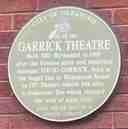
  8. Look for a round, pale green plaque with white writing mounted on a reddish brick wall-this plaque marks the site of the former Garrick Theatre, so keep your eyes at about head…もっと読む折りたたむ

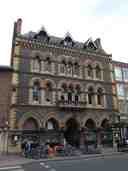
    Look for a round, pale green plaque with white writing mounted on a reddish brick wall-this plaque marks the site of the former Garrick Theatre, so keep your eyes at about head height as you walk along Widemarsh Street. Alright, time for a step back in time-cue the dramatic music and imagine the buzz of Hereford in 1916! Picture yourself surrounded by townsfolk dressed in their finest, soldiers standing tall, and a city alive with the hope of an evening out at the Garrick Theatre. The theatre was a local treasure-built in 1882, later named after Hereford’s own David Garrick, the famous actor-manager born just down the road. The air inside would have been tinged with excitement and a bit of nerves, especially with the world at war outside. On this particular night, the stage was set for a fund-raising concert to support local soldiers from Hereford and Shropshire. Imagine the backstage: dozens of schoolchildren in costumes sparkling with cotton wool, transformed into snow maidens and Eskimos for the big finale. The air must have been thick with anticipation, mixed with whispers and giggles as they waited for their cue. But then, tragedy struck. As a group of children finished their performance and began to shuffle offstage-perhaps giggling, maybe shyly waving to parents-a horrible accident happened. One of the costumes caught fire. With cotton wool being about as flammable as a magician’s flash paper (and definitely not theatre-approved!), flames spread in seconds. The sudden chaos, the cries for help, the rush of parents, performers, and even brave audience members-it’s heart-stopping just to imagine. Despite desperate efforts, six children died that night, and two more followed days later. In the days after, the city was gripped by shock and grief. There was even a touch of mystery and debate-a claim about a carelessly discarded match was raised, but denied by others. The inquest ended with a verdict of accidental death, and the joint funeral was one of the largest Hereford had ever seen. Imagine Broad Street, lined ten deep with mourners, as soldiers carried the tiny coffins. In the aftermath, the people of Hereford raised money for a memorial cot at the local hospital, and though the theatre was rebuilt and then demolished, the memory remained. Today, this plaque-and another inside the cathedral-stand as silent storytellers, reminding us of a night where laughter turned to tears, and how a community came together in the face of heartbreak. So next time you pass here, let the story flicker in your mind-after all, history is best remembered with a spark of imagination.

    専用ページを開く →
  9. You’ll spot Edgar Street as a sprawling football ground ahead of you, flanked by long, tiered stands with signs like “Len Weston Stand”-just keep your eyes peeled for the sweeping…もっと読む折りたたむ

    You’ll spot Edgar Street as a sprawling football ground ahead of you, flanked by long, tiered stands with signs like “Len Weston Stand”-just keep your eyes peeled for the sweeping terraces and the tall floodlight tower reaching for the clouds above the pitch. Now, take a deep breath-the smell of fresh grass, frying onions, and a hint of nostalgia are in the air! You’re standing at the beating heart of Hereford football: Edgar Street, or officially these days, the MandM Edgar Street Stadium. It might look like your classic English ground now, but this pitch is bursting with colorful tales, triumphs, heartbreak, and more than the odd whiff of mud. It's the largest football stadium in Herefordshire, tucked right against the old cattle market-which, in classic Hereford style, is now an upmarket shopping center. Talk about trading cows for crowd cheers! Let’s travel back. Can you hear that? Late 19th century, and this ground is buzzing with amateur teams-no stadium seats, just a running track curling around the pitch like a slow snake. The atmosphere’s lively, everyone’s bundled up against the English chill, and the smell of pipe tobacco drifts through the stands. It was once the Edgar Street Athletic Stadium, where Hereford Athletic and Hereford City played, and it already had quirks you can still spot today. See those odd curved “dead” areas behind each goal? That was for the runners, but now it’s a favorite place for wayward balls and dramatic sliding tackles. Hereford United Football Club moved in for good in 1924, and with them, football fever gripped the city. But, oh, did they have their troubles. Money was always tight. Picture the landlord slashing the rent just to keep the club afloat-imagine your landlord being that generous! In 1931, Hereford City Council came to the rescue, buying the ground for a whopping £3,000. That was big money back then-enough to buy an entire herd of cows, several tractors, and still get a good pie at halftime. Some things changed fast. The ground got its own floodlights in 1953. Not many clubs outside the big city teams could brag about that. You’d see the beams sparkle into the evening, tempting the townsfolk to come down and watch the magic happen under the lights. The crowd would huskily sing, scarves aloft, as the players took to the pitch in the glow. Fast-forward a bit, and the 1970s brought bold new buildings. Look to your right-that’s the Len Weston Stand, squashed right up to the main A49 road. It’s two stories: standing below, super-close to the action, and just five steep rows of seats above providing the best view in the house-even if your knees do bump the row ahead! And yes, the stadium’s so tight to the road, they couldn’t build it any wider, giving it that cozy, “better mind your elbows” feeling. On the left, you’ll see the Merton Stand, finished in the swinging '60s, the only all-seater stand-family friendly, with all the club’s offices, changing rooms, and secrets hidden beneath. It’s the HQ for directors, journalists, and sponsors-so if you ever spill your tea here, make sure it’s not on the boss’s shoes. And behind the northern goal, there’s the famous Meadow End-the noisiest patch of real estate in town. This curved terrace lets fans stand almost on top of the pitch. Every great Hereford goal, every heart-stopping save, it all reverberates off these metal railings. Back in 1972, Ronnie Radford and Ricky George scored legendary goals right here and knocked mighty Newcastle United out of the FA Cup. You can imagine the roar-a literal earthquake of joy-and I bet there are still a few echoes hanging in the air today. For away fans and conspiracy theorists, the southern end was the Blackfriars Street End, but sadly, time caught up with its terraces, and health and safety said “enough!” Now, in 2024, the diggers are demolishing this old section to make way for something new. Stand here long enough and you might even catch the vibration in your shoes. Edgar Street has weathered more drama than a soap opera-financial troubles, shut-downs, phoenix-like rebirths. When Hereford United was wound up in 2014, it felt like the end, but from the ashes came Hereford FC, starting a new chapter with thousands cheering on from these very stands. The biggest crowd ever squeezed in was 18,114 for a cup game against Sheffield Wednesday in 1958. Modern days have seen nearly 5,000 fans shake the Meadow End when Hereford FC went on new cup runs-though in the pandemic, they played one semi-final here with the stands empty, the sound of the match echoing through deserted rows. So, as you stand here, surrounded by echoes of chants, the creak of old seats, and dreams both dashed and reborn, you’re part of a living tradition. Edgar Street isn’t just a football ground-it’s Hereford’s very own beating heart, with fresh chapters still to be written every Saturday.

    専用ページを開く →
  10. Look ahead for a striking modern building with tall glass walls, a wooden slatted roof, and large blue letters that spell out “Courtyard” above the entrance. Now that you’re here…もっと読む折りたたむ

    Look ahead for a striking modern building with tall glass walls, a wooden slatted roof, and large blue letters that spell out “Courtyard” above the entrance. Now that you’re here in front of the Courtyard, let me tell you a tale with plenty of curtain calls and perhaps a spilled cup of coffee or two. Picture this-once upon a time, this very spot was home to the New Hereford Theatre, which started life not as a glamorous stage, but as a rather soggy swimming baths. Over the years, the old building grew tired and outdated. Instead of echoing applause, you might’ve heard the plumbing gurgling louder than a crowd’s cheer! But in 1993, a wave of excitement washed through Hereford when plans began for a brand new arts venue. Suddenly, help arrived: the Lottery Commission splashed out a mighty £3.75 million for the cause. Architects from all around tossed their hats in the ring, but it was Glenn Howells who won the spotlight, creating this bold glass-and-wooden design inspired by an Elizabethan courtyard theatre, like a time machine with WiFi. Imagine, seats arranged in a horseshoe, the stage waiting to spring to life, the smell of sawdust replaced by fresh paint and strong coffee from the café-bar. On the big opening night in September 1998, the doors swung wide, ribbons were cut, and the public poured in, led by the artistic director at the time, Jonathan Stone. Inside, the Main House and Studio can transform at a moment’s notice-a musical, a youth theatre riot, or a national tour; sometimes it’s even a cinema or a lecture hall. Brush past an art gallery, conference rooms, a rehearsal studio, and listen for whispers of rehearsals or the tap of tap shoes upstairs. Once, even a British prime minister used the Studio to launch his campaign-politics and panto under one roof! With its “ultra-cool” look and lively shows, the Courtyard really earns its name-a place for people to gather, to laugh, to gasp in surprise, and sometimes, just to enjoy a sneaky jazz night in the café. You never know what story you’ll step into next!

    専用ページを開く →
  11. To spot Westfields F.C., look for a bright claret and blue shield emblazoned with “Westfields F.C.”-it should stand out proudly on signage or badges just ahead of you. Alright,…もっと読む折りたたむ

    To spot Westfields F.C., look for a bright claret and blue shield emblazoned with “Westfields F.C.”-it should stand out proudly on signage or badges just ahead of you. Alright, football fans and curious wanderers, take a deep breath-can you hear the distant echo of a referee’s whistle? You’re standing in front of Westfields Football Club, where Hereford’s football dreams have been kicking off since a chilly November back in 1966! Imagine it: a group of local kids, probably with muddy knees and giant grins, playing friendly matches on Widemarsh Common just for the joy of it. Among them was Andy Morris, who still carries the torch today as the club’s chief executive-talk about dedication! As time ticked on, the club’s journey took them from those carefree Sunday games to the competitive Herefordshire Sunday League, scooping up trophies and making a name for themselves. By the mid-70s, Westfields’ ambitions were clearly growing-so they introduced a Saturday team and moved from the spartan King George V playing fields to the more promising Thorn Lighting grounds at Rotherwas. If you listen closely, you might almost hear the boots crunching the grass and the cheers rising as Westfields climbed through the leagues. Fast forward to the 1980s-promotion after promotion saw them battling it out in the West Midlands (Regional) League, climbing from Division Two, to Division One, and finally to the Premier Division. These weren’t just lads having a weekend kick-about anymore! By 2002-03, Westfields really hit their stride, pulling off a stunning league and cup double. They didn’t just see off their rivals, Kington Town, they lifted the Herefordshire County Challenge Cup, bringing wild celebrations to the city. But what’s a club without a little drama? In their very first season in the Midlands Alliance, Westfields soared to a terrific sixth place, but the next year the specter of relegation loomed-thankfully, they narrowly dodged disaster in 20th place! Over the following years, they rode waves of excitement, like that unforgettable FA Cup run in 2016-17, facing Curzon Ashton and almost toppling the giants with a plucky 1-1 draw at home. Imagine the tension as every seat in the stadium seemed to vibrate with hope-until Curzon Ashton pulled through in the replay, dashing Hereford’s dreams for another year. Management’s seen its own game of musical chairs: Sean Edwards, the man behind that magical cup run, resigned, passing the baton through Andy Bevan, then Phil Glover, and most recently, Scott Russell in October 2023 after a rocky start to the season. Through it all, the club’s heart stayed true to its claret and blue, inspired by those West Ham legends of England’s 1966 World Cup win. Today, the ground you see, allpay.park, is worth more than a quarter of a million pounds-gleaming with pride and history right in the city’s heart. Their best league finish? Second in the Midland Football Alliance, not once but twice. And the record attendance? Try squeezing 1,825 passionate fans into the ground for a clash against Hereford! So take a moment. Picture those first muddy matches, the thunder of feet in promotion finals, and the electric crackle of a packed stadium. This isn’t just a football club. It’s the living, breathing pulse of Hereford’s local pride.

    専用ページを開く →
  12. You’ll spot Widemarsh Common as a wide, green open field ahead of you, ringed with simple white fences, a few scattered trees, and some large silver-coloured tanks just behind the…もっと読む折りたたむ

    You’ll spot Widemarsh Common as a wide, green open field ahead of you, ringed with simple white fences, a few scattered trees, and some large silver-coloured tanks just behind the pitch-so just look out for those shining metal cylinders in the distance. Welcome to Widemarsh Common, where the grass is always ready for a muddy football tackle or a perfect cricket catch. Imagine the cheers of kids racing after a ball, the sharp sound of a cricket bat connecting, the smell of fresh-cut grass, and sometimes, just a whiff of apples from the cider factories of years gone by. This was once the stomping ground of W. M. Evans & Co., a local cider firm, though their exact spot is a bit of a mystery-perhaps those old tanks in the distance are keeping their secrets! But don’t be fooled by today’s peaceful air, because in 1679, something far darker happened on this very ground. On a breezy August day, crowds gathered at the edge of the field, their voices hushed, eyes fixed on a single brave soul-Saint John Kemble. He stood calm and steady, about to face a harsh fate for his beliefs, eventually becoming one of the famous Catholic martyrs. So whether you’re here for a sunny match or a stroll past cider ghosts and echoes of history, Widemarsh Common has stories to surprise even the most seasoned explorer. Maybe keep your eyes peeled for a stray cricket ball-or the odd wandering spirit with a thirst for cider!

    専用ページを開く →

よくある質問

ツアーはどうやって始めますか?

購入後、AudaToursアプリをダウンロードして引き換えコードを入力してください。ツアーはすぐに開始できます。再生ボタンをタップして、GPSガイド付きルートに従うだけです。

ツアー中にインターネットは必要ですか?

いいえ!開始前にツアーをダウンロードしておけば、完全にオフラインで楽しめます。チャット機能のみインターネットが必要です。モバイルデータを節約するため、WiFi環境でのダウンロードをお勧めします。

これは団体ツアーですか?

いいえ、これはセルフガイド式のオーディオツアーです。ガイドや団体、決まったスケジュールに縛られることなく、スマホから流れるナレーションを聴きながら自分のペースで自由に探索できます。

ツアーの所要時間は?

ほとんどのツアーは60〜90分で完了しますが、ペースは完全に自由です。好きな時に一時停止したり、スポットを飛ばしたり、休憩を取ったりできます。

今日中にツアーを終えられない場合は?

問題ありません!ツアーには無期限でアクセスできます。明日、来週、あるいは来年でも、好きな時に再開できます。進行状況は保存されます。

どの言語が利用可能ですか?

すべてのツアーが50以上の言語に対応しています。コードを引き換える際にお好みの言語を選択してください。注意:ツアー生成後に言語を変更することはできません。

購入後、どこからツアーにアクセスできますか?

App StoreまたはGoogle Playから無料のAudaToursアプリをダウンロードしてください。メールで届いた引き換えコードを入力すると、ライブラリにツアーが表示され、ダウンロードして開始できるようになります。

verified_user
満足保証

もしツアーを楽しめなかった場合は、返金いたします。お問い合わせ先: [email protected]

以下の決済で安全にチェックアウト

Apple PayGoogle PayVisaMastercardPayPal

AudaTours: オーディオツアー

楽しくて手頃なセルフガイド式ウォーキングツアー

アプリを試す arrow_forward

世界中の旅行者に愛されています

format_quote このツアーは街を見るのに本当に良い方法でした。ストーリーは作り込まれすぎず面白くて、自分のペースで探索できるのが良かったです。
format_quote 観光客気分になりすぎず、ブライトンを知るためのしっかりとした方法でした。ナレーションには深みと文脈がありました。
Christoph
Christoph
starstarstarstarstar
ブライトン・ツアー arrow_forward
format_quote 片手にクロワッサンを持ち、期待ゼロで始めました。アプリはただ一緒にいてくれる感じで、プレッシャーもなく、クールな物語を楽しめました。

オーディオツアー使い放題

世界中のすべてのツアーをアンロック

0 ツアー·0 都市·0 国
all_inclusive アンリミテッドを探索