
ブライトン音声ガイドツアー:時間と文化を巡る旅
ブライトンの華やかな表面の下には、観光客の足が届かない場所で、秘密、ドラマ、そして奇抜さに満ちた心が脈打っています。壮麗なマルボロ・ハウスからオールド・スタイン・ガーデンズを抜け、反骨精神あふれるマルボロ・パブ&シアターへと続くセルフガイド音声ツアーに出発し、ほとんどの旅行者が見ることのないワイルドな物語や隠れた場所を発見しましょう。 どのスキャンダルが、ある王子を真夜中に暗いトンネルを滑り降りることを強いたのでしょうか?廃墟となった舞踏室や秘密の庭園には、どんな幽霊話が今も響き渡っているのでしょうか?なぜある大家の妻は、あの悪名高い階段を謎めいた死を遂げたのでしょうか? 曲がりくねった通りやきらめくファサードをたどると、ブライトンの革命的な過去、伝説的なパーティー、海辺の変貌、そして社会的な目覚めが鮮やかに蘇ります。一歩ごとに新たな発見があり、予期せぬ陰謀と忘れられない色彩が、このまばゆい都市の見方を変えるでしょう。 ブライトンがその真の姿を見せてくれます。今すぐ冒険を始めて、ほとんどの人が決して見ることのないものを見つけましょう。
ツアーのプレビュー
このツアーについて
- schedule所要時間 40–60 mins自分のペースで進める
- straightenウォーキングルート 2.5kmガイド付きパスに沿って進む
- location_on
- wifi_offオフライン対応一度のダウンロードでどこでも使える
- all_inclusive無期限アクセスいつでも、ずっと再生可能
- location_onマルボロ・ハウス、ブライトンから開始
このツアーのスポット
Take a good look to your left as you stroll up Old Steine-you can’t miss Marlborough House standing tall and proud in bright white. This grand mansion almost glows on a sunny day,…もっと読む折りたたむ
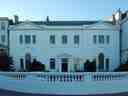
Take a good look to your left as you stroll up Old Steine-you can’t miss Marlborough House standing tall and proud in bright white. This grand mansion almost glows on a sunny day, with its perfectly symmetrical face, high arched windows on either side, and a balustrade fence that looks like it’s guarding something precious. You’re looking for a building that seems to have borrowed its style from ancient temples, with triangle-shaped gables above both wings and a central doorway set just a step back from the street. If you see a house that looks too posh to host a humble dinner party, that’s the one. If these walls could talk, I bet they’d have plenty of juicy secrets! Marlborough House was built way back in the 1760s for a man named Samuel Shergold. Rumor has it he was hoping to impress the neighbours-and probably did. After a few changes of hands, along came the 4th Duke of Marlborough, and then William G. Hamilton snapped it up, calling in the famous architect Robert Adam. Adam didn’t mess around-he gave the house a serious neoclassical facelift, making it fit for royalty. This place has played host to more VIPs than your average red carpet. The Prince of Wales popped by-yes, he’d later become King George IV-sometimes with his new wife in tow, sometimes dodging building work at his own Royal Pavilion. Imagine the sound of laughter echoing through these rooms as they threw parties fit for a prince, the clink of glasses, maybe even a scandal or two. But all good things must come to an end. Over the years, the house changed hands faster than a hot potato. Lady Anne Murray, known for her charity and wild social ‘season’ gatherings, once made this place buzz with excitement. After a long string of owners, it ended up as council offices and even doubled up as a school board meeting spot. Quite a fall from royal parties to paperwork! Now, the paint might be peeling and the original fireplaces sadly lost in a London warehouse fire, but this building still stands as Brighton’s second most important historic home-just a step behind the famous Royal Pavilion. It’s been empty for years, apart from the occasional daring squatter, and it sits on the at-risk list-a bit like an old movie star waiting for the right comeback role. So as you stand here, listen to the silent stories all around. Maybe you can imagine the rustle of silk dresses, or the distant laughter of Brighton’s high society drifting from these empty halls. If these old bricks could shout, they’d probably say, "Oh, the parties I’ve seen-and the paperwork too!"
専用ページを開く →Look just ahead and to your left and you’ll see the Marlborough Pub and Theatre standing tall on the corner. It’s that old red-brick building with the big white windows and the…もっと読む折りたたむ
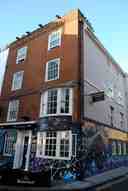
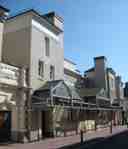
Look just ahead and to your left and you’ll see the Marlborough Pub and Theatre standing tall on the corner. It’s that old red-brick building with the big white windows and the words “Marlborough Hotel” right up top. The bottom half is impossible to miss - it’s covered in a burst of bold, colourful street art, with starry purples and wild shapes stretching along the wall. If you spot a glinting constellation crowned by a white unicorn and a rainbow, you’re in exactly the right place. Now that you’re here, pause for a moment and imagine Brighton in the late 1700s. This building began life as the Golden Cross inn, and if these bricks could talk, they’d practically scream with stories. Down in the cellar, there’s a bricked-up tunnel said to go all the way to the Royal Pavilion. Local legend says it was used by George, Prince of Wales, to sneak here for evenings full of drama-whether that was a play or a bit of scandal, who’s to say? One thing’s certain: this inn has seen plenty of high spirits, and not just the ones behind the bar. Through the years, it’s been all sorts of things: a spot for wool traders, a lively music club, a ballroom echoing with laughter. Picture the plush carpets, the polished mahogany, and spittoons scattered about-Victorian “luxury” at its finest, with the faint scent of roast dinners drifting from the kitchen. But the Marlborough isn’t just a place for revelry; it’s had its share of shadows. In 1900, poor Lucy Packham, the landlord’s wife, met a tragic end at the bottom of the stairs. The trial that followed was a true local sensation-gossip, shock, and a dash of dark humor. Years later, they even re-enacted the whole affair as a comic play in the very same pub. Only in Brighton! Today, this place is a lively hub for Brighton’s LGBT community, a stage for music, cabaret, and theatre, especially when the city bursts to life for Pride and the Fringe Festival. Stepping inside is like stepping into Brighton’s beating heart-glamorous, quirky, and never short of a fantastic story or two. If walls can have ears, the Marlborough’s would be wiggling right now, ready for the next secret, the next laugh, or the next round of applause. Don’t worry-the only thing you need to sneak in is your best smile. Fascinated by the early history, murder at the marlborough or the ghost stories? Let's chat about it
専用ページを開く →
さらに12件のスポットを表示表示するスポットを減らすexpand_moreexpand_less
Look ahead for a dramatic row of cream-coloured stone with palace-like arches, tall columns tipped with little domes, and one especially big, eye-catching green dome rising up…もっと読む折りたたむ
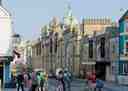
Look ahead for a dramatic row of cream-coloured stone with palace-like arches, tall columns tipped with little domes, and one especially big, eye-catching green dome rising up above the roofline. This is the Brighton Dome, stretching alongside the street like a piece of distant India dropped into Brighton. If you see black banners with a golden “D” flapping over the doors, you’ve found your spot! Alright, picture this-over two hundred years ago, if you were standing here, you’d need to dodge horses! This lavish building, with its grand arches and onion-shaped domes, wasn’t built for pop stars or orchestras, but for the Prince Regent’s own prize horses. Imagine the sound of hooves echoing through the stables, and groomsmen bustling around on balconies above you. Back then, the Prince Regent wanted the fanciest stable in England, so he copied a futuristic building from Paris. In the centre, there was an enormous lotus-shaped fountain, not for thirsty visitors, but so the horses could have a drink in style. Believe it or not, the horses have left, but the drama stayed behind! At one point, Queen Victoria herself decided to sell the whole estate-she didn’t fancy seaside living with so many memories of her uncle’s horses. The town was unsure what to do with this space: should it be a law court or even a swimming pool? In the end, just by the skin of their teeth, it became an assembly room-a very posh place to throw a party! Step forward a bit, and in the 1800s you’d be dazzled by gigantic gas chandeliers with over 500 flickering jets of gas light floating overhead. Turn the gas off to save money, though, and suddenly-whoops!-everything became so dim that people started bumping into each other! The Dome didn’t stop adapting. During the First World War, it actually became a hospital for wounded Indian soldiers. Imagine the quiet shuffle and low conversations of men far from home, nursed under this extraordinary ceiling. For a while, you’d hear not music, but the sounds of recovery and compassion. And if walls could rock, these would! Brighton Dome has hosted big names, including The Who and Pink Floyd, with the first-ever live performance of “The Dark Side of the Moon.” You might still catch a few ghostly strums of guitars if you listen closely… So, whether you’re here for world-famous concerts or just to gawp at the domed splendour, remember: it’s not just a venue, it’s a stable-turned-theatre that’s seen more drama in two centuries than most stage plays ever dream of. Keep your eyes peeled for the royal tunnels under your feet, and maybe-just maybe-watch out for a galloping ghost horse!
専用ページを開く →Right in front of you is a building that could easily have landed in Brighton straight from a storybook. To spot the Brighton Museum & Art Gallery, just look for a creamy-brick…もっと読む折りたたむ
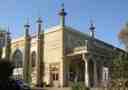
Right in front of you is a building that could easily have landed in Brighton straight from a storybook. To spot the Brighton Museum & Art Gallery, just look for a creamy-brick façade with exotic, palace-like columns and tall, pointy domes that reach up into the sky. The building looks part-Indian palace, part-regal mansion, and if you notice the ornate windows and the sign “Brighton Museum & Art Gallery” on the wall, you’re in the right place! Now, picture this: it’s 1805. The building in front of you wasn’t built to hold dazzling art or historic oddities. Nope-it was meant to be an ultra-fancy tennis court for the Prince of Wales! Imagine the royal grunts echoing off these walls. But, like that treadmill gathering dust in your living room, it never quite got finished. Instead, it became cavalry barracks. Picture the clatter of horses’ hooves and soldiers’ boots echoing every morning. After King George IV passed on, King William IV took his turn staying in the Pavilion, and even Queen Victoria popped by. But soon, the royal family packed up and left for Windsor, thinking Brighton was just too... well, Brighton. The government planned to sell the whole estate, but Brighton’s leaders refused to let these beautiful buildings fall into strangers’ hands. With remarkable determination, they found the funds and bought the Pavilion for £53,000-quite a bargain, unless you’re trying to buy a flat in Brighton today! By 1851, the Palace’s galleries were buzzing with annual art shows, showing off local talents like Frederick Nash and Copley Fielding. The first exhibitions took place right here, in rooms that echo with creativity to this day. And just so you don’t get lost-the building next door was the stables, now reborn as the Brighton Dome. Fast forward to today, and this place is bursting with surprises. There’s everything from surrealist art, ancient ceramics, and British birds to towering cabinets full of butterflies and brightly colored toys-over 20,000 toys, to be exact. That’s enough to keep even the most energetic child (or adult) busy until tea time. One tip: if you listen closely, you might almost hear the cheerful hubbub of artists, chatter of old museum-goers, and, if you use your imagination, maybe that first, echoey tennis ball that never quite made it over the net. All for the price of a yearly pass-and if you’re a Brighton local, it’s even cheaper! If you’re ready, we’ll continue our journey soon-just try not to get lost among all those butterflies!
専用ページを開く →As you walk forward, get ready for your jaw to drop - the Royal Pavilion is right in front of you. Just look for the enormous white building with those tall, pointed towers and…もっと読む折りたたむ
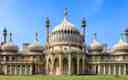
As you walk forward, get ready for your jaw to drop - the Royal Pavilion is right in front of you. Just look for the enormous white building with those tall, pointed towers and giant bulb-shaped domes popping up across the sky. It looks like something that’s landed from a fairy tale or, maybe, sprouted out of a box of exotic sweets. Those round, ridged onion domes and skinny minarets aren’t easy to miss! Now, let’s step into the story. Imagine yourself in Brighton over 200 years ago. There’s salty sea air, the sound of seagulls, and right here stands the most extraordinary palace anyone could dream up. It looks a bit like the Taj Mahal decided to take a seaside holiday. This shimmering palace started as a simple farmhouse, but that didn’t last long - not when George, the Prince of Wales, came to town in 1783. He was only 21, full of life, a lover of parties, theatre, fancy food, and a touch of royal mischief. Brighton was the fashionable place to be, and George wanted a hideaway for his own adventures… and secret liaisons! He was even told by his doctor the sea air would help his gout, so-what better excuse for a party palace by the beach? What you see now, with its swirling domes and dramatic towers, is the work of architect John Nash. It’s a mash-up of Indian and Chinese styles, designed to impress-and maybe to distract from all those royal bills piling up back in London. At night, imagine the Pavilion glowing with hundreds of candles, the laughter of lords and ladies swirling through the air. It was the spot for royal feasts, waltzes, and secrets. If the Pavilion looks a bit like the Taj Mahal, good eye! George wanted something that dazzled, so he borrowed all the style and exotic flair he could find. The inside is just as outlandish, bursting with dragons, silks, gold-enough glitz to make most palaces jealous. But the story isn’t all royal glamour. Queen Victoria, after George and his brother William IV, found it way too public. Imagine trying to drink your morning tea and there’s a crowd outside-every morning! Poor Victoria packed her bags for somewhere quieter, and the Pavilion became Brighton’s eccentric treasure ever since. So, snap a mental photo. You’re standing in front of a building that’s seen secret romances, wild parties, and the occasional royal headache. Don’t worry, there’s no need to bow-just enjoy the sight! Intrigued by the purchase by brighton, first world war or the tourism? Explore further by joining me in the chat section below.
専用ページを開く →Look just to your left along this narrow street, and you’ll spot a long, cream-coloured building with big, blocky columns rising up the facade. The windows are tall and sturdy,…もっと読む折りたたむ
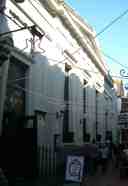
Look just to your left along this narrow street, and you’ll spot a long, cream-coloured building with big, blocky columns rising up the facade. The windows are tall and sturdy, and you might notice some decorative details at the very top under the roofline. There’s a gate and a couple of signs near the entrance-yes, that’s the Union Chapel! Here you are, standing outside the Union Chapel, Brighton’s original rebel gathering spot. Imagine yourself in the 17th century, when finding this building wasn’t just about looking for a sign-it was about sneaking through alleys, making sure no one in uniform was following you, and hoping your chapel didn’t turn into a secret swimming pool in a heavy downpour! Now, Union Chapel has gone by a lot of names: Union Street Chapel, Elim Free Church, Four Square Gospel Tabernacle... honestly, it’s had more identities than a mystery novel detective. But no matter the name, it all started as Brighton’s very first Nonconformist place of worship, long before Sunday roasts and beach deckchairs. Back then, the only official church was St Nicholas’, perched safely up the hill-everyone else had to hide their worship like hidden treasure. Picture this street in the 1600s, just a cluster of fishing huts, salty air, and a few brave villagers looking for a place to pray quietly. Over the years, Brighton boomed. Suddenly, a sleepy fishing village was bursting with visitors and new ideas. Chapel walls were rebuilt and expanded-maybe even right where you’re standing, stones and flints mixing together like a patchwork quilt, with red brick stitches made by master Brighton builders. The name “Union Chapel” was meant to show different kinds of Christians coming together here. Inside these walls, people whispered prayers that would have gotten them in big trouble if the Conventicle Act of 1664 still stood. Today, those laws are long gone. Instead of faint candlelight and quiet hymns, things turned lively in 1988 when the chapel became a pub: from sermons to pints-talk about holy spirits! So, while you’re standing here, think of all those who gathered, worried and hopeful, to find “union” in the heart of Brighton. If only these columns could talk-they’d have centuries of secrets, and probably a few good drink recipes too!
専用ページを開く →Alright, as you’re walking up North Street, keep an eye out for a striking red-brick building with a tall, pointy clock tower. Look up-yes, all the way up! You can’t miss its big…もっと読む折りたたむ
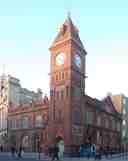
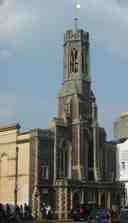
Alright, as you’re walking up North Street, keep an eye out for a striking red-brick building with a tall, pointy clock tower. Look up-yes, all the way up! You can’t miss its big clock faces. The windows are long and arched, and you’ll see elegant little crosses topping the building’s edges. That’s the Chapel Royal waiting for you. Now, let’s imagine it’s the late 1700s. Brighton is not yet the bustling place you see today. Back then, it was a sleepy fishing town, the salty air smelling of seaweed and the coastline scarred by an enormous storm just decades earlier. The people living here, just a few thousand of them, probably never dreamed a church like this would rise here. But then something strange happened-suddenly, seawater became all the rage! Picture it: folks come pouring into Brighton to bathe and even drink the stuff, hoping for magical cures. And guess who comes along just in time? The Prince Regent himself, future King George IV, rolling into town wanting somewhere a bit less “uphill” than the old church for his worship. He orders up a chapel almost right on his doorstep. Picture him in his fancy clothes, maybe a little hungover from last night’s party, grumbling about having to climb hills for church! The vicar, eager for royal approval, promises a chapel as grand as the fashionable crowds filling the town. On a crisp November day in 1793, the Prince himself lays the first stone right where you’re standing. It must have been quite a scene-horse-drawn carriages, the buzz of the crowd, and Brighton’s future suddenly looking far brighter. The funny thing? Despite all that fuss, the Prince soon stops coming, said to have stormed off after a preacher’s fiery sermon about immorality-talk about an awkward Sunday service! But the Chapel Royal carried on, hosting crowds every season, pews auctioned off to the highest bidders while others had to pay just to get a seat. Even now, if you listen closely, you might just hear echoes of elegant shoes on stone floors and soft, polite laughter from Brighton’s Regency crowd. And who knows? Maybe the Prince Regent still peeks in from time to time… just to make sure no one’s preaching about him again. When you’re ready, we’ll head on to the next stop-unless you’re thinking about trying a sip of seawater yourself! Curious about the architecture, the chapel today or the external conservation repairs? Don't hesitate to reach out in the chat section for additional details.
専用ページを開く →Look ahead for a grand, pale stone building on the corner, its curved facade and tall, arched windows just begging for attention. Above the arches, you’ll spot some ornate…もっと読む折りたたむ
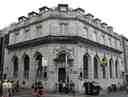
Look ahead for a grand, pale stone building on the corner, its curved facade and tall, arched windows just begging for attention. Above the arches, you’ll spot some ornate stonework-imagine the flourish of an envelope sealed with an extravagant wax stamp. The roofline is dotted with neat little dormer windows, like watchful eyes peering over North Street. This, my friend, is 155-158 North Street. Picture yourself here a hundred years ago: instead of the buzz and laughter from what is now a busy Wetherspoon pub, you’d have heard the serious shuffle of bankers, crisp newspaper headlines being exchanged, and perhaps even the occasional hush as someone toted up the day’s takings. This place was originally a bank-built for the National Provincial Bank in the early 1920s, right after the chaos of the First World War. People must have felt optimistic about the future, seeing a brand-new stone palace rise atop the remains of old shops and a bustling newspaper office. Look at all the detail in the stonework-Brighton’s own local architecture stars, Clayton & Black, really outdid themselves. They wanted to make something that screamed King Louis style: elegant, grand, and just a little bit showy. If these walls could talk, they’d tell you about a time when North Street was the centre of Brighton’s commercial universe-lined with banks, shops, and endless deals. Back then, everyone with serious money came here to make things happen. Of course, money moves and cities change. Eventually, the bank merged with another, then lost its shine, and finally-like many banks in the UK-it was reborn as something that brings people together for entirely different reasons: a pub! You may not find a vault full of gold inside now, but you will find a golden pint or two. Cheers to progress, right? 155-158 North Street is special enough to be listed by English Heritage. History buffs will love knowing it’s Grade II, recognised for its “good attention to detail.” If you think it looks a bit posh for a pint, you’re not wrong! Just imagine all the deals, dramas, and daydreams that have happened beneath this roof over the past century. So, next time you’re sipping something cold here, give a little nod to the ghosts of bankers past-and maybe ask if they’d ever have imagined their grand bank becoming the home for Friday night stories and Saturday morning fry-ups. History in every sip!
専用ページを開く →If you’re looking to spot the Holy Trinity Church, just glance upwards for a striking octagonal tower reaching for the clouds. Its stone and flint face has a textured, almost…もっと読む折りたたむ
If you’re looking to spot the Holy Trinity Church, just glance upwards for a striking octagonal tower reaching for the clouds. Its stone and flint face has a textured, almost chessboard look, especially on the corner by Ship Street and Duke Street. You’ll see a gothic flourish: tall, pointed windows and a sense of quiet drama. It’s quite a contrast - the flint and stone tower with castle-like battlements above, and then the pale stucco sides stretching away. When you see it, you can’t help but feel you’ve found something mysterious tucked among Brighton’s bustling streets. Now, let’s bring it to life. Imagine the early 1800s - the air thick with sea mist, shopkeepers shouting about sugar and silk, and a dapper gent with wild ideas called Thomas Read Kemp. He arrives, all swagger and vision, and decides this town needs a new kind of church - not too stuffy, not too ordinary. It begins as a chapel for folks who don’t quite fit in with the regular crowd. Picture candlelight flickering under a glass dome, all the latest Brighton gossip echoing off the stone, and Kemp himself beaming with pride… until he vanishes, chased by debt collectors waving ledgers instead of hymn books. This place changes hands more often than a coin at the fair. It becomes Anglican, then gets a plaque for the local legend Reverend Robertson, the kind of preacher whose sermons made Brighton’s ears perk up all the way down the pier. When the congregation dwindled and the last hymns faded, it didn’t stay silent for long. Instead, it was reborn as a museum, and now an art gallery - swapping clouds of incense for splashes of paint. You may notice how the church’s eastern face is all dramatic gothic, thanks to a Victorian makeover. The south side, facing Duke Street, still hints at its older, smooth, classical look. It’s like Brighton itself - a bit unpredictable and always reinventing itself. Imagine the layers of stories held by these old stones. So, as you stand outside, maybe take a deep breath and see if you can feel the echo of a crowd, hear a distant sermon, or maybe catch the whisper of Brighton’s most daring plans. And who knows, maybe the ghosts of Brighton’s eccentric movers and shakers are still inside, quietly admiring the latest art show.
専用ページを開く →If you’re looking for the Brighton Friends Meeting House, pause right here and look for a dignified red brick building straight ahead, with a triangular roofline right above the…もっと読む折りたたむ
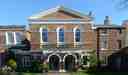
If you’re looking for the Brighton Friends Meeting House, pause right here and look for a dignified red brick building straight ahead, with a triangular roofline right above the center. It’s got tall arched windows gleaming back at you, a bit like eyebrows raised in curiosity-and see that porch with two big arched doorways? Above the doors, you’ll spot simple white letters spelling out “Friends’ Meeting House.” The garden outside tends to be peaceful, but don’t worry, you won’t need an invitation to peek in from here. Just find those gentle curves and the inviting porch, and you’re in the right spot. Now, let’s step into a different century for a moment. Back in 1805, Brighton was hardly the bustling seaside town you know today-more like a humble fishing village, with a hint of salty air and seaweed clinging everywhere. The Quakers, known for their calm and modest ways, built this meeting house longing for a place to gather in peace. Can you imagine it? Maybe a horse trotting by, a few local fishermen casting suspicious glances at the new neighbours, and a quiet group slipping inside to worship. But history wasn’t always this peaceful. The Quakers here had to wait until an ancient law, the Conventicle Act-a bit like a no-gatherings-allowed party pooper-was finally lifted, and only after that were they able to worship in public. The first Quaker meeting house was in a malt house, but when the Prince Regent wanted a new pleasure garden (and, evidently, didn’t mind evicting some Friends), the Quakers sold up and moved here with the grand sum of £1,800 in their pockets. Not a bad deal for the 1790s! The building you see today grew over time, a bit like a friendly patchwork blanket. There’s the original three-storey section on your right, with its solitary bricked-up windows glancing at you with a touch of mystery-what secrets do they keep hidden? The centre section was added in 1850: you can’t miss it, with its classical lines and those proud twin arches. Off to the left, another extension was added in the 1870s for education and now, fittingly, hosts community events. Imagine the stories these bricks have heard: whispered prayers, laughter from children in the classrooms, and perhaps a ghost or two wondering where the old graveyard has gone. Prince Albert Street took over the original burial ground in 1838; the graveyard, like the city, just kept moving. And despite all that change, the Friends’ Meeting House remains a gentle anchor, licensed for worship and still a safe harbour. Today, it’s protected as a Grade II listed building by English Heritage-and there are only so many of those, even in a city as full of history as Brighton. So take a deep breath and listen. The peace here is strong enough to be heard over the city’s buzz. Who knows, you might even leave with a sense of calm that lasts all the way to your next stop. Ready to wander onward? Brighton’s history is just getting started.
専用ページを開く →If you look just ahead, you’ll see a grand old building standing proudly on Middle Street, just a block away from the bustling seafront. Look up-notice the pale Sussex brickwork…もっと読む折りたたむ
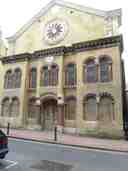
If you look just ahead, you’ll see a grand old building standing proudly on Middle Street, just a block away from the bustling seafront. Look up-notice the pale Sussex brickwork and the rows of tall arched windows, each topped with a splash of red and blue stripes. The centrepiece is that gorgeous round rose window above the door, almost like an intricate flower set in stone. And if you spot two thick red columns flanking the wooden doorway, you’ve found it: the Middle Street Synagogue. Take a moment and imagine the sounds of Brighton in the 1800s-horses clopping past, street vendors calling out. Right where you stand, the Middle Street Synagogue opened its doors in 1875, welcoming in the city’s Jewish community. Not just any building, this was once the heart of Jewish worship in Brighton and Hove, where Ashkenazi traditions echoed against these elegant walls. The Jewish community had been growing here since the late 1700s-one of the area’s most famous early residents, Emanuel Hyam Cohen, even started a school by the sea and helped set up the first places of worship. But this synagogue, built after years of moving from house to house, was the true centrepiece. The architect, Thomas Lainson, really went all out: take in the Italian Renaissance and Byzantine style, designed to impress. Even the celebrated Sassoon family helped decorate the interior-and believe it or not, this was the first synagogue in Britain to be lit by electric lights. Imagine the gasps back then, when the whole place shimmered with new technology. Although regular services moved to West Hove in the 1960s, the Middle Street Synagogue still shines during special occasions, like cultural events and weddings. In fact, it’s been called Brighton’s second most important historic building-second only to that little palace, the Royal Pavilion. This place survived wild winters, storms, and even a bit of neglect until big fundraising concerts and government grants brought it back to life. Now it’s Grade II* listed, safe for generations to come. Sometimes, when the doors open for educational tours, you can almost hear echoes of old songs drifting out-one part history, one part mystery. If you ever get the chance to peek inside during Brighton Festival, seize it! But for now, enjoy the view of this remarkable slice of Brighton’s past. And don’t worry-no math test on the Hebrew inscriptions.
専用ページを開く →As you’re coming up Middle Street, look for a long, pale building with two tall, solid towers at each end. Over the entrances, you’ll spot decorative fan-shaped glass windows set…もっと読む折りたたむ
As you’re coming up Middle Street, look for a long, pale building with two tall, solid towers at each end. Over the entrances, you’ll spot decorative fan-shaped glass windows set in three pointed roof sections jutting out towards the pavement. If you peer up, you might just catch part of the old "Hippodrome" sign peeking above the roofline. The whole place has the feel of a sleeping giant-grand, just a bit faded, and full of secrets. Now, let’s step back in time! Imagine you’re here in 1900: the doors slam open and-oh!-it’s not a theatre yet, but an ice rink. That didn’t last long, though. Turns out, Brighton folk weren’t exactly skating champions. So what do you do with a chilly building that won’t skate? Why, you turn it into a circus, of course! Inside, the Hippodrome blossomed into Brighton’s most dazzling variety theatre. Picture hundreds of people pouring in, their excited chatter echoing off Rococo decorations and painted ceilings. Legends like Harry Houdini, Charlie Chaplin, the Beatles, even the Rolling Stones-yes, really!-all played here. One night, Laurence Olivier himself tripped on his stage debut. Proof that even future knights of the realm have clumsy moments! The space you’re standing in front of once had palm trees and glittering lights, with 3,000 people-sometimes more!-cheering, gasping, and laughing until their sides hurt. Max Miller, Brighton’s own quick-witted comic, was the star so many times, he probably left an indentation in the stage. But the years rolled by and tastes changed. The cheers faded, the curtain fell, and now the Hippodrome waits, like an old magician between tricks, for a new chapter-maybe another roaring crowd, or just the soft shuffle of history-lovers like you. One last thing-a little Brighton mystery for you. If these walls could talk, imagine the stories they’d tell. But for now, they’re keeping most of their secrets, right here beside you on Middle Street.
専用ページを開く →To spot the Clock Tower, just look straight ahead toward the spot where four busy roads meet-North Street, West Street, Queen’s Road and Western Road. Right in the middle of the…もっと読む折りたたむ
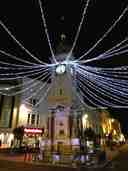
To spot the Clock Tower, just look straight ahead toward the spot where four busy roads meet-North Street, West Street, Queen’s Road and Western Road. Right in the middle of the crossroads stands a tall stone tower, topped with a golden ball and a spire, with clocks looking out in every direction. At night, twinkling string lights stretch from the tower across the streets, making it look like a sparkling spider at the center of a glowing web! The base is decorated with arches and statues, and it’s surrounded by city shops, all buzzing around its base. Alright, take a deep breath of Brighton’s salty evening air as we stand here at the famous Clock Tower-right at the heart of the city’s bustle. Imagine when this spot was just an empty patch, long before the tower appeared, a place where folks huddled under a shabby shelter to wait for the tram. Then, in 1888, to celebrate Queen Victoria’s Golden Jubilee, a generous chap named James Willing decided Brighton needed a showstopper. He threw two thousand pounds into the project, and voilà! Up went this striking tower. Back then, Brighton was turning from a tiny fishing village with a name no one could spell-Brighthelmston-into a vibrant seaside resort, all because people decided seawater was the hottest new medicine! You can almost hear the clatter of carriage wheels and the excited chattering of holidaymakers as the city exploded into fashion. When the Clock Tower was revealed, locals didn’t know quite what to make of it. Some loved it, some said it was an eyesore, but hey, no one could ignore it! For a while, a shiny copper “time ball” perched on that mast, racing up and down every hour-powered by mysterious signals from the distant Royal Observatory. It was so noisy, though, the locals almost started a rebellion just to get a little peace and quiet. If you peek at the base, you’ll spot statues and inscriptions, each with stories to tell about Brighton’s royal connections and its grand ambitions. This intersection has always been a crossroads-first for medieval traders on muddy roads, now for shoppers and night owls darting past neon signs and blinking bus lights. So, as you listen to the clock’s hands ticking away another Brighton minute, remember: this old tower, odd or marvelous, is still the beating heart-the city’s hub and its meeting place. And if you ever get lost in Brighton, just look for the glowing web of lights and the grand old Clock Tower, standing proud since the days of Queen Victoria.
専用ページを開く →Straight ahead is St Nicholas Church, standing tall and a little proud on its own patch of green. You’ll spot its rugged, grey-stone walls first-a bit like they’ve been pieced…もっと読む折りたたむ
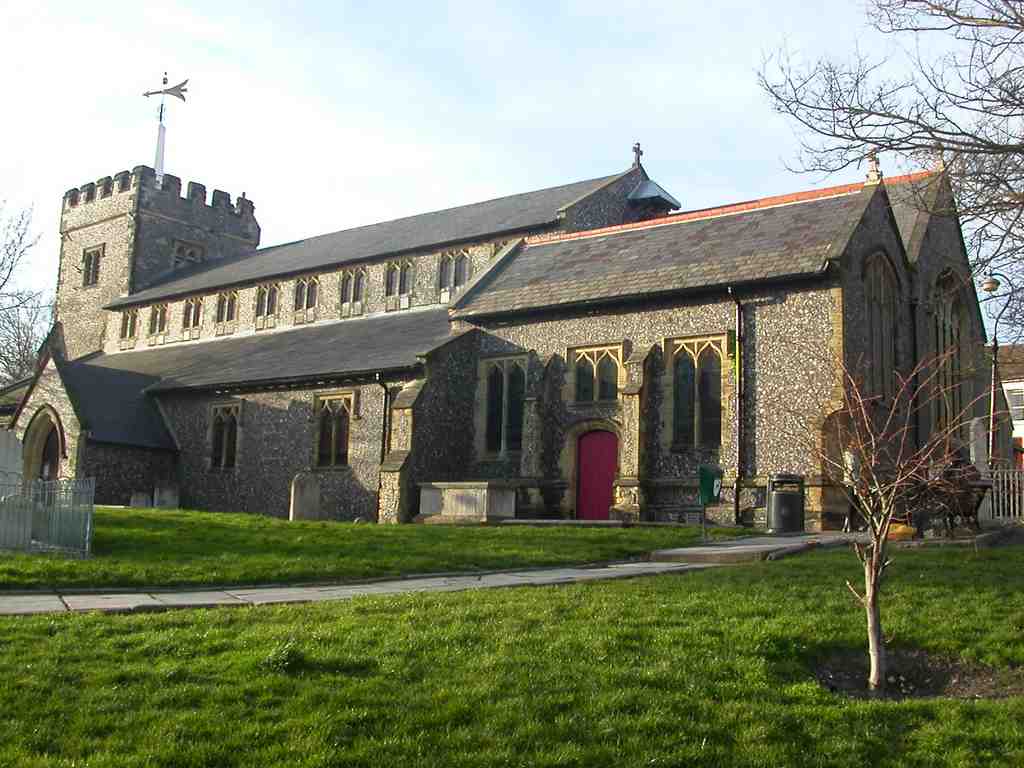
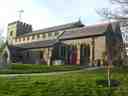
Straight ahead is St Nicholas Church, standing tall and a little proud on its own patch of green. You’ll spot its rugged, grey-stone walls first-a bit like they’ve been pieced together from hundreds of ancient pebbles and flint. Look out for the sturdy square tower at the far end, topped with a weather vane spinning in the breeze. There’s a gentle slope leading up to the church and, right now, the sunlight glints off its red door and those arched windows, giving it a hint of magic against the sky. Welcome to St Nicholas Church, Brighton’s oldest friend. Imagine standing here almost a thousand years ago: instead of city sounds, you’d hear the distant shouts of fishermen and the wind whistling across the old, marshy coastline. This church is truly the heart of Brighton. Back in the days when the town was a scruffy little fishing village called Bristelmestune, there was already a church here-or at least somewhere nearby-watching over everyone from its safe, high hill. It’s survived wild weather and stony centuries that would’ve toppled lesser buildings. Picture a night in November 1703: the sky goes dark, thunder cracks, and fierce winds start tearing the lead right off the roof. Imagine the thud and clatter as pieces fly through the air. A storm two years later finished the job, and the villagers must have thought their luck had run out! But they patched her up, and St Nicholas stood strong, even while the rest of the lower town washed out to sea. The church itself is like a survivor in an epic adventure-once, French raiders stormed the coast and burned down the entire village, but the church, perched up here like a wise old guardian, was the only thing to remain. Inside, there’s a battered font carved all the way back in 1170, which has been shuffled around the building more times than a nervous wedding guest. Over the years, as Brighton got fancy and people flocked to its beaches for healing dips, St Nicholas grew crowded. People squeezed onto wooden pews that fanned out from the center like spokes on a wheel, and even climbed up steep staircases to galleries swinging above the congregation-imagine sitting up there, hoping your legs didn’t fall asleep and you didn’t sneeze at the wrong moment. After changing hands from monks to kings, queens, and a bishop or two-Thomas Cromwell even owned the place, briefly, before, well, losing his head over politics-the church has always kept its doors open. So as you stand here now, maybe in the hush of the afternoon, you’re part of a story that stretches all the way back through storms, invaders, and centuries of weddings, whispers, and wandering souls. And just think-this spot has seen it all, and she’s still standing, with a few cracks but a lot of pride. Intrigued by the early history, construction of the present church or the patron of the church? Make your way to the chat section and I'll be happy to provide further details.
専用ページを開く →
よくある質問
ツアーはどうやって始めますか?
購入後、AudaToursアプリをダウンロードして引き換えコードを入力してください。ツアーはすぐに開始できます。再生ボタンをタップして、GPSガイド付きルートに従うだけです。
ツアー中にインターネットは必要ですか?
いいえ!開始前にツアーをダウンロードしておけば、完全にオフラインで楽しめます。チャット機能のみインターネットが必要です。モバイルデータを節約するため、WiFi環境でのダウンロードをお勧めします。
これは団体ツアーですか?
いいえ、これはセルフガイド式のオーディオツアーです。ガイドや団体、決まったスケジュールに縛られることなく、スマホから流れるナレーションを聴きながら自分のペースで自由に探索できます。
ツアーの所要時間は?
ほとんどのツアーは60〜90分で完了しますが、ペースは完全に自由です。好きな時に一時停止したり、スポットを飛ばしたり、休憩を取ったりできます。
今日中にツアーを終えられない場合は?
問題ありません!ツアーには無期限でアクセスできます。明日、来週、あるいは来年でも、好きな時に再開できます。進行状況は保存されます。
どの言語が利用可能ですか?
すべてのツアーが50以上の言語に対応しています。コードを引き換える際にお好みの言語を選択してください。注意:ツアー生成後に言語を変更することはできません。
購入後、どこからツアーにアクセスできますか?
App StoreまたはGoogle Playから無料のAudaToursアプリをダウンロードしてください。メールで届いた引き換えコードを入力すると、ライブラリにツアーが表示され、ダウンロードして開始できるようになります。
もしツアーを楽しめなかった場合は、返金いたします。お問い合わせ先: [email protected]
以下の決済で安全にチェックアウト 


