
テルエル音声ツアー:時と文化を巡る旅
エメラルドのタイルが輝く塔と、足元で物語を語るレンガ色の階段がある街—テルエルは、見た目以上のものを隠しています。 賑やかなテルエル駅から、ドラマチックな階段の昇り、そして秘密めいた教会の塔を通り過ぎる、セルフガイドの音声の旅に出かけましょう。ほとんどの旅行者が耳にすることのない伝説と歴史を解き明かします。 なぜ静かな鉄道の閉鎖が、一夜にしてテルエルをバラバラにしかけたのでしょうか?階段の上にある街の中心に永遠に刻まれた、ささやかれたラブストーリーとは?そして、サン・サルバドールのまばゆい塔に隠された、学者たちを何十年も議論させた細部とは何でしょうか? これは単なるツアーではなく、何世紀にもわたる反乱、ロマンス、そして再発明への真っ逆さまな突入です—アーチを抜け、モザイクの階段を上り、忘れ去られた修道院の壁を越える、あなた自身の旅です。一歩ごとに新たな発見が約束されています。 テルエルの美しいファサードの裏に隠されたものを解き明かす準備はできましたか?再生ボタンを押して、街の生きた伝説に足を踏み入れましょう。
ツアーのプレビュー
このツアーについて
- schedule所要時間 30–50 mins自分のペースで進める
- straightenウォーキングルート 1.2kmガイド付きパスに沿って進む
- location_on
- wifi_offオフライン対応一度のダウンロードでどこでも使える
- all_inclusive無期限アクセスいつでも、ずっと再生可能
- location_onテルエル駅から開始
このツアーのスポット
To spot Teruel Station, look for a large, sturdy, reddish-brick building with a rectangular shape and two stories, topped with a sloping hip roof and an old-fashioned sign reading…もっと読む折りたたむ
To spot Teruel Station, look for a large, sturdy, reddish-brick building with a rectangular shape and two stories, topped with a sloping hip roof and an old-fashioned sign reading “Teruel” just above and beside its main entrance; you’ll notice it’s right next to the railway tracks and has trains coming and going, all set slightly to the west of the city center. Welcome to Teruel Station-the grand old gateway to the city! As you stand here, just imagine: over a hundred years ago, in the early summer of 1901, the very first train chugged into Teruel, probably cheered on by proud locals in their finest hats (and maybe scratching their heads at this magnificent new arrival). Back then, the city felt like it was perched on the edge of a new world, finally connected by rail to distant places like Calatayud and Valencia. The station building you see before you hasn’t changed all that much-those sturdy bricks have weathered a century of arrivals, departures, reunions, and even heartbreaks. If you squint and listen closely, you almost hear steam engines hissing and see mustachioed porters scurrying about, while elegant travelers checked the time against the big station clock. Imagine the flurry in the 1940s when the national railway system, RENFE, took over. Suddenly, Teruel became a tiny but vital node in a great network across Spain. Of course, things weren’t always easy for this station. Picture 1985: the old line to Calatayud gets shut down-probably the kind of day when suitcases felt heavier and goodbyes seemed sadder. By the early 1990s, the station started to reinvent itself. While it still lacks fancy flourishes-no statues, no fancy cornices-its sober design speaks to the hardworking spirit of Teruel. There’s something charming about its honest, no-nonsense architecture; just you, the brickwork, and memories of tens of thousands of travelers. Even now, look around: there are two main platforms, and a covered walkway for crossing the tracks. There’s an elevator tucked away so people can skip the stairs and a cozy little bar open on weekdays-though if you want a drink on a holiday, you’re out of luck, unless you fancy pretending to be a tumbleweed blowing through the empty ticket hall. And how about the traffic? From here, trains whisk you away not just to the buzz of Zaragoza or sunny Valencia, but even down to Alicante and Murcia, with the hum of diesel engines instead of long-haul express trains. The legendary sounding “Estrella Sol de Levante” train used to glide through here, ferrying passengers all the way to Bilbao, until one night in 1992, it rolled away for the last time. Night trains, once a staple, are now just ghosts in the memory of the station walls. But there’s fresh hope chugging down the tracks! In 2024, a new high-speed service will link Teruel directly with mighty Madrid, speeding along thanks to some clever technology that lets trains switch between track sizes. Who knows, maybe the next love story, daring adventure, or wild idea to change the world will begin right here, on one of these platforms. For now, Teruel Station stands as a monument to comings and goings, a place where past and future, history and hope, are always just a train ride apart. So, take a deep breath and enjoy the sight-a living piece of history, where every brick has a tale and every timetable could be the start of your next big journey. Exploring the realm of the railway situation, the station or the rail services? Feel free to consult the chat section for additional information.
専用ページを開く →Right in front of you, rising steeply like a brick-red waterfall with splashes of green and white ceramics, is the Teruel Staircase - just look for its grand neo-Mudejar towers…もっと読む折りたたむ
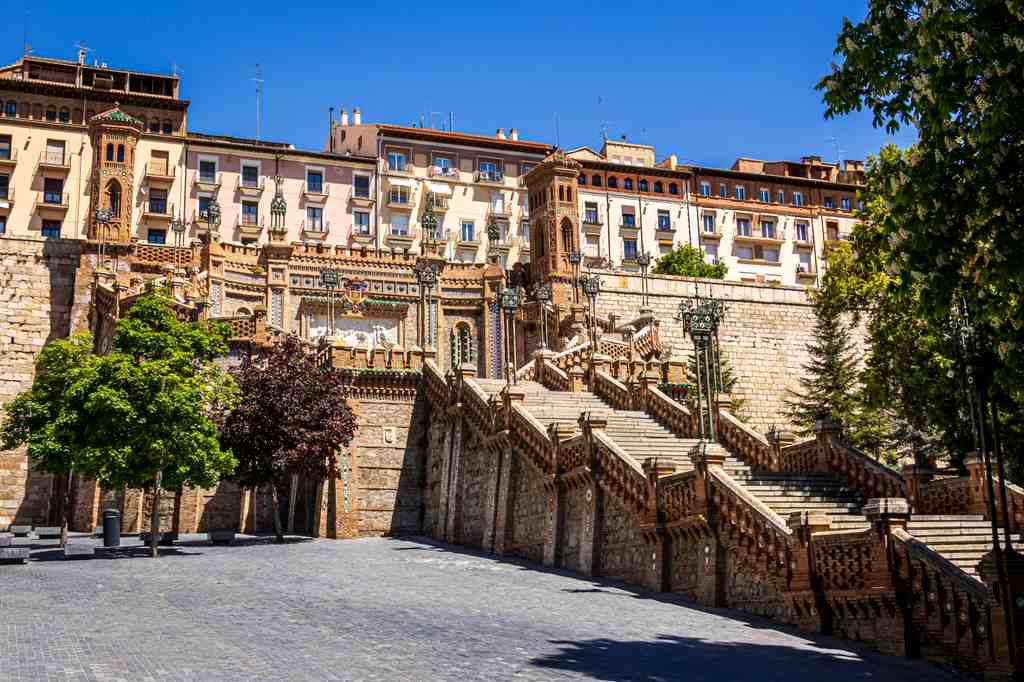
Right in front of you, rising steeply like a brick-red waterfall with splashes of green and white ceramics, is the Teruel Staircase - just look for its grand neo-Mudejar towers and richly decorated steps climbing up from the train station to the city above. Picture this: It’s the early 1920s in Teruel, a small Spanish city set on hilly ground, and there's a real challenge facing every traveler-getting from the busy train station at the base of the hill up to the heart of the old city. Now, 26 meters doesn’t sound so tough until you try it on a hot summer day with bags in hand and dreams of jamón and local wine! No wonder someone had to step in-pun entirely intended. Here comes our hero: José Torán de la Rad. Not a caped crusader, but a clever local engineer with a stylish mustache and great taste in architecture. He wanted to do more than build a staircase; he wanted to give Teruel an entrance as grand as its legends. He dreamed up this masterpiece to connect travelers with the Paseo del Óvalo above-a place then called the Paseo de la Infanta Isabel-and, at the same time, to make every climb a feast for the eyes. Why just walk up when you can do it in style? Construction kicked off in March of 1920. There’s even a tale about the first stone being laid, supposedly by Carlos Castel y Clemente, a well-known statesman. A helpful hint if you’re keen-eyed: check out the ceramic plaque near the top-it says his name! The only problem is, Mr. Clemente had passed away before 1920, so it must have been his son, Carlos Castel y González de Amezúa, who helped launch the project. Proof that even Teruel's staircases are built on a bit of mystery… and maybe a clerical error or two. But back to our staircase: it only took 15 months to build-faster than some people take to climb it, if you ask the locals. By June of 1921, the people of Teruel were marching up and down these steps with a mix of pride, curiosity, and relief. After all, what used to feel like scaling a cliffside suddenly became a stroll through history and artistry. Now, take a closer look around. Do you notice the intricate brickwork and those flashing green and white ceramics? That’s neo-Mudejar style, echoing the city’s famous mix of Christian and Islamic art, a distinctive feature of Teruel’s character. The staircase practically glows at sunset, reflecting the colored light like some ancient Arabian tapestry, with towers on top standing like sentinels watching over the city. You can even spot a masterful ironwork on the old farolas-the lamps that line your ascent-flowing with modernist curves inspired by the city’s fondness for art nouveau. Who says a staircase can’t be a catwalk? If you pause at the main landing in the middle, look up. Set before you, and framed by the city’s coat of arms and a playful fountain, is a large sculpted scene of the Lovers of Teruel-a story so packed with drama and heartbreak it could give Romeo and Juliet a run for their money. The sculptor, Aniceto Marinas, carved their fateful embrace right into the heart of this monument, a reminder that every step up to Teruel holds a story of passion. Even in the new millennium, this area keeps changing. Thanks to the British architect David Chipperfield and a creative Spanish firm, the Paseo del Óvalo up top has been pedestrianized, complete with modern elevators making the climb a little easier for visitors who’d rather save their legs for dancing… or for more stairs. There’s one last secret tucked beside the steps. The building next door was once a Carmelite convent, later a headquarters for the Guardia Civil, and now it’s the seat of the Aragon government. History sticks to these bricks as well as the mortar does! So, whether you’re hiking up to see the sights or just want to stand at the top and pretend you’re royalty entering Teruel, the staircase isn’t just a path-it’s a journey through Teruel’s past, sprinkled with stories, a dash of intrigue, and the odd mistake on a commemorative plaque. Not bad for a set of stairs, right? And if climbing them makes you a little breathless, just tell everyone you were overwhelmed by the history. Wondering about the description, paseo del óvalo and carmelite convent or the see also? Feel free to discuss it further in the chat section below.
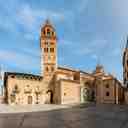
専用ページを開く →To spot the Tower of the Church of San Salvador, look up ahead for a tall, square tower made of reddish brick, completely decorated with shining green and white tile patterns and…もっと読む折りたたむ
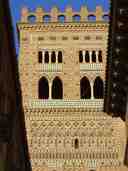
To spot the Tower of the Church of San Salvador, look up ahead for a tall, square tower made of reddish brick, completely decorated with shining green and white tile patterns and small arches peeking out from above the surrounding rooftops. Standing here, you’re in front of one of Teruel’s most treasured secrets: the Tower of San Salvador! Imagine the bustling street over 700 years ago, dust swirling at your feet, and this stunning tower rising above the city like a jeweled sentinel. If these walls could talk, I bet they’d have some very dramatic things to say-perhaps even a brick joke or two! Built sometime after 1315, the tower was a bit of a trend-follower. Its neighbor, the famous San Martín Tower, was all the rage first, but San Salvador said, “Move over, I’m here to steal the show!” So, its builders went all out, adding even more detailed decorations and clever engineering to impress everyone who passed by. The brickwork isn’t just pretty; each glazed green and white ceramic inserted between the lines tells the story of Spain’s special Mudéjar architecture-a blend of Christian and Islamic styles that you hardly find anywhere else. Back in its heyday, locals would have heard its bells calling out, echoing between these narrow streets and through city walls. But not all was smooth sailing-the original church attached crumbled dramatically in 1677. Good thing the tower stood tall, like that one friend who keeps the party going even when the cake falls over! Today, you can actually go inside-just slip through a little door on the right if you’re coming up from Paseo del Ovalo. Here’s your chance to see the secret inner workings of these marvels. There are videos and exhibitions explaining how people created such wonders, helping you trace the footprints of architects who mixed faith, art, and maybe even a bit of showing off. So, while you gaze up, imagine the centuries of eyes who’ve admired this masterpiece-travelers, dreamers, and now, lucky you! Are your neck muscles ready for some more staring up? Because Teruel’s towers just love showing off!
専用ページを開く →

さらに8件のスポットを表示表示するスポットを減らすexpand_moreexpand_less
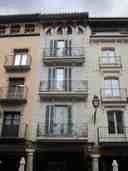
To spot Ferran House, look up and search for a tall, elegant yellow building with plenty of black wrought-iron balconies, nestled on the corner ahead-it stands out from its…もっと読む折りたたむ
To spot Ferran House, look up and search for a tall, elegant yellow building with plenty of black wrought-iron balconies, nestled on the corner ahead-it stands out from its neighbors with its striking colors and ornate details. Ah, here you are in front of Ferran House! Over a hundred years ago, imagine this: you’re standing on this exact street corner in 1910, the air alive with excitement as workers hammer away at something entirely new for Teruel-modernism, by the hand of the bold architect Pablo Monguió. Back then, the city was buzzing, and people were craning their necks to catch a glimpse of this masterpiece as each level rose up toward the sky. The Ferran House isn’t just a building; it’s like a seven-layer cake of innovation. The bottom floors hummed with shops and lively business deals, while families lived, loved, and argued in the airy yellow apartments above. Look closely-notice the twisty, plant-like ironwork curling around the balconies? That’s modernist style at its finest, where nature and imagination mix together. On the right, you’ll see unique shapes: a circular window above the entrance and a grand viewing bay, perfectly balanced like a well-told joke. If you step to the left side, check out the spectacular corner bay-like the building’s way of winking at passersby and saying, “How about this for a stylish hat?” This wasn’t just architecture-it was Teruel’s answer to the future, as the city’s growing middle class wanted something fancy to show off their new tastes. At night, imagine marble floors shining, grand staircases creaking under elegant shoes, and laughter echoing out the lofty windows. Even today, you can sense the pride of old Teruel peeking out from behind every yellow wall. So take a moment, inhale the creative spirit, and thank Pablo Monguió for making sure Teruel never had to settle for boring buildings with no personality!
専用ページを開く →To spot the Madrilenian House, look straight ahead for a tall, narrow building with a pale blue and white façade, three elegant balconies with swirling ironwork, and a very…もっと読む折りたたむ
To spot the Madrilenian House, look straight ahead for a tall, narrow building with a pale blue and white façade, three elegant balconies with swirling ironwork, and a very decorative top floor, nestled right between its taller neighbors. Welcome to the Madrilenian House, a jewel of modernist architecture designed in 1912 by Pablo Monguió for the Garzarán family. Imagine you’re standing here in the busy Plaza Carlos Castel over a hundred years ago. The ground floor once buzzed with life, as locals scurried in and out of a bustling shop-so much so, the whole house got its nickname from that original business! Here’s a fun fact: even though its plot is just around 4.6 meters wide-hardly wide enough for a sleepwalking giraffe-the architect made up for it by turning the façade into an artistic masterpiece. The light blue and white colors, together with the fabulous iron balconies, make it feel almost like a birthday cake for a house! Just look up and see that giant oval around the windows, surrounded by playful swirls and delicate flowers. Up top, curving shapes bend and fold, almost like icing on a fancy pastry. Does anyone else feel suddenly hungry, or is it just me? Notice those wooden beams supporting the roof? They’re decorated with sparkling ceramics, and it’s here where floral garlands seem to hang down, as if a party’s about to start. A closer look at the ironwork might just reveal some surprise visitors-like stylized butterflies or winding vines-woven right into the balcony railings by the genius craftsman Matías Abad. This house isn’t just beautiful; it tells the story of Teruel’s thriving, ambitious middle class of the early 1900s-people who wanted their homes to show off their style, fashion, and just a little bit of swagger. Although its inside has seen some changes, the exterior you see now is nearly as authentic as the day it was built. Imagine all the laughter, drama, and secrets that have fluttered behind these pale blue shutters-oh, if these walls could talk, we might never leave this spot!
専用ページを開く →Look for a grand brick tower with detailed arches, colorful tiles, and a decorative iron gate, rising right in front of you at the edge of the plaza-this is the unmistakable…もっと読む折りたたむ
Look for a grand brick tower with detailed arches, colorful tiles, and a decorative iron gate, rising right in front of you at the edge of the plaza-this is the unmistakable Teruel Cathedral. Welcome to Teruel Cathedral! Take a moment to soak in that dazzling façade. If you tilt your head back, you’ll find yourself staring up at a tall, square tower decorated with glazed tiles that shimmer like a box of spilled jewels when the sunlight hits just right. The iron gate guarding the entrance almost dares you to peek inside and imagine centuries of secrets hidden within these walls. Let’s travel back in time-way, way back to 1171. Right where you’re standing, the first stones were set for the church of Santa María de Mediavilla. Back then, the air would have been thick with the sound of chisels on stone and the chatter of workers covered in dust. Originally built in the Romanesque style, the place looked sturdy and solid, but not quite as magical as what you see now. Fast forward to 1257, and a Moorish master builder named Juzaff swooped in like a wizard, bringing the tricks of Mudéjar architecture-layers of brick, bursts of color from ceramic tiles, and arches that looked like they belonged in a fairytale. The old Romanesque look was left behind; instead, Juzaff crafted three long, light-filled naves out of masonry and brick, letting sunlight flood into the church in ways that must have astounded the townspeople. The transformation didn’t stop there. The 14th century saw new Gothic-Mudéjar apses added, and almost like a magician cutting a ribbon, the architect reduced the chunky supports inside and opened up the arches, making the space feel airy and bright. The blend of Christian and Islamic art created a feast for the eyes. By 1423, the cathedral was so grand and important that even the “rebel pope,” Benedict XIII, decided to raise it to collegiate church rank. With all this change, you might wonder: Has anything stayed the same? Well, the authentic Mudéjar spirit remains, untarnished by the centuries. Now, glance back up at the tower. The lower part forms a vault that you could actually walk through, a tunnel as old as some of the first European kingdoms. It’s one of the oldest Mudéjar towers in Spain, square and solid at the base, then stretching up and topped by a lantern that looks almost like a crown. That lantern, built in the 16th century, flooded the cathedral with light, especially catching the sparkle of the Renaissance altarpiece inside. Here’s a fun fact: What you see on the outside hides a secret overhead. The ceiling of the central nave has been called the “Sistine Chapel” of Mudéjar art-a hidden wonder covered up during the 18th century by a false ceiling, protected like a treasure map rolled up inside an old pirate’s chest. When the fake ceiling finally came down, the original was revealed, full of paintings-makers, knights, fantastical beasts-almost as if you could hear them whispering stories from the rafters. The centuries rolled on, leaving their mark. In the early 1700s, bits of Neoclassical taste snuck in, curtain-rod straight and simple, hiding the playful Mudéjar artwork for quite a while. But in 1909, Pau Monguió, a Modernist architect, burst onto the scene with a wild new southern façade-a dramatic mix of Neo-Romanesque and Neo-Mudéjar ornamentation. He finished it off with an iron gate inspired by a 15th-century choir screen inside, closing things off with a clang that echoed through the years. In 1986, UNESCO finally said, “Enough secrets!” and declared the cathedral, along with its Mudéjar cousins in Teruel and Zaragoza, a World Heritage Site. They admired the inventive use of brick and glazed tiles-as if someone was trying to paint with clay and light all at once. So, as you stand here, maybe you can imagine the sound of history: the sharp snap of tiles being set, the slow ring of hand-forged iron, the footsteps of worshippers beneath the most colorful ceilings in Spain. So welcome to the crossroads of cultures, colors, and centuries. Keep your ears open; you just might hear a story, or a mysterious echo, from the many lives that have passed through these doors. For a more comprehensive understanding of the the tower, mudéjar reform or the ceiling of the central nave, engage with me in the chat section below.
専用ページを開く →Take a look in front of you at the grand building on Plaza de la Catedral-that’s the Teruel City Council! Here, the big decisions that shape daily life in Teruel are made. Imagine…もっと読む折りたたむ
Take a look in front of you at the grand building on Plaza de la Catedral-that’s the Teruel City Council! Here, the big decisions that shape daily life in Teruel are made. Imagine opening the heavy doors, and the echoing footsteps of council members as they gather inside. These halls have felt the hustle and bustle of city business for years, with every mayor, including today’s, Emma Buj Sánchez, taking a seat to guide Teruel’s future. Behind those walls, the council works like a well-oiled machine, though occasionally a squeaky one when budgets don’t quite line up! Their main job is to draft the rules that keep Teruel running smoothly-writing new regulations, planning roads, and deciding how to spend the city’s treasure hoard, or, sometimes, how to wisely manage the piggy bank when the coffers are a bit light. Elections happen every few years, with the last one on May 28th, 2023. Imagine the nerves, excitement, and a few hopeful promises floating through the streets at election time. And yes, sometimes city debts rise and fall like a rollercoaster-let’s hope it’s always fun and never too scary! So, as you stand here, you’re right at the heart of local power, where Teruel’s story is written, one council meeting (and maybe heated debate) at a time.
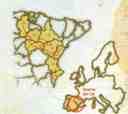
専用ページを開く →In front of you, you’ll see a map etched with winding red paths stretching across eight Spanish provinces-this is your sign that you’ve found The Way of El Cid; just look for a…もっと読む折りたたむ
In front of you, you’ll see a map etched with winding red paths stretching across eight Spanish provinces-this is your sign that you’ve found The Way of El Cid; just look for a route map bordered by names like Te (Teruel), Bu (Burgos), and Al (Alicante) to help you spot it! Welcome to a journey wrapped in legend, where each footstep lands you closer to the world of Rodrigo Díaz de Vivar, known as El Cid. Picture this: it’s the 11th century, and the air smells of horses, dust, and adventure. You are now standing on a route that’s not just a line on a map, but a living story spanning more than 2,000 kilometers and woven through eight Spanish provinces-Burgos, Soria, Guadalajara, Zaragoza, Teruel, Castellón, Valencia, and Alicante. Oh, if only your shoes could collect as many tales as the Cid collected followers! The Way of El Cid is inspired by both an epic poem-the Cantar de mio Cid-and a real, larger-than-life hero. The poem itself is a tapestry of history and legend, where the unstoppable Cid gallops across medieval Spain, his loyal followers at his heels, never knowing if the next bend in the road will reveal friend or foe. You can almost hear Babieca, the Cid’s famous steed, thundering down these ancient paths as he glances back at his home, feeling equal parts sorrow and determination. Now, the route wasn’t drawn up all at once. It began as just a modest 18 kilometers, linking Vivar del Cid to San Pedro de Cardeña. But legends have a habit of growing, don’t they? Soon, other provinces joined in, and the path grew into what you see before you today-a grand saga that connects the heart of Spain’s interior to the Mediterranean coast. And here’s a fun fact: the journey has been shaped both by real footsteps and by the strokes of a poet’s imaginative pen. Some roads are truly where El Cid once rode, while others were chosen because, well, the poem said so! Sometimes it’s pretty handy to have an epic ballad as your GPS. If you looked for records as thick as a knight’s shield to map El Cid’s real path, you’d be disappointed. The route follows a blend of ancient Roman roads, trading trails, and even some places that were only immortalized because they sound good in verse. And with every stride, you cross regions rich with history: medieval cathedrals that shimmered in candlelight, castles that echoed with laughter and battle cries, and villages that have seen centuries pass by like so many tired travelers. Let’s add a dash of drama: at the heart of the Cantar de mio Cid is exile-El Cid banished by King Alfonso VI, left to march out with his family and friends, watching his past disappear behind him. Think of him trudging past you right now, armor clinking, his wife and daughters close by, the weight of destiny heavy on his shoulders. Along these paths he gathered new companions, fought for survival, and ultimately conquered the city of Valencia after a ten-month siege. It wasn’t all epic battles, though-sometimes he just needed to find dinner for a very hungry army. This route isn’t just for walkers with a taste for old poems; it’s a patchwork of Europe’s medieval heritage. Along the way, you might pass places like the magical city of Burgos, the winding gorges of Soria, the wild Sierra del Maestrazgo in Teruel, and the orange groves near Valencia. You’ll find Romanesque churches cozying up to Mudéjar towers, Islamic arches swapped for Gothic spires, and-if you listen closely-the stories of knights, poets, and the hopeful poor who all tramped these same byways. One special tradition: pilgrims can collect stamps in a “salvoconducto,” a passport stamped in each town just as travelers did long ago to guarantee safe passage. But, trust me, nowadays the only danger is getting caught by a friendly local who insists you try some jamón or share a tall tale. So as you stand here, imagine the echo of epic adventure stretching before and behind you-the clash of swords, the thrill of the unknown, the laughter around a smoky campfire, and the whispered promises of fame. Who knows, perhaps somewhere out there, the Cid himself is smiling at your courage to walk the road of heroes. Go on, take another step-your legend awaits! Interested in knowing more about the origins of the camino del cid, the way of the cid and the song or the places of interest
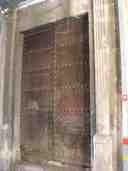
専用ページを開く →To spot the Palace of the Marquis of Tosos, look for an ancient stone doorway with weathered wood studded with iron nails, just off the bustling San Miguel street-its imposing…もっと読む折りたたむ
To spot the Palace of the Marquis of Tosos, look for an ancient stone doorway with weathered wood studded with iron nails, just off the bustling San Miguel street-its imposing presence really stands out from the modern surroundings. As you stand before these massive wooden doors, imagine the year is 1680. The palace’s main facade rises before you with its proud, classicist ornamentation. In those days, the air might have carried the echoes of horse hooves and the rustle of silk gowns drifting across the cobblestones. Inside, noble families would sweep up the grand central staircase, hands tracing the elegant Corinthian column at its base. Picture candlelight flickering through the arched gallery above, casting crazy shadows as guests arrived for secretive meetings-was that a sudden knock at the door, or just the wind? The palace has always had secrets, from the locked gardens in the back to the odd mid-20th-century changes-maybe even a mysterious mid-level floor cropping up where there hadn’t been one yesterday. All the while, the carved wooden eaves looked down, their leafy patterns quietly watching. Today, try not to startle if you hear a creak or two, as these old walls love to whisper their stories on blustery days. Thanks for joining me on this adventure through Teruel!
専用ページを開く →

よくある質問
ツアーはどうやって始めますか?
購入後、AudaToursアプリをダウンロードして引き換えコードを入力してください。ツアーはすぐに開始できます。再生ボタンをタップして、GPSガイド付きルートに従うだけです。
ツアー中にインターネットは必要ですか?
いいえ!開始前にツアーをダウンロードしておけば、完全にオフラインで楽しめます。チャット機能のみインターネットが必要です。モバイルデータを節約するため、WiFi環境でのダウンロードをお勧めします。
これは団体ツアーですか?
いいえ、これはセルフガイド式のオーディオツアーです。ガイドや団体、決まったスケジュールに縛られることなく、スマホから流れるナレーションを聴きながら自分のペースで自由に探索できます。
ツアーの所要時間は?
ほとんどのツアーは60〜90分で完了しますが、ペースは完全に自由です。好きな時に一時停止したり、スポットを飛ばしたり、休憩を取ったりできます。
今日中にツアーを終えられない場合は?
問題ありません!ツアーには無期限でアクセスできます。明日、来週、あるいは来年でも、好きな時に再開できます。進行状況は保存されます。
どの言語が利用可能ですか?
すべてのツアーが50以上の言語に対応しています。コードを引き換える際にお好みの言語を選択してください。注意:ツアー生成後に言語を変更することはできません。
購入後、どこからツアーにアクセスできますか?
App StoreまたはGoogle Playから無料のAudaToursアプリをダウンロードしてください。メールで届いた引き換えコードを入力すると、ライブラリにツアーが表示され、ダウンロードして開始できるようになります。
もしツアーを楽しめなかった場合は、返金いたします。お問い合わせ先: [email protected]
以下の決済で安全にチェックアウト 


