AudaTours logoAudaTours

ブカレスト音声ツアー:ブカレストの隠された鼓動

オーディオガイド12 か所

優雅なファサードの街は、表面の下に傷跡と秘密を隠しています。ブカレストは、聖なる星、金色のアーチ、そして炎と怒りを生き延びた壁を通して、その真の物語をささやきます。 セルフガイド音声ツアーで、観光ルートを離れ、ルーマニアのユダヤ人街の中心部へ足を踏み入れましょう。そこでは、勝利と悲劇のこだまが今も細い通りを漂っています。 真夜中にすべてを危険にさらして、禁じられたトーラーの巻物を救ったのは誰でしょう?希望の前夜に、なぜ激しい炎がコーラル寺院を焼き尽くしたのでしょう?目立たない博物館にあるどの奇妙な遺物が、かつて街の半分を揺るがした家族の確執を解き明かしたのでしょう? 豪華なシナゴーグから厳粛な記念碑へとさまよい、一歩ごとに反乱、信仰、スキャンダル、そして回復力の層へと深く入り込んでいきます。数分で数世紀を歩き、ほとんどの人が決して見ることのない場所を発見し、足元でブカレストがドラマチックに脈打つのを感じるでしょう。 静かな祈りが轟く歴史と出会った場所を歩く準備はできていますか?聞き始めて、ブカレストの隠された魂が姿を現すのを待ちましょう。

ツアーのプレビュー

map

このツアーについて

  • schedule
    所要時間 40–60 mins自分のペースで進める
  • straighten
    ウォーキングルート 3.0kmガイド付きパスに沿って進む
  • location_on
  • wifi_off
    オフライン対応一度のダウンロードでどこでも使える
  • all_inclusive
    無期限アクセスいつでも、ずっと再生可能
  • location_on
    ブカレストのウニレア・スファンタ寺院から開始

このツアーのスポット

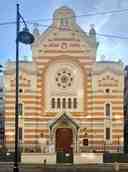
  1. To spot the Templul Unirea Sfântă din București, look for an eye-catching facade striped in warm cream and terracotta, topped with stone stars of David and arched windows,…もっと読む折りたたむ

    To spot the Templul Unirea Sfântă din București, look for an eye-catching facade striped in warm cream and terracotta, topped with stone stars of David and arched windows, standing proudly behind a decorative fence right along Strada Mămulari. Now, take a deep breath and imagine yourself whisked back through time, standing where so many footsteps have echoed over the years. Right in front of you is the Templul Unirea Sfântă-or, as it’s also called, the Great Tailors’ Synagogue. No, you haven’t stumbled onto the set of a magical fairy tale, but it’s just as packed with stories, drama, and a surprising amount of resilience. This striking building has been watching over Bucharest since 1850, although some folks insist it was actually born in 1836. Either way, time doesn’t seem to have dulled its spirit; after all, how many places can say they’ve outlived everything from war to earthquakes to fashion faux-pas? Constructed by the city’s community of tailors-yes, the folks who kept Bucharest’s best-dressed looking extra sharp-this synagogue quickly became a spiritual anchor for generations. Back then, the area was alive with the sound of sewing machines and the clatter of scissors, mixing with whispered prayers and children’s laughter. Can you picture the young apprentices sneaking glances inside, hoping for a wisp of wisdom or at least a break from hemming trousers? The building’s design is like a delicious architectural stew-take a bit of Moorish flair, toss in some Romanesque arches, blend it with Byzantine curves, and even sprinkle in a dash of Wallachian charm. The central nave stretches up high, almost as if it’s reaching for the heavens, while thick walls and sturdy buttresses hold firm as if guarding many secrets. Don’t forget to look up and spot the stars-those aren’t just for show, you know. For nearly two centuries, these stars of David have watched over the stories within. But life hasn’t always been stitched together so neatly here. In January 1941, the building was violently attacked by the Legionnaires, leaving it battered and broken. But this isn’t a place that gives up easily-soon restored, it once again welcomed the faithful and the curious. Like a favorite old coat, patched and mended with care, the synagogue survived World War II and the tough years under Ceaușescu’s rule, when so many synagogues in Bucharest were simply wiped away. This synagogue also became a beacon for memory, knowledge, and culture. In 1978, a new thread was sewn into the building’s story: here, the Museum of the History of Romanian Jews was established, thanks to the efforts of Chief Rabbi Dr. Moses Rosen. Suddenly, the rooms buzzed not only with prayers but with the tales of generations-actors, artists, teachers, parents-all woven into the fabric of Romanian society. In 2019, after a thorough facelift and a modern touch, it reopened as the Museum of the History and Culture of the Jews of Romania "Dr. Nicolae Cajal." Now, if you’re a fan of art, history, or both, you’re in luck: inside, you’ll find paintings by Jewish Romanian artists valued at any national museum, memories from the Jewish kindergarten, kitchen, and school, and even multimedia exhibits bringing the old days to life. There’s also a corner in the museum that tugs at the heart-the Holocaust Memorial. Here, visitors are invited to write the names of loved ones lost, preserving memories and honoring lives that should never be forgotten. The collection of ritual objects, carefully gathered by Dr. Rosen, helps ground all the history in daily living, reminding us that behind every artifact is a person, a family, and a whole world. And while an upgraded security system might make you feel a bit like you’re stepping into a spy movie, it’s just another layer of the synagogue’s incredible story-a building that stands strong through good times and bad, always ready to greet the next visitor with a story or two. So, next time you pass by, tip your imaginary hat to the tailors, the rabbis, and everyone else whose footsteps and dreams echo within these walls. And, if you have a particularly tricky jacket to mend, who knows, maybe the spirit of the old tailors will lend you a hand!

    専用ページを開く →
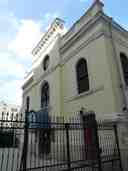
  2. You can spot the Great Synagogue right ahead-a stately, creamy yellow building with tall arched windows and a decorative cornice, standing just behind a classic black iron…もっと読む折りたたむ

    You can spot the Great Synagogue right ahead-a stately, creamy yellow building with tall arched windows and a decorative cornice, standing just behind a classic black iron fence. Now, as you stand here, imagine the gentle footsteps of Bucharest’s Polish-Jewish community back in 1847, bustling to finish their brand-new synagogue. The air would have been filled with excitement-think of the soft chatter, maybe a sneeze from too much sawdust. Over the years, this building has seen quite a bit! In 1865, the walls echoed with the sounds of hammers and the smell of fresh paint during its first big repair. Then it got a stylish update in 1903, and again in 1909. Picture the Rococo swirls being painted in 1936-each stripe adding a bit more glamour, thanks to Ghershon Horowitz, a man who didn’t know the phrase “too fancy.” But there’s a twist-after World War II, the synagogue was battered by far-right Legionnaires, and for a while, it lost its voice. Yet, the community refused to let the silence win. Restorers rushed in 1945, dust flying, as they breathed life back into these walls. Today, you might hear the echo of prayers or the hum of curious visitors, since the Great Synagogue now also tells stories as a Jewish museum. So, take a deep breath, feel the spirit of resilience, and-if you listen closely-you might catch the laughter of Dr. Moses Rosen, the beloved rabbi, still mingling in the air.

    専用ページを開く →
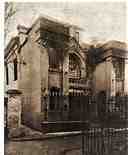
  3. Standing in front of you, on Strada Sfânta Vineri, is a grand, rectangular building faced with two-tone patterned bricks, tall arched windows, and crowned by six slender…もっと読む折りたたむ

    Standing in front of you, on Strada Sfânta Vineri, is a grand, rectangular building faced with two-tone patterned bricks, tall arched windows, and crowned by six slender towers-just look past the black iron fence and spot the intricate rose window above the ornate Moorish portal. Welcome to the Templul Coral, the spectacular “CoraI Temple” of Bucharest-where history isn’t just old, it’s positively lively! Imagine you’re standing in the middle of 19th-century Bucharest: the city is alive with voices from every corner of Europe, and the local Jewish community, led by a visionary named Isaac Leib Weinberg, dreams of a synagogue as dazzling as those found in Vienna or Paris. And why shouldn’t Bucharest have its own showstopper? It all began in 1857, on this very street, in the Mahalaua Stelei neighborhood. Picture a group of hopeful leaders haggling over the price of the land-2,400 gold coins! They’d just bought the spot where you’re standing. Early plans for the temple hinted at tall Gothic arches, but those ideas were soon swept aside for something even bolder, something “Moorish-Byzantine,” a style that makes you want to hum a bit of exotic music as you wander by. Work truly kicked off in 1864, but the journey was anything but smooth. The city buzzed with debate-should the new temple follow the strict old ways or embrace the progress of the modern world? Leaders argued, designs flipped back and forth, and even the city’s top banker, Iacob Loebel, joined in with the architects from Vienna, Enderle and Freiwald, to steer the dream forward. By early 1866, the walls were up, and the intricate brickwork glowed under the city sun. The Torah scrolls were ordered from Budapest, and excitement ran high. Just imagine Bucharesters peering through the iron gates, eager to see what was rising behind them. But then-disaster! Nationalist unrest swept the city. The very temple you see before you, so close to completion, was set ablaze in a night of violent protest. The flames crackled and roared, eating up months of work, fueled by anger over a proposed law granting citizenship to the city’s Jews. The air would have been thick with smoke and fear as neighbors watched the firelight dance against these decorated walls. The damage was enormous-over 209,000 lei went up in smoke. It could have marked the end of the dream, but restoration began at once, even with help from Romania’s own ruler, Carol I. The city’s spirit and the determination of its Jewish community shone through. Finally, in July 1867, with all wounds repaired, the temple was inaugurated. Modern rabbi Antoine Lévy led the ceremony, joined by diplomats and government officials who all understood that this wasn’t just a building: it was a symbol of hope. Over the decades, the Coral Temple has kept on evolving-new conference rooms, galleries, a museum upstairs, and renovations after earthquakes, political turmoil, and the devastations of the Second World War. In January 1941, imagine the sound of breaking glass as legionaries stormed the synagogue, leaving behind a scene of heartbreak, only for the community to rebuild once more, showing resilience at every turn. And it doesn’t stop! Since 2008, further restoration has breathed new color and life into its facades and interiors-mending stonework, restoring stained glass, and reviving the extravagant polychrome brushwork, so the temple looks as enchanting as ever today. Look at the facade: red-and-cream bricks ripple across the walls, a tapestry of color. The grand arched doorway beckons you closer, crowned with delicate carvings. Up above, six small towers guard each corner, and the massive rose windows invite sunlight to dazzle the interior. If you peer inside (or just imagine for now), you’ll find three grand naves divided by elegant arches, a soaring semicircular vault overhead, and ancient benches still welcoming worshippers. Just before you, in the small square, stands a black iron menorah, a silent, strong memorial to the victims of the Holocaust-a reminder that behind all the beauty is a story of survival, grief, and hope. And the guest list! Over time, the Coral Temple has welcomed religious leaders, world-famous rabbis, prime ministers, and even the head of Romania’s Orthodox Church. Step closer and you’ll feel the echoes of conversations, laughter, and prayer from generations past. So, next time you hear the phrase “if these walls could talk,” just remember: here at the Templul Coral, they already do-if you listen carefully enough. And rumor has it, they enjoy a good joke, too-just don’t ask them about the heating bill.

    専用ページを開く →
さらに9件のスポットを表示表示するスポットを減らすexpand_moreexpand_less
  1. Look ahead for a sturdy, beige building with tall, square towers and a large, round window framed by detailed stonework-its Gothic look makes it stand out on the street. Now,…もっと読む折りたたむ

    Look ahead for a sturdy, beige building with tall, square towers and a large, round window framed by detailed stonework-its Gothic look makes it stand out on the street. Now, picture yourself in the heart of the old Jewish district, where the Beth Hamidraș Temple rises up like a keeper of stories long past. If walls could whisper, these would tell tales starting all the way back in 1781, when a generous Jewish woman donated a wooden building for the first synagogue, giving her and her husband's names to the place. Imagine the creak of the wooden floor and the lively chatter of neighbors preparing for Sabbath, candles flickering in cozy warmth. When the wood finally gave way to time, the community built the solid, striking Gothic Revival temple you see now in 1896-a place meant for hope and gathering. But history can be cruel and, in 1941, the Beth Hamidraș Temple witnessed a nightmare. It was a day like any other, worshippers gathered inside, prayers echoing softly, when suddenly violence struck. The far-right Legionaries set fire to the synagogue while people were still inside-smoke, chaos, and a tragedy so heavy it can still be felt in the quiet air around you. Twenty-three souls never left. But this building, like the people it served, would not simply disappear. Restored in 1947, it stood proudly once again-though sadly, its song has faded, and it's now just a warehouse. Still, stand here and listen closely… can you smell old wood, hear laughter, and maybe even the sound of ancient prayers on the wind? The Beth Hamidraș Temple is much more than bricks; it’s memory, resilience, and silent hope.

    専用ページを開く →
  2. Right in front of you is the historic center of Bucharest, where elegant old buildings with intricate stonework catch the sunset between their grand facades-just follow the glow…もっと読む折りたたむ

    Right in front of you is the historic center of Bucharest, where elegant old buildings with intricate stonework catch the sunset between their grand facades-just follow the glow of the sun as it slips between the rooftops above the bustling pedestrian street. Welcome to the beating heart of Bucharest’s past and present! As you stand here, you might notice the cobblestone streets beneath your feet and the lively crowds wandering between stunning old banks and cozy cafes. This area, roughly half a square kilometer in size, sits at the very edge of Bucharest’s Sector 3, and it’s the city’s time machine-if walls could talk, they’d gossip for hours! Let’s start with the borders, so you know you haven’t accidentally wandered into a parallel universe. To the north, there’s Queen Elisabeta Boulevard, where the traffic hums even now. To the east, Bulevardul Hristo Botev, known for keeping secrets as well as rerouting unwary tourists. Down south, you’ll find Bulevardul Corneliu Coposu, while to the west, Calea Victoriei leads straight to some of the city’s greatest treasures. Think of this place as an open-air museum with a twist. In 2010, it proudly made the list of historic monuments-though it’s certainly never acted its age! You’re now part of the buzz, where legendary buildings like Curtea Veche, Manuc’s Inn, and the grand Stavropoleos and Sfântul Anton churches stand only a short stroll apart. The center even hides the official “kilometer zero” of Romania in St. George’s Square, so you could say this is where all Romanian journeys begin-rather handy if you ever misplace your map. The stories here stretch back centuries, swirling around you like autumn leaves. Every street has a name and a tale: Lipscani, Franceză, Doamnei, Stavropoleos-over forty-eight streets form this labyrinth, offering up three entrances, five squares, and a world of surprises with each step. Watch for a sudden burst of music or a cheerful shout from a café terrace-that’s the sound of history mixing with the present. And here’s a secret to impress your fellow travelers: It’s not just a relic-there’s a living heartbeat here. Restoration projects are underway, promising that the charm and the cheerful chaos of this district will last for generations more. If you feel a sense of adventure tingling, it’s probably just the spirit of Bucharest inviting you to get lost... but not too lost! There’s always a friendly street, a hidden park, or a fountain like the famous "Violin Fountain" around the next corner, just waiting for your story to join the city’s own. For a more comprehensive understanding of the delimitation, historical monument or the streets in the historic center, engage with me in the chat section below.

    専用ページを開く →
  3. Imagine, if you will, a land north of the mighty Danube and south of the wild, jagged Carpathians, wrapped in fog and mystery. It was known to locals as Țara Românească - “the…もっと読む折りたたむ

    Imagine, if you will, a land north of the mighty Danube and south of the wild, jagged Carpathians, wrapped in fog and mystery. It was known to locals as Țara Românească - “the Romanian Land” - but the outside world called it Wallachia, a name borrowed from old Germanic and Slavic words for “strangers” or “Romans.” Kind of like calling your neighbor “That Guy Over There Who Talks Funny.” Even now, Romanians prefer Muntenia or Oltenia for the two main parts of old Wallachia, but to the world, Wallachia stuck. The roots of Wallachia go deep. Back in Roman times, the land was a frontier, bristling with forts and watchful soldiers as the Empire tried to hold back waves of invaders. Later, as Rome fell away and the centuries turned, armies swept across these plains: Goths, Huns, Slavs, Byzantines, and more. Each left a fingerprint on the culture, the language, and the landscape. Just be glad you’re only sightseeing - in their day, being a local often meant learning to duck! The real adventure kicks off in the 14th century. Picture a time of armored knights, scheming nobles, and rebel chieftains. Wallachia’s big break came from a local boy made good: Basarab I, a voivode who basically said “Sorry, Hungary, but these mountains are ours now.” After a legendary showdown at the Battle of Posada, Basarab won independence and kicked off the Basarab dynasty. Rumor has it he rode a black horse, but there was nothing half-hearted about his ambition. By the way, speaking of wild rides, you’ve probably heard tales of Prince Vlad III, better known as Vlad the Impaler. He’s Wallachia’s most infamous export, fearsome ruler and real-life inspiration for Dracula - though he was more into wooden stakes than fangs. His idea of justice was, shall we say, pointy. If you were a thief or a treacherous noble… let’s just say you wouldn’t want to RSVP “yes” to one of Vlad’s banquets. But Vlad was only one in a long line of rulers who tried to walk the razor’s edge between freedom and foreign domination. The Ottomans to the south flexed their muscles, interfering in Wallachian politics for centuries. Sometimes the princes paid them off with gold and tribute. Sometimes they paid with blood. Sometimes they sent their own sons as hostages to Constantinople - you know, “Take Our Kids to Work” day, Ottoman-style. Wallachia was a chessboard. Occasionally, it was a punching bag. Habsburgs, Russians, Ottomans-they all wanted a piece. The people of Wallachia carried on regardless, sometimes rebelling, sometimes trading, sometimes just trying to keep their goats out of trouble. Fun fact: the name “Wallachia” pops up in far-off places, even as far as Wales and Wallonia. Apparently, wherever you go, somebody’s got a mysterious cousin named “Wallach.” By the 19th century, revolutions were in the air. Brave souls like Tudor Vladimirescu led uprisings, demanding justice and the end of foreign rule. In 1821, the cry of revolt shook the cobblestones right here under your feet. After much drama, a lot of negotiations, and not a few plot twists worthy of a soap opera, Wallachia finally united with Moldavia in 1859. That was the birth of what we now call Romania. Today, as you look around, try to imagine a land shaped not just by one people or one prince, but by centuries of intrigue-a place where history was never boring and the next big surprise was always just around the corner. Just keep your eye out for any suspiciously pale gentlemen in capes. After all, in Wallachia, legends are everywhere, and you never know what-or who-might be lurking in the shadows. Eager to learn more about the etymology, society or the wallachian insignia? Simply drop your inquiries in the chat section and I'll provide the details you need.

    専用ページを開く →
  4. To spot the National History Museum of Romania, look for a grand rectangular building with an impressive stone façade, huge domes on the corners, and a row of ten massive columns…もっと読む折りたたむ

    To spot the National History Museum of Romania, look for a grand rectangular building with an impressive stone façade, huge domes on the corners, and a row of ten massive columns holding up a wide, ornate porch-trust me, it’s hard to miss! Now, as you’re standing here, let me take you back in time-no time machine required! Imagine the year is 1892, and an ambitious plan is unfolding: Bucharest needs a postal palace, so the architect Alexandru Săvulescu and postal inspector Ernest Sturza set off on a European adventure, not unlike a buddy comedy, exploring post offices from Paris to Geneva. They came back, sketches in hand, and built this masterpiece, modeled mainly on Geneva’s poshest postal palace, but given some serious Romanian flair. As you gaze at those giant Doric columns, picture the clicking of footsteps echoing up the twelve wide steps that run the length of this stately entrance. This wasn’t always a museum-you might smell letters, envelopes, and the faint whiff of ink, because for many years, this was the ultimate hub for sending mail across Romania. Today, the building bursts with stories from Romania’s entire history, spread over 8,000 square meters and 60 glorious rooms: there’s a full-size plaster replica of Trajan’s Column, dazzling Crown Jewels, and even the legendary Pietroasele treasure, sparkling like hidden dragon’s gold under the lights. But not everything here is a glittering prize-ongoing renovations have uncovered a secret: a medieval archaeological site tucked away under the museum, a real hidden chapter of Bucharest’s past. And just recently, the museum featured in a real-life drama-imagine the news buzzing with shock after a gold Geto-Dacian helmet, loaned to a Dutch museum, mysteriously vanished during a daring heist. The director lost his job, and Romania’s precious heritage remains on the most-wanted list. So as you stand before these grand pillars, you’re not just on a walking tour-you’re strolling through over a thousand years of secrets, treasures, and maybe a little mischief.

    専用ページを開く →
  5. If you’re looking straight ahead, you’ll spot an eye-catching palace with a grand glass-and-metal dome at the center, flanked by smaller domed towers and topped by a stunning…もっと読む折りたたむ

    If you’re looking straight ahead, you’ll spot an eye-catching palace with a grand glass-and-metal dome at the center, flanked by smaller domed towers and topped by a stunning semicircular entrance framed with columns-there’s no way to miss its golden glow at night! Let’s take you back, not just to the edge of the sidewalk, but into the heart of old-world Bucharest-when kings, queens, and clever architects had a grand vision. Right now, you’re standing in front of the CEC Palace, which is short for the rather tongue-twisting Casa de Depuneri, Consemnațiuni și Economie. Imagine the red carpet rolled out right where you stand; it’s June 8, 1897, and King Carol I and Queen Elisabeta are here for the groundbreaking ceremony. Even back then, this was the kind of event you’d dress up for-although I promise today you can enjoy this view in sneakers! Before the palace, there was a monastery and a church called “Sfântul Ioan cel Mare,” standing since the 16th century. Old stone, incense in the air, and the bells echoing softly-until it all faded away in 1875 when the site was cleared to make room for progress. First came a plain building for the young CEC bank, but soon it was outgrown, and something more grand was dreamed up. Enter French architect Paul Gottereau, with blueprints that must’ve looked like something out of a fairy tale-turrets, domes, pillars, arches. It was to be the most elegant bank on the boulevard! By 1900, the palace was complete. Standing outside, you might feel the urge to check if you’ve wandered into a Parisian postcard. Glass and metal domes reflect the sunlight (or right now, the city’s glow). Four smaller domes on the corners and a central, much larger dome hover over the grand main hall. As you picture it bustling with people inside, just imagine the suspense: Would local folks trust their life savings in such a palace? Well-they did! CEC became the people’s bank, their piggy bank with attitude. There’s a touch of mystery, too: legends speak of coins, fortunes, maybe even secret decisions made under that glittering dome. Through decades of change, the palace stood firm, surviving wars, revolutions, and the odd accounting error! Now, even as the world speeds past, this palace remains-elegant, strong, and always a little bit magical. Sometimes money really does grow on palaces! Go on-take a moment to admire those details, and try not to wish your own bank visits looked this spectacular.

    専用ページを開く →
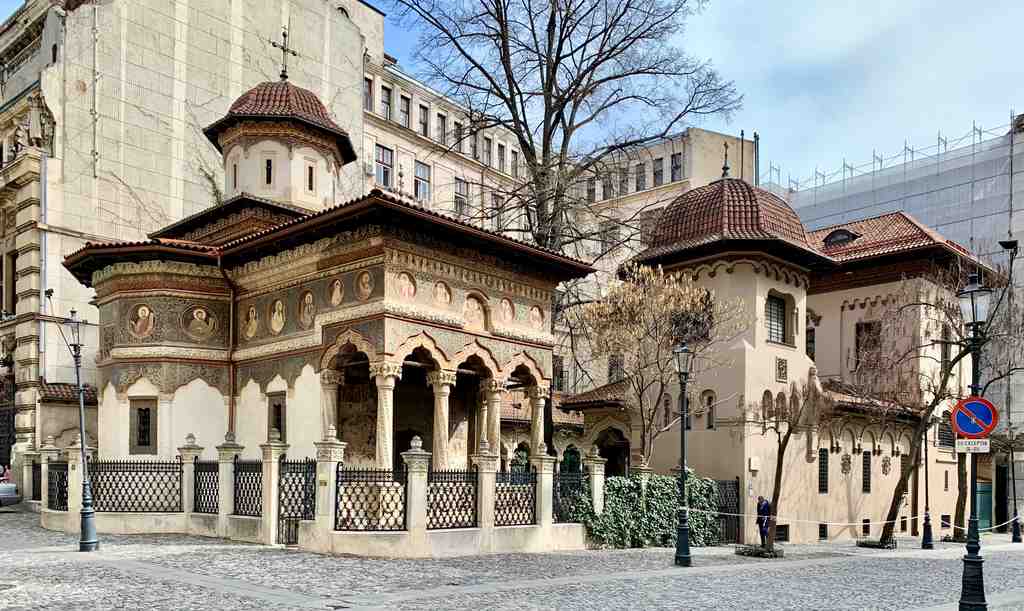
  6. To spot the Stavropoleos Monastery, just look for the small church on your left with a beautiful, richly decorated facade covered in painted religious icons, arched porches, and…もっと読む折りたたむ

    To spot the Stavropoleos Monastery, just look for the small church on your left with a beautiful, richly decorated facade covered in painted religious icons, arched porches, and red-tiled domes nestled between taller modern buildings. Welcome to the magical Stavropoleos Monastery! Imagine yourself stepping into an island of calm right here, in the middle of all Bucharest’s busy streets. Built almost 300 years ago in 1724, this charming little church feels like something out of a fairytale, with its delicate arches, painted saints smiling from every wall, and a garden that sometimes seems quieter than a library at midnight. If you listen closely, you might even hear the faint echo of a time when horses and carts, not cars, rolled down these cobbled roads. Long ago, a Greek monk named Ioannikios Stratonikeas arrived from faraway Pogoniani. Instead of building just a simple church, he had a dream: why not create a whole little community here-one that sang as much as it prayed, and thrived off the hustle and bustle right outside? He built the church and a monastery, then cleverly added an inn to support the whole thing-because, as every wise monk knows, even heavenly voices need earthly funding! The name Stavropoleos actually means “the city of the cross” in Greek, and it was given in honor of the title Ioannikios earned when he became the metropolitan of the region. Over the centuries, this graceful place has seen more drama than a soap opera. Earthquakes shook its walls, toppling the majestic dome; time gnawed away at the beautiful paintings, and the original monastery’s annexes and inn vanished at the end of the 19th century, leaving only the church itself and, much later, a new building inspired by the architect Ion Mincu. Today, that building holds treasures: glittering icons, rescued wall paintings from demolished churches, and a library-a real Aladdin’s cave full of over 8,000 books! Among them are rare manuscripts in Romanian, Greek, and Church Slavonic, donated by all sorts of mysterious characters, professors, and music lovers. Perhaps the most enchanting part of Stavropoleos, though, is its music. This air isn’t just thick with incense; it practically vibrates with centuries of melodies. The monastery has the largest collection of Byzantine music books in all of Romania. Its choir sings neo-Byzantine tunes, just as monks did hundreds of years ago-a single voice gliding and soaring, supported by a soft ison, or drone, hanging in the background. Today, the monastery is alive and bustling-not with monks, but with nuns and a priest, all preserving old books, dazzling icons, and beautiful sacred robes. The choir, led by their enthusiastic archdeacon, even records CDs and travels the world with their haunting music, their voices carrying the ancient spirit of this place into modern times. So, if you linger for a moment and close your eyes, you might almost hear the rustle of old pages, the soft chant of prayers, and the harmony of voices-reminders that magic still lives quietly in the heart of Bucharest. Interested in knowing more about the library, psaltic group or the gallery

    専用ページを開く →
  7. To spot Suțu Palace, look for a grand white neogothic building with tall arched windows and ornate decorations, right at the corner of the paved square ahead. As you stand in…もっと読む折りたたむ

    To spot Suțu Palace, look for a grand white neogothic building with tall arched windows and ornate decorations, right at the corner of the paved square ahead. As you stand in front of Suțu Palace, take a moment to imagine Bucharest nearly 200 years ago, when the city buzzed with horses’ hooves instead of honking cars. Built between 1833 and 1835-on the stern yet stylish orders of postelnic Costache Gr. Suțu-this palace didn’t just pop up out of thin air. Viennese architects Conrad Schwink and Johann Veit brought their vision to life in a stunning neogothic style, with every stone and flourish made to impress. Step closer, and you might almost hear the footsteps of craftsmen and the echo of plans being whispered in German and Romanian. Inside, a bit of magic happened later around 1862, when artist Karl Storck took a chisel to tradition. He transformed the palace with sweeping upgrades, including a majestic staircase that splits in two, as dramatic as a soap opera cliffhanger, and an enormous Murano mirror-so large, you’d worry about bumping into yourself from across the hall! Today, the palace isn’t just a fancy relic; it’s a historic monument and hosts the Museum of Bucharest. You’re standing where high society once mingled, secrets were surely swapped, and maybe someone tripped on those monumental stairs-don’t worry, I won’t tell if you peek inside!

    専用ページを開く →
  8. Right in front of you, University Square spreads out as a grand open space surrounded by historic buildings with elegant facades and busy streets filled with cars and people-look…もっと読む折りたたむ

    Right in front of you, University Square spreads out as a grand open space surrounded by historic buildings with elegant facades and busy streets filled with cars and people-look for the lush green area and statues at the heart of the intersection, across from the ornate University of Bucharest. Welcome to University Square-Bucharest’s beating heart, a place where history and modern life do the tango right before your very eyes! Listen carefully and you might hear the rush of city life swirling all around you, with the grand University of Bucharest standing proudly just nearby. This square isn’t just a crossroads for cars and buses; it’s been a crossroads for ideas, culture, and even revolution. Hundreds of years ago, imagine standing here and peering north-there was once nothing but the dusty edge of Bucharest. By about 1700, the city had started creeping outward, but this was still where civilization ended and wild countryside began. Picture horse-drawn carriages rattling along cobbled streets, and no trams or honking cars in sight. But fast forward to the 19th century, and something magical happens: this spot becomes “the great crossroad” of the city, inspired by the grand boulevards of Paris. Wide roads slice through in every direction, and the young capital of Romania declares, “I’m here, and I’m fabulous!” But it’s not just the city grid that makes University Square special. Take a look at the statues standing tall on the green-they’re the guardians of Romanian education and freedom. There’s Ion Heliade Rădulescu with his dreamy eyes; Spiru Haret, the man who made math heroic; Gheorghe Lazăr, who brought enlightenment; and Michael the Brave, sword raised, reminding everyone that courage is timeless. It took over sixty years to complete all these statues, so you could say Romania was perfecting its selfie game one stone at a time. Now, glance towards the modern buildings hugging the square. See that towering hotel? That’s the InterContinental-the ultimate 1970s luxury! It was built so high, people joked the clouds used its rooftop as a taxi stand. And just next to it is the National Theatre, which went through an identity crisis over the decades. It transformed from a stylish stage to a fortress-like concrete building, then got a futuristic facelift in 2014! Yes, it cost dozens of millions of euros, but now it looks like it could blast off and host a Shakespeare play on Mars. Below your feet is another world entirely-the University Passage. It’s where rushing commuters burst from the metro, shoes echoing in the underground corridor. You can almost imagine the ghosts of old shopkeepers selling sausages and beer, lost to the modern city planning of the 1960s. But perhaps the square’s most dramatic days were in 1990. Here, thousands of students gathered, hungry for freedom after the fall of communism. The tension crackled in the air as songs and slogans echoed off the stone. Then, suddenly, miners arrived by the trainload to silence the protest-a heavy moment etched into the soul of Bucharest. Today you’re standing at a place where revolution, art, and everyday bustle meet. If the city had a storybook, University Square would be the page everyone reads twice!

    専用ページを開く →
  9. To spot the University Palace, just look up toward the elegant neoclassical façade towering above you, with its grand round corners wrapped in columns and topped by impressive…もっと読む折りたたむ

    To spot the University Palace, just look up toward the elegant neoclassical façade towering above you, with its grand round corners wrapped in columns and topped by impressive dome-shaped roofs. Now that you’re here, standing at the heart of University Square, take a big breath and imagine this spot as the center stage of Bucharest’s story! This mighty building looming before you, rising for six stately floors, wasn’t always a palace of learning. Once upon a time, monks wandered here, for this was the sacred ground of the old Saint Sava Monastery. But in the rush and dream of the 19th century, Bucharest needed a home for its boldest minds. And so, on a crisp day in October 1857-when horses still rattled through muddy streets-architect Alexandru Orăscu lay the foundation stone. A metal box was sealed inside, holding the city’s hopes and an official document, like a time capsule buried for the future. The construction spanned over a decade, finishing in 1869, just in time for the waves of knowledge seekers to flood in. In its earliest days, the palace gathered more than just the University’s faculties. It was a buzzing hive-a Senate chamber, the proud vaults of the Academy, the Central Library, a Fine Arts School, and, for good measure, even a pinacotheca and the Museum of Natural History! If you listen closely, perhaps you can hear the ghostly echoes of heated debates, chalk on blackboards, and the hint of library dust as students hustled between rooms. But the Palace didn’t stop growing-no, it had to keep up with Bucharest’s curiosity! New side wings, designed by Nicolae Ghica-Budești, emerged between 1912 and 1926, elegantly stitched onto Orăscu’s dream. The palace’s very skin tells you its story: rugged stone ground floor, vast round arches, a parade of strong Doric pilasters, and above it all, playful roof windows peeking from beneath the domes. At the corners, massive round towers clad in pillars look like they’re ready to break out into a waltz at any minute. Honestly, it’s hard to blame them-this is a building with serious style! Now, here’s a twist worthy of any academic drama: look up in your mind’s eye at the central pediment-once sculpted with a glorious relief by Karl Storck, showing Minerva crowning the arts and sciences. She stretched out a laurel crown to a graceful muse of poetry, while around her, the arts and sciences lounged in all their finery. But in 1944, American bombs rained down, and that masterpiece crumbled. Only fragments survive, tucked away in a city museum. The statues you see today? They’re muses added in 1929 by Emil Wilhelm Becker-a true family affair, as his very own daughter was the model! Over time, the palace became a little too crowded for comfort-a victim of its own popularity-so most institutions moved out, leaving the palace to its original children: the students. Today, you’ll find the Faculty of Geography, Mathematics and Informatics, Letters, Foreign Languages, History, Chemistry, Business, and many more. Just think, the echoes of hundreds of thousands of hopes, dreams, and hard-fought midnight study sessions live in these stone walls. So, as you stand in this square, let your imagination travel through all those stories-monks, master builders, muses, scholars and rebels. Each left a little magic here-giving the University Palace a pulse and a presence that’s very much alive. Now, isn’t that the kind of place where you’d want to chase a dream or two?

    専用ページを開く →

よくある質問

ツアーはどうやって始めますか?

購入後、AudaToursアプリをダウンロードして引き換えコードを入力してください。ツアーはすぐに開始できます。再生ボタンをタップして、GPSガイド付きルートに従うだけです。

ツアー中にインターネットは必要ですか?

いいえ!開始前にツアーをダウンロードしておけば、完全にオフラインで楽しめます。チャット機能のみインターネットが必要です。モバイルデータを節約するため、WiFi環境でのダウンロードをお勧めします。

これは団体ツアーですか?

いいえ、これはセルフガイド式のオーディオツアーです。ガイドや団体、決まったスケジュールに縛られることなく、スマホから流れるナレーションを聴きながら自分のペースで自由に探索できます。

ツアーの所要時間は?

ほとんどのツアーは60〜90分で完了しますが、ペースは完全に自由です。好きな時に一時停止したり、スポットを飛ばしたり、休憩を取ったりできます。

今日中にツアーを終えられない場合は?

問題ありません!ツアーには無期限でアクセスできます。明日、来週、あるいは来年でも、好きな時に再開できます。進行状況は保存されます。

どの言語が利用可能ですか?

すべてのツアーが50以上の言語に対応しています。コードを引き換える際にお好みの言語を選択してください。注意:ツアー生成後に言語を変更することはできません。

購入後、どこからツアーにアクセスできますか?

App StoreまたはGoogle Playから無料のAudaToursアプリをダウンロードしてください。メールで届いた引き換えコードを入力すると、ライブラリにツアーが表示され、ダウンロードして開始できるようになります。

verified_user
満足保証

もしツアーを楽しめなかった場合は、返金いたします。お問い合わせ先: [email protected]

以下の決済で安全にチェックアウト

Apple PayGoogle PayVisaMastercardPayPal

AudaTours: オーディオツアー

楽しくて手頃なセルフガイド式ウォーキングツアー

アプリを試す arrow_forward

世界中の旅行者に愛されています

format_quote このツアーは街を見るのに本当に良い方法でした。ストーリーは作り込まれすぎず面白くて、自分のペースで探索できるのが良かったです。
format_quote 観光客気分になりすぎず、ブライトンを知るためのしっかりとした方法でした。ナレーションには深みと文脈がありました。
Christoph
Christoph
starstarstarstarstar
ブライトン・ツアー arrow_forward
format_quote 片手にクロワッサンを持ち、期待ゼロで始めました。アプリはただ一緒にいてくれる感じで、プレッシャーもなく、クールな物語を楽しめました。

オーディオツアー使い放題

世界中のすべてのツアーをアンロック

0 ツアー·0 都市·0 国
all_inclusive アンリミテッドを探索