Manila Audio Tour: Triumphs & Testaments Tour
マニラの空にそびえ立つ要塞の門。その彫刻された守護者たちは、イントラムロスの歴史ある壁の中に隠された何世紀にもわたる危険、反乱、そして静かな勇気を暗示しています。 これはあなたのセルフガイド音声アドベンチャーです。サンチャゴ要塞、心に残るリサール聖堂、モリオーネス広場などを自由に巡りましょう。ほとんどの訪問者が見過ごしてしまう秘密を聞いてください。影に隠された物語、レンガに織り込まれたスキャンダル、石に刻まれた勇気。 なぜマニラで最も激しい決闘がこのアーチの下で起こったのでしょうか?ホセ・リサールは、これらの石の上に夜明けが訪れる前に、どんな謎のメッセージを隠したのでしょうか?地震と戦争の後、破壊された広場を再建したのは誰でしょう?そして、それは新しい支配者が現れるたびに何度も姿を変えました。 植民地の陰謀がくすぶり、革命が勃発した場所をさまよいましょう。日陰の広場から傷ついた城壁まで、一歩ごとにマニラを廃墟の街としてではなく、ドラマと謎に満ちた生きた年代記として見てください。 今すぐイントラムロスの秘密を解き明かしましょう。物語は、歴史が足元に響き渡る場所で待っています。
ツアーのプレビュー
このツアーについて
- schedule所要時間 30–50 mins自分のペースで進める
- straightenウォーキングルート 2.2kmガイド付きパスに沿って進む
- location_on
- wifi_offオフライン対応一度のダウンロードでどこでも使える
- all_inclusive無期限アクセスいつでも、ずっと再生可能
- location_onサンチャゴ要塞から開始
このツアーのスポット
To spot Fort Santiago, look for a huge, stone gateway with thick, weathered walls and intricate carvings above the arch. The doorway itself is grand and towers above the brick…もっと読む折りたたむ
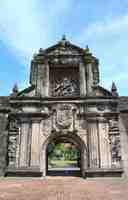
To spot Fort Santiago, look for a huge, stone gateway with thick, weathered walls and intricate carvings above the arch. The doorway itself is grand and towers above the brick path. If you see a gate flanked by powerful columns, topped with a large relief of a man on a horse charging into battle (that’s Saint James!), then you’ve found it! You’re standing at the entrance, ready to step into centuries of history. Welcome to Fort Santiago! Imagine yourself here in 1571, the air heavy with the scent of the river and the buzz of activity as Spanish soldiers haul stones and logs to build this impressive fortress. Let’s step back to when Manila was a brand-new Spanish city and this fort was its shield. The walls you see-22 feet tall and 8 feet thick-were built to keep out enemies, pirates, and, occasionally, the odd duck who just wanted to visit early Manila. This spot wasn’t always so peaceful. The echo you hear under the gateway? That’s the sound of history: Rajah Matanda’s warriors once clashed swords with Spanish troops right here! And if you’re feeling brave, try to imagine the chill in the air when José Rizal, the national hero, walked here for the last time, his footsteps now marked in bronze on the ground. A somber moment, but also inspiring-where courage stood tall in the face of danger. Don’t forget to peek up! The fierce figure above the main gate is no ordinary knight. That’s Saint James, Spain’s patron, shown riding into battle against all odds. If you listen closely, you can almost hear the clang of old armor and the distant shouts of soldiers. Beyond these gates, spice-laden galleons once sailed for far-off Mexico, and mysterious passages led prisoners to cold, stone cells. Every brick and carving has a tale to tell-some are heroic, others heartbreaking, and a few might even make you shiver. Ready to walk inside? Trust me, no pirates or knights will jump out at you today… I think!
専用ページを開く →Alright, you’re almost right in front of the Rizal Shrine! To spot it, look for a white colonial building with thick, arched windows and a classic red-tiled roof, tucked away…もっと読む折りたたむ
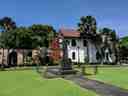
Alright, you’re almost right in front of the Rizal Shrine! To spot it, look for a white colonial building with thick, arched windows and a classic red-tiled roof, tucked away behind lush palm trees and old brick walls. As you walk up, you can’t miss the commanding statue of José Rizal himself standing proudly on a stone platform right in the middle of a green lawn. It’s like he’s welcoming you to step back in time. Imagine it’s a night over a hundred years ago. The thick stone walls and cool air hold secrets of the past. This very building was where José Rizal, the Philippines’ most celebrated hero, spent his last night before facing the firing squad. Talk about a room with way too much history! Here, with lanterns glowing and soldiers’ boots echoing in the halls, Rizal wrote his final poem, “Mi Último Adiós,” and cleverly hid it inside an oil lamp. He gave it to his sister Trinidad-just in case you ever thought hiding notes from your siblings was tough! Today, this museum holds so many personal pieces of Rizal’s life: shells he collected on the beach in Dapitan, his books and handwritten letters, even his artwork. The atmosphere is a mix between a time capsule and an adventure film. It’s peaceful now, but imagine whispers of history floating by as you look through the windows. Step inside if you wish, and see if you can feel the lingering courage and quiet tension of Rizal’s final hours. And don’t worry; you’re perfectly safe! The only danger today is not taking enough photos.
専用ページを開く →Take a look in front of you-see that wide open space with its neat checkered pathways and lines of leafy trees standing like patient soldiers on either side? That’s Plaza…もっと読む折りたたむ
Take a look in front of you-see that wide open space with its neat checkered pathways and lines of leafy trees standing like patient soldiers on either side? That’s Plaza Moriones. Just keep your eyes forward; in the distance, you’ll spot the entrance to Fort Santiago, acting as the plaza’s proud backdrop. If you see people strolling, couples taking selfies, and maybe a few lovebirds sitting under the shady branches, you’ve found our spot! Now, imagine yourself here a long, long time ago. Instead of joggers and kids with ice cream, you’d see rows of Spanish soldiers marching back and forth, the air humming with commands and heavy boots. The year could be 1671 or even earlier-this square already existed, known back then as Plaza de la Fuerza. It was the original parade ground for the men stationed in Fort Santiago, and you’d better believe the grass got trampled flat by all those drills. But fate had its own dance moves. An earthquake in 1863 shook things up, literally, and after that, the plaza was crammed with temporary barracks. By 1898, it had earned a new name: Plaza del General Moriones, after Governor General Domingo Moriones y Muralla. Can you imagine a more dramatic way to get a plaza named after you than surviving quakes and wars? Fast forward, and the Americans arrived, using this space for even more marching-and building bunks for their own troops. Then came World War II, which left nearly everything in ruins, including this very plaza. By the 1970s, the space had been a parking lot, a garden, and even a picnic area. If these stones could talk, they’d probably ask for a little peace and quiet! The Intramuros Administration gave Plaza Moriones two big makeovers, the most recent in 2017. By then, the garden beds had made way for beautiful granite-so it was back to open space, with neat paving in place of endless grass. There’s a fountain in the middle now, and near the entrance to Fort Santiago, elegant kalachuchi trees light up when dusk falls, twinkling with capiz shell lamps. With all this open space, you can stand here and enjoy views stretching from the fort’s gates all the way to Manila Cathedral. So take in the air, maybe imagine a drill sergeant yelling, “Left! Right!” If you hear someone say, “Eyes front!”-don’t worry, it’s probably just me. Welcome to Plaza Moriones, where history’s footsteps never quite fade away.
専用ページを開く →
さらに7件のスポットを表示表示するスポットを減らすexpand_moreexpand_less
Ahead of you, rising right from the center of the roundabout, is the Anda Monument! If you look straight ahead, you’ll see a tall, white obelisk with a golden star on top, set on…もっと読む折りたたむ
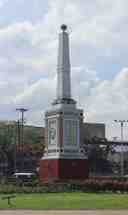
Ahead of you, rising right from the center of the roundabout, is the Anda Monument! If you look straight ahead, you’ll see a tall, white obelisk with a golden star on top, set on a chunky, red-brick base with decorative blue-and-white tiles. The monument stands proudly in the midst of blooming flowers and a spinning circle of passing cars. You can’t miss it - just keep your eyes locked on that sharp, spiky star glimmering up above. Alright, imagine the lively sounds of honking cars and echoing footfalls all around as you step up to this towering landmark. This is no ordinary monument. The Anda Monument isn’t just a traffic obstacle - it’s a heroic reminder planted right between Intramuros and Manila’s busy port area. It was built to honor Simón de Anda y Salazar, a fearless Governor-General who stood his ground when the British came storming into Manila in 1762. While most officials ran for cover, Anda thought, “Not today!” and led a resistance that made the British sweat buckets in this tropical heat. If that’s not cool under pressure, I don’t know what is. Originally, the monument popped up by the Pasig River in 1871, thanks to another governor who thought Anda deserved a little more applause. It’s seen a lot-survived wars, suffered heavy damage under the Japanese in WWII, and got shuffled around Manila like a game of human Tetris. But despite plans to move it-or even turn the roundabout into one giant intersection (boring!)-the monument held its ground, with heritage lovers shouting, “Leave Anda alone!” Today, Anda stands tall atop a newly polished base, surrounded by a dazzling fountain and an army of rainbow-colored lights. At night, it practically glows like the world’s fanciest nightlight. So as you look up at that golden star, picture the monument watching over the city, reminding everyone not to underestimate someone who’s willing to put up a good fight for what’s right. And just think: next time you’re caught in traffic here, you can tell your friends you’re stuck with a true Manila legend! Ready to march onward to the next stop?
専用ページを開く →If you look straight ahead, you’ll see a tall stone pedestal rising from the center of a circular stone fountain. On top, there’s a bronze statue of King Charles IV, proudly…もっと読む折りたたむ
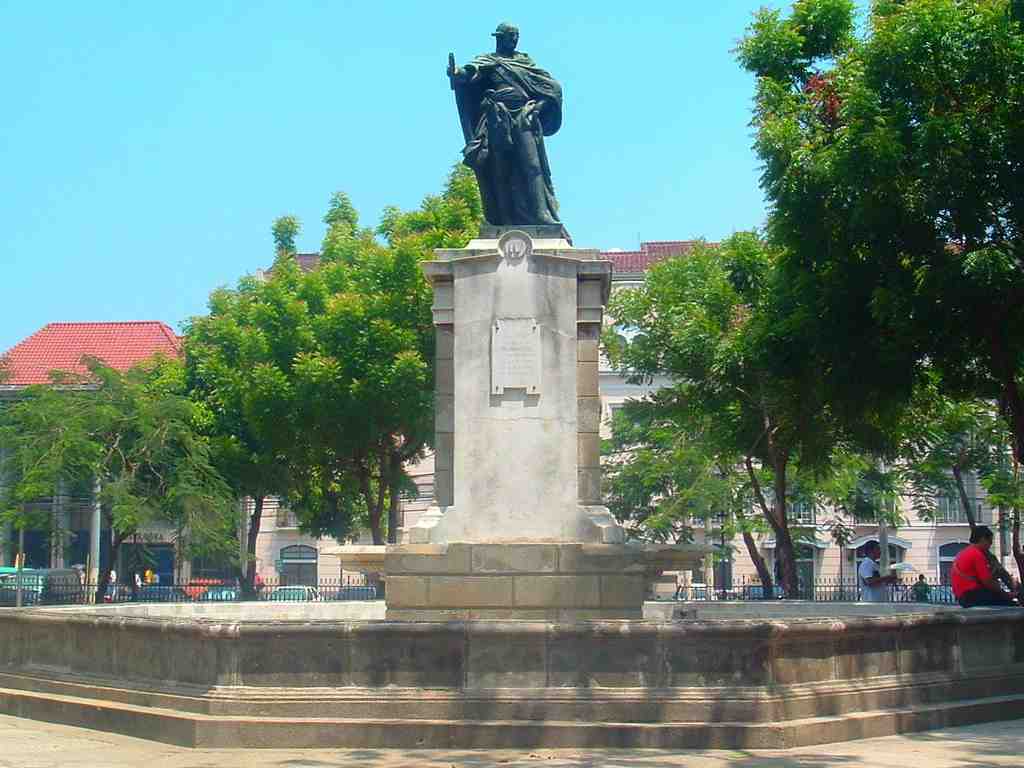
If you look straight ahead, you’ll see a tall stone pedestal rising from the center of a circular stone fountain. On top, there’s a bronze statue of King Charles IV, proudly wearing royal robes, with one arm akimbo and the other gripping a staff. He’s facing right toward the grand Manila Cathedral. The whole monument is surrounded by leafy trees, making it feel almost hidden-like a secret king surveying his leafy court. Don’t miss the roman numerals IV near the base, a crown on top, and some detailed plaques on the pedestal’s front and back. Now, take a moment to picture it-imagine you’re in the early 1800s. Manila’s Plaza de Roma was bustling, horses clopping, and the air tinged with the smell of stone and fresh-cut shrubs. Suddenly, a hush fell on the crowd as workers rolled in a gleaming new statue right here. People stared as the statue of Charles IV was lifted high. Here was the king who, they believed, had saved thousands from the dreaded smallpox with a daring, world-spanning expedition. But wait-did you know those “heroes” of the expedition were not only doctors? Traveling across oceans were 22 brave Mexican orphan boys, aged 8 to 10, carrying the cowpox vaccine right in their bodies. Imagine, their small shoes padding across the stones, facing storms, sea, and homesickness to deliver a miracle to the Philippines! The truth about this monument is a little like a Spanish telenovela-full of surprises! Most thought it was a giant thank-you for the vaccine, but really, it was a show of royal power, built to say, “Look who’s boss!” History can be such a drama queen. If you look up, you’ll see Charles IV looming above, his royal robes fluttering and his staff ready as if to tap you on the shoulder and ask, “Have you had your shot?” At his base, you’ll see plaques in Spanish thanking him, and behind, another telling when it was built. This monument’s been through war, looters, and even a stint hidden away in storage. But it’s come back, patched up, and still keeping watch over Intramuros. So go ahead-give King Charles a wave. He may not wave back, but as far as heroic vaccine stories go, he’s got quite a tale to tell!
専用ページを開く →Right in front of you is one of the most recognizable gateways into the past-Intramuros! To spot it, look for the large, chunky stone bridge covered in moss and greenery, crowned…もっと読む折りたたむ
Right in front of you is one of the most recognizable gateways into the past-Intramuros! To spot it, look for the large, chunky stone bridge covered in moss and greenery, crowned by a giant sign that boldly spells out “INTRAMUROS.” You’ll notice the thick, weathered walls and the cozy tunnel-like opening underneath. If you start feeling like you’ve stepped onto the set of an epic history movie, you’re in the right place! Imagine standing here centuries ago. Around you, the clang of horse hooves and the chatter of merchants fill the air. There’s a strong scent of old stone, rain on moss, and just a hint of something sizzling from a distant food stall. You’re at the entrance to the Walled City-Intramuros-once the heart and soul of Manila. Back in the day, this was a place of secrets, strategy, and a bit of Spanish swagger. The Spanish built these thick walls to protect their treasure: not gold, but Manila itself, the beating center of a faraway empire. Anyone inside these walls was considered part of Manila-a real VIP! Step outside? Sorry, you’d be in the suburbs, or “extramuros,” literally “outside the walls.” No VIP lounge for you! This district, about 0.67 square kilometers-don’t worry, I did the math for you; that’s not very big-was the center of government, religion, and education. Governors, priests, merchants, sailors-all walked these streets. In fact, the Manila Galleons, packed with exotic goods and dreamers, linked Asia to America for hundreds of years. Picture the sound of sails creaking and crates rolling across the cobblestones. But Intramuros wasn’t always so peaceful. When the Americans arrived, they changed the shoreline, built ports, and even turned the moat into a golf course! And during World War II, history hit hard-the city inside these walls was flattened. Yet, like a stubborn plant between stones, Intramuros has been rebuilt and still stands proud, its spirit echoing off every block and corner. So, take a deep breath and let yourself be transported. As you step through this mossy gate, you’re walking where explorers, warriors, and dreamers once marched. Keep your eyes open for hidden courtyards, old churches, and maybe a ghost or two-who knows! In Intramuros, the past doesn’t just whisper. Sometimes, if you listen closely, it laughs and tells a story. Curious about the city walls, present day intramuros or the administration? Don't hesitate to reach out in the chat section for additional details.
専用ページを開く →Right in front of you is Plaza de España. Have a look ahead and you’ll spot a cozy triangle of greenery surrounded by tall, swaying palm trees-looking a bit like a sunny island…もっと読む折りたたむ
Right in front of you is Plaza de España. Have a look ahead and you’ll spot a cozy triangle of greenery surrounded by tall, swaying palm trees-looking a bit like a sunny island right in the middle of bustling streets. If you peek between those palms, you’ll see a statue in the center, standing proud on a stone pedestal. On each corner, the grand old Aduana Building and some modern constructions nod politely to each other, telling a story of Manila’s long, layered past. Plaza de España is small but full of memories! Imagine the sound of horse-drawn carriages clopping along, Spanish soldiers passing by, and the busy chatter from old Manila mixing with the present-day honks and laughter. Now, the main star here is King Philip II, immortalized in bronze and looking heroic-he’s the guy who gave the Philippines its name, though honestly, I bet he never expected to become a local celebrity! Once, this spot was just called Plaza Aduana, after the customs house. Its name changed a bunch over the years-especially after big, dramatic events, like wars and revolutions. At one point, it honored Spanish soldiers who fell during the Philippine Revolution-but don’t worry, we won’t be bumping into any ghosts. In 1902, during the American era, it finally became Plaza de España. Think of all the things this triangle has seen: from Spanish colonists in regal uniforms to World War II, where nearby buildings were reduced to rubble. If these palm trees could talk, the stories would probably fill a whole library-and maybe throw in a plot twist or two! But the plaza isn’t stuck in the past. It’s lovingly kept by the parks department, and in 1998, that statue you’re looking at was added right in the center, just in time for the Philippine Centennial. During a royal visit two years later, Queen Sofía of Spain herself came to see it, probably wondering if King Philip would mind the heat. So take a little stroll around, soak in the sunlight, and let your imagination wander. Just don’t try to challenge King Philip to a staring contest-he’s been winning that one for years!
専用ページを開く →Alright, you should be seeing a cream and yellow building with “Chamber of Commerce of the Philippine Islands” boldly written above the entrance. There’s a bit of old-world…もっと読む折りたたむ
Alright, you should be seeing a cream and yellow building with “Chamber of Commerce of the Philippine Islands” boldly written above the entrance. There’s a bit of old-world flair-notice the white decorative trim along the roofline and the formal lettering in both English and Spanish. You might even spot a blue sky peeking above! Stand right in front and look for the clean sign that says “CHAMBER Bldg.” above the windows-congratulations, you've arrived! Now, let’s step back in time! Imagine yourself in the late 1800s in bustling Manila. Here stood the hub of business dreams-the Chamber of Commerce of the Philippine Islands, the oldest business institution in the country! Established way back in 1886, its story began when the King of Spain decided Manila needed an official hub for merchants and entrepreneurs. Royal decree issued-very fancy. I wish my coffee orders came that official. Picture a room teeming with Manila’s sharpest minds: shipbuilders, real-estate tycoons, bankers, businessmen, and even a few ambitious lawyers. They held their very first meetings in a more humble place-a home in San Nicolas district. But these were folks you wouldn't want to play Monopoly against; pretty soon, they needed a grand, official home for all their big ideas. Through Spanish rule, a splash of American governance, and all the drama in between, the Chamber kept on thriving. Don’t be fooled by its quiet appearance now; this place crackled with debates, passionate speeches, and the occasional sound of paperwork being heroically signed. Later, in 1937, architect Juan Arellano designed this three-story building you’re standing before, and it was opened with quite the ceremony by President Manuel Quezon himself-definitely a day for bow ties and grand speeches! Over the decades, the Chamber played a huge part in shaping Filipino business, adapting to every storm, change, and challenge that history could throw its way. So, right where you’re standing, imagine all the big deals that started here and the dreams that took off towards the future-some thanks to a good handshake and yes, probably lots of coffee. Ready to keep your adventure rolling towards the next stop? What's more inspiring than a building filled with old business secrets and a dash of Spanish flair?
専用ページを開く →There it is right in front of you-the grand, weathered Aduana Building. Just look for the long, rectangular stone structure with tall empty windows and a touch of classical…もっと読む折りたたむ
There it is right in front of you-the grand, weathered Aduana Building. Just look for the long, rectangular stone structure with tall empty windows and a touch of classical elegance. You’ll notice big blocks of gray stone on the lower level, tall rectangle-shaped window frames above, and even a few ironwork balconies that once looked out over busy streets packed with carriages and merchants. The building stretches impressively along the corner, its age showing in the moss, cracks, and scars of history-but don’t be fooled, this place was once the buzzing heart of colonial Manila’s trade and treasure. Now, time for a quick time-travel adventure! Picture yourself as a daring merchant from the 1800s, stepping up to these big arched entrances. Maybe you’re clutching important papers… or just hoping your shipment of chocolate won’t melt in Manila’s heat. This was the Aduana, the Custom House, where government men in sharp uniforms checked what came in and out of the city. These walls kept track of gold, galleons, silver, and yes, probably a hot pepper or two! If the Aduana looks tough and no-nonsense, that’s because it had to protect the kingdom’s riches-and maybe a few secrets. But the Aduana didn’t have it easy. Earthquakes rocked it, fires scorched it, and even bombs during World War II couldn’t knock it off its corner completely. Imagine: in 1863, the ground shakes and walls tumble. In 1945, the sky lights up in the Battle of Manila-yet here it stubbornly stands! It almost feels like this building refuses to quit. With every disaster, it somehow dusts itself off and invites another chapter in its story-from housing customs, to the Treasury, the Mint, and even the Central Bank. On a lighter note, can you spot the tiny balconies? Legend has it people used to watch the city’s celebrations from there, maybe hoping to catch a parade, or just spying on who’s coming and going. And if you hear echoes in the hallways, don’t worry-it’s just the ghosts of accountants past, still checking everyone’s cargo. Restoration has started in recent years, so one day, the Aduana’s grand halls might welcome visitors again. But today, standing in front of its quiet ruins, you can almost hear the clatter of coins, the shouts of merchants, and the wild energy of a city determined to survive anything. You’re not just seeing an old shell-you’re meeting a tough, legendary survivor of Manila’s wild history. Now, are you ready for the next chapter of adventure?
専用ページを開く →You’re almost there-if you look straight ahead, you’ll see a bold white arch rising gracefully over the Pasig River. That’s your landmark! The bridge is modern and unmistakable,…もっと読む折りたたむ
You’re almost there-if you look straight ahead, you’ll see a bold white arch rising gracefully over the Pasig River. That’s your landmark! The bridge is modern and unmistakable, with two striking arches leaning in toward each other, linked by a web of metal cables, all glowing under city lights. Just let your eyes follow the curve of the road as it stretches from Intramuros, sweeping you over the shimmering water below, toward the bright clusters of Binondo’s skyline. Now, picture yourself at the edge of centuries-old Intramuros, just footsteps from Spanish colonial-era stone. Suddenly, there’s this stunning, futuristic arch popping up in front of you, almost as if a giant metal rainbow decided to take a nap right on the river! That’s the Binondo-Intramuros Bridge, Manila’s playground for architectural contrasts. This bridge is no ordinary crossing. It’s a four-lane, steel-boned basket-handle arch-like a big bow holding up the sky. And at 680 meters long, it’s the newest way to zip from the history-soaked streets of old Manila all the way to the bustling, delicious chaos of Binondo, home of the world’s oldest Chinatown. Walk across, and you’re literally stepping from Spanish forts into Manila’s modern heart. But this bridge brings a bit of drama. When the government announced it would span the river right next to places like San Agustin Church, heritage lovers broke into a sweat! There were fierce debates over whether a shiny, new bridge belonged here. Heritage groups imagined ancient walls crumbling as bulldozers crept closer, and some wondered if the thirst for progress might overshadow the stories locked in old stones. One group even warned, “Careful! The wrong bridge could cost us our UNESCO dream!” No wonder the bridge stirs up passions hotter than a bowl of Binondo soup. Still, the bridge got built-thanks to a hefty infrastructure grant from China. The construction brought a wild tangle of cranes, welders, and traffic cones, only delayed by the worldwide curveball of the pandemic. When it finally opened in April 2022, politicians cut ribbons, cameras flashed, and yes, people noticed…the pedestrian stairs weren’t quite ready yet. Guess the bridge needed a little more “step-by-step” progress! Today, as you stand by this beautiful blend of steel and controversy, soak in the river breeze and the glow of city lights reflecting off the arch. Imagine the footsteps of monks, merchants, and revolutionaries over the centuries-now mixing with the roar of jeepneys and laughter of families dashing across this new lifeline. Manila’s always been a city where old meets new, sometimes with a clash, sometimes with a cheer. Go ahead, take a photo! And if the bridge whispers you a secret, it’s this: history is never still, and every crossing is a chance to write the next chapter. I hope you enjoyed the journey!
専用ページを開く →
よくある質問
ツアーはどうやって始めますか?
購入後、AudaToursアプリをダウンロードして引き換えコードを入力してください。ツアーはすぐに開始できます。再生ボタンをタップして、GPSガイド付きルートに従うだけです。
ツアー中にインターネットは必要ですか?
いいえ!開始前にツアーをダウンロードしておけば、完全にオフラインで楽しめます。チャット機能のみインターネットが必要です。モバイルデータを節約するため、WiFi環境でのダウンロードをお勧めします。
これは団体ツアーですか?
いいえ、これはセルフガイド式のオーディオツアーです。ガイドや団体、決まったスケジュールに縛られることなく、スマホから流れるナレーションを聴きながら自分のペースで自由に探索できます。
ツアーの所要時間は?
ほとんどのツアーは60〜90分で完了しますが、ペースは完全に自由です。好きな時に一時停止したり、スポットを飛ばしたり、休憩を取ったりできます。
今日中にツアーを終えられない場合は?
問題ありません!ツアーには無期限でアクセスできます。明日、来週、あるいは来年でも、好きな時に再開できます。進行状況は保存されます。
どの言語が利用可能ですか?
すべてのツアーが50以上の言語に対応しています。コードを引き換える際にお好みの言語を選択してください。注意:ツアー生成後に言語を変更することはできません。
購入後、どこからツアーにアクセスできますか?
App StoreまたはGoogle Playから無料のAudaToursアプリをダウンロードしてください。メールで届いた引き換えコードを入力すると、ライブラリにツアーが表示され、ダウンロードして開始できるようになります。
もしツアーを楽しめなかった場合は、返金いたします。お問い合わせ先: [email protected]
以下の決済で安全にチェックアウト