
トビリシ・オーディオツアー:ディドゥベ、トビリシの文化的・歴史的な宝石
かつて絹の庭園には王家の悲しみと子供の鉄道が隠されていました。トビリシの宮殿や広場は、華麗なファサードの裏に秘密を秘め、それぞれの角が静かな外見に反する物語をささやいています。 これは、ドラマチックなエピソードや、ほとんどの訪問者が見つけることのない隠れた宝石を明らかにする、セルフガイド・オーディオツアーでトビリシを探索するための招待状です。 これらの通りで、カルティ・カヘティ王国の運命を永遠に変えた残忍な出来事とは何だったのでしょうか?どの禁断の愛が、ジョージアで最も豪華な宮殿の一つを誕生させたのでしょうか?そして、なぜ養蚕所がトビリシのエリートたちの間でスキャンダルと科学的勝利の両方を引き起こしたのでしょうか? 影の反乱から壮大な芸術革命までの足跡をたどります。失われた愛のために造られた庭園、亡命によって形作られた宮殿、反乱から生まれた博物館を巡ります。この古代都市が想像もしなかった方法で生命を吹き込むのを目撃するにつれて、すべてのランドマークで予期せぬ展開を期待してください。 トビリシが隠している物語を解き放ちましょう。あなたの旅は今、始まります。
ツアーのプレビュー
このツアーについて
- schedule所要時間 30–50 mins自分のペースで進める
- straightenウォーキングルート 1.1kmガイド付きパスに沿って進む
- location_on
- wifi_offオフライン対応一度のダウンロードでどこでも使える
- all_inclusive無期限アクセスいつでも、ずっと再生可能
- location_onムシュタイド庭園から開始
このツアーのスポット
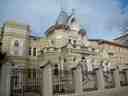
The building itself has historical value, having once been the palace of Duke Constantine Petrovich of Oldenburg. Designed by Paul Stern, a prominent architect of the time, the…もっと読む折りたたむ
The building itself has historical value, having once been the palace of Duke Constantine Petrovich of Oldenburg. Designed by Paul Stern, a prominent architect of the time, the structure exhibits an interesting blend of Gothic and Islamic architectural styles. The interior features contributions by Polish architect Aleksander Rogojski. The palace was a testament to Duke Constantine’s affection for Agrippina Japaridze, whom he met and fell in love with in Kutaisi in 1882. After their elopement, they settled in Tiflis, where he commissioned this palace. In 1927, the Museum of Theatre, established by David Arsenishvili, was relocated to this building. Now, the museum comprises over 300,000 objects that chronicle the evolution of Georgian theater, cinema, circus, folklore, opera, and ballet. Among the notable exhibits is an ancient mask unearthed in Vani, offering a glimpse into classical-era artistry. The museum’s vast collection includes works from Georgian and Russian artists, providing a comprehensive view of regional scenic design evolution. The fine arts depository features portraits, stage decoration sketches, and costumes. Of particular interest are works by Russian Silver Age painters like Konstantin Korovin, Lev Bakst, and Alexander Benua. Additionally, the museum houses a significant collection of Persian Fine Arts, including Qajar miniatures from the 19th century and a painting of King Solomon, revered in both Christian and Islamic traditions. The Art Palace thus serves as a monumental repository of Georgia’s cultural history, offering insight into the artistic and cultural landscape that has shaped the nation. You are currently standing at a location enriched with a deep tapestry of historical and cultural narratives, symbolizing the confluence of love, art, and history.
専用ページを開く →You are now standing at the landmark commemorating the Kingdom of Kartli-Kakheti, a significant historical union in Georgian history. This kingdom was formed in 1762 by the…もっと読む折りたたむ
You are now standing at the landmark commemorating the Kingdom of Kartli-Kakheti, a significant historical union in Georgian history. This kingdom was formed in 1762 by the unification of the two eastern Georgian kingdoms of Kartli and Kakheti. The unification was initiated under the rule of Heraclius II following the death of his father, Teimuraz II. The event marked the first political unification of eastern Georgia in three centuries. Historically, both kingdoms had been under Iranian control since the Peace of Amasya in 1555. However, after the death of Nader Shah of Iran in 1747, Heraclius II exploited the subsequent instability in Iran to assert de facto independence. Although he formally submitted to the newly established Zand dynasty, his kingdom operated autonomously for the next 30 years. One of Heraclius II's noteworthy achievements was the Treaty of Georgievsk in 1783 with the Russian Empire. This treaty formally recognized Russian protection over Kartli-Kakheti, offering nominal security against other powers, particularly Iran, which had long sought dominance over the region. However, the rise of the Qajar dynasty in Iran under Agha Mohammad Khan Qajar led to renewed conflict. In the 1790s, Agha Mohammad Khan Qajar reasserted Iranian control over the Caucasus, culminating in the invasion and sacking of Tbilisi. Heraclius II's subsequent death in 1798 and the assassination of Agha Mohammad Khan further destabilized the kingdom. By 1801, the geopolitical instability and changing dynamics led to the formal annexation of Kartli-Kakheti by the Russian Empire under Paul I, bringing an end to its brief period of political unity and autonomy. This transition was part of a broader pattern of Russian expansion in the Caucasus, confirmed by the Russo-Persian War of 1804-1813, which saw Iran cede its claims to the territory. As you stand here, recognize the historical significance of this site in the ongoing narrative of Georgia’s complex and multifaceted history.
専用ページを開く →

さらに4件のスポットを表示表示するスポットを減らすexpand_moreexpand_less
The Kingdom of Kartli, where you are now standing, represents a significant epoch in Georgian history. This late medieval and early modern monarchy was centered in the province of…もっと読む折りたたむ
The Kingdom of Kartli, where you are now standing, represents a significant epoch in Georgian history. This late medieval and early modern monarchy was centered in the province of Kartli with Tbilisi as its capital. The Kingdom emerged in 1478 following the tripartite division of the Kingdom of Georgia. It existed until 1762 when it merged with the Kingdom of Kakheti through dynastic succession under the Kakhetian branch of the Bagrationi dynasty. During much of its existence, Kartli was a vassal to successive Iranian dynasties and, to a lesser extent, the Ottoman Empire. However, it experienced periods of greater independence, especially post-1747. The genesis of the Kingdom of Kartli is marked by intense feudal competition, civil war, and separatism. The disintegration of a unified Georgian kingdom began in earnest after George VIII’s defeat at the Battle of Chikhori in 1463 by the rebellious nobleman Bagrat VI. Bagrat’s subsequent declaration as King of Imereti splintered the Georgian monarchy further. After his defeat in 1465, George VIII was captured, allowing Bagrat VI to claim kingship over all Georgia by 1466. Released from captivity, George VIII formed the rump state of Kakheti. His nephew, Constantine, then emerged as a contender for the throne in Kartli in 1469, leading to additional turmoil. Bagrat VI was continuously challenged until losing control in 1478 when Constantine, aided by local dukes, temporarily restored Kartli's integrity with Western Georgia by 1481, proclaiming himself King of All Georgia. Yet, this unity was short-lived due to ongoing feudal struggles. The complex interplay of regional powers and noble factions defined Kartli’s historical landscape, reflecting the broader fracturing and political instability of the period. As you gaze upon this landmark, consider the turbulence and shifting alliances that shaped the Kingdom of Kartli, an essential chapter in the history of Georgia.
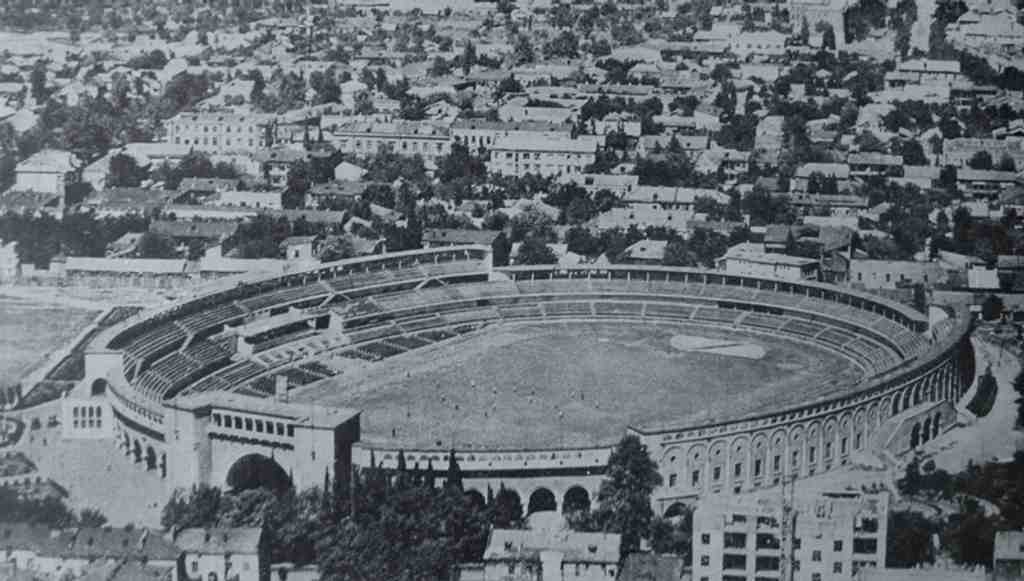
専用ページを開く →You are now standing before the Central Stadium, a significant multi-purpose venue in Tbilisi, Georgia. Its official designation from 1937 until 1953 was the Beria Dinamo Stadium,…もっと読む折りたたむ
You are now standing before the Central Stadium, a significant multi-purpose venue in Tbilisi, Georgia. Its official designation from 1937 until 1953 was the Beria Dinamo Stadium, named in honor of the influential Soviet politician Lavrentiy Beria. Before its closure, this site served as the home ground for FC Dinamo Tbilisi, one of Georgia's foremost football clubs, until they transitioned to the current Boris Paichadze Stadium in 1976. The Central Stadium was capable of accommodating 35,000 spectators, making it a prominent location for various sporting events and gatherings. Though it no longer serves its original purpose, its historical importance remains notable in the annals of Georgian sports heritage.
専用ページを開く →You are now standing before the Boris Paichadze Dinamo Arena. This landmark, known in Georgian as ბორის პაიჭაძის ეროვნული სტადიონი, is one of the hallmark locations in Tbilisi.…もっと読む折りたたむ
You are now standing before the Boris Paichadze Dinamo Arena. This landmark, known in Georgian as ბორის პაიჭაძის ეროვნული სტადიონი, is one of the hallmark locations in Tbilisi. Initially constructed in 1976 by Georgian architect Gia Kurdiani, this stadium has solidified its place as the largest in Georgia with a capacity of 54,202 seats. The stadium's original name was Vladimir Ilyich Lenin Dinamo Stadium, paying homage to the Russian Communist leader. However, in 1995, it was renamed to honor Boris Paichadze, a renowned Georgian football player. Before its construction, Dinamo Tbilisi's home ground was the Central Stadium, which could accommodate approximately 35,000 spectators. The necessity for a larger venue arose due to Dinamo Tbilisi's impressive performances during the mid-1970s. Upon its inauguration, this stadium was among the largest in the Soviet Union, boasting an initial capacity of 74,354. The first match held here was on September 29, 1976, between Dinamo Tbilisi and Cardiff City, resulting in a 3-0 win for Dinamo. The stadium has witnessed many significant events, including Dinamo Tbilisi's triumphs in 1978 and 1979, and hosted 80,000 fans in 1981 to celebrate the team's victory in the European Cup Winners' Cup. The Dinamo Arena has consistently been used for important national and international matches. The record attendance was in 1979 when 110,000 spectators watched Dinamo defeat Liverpool 3-0 in the European Champion Clubs' Cup quarter-finals. The venue was also pivotal for the USSR national football team and hosted memorable matches for clubs like Spartak Moscow and Dynamo Kiev. In 2006, the Dinamo Arena underwent refurbishment, transitioning to an all-seater stadium which adjusted the capacity to its current 54,549 seats. Notably, on August 11, 2015, the stadium hosted the UEFA Super Cup match between FC Barcelona and Sevilla FC. The architectural design has evolved significantly over time. The original 1936 stadium designed by Archil Kurdiani included additions in 1956 that expanded capacity. The current structure, inaugurated in 1976, retained elements from the initial design but enhanced its capacity to accommodate over 74,000 spectators thanks to a complex architectural solution involving a console system supported by 58 pylons. These innovations have allowed the Dinamo Arena to stand as an enduring symbol of Georgian sports and architectural prowess.
専用ページを開く →

よくある質問
ツアーはどうやって始めますか?
購入後、AudaToursアプリをダウンロードして引き換えコードを入力してください。ツアーはすぐに開始できます。再生ボタンをタップして、GPSガイド付きルートに従うだけです。
ツアー中にインターネットは必要ですか?
いいえ!開始前にツアーをダウンロードしておけば、完全にオフラインで楽しめます。チャット機能のみインターネットが必要です。モバイルデータを節約するため、WiFi環境でのダウンロードをお勧めします。
これは団体ツアーですか?
いいえ、これはセルフガイド式のオーディオツアーです。ガイドや団体、決まったスケジュールに縛られることなく、スマホから流れるナレーションを聴きながら自分のペースで自由に探索できます。
ツアーの所要時間は?
ほとんどのツアーは60〜90分で完了しますが、ペースは完全に自由です。好きな時に一時停止したり、スポットを飛ばしたり、休憩を取ったりできます。
今日中にツアーを終えられない場合は?
問題ありません!ツアーには無期限でアクセスできます。明日、来週、あるいは来年でも、好きな時に再開できます。進行状況は保存されます。
どの言語が利用可能ですか?
すべてのツアーが50以上の言語に対応しています。コードを引き換える際にお好みの言語を選択してください。注意:ツアー生成後に言語を変更することはできません。
購入後、どこからツアーにアクセスできますか?
App StoreまたはGoogle Playから無料のAudaToursアプリをダウンロードしてください。メールで届いた引き換えコードを入力すると、ライブラリにツアーが表示され、ダウンロードして開始できるようになります。
もしツアーを楽しめなかった場合は、返金いたします。お問い合わせ先: [email protected]
以下の決済で安全にチェックアウト 


