AudaTours logoAudaTours

アヴィニョン・オーディオツアー:石、聖人、君主たちの残響

オーディオガイド14 か所

アヴィニョンでは、追放された教皇や秘密結社の影が、今もなお古代の石の裏から囁きかけています。ノートルダム・デ・ドン大聖堂のそびえ立つドームと教皇宮殿の壮麗さの下には、賑やかな群衆でさえ決して聞くことのない物語が眠っています。 このセルフガイド・オーディオツアーは、アヴィニョンの激しい権力闘争、語られざる反乱、そして隠された聖域を解き明かします。自分のペースで散策しながら何世紀にもわたる陰謀をたどり、この街の最も劇的で見過ごされてきた瞬間を発見してください。 どのようなスキャンダルが、一晩にしてローヌ川の上に要塞を築かせたのでしょうか?かつてチェレスティン教会の暗い礼拝堂に響き渡った静かな不安とは何だったのでしょうか?なぜ、教皇宮殿の不気味な広間で繰り広げられた強力なライバルたちの秘密会議に、街全体が息をのんだのでしょうか? アヴィニョンの曲がりくねった通りを進み、一歩ごとに歴史の層を剥がすかのように感じてください。ドラマ、遺産、そして予期せぬスリルに満ちた街を発見してください。 アヴィニョンの秘密があなたを呼んでいます。再生ボタンを押して、その伝説を解き明かしましょう。

ツアーのプレビュー

map

このツアーについて

  • schedule
    所要時間 40–60 mins自分のペースで進める
  • straighten
    ウォーキングルート 3.2kmガイド付きパスに沿って進む
  • location_on
  • wifi_off
    オフライン対応一度のダウンロードでどこでも使える
  • all_inclusive
    無期限アクセスいつでも、ずっと再生可能
  • location_on
    チェレスティン教会から開始

このツアーのスポット

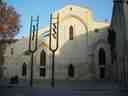
  1. To spot the Church of the Celestines, look for a striking, pale stone façade with pointed Gothic arches and tall narrow windows set back from the square - you can’t miss those two…もっと読む折りたたむ

    To spot the Church of the Celestines, look for a striking, pale stone façade with pointed Gothic arches and tall narrow windows set back from the square - you can’t miss those two unusually modern metal sculptures out front! Welcome to the Church of the Celestines! Right now you’re standing in front of a place that has seen just about everything from popes and kings to soldiers and street festivals. This is no ordinary old stone church; oh no, this place is built right on the edge of drama and miracles. Picture the year 1387: Avignon is crowded and buzzing with the scent of incense and anticipation. Cardinal Pierre de Luxembourg died young, and people were so sure he was a saint that his simple grave in the cemetery became the hottest destination in town. Legends say miracles bloomed faster than the springtime lavender - sick people were healed, and hope blossomed in even the poorest hearts. At this point, the Catholic Church itself was in crisis. There were two popes - one in Rome, one here in Avignon - and everyone was arguing about who got the bigger hat. Pope Clement VII, Avignon’s very own contender, needed all the help he could get to prove his divine right, so he backed the building of a brand new monastery and church, right here, next to the miraculous grave. Not to be left out, King Charles VI of France - who might have had a little case of royal FOMO - claimed the credit too. Imagine two VIPs racing to lay the first brick! Together, they created what would be Avignon’s last and fanciest monastic foundation from the pope, and the only royal one in town. Work began in 1389 and the grand plan was for a massive basilica with a choir, cloister, and a whole set of extra chapels. The church quickly filled up with the tombs and relics of high-flying cardinals, popes, and saints. The abside - that’s the curved, elegant end behind the altar - was once the fanciest in the city, rivaling even its much grander neighbors. But as with most epic tales, things didn’t go exactly as anyone planned. After wars and some unfinished business (literally: only three out of seven main sections of the church were ever completed), the Revolution rolled in and things got wild. Mobs tore through, smashing tombs, setting woodwork ablaze. For a while the only saints you’d find here were the ghosts of old generals, because the buildings became a military barracks and hospital. Once, this place was dripping with art: glittering marbles, colorful paintings, lifelike statues - some of them now scattered across museums in France. The grandest monument of all, the tomb of Pope Clement VII, was decked with marble, statues, and papal symbols, but during the Revolution, even that got the smash-and-grab treatment. Among the more peculiar lost treasures was a painting known as “The Spider’s Web” - supposedly by King René himself - featuring a towering skeleton in a shroud, which might make you double-check that the church door isn’t creaking behind you! After the soldiers marched away, the buildings languished. Some sections were ruined in wartime bombings, others swallowed by modern city offices, but the city of Avignon decided it wasn’t done with the Celestines yet. Since 1980, the old church belongs to everyone: the public, the artists, dreamers, and festival-goers. Each summer, the cloisters of the Celestines become one of the Festival d’Avignon’s most amazing spaces - yes, you might catch a cutting-edge play, surrounded by ancient stone, and maybe wonder if any saints or popes are still secretly critiquing the audience. So while the church’s golden days as the richest, grandest convent are long gone, its legacy lingers on: from miracle cures, feuding royals, and papal ambitions, to soldiers’ boots and festival laughter. Every century has left its mark, and if you hear a faint applause or whisper of old chants, just smile - you’re part of the Church of the Celestines’ ever-changing story!

    専用ページを開く →
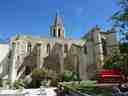
  2. To spot the Temple of Saint-Martial, look for a striking, pale stone church with pointy Gothic arches and a tall, spiky steeple rising above the greenery-it's tucked right at the…もっと読む折りたたむ

    To spot the Temple of Saint-Martial, look for a striking, pale stone church with pointy Gothic arches and a tall, spiky steeple rising above the greenery-it's tucked right at the corner where Rue des Lices meets Rue de la République. Now, let’s dive into the wild ride of this landmark! If this place looks peaceful now, you should have seen the action here over the centuries. Imagine: it started as a grand palace for Queen Jeanne of Naples, shimmering freshly built in 1346 just outside the buzzing city walls. Legend has it, she only stayed here once during the Black Death-talk about checking in at the worst possible time! Townsfolk would have whispered about the royal guest through their masks, while the air outside must have been sharp with tension and worry. After the queen’s dramatic visit, the building became the proud home of Cardinal Androin de la Roche, gifted by Pope Urban V, as compensation for another snatched property. The Cardinal must have arrived with a parade, making his “livrée,” or mansion, right here before he upgraded to even fancier digs. If you spot those Gothic windows and that sturdy stonework, think of the Benedictine monks who later moved in, chanting their prayers, filling the air with hymns and incense. Centuries rolled on, and the place turned into a college for Benedictine novices, funded by a powerful cardinal. You can almost picture twelve young monks trundling through halls, books in hand, perhaps sneaking a joke or two when the abbot wasn’t listening. Some big names found their resting place here, like Cardinal Pierre de Cros and Guillaume d’Aigrefeuille the Younger-the latter even got his tombstone displayed in the nearby Petit Palais Museum. Who knew going to college could be so permanent? But it gets better! By the 19th century, the building took on a new life as a natural history museum. Imagine the delight of Jean-Henri Fabre, a renowned naturalist, who padded these floors teaching chemistry and working with dyes. The museum echoed with excitement: Fabre’s students-whether curious farmers or elegant young ladies from the countryside-packed the hall, their arms overflowing with colorful flowers from the local greenhouses. The room buzzed with learning, so captivating it even caught the attention of Victor Duruy, a high-profile visitor who just happened to be the Minister of Education! But with fame comes scandal. When Fabre explained flower fertilization to his female students, some stuffy moralists were scandalized. The controversy grew so heated that Fabre had to resign, despite having served the city for nearly three decades. It’s a bit sad-sometimes teaching about bees and flowers really does cause a buzz. Across different ages, the building’s mood changed again. In the Renaissance, Protestants in Avignon were under pressure, but after the French Revolution’s push for freedom, the Protestant community found a home here in 1881. The Saint-Martial church became a lively temple for worship as part of the United Protestant Church of France. In recent years, it’s seen national church synods and the installation of a magnificent organ in 1984-when those pipes play, the building almost dances with music. So here it stands, a survivor and a shapeshifter. From royal palace to college, museum to temple, the Temple Saint-Martial is a reminder that buildings-like people-can reinvent themselves; sometimes all it takes is the right moment for a remarkable transformation. And, just between us, it’s probably the only church in France where explaining the birds and the bees really caused fireworks.

    専用ページを開く →
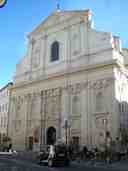
  3. To spot the Lapidary Museum, look for the grand cream-colored stone building with intricate Baroque carvings and a tall, arched window just above its central front door-it’s right…もっと読む折りたたむ

    To spot the Lapidary Museum, look for the grand cream-colored stone building with intricate Baroque carvings and a tall, arched window just above its central front door-it’s right on rue de la République, standing out with its elegant curved gables and sculpted details. Okay, deep breath-can you feel the past rumbling under your feet? This stunning 17th-century building in front of you wasn’t always a museum. Picture the clatter of carriages on cobbles as Jesuit scholars hurried inside when it was a chapel, back in 1616, with Étienne Martelange dreaming up the plans and François de Royers de la Valfenière raising these very walls. Fast-forward a few centuries, and now, beneath those stone arches, a collection of ancient wonders awaits, rescued from Greece, Etruria, Rome, and Gallo-Roman Gaul. Imagine-statues missing their heads, deities like Athena dressed in armor decorated with rams’ heads, and stone stelae showing women holding ducks or offering snacks to mysterious snakes. The Lapidary Museum is not just about old stones and dusty relics. Listen carefully, and you might hear whispers of Etruscan funerals or Roman priestesses holding sacred dishes. There’s even a funerary urn dedicated to C. Silius Herma and their faithful slave-talk about loyalty beyond the grave! And at the heart of it all lies the Lauris-Puyvert Stela, carved from tough limestone, linking you directly to prehistoric hands. Today scholars flock here for secretive conferences and summer exhibitions exploring cults, gods, and mummies. Just imagine, right behind these walls, the buzz as new exhibits roll in and stories over two thousand years old come alive. Every corner here is full of drama, mystery, and yes-even a missing statue head or two. Welcome to the Lapidary Museum, where every stone could tell you a joke…if only you spoke ancient Greek!

    専用ページを開く →
さらに11件のスポットを表示表示するスポットを減らすexpand_moreexpand_less
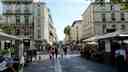
  1. To spot the Rue de la République, just look straight ahead for a wide, lively boulevard lined with elegant pale stone buildings, bustling cafés, and lots of people strolling and…もっと読む折りたたむ

    To spot the Rue de la République, just look straight ahead for a wide, lively boulevard lined with elegant pale stone buildings, bustling cafés, and lots of people strolling and shopping as far as the eye can see. So, you’re standing at the heart of what locals like to call the backbone of Avignon-Rue de la République! Can you feel the buzz? Imagine the echo of footsteps on these cobblestones, the distant clang of a café spoon against a glass-this is where Avignon marches to the beat of city life. Long before selfies and lattes, this street didn’t even exist. Back in the 1600s-way before anyone thought to slap a “tattoo & piercing” sign in an elegant window-an ambitious fellow called Pierre II Mignard had a dream: he wanted a straight road slashing from the Place de l’Horloge all the way over to the Saint-Michel gate. Of course, like many grand city dreams, it sat on a shelf for quite a while. Fast-forward to the 19th century, and finally, the need for easier access to the brand-new railway station gave Avignon a reason to build. Suddenly, the clatter of pickaxes and the rumble of carts filled the air as this wide boulevard was carved right through the old city. You could say it literally changed the town-some might joke it “cut the city in half,” though at least now locals didn’t have to squeeze through medieval alleys just to make a train! But building Rue de la République didn’t come cheap. What started as a 700,000 franc undertaking ballooned to almost double! People lost houses, shops had to move, and some folks thought the city was ruined. If you listen closely, you might sense the grumblings of old-timers from 1860, muttering about dust, wind, and the loss of the city’s charm. André Hallays, in 1909, loved the convenience but hated how the mighty mistral wind now swept down this “huge, straight wound” whenever it wanted! If you could peel back the layers under your feet, you’d find traces of even older streets. Rue Saint-Marc, for example, once teemed with travelers and intrigue-a place where hot bathhouses and taverns attracted everyone from weary pilgrims to, let’s say, some less-than-angelic night owls. And across from the Jesuit College, now the Lapidary Museum, stood the grand Hôtel de Calvière, where a famous marquis-friend to none other than Voltaire-hosted secretive meetings. Near here, in the 1600s, the Marquise de Ganges lived in the Hôtel de Castellane-Ampus until her high-profile murder made headlines all over France. Who knew these streets had such drama? If you’re feeling a bit ghost-hungry, imagine the legions of English and Scottish nobles trailing behind their would-be king, James Stuart, who took up residence nearby in 1716. Or picture the printing presses of Chambeau, churning out pirated bestsellers so good that even the original author-Châteaubriand-decided to make them official! These days, rue de la République is a catwalk of everyday life-fashion shops, inviting restaurants, and locals hurrying by. Back in the day, the wide pavements and the grand plane trees of the Cours Jean-Jaurès meant room for carriages (and a lot of strolling for showing off a new bonnet). So whether you’re scouting out your next café stop or gazing up at the beautiful balconies above, know you’re walking in the footsteps of not just poets and politicians, but rebels, lovers, and a fair few scandal-makers!

    専用ページを開く →
  2. Picture Avignon in the early 2010s: the cobblestones are still old, the cafés are still bustling, but something’s stirring in the air-a major shakeup! In 2014, France drew up new…もっと読む折りたたむ

    Picture Avignon in the early 2010s: the cobblestones are still old, the cafés are still bustling, but something’s stirring in the air-a major shakeup! In 2014, France drew up new lines on the map, and Canton d’Avignon-2 was born, rather like a new kid at school with a very complicated lunch box. Before this, Avignon had more cantons than a magician with rabbits, but the new system cut the number by almost half. Local folks had to get used to electing not just one, but two councillors-a mix of man and woman-like a political buddy cop movie. And if you want to move on to the second round of voting, you’d better have at least 12.5% of registered voters in your corner. Suddenly, politics here was a real nail-biter. In 2015, the first elections under this new system were electric. Two duos-Sylvie Fare and Sylvain Iordanoff for the environmentalists, and their rivals from the National Front-raced for the win. Can you imagine the suspense? The city was abuzz, with people discussing strategy over their morning croissants. Sylvie and Sylvain came out on top, with a whopping 58.69%. The voters turned out in decent numbers, proving democracy is alive and well in this corner of France, even if participation was a bit less than the national average. Sylvain, by the way, later co-founded a group supporting La République en Marche, so you could say he had a real spring in his step. Fast forward to June 2021, and the tension was mixed with a little apathy-only about one in three locals turned out to vote. Must have been a good day for a picnic instead! But democracy marched on with a new contest and, after a suspenseful two rounds, Laurence Lefevre and Fabrice Martinez-Tocabens came out winners, supported by most voters brave enough to leave their sun loungers. The canton itself covers a patchwork of Avignon streets and avenues, like Avenue Eisenhower and Avenue Saint-Ruf. It’s truly the heart of the city, pulsing with nearly 33,000 inhabitants. And even though the population’s dipped a little lately, the spirit of civic engagement here is alive and kicking-just like you, adventurer, standing on the crossroads of Avignon’s living history. Now, ready to press on? The next stop awaits!

    専用ページを開く →
  3. Right in front of you, you’ll see the sturdy, pale stone Walls of Avignon, stretching in a near-straight line with tall, square towers and deeply notched battlements-just look for…もっと読む折りたたむ

    Right in front of you, you’ll see the sturdy, pale stone Walls of Avignon, stretching in a near-straight line with tall, square towers and deeply notched battlements-just look for the imposing medieval walls that zig-zag against the sky like the guards of an ancient fortress on watch. Imagine standing here in the 14th century: the air thick with tension, the clang of builders’ hammers echoing as huge blocks of limestone are stacked to form these very walls. The townspeople bustle under the shadow of the towers, eager to feel safe inside their city while curious goats-yes, goats!-try to sneak through the maze of moats and gates for a nibble of someone’s laundry. Before these defenses, Avignon had double walls and moats in the 1200s. But during the Albigensian Crusade, the city backed the wrong side and paid dearly-after a punishing three-month siege, Avignon was forced to pull down its old walls and fill in its moats. But a couple decades and some stubbornness later, the townsfolk rebuilt them. As you walk, behind some modern streets you still follow their ancient path, though aside from a single fragment, those early fortifications are whispers from beneath your feet. The real drama began when the Popes moved to Avignon in 1309. Picture religious officials, artists, and merchants pouring into town, markets booming, and houses sprouting like mushrooms outside the old city walls. It didn’t take long before everyone realized these newcomers-especially the papal bigwigs-needed protecting from the bands of mischievous mercenaries roaming France in the chaos of the Hundred Years’ War. So, in 1357, the pope declared, “Let’s raise new walls!” (After collecting a little tax on wine and salt-cheers!) Twenty years-plus more taxes, papal loans, and lots of sweat-later, a truly mighty wall surrounded an area three times bigger than before. Twelve mighty gates, tall towers, and moats deep enough to make every frog in France jealous. Some unlucky folks weren’t so lucky, though. If you tried to get through these gates when the drawbridges were up and the portcullis slammed down, you’d better have a good story-or at least a fresh loaf of bread. Each gate was heavily fortified for defense, but if your donkey’s singing kept the guards awake, maybe you got a wink and a pass! Over the centuries, the walls evolved-a gate here, a tower collapse there, always adapting. By the time the Renaissance rolled around, cannons thundered to life, and new holes were made for them in the towers. Whenever change swept through France-like the French Wars of Religion-gates slammed shut, were walled up, or got reinforced, just in case some hungry army or angry neighbor came knocking. Think of the rainstorms! The walls doubled as a flood barrier. In 1840, the Rhône river rose over eight meters, and the streets filled like bathtubs. Town leaders had to quickly slot in wooden planks and stuff gaps with straw and earth to keep out the water. Sometimes, not even that was enough-a section of the wall once collapsed during a massive flood, sending a rush of water through the streets, carrying more mud than a herd of wild pigs could ever dream of. And yet, Avignon’s walls still stand-4.3 kilometers in all, ringed by ancient towers and stories. Once a symbol of papal power, fortress, flood defense, and, sometimes, a very effective toll booth for collecting taxes! Today, as you trace your hand over the cool, timeworn stones, you’re touching centuries of defiance, laughter, fear, and hope-proof that Avignon always rebuilt, even when the world outside was in chaos. And who knows, if you listen closely, you might just catch a goat bleating in the distance, still trying to sneak in. Ready for the next chapter? Let’s continue our journey deeper into Avignon’s living history! For a more comprehensive understanding of the early fortifications, 13th century double walls or the avignon papacy and the 14th century city walls, engage with me in the chat section below.

    専用ページを開く →
  4. Straight ahead, you’ll spot a tall, pale stone bell tower with pointed arches and a sharply angled roof-and if that sunlight makes you squint, you’re looking right at the…もっと読む折りたたむ

    Straight ahead, you’ll spot a tall, pale stone bell tower with pointed arches and a sharply angled roof-and if that sunlight makes you squint, you’re looking right at the Collegiate Church of Saint-Didier! Now, take a moment to soak in this striking bit of Avignon-it might seem calm today, but this spot has seen centuries of drama, devotion, and, believe it or not, a bit of medieval paperwork. In the middle of the 1300s, Avignon was the center of the Catholic universe, with popes in residence and plenty of ambition in the air. So, what do you do when you’re a cardinal with a grand legacy in mind? You put in your will that your heirs must build a church, of course! That’s exactly what Cardinal Bertrand de Deaux did. And, like any great story, it took a papal seal of approval-Pope Innocent VI stamped the deal in 1355. Medieval lawyers would have had a field day. The church you see took just over three years to construct, with a team of talented stoneworkers (or lapicides, if you’re feeling fancy today). Imagine the clatter of chisels, the anxious shouts as builders juggled both profits and risks. Jean Postier from Salon-de-Provence was a real heavyweight in that crew-he’d already worked on the famous Palais des Papes! Another local legend, Jaume Alasaud, kept the team in line. He was the master mason behind several of Avignon’s most important monuments. On September 20, 1359, everyone in Avignon must have been craning their necks in excitement (and probably checking their watches) when the church was finally consecrated. People would have gossiped that it was the finest example of Avignon's take on Gothic style-and to be honest, they weren’t wrong. But there’s more to Saint-Didier than just its stony walls. Step inside and you’ll find art treasures like two works by Simon de Châlons and a Renaissance relief, The Carrying of the Cross, commissioned by none other than King René in 1478. That piece alone might make you want to dust off your art history books! Through centuries, this spot transformed from a legendary 7th-century chapel site to the bustling heart of the city-a little drama, a dash of creativity, and a whole lot of stone. Who says history can’t be stylish? Eager to learn more about the first saint-didier church, gothic church or the furniture? Simply drop your inquiries in the chat section and I'll provide the details you need.

    専用ページを開く →
  5. To spot the Halles d'Avignon, look straight ahead for a large, rectangular building covered by a spectacular, living green wall that nearly overflows with lush plants and swirls…もっと読む折りたたむ

    To spot the Halles d'Avignon, look straight ahead for a large, rectangular building covered by a spectacular, living green wall that nearly overflows with lush plants and swirls of vegetation on its entire façade. Now, take a moment to imagine the delicious heart of Avignon standing right before you-and not just any old market, but a true theatre for the senses, delivering everything from the smell of fresh-baked bread and roasting chicken to the colors of olives and piles of bright vegetables, all under one remarkable roof. This is the Halles d’Avignon, and you’re on Place Pie, at the city’s official address for culinary adventure. For five centuries, people have gathered on these very cobblestones, hungry for more than just food. Picture Avignon in the 16th century: rumors swirl, the atmosphere is tense, and religious conflicts are in full swing. In 1562, a man named Parpaille was condemned as a heretic, and his house was wiped off the map. That patch of ground was soon earmarked for a new covered market. Yet, in the grand tradition of French construction (which sometimes progresses at the speed of a snail carrying a baguette), the colonnaded marketplace didn’t open until 1624-over sixty years after the first plans! At first, it came with its own guardhouse and chapel. History lesson: if you ever hear someone complaining about city paperwork today, just remind them it used to take sixty years to build a market. The market weathered the centuries and kept evolving. By the 18th century, the clever Avignon architect Jean-Baptiste Franque dreamed up a new artery for the city, linking Place Pie to the Rue du Vieux-Sextier, and imagined a city supply center brimming with butchers’ shops, fishmongers, and even tripe sellers for those feeling extra adventurous. While most old shops disappeared, one-decorated with ornate bovine and sheep heads-still stubbornly faces the square, as if daring shoppers to make eye contact with their beef. Flash-forward to the late 19th century, as ideas and arguments over new market halls flew through city council meetings. By 1895, President Félix Faure himself declared the project in the public interest, and the new steel-and-glass Halles sprang up-an emblem of civic pride and culinary ambition, officially opening with a grand ceremony in 1899. There were renovations aplenty as decades passed, each one giving the Halles a little more shine or, sometimes, a patch-up job after a bomb or two in World War II. Modern life rolled in with cars, supermarkets, and multi-storey parking-but the Halles adapted, reopening brilliantly in 1974, still at the city's core. And then there’s the show-stopping green wall-just look at it! In 2005, botanist Patrick Blanc designed this 600-square-meter vertical garden, turning the north façade into a swirling oasis of twenty plant species per square meter. Powered by a clever irrigation system and layered felt that mimics mossy rock, the wall bursts with colorful flowers and greenery all year long. It’s like the world’s biggest, leafiest painting, a living, breathing badge of Avignon’s creativity. Inside, you’ll find fifty enterprising merchants offering everything from the sharpest local cheeses to the freshest shellfish, all carefully arranged to tempt every food lover who steps through the doors. And if you ever turn up early on a Saturday, don’t be surprised to catch local chefs working their magic right on site, whipping up dishes in friendly cooking demos. Don’t be shy-they’ll happily rope you in to learn the secrets behind that perfect ratatouille or the most moreish olive tapenade! Even Peter Mayle, the author of “A Year in Provence,” couldn’t resist singing the praises of the Halles, calling it one of the best food markets in France or anywhere else. Another writer, Jean Viard, tangled words in honoring the flavors and scents here-mushrooms, roasting poultry, the tang of the sea, and those earthy undertones that make your stomach grumble and your heart happy. So go ahead, let your senses do the shopping and join the centuries-old parade of Avignon gourmets. Just don’t try to lick the green wall-that’s for the plants. Wondering about the historical, the small kitchen of les halles or the the green wall? Feel free to discuss it further in the chat section below.

    専用ページを開く →
  6. To spot the Avignon Synagogue, look for the large, cream-colored neoclassical building with strong geometric lines and two grand wooden doors, standing at the corner under the…もっと読む折りたたむ

    To spot the Avignon Synagogue, look for the large, cream-colored neoclassical building with strong geometric lines and two grand wooden doors, standing at the corner under the shade of leafy trees across from a café. Now, let’s dive into the story-no passport required for this journey! You’re standing by an extraordinary building, right in the heart of Avignon’s old Jewish quarter, where centuries of tradition found their home. Imagine the 1200s, when local bishops decided all the city’s Jewish families must pack up and settle right here, in a neighborhood closed off by iron gates every night. It was a world filled with daily rituals-weddings in one room, bread baking and kosher meat nearby, and prayers echoing under the same sacred roof. The original synagogue stood here for hundreds of years before being lavishly rebuilt in the grand neoclassical style you see now, with its elegant dome, white columns, and walnut furnishings. But in 1845, disaster struck-fire! Yet the community’s spirit didn’t burn away; within a year, a brand-new synagogue rose thanks to architect Joffroy, and that’s the very one before you. Odd fact: unlike other local synagogues, you won’t find Elijah’s chair inside-maybe he was busy elsewhere! Since 1990, this unique spot has been a protected monument, a quiet keeper of countless stories and a symbol of resilience, still welcoming worshippers and wanderers like you.

    専用ページを開く →
  7. To spot St. Peter’s Basilica in Avignon, just look straight ahead for a grand, pale stone façade with pointy towers and incredible carved wooden doors facing you right on the…もっと読む折りたたむ

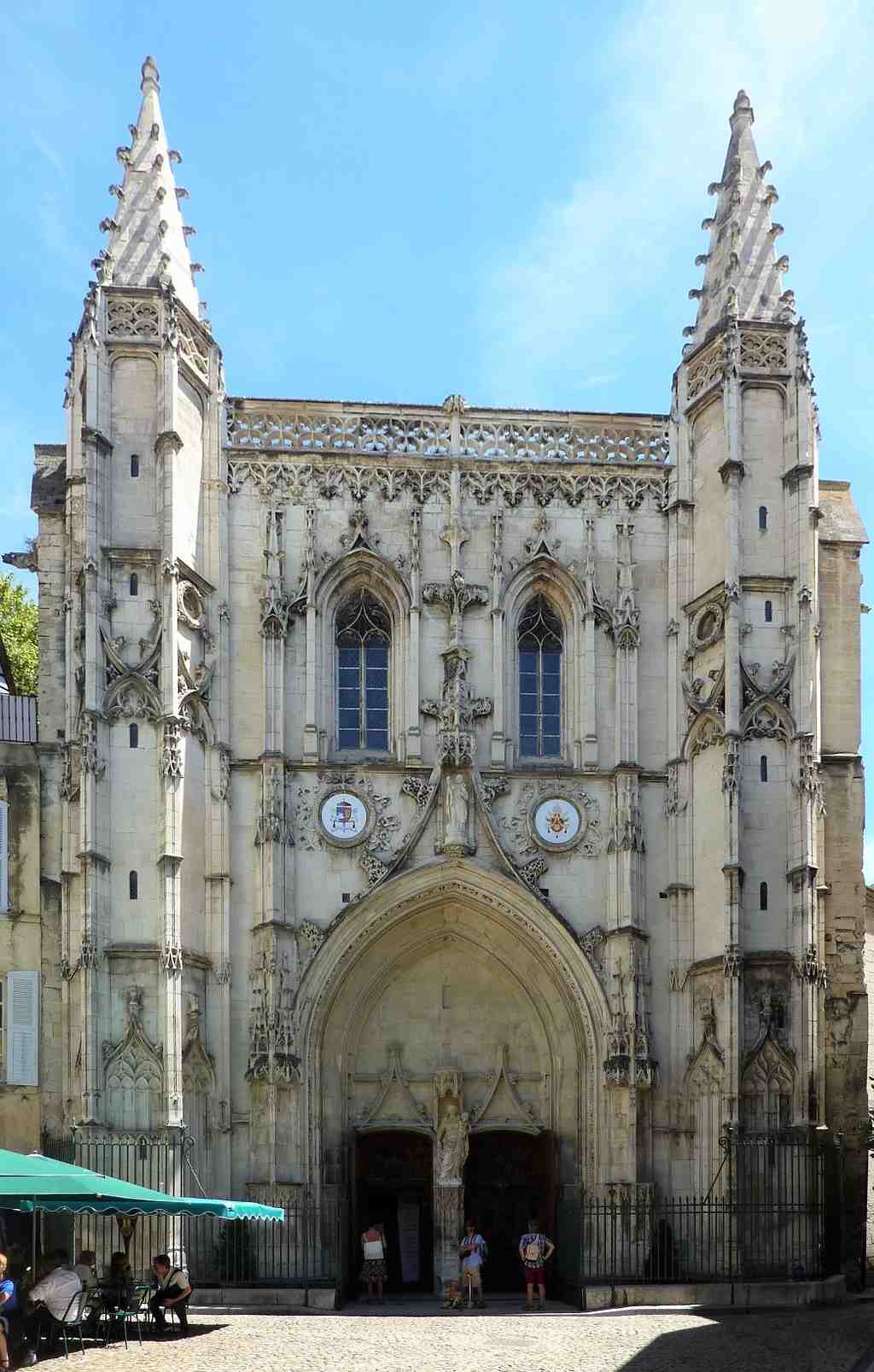
    To spot St. Peter’s Basilica in Avignon, just look straight ahead for a grand, pale stone façade with pointy towers and incredible carved wooden doors facing you right on the charming Place Saint-Pierre. Now, imagine walking back in time to the 7th century, when there first stood a church on this site-until it was swept away, not by a strong Avignon mistral, but by a Saracen raid. Out of the ashes, Foulques II, determined as ever (and probably with a fantastic beard), began rebuilding, starting Avignon’s long fascination with magnificent churches. Fast-forward to 1358: The city is alive with construction and gossip about Cardinal Pierre des Prés, whose generous donation brought canons and a brand-new cloister to life. Sadly, the ancient cloister is gone, but legends say you can still hear echoes of chanting monks on quiet days. The Pope himself took notice-because when you live in Avignon, even the Pope’s just around the corner! Pope Innocent VI made St. Peter’s a collegiate church, gathering the city’s finest clergy for centuries to come. And just like a cake layered with surprises, the basilica kept growing: in the 15th century, its long nave stretched even further, chapels blossomed up along the side, and the stone parvis-where you stand now-appeared in 1486, ideal for a dramatic entrance or two. By 1495, Jean-Baptiste Lécuyer had added a striking bell tower, topped with a sharp octagonal spire that aims sky-high, as if daring Avignon’s famous festival actors to outdo it. But everyone’s first gasp is reserved for the façade, crafted in 1524. Flanked by two elegant turrets and crowned by lacy stonework, the centerpiece is a set of massive walnut doors sculpted in 1551. These doors are so impressive, you might expect them to argue philosophy when you knock. Standing guard above is a delicate Virgin and Child statue, the silent hostess of every sunrise on the square. Step inside and the basilica reveals its secrets: chapels glowing with history, relics of the blessed Pierre de Luxembourg, golden woodwork from the 17th century, paintings by the likes of Nicolas Mignard and Simon de Châlons. There’s drama, too: grand altars and family tombs, a relic or two, and artwork that’s traveled from as far away as Montfavet, embarking on their own little pilgrimage. Modern history hasn’t forgotten St. Peter’s! In 1840, it became a protected historic monument. And in 2012, Pope Benedict XVI designated it a minor basilica-a big honor for a church that already feels larger than life. So, take in the spires, the doors, the gentle bustle of the square. You’re standing on centuries of faith, hope, and a touch of Avignon’s irrepressible flair. Now… who’s ready for some more time travel?

    専用ページを開く →
  8. Directly in front of you, you’ll spot neat rows of green plants and trees spread out in geometric beds, all surrounded by weathered stone walls and shaded by a few large…もっと読む折りたたむ

    Directly in front of you, you’ll spot neat rows of green plants and trees spread out in geometric beds, all surrounded by weathered stone walls and shaded by a few large trees-just look for a peaceful, lush garden set against the backdrop of the imposing Palais des Papes. Picture yourself standing right where popes once strolled, but don’t worry, you don’t have to wear a robe. The Gardens of the Palais des Papes have been a place of secrets, science, and even a bit of gardening gossip for over 700 years. Imagine the early 1300s: instead of tourists with cameras, this land was sprinkled with private gardens and orchards owned by powerful families. As Avignon transformed into the seat of the Papacy, the property beneath your feet was snatched up between 1316 and 1319-poof, instant holy expansion. The first real papal garden took shape thanks to the blending of two humble orchards, right under what’s now the towering walls. Meanwhile, up to the north, under the brooding rock face of the Rocher des Doms, there was a “secret” utility garden where, yes, the popes kept not only fruit and vegetables, but a menagerie of animals too. So if you hear a mysterious rustling in the bushes, it’s probably just a bird-or maybe the ghost of one of Urban V’s peacocks! As you walk past the tidy beds and pergolas, imagine the time of Pope Benedict XII in the 1330s and 1340s. He was a fan of garden makeovers, expanding the original plots to stretch right up to the palace walls, even installing a handy water supply system using both well and rainwater. And just to keep things dramatically medieval, there was a gigantic, clever cooling cistern nearby-part refrigerator for keeping the papal cheese fresh, part icehouse. There were two main gardens enclosed by new ramparts during Benedict’s reign. To the south, there was a real showstopper: the Garden of the Griffon. Water splashed from a central fountain, which may have been dedicated to the papal favorite-manuscript-scribbling griffons or, perhaps, cheeky baboons! There’s a joke in there somewhere about papal monkeys and the grapes they couldn’t quite reach. In the north, another garden featured a wide meadow lined with benches made of greenery, all under trellises covered with vines. Picture the popes strolling along, crunching a fresh spinach leaf, or plucking some marjoram for the kitchen. And they certainly weren’t shy about their vegetables: borders of chard, parsley, and kale created a natural feast for both the eye-and the dinner table. Fast forward a few decades, and Pope Urban V builds more gardens and even adds animal cages and a studio where he could relax and admire his work. You might say these were the original “VIP lounges” of Avignon, complete with fountains, shady spots, and even a noria-an ancient waterwheel for irrigation. Those popes really knew how to garden in style! By the time the Renaissance swept through, the gardens had become elegant gathering spaces, with sanded terraces, geometrically perfect squares, and fountains at their hearts. A century later, even the force of an accidental explosion in the nearby fortress didn’t keep these gardens down; they just kept adapting-first as orchards, then as vegetable gardens for the papal deputies, then eventually as abandoned fields before finally being revived in the early 20th century. Today, as you look out over paths and herbs, you’re wandering through three recreated distinct gardens. You’ll spot Mediterranean and Provençal plants as old as the papacy itself-grapevines, chard, rhubarb, onions, lavender, and even a citrus tree or two, all growing exactly as they were centuries ago. Pergolas and fountains are cleverly revived from old ruins, bees buzz by the palace hives, and ancient wells feed modern irrigation. So next time you’re picking a sprig of rosemary or marveling at those neat garden beds, remember: these plants have outlasted popes, peacocks, and even exploding fortresses-making them possibly the most persistent vegetables in Europe.

    専用ページを開く →
  9. To spot the Palais des Papes, just glance up ahead-the massive stone fortress with its tall, square crenellated tower rising above a web of pointed arches is impossible to miss;…もっと読む折りたたむ

    To spot the Palais des Papes, just glance up ahead-the massive stone fortress with its tall, square crenellated tower rising above a web of pointed arches is impossible to miss; the pale stone walls and commanding height stand out against the blue sky. Welcome to the Palais des Papes, where gothic grandeur towers above you and history whispers through every stone! Close your eyes for a moment and imagine the year is 1340. The smell of fresh-cut limestone is thick in the air, and the clamor of stonemasons, scribes, and medieval cooks fills these walls. This isn’t just any palace-oh no! This is the largest gothic palace in all of the Middle Ages, a place so big some say even its ghosts get lost on stormy nights. Look at the walls-see how they’re a mix of fortress and fairy tale? That’s because this was both a palace and a castle. Back in the 14th century, the popes picked Avignon over Rome (imagine the moving expenses!) and suddenly, this sleepy town became the center of western Christianity. Imagine cardinals in splendid robes scurrying across this courtyard, troubadours tuning their lutes, and secret conclaves behind heavy wooden doors. Six popes were chosen right here! The echoes of their decisions shaped the world, and if you listen closely, you might hear a papal sigh floating by on a summer breeze. The palace you see is actually two palaces in one: the older “Palais Vieux,” built by Benedict XII, is all about thick walls and defensive towers-a fortress planted on the Doms Rock, high over the Rhône. Then came Clement VI, who said, “Why not make it fabulous?” He built the glamorous “Palais Neuf” with frescoes by Matteo Giovanetti and Simone Martini. Imagine artists with paint-splattered robes dangling from scaffolding, bringing scenes to life as monks and clerks hurried past below. But the papal palace wasn’t all prayer and politics. This was once home to the greatest library in Europe-2,000 manuscripts! Petrarch, the very founder of humanism, wandered these halls, quill in hand, dreaming up poetry and philosophy. And if your ears are extra sharp, you might pick up a faint melody: the grand Clémentine chapel drew composers and musicians from across Europe, their music echoing through the lofty halls. Yet the palace’s splendor didn’t last forever. After almost 70 years as the papal seat, the popes packed up and returned to Rome, lured by the hope of reuniting the Christian world and the irresistible pull of Saint Peter’s tomb. It wasn’t easy-the French king and even the cardinals tried to stop them-yet two determined popes (Urban V and Gregory XI) managed to make the great escape. The palace’s purpose faded, but its grandeur never did. Through wars, sieges, and even secret nighttime invasions through the kitchens (imagine would-be intruders scrambling up a spiral stair under the cover of darkness, only to be chased out by defenders tossing stones and burning bundles from above!), the Palais has stood firm. It’s witnessed the rise and fall of empires, the birth of masterpieces, and enough drama to fill a dozen seasons of your favorite TV show. Even after the last pope left, soldiers, aristocrats, and even fortune seekers claimed pieces of the past, yet the palace endured. Since 1840, it’s been protected as a historic monument, and together with the old center of Avignon, it became a UNESCO World Heritage site-with over 770,000 people walking these same stones just last year! So as you stand here, let your imagination soar up to those castle towers and down to the hidden chambers below. The Palais des Papes isn’t just a building-it’s centuries of history, art, intrigue, and resilience, still standing proudly above the Rhône and welcoming every curious traveler, maybe hoping you’ll add your own story to its long, echoing halls. Seeking more information about the localization, palais des papes in avignon today or the christmas party at the palais des papes in avignon? Ask away in the chat section and I'll fill you in.

    専用ページを開く →
  10. To spot the Notre-Dame-des-Doms Cathedral, look up toward the rocky hill in front of you and direct your gaze to the towering cream-colored building crowned by a dazzling golden…もっと読む折りたたむ

    To spot the Notre-Dame-des-Doms Cathedral, look up toward the rocky hill in front of you and direct your gaze to the towering cream-colored building crowned by a dazzling golden statue of the Virgin Mary that’s shining in the sun. Now, take in the scene-a mix of sun-warmed stone, cool shadow, and a gentle breeze brushing past. You’re standing at the heart of Avignon’s spiritual pulse, where for nearly a thousand years, people have walked up this very hill, eager to see the cathedral rising majestically above the city. It’s a little like climbing a cake stand to get the best seat at a birthday party-only the guest of honor here is Notre-Dame-des-Doms, and she’s seen a lot more candles! This cathedral has been watching over Avignon since the 12th century. She wasn’t always this big or grand-in fact, she started as a simple Romanesque church with sturdy columns, leafy carvings, and a porch that even the ancient Romans would envy. Picture noble arches, acanthus leaves curling around the capitals, and a sense of quiet strength. But she didn’t stay modest for long. As Avignon’s importance grew, especially when the town became a hot spot for popes in the 1300s, the cathedral was upgraded to match her new neighbors at the Palais des Papes right next door. By 1475, she wasn’t just a cathedral-she was a Metropolitan cathedral, the big cheese of all the area’s churches. And let’s be honest, who doesn’t want a fancy title? Her position is unbeatable-built high atop the Rocher des Doms, she keeps an eye on the whole city, the mighty Rhône below, even the far-off Alpilles. If you listen closely, you might just catch the wind carrying snippets of choir music through the open windows-or maybe just the soft clink of tourists’ cameras. Over the centuries, she gained new chapels, a grander apse, and a gallery that wraps around the nave like a balcony at the opera-perfect for spotting bishops or, rumor has it, an occasional cat taking a nap. The south lateral chapel even shelters the tomb of Pope John XXII, designed by a crafty English sculptor who left it sparkling with flamboyant Gothic flair. Cardinal commissions and artistic visitors, like the famous Simone Martini, added frescoes-glorious reds and golds animating sacred tales just above the heads of awestruck churchgoers. But danger and drama found Notre-Dame-des-Doms too. During the siege of Avignon in the early 1400s, the air was thick with tension and suspicion. At one point, the cathedral’s original pyramidal bell tower collapsed-crushing the ancient baptistery and causing quite a scandal. The locals even accused the group of Catalans living in the Papal Palace of foul play. Amid the rubble and confusion, those crafty Catalans used the ruined spot to haul up their artillery-a true medieval version of “if life gives you lemons, make lemonade... or a defensive platform!” Through revolutions and restorations, the cathedral always bounced back. In 1854 Pope Pius IX gave her the title of “basilica minor,” and just five years later, up went that beautiful golden Virgin Mary you saw-four and a half tons of gleaming lead, blessing the town from her perch. During the French Revolution, all the bells were melted down for cannon fodder, but today, her carillon rings out once more with a mighty thirty-five bells-Avignon’s soundtrack for festivals, special occasions, and probably a few overambitious air guitar solos from local kids. Inside, marvel at gothic tombs, a twelfth-century marble cathedra, baroque galleries, ancient frescoes-including one decidedly spooky scene where Death fires arrows at people scurrying left and right (you’d think a warning sign would do, but hey, this IS medieval art). Artistic treasures by painters through the centuries line the walls, each adding their voice to Notre-Dame’s chorus. So as you stand in the sunlight, remember-the Notre-Dame-des-Doms isn’t just a church. She’s a survivor, a queen on her rocky throne, who has outlasted popes, armies, revolutionaries, and even the occasional ambitious pigeon. And fun fact-the best view of her sparkling statue? Find a spot across the Rhône, maybe at Mont Andaon, for a postcard-worthy panorama. But right now, you’re at the heart-listening to bells and stories that have soared through Avignon for centuries. If you're keen on discovering more about the localization, historical or the architecture, head down to the chat section and engage with me.

    専用ページを開く →
  11. Right ahead of you on Rue de la Banasterie, look for a striking stone façade topped with a sculpted flurry of angels and a dramatic sunburst above large red doors-this is the…もっと読む折りたたむ

    Right ahead of you on Rue de la Banasterie, look for a striking stone façade topped with a sculpted flurry of angels and a dramatic sunburst above large red doors-this is the Chapel of the Black Penitents. Let me spin you a tale that starts centuries ago, right where you’re standing! Imagine the narrow Avignon street bustling with whispers, robed figures, and the swish of velvet as twilight falls. The air smells faintly of incense and candle wax, and from behind these grand doors, you’d sometimes hear the hum of a solemn procession, perhaps even a gasp as a ceremony reached its peak. This chapel wasn’t just another parish stop; it was the headquarters of the Black Penitents-one of Avignon’s most powerful and mysterious brotherhoods. The whole Penitent movement in this city reads a bit like a superhero lineup, if superheroes liked robes and medieval pageantry! It all started with the Grey Penitents, but not to be outdone, the Black Penitents were born in 1586 when a Florentine soldier, Pompée Catilina, gathered local Italians to help prisoners and the condemned-talk about dramatic missions! Over time, White, Blue, Violet, and even Red Penitents joined the party. The revolution swept most away, but today, only the original Greys and these Black Penitents remain. The Black Penitents set up here after purchasing the old chapel of Notre-Dame de Fenouillet in 1591. They added a sacristy in 1620, an anti-chapel in 1631, and employed top artists and craftsmen to turn the place into a real showstopper. Picture walls dressed in elegant wooden panels, huge curved canvases illustrating Passion scenes, and a stream of small round paintings twinkling in the candlelight-though during the Revolution many original paintings vanished, some even replaced with works quite unrelated to the old stories. One thing nobody can miss is that wild sculpture outside, spangled with sunbeams and clouds-it features a cloud of angels hoisting the head of Saint John the Baptist on a platter. That’s because the brotherhood focused their mission on the beheading-yes, a bit macabre-of this particular saint. If you think that’s unusual, wait until you hear about their most famous ritual. On the Feast of the Beheading of Saint John the Baptist, thanks to special permission from Pope Clement VIII, the Black Penitents could actually save a condemned prisoner from execution. The chosen man would be led-rattling down the street on a silver chain-by the brotherhood’s rector, into this very chapel. Inside, he’d be given a bright red robe and a crown of olive branches atop his head-not your average fashion statement! After special prayers, the saved man would be paraded through Avignon, trailed by a fanfare, guards in Swiss uniforms, and a crowd belting out “Te Deum” and “Benedictum” at full volume. Even the powerful Cardinal Richelieu, during his exile here, joined the festivities. I guess it really brought people together-nothing like a last-minute pardon to get the city singing. Back to the chapel’s look: inside, you’d find art from the greats-Levieux, Mignard, Parrocel, and others. The altarpiece in the choir once centered around a dying Christ by Nicolas Mignard, flanked by paintings that swapped homes more often than Avignon’s favorite baker. The ceilings, painted with Saint John’s “apotheosis,” seem to swirl upwards, capturing the drama of those old ceremonies. Oh, and fun fact: the actual “Hospice des Insensés,” an asylum for the insane, was once attached to this place. The lucky or unlucky souls who passed through here must have added their own stories to the atmospheric echoes. Although after 1948 the brotherhood’s activities came to a close, the spirit of those dramatic rituals and brotherhood camaraderie survived. Since the 1980s, the Penitents have revived their traditions, filling the building once again with prayers and the soft shuffle of footsteps over ancient flagstones. So as you stand here, imagine whispering footsteps, echoing celebrations, and the mysterious rituals that made this chapel far more than just a pretty façade. You’ve reached the end of our journey in Avignon-but who knows, maybe you’ll spot a Penitent or two in black, and hear the hidden stories carried on the wind! Seeking more information about the brotherhood of the black penitents, ceremony of deliverance or the chapel of the black penitents? Ask away in the chat section and I'll fill you in.

    専用ページを開く →

よくある質問

ツアーはどうやって始めますか?

購入後、AudaToursアプリをダウンロードして引き換えコードを入力してください。ツアーはすぐに開始できます。再生ボタンをタップして、GPSガイド付きルートに従うだけです。

ツアー中にインターネットは必要ですか?

いいえ!開始前にツアーをダウンロードしておけば、完全にオフラインで楽しめます。チャット機能のみインターネットが必要です。モバイルデータを節約するため、WiFi環境でのダウンロードをお勧めします。

これは団体ツアーですか?

いいえ、これはセルフガイド式のオーディオツアーです。ガイドや団体、決まったスケジュールに縛られることなく、スマホから流れるナレーションを聴きながら自分のペースで自由に探索できます。

ツアーの所要時間は?

ほとんどのツアーは60〜90分で完了しますが、ペースは完全に自由です。好きな時に一時停止したり、スポットを飛ばしたり、休憩を取ったりできます。

今日中にツアーを終えられない場合は?

問題ありません!ツアーには無期限でアクセスできます。明日、来週、あるいは来年でも、好きな時に再開できます。進行状況は保存されます。

どの言語が利用可能ですか?

すべてのツアーが50以上の言語に対応しています。コードを引き換える際にお好みの言語を選択してください。注意:ツアー生成後に言語を変更することはできません。

購入後、どこからツアーにアクセスできますか?

App StoreまたはGoogle Playから無料のAudaToursアプリをダウンロードしてください。メールで届いた引き換えコードを入力すると、ライブラリにツアーが表示され、ダウンロードして開始できるようになります。

verified_user
満足保証

もしツアーを楽しめなかった場合は、返金いたします。お問い合わせ先: [email protected]

以下の決済で安全にチェックアウト

Apple PayGoogle PayVisaMastercardPayPal

AudaTours: オーディオツアー

楽しくて手頃なセルフガイド式ウォーキングツアー

アプリを試す arrow_forward

世界中の旅行者に愛されています

format_quote このツアーは街を見るのに本当に良い方法でした。ストーリーは作り込まれすぎず面白くて、自分のペースで探索できるのが良かったです。
format_quote 観光客気分になりすぎず、ブライトンを知るためのしっかりとした方法でした。ナレーションには深みと文脈がありました。
Christoph
Christoph
starstarstarstarstar
ブライトン・ツアー arrow_forward
format_quote 片手にクロワッサンを持ち、期待ゼロで始めました。アプリはただ一緒にいてくれる感じで、プレッシャーもなく、クールな物語を楽しめました。

オーディオツアー使い放題

世界中のすべてのツアーをアンロック

0 ツアー·0 都市·0 国
all_inclusive アンリミテッドを探索