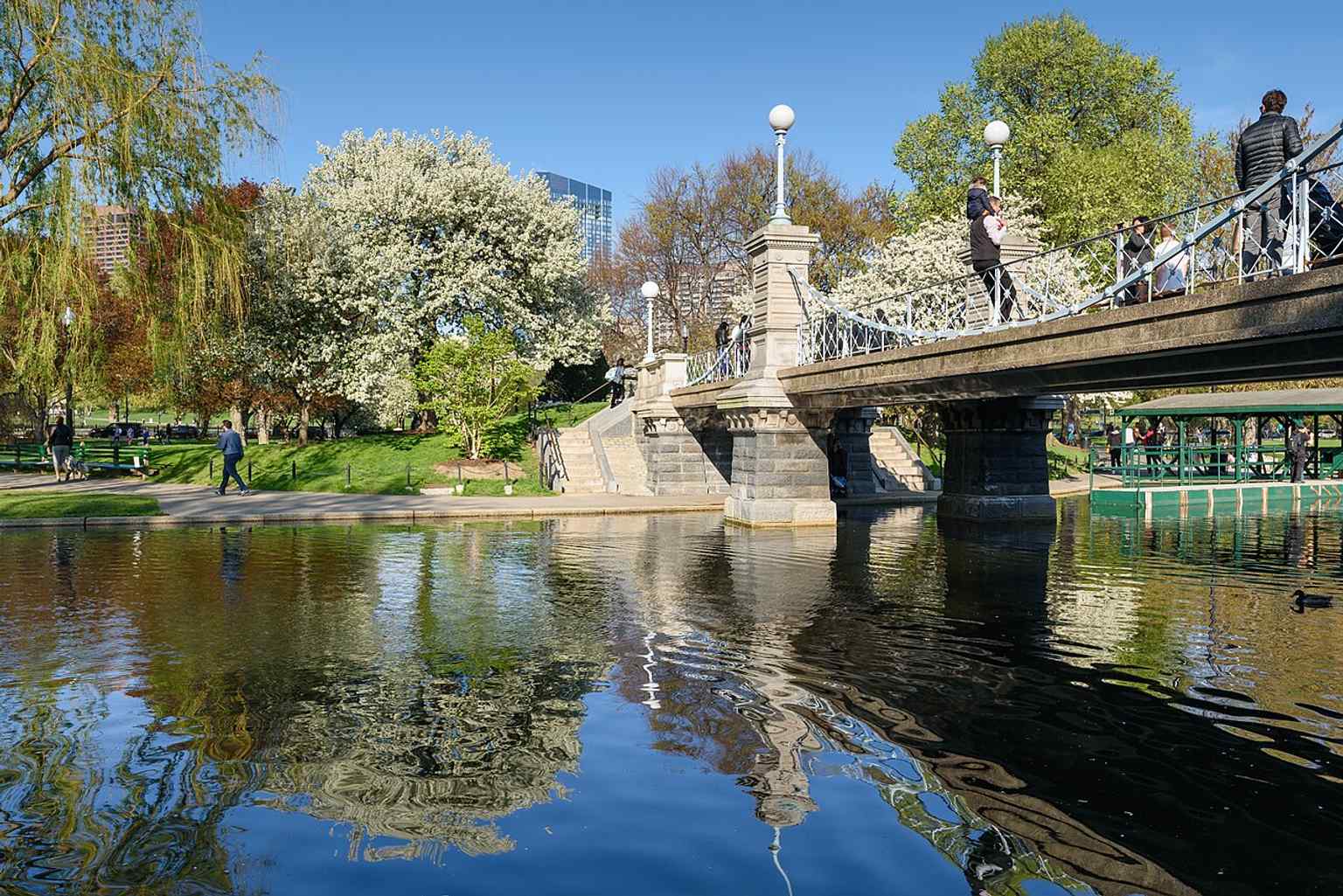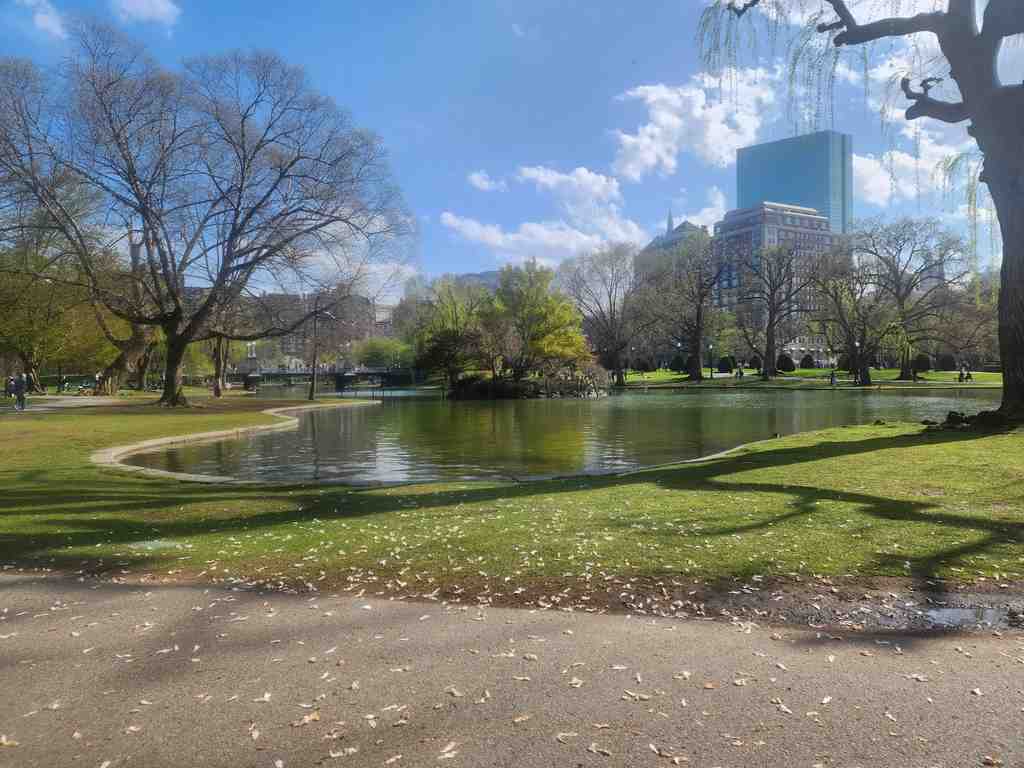
Look for the black wrought-iron fence, the broad oval pond, and the slim footbridge curving across the water like a little iron sketch.
The wild thing is this garden started as no garden at all. It began as Back Bay mudflats, a salty marshy edge of Boston where ropemakers set up a ropewalk after a fire pushed them out of a more crowded part of town. In seventeen ninety-four, the town let them use this land on one condition: build a seawall and start filling it. So Boston did something very Boston here... it argued with nature and then redesigned it.
A lot of that fill came from Mount Vernon, a hill on Beacon Hill that no longer exists because people literally carted it away. First they used handcarts. Then, by eighteen oh four, they built a gravity railroad, basically a track that let earth roll downhill into the marsh. A whole hill vanished so this calm patch of green could appear.
In eighteen twenty-four, the city bought the land back for fifty thousand dollars, well over a million in today’s money. One year later, voters rejected a plan to turn it into a graveyard. Then Horace Gray pushed for something bolder, and in eighteen thirty-seven Boston claimed this as the first public botanical garden in America.
If you want a quick peek behind the curtain, check the image on your screen; that old map shows how unfinished and improbable this place once looked.
The garden you see now took shape after an eighteen fifty-six political truce called the Tripartite Indenture. That agreement protected this land from private housing, and soon Alderman Crane’s plan moved forward. The pond came first in eighteen fifty-nine. The fence went up in eighteen sixty-two. George F. Meacham shaped the overall design, and James Slade with city forester John Galvin laid out the paths and flower beds. The style is called an English landscape garden, which means it tries to feel natural and loose even though every curve is carefully planned.
That’s why the place feels different from Boston Common. The Common is open and democratic, a big shared room. The Public Garden is more like a composed sentence. The paths bend. Trees frame views. Formal plantings sit inside a landscape pretending to be effortless.
The pond, though, had a rough start. Caretakers fed it with salt water, sewer water, and fresh water from Frog Pond, and the result was slime and a smell nobody wanted to linger around. So the city began draining and cleaning it every year. Even now, this four-acre pond is shallow, only about three feet at its deepest.
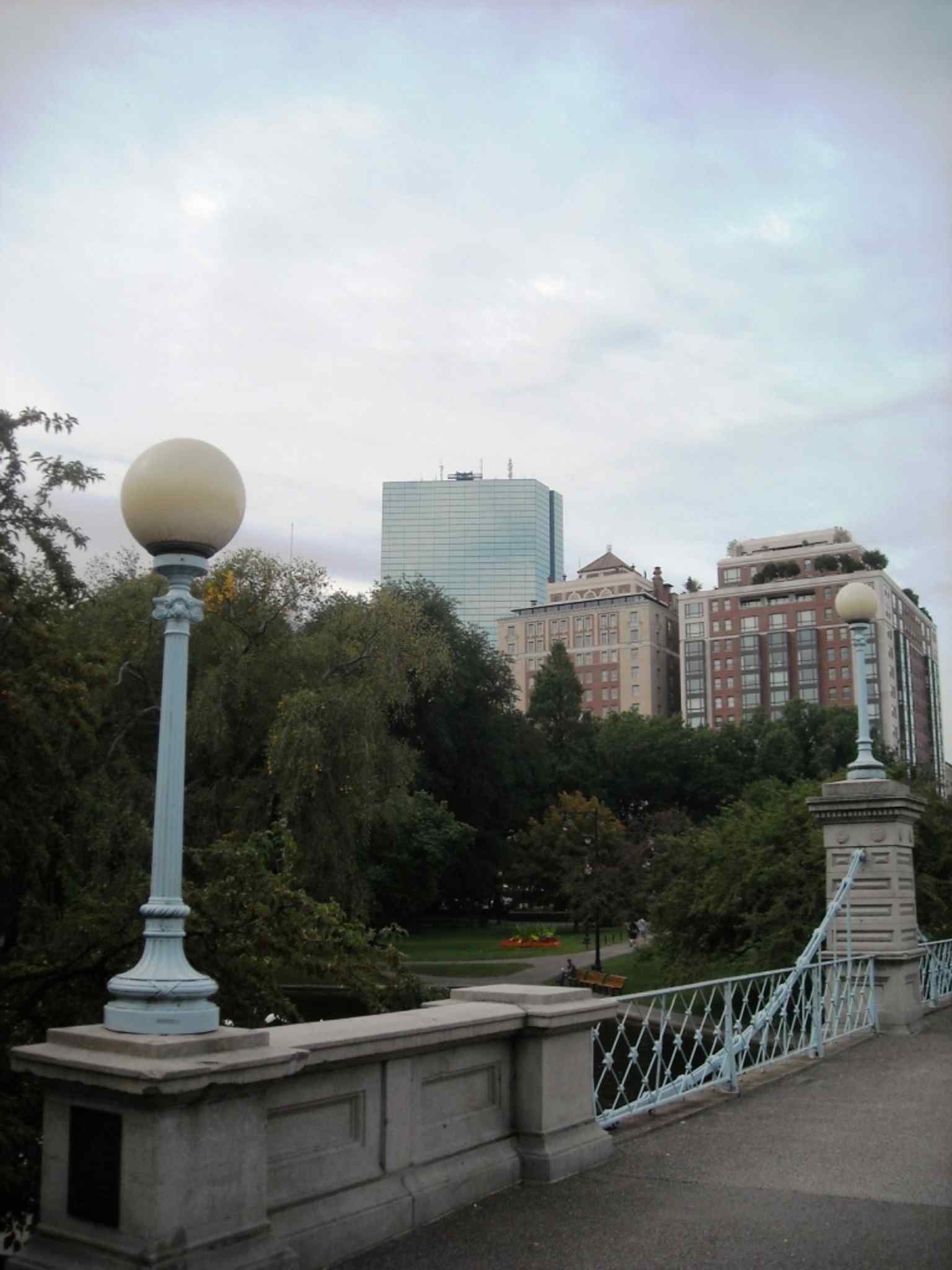
And that little bridge out there? Take a look at the app image if you want the classic angle. It opened in eighteen sixty-seven as the world’s shortest functioning suspension bridge, though the old suspension parts are decorative now. Nearby, the Swan Boats have circled the pond since eighteen seventy-seven, powered by a guide pedaling from inside the swan. Even the romance here has practical machinery hidden underneath.
That may be the real Boston trick. This garden looks gentle, but it took landfill, lawsuits, engineering, gardeners, donors, and generations of caretakers to make gentleness hold. For a city that often tells its story through speeches and battles, this place tells it through curves, water, and the stubborn decision to save room for beauty.