
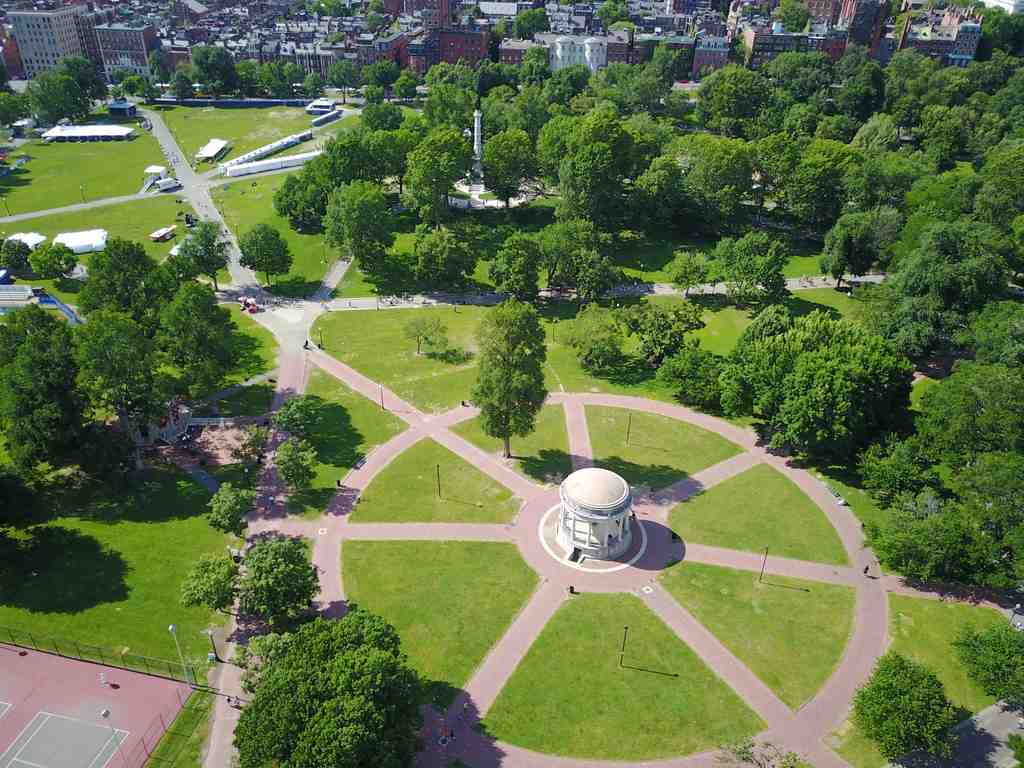
Look for the broad green sweep framed by black iron fencing and curved paved paths, with the tall stone Soldiers and Sailors Monument rising from the park like a marker pin in the middle of the city.
This is Boston Common... fifty acres of open ground that somehow feels bigger than its size, maybe because so much of Boston has passed through it. It’s the oldest city park in the United States, but it didn’t begin as a park at all. Back in the seventeen twenties of Boston’s story... actually, even earlier... this land belonged to William Blaxton, the first European settler here, a solitary minister living on the Shawmut Peninsula before Boston properly existed. He invited the struggling Puritans over from Charlestown because this side had good fresh springs. Then, in sixteen thirty-four, tired of crowded neighbors and the hassle of holding so much land, he sold most of his fifty acres back to Governor John Winthrop for thirty pounds, about five thousand four hundred fifty-five dollars in today’s money. That sale became the town common.
At first, the Common worked like a shared backyard for livestock. Families grazed cows here until overgrazing chewed the place down, and officials finally banned cows altogether in eighteen thirty. So yes, one of America’s most famous public spaces spent nearly two centuries with a serious cow problem.
But this ground has a darker layer too. Boston used it for public hangings until eighteen seventeen. A huge oak stood here for generations, later remembered as the Great Elm. Authorities hanged Mary Dyer there in sixteen sixty for repeatedly returning to Boston as a Quaker, even after the Puritan government banned Quakers from the colony. That’s the kind of history the Common never lets you forget: this open space carried both freedom and punishment at the same time.
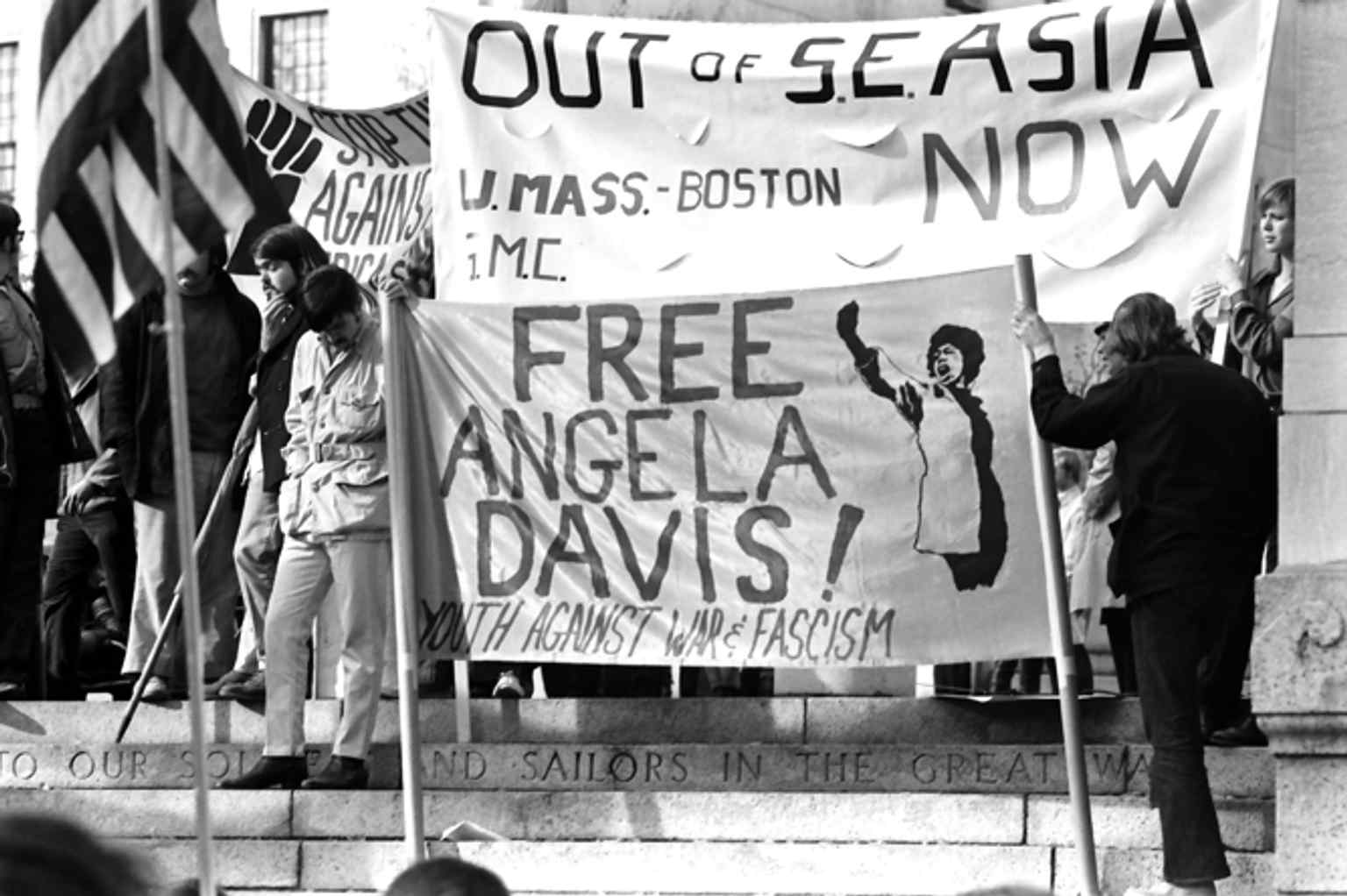
It also became Boston’s outdoor forum. In seventeen thirteen, angry residents launched the Boston Bread Riot here over food shortages. Before the American Revolution, British troops camped on this ground and marched out from here toward Lexington and Concord. Later came speeches, fireworks, protests, concerts, and massive public gatherings. If you glance at the app, there’s a striking photo of a nineteen seventy anti-war protest here, one chapter in the Common’s long life as Boston’s civic front porch.
The shape of the place changed too. By eighteen thirty-six, Boston enclosed the Common with an ornamental iron fence, helping turn rough-use land into a true public park. That same year, after long resistance from Boston’s Black community, the city finally lifted the rule that kept Black and Indigenous people out. And over on the Charles Street side, what had been a nasty dumping ground finally got repaired in eighteen ninety-five when workers reused soil dug from the new Tremont Street subway, the first subway in the U-S.
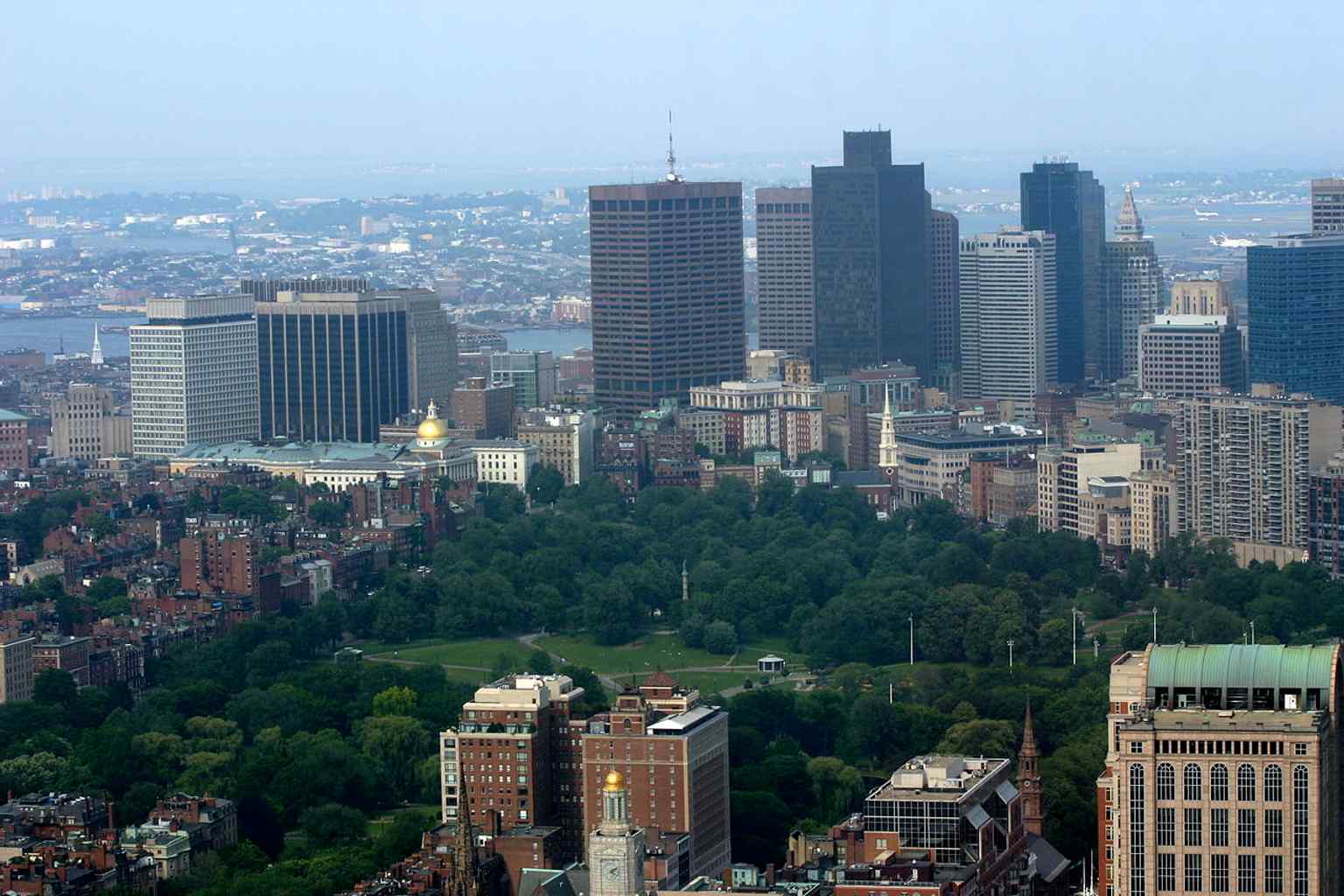
What I love is how the Common still refuses to be just one thing. It’s open and unstructured, made for gathering, unlike the more polished Public Garden next door. And if you want a quick visual of how the city grew up around this edge, check out the before-and-after image with Park Street Church holding its ground while the skyline swells behind it.
The Common is free, and it’s generally open from six in the morning to eleven thirty at night.
Boston Common feels like Boston in its rawest form: public, messy, brave, and wide open.
Take your time here... and when you’re ready, we can ease over to the Public Garden.






%20-%20%22City%20of%20Perspectives%2C%20No.%201%22.jpg)