
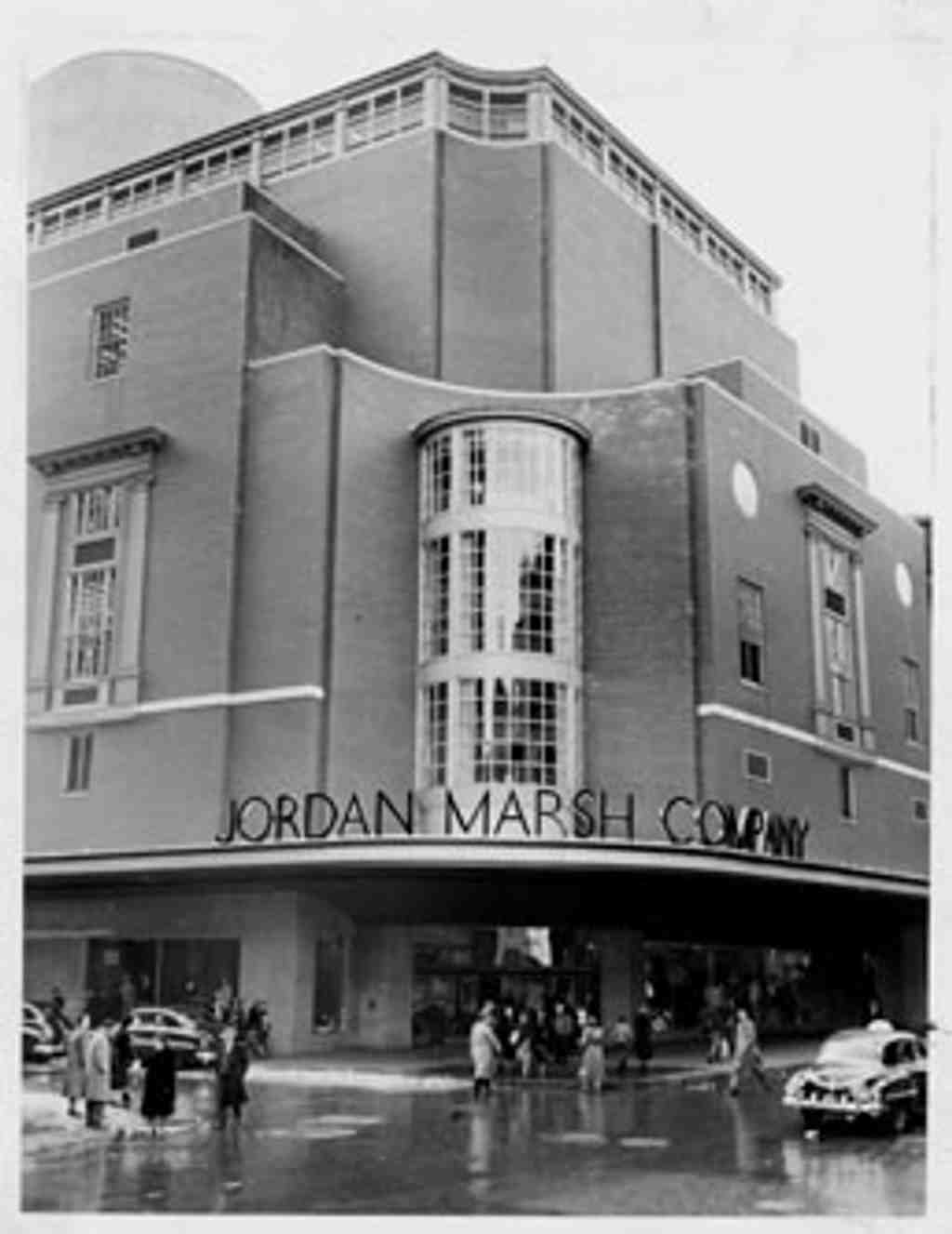
On your left, look for a low red-brick block with a flat roofline and long bands of windows-the restrained modern shell that now occupies the old Jordan Marsh site.
This spot carries one of Boston’s biggest retail stories... and one of its sharpest heartbreaks. Jordan Marsh began in eighteen forty-one, when Eben Dyer Jordan left his job in a dry goods store and struck out on his own. Ten years later, he teamed up with Benjamin L. Marsh. At first they sold linen, silk, and imported dry goods wholesale, mostly to other merchants. Then, in eighteen sixty-one, they grabbed a brownstone at four hundred fifty Washington Street and started selling straight to the public.
That move changed the game. After the Civil War, Jordan Marsh spread into neighboring buildings and created what many people call the nation’s first departmentalized store, meaning one giant shop broken into separate sections for different kinds of goods. It wasn’t just efficient... it felt like a whole indoor city of shopping. Jordan Marsh made that city elegant too: fashion shows, art exhibitions, afternoon concerts, and a bakery that became famous for blueberry muffins. Not a bad way to sell a coat.
If you want a glimpse of the old world they built, check the image on your screen of Washington Street. That stretch helped define Downtown Crossing as Boston’s department-store district.
Jordan Marsh also treated shopping like a kind of invention lab. The store offered charge accounts, pushed the idea that the customer is always right, and backed purchases with money-back guarantees. It adopted electrical lighting, glass display cases, telephones, and elevators early on. It even used pneumatic tubes, little pressurized pipes that shot cash and credit slips from one department to another overhead like retail bloodstream.
After World War Two, the company went even bigger. Management replaced the patchwork of older buildings with a massive new store that filled a whole city block, covered more ground than Harvard Stadium, dropped two stories underground, and rose fourteen stories above the street. It had air conditioning, automatic doors, block-long display windows, and even sidewalks warmed by radiant heat.
Then came the turn that still stings. The original ornate brownstone flagship, with its corner clock tower designed by Nathaniel J. Bradlee in the eighteen sixties, came down in nineteen seventy-five along with the annex buildings. Some furious shoppers cut up their store cards in protest. Preservationists rallied so hard that their fight helped spark the creation of the Boston Landmarks Commission. So in a strange way, Jordan Marsh disappeared... and helped Boston save other buildings afterward.
The chain stretched across New England and beyond. One suburban branch in Framingham became famous for its huge white dome, so visible that pilots used it as a landmark while approaching Logan Airport. You can see that wild piece of retail ambition in the app. But ownership kept changing hands, from Hahn to Allied to Federated, and by nineteen ninety-six the Jordan Marsh name gave way to Macy’s.
So this corner is really a lesson in Boston memory: what a city chooses to build, and what it regrets losing.
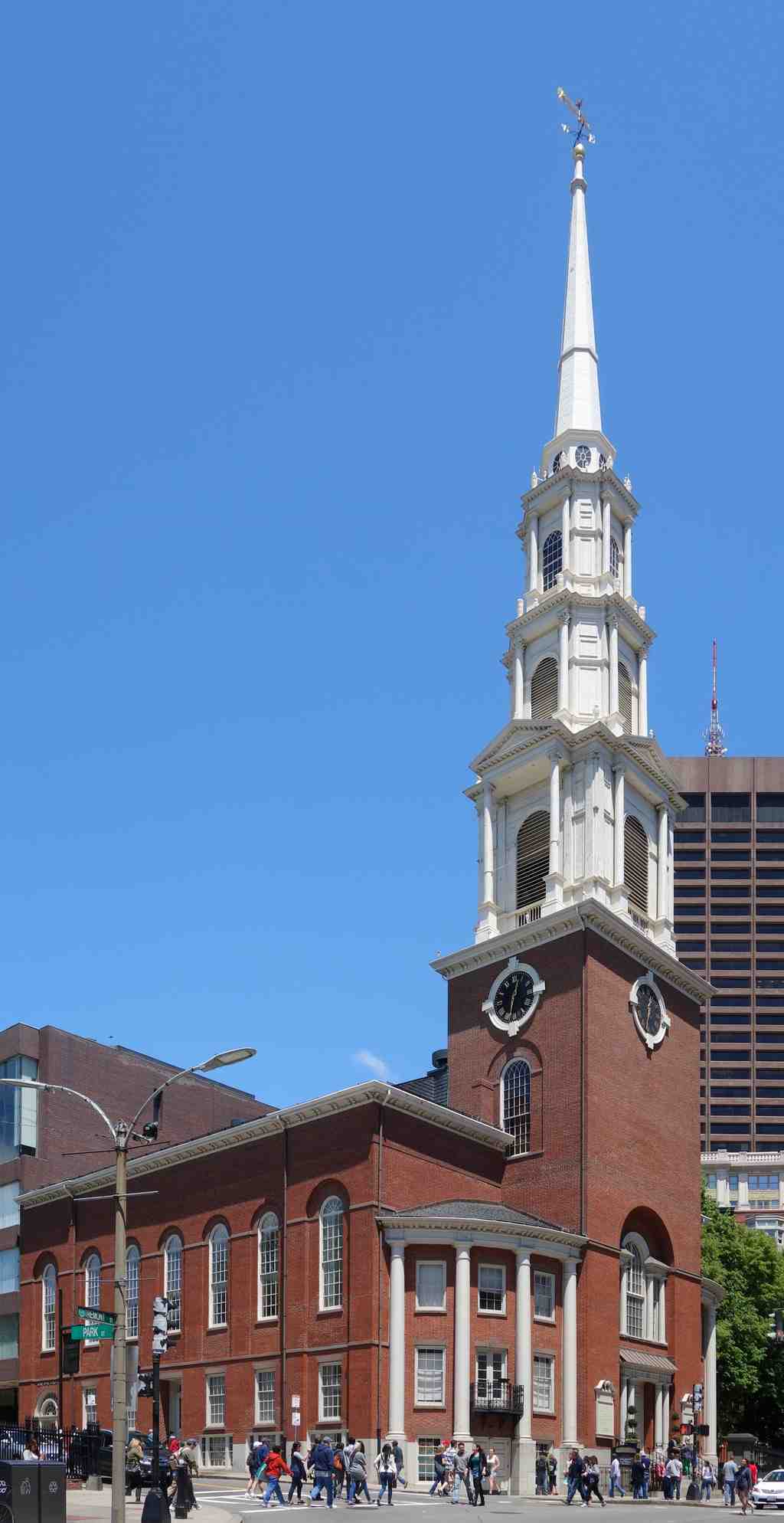
Take a moment here, and when you’re ready, we can head along to Park Street Church.




