AudaTours logoAudaTours

Tappa 4 di 17

Faneuil Hall Marketplace

headphones 04:09 Acquista il tour per sbloccare tutte le 19 tracce

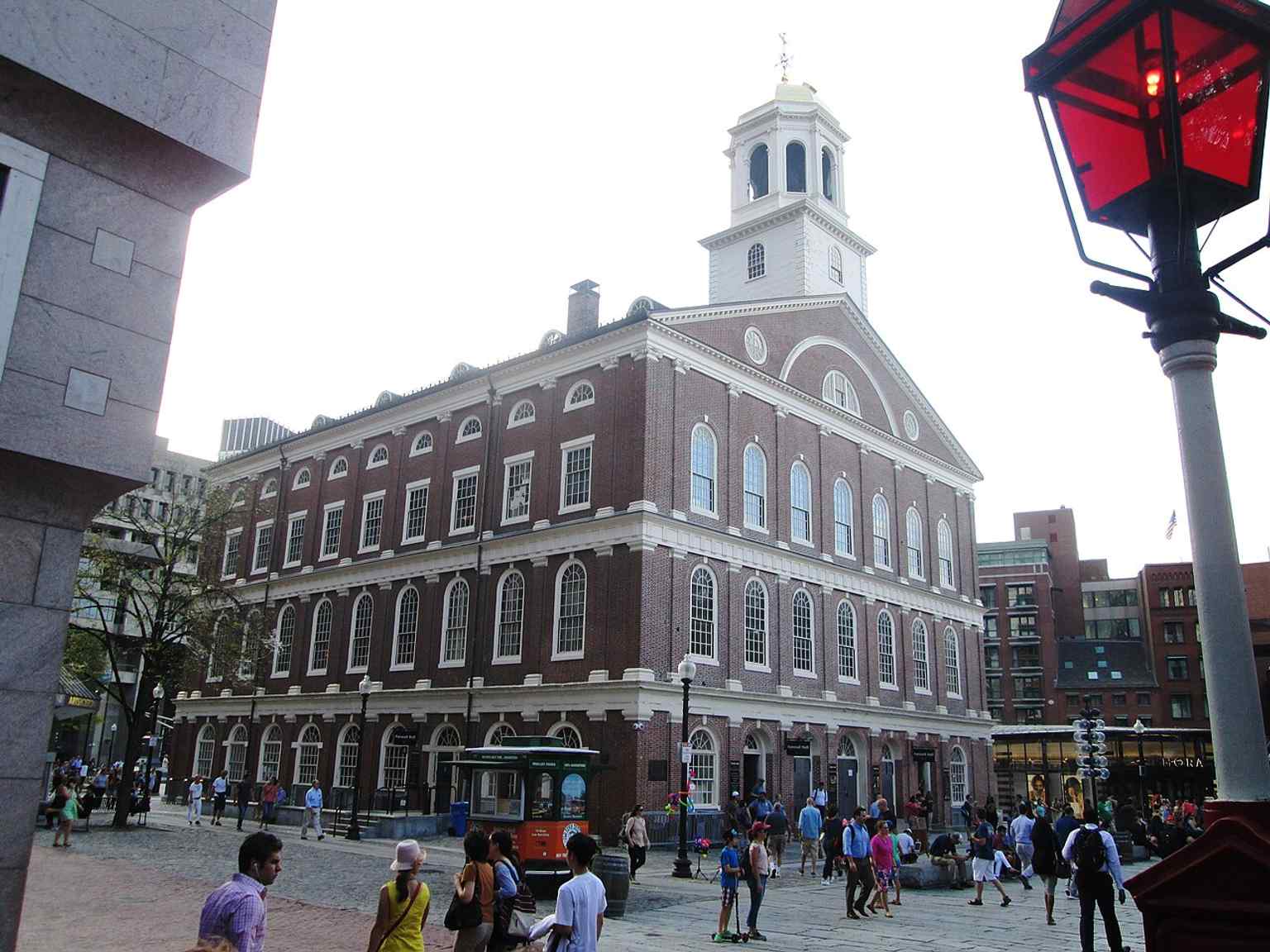
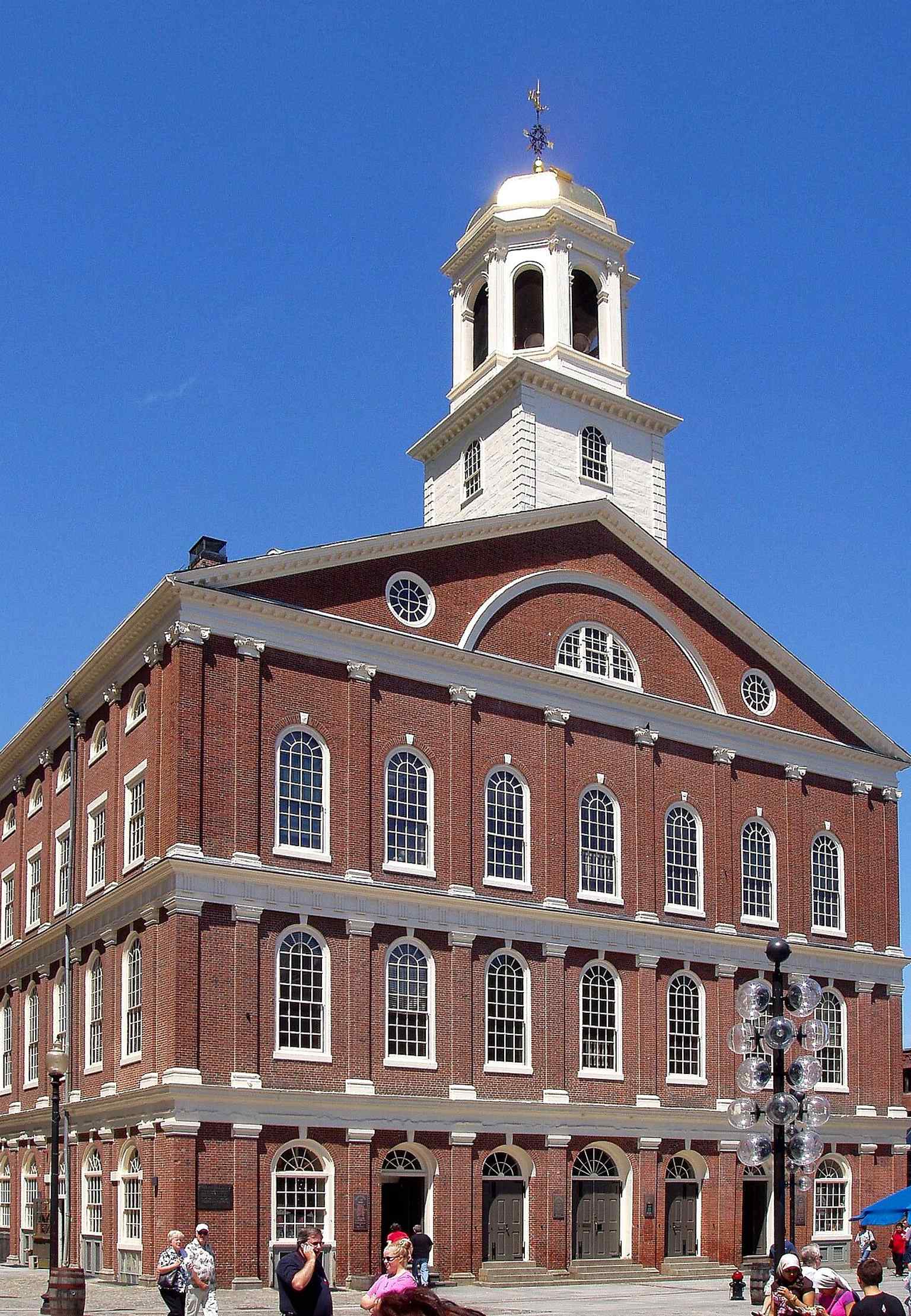
On your left, Faneuil Hall is a long red-brick market hall with tall arched ground-floor openings, a slate gable roof, and a little cupola topped by a gilded grasshopper.

This place looks steady now, but it started as an argument. In seventeen forty, merchant Peter Faneuil offered Boston a public market and meeting hall, and the town accepted by just seven votes. That close. There was always a catch in the grain, though: Faneuil’s wealth included profits from the slave trade, and that history still shadows the building’s name.

The first version opened in seventeen forty-two as both a market below and a public hall above. People bought produce and meat downstairs, then climbed up to argue about taxes, rights, and power. That mix is kind of the genius of Faneuil Hall... food for the body underneath, food for public outrage upstairs. In seventeen sixty-one, fire gutted the place, leaving mostly brick walls behind. Boston rebuilt it, and in seventeen sixty-three James Otis Junior rededicated it to the “Cause of Liberty.” Not long after, patriots like Samuel Adams turned the hall into a pressure chamber for revolution. Protests over British taxes thundered here, and the meetings that fed into the Boston Tea Party gathered in this orbit.

That’s why people started calling it the “Cradle of Liberty,” which is a pretty tender nickname for a building that spent so much of its life hosting fierce arguments. And it kept going. Abolitionists spoke here in the nineteenth century. Frederick Douglass spoke here. William Lloyd Garrison spoke here. The building held debates about slavery, suffrage, labor, war, and who got to belong in the American story.

A lot of what you see comes from architect Charles Bulfinch, who reshaped the hall in eighteen oh six. He doubled its width, added another floor and an attic, and gave it the larger, more composed form standing in front of you now. Up top, that gold grasshopper matters too. It’s one of America’s best-known weathervanes, made in seventeen forty-two by Shem Drowne, and Boston legends say locals once used it as a kind of trick question to spot impostors who pretended to know the city. Miss the grasshopper, and maybe you weren’t from around here after all.

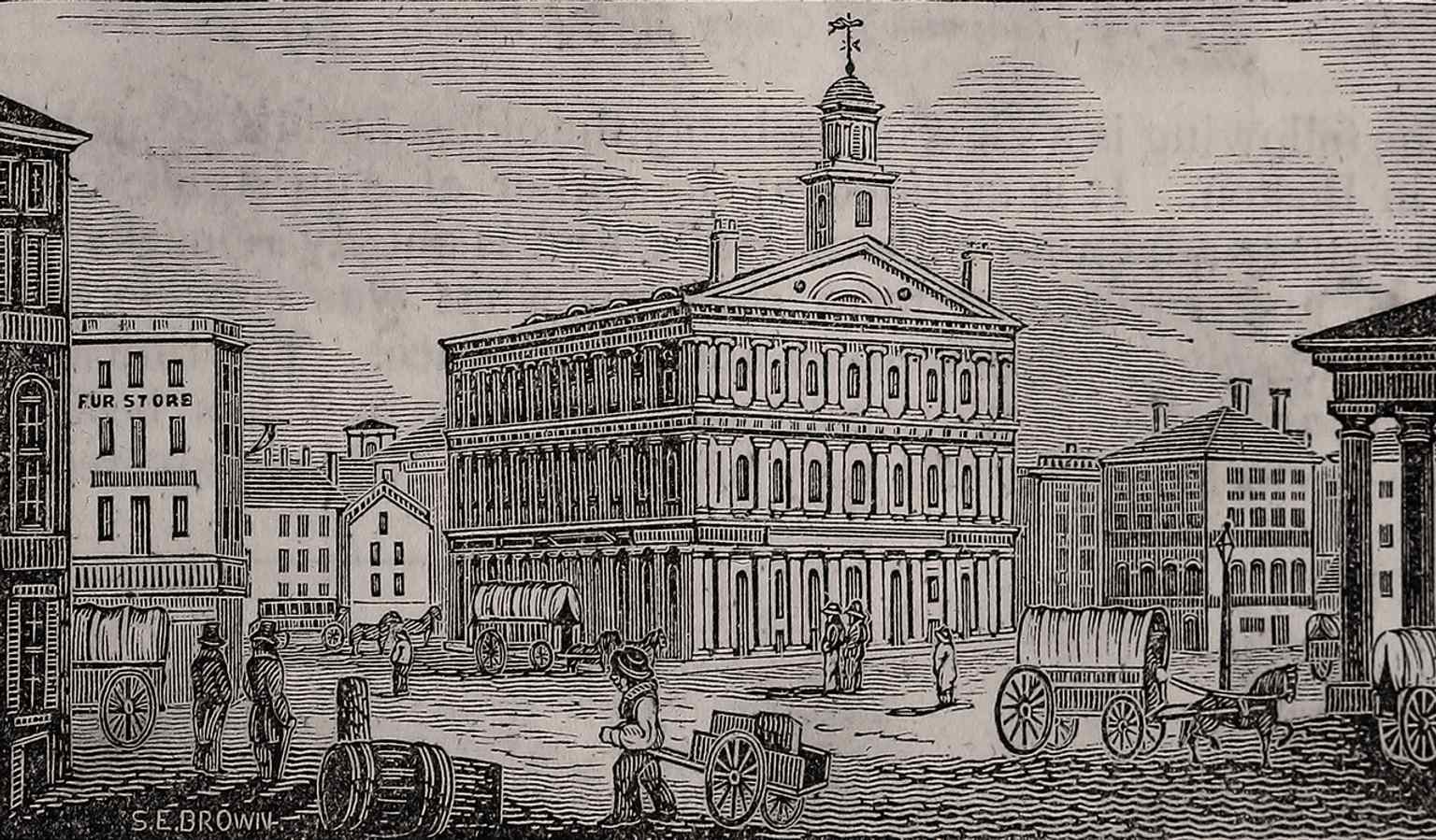
If you want a quick time-jump, the image in the app shows how the hall barely budges while the whole city around it reinvents itself.

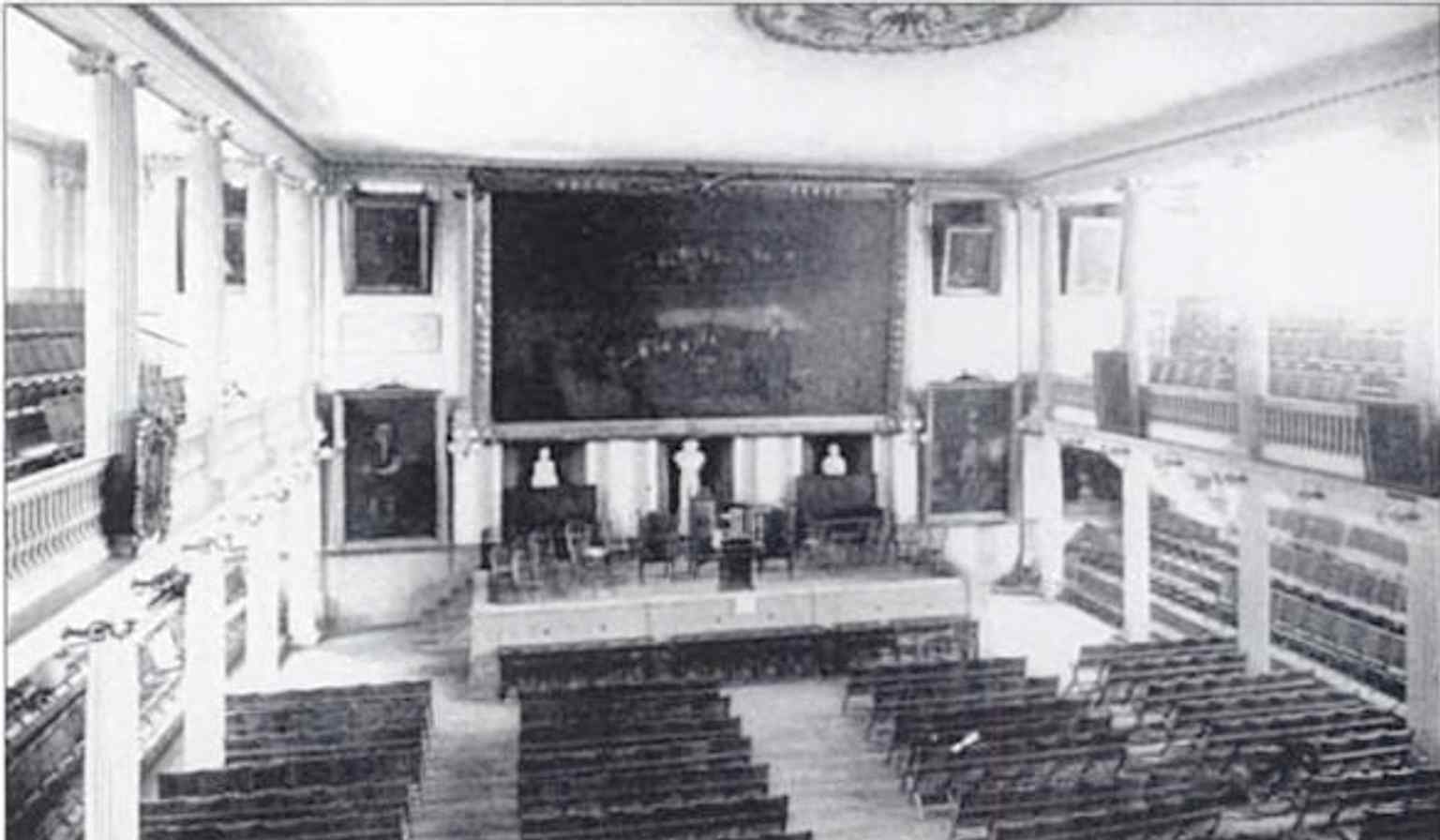
And if you glance at your screen, the Great Hall image gives you the real payoff upstairs: a big neoclassical meeting room with a gallery, a rostrum for speakers, portraits all around, and the feeling that any sentence said there ought to matter.

Faneuil Hall has kept adapting ever since, through fireproofing, restoration, and modern accessibility work, but it never quite stopped being what it was at the start: a place where commerce, conflict, and civic theater all share the same roof.

If you want to step inside later, it’s free, usually open from ten in the morning to nine at night, with shorter hours on Sunday.

For all its fame, this building still feels like Boston thinking out loud.

Take a moment with it, and when you’re ready, we can head on to the next stop.
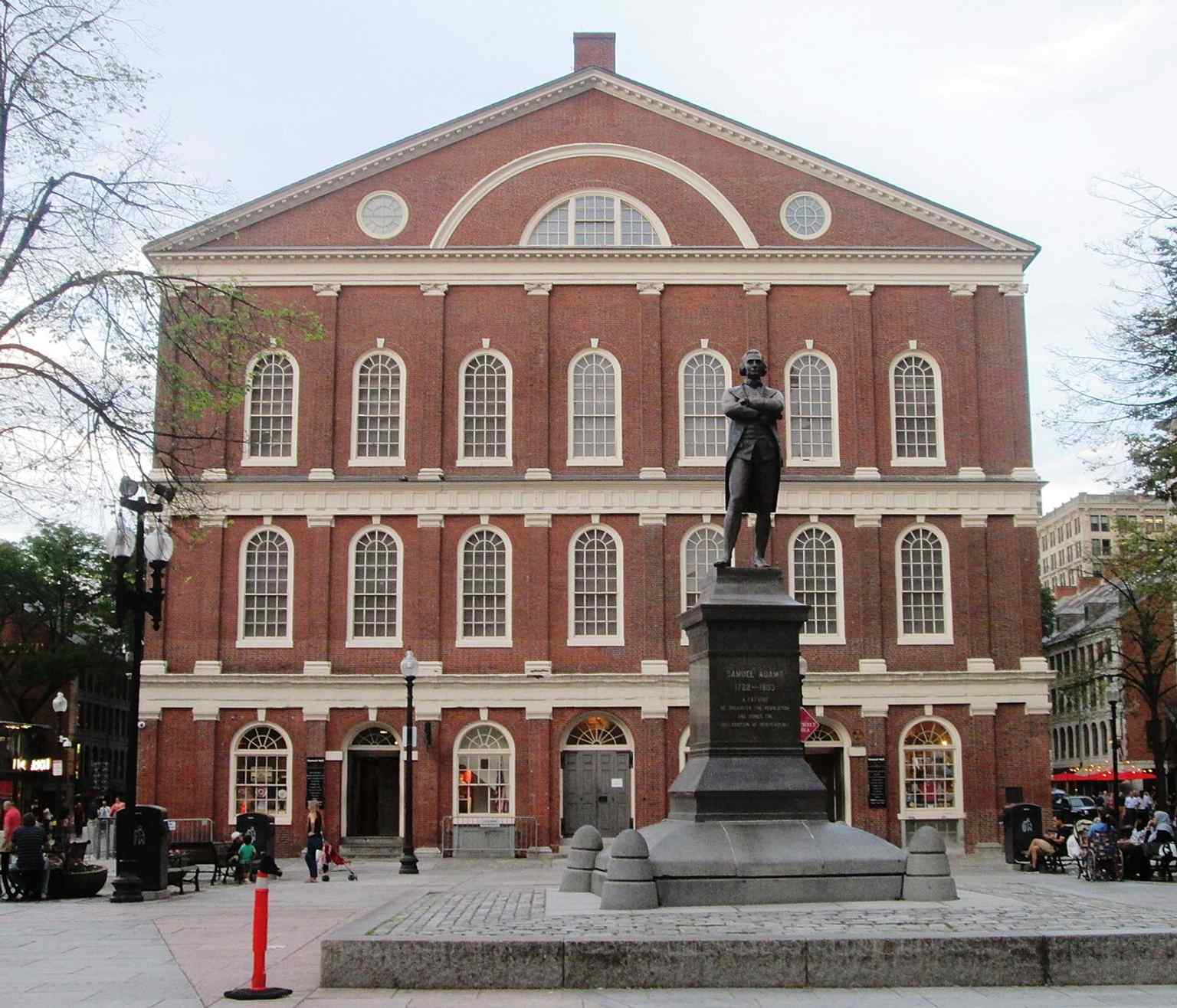
A classic full view of Faneuil Hall, the 1742 meeting hall nicknamed the “Cradle of Liberty” for the revolutionary speeches held inside.
A classic full view of Faneuil Hall, the 1742 meeting hall nicknamed the “Cradle of Liberty” for the revolutionary speeches held inside.Photo: Beyond My Ken, Wikimedia Commons, CC BY-SA 4.0. Cropped & resized.
Faneuil Hall from the southeast, showing the red-brick Bulfinch-era facade that later housed both a market and a public forum.
Faneuil Hall from the southeast, showing the red-brick Bulfinch-era facade that later housed both a market and a public forum.Photo: Beyond My Ken, Wikimedia Commons, CC BY-SA 4.0. Cropped & resized.
An early-2000s view of the historic building, useful for showing the Hall’s main massing and roofline in the modern marketplace setting.
An early-2000s view of the historic building, useful for showing the Hall’s main massing and roofline in the modern marketplace setting.Photo: en:User:Daderot, Wikimedia Commons, CC BY-SA 3.0. Cropped & resized.
A clean exterior portrait of the National Historic Landmark, helping show the hall as a preserved landmark within downtown Boston.
A clean exterior portrait of the National Historic Landmark, helping show the hall as a preserved landmark within downtown Boston.Photo: Bestbudbrian, Wikimedia Commons, CC BY-SA 4.0. Cropped & resized.
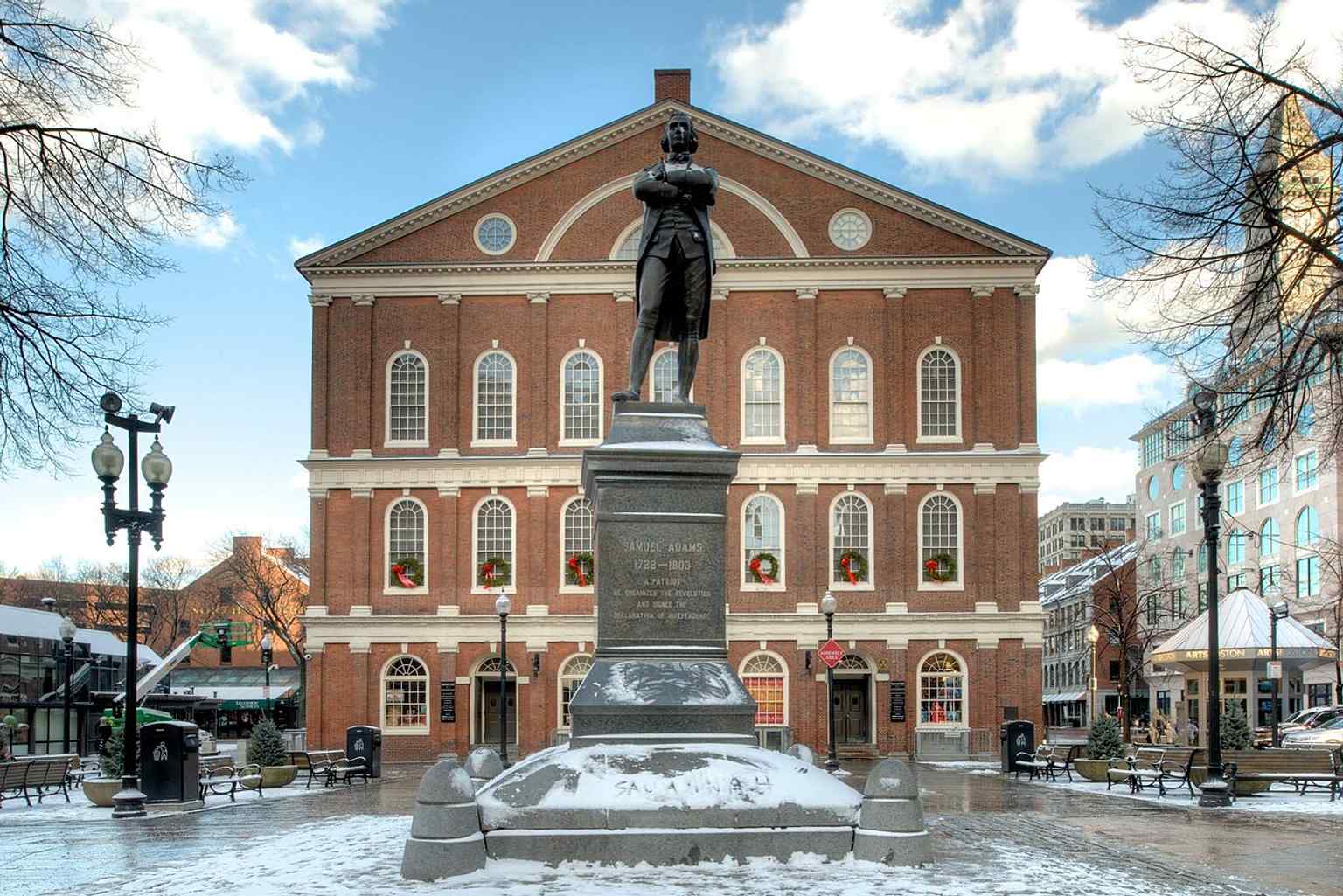
The Samuel Adams bust outside Faneuil Hall, echoing the site’s role as a center of patriotic debate before the Revolution.
The Samuel Adams bust outside Faneuil Hall, echoing the site’s role as a center of patriotic debate before the Revolution.Photo: Bestbudbrian, Wikimedia Commons, CC BY-SA 4.0. Cropped & resized.
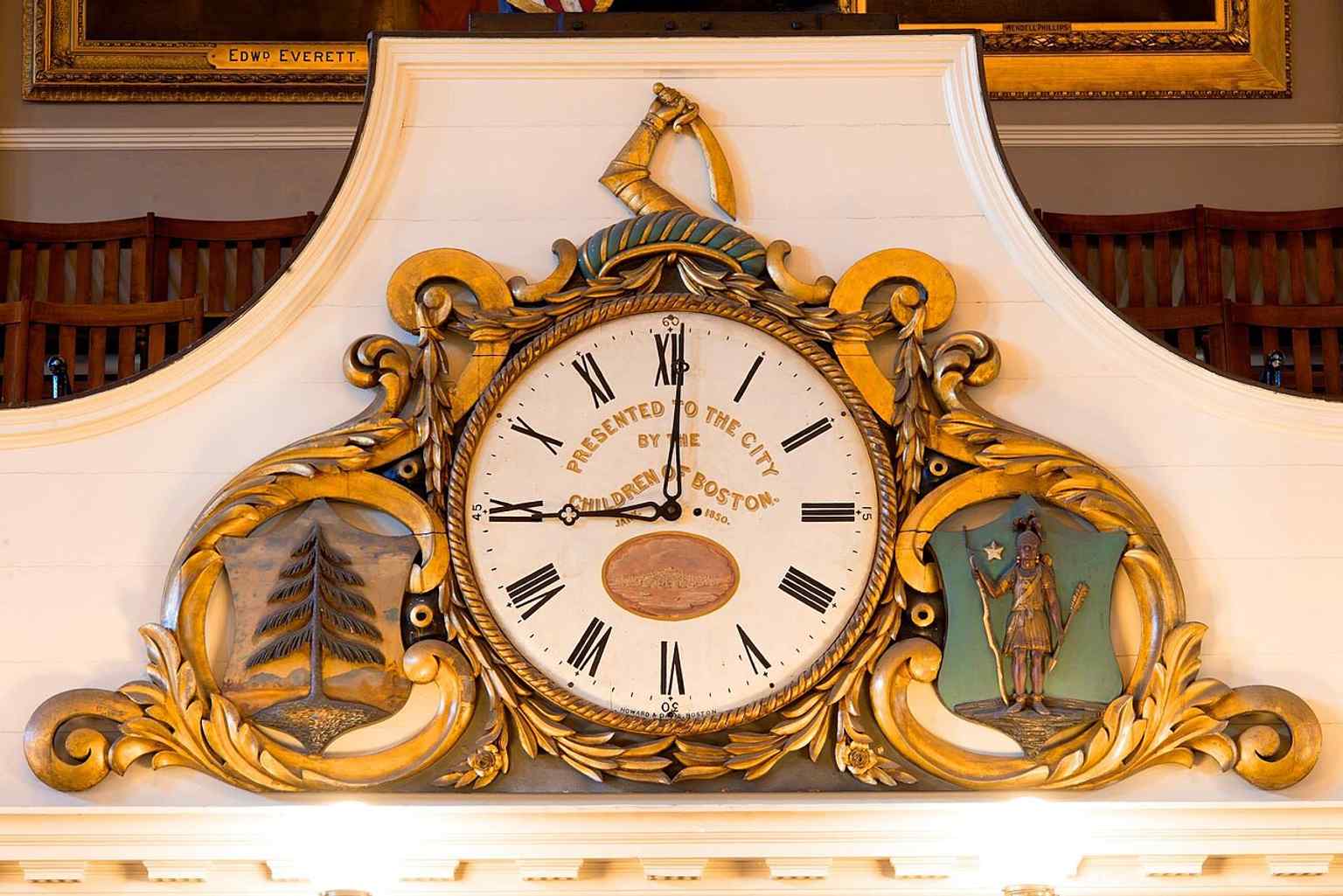
The 1850 clock detail from the Great Hall, part of the building’s long interior history and later 19th-century renovations.
The 1850 clock detail from the Great Hall, part of the building’s long interior history and later 19th-century renovations.Photo: Bestbudbrian, Wikimedia Commons, CC BY-SA 4.0. Cropped & resized.
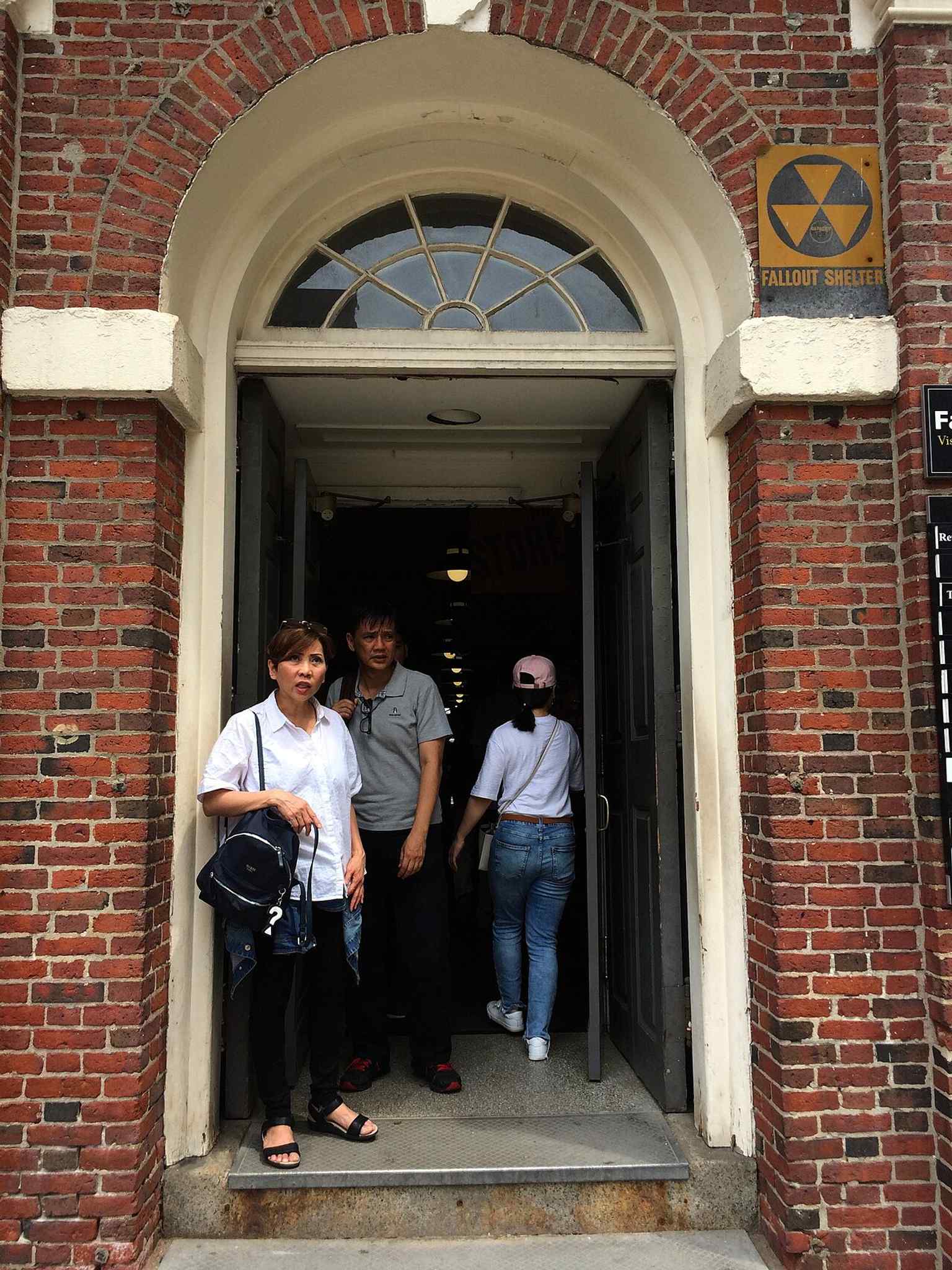
A modern entrance detail with a fallout-shelter sign — a small reminder that Faneuil Hall kept adapting through the 20th century.
A modern entrance detail with a fallout-shelter sign — a small reminder that Faneuil Hall kept adapting through the 20th century.Photo: Andre Carrotflower, Wikimedia Commons, CC BY-SA 4.0. Cropped & resized.
A 19th-century interior view that captures the older market-and-meeting-hall character before later fireproofing and restoration work.
A 19th-century interior view that captures the older market-and-meeting-hall character before later fireproofing and restoration work.Photo: Author unknown, Wikimedia Commons, Public domain. Cropped & resized.
An 1839 street view of Faneuil Hall, showing how prominent the hall already was in Boston’s civic life.
An 1839 street view of Faneuil Hall, showing how prominent the hall already was in Boston’s civic life.Photo: John Warner Barber, Wikimedia Commons, Public domain. Cropped & resized.
arrow_back Torna a Audioguida di Boston: L'Odissea dei Punti di Riferimento di Boston
Amato dai viaggiatori di tutto il mondo

Migliaia di tour iniziati.
Un sacco di opinioni.

4.8 su App Store e Google Play. Ecco alcune recensioni a cui torniamo spesso.

starstarstarstarstar
Un ottimo modo per conoscere Brighton senza sentirsi un turista. La narrazione aveva profondità e contesto, senza esagerare.
Christoph
Christoph
Tour Brighton
starstarstarstarstar
Ho iniziato questo tour con un cornetto in mano e zero aspettative. L'app ti accompagna tranquillamente, niente pressione, solo tu, le tue cuffie e delle storie interessanti.
download Scarica l'app

Metti le cuffie.
Esci fuori.

Gratis da scaricare. Tour in ogni città. Parti in 60 secondi — senza account, senza carta.

Download on the App StoreGet it on Google Play
starstarstarstarstar_half
4.8
AudaTours app icon
headphones
~ 4 min al tuo primo tour
public
1.000+ città nel mondo
all_inclusive
AudaTours
Unlimited

Ogni tour. Ogni città. Un abbonamento.

3101 tour2271 città138 paesi50+ lingue