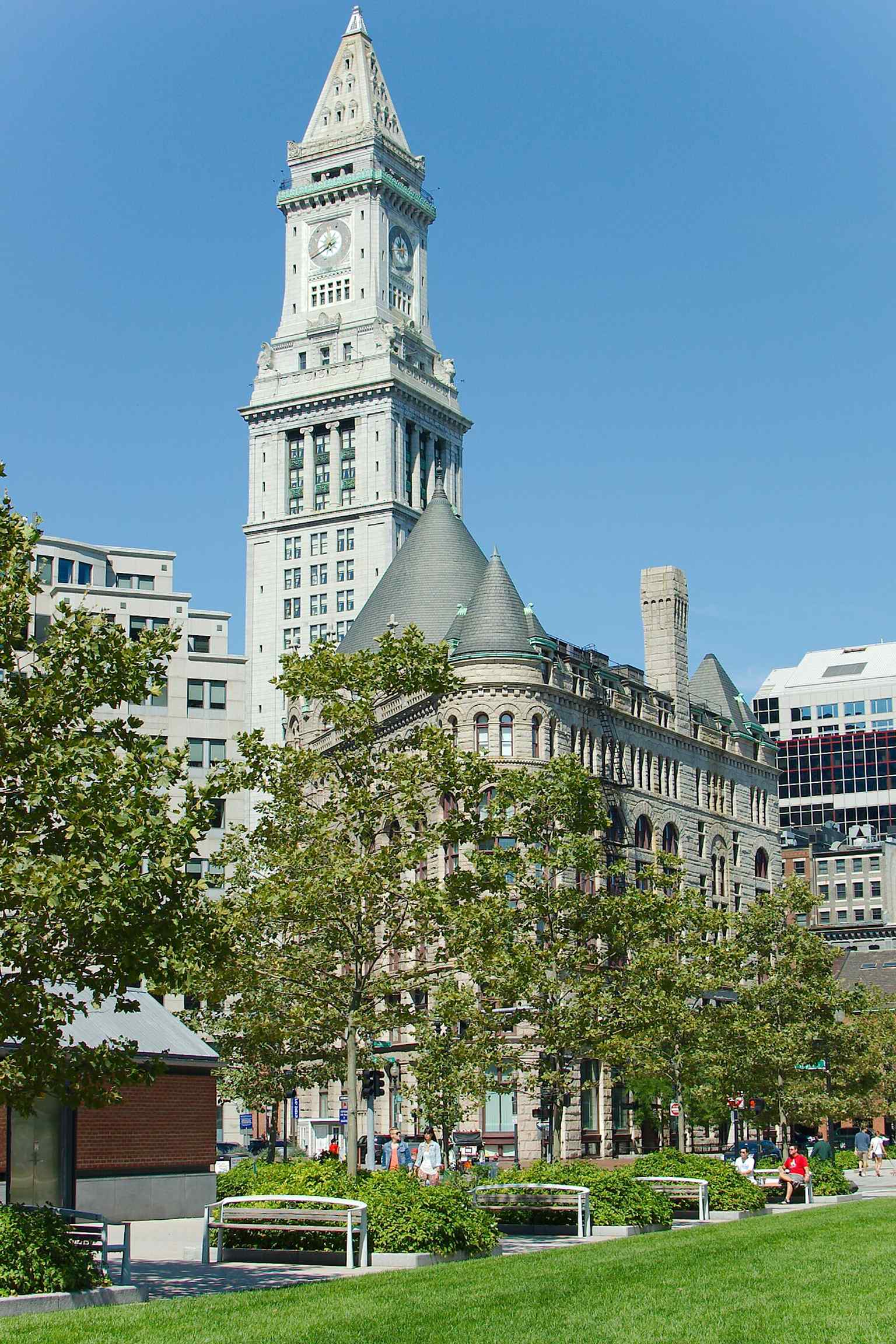
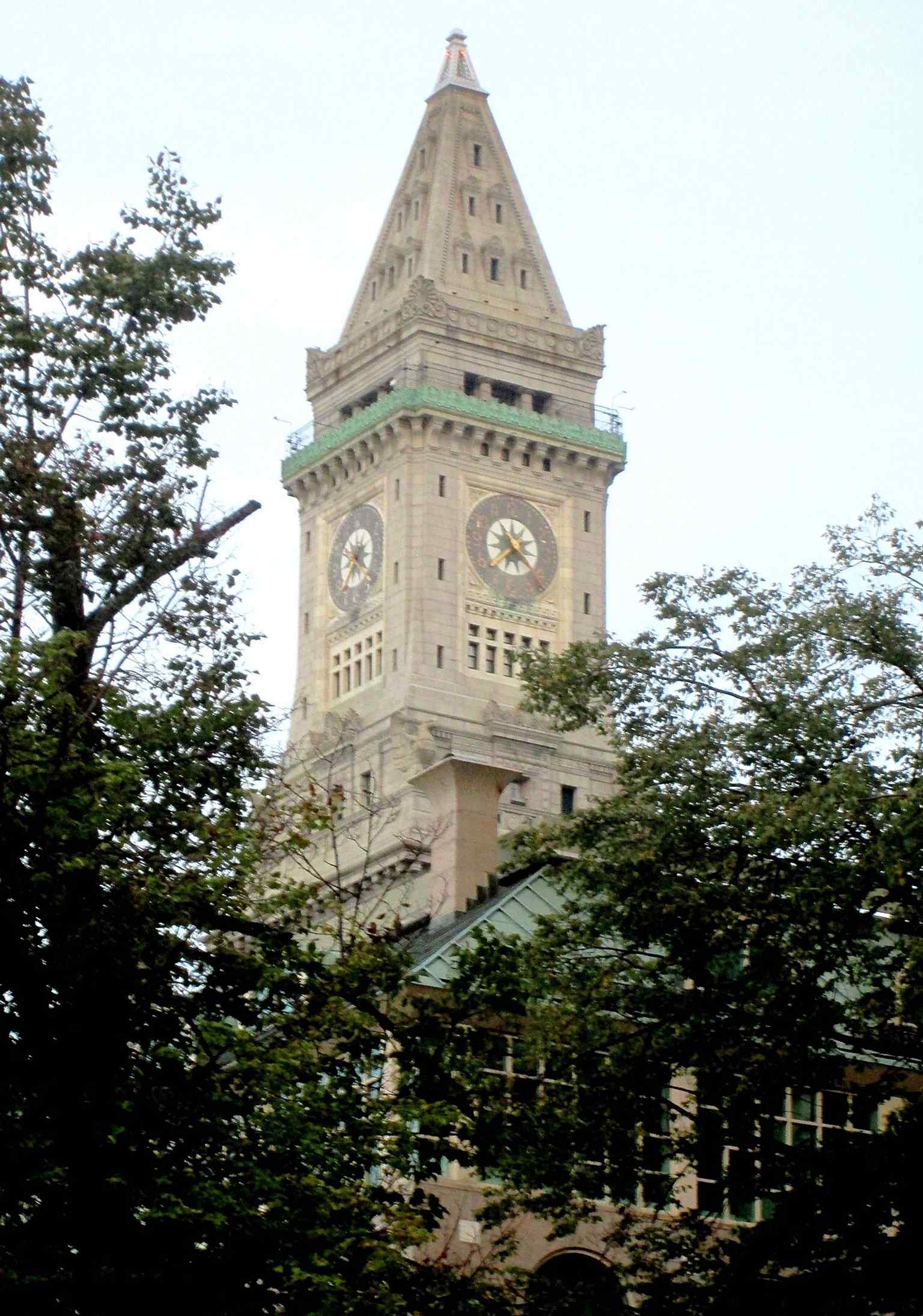
In front of you is a pale granite base shaped like a classical temple, ringed with thick fluted columns and topped by a tall narrow tower with a huge clock face near the top.
This building is basically Boston wearing two different centuries at once. Down low, you’ve got the original Custom House, which architect Ammi Burnham Young designed in the late eighteen thirties in the Greek Revival style - meaning he borrowed the muscle and calm symmetry of ancient temples. Then, rising out of it, comes that tower from nineteen thirteen to nineteen fifteen, when Peabody and Stearns gave the old customs building a skyscraper spine.
That older granite base was no small flex. Young used thirty-six Doric columns - the plain, sturdy kind from classical architecture - and each one came from Quincy granite, carved from a single piece of stone. Each weighed about forty-two tons. Only half of them actually carry weight; the rest stand there for pure authority, which honestly feels very Boston. The whole project cost about one million seventy-six thousand dollars when it opened in eighteen forty-nine... roughly forty million today.
And here’s the wild part: when officials chose this site in eighteen thirty-seven, this was basically the edge of the harbor. Before Boston filled in more land, ships tied up at Long Wharf so close that the building’s eastern side nearly touched the working waterfront. Customs officers stood here to inspect cargo and collect maritime duties, the taxes that flowed in with the age of sailing ships. If you pull up the aerial image on your screen, you can really see how close this place sat to the old shoreline.
The whole structure stands on about three thousand wooden piles driven down through fill to bedrock. So yes, this giant temple-and-tower combo is resting on a hidden forest of timber.
By the early nineteen hundreds, Boston needed more room for shipping business, and the federal government had a handy advantage: it did not have to obey the city’s one hundred and twenty-five foot height limit. So up went this four hundred ninety-six foot tower, and for a while it ruled the skyline as Boston’s tallest building. If you want a quick little time warp, the image on your screen shows how much this corner has changed.
Now look up at that clock. Its face measures twenty-two feet across. When workers started it in nineteen sixteen, the hands were made of gold-leaf-painted California redwood and weighed one hundred one and one hundred forty-one pounds. Gorgeous idea... not the smoothest machine. An undersized motor meant the clock struggled through much of the twentieth century, and crews finally replaced the hands with carbon fiber in twenty twenty.
The customs agents moved out in nineteen eighty-six. After years of debate, Marriott converted the building in nineteen ninety-seven into a vacation club hotel, somehow fitting four or five suites onto each tiny tower floor with custom built-in furniture. Peregrine falcons have also claimed the tower since nineteen eighty-seven, which feels right for a place that has always liked altitude.
So this landmark is part port, part temple, part early skyscraper... and all attitude.
Take one more look up, and when you’re ready, we can wander over to Faneuil Hall.