
Tour audio di Aurora: Leggende, punti di riferimento e sogni sul lungofiume
Sotto le vivaci strade e le facciate storiche di Aurora, i segreti si annidano nel vapore che sale dagli archi ferroviari e nelle ombre proiettate sotto eleganti cupole. Questo tour audio autoguidato svela le storie della città mentre vaghi al tuo ritmo, attraversando luoghi e momenti che la maggior parte dei visitatori non nota mai. Storie nascoste di ribellione, faide politiche e stravaganti leggende locali pulsano in ogni isolato. Chi tramava dietro le mura di arenaria della Two Brothers Roundhouse in un momento di sconvolgimento civico? Quale silenziosa memoria infesta le ornate camere della Grand Army of the Republic Hall? Perché i vecchi giurano che i ponti di Stolp Island sussurrano nomi dopo il tramonto? Percorri le passeggiate sul lungofiume dove gli operai delle fabbriche scioperarono per il cambiamento e scopri sale che echeggiano scandali, speranze e cuori infranti. Ogni passo svela un altro strato, rivelando Aurora come non l'hai mai vista. Inizia a esplorare ora e scopri cosa si cela oltre la superficie levigata di Aurora. Le storie ti aspettano.
Anteprima del tour
Informazioni su questo tour
- scheduleDurata 40–60 minsVai al tuo ritmo
- straighten4.3 km di percorso a piediSegui il percorso guidato
- location_onPosizioneAurora, Stati Uniti
- wifi_offFunziona offlineScarica una volta, usa ovunque
- all_inclusiveAccesso a vitaRiascolta quando vuoi, per sempre
- location_onParte da Two Brothers Roundhouse
Tappe di questo tour
To spot the Two Brothers Roundhouse, look for the large, round, yellowish stone building with many windows and a low black roof, sitting alongside the railroad tracks-its massive,…Leggi di piùMostra meno
To spot the Two Brothers Roundhouse, look for the large, round, yellowish stone building with many windows and a low black roof, sitting alongside the railroad tracks-its massive, curved walls really stand out in the open space. Alright, you’ve arrived at a true Aurora giant! Imagine yourself back in 1856; instead of today’s craft beers and live music, you’d be standing right where the thunder and hiss of steam engines set the rhythm of the city’s heartbeat. This mighty roundhouse-built from Batavia’s limestone and shaped almost like a forty-sided coin-was designed by Levi Hull Waterhouse, a name as sturdy as the building itself. You can almost see the flicker of lantern light on those thick factory windows, hear the as railroad workers hustled to repair and maintain locomotives for the Chicago & Aurora Railroad. Picture a young, growing town relying on this very spot for expansion westward, the smell of coal and oil drifting on the breeze, and the rumble of new engines rolling in for a tune-up. The roundhouse was so busy that they quickly had to add eight more stalls just three years after it opened-eventually squeezing in forty stalls and a locomotive shop. And with a steady chuff and whistle, trains would roll in, ready to be cleaned, fixed, or even upgraded. As railroad technology raced onward, this place saw it all; in the 1930s, the sleek, silver Zephyr diesel engines stole the show, and the workers here helped put together not just steam engines, but fancy passenger cars-including the first glass-topped dome car, so folks could ride in style. But times change! By the middle of the 20th century, cars ruled the roads and Aurora’s rail tracks grew quieter. One by one, the shops around you closed up, with this grand roundhouse finally shutting its doors in 1974. For over twenty lonely years, the building stood abandoned-weathered, empty, and echoing only with memories. In 1978, its history was recognized and it was placed on the National Register of Historic Places, but it took a true hero-football legend Walter Payton-to bring it roaring back to life. Imagine the excitement in 1995 when Payton and friends came in with big dreams. They filled the roundhouse with a restaurant, museum, and music-restoring not just the stone and steel, but the spirit of the place. Walter’s own Super Bowl ring from 1985 was even on display! And just in the nick of time, the building won a National Preservation Award, with Walter cheering it on until his last days. Today, the roundhouse buzzes once more, thanks to Two Brothers Brewing Company-a place where, instead of the sound of steam, you might catch drifting from inside. From the hum of engines to the laughter of families, the Two Brothers Roundhouse is living proof that great stories-and great buildings-never really go off the rails!
Apri pagina dedicata →You’re looking for a tall, sturdy building with light brown brickwork, striking geometric lines, and green copper trim around its front entrance-just keep an eye out on your left,…Leggi di piùMostra meno
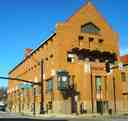
You’re looking for a tall, sturdy building with light brown brickwork, striking geometric lines, and green copper trim around its front entrance-just keep an eye out on your left, standing proudly on the corner with its unmistakable Art Deco presence. Alright, take a deep breath of that fresh Aurora air-now picture yourself standing here nearly a century ago, with nurses bustling past in crisp white uniforms and the jangling sound of a bell ringing from inside. This towering structure before you is the Fox River Pavilion, but to the good folks of old Aurora, it was first known as St. Charles Hospital-a lifeline to the city, built when Aurora was growing bigger by the day. But the story starts even earlier; imagine a group of determined Franciscan Sisters, ducking out of the shadows in 1876, escaping harsh persecution in Germany for their Catholic faith. They made a new home for themselves in Illinois, and soon after, needed someplace grander to help all the sick folks in the bustling, booming city of Aurora. Now, the sisters probably didn’t anticipate building a six-story fortress with gorgeous Art Deco flair-just look at those zigzag decorations above the windows and the copper-topped entrance shining in the sunlight! In 1932, during some of America’s toughest years, a builder named C. J. DeWit rounded up local workers-imagine the hammering, clanging, and hopeful chatter echoing off the walls. Inside, there were once 110 hospital beds, doctors hurrying to emergencies, and nuns quietly tending to patients day and night. The building lived many lives-after decades as a hospital, it morphed into a nursing home and sanatorium, housing all sorts of stories: laughter, tears, and perhaps a ghostly whisper or two late at night. But in 2010, real-life drama struck-after a tragic event, the halls emptied, and the doors were locked for good. Standing here now, this building might look still and silent, but if you listen closely, you can almost sense the layers of history rising up with each brick-tales of resilience, compassion, and the quirks of a city determined to care for its own. So go ahead, give the old pavilion a friendly nod as we head on to the next stop-who knows what stories those walls might whisper as you walk by?
Apri pagina dedicata →Look ahead for a tall, six-story corner building made of red brick and Indiana limestone, topped with a decorative cornice and arched windows at the very top-with a metal fire…Leggi di piùMostra meno
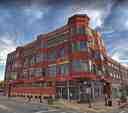
Look ahead for a tall, six-story corner building made of red brick and Indiana limestone, topped with a decorative cornice and arched windows at the very top-with a metal fire escape climbing along one side and big glass storefront windows on the ground floor. Welcome to the legendary Hotel Arthur! Picture yourself stepping into Aurora over a hundred years ago-the air is electric with the clang of trolley bells and the hustle of travelers coming and going. Right now, you’re standing outside what was once the grandest building in the city, built in 1905 by John Knell, Sr., a beer wholesaler from Germany with big dreams and, let’s be honest, a bigger mustache. When Hotel Arthur was finished, people would crane their necks just to see the top, because it was the tallest building in Aurora-until its rival, Hotel Aurora, went and stole its thunder in 1917. But the Hotel Arthur didn’t mind. It still had bragging rights: it was the only hotel on this side of the Fox River, and with its Renaissance Revival design-those crisp limestone bands above and below the windows, lively brickwork, and fancy cornice with dentils-it was as fashionable as a hotel could get. Eugene Malmer, the architect, made sure it had some real flair, and John Knell chose to name the hotel after his brother Arthur. Now, if your brother hasn’t named a six-story building after you, you might want to have a word-just saying! Let’s move into the roaring 1910s. Picture crowds of commuters and families, suitcases bumping along the sidewalk, with streetcars coming to a screeching halt right outside. In 1915, the Hotel Arthur got a new nickname: the Traction Terminal Building! The Aurora, Elgin and Chicago Railroad moved in as their headquarters and made the first floor into a bustling waiting room and diner-the place became the beating heart of the town’s travel scene. While folks waited for trains, they grabbed a bite to eat and swapped stories with travelers from all directions. Upstairs wasn’t just for sleeping anymore. Doctors, insurance agents, and all sorts of professionals set up shop, hoping the luck of the Hotel Arthur would rub off on them. Later that year, the building passed to John Knell, Jr., who headed up the All-Steel Equipment Company for a whopping forty years, showing that hard work and a touch of family legacy can keep a roof over your head-literally. Even as the decades rolled on, the building kept evolving. The big glass storefront windows you see at ground level today? Those arrived in 1937, brightening things up for the next wave of businesses. Through the 1950s, the place buzzed with activity; but as highways grew more popular and the trains slowed down, things quieted. By the 1960s, the upper floors sat abandoned, and by 2003, the last business on the ground floor had packed its bags. But you know how buildings are-they either fade away or spring back to life. Today, the Hotel Arthur is getting a new chapter as a condominium complex, and those old hardwood floors and limestone details will soon be home to new stories. So next time you walk by, remember: some buildings wear their past proudly. Hotel Arthur has welcomed travelers, housed entrepreneurs, and watched Aurora grow-and if these walls could talk, you’d probably have to buy them a beer first!
Apri pagina dedicata →
Mostra altre 10 tappeMostra meno tappeexpand_moreexpand_less
Look ahead for a tall, brown-brick skyscraper with a big antenna and a giant star on top-towering far above any other building along the Fox River, it’s impossible to…Leggi di piùMostra meno
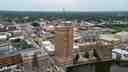
Look ahead for a tall, brown-brick skyscraper with a big antenna and a giant star on top-towering far above any other building along the Fox River, it’s impossible to miss! Welcome to the mighty Leland Tower! Standing at a cloud-grazing twenty-two stories tall, this beauty was the tallest building in Illinois outside of Chicago back in its day. Picture it: the year is 1926, flapper dresses are swirling, and cars have just barely stopped needing to be cranked by hand. Suddenly, Aurora decides to build a hotel so grand and tall, it could make Chicago jealous! The Leland Hotel soared into the sky right here on Stolp Island, brought to life by ambitious architects and builders who probably needed a strong cup of coffee each morning just to keep up. Back then, the Aurora-Leland Hotel was the ultimate hotspot-modern rooms with telephones in every suite, and if you wanted to feel like a superstar, you’d simply head up to the famous Sky Club on top. Imagine the music drifting through the night air, couples laughing and dancing under shimmering chandeliers. Locals, celebrities, even the Chicago “swanks” made a beeline to the Sky Club, all hoping to bump into a big shot like Philip K. Wrigley, Sally Rand, or singing cowboy Gene Autry. It was said you hadn’t really made it until you’d dined and danced above the sparkling city lights. The glamour faded a bit with the ‘60s, and the grand hotel closed its doors, but Leland Tower stayed strong, switching careers from hosting parties to transmitting TV and radio signals. Even now, it puts on a show every winter-just look up! That huge, sparkling shooting star and Christmas tree atop the roof are holiday legends in Aurora. So, while you’re standing in the shadow of this giant, imagine all those footsteps, jazz tunes, and whispered secrets echoing through time. It’s not every day you get to hang out with a legend, right?
Apri pagina dedicata →To spot Stolp Island, look right in front of you across the Fox River-it's marked by a cluster of historic brick buildings, including tall towers and white-trimmed storefronts…Leggi di piùMostra meno
To spot Stolp Island, look right in front of you across the Fox River-it's marked by a cluster of historic brick buildings, including tall towers and white-trimmed storefronts sitting proudly on the riverbank. Now, let’s step into a story that’s as lively as the river rushing beside you. Imagine you’re standing on Stolp Island, a small patch of land that has always had a big personality. When Joseph Stolp first set foot here, this whole place cost him only $12.72-less than the price of a fancy lunch today! He and some determined friends, the McCarty brothers and Zaphna Lake, wasted no time and got to work, raising the first mill by the water. Can you hear that? The Fox River was both their helper and their challenge, splitting the growing town into East and West, causing quite a rivalry between the two. As Aurora blossomed and the population grew past 1,000, people needed a space to come together-quite literally between the two halves. So Stolp Island became the city’s heart, neutral ground for Aurorans. They even built the very first City Hall right here, topped with a bustling post office where news from near and far would shuffle in and out each day. Through those windows, you could have glimpsed a city in motion: families trading goods, kids rushing bikes past horses, and civic leaders plotting Aurora’s next big step. The island’s story keeps building. After the railroad’s arrival in 1856, business exploded. Shops and shops, hotels towering up and up, each built with a hope of drawing crowds to Stolp’s middle ground. When the Hotel Aurora soared skyward in 1917, people craned their necks just to see its rooftop. That record didn’t last too long-Leland Tower next door took the local title as Illinois’ tallest building outside Chicago a decade later. But Stolp Island isn’t just about tall tales; it’s about community. Here stood the city’s first YMCA, a Carnegie library with the smell of old books, and the Grand Army of the Republic Hall ringing with stories from Civil War veterans. The north end, once threatened by every heavy rain, was beefed up and expanded in the roaring twenties, a time when jazz music, theater crowds, and the fancy footwork of the Columbia Conservatory’s students filled the streets. Stolp Island is Aurora in miniature: a patchwork of ambition, invention, and neighborly drama, all tucked between the shifting currents of the Fox. Look around and you might even feel a sense of Aurora’s pulse, humming through these bricks and flowing on in the river.
Apri pagina dedicata →To spot the Grand Army of the Republic Hall, look for a sturdy, octagon-shaped limestone building with a pointed Gothic roof and a small cannon perched outside on the lawn-hard to…Leggi di piùMostra meno
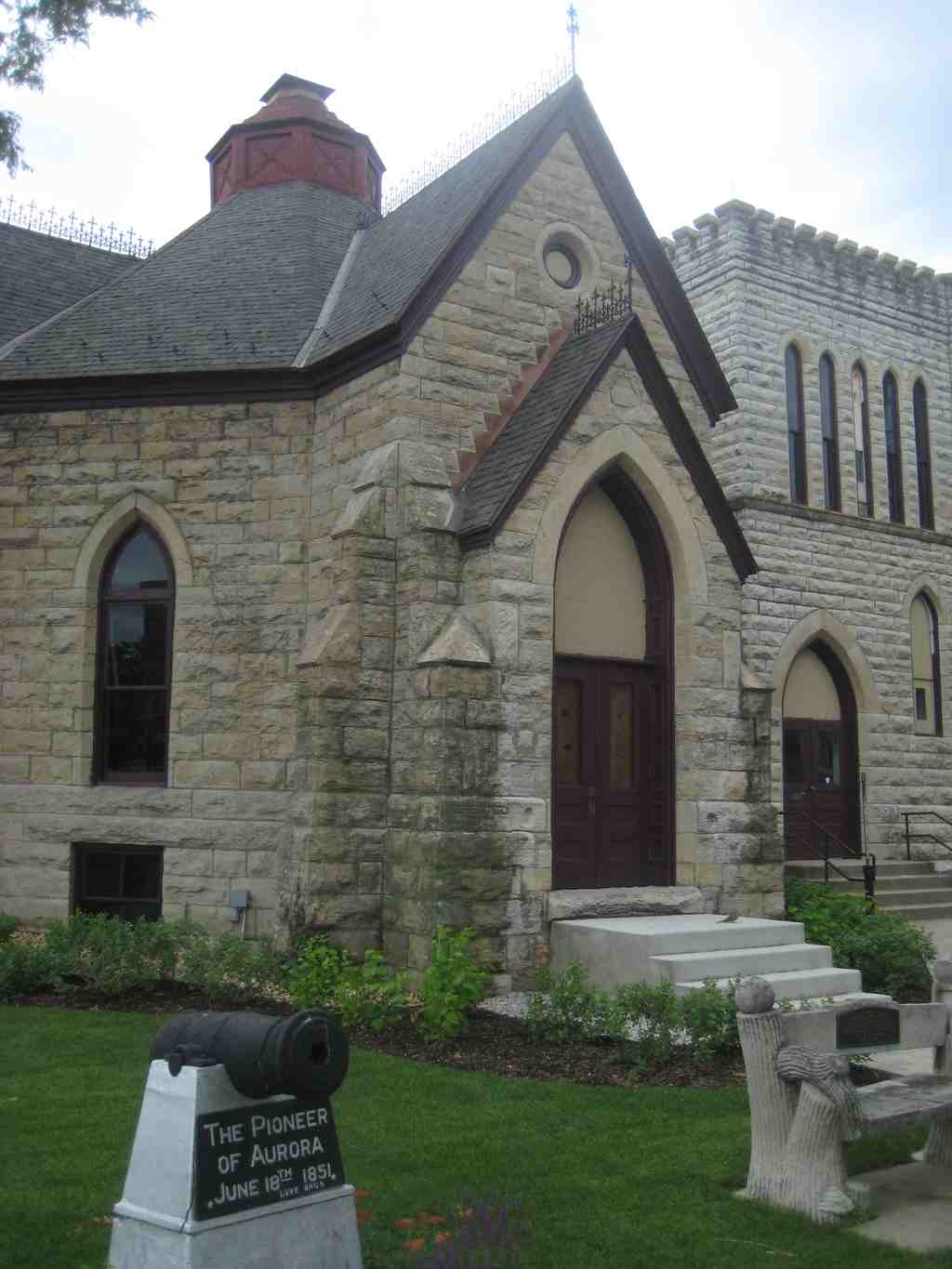
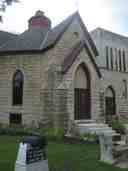
To spot the Grand Army of the Republic Hall, look for a sturdy, octagon-shaped limestone building with a pointed Gothic roof and a small cannon perched outside on the lawn-hard to miss, especially with its castle-like charm. Now, let’s set the scene-take a deep breath, and imagine it’s 1869 and Aurora is buzzing with excitement. The town just survived the chaos of the Civil War, and everyone wants to do something remarkable to honor the brave Union soldiers. But instead of building a boring old statue, a clever fellow named Fred O. White had a more ambitious idea-why not put up a building where folks could gather, share tales, and remember their heroes? The inspiration came all the way from Massachusetts, after Fred visited a memorial there-though thankfully, Aurora skipped the fancy granite roof and some of the pricier bits. So, the community rolled up their sleeves and, stone by local stone, brought this unique hall to life right here on Stolp Island-literally “neutral territory,” because nobody on the east or west side of Aurora could agree where to put things without a squabble. Ah, politics! The hall’s limestone walls soon echoed with laughter, debates, and the footsteps of veterans from Post No. 20 of the Grand Army of the Republic. Any honorably discharged Union vet could join-just picture the air filled with clinking coffee mugs, hot stories, and the creak of old wooden chairs. Before the Carnegie Library opened across the street, this place was the only public library in town. Books were borrowed, secrets whispered, and history was kept alive. But time moves on, and by 1947, the halls grew quieter; the last GAR member, Daniel Augustus Wedge, left behind a legacy-but no more tales to tell. In the 1960s, disaster nearly struck when the city decided to demolish the building. The townspeople roared their disapproval, leading to a fund-raising campaign-and the old hall was saved just in time. Restored and renewed, today this gothic gem stands as the Grand Army of the Republic Memorial Museum. Peek through those beautiful doors and feel the story all around you-war heroes, passionate townsfolk, a community forever changed, and a building that stood the test of time (and a city council with itchy bulldozer fingers). Now, that’s what I call a plot twist worthy of any great American novel!
Apri pagina dedicata →You’re looking for a two-story brick building with a bright red awning, a striking white bay window on the second floor, and a decorative design high up at the center of the…Leggi di piùMostra meno
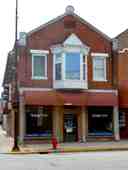
You’re looking for a two-story brick building with a bright red awning, a striking white bay window on the second floor, and a decorative design high up at the center of the roof-just on the corner across from the stoplight. Alright, let’s take a step back in time and imagine Stolp Island a hundred and sixty years ago, bustling with the hum of industry and the scent of fresh wool drifting through the air. Joseph G. Stolp, a pioneer with a knack for carding wool and apparently a great sense of adventure (or maybe just a dislike of sheep in New York), arrived here in Aurora and set up shop right on this tiny island. Back then, Stolp’s original office wasn’t much to look at-just a modest wooden shack. But wool was big business, and Joseph dreamed of more. Soon he was working out of a sturdy brick mill, spinning wool from local sheep into all manner of hats, blankets, and coats. By the 1860s, with the railroad chugging its way through town--Joseph realized he needed a dedicated place to sell his goods. So, in 1861, he built the very building you’re standing in front of now. Picture the windows filled with rolls of colorful cloth, sunlight catching on polished wood and glass, and townsfolk hurrying in with coins jingling in their pockets, eager to warm up with a new scarf or sock. It quickly became a local hub, where you could catch a juicy story from the mill workers or discover the latest in fashionable woolen mittens. But time marches on, and soon trouble came rumbling down the tracks-the railroad brought new goods and new competition Joseph couldn’t keep up with. Eventually, the mill had to close its doors in 1887. No more wool, but there was still life in this old storefront! The building took on a new chapter, rented out to a company making watchmaking tools (precision was the name of the game) and a business painting up the town in fresh colors. In 1889, the store got a makeover: a fancy new entrance, a fresh interior, and that lovely bay window you see peeking out above you, almost like it’s keeping a watchful eye on Stolp Island. Through all the hustle and bustle, fires, floods, and maybe even the odd mustachioed villain twirling in the storefront reflection--this building stands as the oldest on Stolp Island. Today, it’s a proud piece of history, listed with the National Park Service and still watching the city grow and change through those same windows. Not bad for a little shop that started with a dream and a whole lot of wool!
Apri pagina dedicata →Look to your right for a boxy red-brown brick building with thick horizontal bands and unusual, intricate designs carved in stone near the top-its crisp edges and flat roof should…Leggi di piùMostra meno
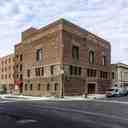
Look to your right for a boxy red-brown brick building with thick horizontal bands and unusual, intricate designs carved in stone near the top-its crisp edges and flat roof should make it stand out from everything else on this block! Now, imagine you’re a traveler back in 1926, stepping onto Stolp Island, and right here in front of you rises the Aurora Elks Lodge No. 705. Already, you might be scratching your head-what’s with these mysterious stone carvings above the windows and all along the edge? That’s the Mayan magic baked into Aurora’s heart! The designers, Zimmerman, Saxe & Zimmerman from Chicago, were swept up in the excitement of ancient Mesoamerican discoveries-there were tales of hidden temples, golden gods, and lost cities splashed across every newspaper. One of them, William Carbys Zimmerman, even traveled to those ancient Mayan ruins, studying the Late Classic temples up close before sketching his vision back in Illinois. What you’re seeing is a true rarity: imagine ancient Mayan gods, fierce symbols, and cryptic glyphs surrounding this building, but all blended with the clean, boxy lines of the Prairie School design-you could say it’s where Frank Lloyd Wright meets Indiana Jones! You can spot those details in the bands of twisted brick and terra cotta, where the carved patterns almost seem to hold secrets of their own. The Elks Lodge was more than just a meeting spot-it had grand dining rooms, secretive lounges, and even a basement bowling alley. Above your head, travelers once settled into forty-six rooms, while the main room buzzed with laughter, music, and a little bit of mystery (although, to be fair, the Mayan theme stumped everyone-Elks aren’t exactly known for their pyramid-building skills). Today, what was once home to masked balls and club meetings is being transformed into upscale apartments, with talk of a restaurant, so perhaps you’ll get to enjoy the spirit of exploration…and maybe even a good taco, all in one adventure!
Apri pagina dedicata →To spot the Old Second National Bank, just look for a tall, sturdy building made of golden-brown brick with a sharp peaked roof and a big clock hanging on the corner above the…Leggi di piùMostra meno
To spot the Old Second National Bank, just look for a tall, sturdy building made of golden-brown brick with a sharp peaked roof and a big clock hanging on the corner above the sidewalk at the intersection of River Street. Now, let’s dive into the story-don’t worry, this isn’t a math test in a bank! Back in 1924, Aurora needed a bank as unique as its people, and they called in George Grant Elmslie, a brilliant architect already nearing the twilight of his career. Now, let’s set the scene: Elmslie was famous for his Prairie School style, the style that loved to stretch buildings out low and wide, almost like they were trying to hug the earth. But just like when your stubborn uncle tries the latest dance craze, Elmslie decided to mix things up. Instead of all those familiar horizontal lines, he reached for the sky-filling this bank with strong, confident vertical brick columns rising all the way from that pink granite base right up to the red-tiled roof. Elmslie didn’t work alone. He brought in Emil Settler to carve the stone, muralist John W. Norton to splash history across the walls inside, and Kristian Schneider to sculpt details with flair. Only the south side got all the fancy exterior decorations-like someone who only irons the front of their shirt! Step closer to the bank and you might imagine hearing the echoes of Aurora’s early days, painted on a three-panel mural by Norton just inside-horses, wagons, and river life from the 1830s. Notice the red-tiled floor inside, designed to look like a giant oriental rug. Can you imagine bank tellers tiptoeing across it, making sure not to disturb the patterns? The bank’s story is one of bold design and creative teamwork-so striking, it was placed on the National Register of Historic Places in 1979. Standing here, you’re not just near a bank-you’re beside a powerful splash of Aurora history… all without making a deposit!
Apri pagina dedicata →To spot the Hobbs Building, look for a striking red-and-brick four-story structure right on the corner, with big, jutting bay windows and a unique five-sided turret that stretches…Leggi di piùMostra meno
To spot the Hobbs Building, look for a striking red-and-brick four-story structure right on the corner, with big, jutting bay windows and a unique five-sided turret that stretches up above your head. Ah, you’ve made it to the famous Hobbs Building! Take a moment and imagine the year is 1895. The air smells like fresh-cut wood and new stone, and there’s a steady hum of horse-drawn carriages outside. Albert Hobbs-part furniture master, part undertaker, and total go-getter-wanted something that would leave people’s jaws on the sidewalk. With its towering turret (once topped with an onion dome), dramatic bay windows, and brick arches, it must have looked like something from a storybook. The stonemasons were busy fitting limestone into those deep sills, and the terra cotta details sparkled in the summer sun. Imagine popping in to buy a sofa, only to be reminded you could get, well, a coffin too! Talk about one-stop shopping. The history here gets even wilder-on the Fourth of July in 1910, a daredevil actually dove from the top of that turret into a pool just six feet deep! Clearly, people back then took “making a splash” pretty literally. For decades, this corner buzzed with stories-shoppers, laughter, maybe a few ghostly creaks at night-before falling quiet for almost 30 years. Now, thanks to a modern-day revival, the Hobbs Building stands proud again, newly restored and ready for its next chapter. So, if these walls could talk... they might just dare you to try that jump yourself-though I wouldn’t recommend it!
Apri pagina dedicata →Look for a large, tan-brick house with a pointed octagon cupola on top and wide eaves with decorative brackets-it’s standing right in front of you, just past the old-fashioned…Leggi di piùMostra meno
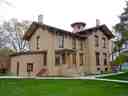
Look for a large, tan-brick house with a pointed octagon cupola on top and wide eaves with decorative brackets-it’s standing right in front of you, just past the old-fashioned water pump. Welcome to the William Tanner House Museum, where each brick and every corner has a story itching to be told. Imagine yourself back in the year 1857-horses clip-clopping down dirt roads, wagons rattling under the prairie sun, and in the midst of it all, William A. Tanner, Aurora’s very own trailblazer, is overseeing the finishing touches on this impressive Italianate house. Picture the scent of fresh stone and the sound of hammers echoing across the quiet fields. William Tanner wasn't just any early settler-he saw the magic in Aurora when it was nothing but open land and potential. After riding in from Watertown, New York, he must’ve had a hopeful spark in his eye as he surveyed this very spot, planning a new life. He worked the land, sent for his family, and set down roots so deep that, rumor has it, the house still sighs with old family secrets! After marrying Anna Makepeace, together they built a life here with ten children-yes, ten! No wonder they needed a house with so many rooms. The parlor bustled with music, laughter, and surely the occasional sibling squabble; the kitchen danced with the aromas of hearty suppers. As you stand by the walk, look to the octagon cupola up top-imagine one of the Tanner kids sneaking a peek at the town’s horizon, wondering what adventures the future might hold. The echo of their voices still lingers in the hallways. The Tanners weren’t just about family-they ran a hardware business that became the heartbeat of Aurora, lasting all the way to 1979. But the house itself-this cross-shaped, brick beauty-has survived everything from runaway circuses to icy winters. When the last of the Tanner family moved out in the 1930s, they didn’t just lock the door and toss the key; they gifted it to the Aurora Historical Society. Now, each summer, people walk through these rooms and taste a slice of Victorian life. If you come by on July 4th, the lawn bursts with picnics and games, while in December, Christmas lights twinkle and the house smells like cinnamon and pine. Soak in the moment-who knows, maybe the Tanner family is peeking out from the past, waving a gentle hello just for you!
Apri pagina dedicata →To spot the Col. Ira C. Copley Mansion, just look for the grand, L-shaped brick house on your right with towering white columns and a porch that seems perfect for a parade of…Leggi di piùMostra meno
To spot the Col. Ira C. Copley Mansion, just look for the grand, L-shaped brick house on your right with towering white columns and a porch that seems perfect for a parade of togas! Now, let your imagination take over as you stand beneath these tall Ionic columns. Picture it’s the year 1917-Aurora’s air buzzing with excitement, neighbors slowing their Model Ts just to sneak a glance at Colonel Ira C. Copley’s brand-new home. Colonel Copley wasn’t your everyday Aurora resident. He was a media mogul-the founder of Copley Press-and a U.S. congressman, which means he knew how to make headlines and history at the same time. He wanted a mansion as grand as his ambition, so he called in Jarvis Hunt, a top Chicago architect, and said, “Surprise me!” The result? A mansion that’s part Classical Revival, part Federal Style, and all about impressing the neighbors. You can almost hear the rustle of elegant gowns and the laughter spilling out from the ballroom under that hipped roof. The porch wraps around, begging for summer parties and grand entrances. Peer upwards-you’ll spot delicate balustrades and a twin chimney, ready to pump out warmth in the winter. The entrance itself greets visitors with slender pilasters and an inviting elliptical fanlight, like the mansion’s giving you a wink. But the real treat is in the details: the Roman brick exterior, set in a Flemish bond, and a Palladian window at the back that catches the afternoon sun, sending golden light across the dance floor. Legend has it, if you listen closely on a moonlit night, you can still hear whispers of deals struck and lively parties punctuated by the Colonel’s hearty laugh. In 1978, history gave this mansion the high five it deserved by adding it to the National Register of Historic Places. Today, the Copley Mansion stands not just as a house, but as a storybook-each brick, each column a chapter in the adventurous life of a man who believed anything was possible in Aurora.
Apri pagina dedicata →


Domande frequenti
Come inizio il tour?
Dopo l'acquisto, scarica l'app AudaTours e inserisci il tuo codice di riscatto. Il tour sarà pronto per partire immediatamente – tocca play e segui il percorso guidato dal GPS.
Ho bisogno di internet durante il tour?
No! Scarica il tour prima di iniziare e goditelo completamente offline. Solo la funzione chat richiede internet. Ti consigliamo di scaricare tramite WiFi per risparmiare dati mobili.
È un tour guidato di gruppo?
No – è un tour audio autoguidato. Esplori in autonomia al tuo ritmo, con la narrazione audio riprodotta dal tuo telefono. Nessuna guida, nessun gruppo, nessun orario.
Quanto dura il tour?
La maggior parte dei tour richiede 60–90 minuti, ma sei tu a controllare il ritmo. Metti in pausa, salta le tappe o fai pause quando vuoi.
E se non riesco a finire il tour oggi?
Nessun problema! I tour hanno accesso a vita. Metti in pausa e riprendi quando vuoi – domani, la prossima settimana o il prossimo anno. I tuoi progressi vengono salvati.
Quali lingue sono disponibili?
Tutti i tour sono disponibili in oltre 50 lingue. Seleziona la lingua preferita quando riscatti il codice. Nota: la lingua non può essere cambiata dopo la generazione del tour.
Dove accedo al tour dopo l'acquisto?
Scarica l'app gratuita AudaTours dall'App Store o Google Play. Inserisci il codice di riscatto (inviato via email) e il tour apparirà nella tua libreria, pronto per essere scaricato e avviato.
Se il tour non ti piace, ti rimborseremo l'acquisto. Contattaci a [email protected]
Pagamento sicuro con 


