AudaTours logoAudaTours

Tour Audio di Oxford: Leggende, Leoni e Studiosi Perduti

Audioguida16 tappe

Una pietra di martire si erge sopra il trambusto delle strade di Oxford, mentre il tetto di un teatro—costruito su una scommessa contro la pioggia inglese—custodisce silenziosamente antichi segreti a pochi passi. Ogni angolo qui sembra intriso di ribellione, ambizioni nascoste e ombre di secoli passati. In questo tour audio autoguidato, immergiti nel cuore tortuoso di Oxford per svelare storie che molti si perdono: complotti sussurrati al Martyrs’ Memorial, silenziose contrapposizioni nelle grandi sale della Bodleian e cerimonie elettrizzanti sotto la cupola dipinta dello Sheldonian. Quale segreto accese fiamme che cambiarono per sempre l'Inghilterra a Broad Street? Quali accordi silenziosi echeggiano tra le pietre della biblioteca? E perché gli studenti una volta mandavano i visitatori a cercare una chiesa sotterranea immaginaria sotto un monumento? Vaga per Oxford con ogni passo che scricchiola sotto i piedi, passando da scene di tumulto a momenti di scoperta mozzafiato. Vivi drammi vividi e arguzia mentre questa città rivela la sua storia vivente ad ogni svolta. Pronto a scoprire cosa nasconde veramente Oxford? Premi play e lascia che le storie abbiano inizio.

Anteprima del tour

map

Informazioni su questo tour

  • schedule
    Durata 50–70 minsVai al tuo ritmo
  • straighten
    2.8 km di percorso a piediSegui il percorso guidato
  • location_on
  • wifi_off
    Funziona offlineScarica una volta, usa ovunque
  • all_inclusive
    Accesso a vitaRiascolta quando vuoi, per sempre
  • location_on
    Parte da Memoriale dei Martiri, Oxford

Tappe di questo tour
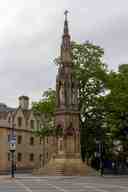
  1. To spot the Martyrs’ Memorial, just look for a tall, ornate stone monument that rises above the traffic lights like a cathedral’s spire, right where St Giles’, Magdalen Street,…Leggi di piùMostra meno

    To spot the Martyrs’ Memorial, just look for a tall, ornate stone monument that rises above the traffic lights like a cathedral’s spire, right where St Giles’, Magdalen Street, and Beaumont Street cross paths, just west of Balliol College. Now, take a moment to let your eyes wander over those pointed arches, delicate carvings, and proud statues looking out across Oxford. It’s hard to imagine this busy street as it was hundreds of years ago-filled with whispers of rebellion and the scent of smoke in the air. You’re standing before the Martyrs’ Memorial, a dramatic stage where history put on quite the performance. Three men-Thomas Cranmer, Hugh Latimer, and Nicholas Ridley-had their fate sealed near here, in an age when what you believed could cost you your life. Picture 16th-century Oxford: the air brisk and cold, the city’s stone streets echoing with tense footsteps. Cranmer, the former Archbishop of Canterbury, and the bishops Latimer and Ridley stood accused, not of some terrible crime like robbery, but of believing the “wrong” things after the English Reformation. In those days, a quick trial was more like a fast train to trouble. Sadly for them, the final stop was a martyr’s end on Broad Street, where they were burned at the stake, standing by their beliefs even as the flames rose around them. Centuries later, with Victorian England in full swing, Anglicans like Reverend Charles Pourtales Golightly-whose name, by the way, sounds like a character straight out of a mystery novel-thought Oxford needed a reminder of this story, sharp enough to poke at anyone getting too cozy with Catholic traditions again. So they raised money, picked the great architect George Gilbert Scott, and in 1843, after evicting a rather wobbly old house, this monument sprang up, reaching for the sky. Funny enough, its design wasn’t just inspired by church spires, but by medieval ‘Eleanor crosses’ built by a king for his queen-so there’s a little royal romance in there too! Up close, you’ll see statues carved from creamy Caen stone, representing the three martyrs, forever watchful-even if today, their biggest worry is weathering Oxford’s rain. And don’t miss the shields and inscriptions-like a 19th-century tweet, capturing a moment in stone. Over time, the monument weathered, faded, and took on a look not unlike a wizard after a tough spell, but thanks to a 21st-century makeover, its details shine again. Oh, and here’s a classic Oxford prank-students used to trick tourists into thinking this was the entrance to an underground church, and send them down the stairs to the public toilets! Now that’s history with a splash of humor. Keep your eyes peeled; there’s always more to uncover in Oxford!

    Apri pagina dedicata →
  2. Glance ahead and spot the Sheldonian Theatre by its round, grand facade and distinctive eight-sided cupola rising from the roof-just look for the elegant crown-like dome above the…Leggi di piùMostra meno

    Glance ahead and spot the Sheldonian Theatre by its round, grand facade and distinctive eight-sided cupola rising from the roof-just look for the elegant crown-like dome above the bustling Broad Street, it’s pretty hard to miss! Welcome to the Sheldonian Theatre, Oxford’s magnificent showpiece and, perhaps, the city’s fanciest hatbox. Picture yourself standing here in the late 1660s, dust swirling in the air and voices echoing with excitement. The neighbourhood’s alive-tradesmen hurrying by, scholars in long black robes darting about, and the sharp crack of horses’ hooves on cobblestone. Back then, this spot was transforming dramatically under the guiding hand (and very deep pockets) of Gilbert Sheldon. Now, Sheldon wasn’t just any university man-he was the Warden of All Souls, the Archbishop of Canterbury, and the wealthiest supporter Oxford ceremonies could ever dream of. He wanted something spectacular for the University, a place where graduates could celebrate without scattering hymn sheets all over the local church. So, what did Sheldon do when nobody else was keen to fund the new theatre? He simply dug into his own fortune-a whopping £14,470, which would buy you a pretty nice castle nowadays! And for the design, Sheldon called in a rising genius: Christopher Wren, who probably thought, “How hard can this be? I’ve only just designed one other building!” Wren imagined something bold, something the city had never seen before. He drew inspiration from ancient Rome, particularly the Theatre of Marcellus, which meant elegant curves and a grand sense of space. Just one little problem-Roman theatres had open roofs, perfect for Italian sunshine, but a bit soggy for English rain. Wren had to come up with a roof unlike any other, because local timber just wasn’t going to stretch over 70 feet. So he borrowed a visionary idea-a geometric, trussed flat roof, ingenious for its time and so sturdy that the university’s books were stored up there for years. Not surprisingly, this massive ceiling led to some nervy moments. Rumors spread about how safe it really was with all those heavy books above. In 1720, some brave surveyors climbed up to check and found, to their amazement-and relief!-that the roof was “likely to remain and continue... for one hundred or two hundred Years yet to come.” That’s British understatement for you! Beneath your feet, generations of students have quaked with nerves, as the Sheldonian was home to graduations, ceremonies, and stirring lectures-the very moments that have shaped Oxford’s legends. For centuries, it wasn’t a theatre for drama-no Shakespearean sword-fighting here-at least until 2015, when the Christ Church Dramatic Society decided it was time for a little Arthur Miller. What draws your eyes now as you look up is the grand cupola in the centre, windows all around. Up there, visitors are greeted with sweeping views across Oxford’s dreaming spires-perfect, if you ever wanted to feel a little closer to the gods, or just spy on the neighbours. Inside, a riot of colour covers the ceiling-an enormous fresco painted by King Charles II’s own court artist. Recently, skilled conservators removed and painstakingly restored each panel. As you imagine that process, you can almost hear the hush of brushes, the soft ruffle of canvas being lifted from the ceiling. The painting’s story? It shows Truth descending upon the Arts and Sciences, banishing ignorance from Oxford. Rather optimistic, but a nice thought, especially during exam season. Over the years, the Sheldonian has hosted music history, too-Handel himself stood under these domes, conducting his oratorio Athalia. In modern times, the theatre has vibrated with everything from classical concerts to indie rock bands-Stornoway even launched an album here with a full student orchestra. Now, that’s multitasking. And sometimes, history is happening even as you watch. In May 2024, students flocked here with demands during the Gaza war protests, making the Sheldonian not just a stage for ceremonial hats-or even for a sly magician (as it did in the 1980 film “Heaven’s Gate”)-but for the living voices of the university. So as you stand here, outside this architectural marvel that broke every Oxford tradition, take a moment to drink it in-the echoes of music, debate, and laughter that have filled this place for centuries. And if that all sounds too grand, just imagine Wren up on a scaffold, scratching his head, asking, “Now, how do I put a roof on a Roman theatre in rainy England?”

    Apri pagina dedicata →
  3. To spot the Bodleian Library, look for a grand, old stone building with a massive arched doorway, decorated wooden panels studded with colorful crests, and two small stone angels…Leggi di piùMostra meno

    To spot the Bodleian Library, look for a grand, old stone building with a massive arched doorway, decorated wooden panels studded with colorful crests, and two small stone angels keeping watch at either side. Now, as you stand before these towering doors, take a deep breath and imagine the musty scent of ancient books floating through the air. Welcome to the Bodleian Library, or as Oxford folks like to call it, “the Bod”-not to be confused with your gym routine. This isn't just any library. It was founded in 1602 by a determined chap named Sir Thomas Bodley. He was so keen on giving Oxford a literary heart that he once wrote a letter saying he’d take on the “charge and cost” of bringing a library back to life. Spoiler alert: Bodley delivered. Imagine it’s the 17th century. Bodley’s team is busy reinstalling books in a refitted room above the Divinity School, bringing new treasures in from all over the world, and hoping that none of the manuscripts go wandering off like students during exam week. By the way, don’t let those doors fool you-inside, there are over 13 million printed items, making it Britain’s second largest library. If you dropped a pin in here, the echo would probably disturb a medieval philosopher still looking for the right scroll. But let’s rewind the clock. The first Oxford library was born in the 14th century, high above St Mary’s church, with a bunch of chained books (so students couldn’t walk off with them-clearly, book theft is a time-honored tradition). Fast forward to the 1400s, and Duke Humphrey, brother to King Henry V, donates a mountain of manuscripts. The collection outgrows the space, so they build what is still called Duke Humfrey’s Library, right here above your head. Alas, in the late 1500s, the place falls on hard times. Monks sell off the furniture, books vanish, and religious reforms sweep away “superstitious” texts. The library is more or less a ghost town until Sir Thomas Bodley blows the dust off and dramatically reopens the doors in 1602. He even placed a Benefactor’s Register on proud display-hoping to guilt, I mean, encourage visitors into donating more books. Imagine the hustle and bustle. Scholars from all over Europe are sending in rare volumes, Bodley is trying to collect Turkish and Chinese manuscripts (even when nobody at Oxford could actually read them), and Francis Bacon himself declares the Bodleian to be “an Ark to save learning from deluge.” The rules have always been strict. Even today, before you can enter, you must promise (traditionally out loud) not to steal, damage, or light fires among the ancient tomes. They have this declaration translated into over a hundred languages, just in case you thought you could sneak a matchstick in by speaking fluent Klingon. As centuries roll by, the Bodleian expands-a dazzling tower called the Tower of the Five Orders rises as the grand entrance, each floor decorated with a different kind of ancient column: Tuscan, Doric, Ionic, Corinthian, and Composite. Lecture rooms become book-filled havens, underground bookstacks snake beneath the earth, and tunnels even connect the “Old” and “New” Bodleian buildings. At one point, there was a Lamson tube system under Broad Street to deliver book orders-basically, Victorian Amazon Prime, with a lot more whooshing sounds. The treasures here are jaw-dropping: illuminated manuscripts, Aztec codices, four Magna Carta originals, Tolkien’s notes, Jane Austen’s letters, Beethoven’s works, and even Shakespeare’s First Folio. If Indiana Jones were a professor, he’d be knocking at this door every morning. Film buffs, take note: you’ve seen this place in Harry Potter as the Hogwarts library and hospital wing, and in The Golden Compass and plenty of other movies. Don’t try any spells though; the only magic here is the library’s ability to always, mysteriously, have another room full of books tucked away somewhere. So, as you stand under the watchful eyes of those stone angels, you’re not just looking at an old stack of books. You’re standing at the beating heart of centuries of learning, secrets, drama, and a fair amount of English stubbornness. The next time you borrow a library book and forget to return it, just remember: the Bodleian’s been keeping tabs on its collections for over 400 years… and they probably know where you live! Interested in a deeper dive into the sites and regulations, copying and preservation of material or the treasures of the library? Join me in the chat section for an insightful conversation.

    Apri pagina dedicata →
Mostra altre 13 tappeMostra meno tappeexpand_moreexpand_less
  1. To spot the University Church of St Mary the Virgin, look straight ahead for a tall, striking stone spire rising dramatically above the street, with ornate windows and decorative…Leggi di piùMostra meno

    To spot the University Church of St Mary the Virgin, look straight ahead for a tall, striking stone spire rising dramatically above the street, with ornate windows and decorative statues perched along its tower, just opposite the High Street. Welcome to the heart of Oxford’s history! Just imagine-centuries ago, this very site was surrounded by old city walls, heavy stone and bustling markets, and the chimes of the church bell would have echoed across the town. You’re looking at the birthplace of the University, the grand old University Church of St Mary the Virgin-or St Mary’s, if you’re on friendly terms. People have worshipped here since Anglo-Saxon times, and by 1086, it was already considered ancient! Gaze up at that spire: some say it’s the most beautiful in all of England, and with its delicate pinnacles, noble statues, and fierce-looking gargoyles, it’s easy to believe. Just watch out for rain-those gargoyles like to spit! At nearly 200 feet high, the tower was raised way back in the 13th century, and if you’re feeling bold, you can climb it for postcard views over Oxford. Imagine the sights from up there on a quiet morning: the soft ring of distant church bells, the gentle sound of wind whistling past your ears, and a patchwork of rooftops stretching out toward the past. Now, picture the 1300s. Where you’re standing, university scholars in strange robes would gather in St Mary’s, not just for prayers, but also for heated debates, degree ceremonies, and boisterous arguments. In fact, before Oxford had any grand halls or libraries, this church was the center of it all! The original university library? That was upstairs, filled with dusty books from Bishop Cobham. Where students now sip coffee in the Vaults café, university “parliament” once met to decide the fate of Oxford itself. Oh, and you can thank Adam de Brome, the clever rector who managed to funnel church funds to his new college-Oriel College-by, well, creative paperwork. It seems bureaucracy is as old as the hills! If these stones could talk, they’d tell stories of both faith and fire. In the 16th century, three brave bishops-Cranmer, Latimer, and Ridley-were tried here for heresy, and the church echoed with the sound of angry crowds and nervous shuffles. Cranmer was forced to stand upon a stage, propped up by a shelf hastily cut from one of these very pillars, for a humiliating sermon before being led to the flames. They say Cranmer vowed the hand that signed his recantations would burn first-and so it did. If you look for a pillar with a piece missing, you’ll find a silent witness to a dramatic moment in history. Think graduation ceremonies today are wild? Well, centuries ago, Oxford students celebrated so loudly here that the church rang with laughter and shouts, mixing prayers with cheers until one Archbishop of Canterbury declared enough was enough. He decided a new building was the only solution-thus, the Sheldonian Theatre was born, freeing St Mary’s to become, once again, a place of worship instead of student parties. It’s the church that gave the University its serious face-you could say it “taught Oxford how to behave”! Step closer to the porch, and you’ll find a slice of scandal from the 1600s. The curly Baroque stonework with its spiral columns and a statue of the Virgin and Child was considered so shocking by the Puritans that it was cited as evidence in an Archbishop’s trial! To top it off, when Cromwell’s troops stormed Oxford, the statue got riddled with bullet holes-talk about souvenirs with a story. The inside dazzles as well-gothic arches, tracery, hidden faces of angels carved high above, and windows glowing with the last rays of sunlight. Some glass is nearly 600 years old; others were designed by Augustus Pugin, who helped create the look of Big Ben. Don’t miss the mighty organ at the back-today’s instrument was built by Swiss craftsmen but sits in a case inspired by Father Smith’s original organ, which was sadly lost in a fire after WWII. But this isn’t just a church of stories and echoes-it’s still a living, breathing part of Oxford. Sundays bring the sound of a choir filling the vast space, and visitors come from around the world to soak in the calm and the centuries of history. So next time you hear the bells or feel a breeze up your spine, remember: you’re standing at the crossroads of faith, learning, drama, and a good bit of university mischief. Quite simply, St Mary’s is the soul of Oxford-where the past and present dance together under one glorious spire. Yearning to grasp further insights on the overview, architecture or the organ? Dive into the chat section below and ask away.

    Apri pagina dedicata →
  2. To spot the Radcliffe Camera, just look for the grand, round stone building with a huge silver dome rising above the grass right in front of you-it’s almost impossible to miss, as…Leggi di piùMostra meno

    To spot the Radcliffe Camera, just look for the grand, round stone building with a huge silver dome rising above the grass right in front of you-it’s almost impossible to miss, as it stands alone like a crown in the centre of Oxford. Take a deep breath as you gaze up-the Radcliffe Camera is truly the showstopper of Oxford’s skyline. Imagine stepping back into the 1700s. This fantastic building, now nicknamed the Rad Cam, appeared almost like magic, but really, it was the result of almost three decades of planning, negotiations, haggling with college heads, and enough paperwork to fill a small library before construction even began. The dreamer behind it was John Radcliffe, a doctor so famous he treated kings and queens but who, ironically, didn’t have much time for books himself. His grand plan? Leave a hefty fortune to build the ultimate science library in Oxford-a sort of scientific “room” (that’s what “camera” means in Latin)! Once Radcliffe died in 1714, everyone was itching to get started, but there was a catch: his sisters had to pass away first, and the land had to be bought, which was like playing chess with houses, gardens, and grumpy college fellows. When work finally kicked off in 1737, James Gibbs, the master architect, got to design a truly unique shape. Instead of the usual long, straight library, he dreamed up this three-tiered stone pancake-round, columned, and topped with a lanterned dome. Imagine masons, carpenters, and stone carvers swarming over the site, hammers ringing and saws buzzing against the Oxford air. Don’t be fooled by the smooth lead dome-during the build, there was drama. Some folks wanted it made of stone, but suddenly, all dome construction halted. There was a debate worthy of a courtroom, and the builders almost walked out over a £700 bill! Luckily, disaster was avoided, and the dome got finished with timber and lead-41 tonnes of Derbyshire lead, to be exact! But not everything went smoothly. As the outer scaffolding came down, tragedy struck: two men lost their lives, and payments had to be made to grieving families, their loss echoing through the years like the hush that now fills the reading room. At last, in 1749, Francis Wise became its first librarian, chosen after a cut-throat contest. He must have felt like a king with his own coat of arms on his librarian’s gown! But Wise wasn’t everyone’s favourite. There were rows over who controlled the library, and he once threatened to padlock the place and dare anyone to cut the lock. Noisy drama isn’t only for today’s students, after all! Speaking of drama, over the years the Rad Cam has been shaken by protests and marches: in 2010, students even occupied it, and the walls have seen splashes of orange paint from climate demonstrations. Inside, the upper gallery houses a six-foot marble statue of John Radcliffe himself, which seems only fair since it’s his money that made this place possible. Though you can’t go in, picture the cool hush, the spiral stairs, the scent of old stone and leather-bound books. At its height, the library was filled with treasures: books, marbles, busts, even coins. Over time, its scientific focus sharpened; eventually, its thousands of volumes found a new home nearby, and the Radcliffe Camera became a reading room for the Bodleian Library. If you’re wondering why it looks a bit like a Roman temple-well, so did critics. One even joked it blocked the best view in Oxford. J.R.R. Tolkien, who lived here, thought the Rad Cam reminded him of a dark, mysterious temple from his own Middle-earth stories. While it was once called “the most magnificent structure in Oxford”, others claimed its shape was all wrong and joked about Radcliffe being more interested in fame than facts. You have to admit, though, its roundness is special: the Radcliffe Camera is the earliest circular library in all of England. Out here, under the dome’s shadow, just close your eyes for a second. Imagine the rustle of gowns, the flicker of candlelight, and the distant sound of a carriage pulling up on the cobbles. As Oxford’s most iconic landmark, it’s been immortalized in novels, films, and even detective stories. Stand proud-you’re in the very heart of Oxford’s story, surrounded by centuries of ambition, debate, quiet knowledge, and the occasional splash of eccentric humor. Interested in a deeper dive into the architecture, reception or the in popular culture? Join me in the chat section for an insightful conversation.

    Apri pagina dedicata →
  3. To spot the Covered Market, look for a large arched roof painted white and red, with lanterns glowing warmly overhead, and lots of bustling little shopfronts all around…Leggi di piùMostra meno

    To spot the Covered Market, look for a large arched roof painted white and red, with lanterns glowing warmly overhead, and lots of bustling little shopfronts all around you. Welcome to Oxford’s Covered Market, where stepping inside feels a bit like entering a bustling Victorian film set-minus the top hats and horse-drawn carriages! Now, take a moment to imagine the year is 1774: the city’s streets are crowded with stallholders shouting their wares, and the air is full of tantalizing smells-fresh bread, sizzling sausages, and, dare I say, the slightly less inviting aroma of pig feet. Back then, Oxford’s main streets were jammed with messy, unsavory market stalls, so the town and university folks decided it was high time to tidy things up. Enter John Gwynn, the clever architect behind this grand building and Magdalen Bridge, who designed the market’s iconic façade and those four grand entrances you see today. It all started with just twenty butchers’ shops, but soon, more and more traders arrived: farmers pushing in carts heavy with garden produce, fishmongers hawking the catch of the day, and dairymaids offering fresh butter. Once meat was only allowed inside the market walls, this place became Oxford’s stomach-feeding town and gown alike, and perhaps even a few midnight scholars who fancied a sausage or two on their way home from the Bodleian Library. Fast forward to now, and you’ll still find echoes of history in every stall and cobbled walkway. Bakers knead dough in the early morning light, flower stalls burst with color, and butchers-yes, still some making the legendary Oxford sausage-call out their offers. From surprise royal visits-imagine brushing elbows with Prince Charles while picking out a pastry!-to the hum of everyday shoppers, the market is a patchwork of old and new. Thanks to a recent city investment, the Covered Market gleams with fresh signs and repairs, yet the spirit of centuries past lingers on. So go ahead, wander through, and if you hear a friendly bellow from a butcher, don’t be shy-he’s just doing what butchers here have done for nearly 250 years!

    Apri pagina dedicata →
  4. Look straight ahead for a lively, wide pedestrian street lined with busy shops and a mix of modern storefronts and historic timbered buildings-Cornmarket is the stretch bustling…Leggi di piùMostra meno

    Look straight ahead for a lively, wide pedestrian street lined with busy shops and a mix of modern storefronts and historic timbered buildings-Cornmarket is the stretch bustling with shoppers and topped with the distant square tower of St Michael at the North Gate. Welcome to the beating heart of Oxford-Cornmarket Street! Take a moment to soak it all in: the chattering crowds, the shuffling footsteps, the mix of inviting shop windows and ancient stonework. If you listen closely, underneath the hum of today’s shoppers, you might almost catch the echoes of traders haggling, the clatter of wagon wheels, or perhaps the comforting tap of a photographer setting up his gear in days long gone. But corn, you ask? There’s no corn in sight! That’s because “Cornmarket” never sold vegetables-it was actually the trading place for cereal grains back in the day, known by locals as “The Corn.” Today, it’s a major shopping street and a pedestrian heaven, teeming with stores, buskers, and hungry pigeons hoping for a dropped sandwich crumb or two. On your left is the alleyway to Golden Cross, a secret world of glittering jewellers and quirky craft shops, almost like stepping into a jewelry box tucked away from the crowd. And on the right is the Clarendon Shopping Centre, which wraps around in an L-shape, offering enough retail temptation to test even the strongest wills. Now, not everything here is shiny and new. Pause by the famous 14th-century timbered building on the corner of Ship Street-the sole survivor of a medieval inn called the New Inn, dating back to 1386. That’s about 100 years older than the first “official” playing cards in England! Today it’s part of Jesus College and stands as a remarkable slice of history peeking out between the pizza shops. But Cornmarket’s story isn’t all glory… In fact, in 2002, the street was voted Britain’s second worst! The reason? A botched repaving job turned the street into a giant cracked jigsaw. The company doing it went out of business, leaving everyone in a bit of a pickle until things were sorted (and repaved, again) the next year. This colourful street was once home to Boswells, Oxford’s largest department store, since 1738, and to Henry Taunt, a photographer whose shop caught more of Oxford’s soul than any Instagram filter ever could. If walls could talk, they’d whisper about Zac’s waterproofs, old hotels with Norman cellars, and Woolworth’s grand schemes-some wonderful, some less so! As you wander further, look ahead to St Michael at the North Gate, the oldest building in Oxford, still standing tall and watching the centuries roll by. Just imagine: above your head once hung the city’s old north gate, and just down the street was Bocardo Prison, where the Oxford Martyrs spent their final days. Cornmarket isn’t just a shopping street; it’s history, hustle, and a pinch of drama all rolled into one. Now, onwards-try not to be distracted by the sweet smell of pastries from the Covered Market just nearby!

    Apri pagina dedicata →
  5. Take a good look at this building in front of you-this is no ordinary set of doors you’re walking past. This is the Oxford Union, the debating heart of Oxford, where some of the…Leggi di piùMostra meno

    Take a good look at this building in front of you-this is no ordinary set of doors you’re walking past. This is the Oxford Union, the debating heart of Oxford, where some of the best minds have sharpened their arguments and, equally as important, honed their dramatic pauses. If the walls here could talk, they’d probably start with, “Order, order!” and then argue with themselves for the next hour. Picture it: the year is 1823, a time when Oxford students couldn’t even openly debate big topics like theology. But a group of rebellious undergrads thought, “Let’s meet anyway-what’s the worst that can happen?” They held their first meeting secretly in a room at Christ Church. Their first debate? Parliament versus Royalists. No big deal, just the small matter of who should run England. From those daring beginnings, the Oxford Union burst forth, powered by a passion for free speech and a hunger for a good argument-which, let’s face it, Oxford students are rarely short of. As the Union grew, they needed a home. By the mid-19th century, they settled right here, in Frewin Court, commissioning the architect Benjamin Woodward, already famous in town for his work on the University Museum, to design their new headquarters. The first chamber opened in 1857, but soon, arguments outgrew the space. By 1879, a vast new debating chamber-modeled after the House of Commons, with its own ‘ayes’ and ‘noes’ doors for voting-opened, and for a while, it was the largest of its kind in the world. Talk about big opinions needing big rooms. Now, imagine sweeping into the Old Library: golden lights flicker over books, busts of famous former members gaze sternly, and along the walls are pre-Raphaelite murals painted by none other than Dante Gabriel Rossetti, Edward Burne-Jones, and William Morris. It’s a place not just for words, but for art, bookworms, and maybe the occasional student frantically finishing an essay five minutes before the deadline. This institution isn’t just independent from Oxford University-it’s fiercely so. Being a member, especially a President, is kind of like being a prime minister of your own mini-nation. Many have gone on to do just that: four former UK prime ministers-Gladstone, Heath, Johnson, and the trailblazing Benazir Bhutto-once led debates right here. Though, don’t be fooled: some say more political plots have been hatched over the Union’s dining room table than in Parliament itself-makes you wonder what was really in the tea. The membership rules are as complex as the debates, but whether you’re a life member, a temporary guest, or “deemed worthy” by committee interview, once you’re in, you’re part of the show. The speaker list reads like a who’s who of world history. Picture arguing with Albert Einstein (who may have debated the theory of relativity at length), hearing Queen Elizabeth II deliver a speech, or being serenaded by Elton John. American presidents, Nobel Peace Prize winners, Dalai Lama, even movie stars like Judi Dench and Tom Hanks have spoken here. And yes, David Attenborough brought his calm voice-rumor has it, he narrated the meetings. Of course, the debates get fiery. The Union doesn’t shy away from tough, even controversial, topics. In 1933, students voted infamously that they’d “under no circumstances fight for King and country”-a motion so shocking that newspapers accused them of being traitors, and politicians tried to erase the debate from history. Some rather undignified pursuits took place as well-literally, like when Randolph Churchill was chased through the city by undergrads and fined for illegal parking. If you didn’t expect a little mayhem, you haven’t met Oxford students. The Union has also had moments of tension and protest, whether it’s hosting Malcolm X, hearing from O.J. Simpson soon after his trial, or dealing with fierce protests following controversial speaker invitations. In 1963, under the pressure of the times, women were finally admitted, ending 140 years of all-male membership-about time, right? Judith Okely became the first female member, and Geraldine Jones the first woman President just a few years later. Thursday nights are legendary here. The blare of voices, the stomp of shoes as members vote with their feet-literally-to exit through the ‘ayes’ or ‘noes’ door. The tradition is so deeply British, they probably serve it with tea and scones. If you listen closely, between the footsteps and the whispers, you might just hear echoes of history: the laughter and anger, the rallying cries for free speech, the piano that Vladimir Ashkenazy refused to play because he “wasn’t warmed up” (even legends get cold fingers), and the centuries-old call for meaningful debate. So, next time you argue with a friend, remember: you’re standing in a city where people built a palace just for that. For further insights on the notable debates, notable speakers or the membership, feel free to navigate to the chat section below and inquire.

    Apri pagina dedicata →
  6. Bonn Square is easy to spot: just look for an open, paved plaza with young trees dotted around, a stone memorial rising proudly near the center, and people resting or chatting at…Leggi di piùMostra meno

    Bonn Square is easy to spot: just look for an open, paved plaza with young trees dotted around, a stone memorial rising proudly near the center, and people resting or chatting at its steps-plus, you might notice the flurry of pigeons hoping you drop a crumb! Now, as you stand here, imagine you’re stepping across seven whole centuries of Oxford history. Picture it: where shoppers and students gather today, thousands of townsfolk once walked with quieter steps-because from the 1100s until almost 150 years ago, this was the graveyard of St Peter-le-Bailey Church. Beneath your feet are stories untold and secrets kept, with nearly 6,800 souls recorded as buried here between the late 1500s and 1870. In those days, the church stood not far from where you are now, right on what’s now the busy Queen Street. The church was eventually moved up the road for a little more peace and quiet, and the old one was taken down in the name of road-widening progress-city planning: not always restful for the departed! For over a century, Bonn Square was a peaceful memorial garden. But history here is never dull: in 1900, Oxford’s first war memorial, the Tirah Memorial, was planted right in the square. Fast forward to 1974-Oxford decided to name this spot after its German twin city, Bonn. But the real excitement erupted in 2008, when a major transformation began. Picture workers with shovels, archaeologists brushing off centuries-old gravestones, and passionate locals protesting fiercely to save beloved trees. It was a regular soap opera, with even county councillors getting arrested! When the dust settled, Bonn Square emerged as the lively plaza you see now. And look around for that striking sculpture of stacks of books-created by artist Diana Bell to celebrate friendship and learning between Bonn and Oxford. If you listen closely, maybe you’ll hear the echoes of old Oxford gossiping through the trees-or just a very wise pigeon plotting to swipe your sandwich.

    Apri pagina dedicata →
  7. To spot Oxford Castle, just look ahead for a mighty, rugged stone tower rising above the green trees, standing tall by the edge of the water-St George’s Tower is the clue you…Leggi di piùMostra meno

    To spot Oxford Castle, just look ahead for a mighty, rugged stone tower rising above the green trees, standing tall by the edge of the water-St George’s Tower is the clue you can’t miss. Now, as you stand here, take a moment to imagine the echoes of nearly a thousand years swirling around this place. If you listen closely, you might just hear the distant clang of hammers striking stone, or perhaps the slosh of water in the moat that once surrounded the castle. This spot began as a wooden fort in the 1070s, built by a Norman baron named Robert D’Oyly after he marched in with William the Conqueror. Oxford, battered from the invasion, needed protection-and what better way than to drop a huge castle, right by the town’s old west gate, and dig out a moat using the stream off the Thames? Talk about making a dramatic entrance! But D’Oyly wasn’t messing around. Soon enough, the wood gave way to stone, and the castle swelled in size. Picture a huge motte-a steep mound-topped by a stone keep, with thick curtain walls that now looped right around the still-surviving St George’s Tower behind you. This tower likely predates even the castle itself; it may have kept watch over the Saxon west gate, long before the Normans set foot here. For a tower so old, it’s hardly had a quiet life. In times of war, it saw armies come and go and, at least once, a daring nighttime escape! Let’s go to the winter of 1142, in the middle of a brutal civil war known as the Anarchy. Empress Matilda, cloaked all in white, found herself surrounded by King Stephen’s army. The city was captured, and supplies at the castle ran dangerously low. One snowy night, with the castle mill stream frozen solid, legend says Matilda and a handful of knights slipped out, blending into the snow like ghosts, right under the noses of Stephen’s men. Whether she used a secret gate or simply clambered down the walls, it was the ultimate medieval jailbreak. As centuries drifted by, the castle traded swords for cells. Its military power faded after the 1300s-no more kings or queens holding court-and by the 18th century, the space was used mostly as a prison and for county business. The surviving square keep, the round tower built in the 1200s (sometimes called ‘Henry III’s Tower’), and the echoing crypt beneath St George’s Tower are all that’s left of its original medieval heart. By now, you might be wondering about life inside those grim old prison walls. Imagine the clang of the old gates, the heavy air thick with whispers and the scuffle of prisoners’ feet. Not exactly anyone’s idea of a cozy long weekend! During the 1700s, prison reformer John Howard came by and didn’t like what he saw-rats, overcrowding, and far too many hard times. Some rather drastic changes followed. The old chapels were knocked down, and part of the crypt beneath St George’s Tower was carefully rebuilt. Over all this time, the keep was largely demolished and the sloping green mound you see is what remains of that mighty motte. Oxford’s castle even played host to all sorts of fascinating events: county courts, grand juries, executions, and even a deadly plague that wiped out nearly an entire courtroom in what became known as the ‘Black Assize’ of 1577. With that much drama, you’d think the castle might be ready for a quiet retirement-but far from it! In the centuries that followed, the castle’s prison grew and modernized. It held everyone from hardened criminals to a seven-year-old girl found guilty of stealing a pram-clearly, Oxford didn’t mess around. But by 1996, the time of dungeons and cells was finally up, and the prison shut its doors. Today, instead of prisoners, it welcomes visitors eager for tales from the past. You can even sleep in the old cells, as many have now become hotel rooms-talk about a room with a history! So, as you stand beside these weathered stones on the riverbank, imagine armies clashing, secret escapes, royal courts, and centuries of whispered stories drifting through the cracks. The stones of Oxford Castle have seen it all-from swirling medieval snow to the gentle footsteps of modern travelers like you. Don’t forget to look up and wonder: who was looking back down at you from that tower a thousand years ago?

    Apri pagina dedicata →
  8. To spot St Ebbe’s Church, look to your left for a modest stone building with tall arched windows, a square tower topped by a little spire, and plenty of bicycles lined up…Leggi di piùMostra meno

    To spot St Ebbe’s Church, look to your left for a modest stone building with tall arched windows, a square tower topped by a little spire, and plenty of bicycles lined up outside. Now, let’s step back in time together-don’t worry, there’s no need for a time machine, just a little imagination and maybe a warm coat. St Ebbe’s Church stands as one of Oxford’s best-kept secrets, named after the bold seventh-century abbess, Æbbe of Coldingham. Picture this spot over a thousand years ago: instead of modern buildings around you, there were dirt tracks, wooden houses, and perhaps a lot more sheep than students. The church here was already called “ancient” back in the year 1005, so let’s just say-if these stones could talk, they’d probably need a sip of water first. In its early days, St Ebbe’s was given to Eynsham Abbey by a local bigwig, Æthelmær the Stout. I bet with a name like that, he never needed help opening a jar. The story gets a bit mysterious though: most folks agree the church is named after Æbbe of Coldingham, but some whisper of a shadowy Saint Æbbe of Oxford. Our very own local legend-perhaps she haunts the churchyard now, waiting for someone to finally spell her name right. The current building popped up between 1814 and 1816, and the traffic of change never ceased. Imagine the clang and scrape of masons as the Norman doorway from the 1100s was carefully restored and placed on the west end. Through storms and city growth, St Ebbe’s changed alongside its parish. Part of the old parish vanished under the Westgate Centre in the 1970s-what a trade, a church for a shopping mall! The church’s organ even took a journey north to Yorkshire, finding a new home at St Denys in York. As you stand outside, try to imagine the mix of voices: eager Oxford students (from all over the globe), the serious debates about faith, and children’s laughter from the nearby St Ebbe’s Primary School. On Sundays, the place buzzes with three busy services-and during the week, meetings and youth groups bring the church to life. And while the church remains very traditional in some beliefs, it’s always bustling with energy, guided now by Vaughan Roberts, who also moonlights as a writer and speaker. Centuries of Oxford’s history, mystery, and community spirit are packed right here in these stone walls-plus, if you hang around a bit, you might hear the bell ring, calling the city to yet another chapter in its never-ending story.

    Apri pagina dedicata →
  9. In front of you stands Carfax Tower, a tall, square stone structure with a clock on its face and arched windows, right at the heart of the bustling crossroads-just look for the…Leggi di piùMostra meno

    In front of you stands Carfax Tower, a tall, square stone structure with a clock on its face and arched windows, right at the heart of the bustling crossroads-just look for the tower rising above the intersection! Welcome to the very middle of Oxford-Carfax! If Oxford had a beating heart, you’d be standing right on top of it. Imagine the cross-shaped energy of four ancient roads meeting, all swirling with street performers, students on bikes, and shoppers whizzing past. But the star of this crossroads is, of course, Carfax Tower, also known as St Martin’s Tower. Its thick stone walls have stood here since the 12th century, making it almost as old as some of the university’s jokes-although definitely better built. All that’s left now is this proud tower, but step back in time and you’d hear the tolling of church bells from the huge St Martin’s Church, the official City Church for hundreds of years. Imagine the mayor, city officials, and townsfolk bustling in for Sunday service. But by 1896, the city decided the church had to go-not from a lack of faith, but to make way for more carriages, trams, and the growing crowd of pedestrians (and now buses full of tourists!). Thankfully, they kept the tower, which now stands guard over Oxford’s center, keeping watch at a mighty 74 feet tall-a city rule says no building in central Oxford is allowed to overtop it, although, well, somebody at the Blavatnik School didn’t get the memo! The clock on the tower isn’t just for show. Designed by Sir TG Jackson, it ticks away the hours while bells-some from the 17th century-still ring on special occasions, sending a joyful clang rolling across the crossroads. If you’re feeling brave, there’s a narrow stairway inside, promising a panoramic view across Oxford’s dreaming spires. Warning: climbing the tower is almost a rite of passage, but it does leave your legs wobbling like a new-born deer. A bit of drama too-back in 1355, right on this spot (okay, in a tavern that’s now a bank), a quarrel between students and a taverner erupted into the notorious St Scholastica Day Riot. It’s wild to think how much history has unfolded right here-scandals, celebrations, and city laws that still require some Oxford students to stay within six miles’ reach of Carfax. Here, you’re not just crossing a road-it’s more like stepping through layers of Oxford’s soul. So next time you check the time, just remember: you’re glancing up at a tower that’s outlasted churches, riots, and even some Oxford essays!

    Apri pagina dedicata →
  10. To spot the Museum of Oxford, look right ahead for the grand, red-brick Oxford Town Hall on St Aldate’s Street-just peek through the great arched windows along the front, and…Leggi di piùMostra meno

    To spot the Museum of Oxford, look right ahead for the grand, red-brick Oxford Town Hall on St Aldate’s Street-just peek through the great arched windows along the front, and you’ll spot the entrance. Here you are, stepping right up to the Museum of Oxford-where the city’s wild, wonderful, and sometimes downright weird history is waiting for you just beyond those doors! Imagine, if you will, a bustling Victorian city council chamber transformed into a treasure trove of stories. The museum began its journey in 1975, right inside the old public library space, and you could almost hear echoes of librarians still shushing visitors over in the corner. This place isn’t just a dusty collection of old artifacts behind glass-it’s where Oxford keeps memories alive from prehistoric times right up to the streaming, screen-tapping present. You’ll find bits of ancient pottery and postcards from Rolling Stones concerts, side by side. Ever seen a death mask before? They have Oliver Cromwell’s, so if you spot a strange face staring back at you with a stern frown, don’t be alarmed! If you’re interested in stories of struggle and triumph, the Museum of Oxford has seen plenty. Back in 2009, it faced closure-city budgets were tight, and things looked bleak. But Oxford’s people rallied. Volunteers took shifts, the Oxford Civic Society started a campaign, and together, they kept the doors open. Talk about a plot twist! With all the hustle and bustle of Oxford’s lively present, the Museum doesn’t just look back-it also hosts events, workshops, and even wild arts and crafts sessions for Alice Day, celebrating Oxford’s most famous daydreamer. If you come on the right day, you might bump into folks talking about the time Oxford’s rent strikers made history, or kids learning how a simple tin of marmalade ended up at the South Pole with explorer Robert Falcon Scott-take that, breakfast! Feeling crafty or creative? In 2022, they invited a Digital Artist in Residence who conjured up digital stories and even a videogame where you, too, could explore the magical creatures of Oxfordshire’s ancient myths. So, keep your eyes peeled-there’s always something unexpected happening here. And rumor has it, somewhere within these walls is a chunk of the infamous Cutteslowe Wall, which once literally divided parts of the city. But the museum isn’t just about the past: step inside and you’ll see lively, colorful exhibits telling the stories of Oxford’s Black British communities, the city’s LGBT+ pioneers, and the Windrush migrants who made Oxford their home since the 1950s. There’s even a “Queering Spires” display, which won an award for shining a light on LGBTQ+ history. Not just a feast for your eyes-Museum of Oxford is alive with voices. Memory-sharing events are a regular favorite, where locals bring treasured items and swap stories about growing up, playing sports, or simply living here. If you hear a group laughing or sharing heartfelt tales, you’re probably near a Sporting Oxford Collecting Day or an older person’s group reminiscing about the good old days. Accessibility is at the heart of the museum, too. Every room can be reached by lift, and even the gallery cases are set at just the right height for everyone to enjoy. But tread carefully-those grand old town hall steps out front can be a challenge, so there’s a special entrance for wheelchair users just around the side. And here’s a little local secret: unlike many city attractions, admission is completely free! You can wander through Oxford’s history, admire the city crest gifted by Queen Elizabeth I, or marvel at personal treasures from the real Alice and the real Lewis Carroll, all without spending a penny. But do check opening times-on Sundays and holidays, the museum takes a well-earned nap. So, take your time, listen to the stories echoing inside these walls, and imagine yourself a part of Oxford’s ever-growing tale. Time to step inside and see what stories are waiting just for you! If you're curious about the themes, key exhibits or the gallery, the chat section below is the perfect place to seek clarification.

    Apri pagina dedicata →
  11. Look ahead for a grand, square stone tower rising above Christ Church’s main gate, topped with a silvery, octagonal dome-the one that seems to wear a crown of gothic spikes, right…Leggi di piùMostra meno

    Look ahead for a grand, square stone tower rising above Christ Church’s main gate, topped with a silvery, octagonal dome-the one that seems to wear a crown of gothic spikes, right above the archway. Welcome to the mighty Tom Tower! Standing before you is not just a stone sentinel but the guardian of tales, time, and a truly heavyweight bell. If you listen closely, sometimes you can even hear Great Tom giving a sample of its mighty voice! Designed by Christopher Wren, one of England’s most famous architects-he’s the chap who did St Paul’s Cathedral in London-this tower was finished in 1682. Yes, imagine horses clopping, masons shouting, and the air thick with the dust of hard work, all to complete a gatehouse abandoned by Cardinal Wolsey when he fell out of royal favor in 1529. For over 150 years, this spot waited patiently, roofless and unfinished, as the centuries shuffled by like late students sneaking into class. Wren was adamant that Tom Tower should “be Gothick to agree with the Founder’s worke.” He must've had quite the persuasive voice, because late Gothic wasn’t at all fashionable at the time-it’s like someone today intentionally wearing bell-bottoms to a black-tie affair! But that eccentric choice made Tom Tower a true trendsetter, inspiring other buildings at Harvard in America and even in New Zealand, though none can quite match the Oxford original. Now, let's talk about that bell-Great Tom. Weighing a whopping six and a quarter tons, it’s the loudest bell in Oxford, and maybe the only one that’s ever gotten wrapped up as a prank by cheeky students. Originally called “Mary” and moved from the ruins of Osney Abbey after Henry VIII was on his signature destruction spree, this bell has a history of being tricky to please. It wore through clappers and needed recasting after recasting-like a singer who just can’t hit the right note-until finally, in 1680, Christopher Hodson hit the jackpot and Great Tom found its true “voice.” And now, every night at 9:05pm, Tom booms out 101 times, echoing through the city. That’s 100 for the original scholars, plus one extra-maybe it’s just for good luck. Once, it was the signal for students to scurry home, gates to be locked, and for the city to settle into silence, except for the bell’s mighty song. Even today, Tom keeps time not just for Christ Church, but for all of Oxford, just a little bit off from Greenwich-because of course, Oxford likes to do things its own way!

    Apri pagina dedicata →
  12. To spot Christ Church, Oxford, look for the grand, pale stone facade with pointed arches, tall stair-step gables, and a dramatic central doorway set beneath ornate windows-it’s an…Leggi di piùMostra meno

    To spot Christ Church, Oxford, look for the grand, pale stone facade with pointed arches, tall stair-step gables, and a dramatic central doorway set beneath ornate windows-it’s an impressive sight that rises proudly above the lush grass in front of you. Welcome to Christ Church-known affectionately as “The House”-a place where Oxford’s past seems to echo through every stone. As you stand outside, let your imagination whisk you back almost 500 years: King Henry VIII has just stomped into town (as only he could), fresh from dissolving monasteries and creating both new churches and a few new headaches! It was 1546 when Henry took Cardinal Wolsey's half-finished dream-imagine scaffolding, dust, and builders grumbling over their pies-and refounded it as Christ Church, tying it forever to both Oxford University and the city’s cathedral. To this day, it’s the only place in the world that’s both a college and a cathedral, like someone who tries to do two jobs at once and somehow pulls it off brilliantly. But the magic begins before you even step inside. The iconic Tom Tower, designed by none other than Sir Christopher Wren, rises above you-a bell called Great Tom hangs there, and every night it’s rung 101 times at 9:05, Oxford’s own quirky bedtime reminder (and yes, they still cling to “Oxford time” for some things). That bell once told students, “It’s nearly midnight, time to dash back before the gates close!” except here, thanks to the leisurely pace of the Great Tom, Christ Church gates stayed open a bit longer than anywhere else. I suspect some students appreciated those extra minutes after an evening of… let’s call it “scholarly pursuits.” Now, imagine stepping into Tom Quad, the largest quadrangle in Oxford-once, King Charles I made his palace here during the civil war; the grand hall hosted his Parliament amid the threat of cannonballs (and yes, one night, a “bullet of nine pounds” actually crashed against the hall wall!). By the way, if things feel eerily familiar, you might have wandered into a Harry Potter film set, or perhaps into Pullman’s fantasy world. The Great Hall inspired Hogwarts, and people have replicated these dreamy archways and turrets across the world-from universities in Chicago and Galway to even the city of Christchurch in New Zealand! As for quirky Oxford traditions, Christ Church once hosted annual tortoise races in the glowing sunlight of Tom Quad-more recently, two ducks, charmingly named Tom and Peck, strut around like they own the place, keeping students entertained between lectures. Near the Mercury fountain, koi carp named George (a gift from the Empress of Japan, no less) used to swim, sometimes eyed greedily by a local heron. Wander through the gardens and you might spot some rare English Longhorn cows munching the grass, or picture the cries of an excited crowd-the first ever British hot air balloon ascent launched from these meadows back in 1783! History here isn’t locked away in books, it’s alive in the grounds, the artwork, and even in the buttery (that’s college-speak for “place to get a drink and a nibble”). Some of the greatest minds walked these corridors: Lewis Carroll wrote “Alice in Wonderland” here, perhaps inspired by a strange Oxford daydream; John Locke’s ideas shaped worlds; King Edward VII, future kings, prime ministers, even Albert Einstein spent time in these very halls (yes, the man with the mad hair and the even bigger ideas). Can you feel their presence as you look around? In the air, you might hear music drifting from the cathedral choir-long boys in stiff collars and a world-famous sound, until recently, an all-male club until the first woman joined in 2019, finally breaking a centuries-old tradition. And nestled within these ancient walls lies a treasure trove: a gallery of da Vinci, Raphael, and Michelangelo drawings, left for the public by a generous alumnus-if only every student was so thoughtful! Even the rules here have a story: the Dean is always an Anglican cleric, appointed by the Crown, living on site in a house that whispers grand old secrets. Don’t forget the tradition: “Christ Church College” is technically wrong-it’s simply Christ Church, a name as bold and unique as its history. So, breathe in the air-rich with the scent of old books, freshly cut grass, and maybe the distant promise of rain-and know you stand on ground that has seen revolution, inspiration, and a sense of playful mischief for hundreds of years. Now, shall we go see if Tom and Peck are about, or maybe ring that bell ourselves? (Just kidding, best leave that to the professionals!) Curious about the organisation, buildings and grounds or the cathedral choir? Don't hesitate to reach out in the chat section for additional details.

    Apri pagina dedicata →
  13. You’ve made it to your final stop: Campion Hall! Let’s pause and take in the quiet dignity of Brewer Street-though, I must confess, back in the day it would’ve sounded more like…Leggi di piùMostra meno

    You’ve made it to your final stop: Campion Hall! Let’s pause and take in the quiet dignity of Brewer Street-though, I must confess, back in the day it would’ve sounded more like the Oxford Brewery Festival! Imagine the shuffling feet of students, the grumble of delivery carts, and yes, the cheerful clinking of beer barrels-after all, Brewer Street earned its name for a reason. Now, to the main event: Campion Hall is one of Oxford’s few permanent private halls, and it’s the only one owned and run by the Jesuit order. This place is named after Edmund Campion, a real-life historical hero from the 16th century. He was a famed scholar and fellow at St John’s College, and later became a Catholic martyr. If you ever feel your finals are tough, just remember: they didn’t burn you at the stake for a bad essay! The Hall’s origins are packed with as much drama as a detective novel. It began in 1896, when Father Richard Clarke left the busy streets of London to open a humble hall-imaginatively named Clarke’s Hall-right here in Oxford. He started with just four students, keeping the Jesuit dream alive in a modest house on St Giles’. But alas, the place was quickly outgrown, and within barely over a year they moved to Middleton Hall. Then, just as things were getting comfortable, Father Clarke died suddenly. The dream flickered out for a moment, but it wouldn’t be Oxford without a little resurrection. The hall reopened as Pope’s Hall, under the stewardship of Father O’Fallon Pope. Different names, more students, and a whole lot of Jesuit identity. Names kept changing-think of it as Oxford’s very own “Who’s Who?” game. By 1918, the Hall finally settled on ‘Campion Hall’ in honor of Edmund Campion, and it gained permanent status at the University of Oxford. From there, the Jesuits just kept going-like marathon runners in cassocks. By the 1930s, space was again tight, and instead of making like undergraduates and squeezing one more bunk bed in, they decided to make a permanent home. Their search led them here, to Brewer Street-a neighborhood that once echoed with the sounds of breweries and horse-drawn trams. They snapped up Micklem Hall, an old lodging house that had once belonged to a beer brewer (because who doesn’t want a little character in their college?), and next door, a garage that had once housed the tram horses. Now, that’s a quirky Oxford real estate story if there ever was one. Demolition and construction began, and this time, the job was handed to Britain’s famed architect Sir Edwin Lutyens. Here’s the plot twist: Campion Hall is the only building in Oxford designed by Lutyens! He brought a touch of stately Cotswold flair and some memorable design quirks that you can still see today. Take a look at the chapel-notice the semi-circular apse and the tassels hanging on the light fittings, as red as a cardinal’s hat. Lutyens even slipped in architectural details from his work designing New Delhi in India, such as little bells on the capitals of the columns. If you listen closely, you might almost hear them. The hall is more than bricks and mortar; it’s home to an extraordinary collection of religious art spanning nearly 600 years, much of it collected by the legendary Father Martin D’Arcy in the 1930s. It even made international headlines when a painting long thought to be a lost Michelangelo-potentially worth a cool £100 million-was discovered hanging just over a coffee table here! Spoiler: experts now suspect it might be by Marcello Venusti, but hey, who hasn’t got at least one dubious masterpiece on their wall? Today, Campion Hall keeps its doors open to graduate students from all over the world, focusing on the arts, humanities, and social sciences. It’s not just about academia here-there’s a deep commitment to research with big global impact. The Laudato Si’ Research Institute, launched in 2018, brings together thinkers to tackle pressing environmental issues, and the spiritual journal ‘The Way’ has called Campion Hall home since 2001, sending ideas out into the world much like papers at exam time-only less rushed, and perhaps better edited. So, as you finish this tour at Campion Hall, think of all the layers hidden behind its sober stone: brewing, painting, debate, faith, and a never-ending quest for the next big idea. Oxford might be famous for tradition, but here, the magic is always in the mix. And who knows? Maybe you’ll leave with your own story of discovery just like those who’ve passed through these doors. Congratulations! You’ve completed your Oxford adventure-cheers to you and, just maybe, a toast to all the Jesuits and brewers who made it possible. To expand your understanding of the the way, laudato si' research institute or the masters, feel free to engage with me in the chat section below.

    Apri pagina dedicata →

Domande frequenti

Come inizio il tour?

Dopo l'acquisto, scarica l'app AudaTours e inserisci il tuo codice di riscatto. Il tour sarà pronto per partire immediatamente – tocca play e segui il percorso guidato dal GPS.

Ho bisogno di internet durante il tour?

No! Scarica il tour prima di iniziare e goditelo completamente offline. Solo la funzione chat richiede internet. Ti consigliamo di scaricare tramite WiFi per risparmiare dati mobili.

È un tour guidato di gruppo?

No – è un tour audio autoguidato. Esplori in autonomia al tuo ritmo, con la narrazione audio riprodotta dal tuo telefono. Nessuna guida, nessun gruppo, nessun orario.

Quanto dura il tour?

La maggior parte dei tour richiede 60–90 minuti, ma sei tu a controllare il ritmo. Metti in pausa, salta le tappe o fai pause quando vuoi.

E se non riesco a finire il tour oggi?

Nessun problema! I tour hanno accesso a vita. Metti in pausa e riprendi quando vuoi – domani, la prossima settimana o il prossimo anno. I tuoi progressi vengono salvati.

Quali lingue sono disponibili?

Tutti i tour sono disponibili in oltre 50 lingue. Seleziona la lingua preferita quando riscatti il codice. Nota: la lingua non può essere cambiata dopo la generazione del tour.

Dove accedo al tour dopo l'acquisto?

Scarica l'app gratuita AudaTours dall'App Store o Google Play. Inserisci il codice di riscatto (inviato via email) e il tour apparirà nella tua libreria, pronto per essere scaricato e avviato.

verified_user
Soddisfazione garantita

Se il tour non ti piace, ti rimborseremo l'acquisto. Contattaci a [email protected]

Pagamento sicuro con

Apple PayGoogle PayVisaMastercardPayPal

AudaTours: Tour Audio

Tour a piedi autoguidati, coinvolgenti e convenienti

Prova l'app arrow_forward

Amato dai viaggiatori di tutto il mondo

format_quote Questo tour è stato un ottimo modo per vedere la città. Le storie erano interessanti senza sembrare troppo scriptate, e mi è piaciuto poter esplorare al mio ritmo.
Jess
Jess
starstarstarstarstar
Tour Tbilisi arrow_forward
format_quote Un ottimo modo per conoscere Brighton senza sentirsi un turista. La narrazione aveva profondità e contesto, senza esagerare.
Christoph
Christoph
starstarstarstarstar
Tour Brighton arrow_forward
format_quote Ho iniziato questo tour con un cornetto in mano e zero aspettative. L'app ti accompagna tranquillamente, niente pressione, solo tu, le tue cuffie e delle storie interessanti.
John
John
starstarstarstarstar
Tour Marseille arrow_forward

Tour Audio Illimitati

Sblocca l'accesso a OGNI tour nel mondo

0 tour·0 città·0 paesi
all_inclusive Esplora Illimitato