
Tour audio di Chester: Leggende svelate a Handbridge e nel Quartiere del Castello
Una città dove i secoli si scontrano e i segreti si annidano sotto ogni pietra, Chester non è una semplice passeggiata nella storia: è un palcoscenico per dramma, mistero e l'assolutamente inaspettato. Intraprendi un tour audio autoguidato che spazia da imponenti aule di tribunale a cripte dimenticate e spazi creativi risonanti. Scopri storie che la maggior parte dei visitatori trascura. Cosa ha scatenato un'ondata di terrore nel Tribunale della Corona di Chester così potente da richiedere vetri antiproiettile a protezione del banco degli imputati? Quali nobili prigionieri hanno percorso le profondità infestate del Castello di Chester, per non rivedere mai più la luce del giorno? E perché l'antica torre di St Mary fu improvvisamente mozzata nel cuore della notte durante una ribellione? Attraversa piazze alberate e imponenti arenarie, ripercorrendo il cammino di lotte di potere, processi scandalosi, capolavori perduti e una sopravvivenza mozzafiato. Alla fine del viaggio, Chester si rivela sia come teatro vivente che come testimone silenzioso, pieno di ombre e scintille. Osa immergerti nelle storie più profonde di Chester. Premi play e lasciati avvolgere dalla storia.
Anteprima del tour
Informazioni su questo tour
- scheduleDurata 40–60 minsVai al tuo ritmo
- straighten2.4 km di percorso a piediSegui il percorso guidato
- location_onPosizioneChester, Regno Unito
- wifi_offFunziona offlineScarica una volta, usa ovunque
- all_inclusiveAccesso a vitaRiascolta quando vuoi, per sempre
- location_onParte da Tribunale della Corona di Chester
Tappe di questo tour
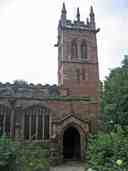
To spot St Mary's Creative Space, look for a tall red sandstone building with arched windows and a square tower topped by stone spires, peeking out just above the leafy greenery…Leggi di piùMostra meno
To spot St Mary's Creative Space, look for a tall red sandstone building with arched windows and a square tower topped by stone spires, peeking out just above the leafy greenery at the top of St Mary’s Hill near the castle. Welcome, intrepid explorer! You’ve made it to St Mary’s Creative Space, where ancient stones and modern creativity come together-like the world’s most historic mash-up album. Take a deep breath and imagine the scent of moss mixing with echoes of centuries-old incense, for you’re standing before one of Chester’s richest layers of history. Picture this: It’s the 14th century, and this hilltop is alive with the shuffle and clang of Norman soldiers from nearby Chester Castle. Back then, St Mary’s was just a simple stone church. Over the centuries, it grew-as if each generation wanted to leave their own mark, or at least add a room for their relatives to squabble over. The Earl of Shrewsbury even had a chunk of the south chapel built around 1443, only to watch in horror as it collapsed spectacularly in 1661. Don’t worry, they rebuilt it in 1693; otherwise, the ghosts would never have let them live it down. The English Civil War gave this church a real pounding in 1645. Imagine the crash of masonry and the startled twitter of pigeons as cannon fire shattered the calm. Then, in 1745 during the Jacobite uprising, Lord Cholmondeley decided the church’s tower was a bit too tall for his liking-it blocked his troops’ line of fire-so off came the upper stage! They lopped it right off, and for a while, the church looked like it had had a bad hair day. Wandering around the outside, you’ll spot that glorious tower, built in three parts: two original 16th-century stages, and the new bit from the 1800s, now topped with stone spires. Find the Tudor doorway along the north wall, then stroll past vast windows filled with intricate tracery, each one bearing witness to the laughter, weeping, and whispered prayers of generations. Step back in time in your imagination, and peer through the old stone arches of the nave-these were built during the Tudor period too, and if you squint, you might see a ghostly figure in ruffled collar stride past with a smile. Inside lies wonder after wonder: 72 monuments and cenotaphs, from the lazily reclining effigy of Philip Oldfield (skeleton companion included-some people never liked sleeping alone) to the tomb of Thomas Gamul, where young Francis reads at his parents’ feet, probably trying to avoid chores even then. During the 1970s, the church swapped holy hymns for the joyful noise of children when it became an educational centre, and now? The air is alive with the buzz of concerts, dramas, and music festivals-sometimes featuring local legends, sometimes artists from beyond Chester’s walls. If you catch a faint ringing, that may be the eight ancient bells, with three dating back to 1657, keeping their centuries-old rhythm. So gaze up, let your imagination wander through time, and know that today, you stand where Norman knights, war-torn soldiers, noble families, and modern-day musicians have all added their voices to St Mary’s endless song. Maybe someday, yours will echo here too!
Apri pagina dedicata →
Mostra altre 10 tappeMostra meno tappeexpand_moreexpand_less
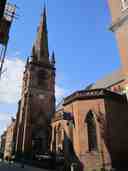
To spot the Guildhall, just look for the tall, reddish sandstone tower with a striking pointed spire and big arched windows rising sharply right ahead of you-it's hard to miss on…Leggi di piùMostra meno
To spot the Guildhall, just look for the tall, reddish sandstone tower with a striking pointed spire and big arched windows rising sharply right ahead of you-it's hard to miss on Watergate. Alright, take a good look up at that dramatic spire! Legend has it, if you stood beneath it on a cloudy day in medieval times, you might have seen a flash of lightning bouncing off the stone-though these days, you’re more likely to see a pigeon making a very dramatic entrance. This stunning red sandstone building actually started as the Holy Trinity Church, and if these walls could talk, they’d probably have a few ghost stories about monks and nobles sneaking in and out since the late 1100s. Can you imagine the original church? It would have had a north aisle, maybe echoing with the shuffling feet of townsfolk and the mulled-clove scent of ancient incense. Back in the 1600s, after a few centuries and no doubt a few too many wild winds, part of the church had to be rebuilt. And then in the 1770s, disaster struck the spire-it had to be completely taken down for safety, after wobbling a bit too much for comfort. I always say, if your church spire starts to wobble, it’s time to get the builder in! A new church appeared in the late 1800s, thanks to architect James Harrison, who had a vision of red sandstone, big clock faces, and an east window so colorful it could rival a rainbow after a Chester downpour. Sadly, Harrison didn’t live to see his building finished, but if you listen carefully, maybe you’ll hear the echo of a satisfied architect in the wind whistling around those gothic arches. When the church closed its doors as a house of worship in 1960, the Guilds and Freemen of the city decided it was too beautiful to let slip into silence. So, they turned it into the Guildhall, a place for feasts, concerts, and lively dances. Imagine the clatter of glasses and the gleeful laughter of banquet guests under those tall arched ceilings! Today, you might even pop in for a members’ drink at the Guild bar, or catch a concert where organ hymns used to ring out. And deep beneath your feet, hidden away, lies a secret: a burial vault dating back centuries, resting just under the stone floor. Just don’t drop your keys, or you might end up on a history hunt! So, as you stand here on Watergate, look up and soak in the history-the Guildhall isn’t just a building, it’s a time machine wearing a rather snazzy spire.
Apri pagina dedicata →To spot Deva Victrix, look ahead for a large, rectangular shape outlined by stone ramparts, set near a bend in the river, with red-roofed buildings packed tightly within-imagine a…Leggi di piùMostra meno
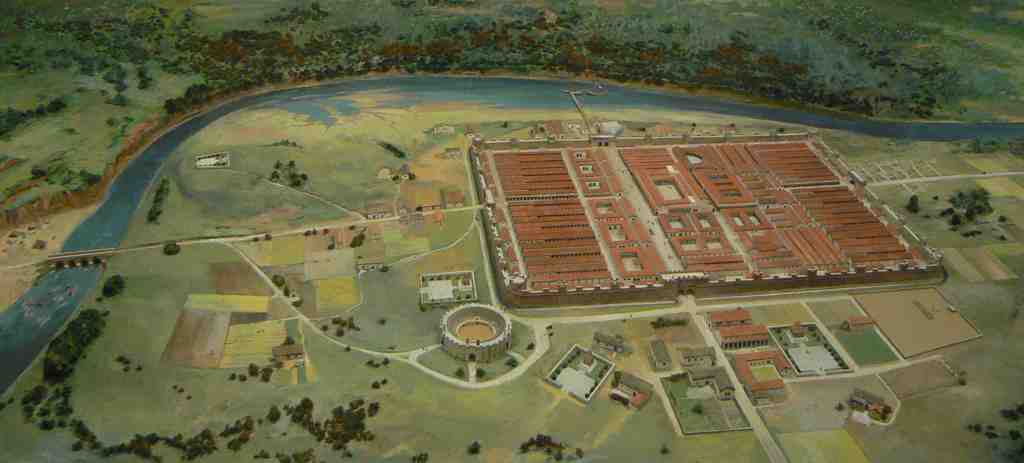
To spot Deva Victrix, look ahead for a large, rectangular shape outlined by stone ramparts, set near a bend in the river, with red-roofed buildings packed tightly within-imagine a stone-walled town with roads meeting at gates in the cardinal directions. Welcome to ancient Deva Victrix! You’re standing on ground so rich with Roman history that if these stones could talk, they’d probably greet you in Latin. Picture yourself almost two thousand years ago: you hear marching footsteps, Roman shields glinting in the sun, and the walls rising high before you, protecting thousands of legionaries from the wild unknown. Deva Victrix wasn’t just any old fort. Built in the 70s AD when the Roman army pressed north against the wild Brigantes, Chester became Rome’s powerhouse in the west. It was all thanks to the mighty Legio II Adiutrix and later, the determined Legio XX Valeria Victrix. They rebuilt Deva not once, but twice, each time stronger and grander. Imagine giant stone walls, nearly a meter and a half thick at the base, rising up with 22 sturdy towers spaced along the ramparts. These were built not with mortar, but by carefully stacking massive sandstone blocks-a bit like the Romans playing a very serious game of Jenga. The fortress was shaped like a giant playing card, with four grand gates directing soldiers and supplies in and out. Its position was no accident: sat on a sandstone bluff by a bend in the River Dee, with fresh water piped from springs a mile away in Boughton, Deva was a blend of strategic brilliance and a touch of Roman over-engineering. The river swirled nearby, providing a harbor for ships bringing exotic goods from across the Empire. The smell of fresh bread from barracks kitchens, the clang of blacksmiths, the buzz of traders outside the walls-life here was always humming. The canaba, or civilian settlement, was a bustling hub where soldiers, merchants, and families mingled. Retired legionaries popped by to reminisce about campaigns, while children ran between the timber shops lining the roads. South of the fortress was the amphitheatre: the largest in Roman Britain, seating up to 10,000 cheering fans (and that’s a crowd bigger than many a modern football match in Chester!). It wasn’t just for entertainment-soldiers trained here, their swords ringing and shields banging, while in peacetime, people gasped at the spectacle of gladiators or acrobats defying gravity on the sand. But the comfort-loving Romans also knew how to relax! Near the fortress gates stood enormous bathhouses, with hot steam, cold plunges, and massive columns rising like a Roman jungle gym. Mosaics decorated the floors, and underfoot, cleverly-designed hypocausts made sure everyone stayed toasty even in the drizzle of a British autumn. If you’d arrived here during its prime, you’d find some mysterious sights too. Deep in the heart of Deva was an unusual elliptical building like no other in Roman Britain-possibly a grand headquarters for the governor or maybe, just maybe, a temple dedicated to the twelve gods. Their central fountain sparkled, alcoves ringed the walls, and the place buzzed with imperial secrets. There’s even a theory that Deva, bigger and more splendid than York or Caerleon, was meant to be the capital of Roman Britain. Maybe the Emperor himself dreamed of ruling Britannia from right where you’re standing! Chester also grew a bustling port, making Ireland just a short ship’s hop and linking the fortress to the rest of the Empire. After centuries of glory, the mighty legions finally marched away in the twilight of Rome, coins jangling in their pouches and memories echoing in the stones. The city carried on-Anglo-Saxons called it “Legacaestir,” and parts of Roman walls were recycled into new fortresses and churches. Roman tombstones found a second career propping up medieval defenses, and locals kept using the old baths and buildings for generations, some speaking a Latin that lingered here even as the world around Chester changed. So take a moment to pause and listen. Do you hear the echoes of marching centurions, merchants hawking their wares, or maybe the splash of soldiers in steamy Roman baths? History here isn’t silent-it whispers through every stone, every echoing step as you walk through what once was the stronghold at the edge of the Empire. And don’t worry, no legionnaire will check your passport today. Welcome to Deva-the fortress, the city, the living past of Chester! If you're keen on discovering more about the civilian settlement, legionary quarry or the legionary baths, head down to the chat section and engage with me.
Apri pagina dedicata →You’ll spot Chester Cathedral ahead by its dramatic towers and walls of deep red sandstone, dotted with spires and intricate gothic windows-just look up above the trees and you’ll…Leggi di piùMostra meno
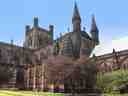
You’ll spot Chester Cathedral ahead by its dramatic towers and walls of deep red sandstone, dotted with spires and intricate gothic windows-just look up above the trees and you’ll see that mighty, weathered central tower looming above everything else! Now, get ready to step into a thousand years of history-where every stone seems to whisper secrets. Imagine yourself here when this land was a Roman stronghold, with soldiers marching past and, perhaps, the sounds of early Christian prayers echoing under a basilica on this very site. Legend claims this spot was once dedicated to St Paul and St Peter before shifting to Saint Werburgh, a nod to how Chester’s spiritual heart kept changing hands through the centuries. Fast forward to 907, when the Viking threat was pressing in, and the formidable Lady of the Mercians, Æthelflæd, ordered the city’s refortification-plus a grand minster was founded, with the precious remains of Werburgh transferred here for safekeeping. Then along came Norman power, and in 1093, Hugh Lupus and a bunch of monks from Normandy decided to build a mighty Benedictine abbey, the beginnings of the cathedral you see today. You’re now looking at walls that blend styles spanning five centuries-starting with the chunky forms of Norman masonry, through lacy Gothic arches, all the way to the soaring windows and sculpted battlements of the Perpendicular age. You may notice the soft pinkish stone; that’s local Keuper Sandstone, beautiful but not very tough, so it’s been through a bit of a ‘spa day’ courtesy of 19th-century Victorian restorers. An architect called George Gilbert Scott gave the towers those pointy turrets, determined that Chester should impress every visitor, even if it meant a little “creative restoration”-which, I’ll add, caused some heated debates! Some said it was like giving the cathedral a facelift with a trowel. If you can tear your gaze from the outside details-those big window tracery patterns, spindly pinnacles, and the massive eight-light window on the west-you’ll notice the building seems strangely symmetrical... except that the towers don’t quite match. That’s not a mistake! Only one of the west towers made it off the drawing board before the money (and the monks) ran out after Henry VIII’s grand ‘let’s dissolve all the monasteries’ plan in 1538. Legend says the unfinished south tower is haunted by the ghost of an ambitious builder who still wants to finish his work! Step inside in your mind for a moment, and picture the golden tinges of that sandstone, the wide, high nave, and those gorgeous choir stalls carved around 1380, where no two misericord carvings are alike. Some are solemn, some are silly-you’ll find monkeys, mermaids, and creatures up to all sorts of mischief. These stalls are considered some of the finest in the country, and their beauty is so captivating, it could distract even the most serious bishop from his prayers. Now, picture centuries swirling past: You’d have monks chanting in Latin, townsfolk streaming to see the vibrant stained glass windows (most of which are now from the 19th and 20th centuries, due to a bit of ‘creative rearrangement’ from Cromwell’s troops), and fiery 17th-century trials being held in the consistory court under the tower. There’s even a unique survival in England-the actual bishop’s courtroom preserved beneath the southwest tower, last used for judging the rather unfortunate case of an attempted priestly suicide in the 1930s. In more recent times, the majestic Addleshaw Tower was added as a separate belfry-believe it or not, the first freestanding bell tower for a cathedral since the Reformation. Chester Cathedral hums with life today, still a place for worship, music, and even the odd art exhibition. Whether you’re a seeker, a music lover, or just curious, you’re standing where centuries of history, legend, and laughter all blend together. So take a breath, soak it all in, and don’t be surprised if you feel goosebumps-Chester Cathedral is the sort of place where even the stones seem to be listening in. And don’t worry; if you hear the faint sound of hammering from the unfinished tower, just wink at the ghostly builder and tell him, “Maybe next century!” To expand your understanding of the architecture, fittings and glass or the features, feel free to engage with me in the chat section below.
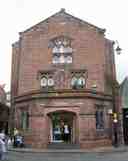
Apri pagina dedicata →Have a look straight ahead and you’ll see a tall, reddish sandstone building with pointy Gothic-style windows above a shop entrance-this is St Nicholas Chapel, and it’s easy to…Leggi di piùMostra meno
Have a look straight ahead and you’ll see a tall, reddish sandstone building with pointy Gothic-style windows above a shop entrance-this is St Nicholas Chapel, and it’s easy to spot right on busy St Werburgh Street! Now, as you stand outside, imagine this spot over 700 years ago. The air is colder, horses clop by, and the only thing more mysterious than the medicine in the modern shop inside is the history tucked within these ancient walls! Built around the year 1300 for Simon de Albo, the abbot of St Werburgh’s, this place started its life as a solemn chapel-a place for quiet prayers and flickering candlelight. But, oh, St Nicholas Chapel couldn’t sit still for long! When it stopped being a chapel, the doors flew open for a whole parade of new adventures. First, it became the parish church for St Oswald-imagine crowds bustling in, the echoes of singing, the smell of burning wax. Then, in 1488, it was handed over to the city’s Mayor and Assembly, who soon decided this holy building would make a rather “woolly” venue-a Commonhall and Wool Hall for traders! Sheep to shawl, right under those Gothic arches. By the mid-1700s, here’s where things get dramatic-literally. St Nicholas Chapel turned into a stage for plays. You might have heard laughter and applause spilling out the doors at night, the smell of wooden benches and musty velvet curtains in the air. Actors and actresses hurried through the Music Hall Passage next to you, which still bears the memory of those lively evenings. In the Victorian era, James Harrison gave this building a new twist, converting it into a grand Music Hall. Later, it became a cinema before settling into retail life as a shop. So, as you gaze at those old stones, imagine the medieval prayers, the grumbling merchants, the drama of actors, the swirl of music, and finally, the rustle of carrier bags today. Not every building can claim to be a theater, concert hall, and a shop-talk about a place with a serious case of identity crisis! Who knows? Maybe the stones still carry an echo or two from every chapter of its story.
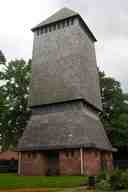
Apri pagina dedicata →To spot the Addleshaw Tower, look for a tall, modern-looking structure with a square base made of pink sandstone, rising up like a giant slate pyramid right next to the cathedral…Leggi di piùMostra meno
To spot the Addleshaw Tower, look for a tall, modern-looking structure with a square base made of pink sandstone, rising up like a giant slate pyramid right next to the cathedral grounds. Now, as you stand in front of this striking tower, let me tell you-it’s impossible to miss, isn’t it? The Addleshaw Tower stands boldly amid older Gothic spires, looking a bit like it landed from the future, or maybe a slice of Swiss cheese, with all those quirky square windows and that sharply sloping roof. Some locals even nicknamed it the “Chester Rocket”-and you can just imagine why! But this tower wasn’t always here. In fact, its story begins with a problem high above your head: the cathedral bells. In the swinging sixties-1963, to be exact-those great bells hung above Chester, tucked inside the ancient central cathedral tower. But then, disaster struck: someone realized those mighty bells were, well, a bit too mighty for their medieval home. The old tower shook every time they rang, and engineers worried it just wouldn’t survive much more ringing. Can you imagine climbing up to ring the bells and feeling the floor tremble beneath your feet? Not exactly comforting! So, with bells silenced, the Dean and Chapter of the cathedral faced a dilemma. What to do? Enter George Pace, an architect known for saving historic churches. After weighing up the options (and probably a few sleepless nights), he proposed something pretty radical: build an entirely new, separate bell tower. Don’t disturb the ancient stone; instead, let’s create a modern sanctuary for a new generation of bells. And not just any old tower-this would be the first free-standing cathedral bell tower in England since the 15th century! It’s as if Chester decided to leap forward in time with a single, tuneful bound. So, the Royal Academy showed off Pace’s bold design in 1969-think local sandstone for the base, sleek slate rising into the sky, and dazzling stained glass windows on all sides. When it was finally built (pile foundations and all, since this patch of ground was once an old burial yard), the Addleshaw Tower soared 85 feet high, with a proud pyramidal roof and louvred openings for the bells. The base houses a secret world for bellringers-a meeting room, a spiral staircase, and a ringing chamber where ropes hang in a perfect circle, surrounded by commemorative plaques. And, if you listen closely on a quiet day, you can almost hear the echo of countless wedding bells and peals. As for those bells, nine of them were carefully removed from the old tower in 1968, then whisked away to Loughborough to be recast into a ring of twelve. The first time anyone heard them in their new home was a chilly October afternoon in 1974. Just a few months later, in February, those bells sang out for a wedding-the bride just happened to be from the famous Grosvenor family. Talk about ringing in a new chapter! But oh, not everyone was in love with this modernist rocket at first. Some grumbled, some scowled, maybe even a few declared it an eyesore. Yet, like all good stories, the Addleshaw Tower slowly won folks over with its blend of new and old. Today, it stands tall as a Grade II listed building-honoured for its bold architecture, its respect for the historic setting, and its unique mix of modern and traditional materials. Inside, bellringers still gather, their footsteps echoing up the spiral stairs as they prepare for another round of joyful noise. The sound chamber above, the mighty belfry perched at the very top-it’s all waiting for the next peal. So as you gaze up, imagine the energy, debate, and vision that lifted this tower into the Chester skyline. The next time the bells ring, remember: you’re hearing the echoes of a story that spans centuries and, perhaps, a little bit of rocket fuel ambition, right here in Handbridge.
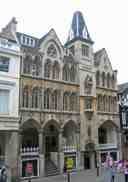
Apri pagina dedicata →Right in front of you is Crypt Chambers: you’ll spot it by looking for the tall, pointed turret rising above a row of grand, arched windows, with ornate cast-iron railings and a…Leggi di piùMostra meno
Right in front of you is Crypt Chambers: you’ll spot it by looking for the tall, pointed turret rising above a row of grand, arched windows, with ornate cast-iron railings and a mix of red and yellow sandstone-it's right there on Eastgate Street, where the steps lead down to the mysterious undercroft. Now, let’s step into the story-no need to dive down the steps just yet, though you might feel a medieval chill tickling your neck as you stand outside this remarkable building. Imagine the excitement of Chester in the 1850s: carriages rumbling by, merchants haggling in the bustling Row above, the scent of newly-cut fabric drifting from the grand department store on this very spot. But beneath your feet, hidden away like a dragon’s secret, is the truly ancient part: a medieval undercroft, one of the best in all Chester according to the experts. William and Charles Brown-imagine them in their top hats, sharp-eyed and ready to make their fortune-decided this was the perfect site for their department store. But rather than start from scratch, they built right on top of the old medieval house, keeping the undercroft below. So, beneath the shopfronts and the buzz of commerce, stonemasons from centuries ago still wait, their rib-vaulted walls as strong as when knights clattered by above. Take in the outside: four lofty storeys plus attic rooms for good measure as if the building itself is stretching to see over the city walls. That square stair turret isn’t just for show-it was a statement. The Browns’ initials, W.B. and C.B., are carved right into the stone, so they’d be remembered long after the last bolt of velvet was sold. Look closely-you’ll spot the Chester city arms on both sides of the shop entrance, and above, blank scrolls and the date ‘1858’ carved in, a reminder that even shopkeepers like to make their mark. The windows are a festival of arches, their slender columns like rows of little guards. On the tower, oriel windows jut out dramatically, perfect for spying on the street below. And if you listen closely above the noise of the modern city-maybe, just maybe-you’ll hear the echo of medieval traders whispering secrets in the shadows beneath your feet. So here you stand, outside Crypt Chambers, a department store with the bones of a medieval house-a place where history is right under your toes, lined with stories as rich as any fabric sold within. Not bad for a shopping trip, right? Let’s see what secrets our next stop has in store!
Apri pagina dedicata →

Domande frequenti
Come inizio il tour?
Dopo l'acquisto, scarica l'app AudaTours e inserisci il tuo codice di riscatto. Il tour sarà pronto per partire immediatamente – tocca play e segui il percorso guidato dal GPS.
Ho bisogno di internet durante il tour?
No! Scarica il tour prima di iniziare e goditelo completamente offline. Solo la funzione chat richiede internet. Ti consigliamo di scaricare tramite WiFi per risparmiare dati mobili.
È un tour guidato di gruppo?
No – è un tour audio autoguidato. Esplori in autonomia al tuo ritmo, con la narrazione audio riprodotta dal tuo telefono. Nessuna guida, nessun gruppo, nessun orario.
Quanto dura il tour?
La maggior parte dei tour richiede 60–90 minuti, ma sei tu a controllare il ritmo. Metti in pausa, salta le tappe o fai pause quando vuoi.
E se non riesco a finire il tour oggi?
Nessun problema! I tour hanno accesso a vita. Metti in pausa e riprendi quando vuoi – domani, la prossima settimana o il prossimo anno. I tuoi progressi vengono salvati.
Quali lingue sono disponibili?
Tutti i tour sono disponibili in oltre 50 lingue. Seleziona la lingua preferita quando riscatti il codice. Nota: la lingua non può essere cambiata dopo la generazione del tour.
Dove accedo al tour dopo l'acquisto?
Scarica l'app gratuita AudaTours dall'App Store o Google Play. Inserisci il codice di riscatto (inviato via email) e il tour apparirà nella tua libreria, pronto per essere scaricato e avviato.
Se il tour non ti piace, ti rimborseremo l'acquisto. Contattaci a [email protected]
Pagamento sicuro con 


